

Sustainable Management: 7 Powerful Ways to Protect Resources
“Forests managed sustainably can store up to 30% more carbon than unmanaged forests, aiding climate change mitigation.”
“Sustainable agriculture practices can reduce water usage by up to 50% compared to conventional farming methods.”
Table of Contents
- Introduction
- Understanding Sustainable Management
- 7 Powerful Ways to Protect Resources
- 1. Soil & Water Management
- 2. Integrated Pest & Nutrient Management
- 3. Biodiversity Conservation & Climate Resilience
- 4. Responsible Mining & Extraction
- 5. Circular Economy & Material Efficiency
- 6. Responsible Sourcing & Transparent Governance
- 7. Sustainable Infrastructure & Adaptive Planning
- Comparative Sustainability Strategies Table
- Farmonaut’s Role in Sustainable Management
- Key Insights, Tips & Alerts
- Frequently Asked Questions
- Conclusion: A Roadmap for Sustainable Resource Use
Introduction
Amid the complex and ever-evolving tapestry of natural resources, one topic often threads through multiple sectors—sustainable management. Sustainable management is the core pursuit of extracting value from the earth while preserving environmental, social, and economic balance for the present and future. Whether focused on agriculture, forestry, mining, minerals, gemstones, infrastructure, or defense, the need for integrated stewardship remains paramount—not just for the land, but for the people, the ecosystems, and the economies they support.
In this guide, we’ll comprehensively explore seven powerful ways to protect resources—practical, proven strategies that help ensure the world’s most vital systems can thrive. You’ll discover not only the ‘what’ and ‘why’, but also the ‘how’—with detailed, sector-specific best practices, inspiring highlights, sector-by-sector comparisons, actionable takeaways, and the pivotal role advanced technology (like Farmonaut’s satellite-based monitoring tools) plays in modern resource stewardship.
Understanding Sustainable Management
Sustainable management is grounded in a commitment to balance three pillars: environmental stewardship, resource efficiency, and community wellbeing. In simple terms, it means meeting today’s needs—whether in food production, fiber, minerals, timber, or infrastructure—without compromising the ecological systems and social foundations that future generations will depend on.
- Resource Extraction: How can we minimize impacts on ecosystems and retain soils, water, and biodiversity?
- Economic Viability: What strategies sustain yield, revenue, and social value over time?
- Governance and Equity: Who benefits, who decides, and how can we ensure ethical, transparent, and inclusive approaches?
The thread running through all these questions is the principle of balance: maximizing value without undermining the health of the very systems that deliver it.
7 Powerful Ways to Protect Resources
The following seven strategies represent the most effective, cross-sectoral approaches to sustainable management. Each can be tailored to unique local and industry needs, but together, they provide a comprehensive framework for resilient, efficient, and ethical stewardship.
1. Soil & Water Management
Soil and water are foundational resources in agriculture, forestry, and mining. Protecting their integrity is crucial for long-term resilience and the ability to sustain yields, preserve habitats, and reduce environmental risks.
- ✔ Conservation Tillage: Minimizes soil erosion, retains organic matter.
- ✔ Precision Irrigation: Delivers water efficiently, conserving moisture and reducing waste.
- 📊 Soil Health Monitoring: Identifies nutrient deficits, tracks soil quality and organic content.
- 🔄 Water Reuse & Rainwater Harvesting: Reduces dependency on vulnerable water sources.
- ⚠ Risk: Overuse of chemical fertilizers may threaten soil biodiversity if not integrated wisely.

In farming, practices like tillage reduction, precision irrigation, and agroforestry sustain soil structure, enhance nutrient cycling, and help deliver stable yields even in unpredictable weather conditions.
In forestry, reduced-impact harvests and watershed protection measures preserve forest soils against compaction and nutrient depletion.
In mining, soil reclamation and constructed wetlands minimize pollution risks and enable post-mining land use that supports local communities or biodiversity corridors.

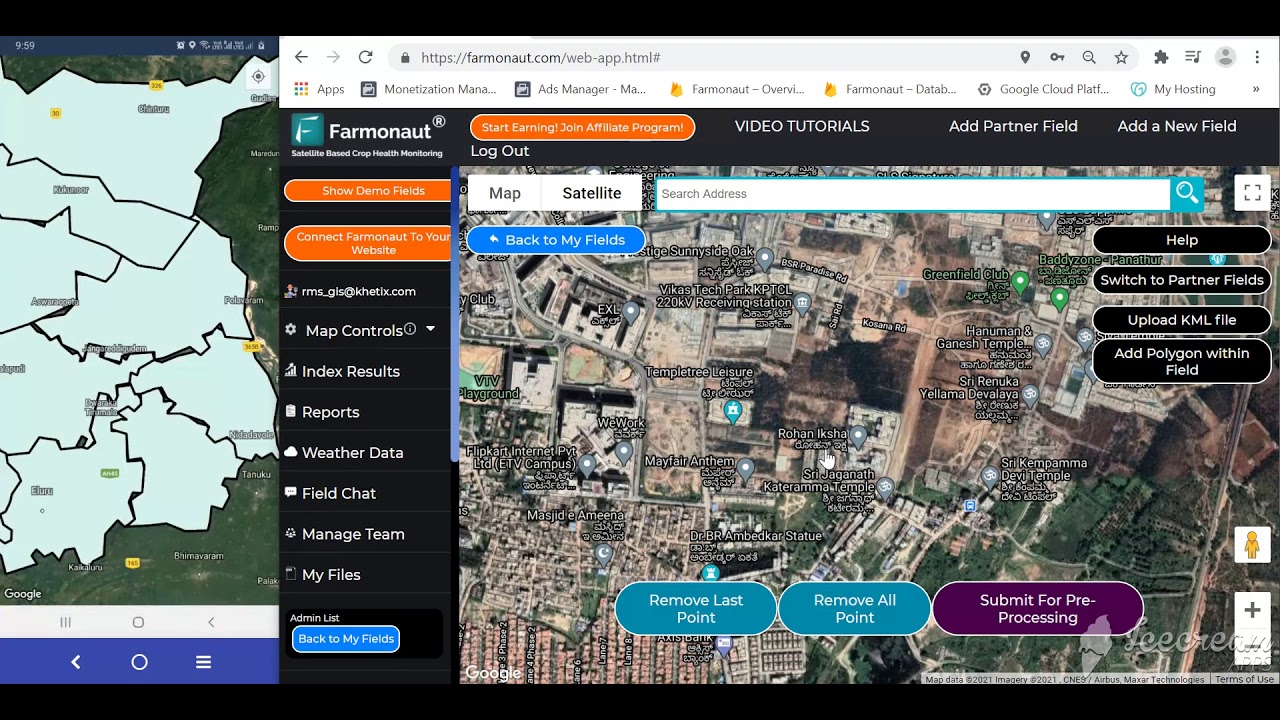
Monitor soil health and water use with Farmonaut’s Satellite Platform (Web & Mobile)
2. Integrated Pest & Nutrient Management
Holistic control of pests and nutrients is central to sustainable agriculture, forestry, and even in areas adjacent to industrial mining. High input costs and excessive reliance on chemicals can threaten ecosystems and reduce efficiency. Integrated management leverages beneficial organisms, crop rotations, cover crops, and precision application to maximize production while minimizing environmental impacts.
- 🐞 Biological Controls: Foster populations of beneficial insects and soil microorganisms.
- 🔄 Crop Rotation and Legume Cover Crops: Naturally disrupt pest cycles, replenish soil nitrogen.
- 💧 Targeted Nutrient Delivery: Use drip irrigation in agriculture and biochar in forestry for efficient nutrient cycling.
- 📉 Reduced Chemical Load: Lower input costs, limit contamination of local water bodies.
- ⚠ Risk: Ignoring local context can make integrated methods less effective—site-specific adaptation is key.
Example: In mining tailings management, phytoremediation (the use of specific plants) can stabilize metals and reduce long-term pollution, illustrating an integrated approach.
3. Biodiversity Conservation & Climate Resilience
Maintaining ecosystem services while meeting product demands is vital. Biodiversity conservation, climate resilience planning, and reforestation underpin sustainable forestry and farming, and even inform mining rehabilitation strategies.

- 🌱 Cover Cropping & Pollinator Protection: Boost crop yields, maintain soil stability, and enhance food security.
- 🌳 Assisted Natural Regeneration: Stimulate forest regrowth where land has been degraded or mined.
- 🥇 Carbon Sequestration: Forests and well-managed soils help sequester carbon, supporting climate goals.
- 🌈 Diverse Varieties Adoption: Increase resilience to disease and unpredictable weather.
- 🌿 Wildlife Corridors & Riparian Buffers: Connect habitats, reduce erosion along rivers and streams.
- 🌎 Eco-system service: Sustainable practices restore habitat, preserve watershed quality, and safeguard future productivity.
- 🌾 Food chain support: Maintaining pollinators and crop genetic diversity ensures stable food yields amid climate shocks.
- 🐻 Biodiversity hot spots: Strategic reforestation and integrated pest management sustain revenue streams and carbon sinks.

Proactive biodiversity planning is now integral to most industry sustainability standards (see Farmonaut’s Crop Plantation/Fores Advisory for reforestation projects).
Use Farmonaut to monitor forest health and climate impacts
4. Responsible Mining & Extraction
Raw material extraction is among the most controversial topics in sustainability, but rigorous standards and integrated stewardship approaches can transform mining from a source of degradation to a potential agent for regional development and restoration.
- 🦺 Environmental Impact Assessments (EIA): Comprehensive studies to identify and mitigate environmental and social risks.
- 📦 Progressive Rehabilitation Plans: Plan for step-wise reclamation and post-mining land use that leaves lasting value (see Farmonaut’s Carbon Footprinting for mining).
- 💧 Water Management Controls: Reduce contamination of rivers and aquifers; recycle process water wherever possible.
- 🌬 Air Quality Protocols: Dust and emission controls to protect local health.
- ⚖ Fair Labor & Community Development: Commit to fair labor, transparent reporting, and direct local benefit.
- 💎 Ethical Gemstone Sourcing: Traceability tools (learn more about blockchain-based product traceability with Farmonaut) ensure authenticity, reduce conflict revenue, and promote local enterprise.


Progressive mining management requires not just compliance, but going above and beyond—investing in local workforce, transparency, and rehabilitation. The core goal is to minimize ecological costs while maximizing enduring benefit for communities and the environment.
Optimize mining logistics with Farmonaut’s Fleet Management tools
5. Circular Economy & Material Efficiency
The future of resource conservation is circular — maximizing value from existing materials, minimizing waste, and ensuring every by-product serves a purpose. For agriculture, this may mean nutrient cycling and agro-waste utilization. In forestry, it refers to harnessing bark, peels, or sawdust for composite wood products, reducing the need for fresh timber. For mining, it is about tailings reuse and innovative material recovery.
- 🔁 Agro-waste Recycling: Composting and biogas from crop residues sustain yields and soil health.
- 🚜 Circular Wood Products: Use of shavings in engineered boards, mulch, energy production, and as packing material.
- ⛏ Mining Waste Valorization: Tailings and slag used in construction materials, road building, or as fill for habitat restoration.
- 💰 Value Recovery: Secondary minerals and rare elements recovery for increased efficiency.
- 📦 Pallet Reuse, Plastic Recycling: Projects like farm plastic recycling contribute to circular economies, reducing landfill waste.
- ♻ Resource Savings: Circular models yield up to 50% reduction in waste streams across sectors.
- 🌱 Soil & Water Health: Farm and forest waste cycling protects soil life, enhances water retention capacity, and boosts resilience.
- 🌲 Sustainable Wood Chains: Composite and engineered timber help reduce land use pressure while sustaining revenue.
6. Responsible Sourcing & Transparent Governance
Strong governance is the backbone of sustainable resource use. In all sectors, transparent licensing, independent monitoring, and community engagement are needed to build trust, manage risks, and ensure equitable benefits. This extends from agriculture supply chains (for traceability and pesticide safety) to forestry certification (like FSC) and conflict minerals regulations in mining.
- 🔗 Blockchain-Based Traceability: Secures provenance, reduces fraud in agriculture and minerals (see Farmonaut’s Traceability system).
- 📃 Certification & Auditing: Independent verification of standards—ensuring value claims are real.
- 🌏 Community Benefit Agreements: Secure ongoing local revenues and prioritize ethnic and indigenous group rights.
- 🚦 Real-Time Monitoring & Rapid Response: Technology (like satellite monitoring in Farmonaut’s Environmental Impact tools) alerts managers to deviations or incidents that could threaten health, ecosystems, or compliance.
- ⚖ Fair Labor Standards: Uphold social welfare and develop skills, ensuring that resource extraction brings lasting, positive change beyond single-commodity cycles.
7. Sustainable Infrastructure & Adaptive Planning
Infrastructure connects remote regions with vital markets, education, and services. But if not properly planned, it can fragment habitats, increase erosion, and expose communities to risk. Sustainable infrastructure means building with a holistic view—ensuring designs are climate-resilient, materials are efficiently sourced, and adaptive systems are in place to monitor and mitigate impacts over the full lifecycle.

- 🏞 Lifecycle Planning & Material Sourcing: Prioritize lower-footprint materials, minimize new land take, and commit to restoration post-project.
- 🌧 Erosion Controls & Water Management: Incorporate green infrastructure and stormwater detention for both agriculture and mining support roads.
- 📡 Digital Monitoring & Adaptive Management: Leverage satellites and AI to track use, integrity, and safety of critical infrastructure assets (see Farmonaut’s Fleet & Project Management tools).
- 🚚 Enabling Resilience: Real-time data helps predict and mitigate disruptions from climate or natural hazards.
- 🔌 Energy Efficient Systems: Favour renewable energy, smart grids, or energy storage where possible, reducing operational costs and emissions.
In all, adaptive planning ensures that infrastructure acts as an enabler for more resilient, efficient, and sustainable industries—not as a source of new environmental challenges.
Comparative Sustainability Strategies Table
| Sustainable Management Method | Application in Agriculture | Application in Forestry | Application in Mining | Estimated Resource Savings (%) | Community/Environmental Benefits |
|---|---|---|---|---|---|
| Soil & Water Management | Conservation tillage, drip irrigation, rainwater harvesting | Reduced-impact roads, watershed protection | Tailings management, land reclamation, water treatment | 30-60% | Soil health, stable yields, safe water, climate resilience |
| Integrated Pest & Nutrient Management | Crop rotation, biologicals, cover crops | Pest-resistant species, nutrient balancing | Phytoremediation, targeted fertilizer use | 15-40% | Reduced chemical use, improved air/water, lower costs |
| Biodiversity & Climate Resilience | Planting diverse varieties, pollinator buffers | Reforestation, assisted natural regen. | Wildlife corridors, habitat restoration | 10-30% | Carbon sequestration, wildlife, reduced climate risk |
| Responsible Mining & Extraction | N/A | Local minerals for forest roads, minimal extraction | EIA, progressive closure, labor standards | 20-50% | Reduced habitat loss, stable revenue, social benefits |
| Circular Economy & Material Efficiency | Waste-to-compost, recycling, bioenergy | Engineered wood, bark/reuse, biomass energy | Tailings reuse, secondary minerals recovery | 30-55% | Less landfill, more jobs, land/water quality protection |
| Responsible Sourcing & Governance | Traceability in food chains, labor audits | FSC/PEFC certification, monitoring | Conflict-free sourcing, blockchain tracking | 5-10% | Ethical business, poverty reduction, consumer trust |
| Sustainable Infrastructure & Adaptive Planning | Smart irrigation, storage, transport | Eco-engineered access roads, bridges | Low-impact roads, digital project monitoring | 20-45% | Disaster resilience, safer supply chains, less habitat loss |
Farmonaut’s Role in Sustainable Management
As a satellite technology provider, Farmonaut empowers companies, governments, and local operators across agriculture, mining, infrastructure, and defense to pursue more sustainable management strategies:
- 📡 Satellite-Based Monitoring: Real-time crop, soil, and environmental health checks for resource efficiency and compliance.
- 🤖 Jeevn AI Advisory System: Tailored, actionable advice for operational planning in all major sectors.
- 🔗 Blockchain Traceability: Secure provenance for products; reduces fraud and supports responsible sourcing.
- 📉 Fleet & Resource Management: Improve logistics and supply chain efficiency in mining, forestry, and infrastructure.
- 🔬 Environmental Impact Tracking: From carbon footprint monitoring to air and water quality, Farmonaut tools enable transparent, data-driven stewardship.
Farmonaut’s solutions are available via Android, iOS, web and API—enabling both field operators and central planners to reduce resource waste, minimize risks, and sustain community wellbeing.
Ready to explore satellite-powered sustainable management for your operation?


Developers can access Farmonaut’s API here; see the API documentation to begin integration.
Farmonaut subscriptions:
“Sustainable agriculture practices can reduce water usage by up to 50% compared to conventional farming methods.”
Key Insights, Tips & Alerts
Integrated planning across sectors (agriculture-forestry-mining) amplifies resource savings and resilience far more than isolated efforts. Collaboration and shared technology platforms—such as real-time satellite data and AI-powered advisory systems—create system-level benefits for entire regions.
Invest in digital monitoring for high-value or at-risk resources. Early detection of soil degradation, water scarcity, or crop disease enables rapid, targeted action—reducing input costs and long-term risk.
Overlooking seasonal and weather variability can compromise even the best sustainability plans. Use adaptive scheduling and diversified crop/forestry planning—as well as technology-powered climate forecasts—to minimize losses.
ESG (Environmental, Social, Goverance) investments now drive billions in capital flows to projects with measurable resource savings, transparent reporting, and social impact. Companies utilizing certified, traceable, and technology-enabled sustainable management attract more favorable terms and improve brand value.
Automation, AI, and remote sensing are revolutionizing how we monitor and optimize resource use. Early adopters see not just resource savings, but greater compliance with evolving sustainability regulations. Explore Farmonaut’s Large Scale Farm Management platform for scalable, actionable insights.
Five Must-Know Takeaways on Sustainable Management
- 📈 Sustainable management increases both short- and long-term economic viability for farms, forests, and mines.
- 💧 Water stewardship and soil health are “no-regrets” investments—delivering lasting value.
- 🔄 Circular economy practices reduce both costs and environmental impact, while supporting local economies.
- 🛡 Transparent governance builds market trust, safeguards against conflict, and aligns with modern investor preferences.
- 🤝 Community engagement ensures benefits are shared equitably and management is responsive to real needs.
Frequently Asked Questions
What is sustainable management and why does it matter?
Sustainable management is a strategy that aims to extract value from resources—such as soil, water, forests, and minerals—while preserving ecosystem health, supporting economic viability, and ensuring social welfare. It matters because it not only prevents depletion and degradation of the earth’s systems, but also supports long-term production, community resilience, and climate change mitigation.
How is sustainable management implemented in agriculture?
Through conservation tillage, crop rotation, precision irrigation, nutrient cycling, integrated pest management, and proactive water conservation. Advanced technologies, such as Farmonaut’s satellite monitoring & AI advisory platform, bring real-time decision support to farmers, enhancing productivity and sustainability.
What are responsible mining and sustainable extraction?
Responsible mining includes rigorous environmental impact assessment, fair labor standards, progressive reclamation, community engagement, and technological solutions to minimize water, air, and soil contamination. Sustainable extraction extends beyond compliance, aiming for positive regional legacies and value beyond the life of the mine.
How do traceability and blockchain support sustainability?
Traceability and blockchain secure the provenance of agricultural, forestry, and mineral products—reducing fraud, incentivizing ethical sourcing, and boosting transparency for end-users, regulators, and investors.
How can my organization get started with satellite-powered resource management?
Farmonaut offers satellite-based monitoring, AI-driven recommendations, blockchain traceability, and environmental impact assessment solutions. Start by signing up via the web/mobile platform or integrating the open API into your workflow. Explore dedicated products for carbon footprint tracking, fleet management, traceability, and agricultural loan/insurance verification for end-to-end sustainable stewardship.
Conclusion: A Roadmap for Sustainable Resource Use
Sustainable management is more than a set of practices—it’s a living framework that threads across agriculture, forestry, mining, infrastructure, and defense. Success relies on our shared ability to balance productive output with ecological, social, and economic integrity.
- Emphasize soil and water health for long-term yield, stability, and risk resistance.
- Integrate biodiversity conservation and adaptive planning for climate resilience.
- Advance responsible sourcing, circular economy, and transparent governance to build trust and market opportunity.
- Leverage technology for monitoring, efficiency, and real-time response at every operational level.
- Engage with communities and stakeholders to ensure balanced benefits and reduced conflict.
By embracing these powerful strategies—often with the support of technology platforms like Farmonaut—we can secure not only the value and efficiency of our industries, but also the ecosystems, livelihoods, and resilience that will define our collective future.
Your next step? Explore how satellite insights, AI-advisory, and blockchain traceability can empower truly sustainable decision making for your team or region.
Explore Farmonaut’s Carbon Footprinting for agriculture, forestry, or mining projects.
Discover Farmonaut’s Fleet Management for operational efficiency across resource sectors.
Secure your resource and product chain with blockchain-based traceability.
Utilize satellite verification for easier agricultural loans and insurance.
Together, let’s sustain the roots and the rewards of the world’s most vital resources—for everyone, everywhere.


