

Satellite Banana Crop Advisory: One Crop, Two Ages, Two Different Weevils

Jaganmohan Reddy runs two banana fields and a pomegranate block across just over twelve acres in YSR Kadapa district, Andhra Pradesh. The two banana fields were planted six months apart. On the same satellite pass, one was warned about a weevil that bores the pseudostem and the other about a weevil that bores the corm — because the plants are different ages.
Banana is a crop where timing is everything and the window is unforgiving. Get water wrong at flowering and the bunch never fills. Get potassium wrong at bunch development and the fruit is small. Get the wrong weevil and the treatment goes into the wrong part of the plant. This grower runs two banana fields planted six months apart, plus a pomegranate block heading into harvest — three fields, three separate calendars, on twelve acres.
He submitted feedback on 11 July 2026, on the advisory for his mature banana field, and answered Yes to all three questions: the report helped optimise his irrigation, it helped optimise his fertiliser application, and it helped him take action on pest, disease or weed issues. By that date the account had received 31 advisories across 21 satellite acquisition dates; it now stands at 55 across 31. This article opens both the advisory he rated and the current one on the same field, and traces where the value sits.
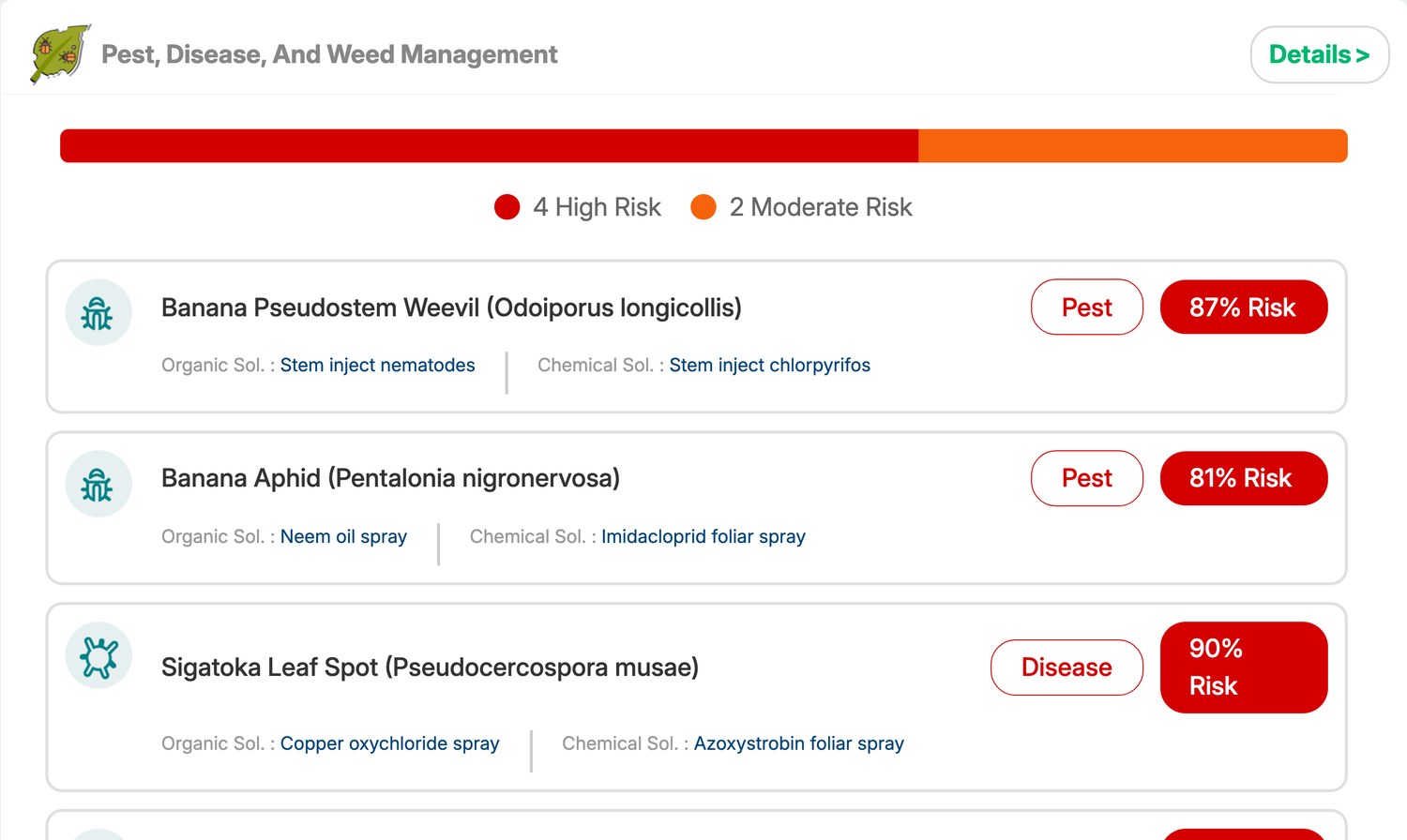
On the pass of 25 August, the mature banana field’s top pest was banana pseudostem weevil (Odoiporus longicollis) at 87%. The young field’s top pest was banana rhizome weevil (Cosmopolites sordidus) at 87%. Same crop, same farm, same satellite pass, identical risk score — and a completely different insect, because Odoiporus attacks the pseudostem of grown plants and Cosmopolites attacks the corm of young suckers. The treatments go into different parts of the plant.
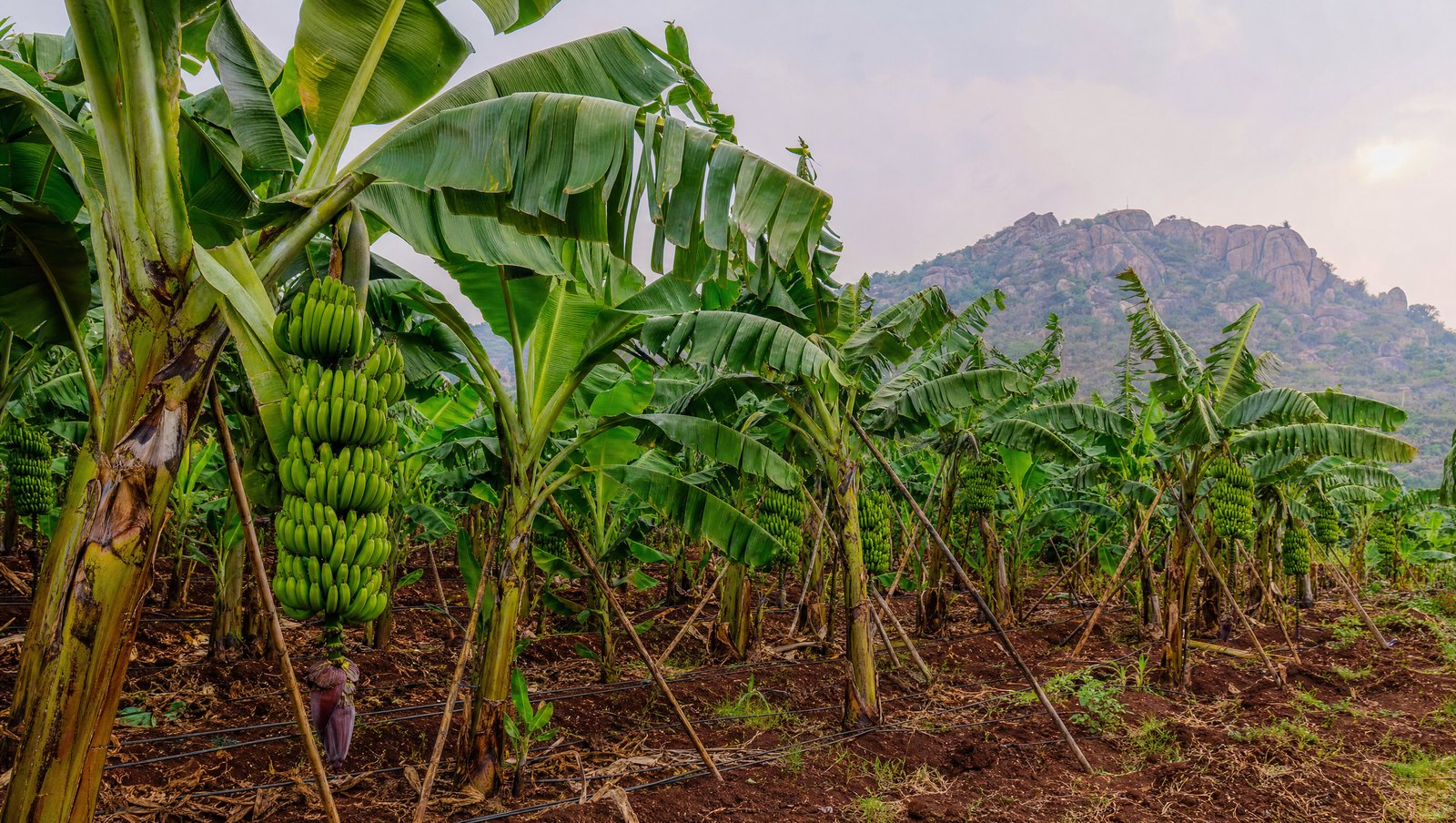

Three fields, three calendars, twelve acres
The holding is not large but it is deliberately staggered. The older banana field went in on 12 October 2025 and is now at bunch development, harvesting from September 2026. The younger one went in on 26 April 2026 and is still in vegetative growth, harvesting April 2027. The pomegranate block, whose current cycle began in February 2026, is at maturity and harvest, due November 2026.
| Field | Acres | Stage | Method | Water, 7 days | N | P | K | Zn | Harvest |
|---|---|---|---|---|---|---|---|---|---|
| Banana, mature | 4.82 | Bunch development | Drip + fertigation | 13.5 mm | 24.5 | 77.5 | 145.0 | 8.8 | Sep 2026 |
| Banana, young | 4.14 | Vegetative | Drip + fertigation | 18.0 mm | 38.9 | 108.8 | 78.3 | 5.5 | Apr 2027 |
| Pomegranate | 3.21 | Maturity / harvest | Drip | 8.3 mm | 0 | 0 | 0 | 0 | Nov 2026 |
| Portfolio — 12.17 acres | 39.8 mm | 11 of 21 field-days at zero | 3 windows | ||||||
Note the pomegranate row. Every one of its five nutrient readings came back inside its target band, the application frequency field reads zero days, and the source columns for nitrogen, phosphorus, potassium, sulphur and zinc all read “None”. At maturity and harvest, the correct instruction for that block is to stop feeding it and let the fruit finish.
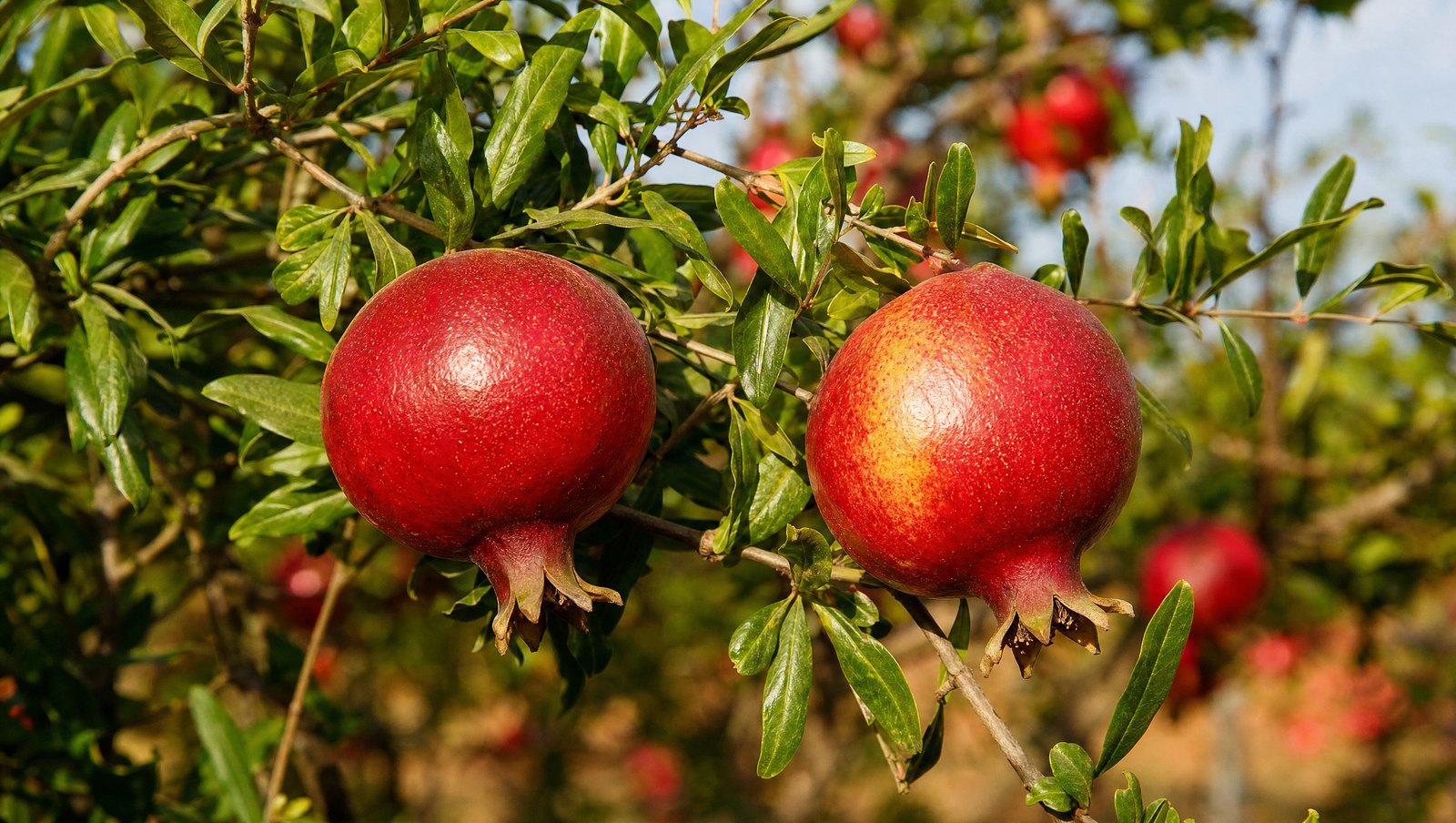
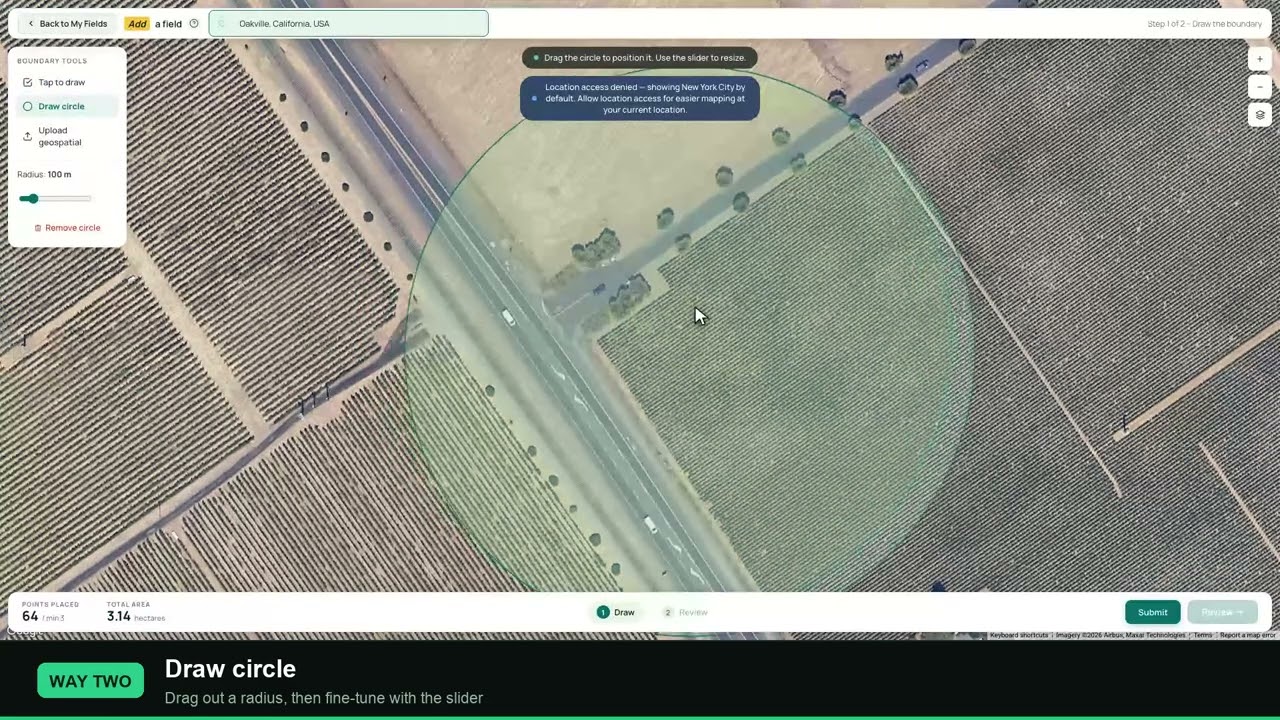
What the satellite banana crop advisory delivers per field
Each field receives its own report per satellite pass: a seven-day irrigation schedule with the delivery method named and the alternatives priced in millimetres, per-nutrient fertiliser rates with an organic and a chemical source for each and an application frequency, pest and disease risk with percentage scores and paired organic and chemical solutions, weed pressure, soil chemistry and a yield estimate with a harvest window.
It also publishes its own reasoning. The 11 July advisory on the mature banana field records that reference evapotranspiration was estimated at about 5.5 mm per day, that the crop coefficient for banana at flowering is approximately 1.0, and that NDVI on that field had dropped from 0.65 to 0.53 against a typical 0.70–0.85 for flowering banana — read as moderate to severe stress. NDWI had dipped to 0.36 before recovering to 0.58, which the report reads as intermittent water stress. That is the chain of reasoning behind what it then told him to do.
Irrigation: the same field, told two opposite things six weeks apart
This is the clearest illustration on the holding of what stage-aware advice actually means, and it is not a story about using less water.
On 11 July, at flowering (anthesis), the advisory prescribed 5.5 mm every single day for seven days — 38.5 mm for the week, with no rest days at all. Anthesis is when flower development and fruit set happen; moisture stress in that window costs bunch size permanently, and the satellite was reading stress on that field at the time. The advisory told him to water more, not less.
On 25 August, with the bunches set and filling, the same field was prescribed 4.5 mm on three days of seven — 13.5 mm for the week. That is 65% less water on the same field, six weeks later, with no change other than the crop moving stage.
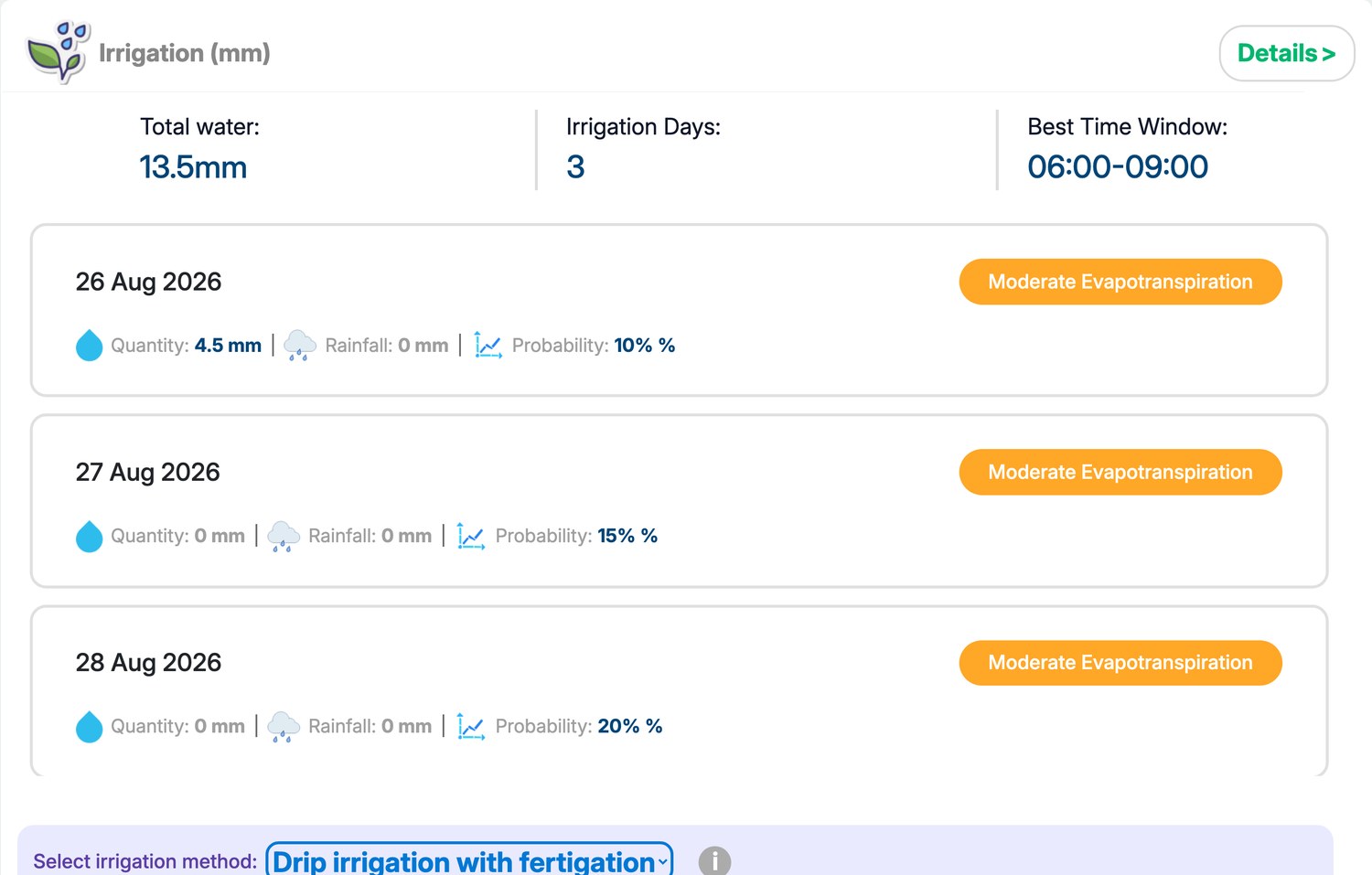
Across the three fields on the current pass, 11 of 21 field-days carry a zero, and following the schedule applies 51.8% less water than irrigating every field every day at its own peak recommended rate — 39.8 mm against 82.6. But the July advisory is the reason that number should not be read as the point. The point is that the schedule follows the crop: seven days a week when the yield is being decided, three when it is not.
Optimising irrigation is not the same as reducing it. On banana, the weeks around anthesis are the ones worth over-watering rather than under-watering — and the weeks after bunch set are where the savings live. A schedule that cuts uniformly across the season would take the water out of exactly the wrong week.
The method is named as drip irrigation with fertigation on both banana fields, and the alternatives are priced against it: on the mature field micro-sprinkler is listed at 5.2 mm and basin irrigation at 6.5 mm against drip’s 4.5 — basin costs 44% more water for the same job. On the pomegranate, drip at 2.8 mm against basin at 4.0 is a 43% difference.
At anthesis it said water every day. Six weeks later, on the same field, it said three days out of seven. Nothing changed except the crop.
Fertiliser: nitrogen for the leaves, potassium for the fruit
The two banana fields invert each other’s nutrient priorities, and the reason is in the phenology.
The mature field at bunch development was prescribed 145.0 kg/acre of potassium — the largest single figure anywhere on the holding — against 24.5 of nitrogen. Potassium is what fills a banana bunch, and that field’s own reading was 104.4 ppm against a 150–250 target, so it is genuinely short.
The young field in vegetative growth was prescribed the reverse: 38.9 kg/acre of nitrogen — almost 60% more than the mature field — and only 78.3 of potassium. Its potassium reading was already 148.35 ppm, effectively at the bottom of the target band, so the model flags potassium as its one nutrient at optimal level and puts the money into nitrogen and phosphorus instead. Nitrogen builds the leaf area that will later carry the bunch; potassium can wait until there is a bunch to fill.
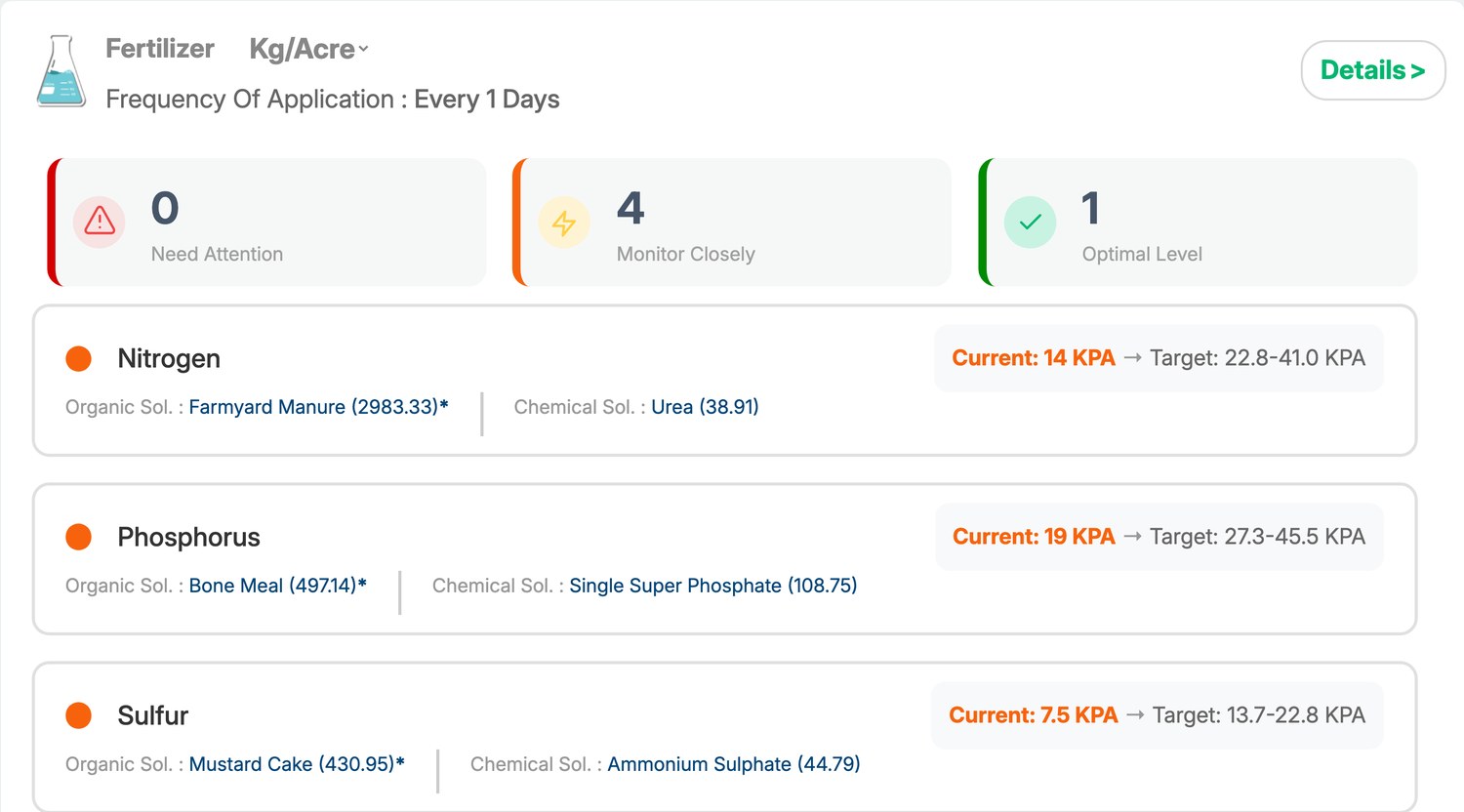
The frequency field is worth noticing on its own. The young field is set to every 1 day, the mature field to every 2 days, the pomegranate to zero. Those are fertigation cadences, not broadcast schedules — which is consistent with the delivery method being named as drip with fertigation on both banana fields.
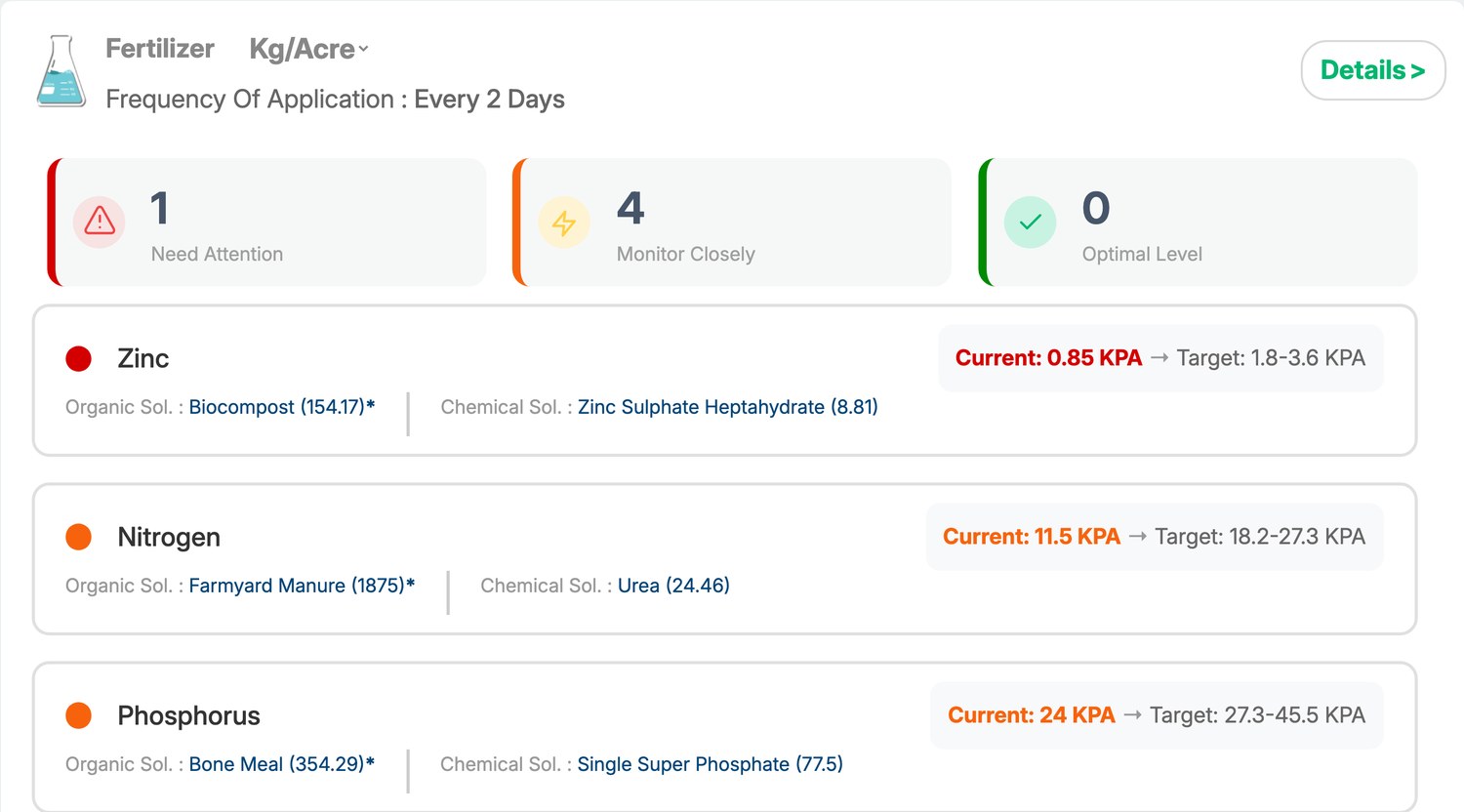
One nutrient carries a red flag across the whole holding: zinc on the mature banana field, at 0.85 against a target of 1.8–3.6, with 8.81 kg/acre of zinc sulphate heptahydrate or 154 kg/acre of biocompost prescribed against it. It is the only “Need Attention” entry on any of the three fields — and on the 11 July advisory, six weeks earlier, zinc had not been prescribed at all.
Pest and disease: the weevil changes with the age of the plant
Both banana fields were read on the same satellite pass. Their pest lists overlap on two entries and diverge completely on the other two.
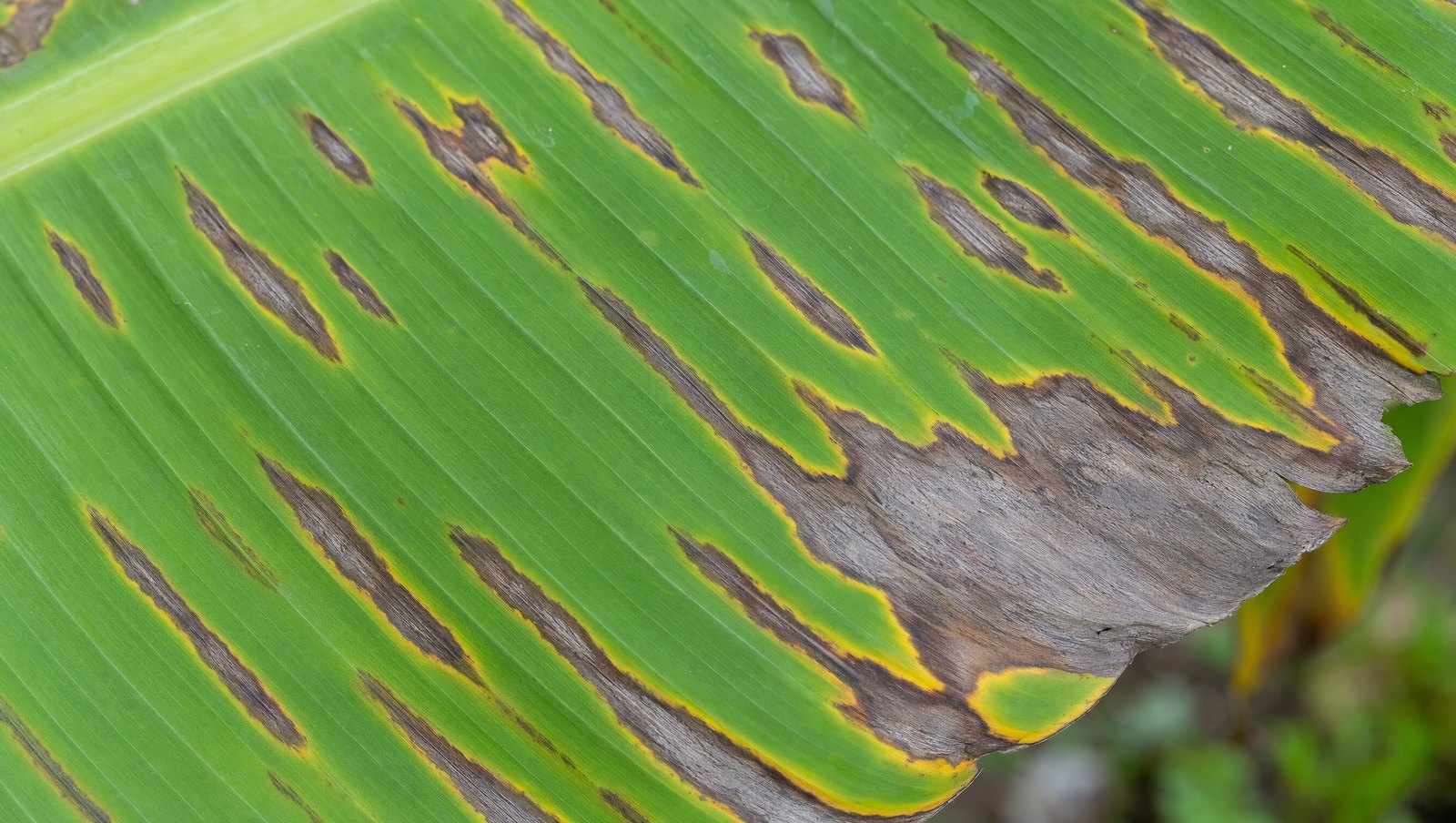
On the mature field: banana pseudostem weevil (Odoiporus longicollis) at 87%, banana aphid (Pentalonia nigronervosa) at 81%, Sigatoka leaf spot (Pseudocercospora musae) at 90% — the highest score anywhere on the holding — and Panama wilt (Fusarium oxysporum f. sp. cubense) at 72%.
On the young field: banana rhizome weevil (Cosmopolites sordidus) at 87%, the same aphid at 84%, the same Sigatoka at 86%, and banana bunchy top virus at 76%.
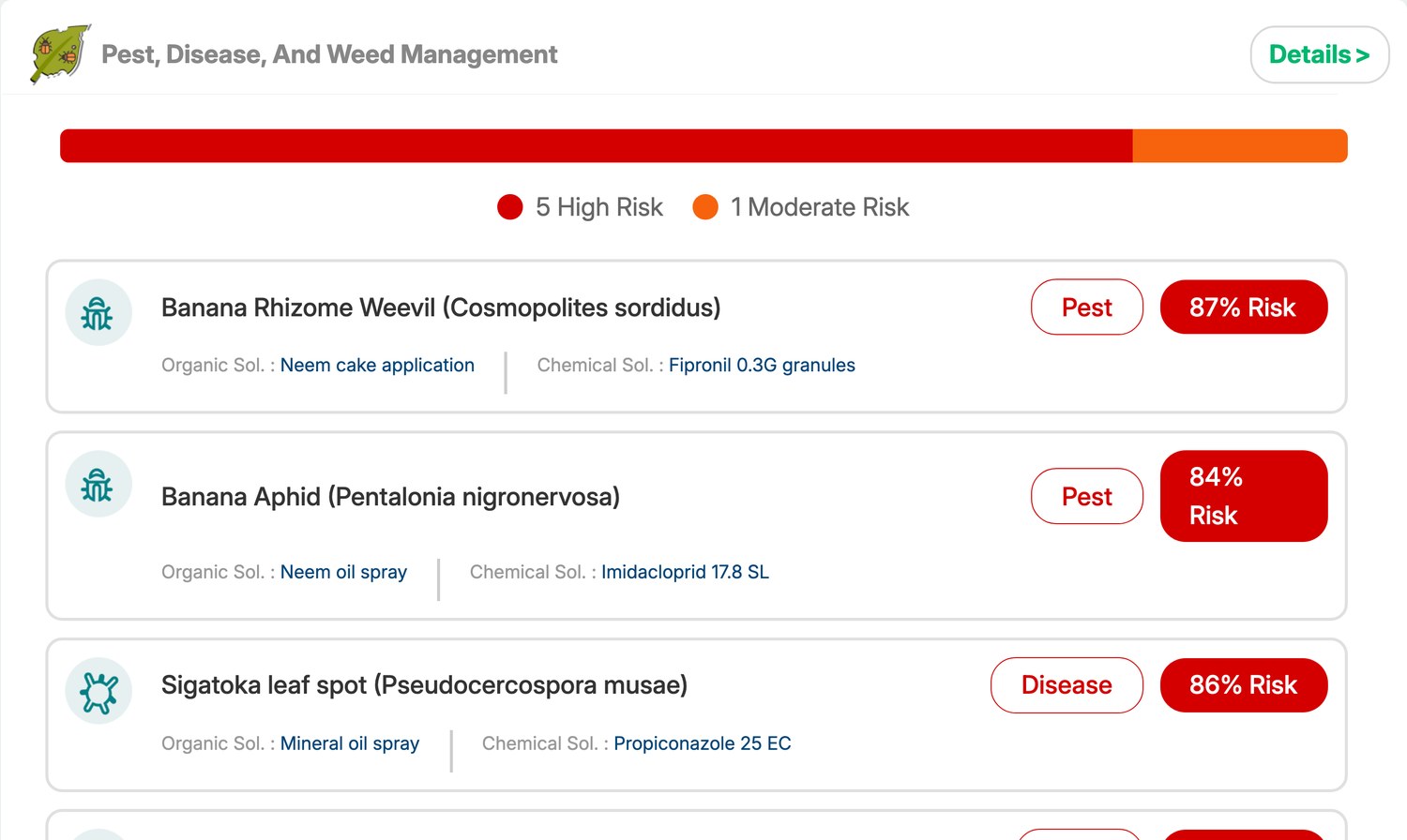
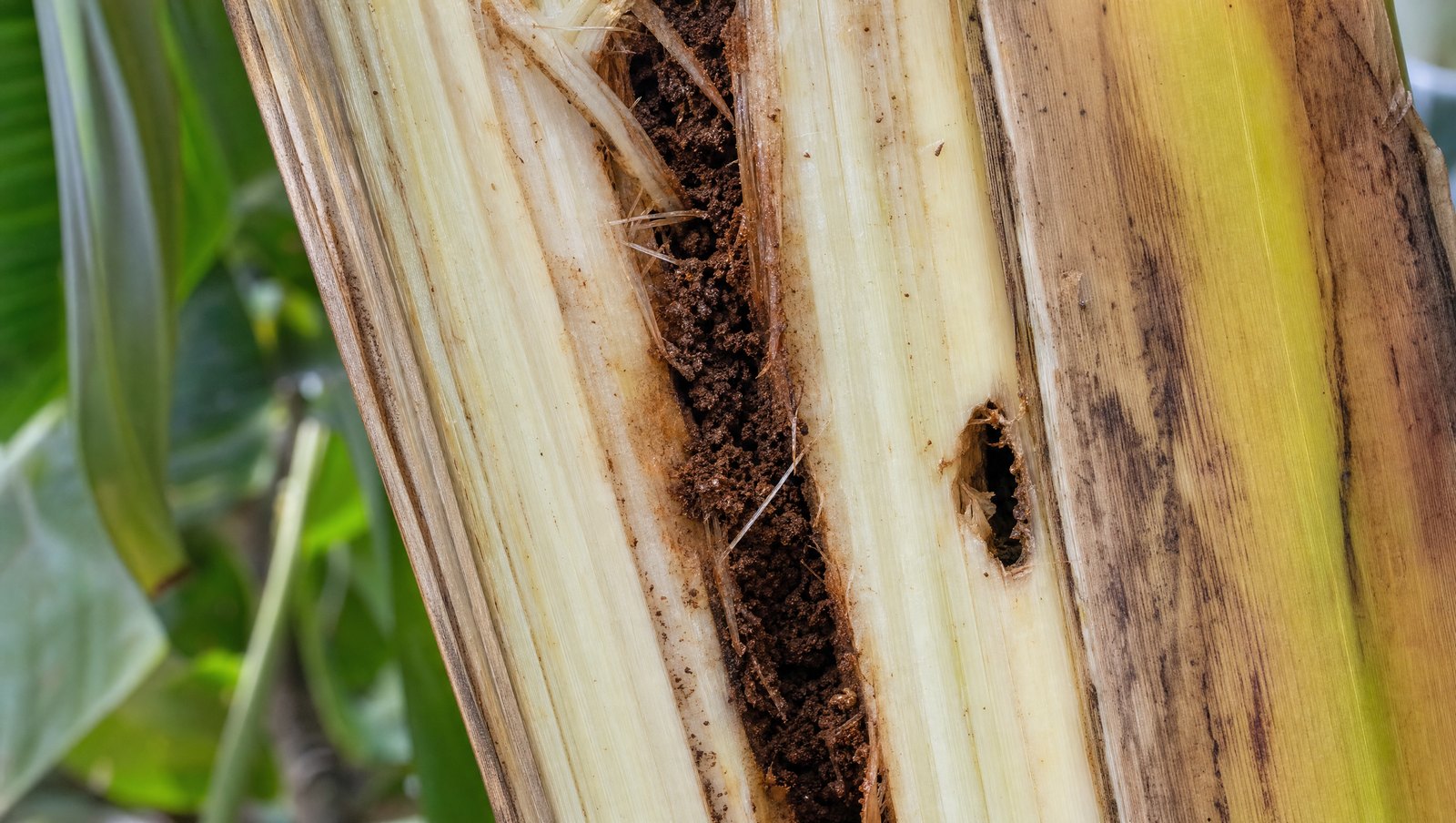
The divergence is not cosmetic and it changes what the grower buys. For Odoiporus on the mature field the solutions are stem injection — entomopathogenic nematodes as the organic route, chlorpyrifos as the chemical. For Cosmopolites on the young field they are soil-applied — neem cake, or fipronil granules at the base. Buying the mature field’s treatment for the young field would put product into the wrong part of the plant.
The fourth entries diverge for the same reason. Panama wilt on the mature field is a soil-borne Fusarium that expresses in established plants. Bunchy top virus on the young field is aphid-vectored and is most destructive in young plantings, where an infected mat has to be eradicated rather than treated — which is exactly what the advisory’s organic column says: “eradicate infected mats”, with a vector spray as the chemical route. On a farm running two banana ages simultaneously, the young block is also the one at risk from aphids moving off the older block, which makes the aphid score on both fields worth reading together.
Weed pressure is consistent and, on this soil, predictable: Cyperus rotundus (purple nutsedge) at 84–88% on the banana fields and 65% on the pomegranate, with Cynodon dactylon (Bermuda grass) at 73–83%. Under drip on a permanent crop both colonise the wetted zone directly around the plant base, which is precisely where the crop’s own feeder roots are.

What the numbers add up to
| Mechanism in the advisory | What it delivers on these three fields |
|---|---|
| Irrigation set by growth stage, not by calendar | 7 days a week at anthesis, 3 after bunch set — 65% less water on the same field |
| 11 of 21 field-days set to zero on the current pass | 51.8% less water — 39.8 mm against 82.6 |
| Nutrient priority follows phenology | K 145.0 on the bunch-filling field; N 38.9 on the leaf-building one |
| Nutrient withdrawn entirely at maturity | Pomegranate prescribed nothing, frequency zero, sources “None” |
| Micronutrient screening across all fields | Zinc at 0.85 against 1.8–3.6 — the holding’s only red flag |
| Pest resolved to species, by plant age | Odoiporus (inject the stem) on the mature field; Cosmopolites (treat the soil) on the young one |
| Alternative delivery methods priced in millimetres | Basin costs 44% more water than drip on the mature banana |
Same crop, same farm, same satellite pass, identical 87% risk score — and a completely different insect.
Banana carries a high input cost per acre and a single harvest per plant cycle, so the cost of a mistimed decision is concentrated rather than spread. The two savings visible here — 65% of a week’s water on one field, and an entire nutrient programme withdrawn on another — both come from timing rather than from buying anything.
Grower-reported outcomes, as submitted
The cards below reproduce Jaganmohan Reddy’s answers to our in-app feedback questionnaire for the advisory dated 11 July 2026, exactly as recorded.
The percentages are the grower’s own conservative estimates from a structured form rather than metered volumes. What the advisory data shows independently is that the guidance was resolved to the field, the crop and the growth stage — including a stage change on one field that moved its water requirement by 65% and its nutrient list from two items to five.
Two ages of the same crop, on purpose
Planting banana in two blocks six months apart is a deliberate commercial strategy rather than an accident of scheduling. It spreads harvest across two windows, spreads the labour peak, and spreads price risk across two market periods — this holding harvests in September 2026 and again in April 2027 from the same crop.
It also doubles the management load, which is where per-field monitoring earns its place. The two fields need different water volumes on the same day, opposite nutrient priorities, and different pest treatments applied to different parts of the plant. A single farm-level plan cannot serve both, and averaging them would under-water the flowering block while over-feeding the young one.
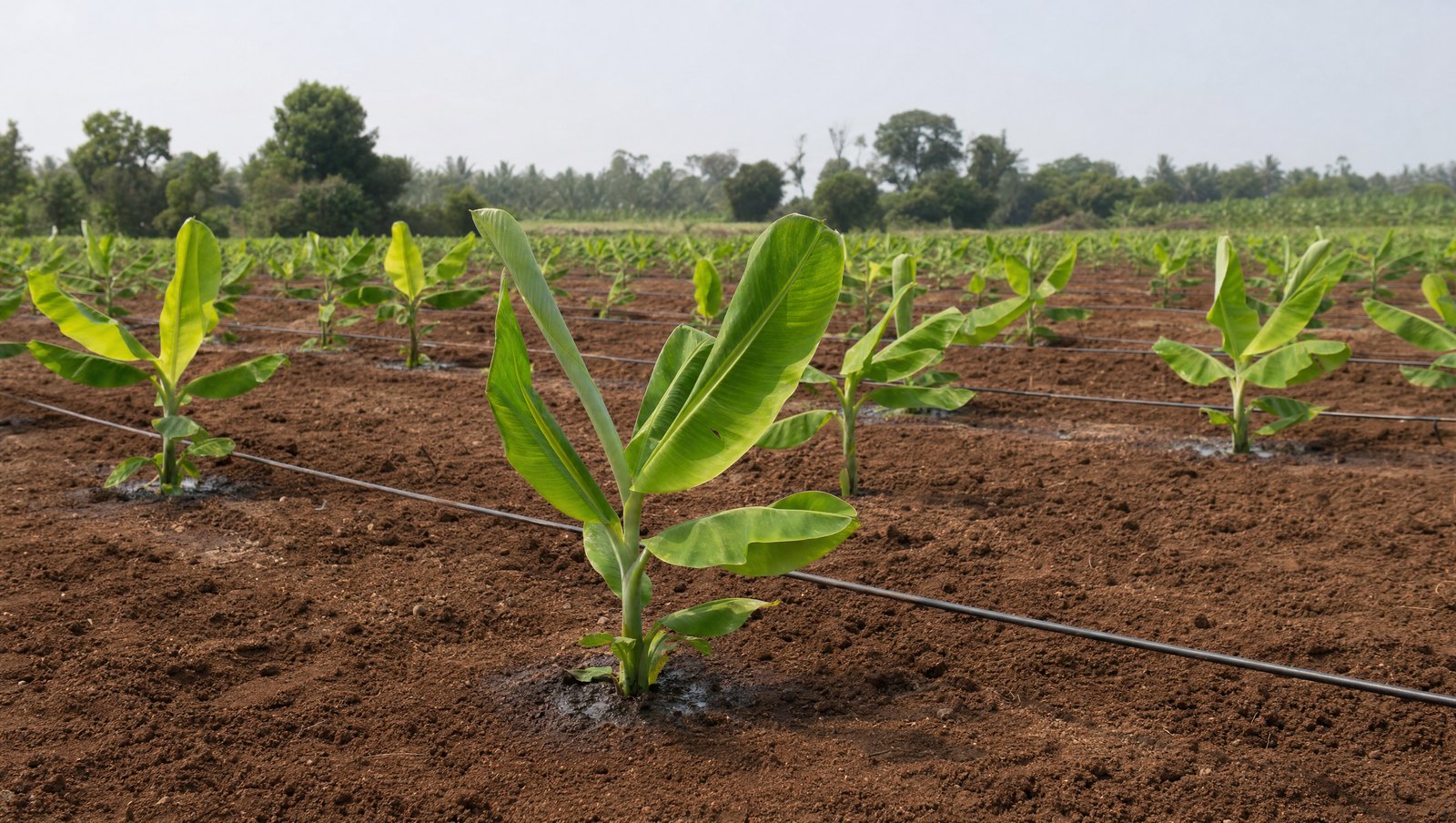
The soil is the constraint both fields share. Organic carbon reads 0.15% on the mature field, 0.11% on the young one and 0.12% on the pomegranate, flagged low throughout, with pH 6.8 on the bananas and 7.2 on the pomegranate and salinity low everywhere. At that carbon level the soil holds little nutrient between applications, which is exactly why the fertigation cadences are set at one and two days rather than as single seasonal doses.
Banana is one of the thirstiest crops grown in Rayalaseema, a region where groundwater is the binding constraint. The 11 July advisory asked for 38.5 mm on that field and the 25 August one asked for 13.5 — a difference of 25 mm per week on 4.82 acres. Applying the July schedule through August would have put roughly a week’s worth of surplus water into the ground for no yield return.
The recommended method is not always the cheapest listed. Both banana fields already run drip with fertigation, and the advisory prices basin irrigation beside it at 44% more water — not as a recommendation but as a number, so the value of the system already installed is visible rather than assumed.

Why per-field beats per-farm on twelve acres
The yield estimates put the range in perspective: 22,500 kg/acre on the mature banana, 18,000 on the young one and 3,500 on the pomegranate. The banana figures are an order of magnitude above the pomegranate because a banana bunch is a heavy fresh weight harvested once, and the numbers are not comparable — averaging them describes nothing real.
The estimate also moves as the season resolves. On 11 July the mature field was projected at 18,500 kg/acre with a local range of 16,000 to 24,000, and a harvest window of October to December 2026. By 25 August, with the bunches set and filling, the projection had firmed to 22,500 kg/acre and the window had moved forward to September. That revision is the visible output of six weeks of additional satellite passes.
Underneath sits a per-pixel read of each field, resolved through crop coefficients and regional pest models. Fifty-five advisories over thirty-one acquisition dates is what keeps two banana ages and a pomegranate block on separate calendars rather than averaged into one.

Running this on your own plantation
- Map each block separately, especially staggered plantings. Two banana fields six months apart need different water, different nutrients and different pest treatments on the same day.
- Set the growth stage and let the water follow it. Seven days a week at anthesis and three after bunch set is not inconsistency — it is the crop’s actual requirement.
- Read the nutrient priority, not just the totals. Potassium on the bunch-filling block, nitrogen on the leaf-building one; the same total spend in the wrong order buys less yield.
- Check the micronutrient flags. Zinc at 0.85 against 1.8–3.6 was the only red entry on this holding, and zinc deficiency in banana is easy to miss by eye.
- Match the treatment to the insect, not the crop. Odoiporus is injected into the pseudostem; Cosmopolites is treated in the soil. Same crop, different target.
Explore the platform at sat.farmonaut.com, read more about our satellite and AI-based farm advisory in the JEEVN AI overview, or talk to our team about monitoring a staggered plantation. JEEVN AI is a paid product; plan detail is on the platform.
Two ages, two answers
Map each block, set its crop and growth stage, and get per-field irrigation, nutrient and pest guidance from satellite passes over your own ground.
Frequently asked questions
What is a satellite banana crop advisory and what does it deliver?
It is a per-field report built from satellite passes over your own boundary, giving a seven-day irrigation schedule with the delivery method named and alternatives priced in millimetres, per-nutrient fertiliser rates with organic and chemical sources plus an application frequency, pest and disease risk as percentage scores with paired solutions, weed pressure, soil chemistry and a yield estimate with a harvest window. On this holding three fields each received their own, producing 55 advisories over 31 acquisition dates.
Why did the same field get 38.5 mm one month and 13.5 mm the next?
Because the crop moved stage. On 11 July the field was at flowering (anthesis), when flower development and fruit set determine bunch size and moisture stress does permanent damage — so the advisory prescribed 5.5 mm every day for seven days. By 25 August the bunches were set and filling, and the requirement fell to 4.5 mm on three days. Same field, 65% less water, purely because of where the crop had got to.
Why does the mature banana field need so much more potassium than the young one?
Potassium is what fills a banana bunch. The mature field at bunch development was prescribed 145.0 kg/acre against a reading of 104.4 ppm on a 150–250 target — genuinely short at the moment it matters most. The young field in vegetative growth already read 148.35 ppm, so potassium was flagged at optimal level and the prescription went into nitrogen (38.9 kg/acre) to build leaf area instead.
Why do two banana fields on the same farm get different weevils?
Because the two weevils attack different parts of the plant at different ages. Odoiporus longicollis, the pseudostem weevil, bores the standing pseudostem of grown plants and is treated by stem injection. Cosmopolites sordidus, the rhizome or corm weevil, attacks the corm of young suckers and is treated in the soil with neem cake or granules. Both scored 87% on the same pass — on different fields.
Why was the pomegranate block prescribed no fertiliser at all?
Because it is at maturity and harvest, and all five of its nutrient readings were inside their target bands. The advisory’s application frequency for that block reads zero days and the organic and chemical source fields read “None”. Continuing to feed a fruit crop through maturity delays colouring and firmness rather than adding yield.
Is satellite monitoring worthwhile on a twelve-acre plantation?
On this holding it produced three different answers where a farm-level plan would have produced one — including a 65% water swing on a single field between two growth stages, and two different weevil treatments for the same crop. Banana carries a high input cost per acre and one harvest per plant cycle, so mistimed decisions are expensive and hard to correct.
Are the pest probabilities confirmed infestations?
No — they are modelled risk scores from satellite indices, weather and regional pest pressure, working as a scouting priority list. Their value here is specificity: two weevil species separated by plant age, and a fourth entry that differs between fields because Panama wilt expresses in established plants while bunchy top virus is most destructive in young ones.
Glossary
- Anthesis
- The flowering phase, when the banana inflorescence emerges and fruit set occurs. The most moisture-sensitive window in the cycle, and the reason the July advisory prescribed water on all seven days.
- Bunch development
- The phase after fruit set when the fingers fill out. Potassium-driven, which is why the prescription on the mature field is dominated by 145.0 kg/acre of potassium.
- Fertigation
- Delivering dissolved fertiliser through the drip line. It is what makes an application frequency of every one or two days practical rather than theoretical.
- Corm
- The underground stem base from which banana suckers grow. Cosmopolites sordidus attacks it, which is why that weevil is treated in the soil rather than by stem injection.
- Sigatoka leaf spot
- A fungal disease (Pseudocercospora musae) that destroys functional leaf area and so directly reduces bunch filling. It scored highest of anything on this holding, at 90%.
Case-study basis: JEEVN AI field advisories for a single Farmonaut account, drawing on two dated advisories for the mature banana field — the one the grower rated, generated from the satellite pass of 11 July 2026, and the most recent, from the pass of 25 August 2026 — together with the most recent advisory for each of the other two fields (banana, 25 August 2026; pomegranate, 15 August 2026, that block’s latest available pass), plus the account’s in-app feedback submission dated 11 July 2026. Crops, region, field count and area are reported from the account’s own records on the platform; the account holder is named as recorded on his Farmonaut account and precise field locations are withheld. The reported percentages are the grower’s own estimates from a structured feedback form, not metered or invoiced measurements; the 65% and 51.8% water figures are our own calculations from the advisories’ own daily quantities, the second against a stated baseline of irrigating every field on every day at that field’s own highest recommended rate. All nutrient, pest, soil and yield figures are read directly from the advisories. Pest, disease and weed percentages are modelled probabilities, not confirmed infestations. Yield figures are estimates, not guarantees. Imagery: the five platform screenshots are genuine captures of this account’s own advisory data; the five wider field photographs are AI-generated illustrative imagery, each labelled as such in its caption, and do not depict the grower or his fields. JEEVN AI is a paid product.
Discussion
Questions, corrections or field experience? Share them below. First-time comments are reviewed before they appear, and your email is never published.
No comments yet. Be the first to add a question or your experience.

 Krishi GK
 Geno
 Hayleys Agriculture
 Linx Agritech
 Adinet
 Save Your Soils
 Grandstream Algérie
 XOS Realty
 Geospatial Lab Africa
 Agro La Gándara
 HIPSAC
 ZOL Zimbabwe
 Juligerm
 AdBio
 MISE Maroc
 NWNS

 Licence holder · Niger · Gold










