

Exploration drilling · Canada
Diamond Drilling Companies Canada: Permits, Seasons, Costs
Diamond drilling companies in Canada range from national contractors such as Major Drilling and Orbit Garant to regional crews, and choosing one means matching the rig, season and access to your ground and filing the right provincial permit or notice before you drill; one recent Quebec technical report budgets about C$382 per metre all-in.
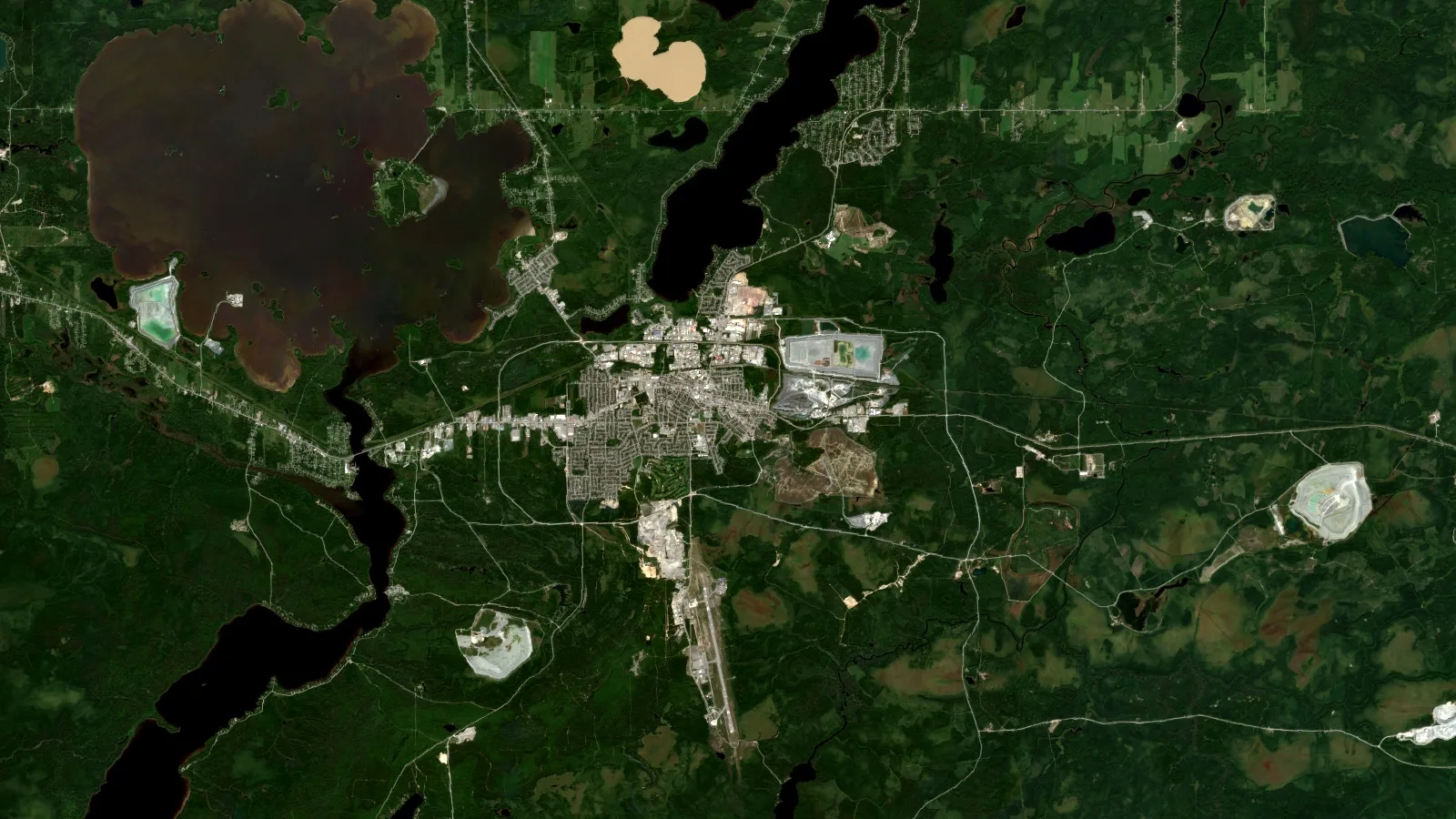
Key takeaways
- The diamond drilling companies Canada relies on range from a few national contractors to many regional firms; the Canadian Diamond Drilling Association in North Bay keeps a member directory.
- Natural Resources Canada reports planned 2026 exploration and deposit appraisal spending of C$5.3 billion, led by Quebec, British Columbia, Ontario and Saskatchewan.
- Each province has its own trigger: Ontario’s exploration plan or permit, Quebec’s impact-work authorization (ATI), BC’s Mines Act permit (Notice of Work) and Manitoba’s work permit.
- Winter brings ice roads and frozen ground, and also weather stoppages; a government ice guide warns its load charts do not cover stationary loads such as drill pads.
- Public drill results on a material property must report collar, azimuth, dip, widths and QA/QC under NI 43-101 section 3.3.
In this article
- Diamond drilling companies Canada juniors hire, and how to check them
- Diamond drilling, RC drilling and reverse circulation drilling in Canadian ground
- Where Canada's drill rigs are working
- Winter vs summer drilling, and helicopter-supported programs
- Provincial permits and notices before you drill
- What a Canadian drill program costs per metre
- Drill core sampling, logging and disclosure
- Where satellite targeting fits before the rig arrives
- Diamond drilling companies Canada: frequently asked questions
Search for diamond drilling companies Canada and you get a list of names. What you need before you sign is different: which provincial permit or notice your program triggers, whether the rig goes in on a winter ice road or under a helicopter, what a realistic all-in cost per metre looks like, and how the core will be logged, sampled and disclosed under NI 43-101. This page answers those questions for Ontario, Quebec, British Columbia and Manitoba, using regulator pages, provincial statistics and filed technical reports. Drilling methods in general are covered in our guide to exploration drilling methods and hole planning, and contractor tenders in our guide to picking a drilling contractor, so we only repeat what Canada changes.
British Columbia explorers drilled 933,640 m in 2025, up 301,914 m on the year before.
Diamond drilling companies Canada juniors hire, and how to check them
Start with the size of the market. In 2025 the BC Geological Survey counted 933,640 m of exploration drilling in British Columbia alone, and that is one province. The diamond drilling companies Canada’s juniors use fall roughly into three groups: national contractors that run surface and underground fleets across several provinces and abroad, regional firms rooted in one mining camp, and small specialist crews with light or heli-portable rigs.
National diamond drilling companies Canada-wide, from their own filings
Two listed names come up most. Major Drilling Group International, headquartered in Moncton, New Brunswick (TSX: MDI), describes itself as the largest provider of drilling services to the mining sector; its history page traces the company to the 1980 acquisition of Ideal Drilling in Bathurst and later purchases in Val-d’Or, Rouyn and, in 2019, Norex Drilling of Timmins. Orbit Garant Drilling (TSX: OGD), headquartered in Val-d’Or, Quebec, reported 186 drill rigs at June 30, 2025 in its fiscal 2025 MD&A, and builds rigs in Val-d’Or and Sudbury. These are facts from the companies themselves, not a ranking; dozens of private diamond drilling companies Canada-wide do the same work in their home districts.
Contract length matters to a junior’s cash plan. Orbit Garant’s MD&A says its surface drilling contracts typically run six to twelve months and its underground contracts one to two years, and that customers can cancel on short notice in prescribed circumstances. Surface exploration work for a junior is usually the shorter kind, so read the termination and standby clauses as closely as the metre rate.
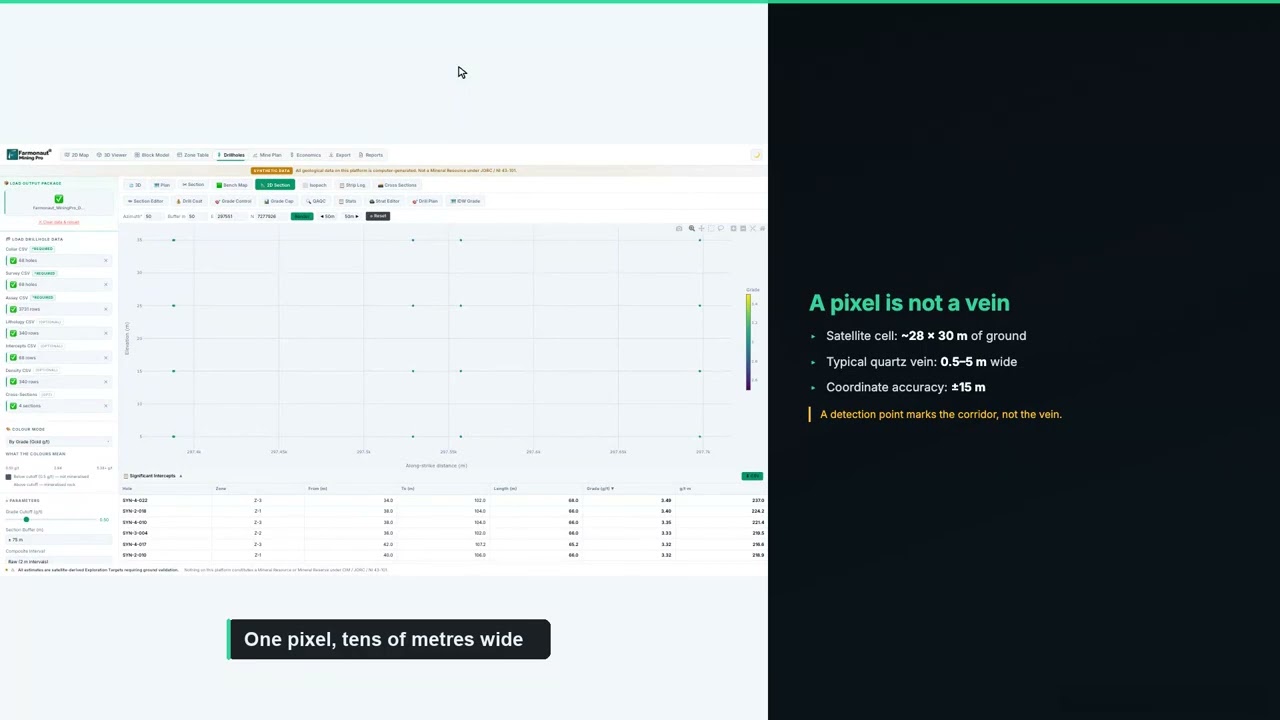
▶ How to plan a drilling program before you call diamond drilling companies Canada-wide (5 min 49 s). · 5:49
The CDDA and driller training
The Canadian Diamond Drilling Association (CDDA), based in North Bay, Ontario, represents drilling contractors in dealings with government, issues safety alerts, runs a job portal and keeps a member directory. It is the closest thing to an industry register, so a useful first check on any of the diamond drilling companies Canada offers is whether it is a member and what safety statistics it reports through the association. The CDDA does not license drillers, so membership is a signal, not a guarantee.
Training is provincial. In Ontario, surface diamond driller courses are built on the province’s common core standard; Canadore College, for example, describes its introductory course as training toward Ontario Common Core 770200 and the National Occupational Standards, covering five mandatory modules for work in Ontario’s surface diamond drilling industry, with final sign-off by an employer that has signing authority. Ask any contractor which standard its helpers and drillers were trained to, and ask for the certificates.
Diamond drilling, RC drilling and reverse circulation drilling in Canadian ground
Diamond core drilling is the method most of this page is about: a rotating bit set with industrial diamonds cuts a solid cylinder of rock that comes up in a tube and is laid in core boxes. Quebec’s list of drilling methods that need an impact-work authorization names four kinds side by side: diamond, percussion, reverse circulation and sonic. That is a fair summary of the Canadian toolkit.
RC drilling, short for reverse circulation drilling, breaks rock into chips with a hammer and blows them up the inside of a double-walled rod to a cyclone at surface. It is faster and usually cheaper per metre than core, but you get chips, not an intact sample. The CIM best practice guidelines note that sample intervals for reverse circulation and other rotary holes are typically a constant length, while core can be cut to geological contacts such as a vein or an altered zone. In Canada, RC drilling earns its place on wide, disseminated targets, in shallow pre-collars through overburden, and for some infill drilling where geology is already known. Where structure controls the grade, as in most Abitibi or Red Lake gold, oriented diamond core is the default.
| Method | What comes up | Where it fits in Canada | Watch for |
|---|---|---|---|
| Diamond core | Solid core in boxes | Structurally controlled gold, VMS, oriented-core programs, resource drilling | Slower per shift; recovery in broken ground |
| RC drilling | Chips, sampled by fixed interval | Wide disseminated targets, pre-collars, some infill drilling | Water inflow, sample contamination, no structure data |
| Sonic | Continuous soft-sediment core | Till and overburden sampling under glacial cover | Limited depth into bedrock |
| Percussion | Cuttings | Shallow bedrock checks, some overburden work | Coarse sample, poor depth control |
Methods as listed by Quebec’s ATI page; uses drawn from the CIM Mineral Exploration Best Practice Guidelines (2018) and our methods guide. Your QP decides the method for each target; ask diamond drilling companies Canada-wide which of these rigs they can supply.
Diamond drilling in Canada is also the method the regulators know best. Ontario’s permit forms ask for the “type of drilling” and the planned hole diameter, and the sample application we read on the Environmental Registry of Ontario listed NQ-size diamond core with a “complete package” diamond drill. If you plan RC or sonic instead, say so on the form; the pad size, water use and cuttings handling differ.
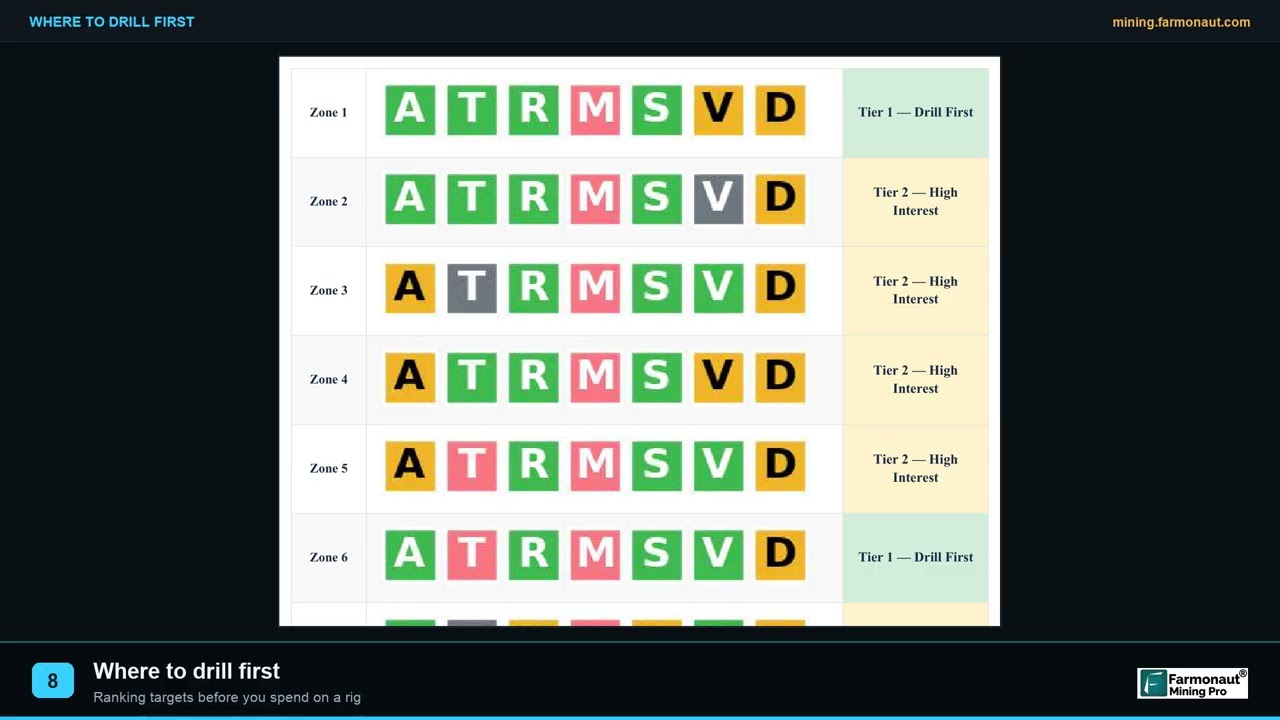
▶ How explorers decide which target gets the first hole (2 min 19 s). · 2:19
Where Canada’s drill rigs are working
Demand for diamond drilling companies Canada-wide follows exploration budgets, and those are rising. Natural Resources Canada’s Canadian Mineral Exploration Information Bulletin puts preliminary 2025 exploration and deposit appraisal spending at C$4.4 billion and 2026 spending intentions at C$5.3 billion, a 21% rise that would be a record if realized. It ties the increase largely to gold, at record prices. Juniors are expected to spend C$2.91 billion of that in 2026.
Chart
Planned exploration spending, top provinces and territories
Spending intentions for exploration and deposit appraisal, C$ million
For drilling metres, British Columbia publishes the most detailed public numbers. The BC Geological Survey’s yearly overviews, built from the BC Mineral and Coal Exploration Survey run with AME and EY, give a province-wide drilling total. It fell from 1,149,550 m in 2022 to 747,529 m in 2023 and 631,726 m in 2024 (Information Circular 2025-01), then jumped to 933,640 m in 2025 (Paper 2026-02).
Chart
Exploration drilling in British Columbia by year
Total metres drilled province-wide, all commodities, thousand metres
The regional split shows where the rigs actually went. The Northwest, home of the Golden Triangle, took 456,925 m in 2025 on C$436.1 million of spending. North Central and South Central roughly doubled their metres. The Southeast fell. If your project is in a busy district in a busy year, book one of the diamond drilling companies Canada-wide early, because the same crews are bidding on your neighbours’ programs.
Regional shifts inside one province
Chart
Where BC’s drill metres went: 2024 vs 2025
Exploration drilling by region, thousand metres; Northeast (under 4k m both years) omitted
The other provinces publish spending more readily than metres. For Ontario and Quebec, NRCan’s bulletin reports that Ontario led 2025 preliminary spending at C$1.08 billion and Quebec followed at C$955 million. On-mine-site exploration in Ontario also rose by C$63 million, work that uses the same crews juniors want.

▶ Copper and Gold in British Columbia|Copper and gold exploration in British Columbia, where most of Canada's published drill metres sit (3 min 11 s). · 3:11
Winter vs summer drilling, and helicopter-supported programs
Canadian drilling runs on two calendars. In much of the Shield, lakes, muskeg and swamps are easier to cross when they are frozen, so programs move in on winter roads and drill from ice or frozen ground. In the mountains of BC and Yukon, the season is the snow-free summer and the rig often arrives under a helicopter. Diamond drilling companies Canada-wide plan around both. Orbit Garant’s MD&A states that weather conditions often cause surface drilling programs to pause or to be planned around seasonal changes, and its fiscal 2026 third-quarter release said harsher winter weather in Canada cut productivity on all of its surface drilling projects.
Winter drilling: ice, frozen ground and what the load charts leave out
The standard tool for ice bearing capacity is Gold’s formula, P = A × h², where P is the allowable gross vehicle weight in kilograms, h is the thickness of good-quality ice in centimetres and A is a factor set by the operating level. The Government of the Northwest Territories’ Guidelines for Safe Ice Construction use A = 4 for pre-construction and routine construction, A = 5 or 6 for higher operating levels with extra controls, and give load charts for each. At A = 4, 40 cm of good ice carries 6,400 kg and 70 cm carries 19,600 kg.
Read the guide’s own caveat before you plan an ice pad. It says its bearing-capacity guidance is not appropriate for stationary loads on ice covers, naming drill pads and semi-permanent structures. A rig that sits in one place for days loads the ice differently from a truck crossing it. That is an engineering problem for a qualified ice specialist, not a calculator.
Calculator
How thick must lake ice be to move your drill rig?
Enter the gross weight of the heaviest moving load and the A factor for Gold’s formula.
- About: 28 inches
- Allowable load at that thickness: 20,164 kg
Gold’s formula P = A × h², with P in kg and h in cm of good-quality ice, as used in the Government of the Northwest Territories Guidelines for Safe Ice Construction (2015), which use A = 4 for routine construction. Result rounded up to the next whole centimetre. Moving loads only: the guide says its charts do not apply to stationary loads such as drill pads. White or slush ice, cracks, currents and pressure ridges reduce capacity. A planning check, not an ice-safety approval; follow your province’s occupational health and safety rules and a qualified ice engineer.
At the defaults, a 20-tonne load needs about 71 cm of good ice at the routine level. That is a lot of ice to build early in the season, and it explains why winter programs on lakes often start later than the calendar suggests, and why spring break-up ends them abruptly.
At A = 4, Gold’s formula needs about 71 cm of good ice to carry a 20-tonne moving load.
Helicopter-supported drilling
In steep or roadless ground the rig, fuel, water pump and core come and go by helicopter. The BC Geological Survey’s 2024 overview opens with a photo of helicopters completing a drill move at a target in northwest BC, which is the everyday picture in the Golden Triangle. When you ask diamond drilling companies Canada-wide for a heli-supported quote, the questions shift: how many slings does the rig break into, how heavy is the heaviest piece, how far is the staging area and how many flying days do you lose to cloud.
Weight also matters in Ontario for a different reason. A drill with an assembled weight under 150 kg is an exploration plan activity there, while a heavier mechanized drill is a permit activity, as shown on the province’s exploration permit form. Portable drills that stay under the line can make an early program simpler to approve, at the cost of depth and core size.
Provincial permits and notices before you drill
None of the diamond drilling companies Canada has can drill your claim until your own approvals are in place, and the contractor will ask to see them. The rules differ by province, change often and are summarised here only as general information, not legal advice; confirm with the regulator for your ground.
| Province | What triggers it | Approval or notice | Timing and consultation |
|---|---|---|---|
| Ontario | Mechanized drilling; over 150 kg assembled weight is a permit activity | Exploration plan (lighter work) or exploration permit; Notice of Operation of a Test Drill for diamond drilling | Plan effective 30 days after circulation; permit decision within 50 days of circulation; ministry circulates to Aboriginal communities; surface rights owners notified first |
| Quebec | Work with hydraulic machinery or explosives, including diamond, percussion, RC and sonic drilling | Authorization for impact exploration work (ATI) from the MRNF | Present the work to municipalities and Indigenous communities first and file a report of those exchanges with the request |
| British Columbia | Mechanical disturbance of the ground to explore | Mines Act permit (Notice of Work application) before starting work | Claims registered since March 25, 2025 go through the Mineral Claims Consultation Framework with First Nations |
| Manitoba | Work on Crown land on a claim or mineral exploration licence outside provincial parks | Work permit for mineral exploration (hand-tool prospecting is exempt) | Permits up to three years, renewable for two; Crown-Indigenous consultation assessed with the technical review |
Sources: Ontario exploration plan and permit guide and ERO permit form; Quebec ATI page; BC Mines Act s. 10 and BC Geological Survey Paper 2026-02; Manitoba Mine Manitoba permitting page. General information, not legal advice; confirm with each regulator.
Ontario
Ontario’s exploration plan and permit guide sets the clock. Give an estimated start date more than 35 days after you submit a plan, or more than 55 days after you apply for a permit. A plan takes effect 30 days after circulation and lasts two years. A permit decision comes within 50 days of circulation, after the application has sat on the Environmental Registry for 30 days. You must send the draft to surface rights owners before submitting, and for diamond drilling you also contact the labour ministry and file a Notice of Operation of a Test Drill.
Quebec
Quebec now treats drilling with hydraulic machinery as impact exploration work. The holder of the exclusive exploration right presents the planned work to the local municipality and to Indigenous communities, collects their questions and answers them, then sends the ATI request with a report of those exchanges. The request must describe each job, where it is, when it will happen, the machinery and the mitigation measures.
British Columbia and Manitoba
In BC, the Mines Act defines a mine to include a place where the ground is mechanically disturbed to explore, and section 10 requires a permit before starting any work in, on or about a mine. In Manitoba, the work permit page asks for map files, a work plan for multi-season projects and the number of years wanted, up to three.
Infographic
Before the first metre: the path to a drill hole
- 1Check the groundConfirm your claim or licence on MLAS, GESTIM, MTO or iMaQs.
- 2Talk to neighboursNotify surface owners; meet municipalities and Indigenous communities.
- 3File the permitOntario plan or permit, Quebec ATI, BC Notice of Work, Manitoba work permit.
- 4Hire and mobilizePick the contractor, rig weight and access by road, ice or helicopter.
- 5Drill, log, samplePhotograph, log and split core; insert blanks, standards and duplicates.
- 6Disclose properlyNI 43-101 s. 3.3: collar, azimuth, dip, widths and QA/QC.
What a Canadian drill program costs per metre
Public cost-per-metre numbers from diamond drilling companies Canada-wide are rare, because rates sit in private contracts. Filed technical reports are the best public source. The June 2026 NI 43-101 report on Maple Gold Mines’ Douay/Joutel project in northwestern Quebec, prepared by SLR Consulting, recommends a 50,000 m program and prices it line by line in its Table 26-1: C$263 per metre for drilling, C$46 for general and camp, C$38 for laboratory assays, a C$34.70 contingency and C$381.70 all-in. It also budgets engineering, core scanning, geophysics and environment without a per-metre figure.
Chart
One Quebec drill budget, broken down per metre
Douay/Joutel recommended 50,000 m program, C$ per metre drilled, by cost line
Treat that as one data point, not a benchmark. Depth, core size, access, season and how busy the district is all move the price. Orbit Garant’s fiscal 2025 results tied part of its improved margin to higher revenue per metre drilled in Canada, while its fiscal 2026 third quarter saw lower average revenue per metre on some specialized work because winter weather cut metres. Rates move with weather and demand, which is why quotes from several diamond drilling companies Canada-wide are worth the time.
Calculator
What will your drill program cost in C$?
Enter holes, hole length, per-metre costs in Canadian dollars and a contingency.
- Total metres: 5,000 m
- Drilling (C$): $1,315,000
- Camp and assays (C$): $420,000
- Contingency (C$): $173,500
- All-in per metre (C$): $381.70
Amounts in Canadian dollars (C$). Defaults come from the Douay/Joutel NI 43-101 technical report (SLR Consulting for Maple Gold Mines, June 2026, Table 26-1): drilling C$263 per metre, general and camp C$46 plus laboratory assays C$38 (C$84 together) and a 10% contingency, which reproduce its C$381.70 all-in figure. Excludes engineering, core scanning, geophysics, environment, helicopter time and permitting. One project’s budget, not a quote; get rates from diamond drilling companies Canada-wide for your ground.
At the defaults, 20 holes of 250 m come to 5,000 m and about C$1.9 million before helicopters, geophysics and permitting. Halve the hole count and you halve the bill, which is why the cheapest metre is the one you never drill on a weak target.
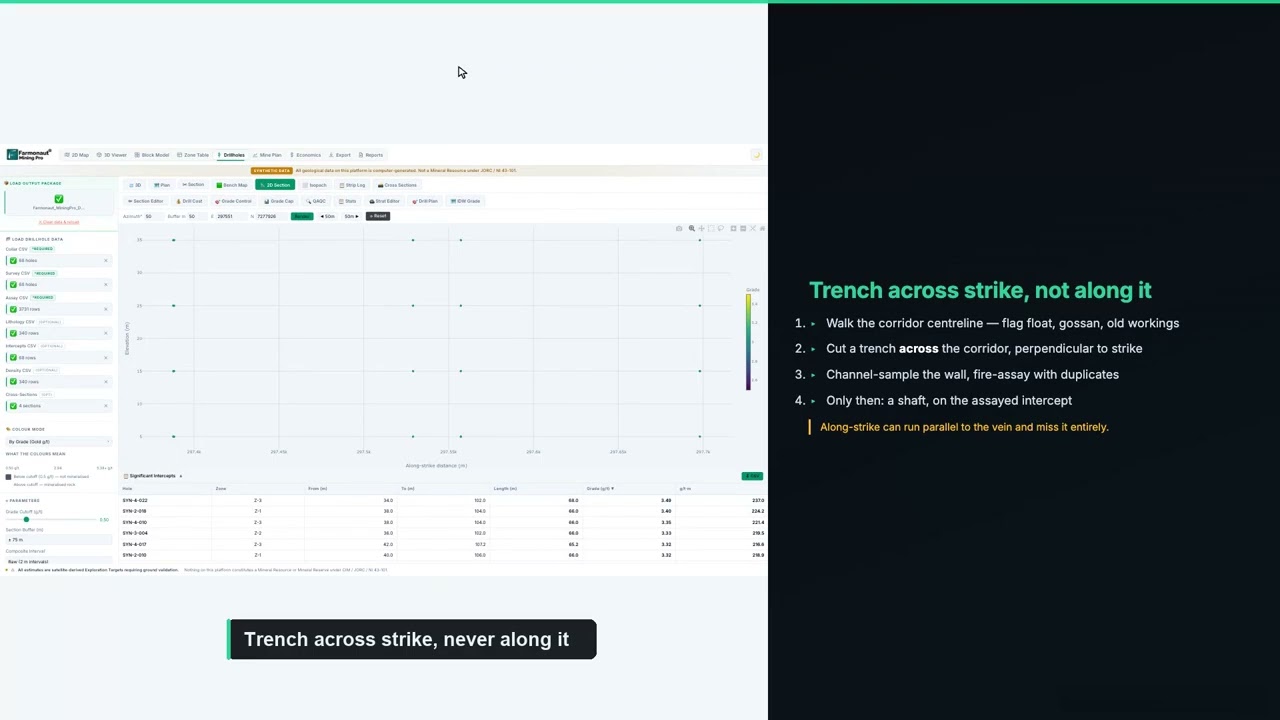
▶ Farmonaut Mining Pro Course Ch.11|Planning a drill program in detail: hole spacing, depth and order of holes (12 min 13 s). · 12:13
Drill core sampling, logging and disclosure
Once diamond drilling companies Canada-wide hand over the core boxes, the work shifts to the geologist. The CIM Mineral Exploration Best Practice Guidelines set the expected routine for drill core sampling: tag each core box inside and out, photograph the core before splitting, log lithology, alteration, mineralization, structure and recovery, and mark sample intervals in the boxes. Core intervals can follow geology or a fixed length; RC samples are usually fixed length. A representative fraction of the hole material should be retained, and where it is not, the reason recorded.
Quality control runs alongside. The same guidelines describe certified reference materials, blanks and field duplicates as part of a QA/QC program, and expect all analytical certificates and metadata to be kept. Infill drilling, which tightens hole spacing inside a known zone, leans heavily on this routine, because a resource estimate is only as good as the sampling behind it.
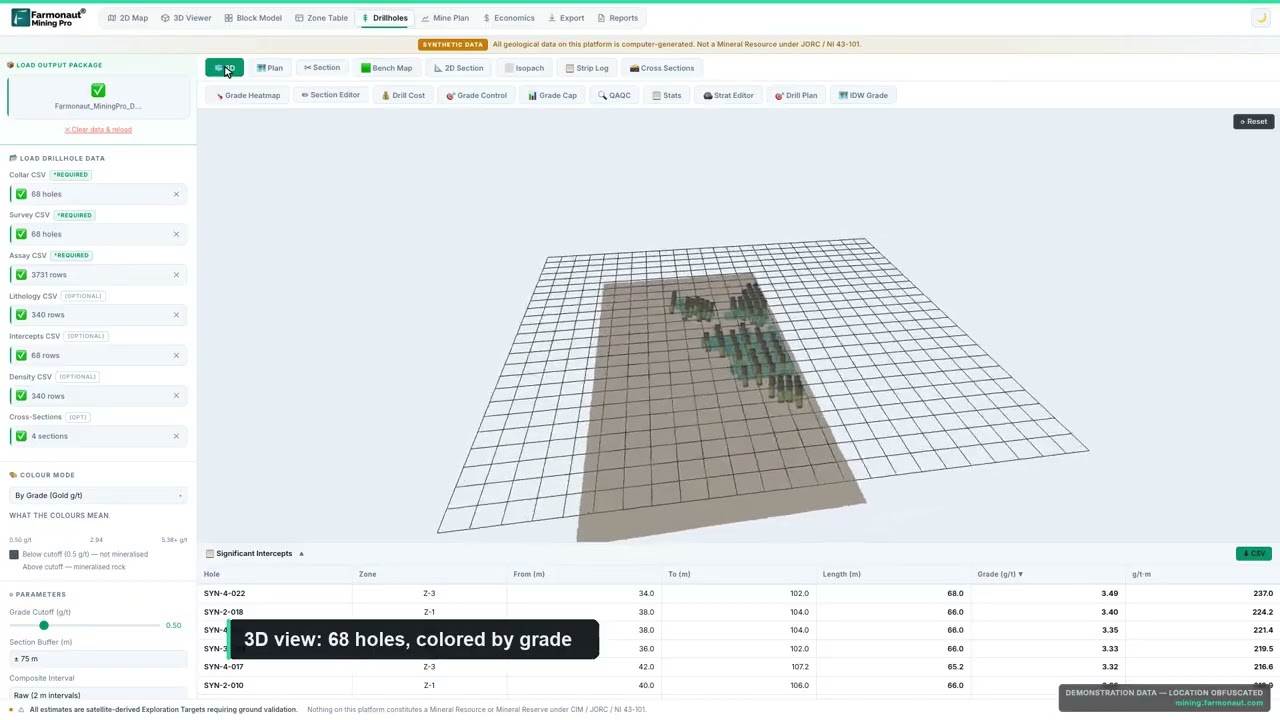
▶ Farmonaut Mining Pro Course Ch.10|What a drillhole database holds: collars, surveys, assays and lithology (14 min 58 s). · 14:58
Core libraries: the Manitoba example and Winnipeg
Provinces also keep core. Manitoba’s Geological Survey stores exploration core at facilities in The Pas, Thompson, Lynn Lake, Flin Flon and on Brady Road in Winnipeg, about 260,000 m of Precambrian core in all; the Bakers Narrows library closed after wildfire damage. Access is by request through the Midland Street office in Winnipeg, sampling needs permission and the province can ask for assay results and pulps. The province’s rules also require diamond drill core and chip containers to be labelled with aluminum tape showing the hole number and depth interval.
Reporting results under NI 43-101
For a TSX, TSXV or CSE issuer, drilling ends in a news release, and NI 43-101 section 3.3 governs what it must say. The Ontario Securities Commission’s mineral disclosure best practices presentation lists the drilling items: collar location, azimuth and dip of the holes, sample depths and relevant assays, true widths if known, and the QA/QC program, with lab information also required. Its list of common failings includes leaving out hole location, azimuth and dip, not giving true widths and omitting QA/QC details. Downhole surveys and sampling records make those numbers possible, so when you compare diamond drilling companies Canada-wide, compare their survey and reporting standards too. This is general information, not legal or securities advice; confirm with your advisers and the exchange.
Where satellite targeting fits before the rig arrives
Drilling is the most expensive step in early exploration, and every hole spent on a weak target is money not spent on a good one. That is where we come in. Farmonaut’s satellite-based mineral detection screens large areas with multispectral and hyperspectral data for alteration, structure and deposit-associated patterns before field crews deploy, which can cut early exploration timelines from months to days and lower early-exploration cost by up to 80 to 85%. The Premium+ report adds TargetMax™ drilling intelligence, with recommended drilling angles and 3D subsurface models of vein structures, to help rank targets before you call any of the diamond drilling companies Canada has.
Be clear about the limits. Satellite results are exploration targets ahead of any resource estimate; they do not replace drilling, a Qualified Person or NI 43-101 disclosure. In Canada, snow, forest and glacial cover hide much of the bedrock, so satellite work is strongest on structure, outcrop windows and access, and the drill still decides. To screen your ground, use Map Your Mining Site or get a quote; send coordinates or a KML/KMZ polygon and the target mineral, and delivery takes 5 to 20 business days depending on size and complexity. For the regional picture, see our overview of gold exploration in Canada and our guide to diamond drilling costs per metre.
Diamond drilling companies Canada: frequently asked questions
Which diamond drilling companies Canada juniors hire are the largest?
How much do diamond drilling companies Canada-wide charge per metre?
Do diamond drilling companies Canada-wide file the drilling permits?
What is RC drilling and when is it used instead of core?
Do I need a permit to drill on my claim in Ontario?
What is an ATI in Quebec?
How thick does lake ice need to be for a drill rig?
Is winter or summer better for drilling in Canada?
What does drill core sampling involve?
Where can I look at old drill core in Manitoba or Winnipeg?
What must a drill results news release include?
Can satellites replace drilling?
Authored by: Farmonaut Research & Content Team · Reviewed by: Farmonaut Mining & Mineral Exploration Team · Updated October 2026
General information about exploration drilling in Canada, not legal, tax, securities or investment advice. Farmonaut is a satellite data-analytics company, not a drilling contractor, licensing agent, broker or investment adviser, and does not rank or endorse contractors. Satellite results are exploration targets, not mineral resources or reserves. Confirm permit rules with the Ontario, Quebec, British Columbia or Manitoba regulator, and disclosure rules with your advisers and the exchange.
Farmonaut mineral detection
Map your mining site from space
Send your claim or licence boundary as KML, KMZ or a polygon. Farmonaut returns ranked satellite exploration targets for it, usually in 5 to 20 business days.

Keep reading
Sources
- Natural Resources Canada, Canadian Mineral Exploration Information Bulletin (2026): natural-resources.canada.ca
- BC Geological Survey, Mining and Exploration in British Columbia, 2025, Paper 2026-02 (2026): cmscontent.nrs.gov.bc.ca
- BC Geological Survey, Provincial Overview of Exploration and Mining in BC, 2024, Information Circular 2025-01 (2025): cmscontent.nrs.gov.bc.ca
- Government of Ontario, Exploration plan submission and permit application guide: ontario.ca
- Environmental Registry of Ontario, exploration permit and application form PR-25-000212 (2025): ero.ontario.ca
- Gouvernement du Québec, Autorisation pour réaliser des travaux d'exploration à impacts (2026): quebec.ca
- Province of British Columbia, Mines Act, RSBC 1996 c. 293, section 10: bclaws.gov.bc.ca
- Government of Manitoba, Mine Manitoba: work permit for mineral exploration: gov.mb.ca
- Manitoba Geological Survey, Manitoba drillcore libraries: gov.mb.ca
- Government of the Northwest Territories, Department of Transportation, Guidelines for Safe Ice Construction (2015): reviewboard.ca
- CIM, Mineral Exploration Best Practice Guidelines (2018): mrmr.cim.org
- Ontario Securities Commission, Mineral disclosure best practices presentation (2015): osc.ca
- SLR Consulting for Maple Gold Mines, Douay/Joutel NI 43-101 Technical Report (June 2026): maplegoldmines.com
- Orbit Garant Drilling, Fiscal 2025 MD&A (September 2025): orbitgarant.com
- Orbit Garant Drilling, Fiscal 2026 third-quarter results (May 2026): newswire.ca
- Major Drilling Group International, About us and history: majordrilling.com
- Canadian Diamond Drilling Association, cdda.ca: cdda.ca
- Canadore College ICAMP, Common Core Surface Diamond Driller training: canadorecollege.ca
Discussion
Questions, corrections or field experience? Share them below. First-time comments are reviewed before they appear, and your email is never published.
No comments yet. Be the first to add a question or your experience.

 VRV Global Pte Ltd
 Omsri International FZE
 G.I.T.T.
 Jaunita Erss Ltd
 Almosi SARL
 SRK Consulting
 Berks Gold Limited
 Mwerezi Minerals Company Limited
 Mining SARL
 SenGold Invest SAS
 Sean Mining Limited
 NTS Group (Pty) Ltd
 Mine4Africa
 Lithspo Minerals Limited
 Tintina Mining Group
