

Mining capital markets · Canada
Vancouver Mining Companies vs Toronto, by the Numbers
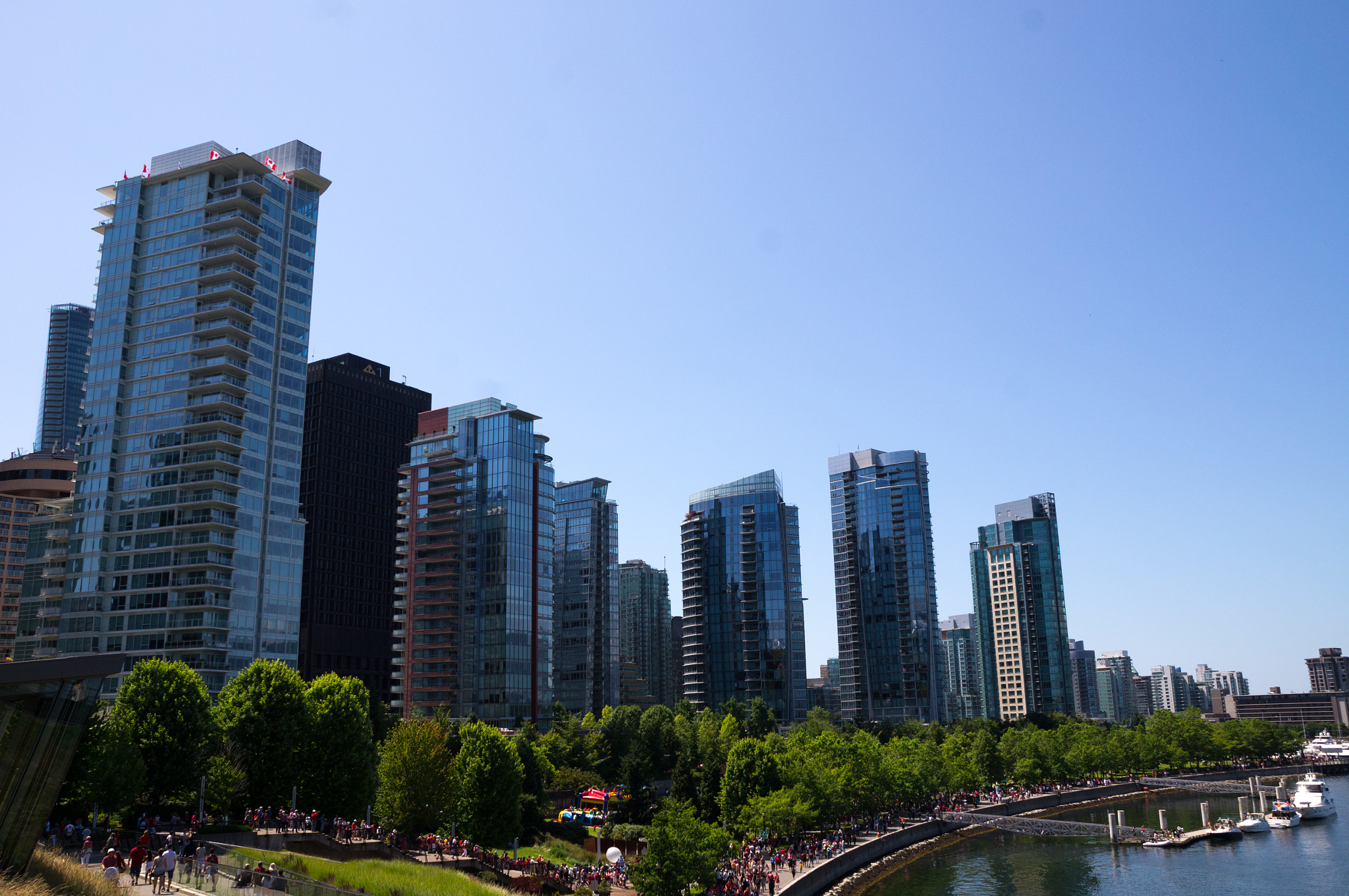
Vancouver is where most Canadian-listed mining companies keep their head office (644 of the 1,075 TSX and TSXV mining issuers in August 2026 list British Columbia), while Toronto-based issuers are fewer but larger, hold more of the market value and host PDAC, so explorers tend to base in Vancouver and raise in both cities.
Key takeaways
- Of 1,075 mining issuers on TSX and TSXV at 31 August 2026, 644 (60%) list a British Columbia head office and 201 (19%) list Ontario.
- Ontario-based mining issuers carry C$557.3 billion of market capitalization against C$491.7 billion for BC-based ones.
- On TSXV, 576 mining issuers are BC-based and 146 Ontario-based; the median BC-based TSXV miner was worth about C$16.3 million.
- Mining raised C$11.4 billion of equity on the two exchanges from January to August 2026, C$6.6 billion of it on TSXV.
- AME Roundup runs in Vancouver in late January and PDAC in Toronto in early March.
In this article
- Vancouver mining companies by the numbers: who is based where
- Why so many Vancouver mining companies keep their head office there
- Toronto's weight vs Vancouver mining companies: fewer issuers, more value
- Where the money is raised: venture board vs senior board
- Listing paths: TSXV first, then the senior board
- Roundup and PDAC: the calendar that links the two cities
- Exploration spending: where the field money goes
- How satellite targeting fits a junior's raise-and-spend cycle
- Frequently asked questions about Vancouver mining companies
Ask where Canada’s junior miners live and the honest answer is a spreadsheet. We downloaded TMX Group’s list of every mining issuer on Toronto Stock Exchange and TSX Venture Exchange as of 31 August 2026 and counted head-office locations. Vancouver mining companies, or more precisely issuers that list British Columbia as their head office, make up 60% of the file. Toronto and the rest of Ontario account for 19%, yet those companies hold more of the market value. This page sets out what the numbers say about where explorers base, where they list and where the money is raised, without the folklore.
A note on method before the numbers. The TMX file records each issuer’s head-office province or region, not its city. When we say “BC-based” we mean the issuer told the exchange its head office is in British Columbia. The BC Geological Survey’s own figure for the city is that more than 1,000 exploration and mining companies are headquartered in Vancouver, a count that also includes unlisted and privately held firms. We report totals by province and exchange only. No company is named, ranked or singled out.
If you are new to the disclosure side of a listing, our explainer on NI 43-101 and resource estimation covers the technical-report rules that apply in both cities, and the overview of gold exploration across Canada covers the ground itself.
More than 1000 exploration and mining companies are headquartered in Vancouver.” (BC Geological Survey, Paper 2026-02)
Vancouver mining companies by the numbers: who is based where
Start with the count. The TMX mining list for 31 August 2026 holds 1,075 issuers: 890 on TSX Venture Exchange and 185 on Toronto Stock Exchange, matching the totals in the TMX MiG Report for August 2026. We grouped them by the “HQ Location” field. British Columbia comes first with 644 issuers. Ontario is second with 201, Quebec third with 56, then Alberta with 37 and the United States with 35.
That makes Vancouver mining companies the single largest group on Canada’s two main boards by a wide margin. Even if every Ontario, Quebec and Alberta issuer were added together, the total (294) would be under half the British Columbia figure. Foreign head offices are a small slice: Australia, New Zealand and Papua New Guinea together account for 21 issuers, Latin America 20 and the UK and Europe 13.
Chart
Where TSX and TSXV mining issuers are based
Listed mining issuers by head-office location, 31 August 2026 (top 8 of 1,075)
For Vancouver mining companies the skew is a venture-board story. On TSXV, 576 mining issuers are BC-based against 146 in Ontario, close to four to one. On the senior board the gap nearly closes: 68 BC-based mining issuers on TSX against 55 in Ontario. In other words, the Vancouver head office is typical of the early-stage explorer, and the senior producers are spread more evenly between the two provinces, with a few large ones elsewhere.
The wider exchange data shows the same pattern for all sectors, not just mining. TMX’s August 2026 report counts 928 listed issuers with a British Columbia head office, 793 of them on TSXV. Ontario has 2,046 issuers in total, but 1,738 of those are on TSX, a figure that includes exchange-traded products managed from Toronto. For mining specifically, the venture board is where Vancouver dominates.

▶ Video: how satellite and soil data are being used on copper and gold ground in British Columbia, the province most Vancouver mining companies know best. · 3:11
Why so many Vancouver mining companies keep their head office there
We cannot measure motives from an exchange file, so this section sticks to what the official sources document. Four facts about the setting Vancouver mining companies work in stand out, and each is checkable.
- ✔ The venture exchange has western roots. The Courthouse Libraries BC history of the Canadian Venture Exchange records that the Vancouver and Alberta stock exchanges merged to form CDNX under a 1999 restructuring agreement, and that CDNX was later renamed TSX Venture Exchange.
- 📊 The province spends heavily on exploration. BC’s Geological Survey puts 2025 exploration spending at C$750.9 million, up C$198.8 million from C$552.1 million in 2024 and above the previous record of C$740.4 million set in 2022.
- The industry association is there. The Association for Mineral Exploration (AME) lists its office at 889 West Pender Street in Vancouver and runs the Roundup conference in the city each January.
- Provincial geologists are there too. The same BCGS paper directs companies that want to profile projects to the Mineral Development Office in Vancouver.
The BC paper adds context for the copper weighting we see in the data. It describes British Columbia as Canada’s largest producer of copper and metallurgical coal and its only producer of molybdenum. In our count, 219 of the 644 BC-based mining issuers flag copper as a commodity, against 67 of the 201 Ontario-based issuers. Gold remains the most common flag in both groups: 405 BC-based issuers and 118 Ontario-based issuers list it.
| Mining issuers, 31 Aug 2026 | BC head office | Ontario head office |
|---|---|---|
| On TSXV | 576 | 146 |
| On TSX | 68 | 55 |
| Median market cap, TSXV issuers | about C$16.3 million | about C$23.0 million |
| Share of TSXV issuers under C$10 million | 38.5% | 29.5% |
| Median market cap, TSX issuers | about C$1.28 billion | about C$1.03 billion |
| Flag gold as a commodity | 405 | 118 |
| Flag copper as a commodity | 219 | 67 |
| Report properties outside Canada | 372 | 107 |
Farmonaut analysis of the TMX TSX and TSXV listed mining issuers list (31 August 2026). Aggregates only. Commodity and property flags are as reported in the file; one issuer can carry several.
Two readings of the table are worth stating plainly. First, the typical venture issuer among Vancouver mining companies is small: more than a third were valued under C$10 million on 31 August 2026. Second, the BC-based companies that have reached TSX are not smaller than their Ontario peers; their median was higher. The size gap belongs to the venture tier, where Vancouver mining companies are both more numerous and, on average, earlier in their life.
Toronto’s weight vs Vancouver mining companies: fewer issuers, more value
Toronto’s case rests on value and on the senior board. Add up the market capitalization in the TMX file and the 201 Ontario-based mining issuers come to C$557.3 billion, about 41% of the C$1,362.8 billion total for all mining issuers. The 644 Vancouver mining companies in the file (BC-based issuers) come to C$491.7 billion, about 36%. Saskatchewan, with only nine mining issuers, carries C$109.7 billion because a handful of large producers are based there.
Chart
Market value of mining issuers by head office
Combined TSX and TSXV mining market capitalization, C$ billion, 31 August 2026
Trading follows value, and here Vancouver mining companies trail. The TMX file’s year-to-date value traded, summed by head office, is about C$250.8 billion for Ontario-based mining issuers and C$197.9 billion for BC-based ones, January to August 2026. The Ontario government’s 2026 mineral exploration factsheet goes further, calling Toronto “the mining finance capital of the world” and stating that TSX and TSXV list more mining companies than any other exchange. That is the province’s description of itself; the federal numbers below are the more neutral benchmark.
Natural Resources Canada’s key facts on the mineral sector (February 2026), citing TMX Group, say TSX and TSXV were home to 42% of the world’s public mining and exploration companies and raised 46% of the world’s mining equity capital in 2024, about C$10.4 billion. Both exchanges are operated from Toronto, which is why the “base in Vancouver, list in Toronto” shorthand is partly an artefact of geography: every listed issuer, wherever its office, trades on a Toronto-run exchange.
TSX and TSXV raised 46% of the world’s mining equity capital in 2024. (Natural Resources Canada, February 2026)
Ontario also does more exploration than British Columbia on the federal measure. The province reports 2025 exploration spending of C$1,080 million, with junior companies spending C$328 million and gold taking C$807 million, or 75%. It also counted more than 379,000 active mining claims at 31 December 2025. So Toronto is not only a finance centre; it sits in a province with a large exploration program of its own.

▶ Documentary (about 11 minutes): the global race for gold, the commodity that 523 of the BC- and Ontario-based mining issuers in the TMX file list. · 10:44
Where the money is raised: venture board vs senior board
“Base in Vancouver, raise in Toronto” is a common line, but the exchange data does not record where investors sit, only which board the money was raised on. What it does show is that the venture board does most of the mining fundraising by value. TMX’s August 2026 MiG Report puts mining equity capital raised on both exchanges at C$11,375.6 million from January to August 2026. Of that, C$6,559.5 million was raised on TSXV, C$5,438.0 million of it through private placements, and C$4,816.1 million on TSX.
For a full year, the December 2025 MiG Report shows mining raised C$15,979.3 million across both exchanges in 2025: C$8,128.6 million on TSXV and C$7,850.7 million on TSX. With 576 of the 890 TSXV mining issuers based in British Columbia, Vancouver mining companies are, by count, the main users of that venture-board capital. We cannot split the dollars by head office, because the MiG Report does not publish financings by issuer province.
Deal size separates the boards. Across all sectors, the August 2026 report gives an average financing of C$48.6 million on TSX against C$7.7 million on TSXV for the year to date. For an explorer, that gap is the practical meaning of “Howe Street versus Bay Street”: a venture issuer typically funds the next season with a placement in the single-digit millions, while a senior issuer can raise for construction in one offering.
Flow-through shares sit inside many of those placements. Natural Resources Canada’s April 2026 exploration bulletin notes that junior companies usually have no operating revenue and rely heavily on equity financing, and it describes the federal 15% Mineral Exploration Tax Credit and the 30% Critical Mineral Exploration Tax Credit that sit on top of flow-through shares. The provinces add their own credits, and this is where the home provinces of Vancouver mining companies and Toronto issuers differ most.
BC and Ontario flow-through credits compared
British Columbia’s Income Tax Act, section 4.721, provides a mining flow-through share tax credit of 20% of an individual’s BC flow-through mining expenditure. Ontario’s focused flow-through share tax credit is 5% of Ontario exploration expenses renounced to an individual who lives in Ontario at year end. Ontario’s own worked example shows how the credits stack: on C$1,000, the Ontario credit is C$50 and the federal credit is C$142.50, which is 15% of C$950 after the provincial credit is deducted.
Calculator
What tax credits does a flow-through subscription earn in BC vs Ontario?
Enter the subscription and the credit rates that apply. Amounts in Canadian dollars (C$).
- Provincial credit (C$): $2,000
- Federal credit (C$): $1,200
- Credits as share of subscription: 32.0 %
Example values only, in Canadian dollars (C$). Provincial rate: BC 20% of BC flow-through mining expenditure (BC Income Tax Act, s. 4.721), Ontario 5% (ontario.ca focused flow-through share tax credit), 0 elsewhere. Federal: METC 15% or CMETC 30% (NRCan exploration bulletin, April 2026; not both). The federal credit is applied after deducting the provincial credit, as in Ontario’s worked example; we assume the same for BC. Assumes all funds are spent on eligible exploration in that province and renounced to an individual resident there. Excludes the income deduction, capital gains and minimum tax. General information, not tax, legal or investment advice; confirm with your advisers and the exchange.
Run the defaults and the difference is plain: C$10,000 spent in British Columbia earns C$3,200 of credits for a BC resident, while the same amount spent in Ontario earns C$1,925 for an Ontario resident. Note what decides it: where the exploration money is spent and where the investor lives, not where the company’s head office is. Vancouver mining companies exploring in Ontario renounce Ontario expenses, not BC ones.

▶ Video: satellite and soil methods on Canadian critical-mineral ground, the commodity group that qualifies for the 30% federal CMETC. · 2:25
Listing paths: TSXV first, then the senior board
Most Vancouver mining companies enter the market on the venture board, and the rules there are the same whatever city the company calls home. TSXV Policy 2.1 (as at 31 March 2026) sets the Tier 2 mining bar: a significant interest in a qualifying property, at least C$100,000 of approved exploration spending in the past 36 months, a first-phase work program of at least C$200,000 recommended in an NI 43-101 geological report, working capital for 12 months plus C$100,000 unallocated, and a public float of at least 500,000 shares held by at least 200 public shareholders. Tier 1 asks for C$2,000,000 of net tangible assets and a program of at least C$500,000.
Moving up is a defined step, not a relocation. TSX’s graduation page says the C$10,000 TSX listing application fee is waived for eligible TSXV issuers and that sponsorship may be waived for qualified ones. In the TMX mining file, 46 of the 68 BC-based issuers on TSX are flagged as TSXV graduates, as are 28 of the 55 Ontario-based ones. That is direct evidence that Vancouver mining companies can reach the senior board without a move to Toronto.
Infographic
From head office to the senior board
- 1BaseHead office, team and technical work.
- 2ListTSXV Tier 2 or CSE, with an NI 43-101 report.
- 3RaisePrivate placements, often with flow-through shares.
- 4PitchAME Roundup in January, PDAC in March.
- 5GraduateMove up to TSX when eligible.
New listings keep the pipeline of Vancouver mining companies and their Toronto peers full. TMX counts 59 new mining listings on the two exchanges from January to August 2026, more than any operating sector in its new-listings chart. The report does not break new listings out by head-office province, so we do not claim a city split for them.

▶ Video: hyperspectral, LiDAR and DCIP methods on a British Columbia gold target, the kind of early work a Tier 2 work program pays for. · 2:47
Roundup and PDAC: the calendar that links the two cities
The two big events bracket the first quarter, and between them they put Vancouver mining companies and Toronto financiers in the same rooms twice before the field season. Dates below are the organisers’ current published dates; check the organiser’s site before booking.
- 📊 AME Roundup, Vancouver. The Roundup FAQ lists the next edition for Monday 25 to Thursday 28 January 2027 at the Vancouver Convention Centre East Building, Under the Sails at Canada Place, in person. AME reports that more than 7,500 people attended in 2026.
- 📊 PDAC Convention, Toronto. PDAC’s attendee information page lists 7 to 10 March 2027 at the Metro Toronto Convention Centre, with the Fairmont Royal York as a second venue. PDAC’s 2026 convention statistics record 32,155 attendees, 33.4% of them international, from 141 countries, including 3,431 self-identified investors.
Scale differs by roughly four to one on those published figures. For Vancouver mining companies, Roundup is the home show and PDAC the trip east. Roundup is run by the exploration association headquartered in Vancouver, and its programme leans toward geoscience and the BC and Yukon field community. PDAC is the larger international convention, and its investor count alone is almost half the size of Roundup’s total attendance.
Exploration spending: where the field money goes
Head offices and capital markets are one picture; the field budget that Vancouver mining companies and their Ontario peers spend is another. NRCan’s April 2026 exploration bulletin puts Canada-wide exploration and deposit appraisal spending at C$4.2 billion in 2024, C$4.4 billion in 2025 (preliminary) and C$5.3 billion in 2026 intentions. By province, Ontario spent C$1.09 billion in 2024, Quebec C$890 million and British Columbia C$747 million. For 2026, companies’ intentions are C$999 million for Ontario, C$1.16 billion for Quebec and C$1.03 billion for British Columbia.
Chart
Exploration spending: 2024 actual vs 2026 intentions
Exploration and deposit appraisal spending, C$ million, by province
Different surveys give different BC numbers, so pick one basis and stay with it. NRCan’s federal survey gives C$747 million for BC in 2024. The provincial survey run jointly by the BC Ministry of Mining and Critical Minerals, AME and EY, reported in BCGS Paper 2026-02, gives C$552.1 million for 2024 and C$750.9 million for 2025, with 933,640 metres of exploration drilling in 2025. The two use different scopes, so do not mix them in one chart or one sentence of investor material.
NRCan also notes that junior companies accounted for roughly half of exploration and deposit appraisal spending in 2024, at C$2.11 billion, rising to C$2.27 billion in 2025 (preliminary) and C$2.91 billion in 2026 intentions. That is the money most Vancouver mining companies raise on TSXV each year and spend in the field.

▶ Video: soil-based targeting for rare earths in Manitoba, an example of low-disturbance early work juniors fund before drilling. · 2:38
What this means for Vancouver mining companies and their Toronto investors
Put the sources together and a few practical points follow, without stretching the data.
- ✔ The head office is a weak signal of where the ground is. Most BC-based mining issuers report foreign properties. Investors should read the property list, not the address.
- ✔ Venture capital is placement capital. About 83% of TSXV mining equity this year came through private placements, and average venture deals are a fraction of TSX ones.
- Province of spend drives flow-through value. BC’s 20% credit and Ontario’s 5% credit attach to where the exploration money goes and where the investor lives.
- Graduation does not require a move. BC-based TSX issuers in the file include 46 TSXV graduates.
- The two conferences set the deadlines. Late January in Vancouver and early March in Toronto are when updated maps, results and data rooms are most visible.
One pressure is common to Vancouver mining companies and Toronto juniors alike: early-stage explorers must show progress on small budgets between raises. With the median BC-based TSXV miner valued around C$16 million in August 2026, a C$200,000 Tier 2 work program is a meaningful share of what the market will fund. Ranking ground before it is drilled is the step where cost per useful target can fall most.
How satellite targeting fits a junior’s raise-and-spend cycle
Farmonaut’s satellite-based mineral detection analyses multispectral and hyperspectral imagery to flag alteration zones, structures and spectral patterns associated with mineralization across a claim block. You send the area as coordinates, KML/KMZ or a polygon, plus the target mineral; we return a report with high-potential zones, prospectivity heatmaps and georeferenced GIS files in 5 to 20 business days, depending on size and mineral complexity.
For Vancouver mining companies and Toronto explorers the use is narrow and specific: deciding which parts of a large package deserve the next field crew, and showing investors why. Farmonaut’s work to date covers more than 100,000 hectares, 20+ mineral types and 25+ countries, and early-stage screening can move timelines from months to days and cut early-exploration cost by up to 80 to 85%. The Premium+ report adds TargetMax™ drilling intelligence: drill-angle recommendations and 3D subsurface models. Ask for the 3D mineral prospectivity mapping overview if you want to see the format.
What the satellite cannot do matters just as much in Canada. Forest, snow, glacial till and lake cover hide bedrock across much of both provinces, so results are exploration targets that need field checks, sampling and drilling before any resource estimate. Farmonaut is not a broker, investment adviser or listing agent, and its results are not NI 43-101 technical reports.
Frequently asked questions about Vancouver mining companies
How many mining companies are based in Vancouver?
The BC Geological Survey (Paper 2026-02) says more than 1,000 exploration and mining companies are headquartered in Vancouver, listed or not. Among TSX and TSXV mining issuers on 31 August 2026, 644 of 1,075 listed a British Columbia head office.
Why are so many junior mining companies in Vancouver?
Official sources document the context: TSX Venture Exchange grew out of the 1999 merger of the Vancouver and Alberta exchanges, BC spent a record C$750.9 million on exploration in 2025, and AME and the province’s Mineral Development Office are in the city. They do not rank motives, and neither do we.
Are Toronto mining companies bigger than Vancouver mining companies?
As a group, yes by value: Ontario-based mining issuers totalled C$557.3 billion of market cap against C$491.7 billion for BC-based ones on 31 August 2026. On TSX alone, though, the median BC-based issuer was larger.
How much do mining companies raise on TSX and TSXV?
TMX reports C$15.98 billion of mining equity raised in 2025 and C$11.38 billion from January to August 2026. On TSXV, about 83% of the 2026 mining total came through private placements.
What share of the world’s mining companies list in Canada?
Natural Resources Canada, citing TMX Group, says TSX and TSXV were home to 42% of the world’s public mining and exploration companies and raised 46% of global mining equity in 2024.
When is AME Roundup?
The organiser lists 25 to 28 January 2027 at the Vancouver Convention Centre East Building. Check the organiser’s site for changes.
When is PDAC and how many people attend?
PDAC lists 7 to 10 March 2027 at the Metro Toronto Convention Centre. Its 2026 statistics record 32,155 attendees from 141 countries. Check the organiser’s site before booking.
Does a Vancouver head office qualify investors for the BC flow-through credit?
No. BC’s 20% credit applies to BC flow-through mining expenditure for eligible individuals; it depends on where the exploration is spent, not where the company is based. General information, not tax advice.
Can a Vancouver-based junior graduate to TSX without moving to Toronto?
Yes. Graduation is an exchange process, not a relocation. In the August 2026 TMX file, 46 of the 68 BC-based mining issuers on TSX were flagged as TSXV graduates.
What does a TSXV Tier 2 mining listing require?
Under Policy 2.1 (March 2026): a significant interest in a qualifying property, C$100,000 of approved spending in 36 months, a C$200,000 first-phase program in an NI 43-101 report, 12 months of working capital plus C$100,000, and 200 public shareholders. Confirm with the exchange.
General information, not tax, legal or investment advice; confirm with your advisers and the exchange. Market data are a 31 August 2026 snapshot and change daily. Farmonaut is not a broker, listing agent or investment adviser. Farmonaut results are exploration targets ahead of any resource estimate.
Farmonaut mineral detection
Rank your ground before Roundup or PDAC
Send your claim outlines as KML, KMZ or a polygon. Farmonaut returns ranked satellite exploration targets with GIS files, usually in 5 to 20 business days.

Keep reading
Sources
- TMX Group, TSX and TSXV listed mining issuers (31 August 2026): tsx.com
- TMX Group, The MiG Report, August 2026: tsx.com
- TMX Group, The MiG Report, December 2025: tsx.com
- BC Geological Survey, Mining and Exploration in British Columbia, 2025 (Paper 2026-02, 2026): cmscontent.nrs.gov.bc.ca
- Government of Ontario, Mineral exploration and production values (2026): ontario.ca
- Ontario Ministry of Energy and Mines, Mineral exploration in Ontario factsheet (2026): ontario.ca
- Natural Resources Canada, 10 key facts on Canada's mineral sector (2026): natural-resources.canada.ca
- Natural Resources Canada, Canadian Mineral Exploration Information Bulletin (2026): natural-resources.canada.ca
- AME, Roundup frequently asked questions (2027 edition): ameroundup.ca
- AME, Roundup organizing committee and office (2026): ame.ca
- PDAC, Convention statistics (2026): pdac.ca
- PDAC, Attendee information, 2027 dates and venue (2026): pdac.ca
- TSX Venture Exchange, Policy 2.1 Initial Listing Requirements (2026): tsx.com
- TSX, Graduation to Toronto Stock Exchange (2026): tsx.com
- BC Laws, Income Tax Act, s. 4.721 mining flow-through share tax credit (current): bclaws.gov.bc.ca
- Government of Ontario, Focused flow-through share tax credit (2026): ontario.ca
- Courthouse Libraries BC, Canadian Venture Exchange (CDNX) history: courthouselibrary.ca
Discussion
Questions, corrections or field experience? Share them below. First-time comments are reviewed before they appear, and your email is never published.
No comments yet. Be the first to add a question or your experience.

 G.I.T.T.
 Jaunita Erss Ltd
 Almosi SARL
 SRK Consulting
 Berks Gold Limited
 Mwerezi Minerals Company Limited
 Mining SARL
 SenGold Invest SAS
 Sean Mining Limited
 NTS Group (Pty) Ltd
 Mine4Africa
 Lithspo Minerals Limited
 Tintina Mining Group
 Dalgety Minerals Pty Ltd
 Vortex Minerals Pty Ltd
