

Mining disclosure · NI 43-101 and S-K 1300
NI 43-101 explained: the Qualified Person, CIM categories, the technical report and S-K 1300
NI 43-101 is the Canadian Securities Administrators’ rule that lets a company publish scientific or technical information about a material mineral project only if a Qualified Person prepared or approved it, only in CIM resource and reserve categories, and, for a first-time resource, only with a Form 43-101F1 technical report filed within 45 days.
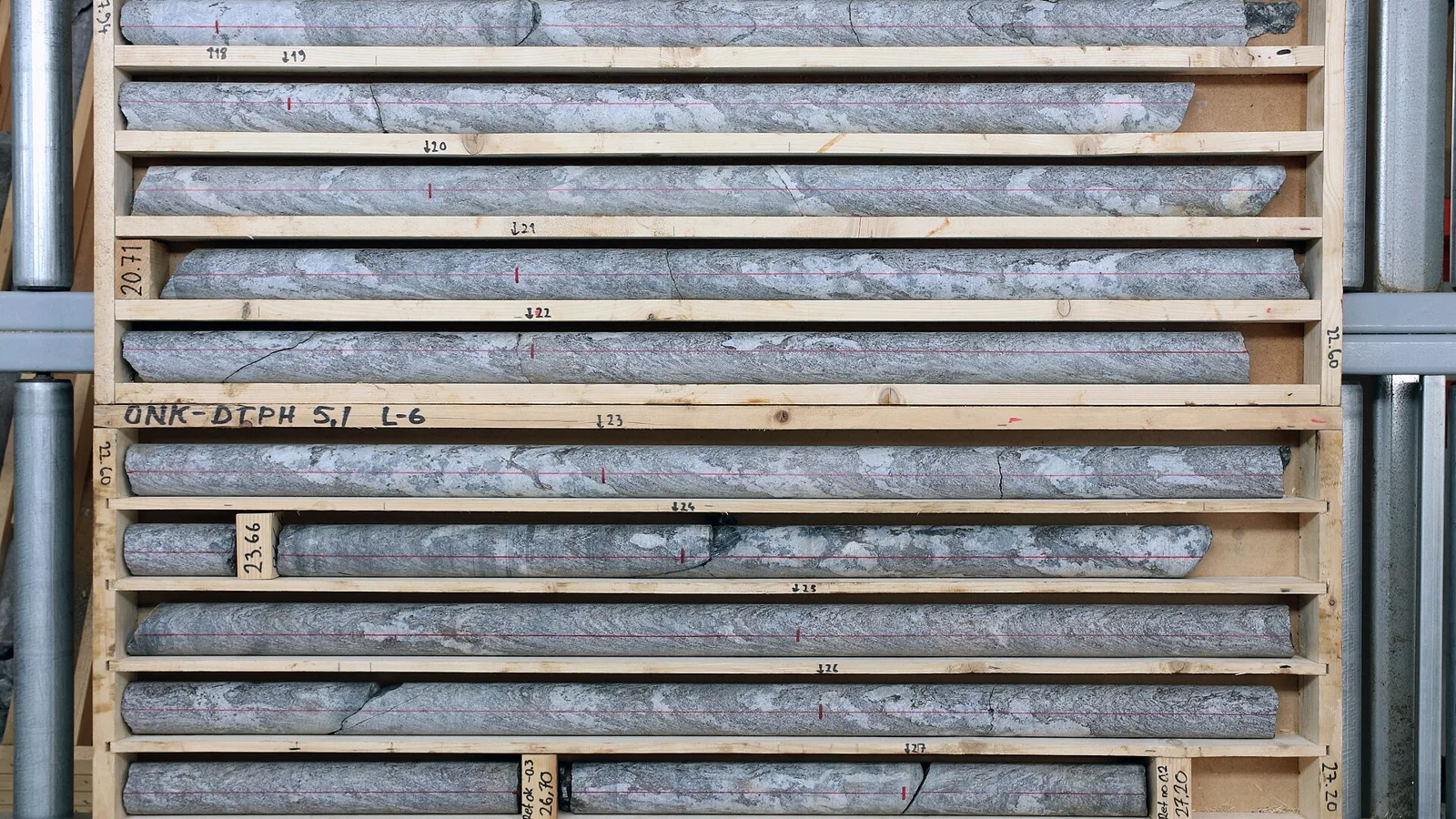
Key takeaways
- Every scientific or technical statement about a material mineral project, including on a website, must be prepared, supervised or approved by a Qualified Person (s. 2.1).
- Resources use only the CIM categories: Inferred, Indicated and Measured, reported separately, with Inferred never added to the others (s. 2.2).
- An exploration-stage report uses 19 of the 27 Form 43-101F1 items; items 15 to 22 apply only to advanced properties.
- A first-time resource, reserve or PEA in a news release needs its technical report filed within 45 days, usually by an independent QP.
- SEC registrants follow S-K 1300, which ties resources to an initial assessment; Canadian filers on Form 40-F under MJDS can keep using NI 43-101.
In this article
- What NI 43 101 covers, and who it binds
- The Qualified Person under NI 43 101
- CIM Definition Standards: inferred vs indicated resource, and measured
- What a junior can disclose under NI 43 101 at the exploration stage
- The NI 43 101 technical report: Form 43-101F1, item by item
- NI 43 101 vs S-K 1300 for juniors with US projects
- The proposed replacement of NI 43-101, and common reading mistakes
- Where satellite data fits before an NI 43 101 report
- Frequently asked questions about NI 43 101
If your company trades on the TSX, TSX Venture or CSE, NI 43 101 decides what you can say about your rocks, who has to sign it, and when the paperwork is due. National Instrument 43-101, Standards of Disclosure for Mineral Projects, applies to every news release, investor deck, website page and AIF in which a Canadian reporting issuer talks about a material mineral project, wherever in the world the project sits. “NI 43-101”, “NI 43 101”, “43-101” and “NI43101” all name the same rule.
This guide works from the instrument itself, as listed on the British Columbia Securities Commission’s NI 43-101 page, the CIM Definition Standards it incorporates, the SEC’s subpart 1300 of Regulation S-K, and the CSA’s June 2025 proposal to replace it. It is written for the people who live with the rule: CEOs, VPs Exploration, project geologists, IR teams and the consultants and investors who read their filings. For how an estimate is built, see our step-by-step guide to mineral resource estimation; for the Australian code, our JORC Code explainer.
Written disclosure” under NI 43-101 expressly includes websites, so an investor page counts as much as a news release.
What NI 43 101 covers, and who it binds
Start with the definition of disclosure, because it is wider than most people expect. Section 1.1 covers any oral statement or written disclosure made by or for an issuer that is intended to be, or is reasonably likely to be, made available to the public in a jurisdiction of Canada. A conference talk, a CEO’s post, a slide in a roadshow deck and a map on the company website are all inside it. That is why NI 43 101 compliance is a company-wide habit, not a job for the geology team alone.
Section 2.1 of NI 43 101 is the foundation of everything else. All disclosure of scientific or technical information about a mineral project on a property material to the issuer must be based on information prepared by or under the supervision of a Qualified Person, or be approved by one. The issuer and its directors still own the disclosure. The QP is the technical gatekeeper, and Part 3 adds that every written disclosure must name the QP and state their relationship to the issuer (s. 3.1).
The rule follows the issuer, not the rock. A TSXV-listed junior drilling in Nevada, Ghana or Peru is bound by NI 43 101 for everything it says in Canada about those projects. “Mineral project” itself is broad: any exploration, development or production activity, including a royalty interest, in diamonds, natural solid inorganic material or solid fossilized organic material such as metals, coal and industrial minerals. Oil and gas fall outside that definition.
What the rule does not do
- ✔ It does not tell you how to drill or assay. It regulates who signs, the words they use and what the disclosure must contain.
- It does not define resource categories itself. Sections 1.2 to 1.4 adopt the CIM Definition Standards for resources, reserves and studies, “as amended”.
- It does not demand an independent QP for every statement. Independence is required for specific technical reports, set out in section 5.3.
- It does not cover filings made only under non-securities law. A report filed with a mining ministry to meet a mining-law requirement is not “disclosure” just because it becomes public.
The Qualified Person under NI 43 101
Ask any securities lawyer which definition matters most in NI 43 101 and most will point here. A Qualified Person is an individual who meets five tests in section 1.1:
- is an engineer or geoscientist with a university degree, or equivalent accreditation, in geoscience or engineering relating to mineral exploration or mining;
- has at least five years of experience in mineral exploration, mine development or operation, or mineral project assessment, or a combination, relevant to that degree or area of practice;
- has experience relevant to the subject matter of the mineral project and the technical report;
- is in good standing with a professional association; and
- if the association is foreign, holds a designation that requires a position of responsibility and independent judgment, plus a favourable confidential peer evaluation or a recommendation by at least two peers and demonstrated prominence in the field.
The professional association test carries the weight. It must admit members on qualifications, experience and ethical fitness, require professional standards, encourage continuing development, and have and apply the power to suspend or expel a member wherever they practise. In Canada that usually means a provincial engineering or geoscience regulator. For foreign bodies, the CSA has published Staff Notice 43-308 on professional associations, last revised in 2013, which the Alberta Securities Commission’s instrument page still lists.
Under NI 43 101, relevant experience is not a box-ticking exercise. The CIM Definition Standards say a QP should be “clearly satisfied that they could face their peers” and demonstrate competence in the commodity, deposit type and situation. Their own example: for vein gold, experience in high-nugget vein deposits is relevant, while experience in massive base-metal deposits may not be. Team estimates are normal, and CIM recommends that each QP takes responsibility for the part they did.
Independence: when the QP must come from outside
Section 1.5 makes a QP independent if no circumstance, in the view of a reasonable person aware of all the facts, could interfere with their judgment. Section 5.3 then lists when every QP on a report must be independent at both the effective date and the filing date:
| Section | Situation | Independent QP needed? |
|---|---|---|
| 5.3(1)(a), 4.1 | First technical report on becoming a reporting issuer | Yes |
| 5.3(1)(b) | Report supporting a long form prospectus or a valuation | Yes |
| 5.3(1)(c)(i) | First-time disclosure of resources, reserves or PEA results | Yes, for the triggers listed |
| 5.3(1)(c)(ii) | A 100% or greater change in total resources or reserves | Yes, measured from the last independent report |
| 5.3(2), 5.3(3) | Producing issuer (C$30 million revenue last year and C$90 million over three) | Generally no, with conditions |
The site visit and the certificate
Section 6.2 requires at least one QP responsible for the report to complete a current personal inspection of the property before the issuer files it. There is one narrow exception: for an early-stage exploration property (no current resources or reserves and no drilling or trenching proposed), the visit can wait if seasonal weather blocks access, provided the report and the disclosure say so and give a timetable. The issuer must then complete the visit as soon as practical and refile.
Every report ends with a certificate for each QP (s. 8.1) and a signed consent (s. 8.3). The certificate states the QP’s qualifications and associations, the date and duration of the most recent site visit, the items they are responsible for, whether they are independent, and any prior involvement with the property.

▶ A southern BC exploration program built from soil sampling, IP and airborne surveys, the kind of work a QP later verifies. · 2:47
CIM Definition Standards: inferred vs indicated resource, and measured
NI 43-101 resource estimation uses only the categories in the CIM Definition Standards on Mineral Resources and Mineral Reserves, adopted by CIM Council in May 2014. A Mineral Resource is a concentration or occurrence of solid material of economic interest in such form, grade or quality and quantity that there are “reasonable prospects for eventual economic extraction”. The QP has to state the basis for that judgment, including the cut-off grade, recovery, commodity price, mining and processing method and costs assumed. For many gold deposits, CIM says “eventual” would normally mean perhaps 10 to 15 years, often less.
| CIM category | Geological evidence | What it can support | Converts to |
|---|---|---|---|
| Inferred Mineral Resource | Limited evidence and sampling; enough to imply, not verify, continuity | Only a PEA, with the cautionary language in s. 2.3(3); never PFS or FS economics | Nothing. It must not be converted to a reserve |
| Indicated Mineral Resource | Adequately detailed and reliable; enough to assume continuity between points | Mine planning and a Pre-Feasibility Study | Probable Mineral Reserve only |
| Measured Mineral Resource | Detailed and reliable; enough to confirm continuity between points | Detailed mine planning and final evaluation of viability | Proven or Probable Mineral Reserve |
The inferred vs indicated resource line is the one that moves money in any NI 43 101 report. Indicated material can feed a pre-feasibility study and, with the Modifying Factors applied, become a Probable reserve. Inferred material cannot. CIM says Inferred resources must not be included in the economic analysis, production schedules or mine life of publicly disclosed pre-feasibility or feasibility studies, though “it is reasonably expected” that most of it could be upgraded to Indicated with more drilling. A Mineral Reserve is the economically mineable part of a Measured or Indicated resource, demonstrated by at least a Pre-Feasibility Study, including dilution and losses.
CIM requires at least a Pre-Feasibility Study before any Mineral Resource can be converted to a Mineral Reserve.
Four rules for every resource number (s. 2.2)
Any disclosure of resources or reserves must use only the CIM categories; report each category separately and say how much of the reserves are included in the resources; never add Inferred to the other categories; and, if it states contained metal, also give the grade and quantity for each category. When the disclosure is written, section 3.4 adds the effective date of each estimate, the key assumptions, parameters and methods, any known legal, political, environmental or other risks that could affect development, and, if there is an economic analysis, an equally prominent statement that resources that are not reserves do not have demonstrated economic viability. Older reserve numbers often came from classical tonnage methods, covered in our guide to ore reserve estimation methods.
What section 2.3 forbids
Section 2.3 of NI 43 101 lists four kinds of number an issuer must not publish, and they are exactly the numbers a promoter most wants to show:
- Quantity, grade or metal content of a deposit that has not been categorized as a resource or reserve.
- An economic analysis that includes Inferred resources, unless it is a PEA that carries the prescribed cautions.
- The gross value of metal in a deposit, a sampled interval or a drill intersection.
- A metal-equivalent grade without the grade of each metal used to build it.
Section 2.3(4) adds a naming rule: an issuer must not call a study “pre-feasibility” or “feasibility” unless it meets CIM’s definition. How the three study levels differ is covered in our guide to scoping, pre-feasibility and feasibility studies.
Old numbers: historical estimates
Many properties arrive with estimates made by a previous owner, sometimes decades old and in other vocabulary. Section 2.4 lets an issuer mention one, in its original terms, only if it gives the source and date, comments on relevance and reliability, the key assumptions and methods where known, whether it uses non-CIM categories, any more recent data, the work needed to verify it, and an equally prominent statement that a QP has not done enough work to classify it as current and the issuer is not treating it as current. In practice a historical estimate is a lead for new drilling, not an asset to value.

▶ Soil geochemistry and satellite layers on BC copper-gold ground: the exploration information a QP has to summarize. · 3:11
What a junior can disclose under NI 43 101 at the exploration stage
Most TSXV and CSE issuers have no resource at all. They have claims, a geological idea, some samples and a drill plan. NI 43 101 still applies to every word, and Part 3 of NI 43 101 sets the bar for written disclosure of exploration information on a material property.
Under section 3.3(1), any written disclosure of exploration information must summarize the material results of surveys and investigations, the interpretation of that information, and the quality assurance program and quality control measures used while the work was done. Section 3.2 adds a statement on whether a QP has verified the data, how, any limits on that verification, and an explanation of any failure to verify.
Rules for drill and sample results
When a release carries sample, analytical or test results, section 3.3(2) requires, for those results:
- 📊 the location and type of the samples;
- the location, azimuth and dip of the drill holes, and the depth of the sample intervals;
- a summary of the relevant analytical values and widths and, as far as known, the true widths of the mineralized zone;
- the results of any significantly higher-grade intervals inside a lower-grade intersection;
- any drilling, sampling, recovery or other factors that could materially affect accuracy or reliability; and
- the type of analytical procedure, sample size, and the name and location of each laboratory, plus any relationship between the lab and the issuer.
Section 3.5 lets a release skip some of these details by referring to the title and date of a previously filed document that already complies. Most juniors use a standard paragraph for QA/QC and a link to the last technical report, and keep the hole-by-hole table in the release itself.
Exploration targets: the only potential size you may publish
Before a resource exists, the one door open is section 2.3(2). An issuer may disclose the potential quantity and grade of a target for further exploration, expressed as ranges, if it states with equal prominence that the figures are conceptual, that exploration has been insufficient to define a mineral resource, and that it is uncertain whether further work will define one, and if it states the basis for the ranges. The calculator below shows why ranges from a junior can look very wide.
Calculator
How wide is your exploration target range in ounces?
Enter the low and high ends of your tonnage and grade ranges to see the conceptual contained-ounce range.
- High case, troy ounces in situ: 192,904 oz
- High case as a multiple of the low case: 3.0 x
Example values only. Formula: troy ounces = tonnes x grade (g/t) / 31.1035, applied to the low ends together and the high ends together. Section 2.3(2) of NI 43-101 lets an issuer disclose potential quantity and grade only as ranges, with equally prominent statements that the target is conceptual, that exploration has been insufficient to define a mineral resource and that it is uncertain whether further exploration will define one, plus the basis for the ranges. There is no price input on purpose: gross metal value is banned by s. 2.3(1)(c). Whether to publish contained ounces at all is a question for your Qualified Person and counsel. Not a mineral resource. General information, not legal or investment advice.
At the default ranges of 2 to 4 million tonnes and 1.0 to 1.5 g/t, the low and high cases differ by a factor of three: about 64,300 to 192,900 ounces in situ. That spread is the honest answer at this stage, and the reason the rule bans single numbers. Notice what the calculator does not do: it has no price input, because the gross metal value of a target is banned outright.
Websites and decks deserve the same discipline as releases. Because written disclosure includes websites, a “resource potential” slide or an old historical estimate left on an investor page without the section 2.4 caveats is a disclosure problem, not a marketing one. For where exploration targets come from in the first place, see our mineral exploration guide and the overview of geophysical survey methods.
The NI 43 101 technical report: Form 43-101F1, item by item
Form 43-101F1 fixes the order of every 43 101 technical report, so a gold project in Nevada and a lithium project in Quebec read the same way. The form’s instruction (4) is the part juniors often miss: the QP must use the headings of Items 1 to 14 and 23 to 27 for every report, and the headings of Items 15 to 22 only for an advanced property. An advanced property is one with mineral reserves, or with resources whose potential viability is supported by a PEA, pre-feasibility or feasibility study. So an exploration-stage NI 43 101 report has 19 headings, not 27.
Chart
The 27 items of Form 43-101F1, grouped by purpose
Number of items in each group (item numbers in brackets); items 15 to 22 are required only for advanced properties
| Item | Heading in Form 43-101F1 | Required for |
|---|---|---|
| 1 to 3 | Summary; Introduction; Reliance on Other Experts | Every report |
| 4 to 5 | Property Description and Location; Accessibility, Climate, Local Resources, Infrastructure and Physiography | Every report |
| 6 to 8 | History; Geological Setting and Mineralization; Deposit Types | Every report |
| 9 to 10 | Exploration; Drilling | Every report |
| 11 to 12 | Sample Preparation, Analyses and Security; Data Verification | Every report |
| 13 to 14 | Mineral Processing and Metallurgical Testing; Mineral Resource Estimates | Every report |
| 15 to 18 | Mineral Reserve Estimates; Mining Methods; Recovery Methods; Project Infrastructure | Advanced properties |
| 19 to 22 | Market Studies and Contracts; Environmental Studies, Permitting and Social or Community Impact; Capital and Operating Costs; Economic Analysis | Advanced properties |
| 23 to 24 | Adjacent Properties; Other Relevant Data and Information | Every report |
| 25 to 27 | Interpretation and Conclusions; Recommendations; References | Every report |
Experienced readers turn to Items 11 and 12 first. They show which labs were used, what standards, blanks and duplicates went in, and whether the QP checked the database against original records. Item 14 must give the estimation method, the cut-off and the assumptions. Item 26 sets out the recommended work program with a cost breakdown for each phase, no more than two phases, each ending in a decision point, which is why financiers read it closely. Every NI 43 101 report also needs a title page, a dated signature page, a table of contents and legible, dated maps with a scale, a north arrow and a legend, including a location map and a geology compilation map.
Three more rules shape the document. The report carries an effective date: the date of the most recent scientific or technical information in it, often months before the filing date. Section 6.4 bars disclaimers by a QP of their own part of the report, outside the narrow reliance allowed by Item 3. And section 6.3 makes the issuer keep assay and analytical certificates, drill logs and other underlying information for 7 years.
When a 43 101 technical report must be filed
Section 4.1 of NI 43 101 requires a technical report for each material property when an issuer first becomes a reporting issuer in Canada. Section 4.2 then lists the documents that trigger a filing: a preliminary long form prospectus, an annual information form, a valuation, certain circulars and offering documents, and the one most juniors meet, paragraph 4.2(1)(j). That covers any other written disclosure, such as a news release, that reveals for the first time resources, reserves or PEA results that are a material change for the issuer, or a material change to them since the last report.
Chart
How long an issuer has to file the supporting technical report
Days from the disclosure (or from the date the property became material) to the latest filing date
For the 4.2(1)(j) trigger the report is due 45 days after the disclosure, or earlier: on the filing date if the same disclosure is in a preliminary short form prospectus, or 3 business days before a take-over bid expires if it is in a directors’ circular. If a property becomes material less than 30 days before the AIF deadline, the issuer has 45 days from that date. When the numbers were prepared and filed by another issuer that holds or held the property, the issuer can take up to 180 days, provided its release names that report, its date, the other issuer and the QP who reviewed it, and states there is no new material information.
Calculator
How many days are left to file your NI 43-101 technical report?
Enter the days since your first-time disclosure, and any earlier prospectus or circular date, to see the days left.
- Filing deadline, days after the disclosure: 45 days
- Days left on the 180-day route, s. 4.2(7): 170 days
Assumptions: section 4.2(5)(a) of NI 43-101 as in force from 30 June 2011: 45 days after the disclosure, or earlier if the same disclosure is in a preliminary short form prospectus (its filing date) or a directors’ circular (3 business days before the bid expires); enter 45 in the second field if neither applies. The 180-day line applies only when every condition in section 4.2(7) is met. Calendar days. A replacement instrument was proposed in June 2025 and is not in force. General information, not legal advice; confirm with your securities lawyer and the exchange.
At the defaults, ten days after a news release with no prospectus or circular involved, the issuer has 35 days left. Enter a short form prospectus due on day 20 and the deadline moves to day 20, with 10 days left. The calculator does not decide whether a disclosure is a “material change”; that call belongs to the issuer and its counsel.
Infographic
From drill hole to filed technical report: six steps
- 1Drill and assayA QA/QC program runs with the work and is summarized in every release (s. 3.3).
- 2QP verifies the dataData verification plus a current personal inspection of the property (s. 3.2, 6.2).
- 3Estimate in CIM termsInferred, Indicated and Measured, each reported separately (s. 2.2).
- 4Disclose with the factsQP name, effective date, key assumptions and risks (s. 3.1, 3.4).
- 5File within 45 daysForm 43-101F1 report with each QP’s certificate and consent (s. 4.2(5), 8.1, 8.3).
- 6Reconcile in a releaseA news release on filing explains any material differences (s. 4.2(5)(b)).

▶ Why gold exploration keeps juniors busy in mature districts, and why the paperwork behind every discovery matters. · 10:44
NI 43 101 vs S-K 1300 for juniors with US projects
Canadian juniors often hold ground in Nevada, Idaho, Arizona or Alaska, and some list in New York. That raises two separate questions: which rule governs the project, and which rule governs the filing. The location of the project decides neither. NI 43 101 applies to everything the issuer discloses in Canada. Whether S-K 1300 also applies depends on whether the company is an SEC registrant, and on how it files.
The SEC adopted subpart 1300 of Regulation S-K on October 31, 2018, replacing Industry Guide 7, and registrants had to comply from their first fiscal year beginning on or after January 1, 2021. Searchers often write it as SK 1300. It applies to a registrant whose mining operations are material to its business, judged on quantitative and qualitative factors and aggregated across all properties, whatever their stage (Item 1301).
- ✔ Canadian MJDS filers on Form 40-F: one such issuer’s Form 40-F states it is not required to provide disclosure under the SEC’s modernized rules and continues to report under NI 43-101 and the CIM Definition Standards, unless it stops being a foreign private issuer or MJDS-eligible.
- Form 20-F and 10-K filers: S-K 1300 governs the SEC filing. Juniors in this position often have one QP sign off under both systems; one Canadian explorer’s Form 20-F states its resources were determined under S-K 1300 as well as NI 43-101.
- No SEC registration: a junior that trades only in Canada, or on US over-the-counter markets without SEC registration, reports under NI 43 101 alone. Confirm your status with US counsel.
| Topic | NI 43-101 with CIM | SEC S-K 1300 | JORC Code (2012) |
|---|---|---|---|
| Legal status | Canadian securities rule | US federal regulation (17 CFR 229.1300 to 229.1305) | Professional code, made binding through ASX and NZX listing rules |
| Accountable expert | Qualified Person: engineer or geoscientist, 5 years, good standing | Qualified person: mineral industry professional with 5 years in the deposit type and the specific activity | Competent Person, 5 years relevant experience |
| Employee as expert | Allowed, but independence required for many reports | Allowed; the filing must say whether the QP is an employee and name any outside employer and affiliation | Set by the code’s Competent Person rules |
| Basis for a resource | QP’s view of reasonable prospects for eventual economic extraction | An initial assessment, a preliminary technical and economic study by a QP | Reasonable prospects for eventual economic extraction |
| Supporting document | Technical report on Form 43-101F1, filed on SEDAR+ | Technical report summary filed as an exhibit | Public Report with the Table 1 checklist |
| Early-stage potential | Target for further exploration, ranges plus cautions (s. 2.3(2)) | Exploration target in a separately captioned section, ranges plus cautions (Item 1302(c)) | Exploration Target, ranges plus cautionary statement |
| Price used | Assumption stated by the QP | A reasonable and justifiable price chosen by the QP and disclosed | Assumption stated by the Competent Person |
The row that changes budgets is the basis for a resource. Under S-K 1300, mineral resource disclosure must rest on a QP’s initial assessment that includes reasonably assumed technical and economic factors (Item 1302(d)). Under NI 43 101, a junior can publish a first resource with the QP’s statement on reasonable prospects and no formal economic study. S-K 1300 also says exploration results alone cannot be used to derive tonnage, grade or production estimates. For a junior moving to a US listing, that is often the line item that surprises the CFO.
Summary disclosure differs too. A registrant with several properties must summarize resources and reserves by commodity and geographic area and for each property holding 10% or more of its combined Measured and Indicated resources or of its reserves (Item 1303). The good news is that the categories line up: both systems, like JORC, follow the CRIRSCO template, and CRIRSCO’s member list shows both CIM (Canada) and SME (United States) as members since 1994. The JORC Code 2012 edition uses “Ore Reserve” and “Proved” where CIM uses “Mineral Reserve” and “Proven”.

▶ Alaska gold exploration with Landsat and ASTER data, a US setting where S-K 1300 can apply to the explorer. · 11:35
The proposed replacement of NI 43-101, and common reading mistakes
The current text has been in force since June 30, 2011, replacing versions that took effect in 2001 and 2005. On June 12, 2025 the Canadian Securities Administrators proposed to repeal and replace NI 43-101, its companion policy and Form 43-101F1, with comments due by October 10, 2025. The CSA notice followed a 2022 consultation paper that drew 85 comment letters.
Chart
How long each text of NI 43-101 has been in force
Years from the date each version came into force to its repeal; current text counted to 15 October 2026
Changes the proposal would make
- ✔ Qualified Person: drop the separate education test, which licensing already covers, and count the five years of experience only after registration as a professional geologist or engineer.
- All projects: scientific and technical disclosure on material and non-material projects alike would need a QP.
- No more stage split: remove the “early stage exploration property” and “advanced property” definitions so one form fits every stage.
- Site visits: remove the seasonal deferral of the personal inspection and add a standalone item for it.
- New CIM terms: “scoping study” replaces “preliminary economic assessment”, “exploration target” replaces “target for further exploration”, and “life of mine plan” is added.
- Foreign codes and royalties: technical reports would use CIM definitions only, and royalty-only issuers would no longer file technical reports.
Where does it stand? As of our check on 15 October 2026, the ASC instrument page and the BCSC page list the June 2025 proposal and a separate May 14, 2026 proposed amendment (arising from changes to the issuer bid, take-over bid and beneficial ownership reporting regimes) as published proposals, with no final replacement in force. The latest amendment in effect dates from 2023 and relates to the move to SEDAR+. Until a final rule is published with an effective date, the 2011 text of NI 43 101 governs. Check either page before relying on any wording here.
Six common mistakes when reading a 43 101 report
- Treating Inferred tonnes like reserves. CIM bars converting Inferred to reserves and keeps them out of PFS and FS economics.
- Adding the categories. A “total resource” that adds Inferred to Indicated and Measured is not a compliant figure under section 2.2.
- Ignoring the effective date. A resource is tied to a drill database and price assumptions as of that date.
- Reading “Qualified Person” as “independent”. The certificate says which; not every report needs an independent QP.
- Reading historical estimates as current. They need the section 2.4 caveats and are not resources.
- Missing the price and cut-off. A resource only means something against a stated cut-off and commodity price. If you cannot find them, keep reading until you do.
For how these reports feed financing decisions, see our guides to mining project finance modelling and finding mining investors.
Where satellite data fits before an NI 43 101 report
NI 43 101 does not say which exploration technologies a QP may use. It governs the standard the results must meet when they are disclosed. That leaves a clear place for satellite analysis at the very start: deciding where to map, sample and drill, so that the data a QP later verifies comes from the right ground. Drilling choices themselves are covered in our guide to exploration drilling methods.
Our satellite-based mineral detection analyses multispectral and hyperspectral imagery to flag likely mineralised target zones, alteration halos, faults and fractures, with no ground disturbance. The satellite-driven 3D mineral prospectivity mapping product adds subsurface structural models, and Premium+ reports include TargetMax™ drilling intelligence with drilling-angle recommendations. We have scanned more than 100,000 hectares for 20+ mineral types in 25+ countries.
- ✔ Input: coordinates, KML/KMZ or a polygon, plus country and target mineral.
- Delivery: 5 to 20 business days, as a PDF plus georeferenced GIS files.
- Economics: up to 80 to 85% lower early-exploration cost, and timelines cut from months to days, compared with starting on the ground.
- ⚠ What it is not: our reports describe exploration targets. They are not NI 43 101 technical reports or S-K 1300 technical report summaries, not mineral resources or reserves under the CIM Definition Standards, and no Qualified Person prepares or approves them. An issuer that discloses anything from them must have a QP take responsibility first, and any potential size must follow section 2.3(2).
To start, draw your claim block on mining.farmonaut.com (Map Your Mining Site) or request a quote through the mining query form. For Canadian ground specifically, our guide to gold exploration in Canada compares the provincial claim systems.
Key terms
- Issuer: A company that has issued or proposes to issue securities; NI 43 101 applies to its disclosure in Canada.
- Material property: A property significant enough to the issuer that its scientific and technical disclosure brings in the instrument’s requirements.
- Advanced property: A property with mineral reserves, or with resources supported by a PEA, pre-feasibility or feasibility study.
- Early stage exploration property: A property whose technical report has no current resources or reserves and no drilling or trenching proposed.
- Effective date: The date of the most recent scientific or technical information in a technical report.
- Preliminary economic assessment: A study short of pre-feasibility that includes an economic analysis of resources; the 2025 proposal would call it a “scoping study”.
- Initial assessment: Under S-K 1300, the preliminary technical and economic study a QP must prepare before mineral resources can be disclosed.
Frequently asked questions about NI 43 101
What is NI 43 101?
National Instrument 43-101, Standards of Disclosure for Mineral Projects, is the Canadian Securities Administrators’ rule for how issuers disclose scientific and technical information about mineral projects. It requires a Qualified Person behind the information, CIM resource and reserve categories, and technical reports on Form 43-101F1 for certain disclosures.
What is a 43 101 technical report?
It is a report prepared by or under the supervision of one or more Qualified Persons, following the 27-item Form 43-101F1, that summarizes all material scientific and technical information about a property as of its effective date. It is filed on SEDAR+ with each QP’s certificate and consent.
What are the 27 items of Form 43-101F1?
They run from Item 1, Summary, through property, history, geology, deposit types, exploration, drilling, sampling, data verification, metallurgy and resource estimates (Items 2 to 14), to reserves, mining, recovery, infrastructure, markets, environment, costs and economics (Items 15 to 22), then adjacent properties, other data, conclusions, recommendations and references (Items 23 to 27). Items 15 to 22 are required only for advanced properties.
Who can be a Qualified Person under NI 43 101?
An engineer or geoscientist with a relevant degree or equivalent accreditation, at least five years of relevant experience in exploration, mine development or operation, or project assessment, experience relevant to the specific project, and good standing with a professional association that can discipline its members.
What is the difference between an inferred vs indicated resource?
An Inferred resource rests on limited evidence that implies but does not verify continuity, and it cannot become a reserve. An Indicated resource has enough reliable data to assume continuity between points, can support a pre-feasibility study, and can convert to a Probable reserve.
What are the CIM Definition Standards?
The CIM Definition Standards on Mineral Resources and Mineral Reserves, adopted by CIM Council in May 2014, define the Inferred, Indicated and Measured resource categories, the Probable and Proven reserve categories, the Modifying Factors and the pre-feasibility and feasibility study levels. NI 43 101 incorporates them by reference.
What does NI 43-101 resource estimation require?
A QP must prepare or supervise the estimate, use only CIM categories, report each separately without adding Inferred to the others, state the effective date, key assumptions, parameters and methods and the basis for reasonable prospects of eventual economic extraction, and, for a first-time resource of material significance, file a technical report within 45 days in most cases.
When must an NI 43 101 report be filed?
On becoming a reporting issuer, with certain prospectuses, AIFs, circulars and valuations, and within 45 days after written disclosure that reveals a first-time or materially changed resource, reserve or PEA. Earlier dates apply when a short form prospectus or directors’ circular carries the same disclosure.
What is SK 1300 and does it apply to Canadian juniors?
S-K 1300 is the SEC’s mining property disclosure rule, mandatory from fiscal years beginning on or after January 1, 2021. It applies to SEC registrants with material mining operations. Canadian issuers filing on Form 40-F under MJDS can use NI 43 101 instead; Form 20-F and 10-K filers follow S-K 1300 in their SEC filings.
Can a junior publish an exploration target under NI 43 101?
Yes, as ranges of potential quantity and grade, with equally prominent statements that the target is conceptual, that exploration is insufficient to define a mineral resource and that it is uncertain whether further work will define one, and with the basis for the ranges. A gross metal value is never allowed.
Has NI 43-101 been replaced?
Not as of 15 October 2026. The CSA proposed a replacement on June 12, 2025, and comments closed on October 10, 2025, but the regulators’ instrument pages show no final replacement in force. Check the ASC, BCSC or OSC pages for the current status.
Is a Farmonaut satellite report an NI 43 101 report?
No. Our reports describe exploration targets for mapping, sampling and drilling. They are not technical reports under NI 43 101 or S-K 1300, not CIM resources or reserves, and no Qualified Person prepares or approves them.
This article summarizes public rules for general information. It is not tax, legal, securities or investment advice; confirm with your advisers, the securities regulators and the exchange. The instrument may be replaced. Satellite targets are exploration targets, not mineral resources or reserves.
Farmonaut mineral detection
Map your mining site from space
Send your claim or licence boundary as KML, KMZ or a polygon. Farmonaut returns ranked satellite exploration targets for it, usually in 5 to 20 business days.
Keep reading
Sources
- British Columbia Securities Commission, NI 43-101 Standards of Disclosure for Mineral Projects, instrument page (2026): bcsc.bc.ca
- Ontario Securities Commission Bulletin, NI 43-101 and Form 43-101F1 as in force from 30 June 2011 (2011): mrmr.cim.org
- Ontario Securities Commission, NI 43-101 instrument page (2026): osc.ca
- Alberta Securities Commission, NI 43-101 regulatory instrument history (2026): asc.ca
- CIM, Definition Standards for Mineral Resources and Mineral Reserves (2014): mrmr.cim.org
- Canadian Securities Administrators, Notice and Request for Comment on the repeal and replacement of NI 43-101 (2025): bcsc.bc.ca
- Canadian Securities Administrators, Notice and Request for Comment, PDF (2025): bcsc.bc.ca
- US eCFR, 17 CFR subpart 229.1300, Disclosure by registrants engaged in mining operations (2026): ecfr.gov
- US eCFR, 17 CFR 229.1300, Definitions: qualified person, initial assessment, exploration target (2026): ecfr.gov
- US eCFR, 17 CFR 229.1302, Qualified person, technical report summary and technical studies (2026): ecfr.gov
- US eCFR, 17 CFR 229.1303, Summary disclosure (2026): ecfr.gov
- US Securities and Exchange Commission, press release 2018-248 on mining property disclosure (2018): sec.gov
- SEC EDGAR, Form 40-F of an MJDS mining issuer describing NI 43-101 reporting (2021): sec.gov
- SEC EDGAR, Form 20-F of a Canadian explorer reporting under S-K 1300 and NI 43-101 (2022): sec.gov
- CRIRSCO, Members list (2026): crirsco.com
- JORC, Australasian Code for Reporting of Exploration Results, Mineral Resources and Ore Reserves (2012): jorc.org
- CSA, SEDAR+ public filing system (2026): sedarplus.ca
Discussion
Questions, corrections or field experience? Share them below. First-time comments are reviewed before they appear, and your email is never published.
No comments yet. Be the first to add a question or your experience.

 Congo Mining Solutions
 Mining SARL
 SenGold Invest SAS
 Sania Corporation
 Sean Mining Limited
 NTS Group (Pty) Ltd
 Mine4Africa
 Lithspo Minerals Limited
 Tintina Mining Group
 Dalgety Minerals Pty Ltd
 Vortex Minerals Pty Ltd
 Faith At Work (Pty) Ltd
 Geotech Mining Solutions plc
 Vulcan International Limited
 Kidepo Associates
 GKY Mining
 Alkimy SARL
 Double A Trading
 GemSprout Metals Limited
 Qader Group
 Ileys General Trading
 SG Gold Mining LLC
 VRV Global Pte Ltd










