

Mining investment · Jurisdiction guide
Best Countries for Gold Mining Investment, Ranked
Nevada, Ontario and Saskatchewan top the Fraser Institute’s 2025 index, while Australia holds the most gold (13,000 tonnes of reserves). See safe and risky jurisdictions, fiscal terms and a tax calculator.
Key takeaways
- Nevada, Ontario and Saskatchewan took the top three places among 68 jurisdictions in the Fraser Institute’s 2025 survey (256 executive responses).
- Australia holds 13,000 tonnes of gold reserves, China produced 380 tonnes in 2025 and world output was 3,300 tonnes (USGS, 2026).
- Headline gold fiscal terms differ widely: Western Australia 2.5%, Ontario 10% of profit, Ghana 5% to 12% on a sliding scale (official and professional sources, 2025-2026).
- Burkina Faso moved five gold assets to a state miner in June 2025 and Mali settled a two-year Barrick dispute in November 2025.
- Spot gold was US$4,116 per ounce on 5 November 2026 (Kitco); test any project at several prices.
In this article
- How we define best and safest
- Best jurisdictions for gold mining investment, ranked by the Fraser index
- Where the world's gold is produced and held
- Safest jurisdictions for gold mining investment: United States, Canada and Australia
- Royalties and mining taxes compared
- Gold price context
- Higher-risk gold jurisdictions: Ghana, Mali, Tanzania and Burkina Faso
- Five steps to screen a gold jurisdiction before you invest
- Frequently asked questions
The best countries for gold mining investment, on the most widely quoted ranking, are Nevada, Ontario and Saskatchewan. They took the top three places in the Fraser Institute’s 2025 Annual Survey of Mining Companies, which scored 68 jurisdictions on both geology and government policy. Australia holds the most gold in the ground (13,000 tonnes of reserves, per the US Geological Survey), and its states sit high on the same list. The safest jurisdictions are therefore mostly in the United States, Canada and Australia, while Ghana, Mali, Tanzania and Burkina Faso carry more fiscal and political risk.
This guide is for mining licence and claim owners, consultants and investors who need to compare places, not just metals. It shows what the rankings measure, where gold is actually produced, how royalties and mining taxes differ, what has gone wrong in the riskier jurisdictions, and a five-step check you can run on any jurisdiction before committing money. Every figure carries its source and date. It is general information, not investment advice.
How we define best and safest
“Best” and “safest” are not the same question, and a country can be good on one and poor on the other. This page uses four separate lenses so you can weigh them yourself.
- Investor perception. The Fraser Institute’s Investment Attractiveness Index combines a Best Practices Mineral Potential Index (geology, about 60% of the score) and a Policy Perception Index (about 40%). Executives answer a questionnaire; the 2025 edition went to 2,304 senior mining executives between 5 August and 26 November 2025, and 256 replied, an 11% response rate (MyJoyOnline summary). It is a sentiment survey, not an audit.
- Physical gold. Mine output and reserves from the USGS Mineral Commodity Summaries 2026, which are government estimates and rounded.
- Fiscal terms. Royalties and mining taxes written into law, which decide how much of each ounce the owner keeps.
- Intervention history. Recent cases where a government took, froze or re-priced mining assets. Past behaviour is the best available guide to political risk.
One caution up front: the Fraser index covers all minerals. A jurisdiction can rank in the top ten because of uranium, potash, lithium or iron ore, so a high rank does not by itself mean good gold ground.
Best jurisdictions for gold mining investment, ranked by the Fraser index
The 2025 survey, published in early 2026, put these ten at the top, in order, in Table 1 of the Fraser Institute report. The right-hand column is our reading of how much each matters for gold specifically, using the USGS tables and the producers named by the survey coverage.
| Rank | Jurisdiction | What it means for gold |
|---|---|---|
| 1 | Nevada, United States | The leading US gold state: about 64% of US mine output in 2025 (USGS) |
| 2 | Ontario, Canada | Large gold camps in the Abitibi greenstone belt; rose from 15th after permitting rule changes |
| 3 | Saskatchewan, Canada | Third overall; gold is one of several minerals |
| 4 | South Australia | Part of Australia, which produced 280 tonnes in 2025 (USGS) |
| 5 | Arizona, United States | Best known for copper |
| 6 | Western Australia | A major Australian gold state; gold royalty of 2.5% |
| 7 | Botswana | Not listed separately in the USGS gold table; rank reflects diamonds and copper |
| 8 | Norway | Not a major gold producer |
| 9 | Sweden | Not a major gold producer |
| 10 | Saudi Arabia | Up from 23rd a year earlier |
Three details change how you should read the list. First, coverage of the survey reports that Finland, Alaska, Wyoming, Newfoundland and Labrador and Guyana dropped out of the top ten. Second, the same coverage shows that good rock does not guarantee a good score: the Yukon and Manitoba ranked 11th and 13th on geology but fell to 47th and 39th when policy alone was scored. Third, the bottom of the table was China, Burkina Faso and Egypt, with China last.
For gold-focused readers the practical short list from this ranking is Nevada, Ontario and Western Australia, with South Australia and Saskatchewan as secondary options. If you want a district-level view of those places, our guides to gold deposits in Ontario and gold exploration in Australia by state cover them.
Where the world’s gold is produced and held
A jurisdiction can score well for stability and still hold little gold. The USGS estimates world mine production at 3,300 tonnes in 2025 and world reserves at 66,000 tonnes. China (380 tonnes), Russia (310) and Australia (280) led output, followed by Canada (200), the United States (160), Ghana (150) and Mexico (140). Each of Kazakhstan and Uzbekistan produced 130 tonnes, and Peru 110 (USGS, 2026). Our ranking of top gold-producing countries has the full table.
Chart
Seven largest gold-producing countries
Mine production in 2025, estimated, tonnes
Reserves tell a different story from output. Australia holds 13,000 tonnes, the largest national total, followed by Russia at 12,000 and South Africa at 5,000. South Africa’s reserves are large relative to its roughly 90 tonnes of annual output, which reflects deep, costly, long-life mines. For an investor, reserves per year of output is a rough measure of how long a country’s mines can keep running at today’s pace. Australia’s 13,000 tonnes against 280 tonnes a year is about 46 years on this crude arithmetic; Ghana’s 1,000 tonnes against 150 tonnes a year is under 7, although reserves rise as companies drill and as higher prices make more rock economic.
The two countries with the highest output, China and Russia, are not realistic destinations for most foreign investors, and China ranked last in the Fraser survey. That leaves Australia, Canada and the United States as the places where large gold output, strong reserves and investor-friendly policy overlap. For the US detail, see our list of the largest active gold mines in the USA.
Safest jurisdictions for gold mining investment: United States, Canada and Australia
Safety for a mining investor means three things: your title cannot be taken or changed without due process, permits arrive in a predictable time, and the tax and royalty rules do not change after you spend your money. The top of the Fraser table scores well on the second and third because the rules are written and public.
Chart
Countries with the largest gold reserves
Reserves, tonnes of gold
Nevada
Nevada ranked first and has the top policy score. The Department of Taxation sets the state’s net proceeds of minerals tax each year on the basis of the previous year’s actual production, taxing gross revenue minus allowable mining, processing and transport costs. Rates in the Department’s net proceeds bulletin run up to 5% depending on the net-to-gross ratio. Federal land is the bigger consideration for claim holders: a claim gives a right to the minerals, not ownership of the surface, a distinction our video below explains.
Ontario and Saskatchewan
Ontario’s mining tax is 10% of taxable profit for non-remote mines and 5% for remote mines, after an annual $500,000 deduction. A new mine can also claim an exemption on up to $10 million of profit for 3 years (non-remote) or 10 years (remote). That is a published rate that an investor can model in advance. Saskatchewan placed third overall.
Western Australia and South Australia
Western Australia charges 2.5% of the royalty value of gold produced, with no royalty on the first 2,500 ounces a year from a gold royalty project, valued at the London Bullion Market price in Australian dollars. The rate is published by the state government, so it can be modelled in advance.
Who is slipping
Not every Western jurisdiction is rising. Alaska, Wyoming and Newfoundland and Labrador all left the top ten. The Fraser index is relative, and many places fell simply because others improved. Nova Scotia is the opposite case: its Policy Perception score jumped from 13.6 to 74.0, moving it from 76th of 82 to 32nd of 68, the largest gain among the jurisdictions reported (Streetwise Reports, March 2026). Rankings move quickly when governments change rules, which is why a policy score is a starting point and not a verdict.
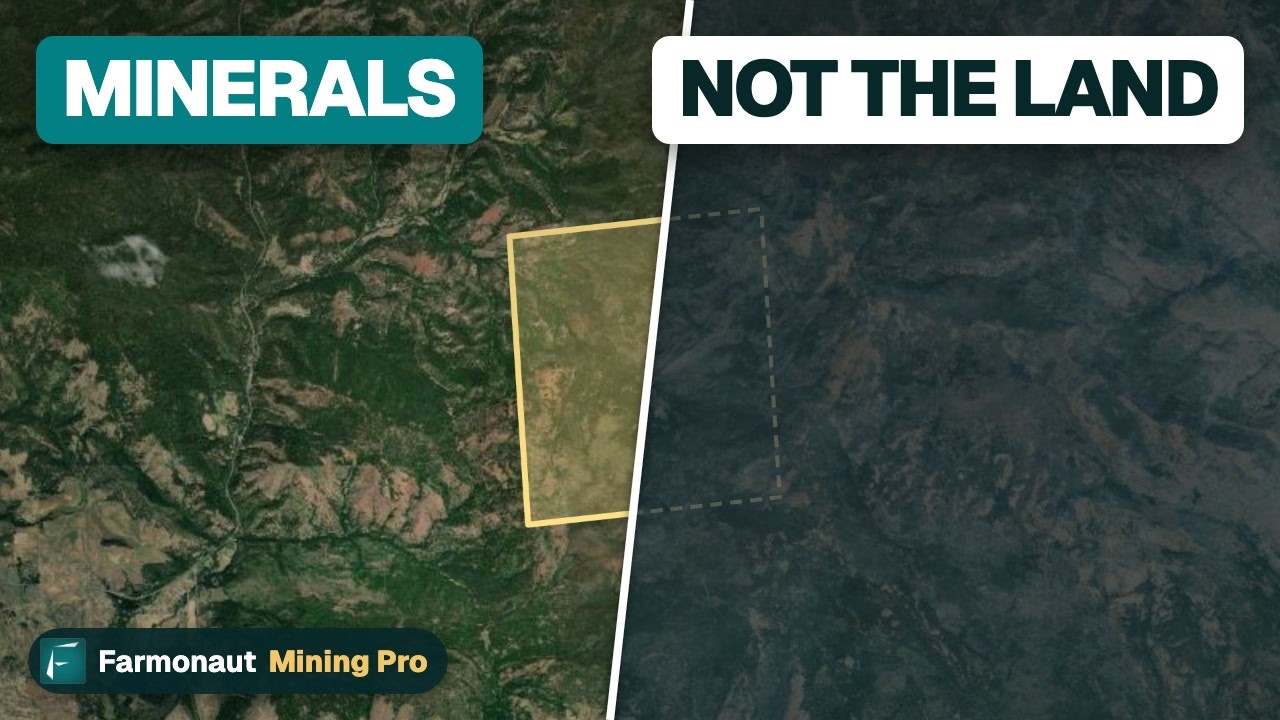
▶ Explains why a gold claim gives mineral rights, not ownership of the land, and how to check the ground first. · 3:19
Royalties and mining taxes compared
Fiscal terms decide how much of the gold price you keep. The rates below are headline figures for gold from the cited official or professional sources; each jurisdiction also levies corporate income tax, local taxes and fees that are not shown.
Chart
Headline gold royalty and tax ranges
Percent; lower and higher rate in each system
| Jurisdiction | Headline gold royalty or mining tax | Notes |
|---|---|---|
| Nevada | Net proceeds tax up to 5% | Rate set annually from net-to-gross ratio; deductions apply |
| Ontario | 10% of profit (5% remote) | $500,000 annual deduction; new-mine exemption up to $10 million of profit |
| Western Australia | 2.5% of royalty value | First 2,500 ounces a year exempt per gold royalty project |
| Ghana | Sliding scale of 5% to 12% | Effective 10 March 2026; growth and sustainability levy cut from 3% to 1% on gold miners |
| Tanzania | 6% (4% under a central-bank purchase programme) | Reduced rate applies to gold sold to the Bank of Tanzania, launched 1 October 2024 |
The chart below shows the range for three of these: Ghana, Tanzania and Ontario. Ghana’s sliding scale is the one to watch: KPMG’s tax alert records that gold and lithium royalties now move with the international price, and the levy on gold miners was cut by two percentage points as an offset. The scale runs from 5% to 12% and rises with the gold price, reported as 5% below US$2,000 per ounce and 12% above US$4,500, so a higher price moves more of each ounce to the state; the schedule published on TaxLawGH lists 10% for gold above US$3,500 to US$4,000, 11% above US$4,000 to US$4,500 and 12% above US$4,500 (Graphic Online, 3 February 2026).
The calculator in this section turns those rates into dollars. Enter your own ounces, price, royalty, levy, all-in cost per ounce and income tax rate to see the government’s take and what is left for the company. It is a simple screen, not a financial model: it ignores timing, capital spending, depreciation and withholding taxes.
Calculator
How much of a gold sale goes to the government?
Enter your own ounces, price and the rates in your licence or fiscal regime.
- Revenue (US$): $411,600,000
- Royalty and levy (US$): $49,392,000
- Income tax (US$): $56,772,800
- Left for the company (US$): $105,435,200
- Government share of revenue (%): 25.79
Example values only, not a forecast. Prices are inputs: example, use today’s price. All money is in US$. It assumes a profit, ignores timing, capital spending, depreciation and withholding taxes, and uses an 11% royalty (the band shown for gold above US$4,000 to US$4,500 in the L.I. 2517 schedule, which is based on a weekly average price) and a 35% income tax as examples; check the gazetted text.
Gold price context
Kitco showed spot gold at US$4,116 per troy ounce at 1:06 a.m. ET on 5 November 2026, up 1.4% on the day, and Trading Economics showed US$4,118.60 the same day, down about 1.1% over a month but up about 3.6% over a year (Kitco, Trading Economics). The USGS puts the 2025 average at US$3,300 per ounce and the value of US mine production at US$17 billion, up 32% on 2024. High prices help every jurisdiction, but they also tempt governments to raise royalties and renegotiate terms, as Ghana’s sliding scale shows. When you model a project, stress-test it at several prices and at the fiscal terms that would apply if prices stay high.
Higher-risk gold jurisdictions: Ghana, Mali, Tanzania and Burkina Faso
West and East Africa produce a lot of gold, but the rules have been moving. These examples are drawn from company announcements and press coverage.
Ghana
Ghana produced 150 tonnes in 2025, the largest African total in the USGS table. In the Fraser survey it ranked 53rd of 68 jurisdictions, down from 46th of 82 in 2024, with a score of 55.21%, and eighth among the 14 African jurisdictions in the index table, two places ahead of South Africa (MyJoyOnline). The new sliding royalty and the lower levy are described above. Our Ghana gold exploration guide covers licence types and belts.
Mali
Mali’s 2023 mining code raised royalties, increased the state’s ownership stake and removed stability clauses. Barrick Mining, Mali’s top gold producer, was in dispute with the government for two years; in November 2025 it signed an agreement to resolve all disputes over the Loulo and Gounkoto mines, with charges dropped and arbitration claims withdrawn. Per two sources cited by Reuters, Barrick agreed to sign the 2023 code in return for a ten-year permit extension (Mining Technology, 25 November 2025). Separately, Mali’s finance minister said a sector-wide audit had recovered more than US$1 billion in arrears (Mining Weekly, 2 December 2025). For a new investor, the lesson is that the dispute ended, but only after a long shutdown and under tougher terms.
Burkina Faso
In June 2025 Burkina Faso completed the transfer of five gold assets, two operating mines and three exploration licences formerly held by subsidiaries of Endeavour Mining and Lilium, to the state miner SOPAMIB (Mining Technology, 13 June 2025). The country sits near the bottom of the Fraser table. It is the clearest recent example of state takeover risk in a major gold region.
Tanzania
Tanzania charges a 6% gold royalty, with a reduced 4% for gold sold through the Bank of Tanzania’s purchase programme, launched on 1 October 2024 (TanzaniaInvest). For a small foreign-owned operation, who may hold a licence matters as much as the royalty, a topic the video below covers for Africa as a whole.
For a South African view, where deep mines and a large reserve base sit alongside labour and power constraints, see our South Africa gold exploration page.

▶ Shows which doors are open to foreigners seeking a small-scale mining licence in Africa. · 5:16
Five steps to screen a gold jurisdiction before you invest
- Check title security. Confirm who grants the licence, how long it lasts, whether it can be revoked and whether there is a public register. Burkina Faso and Mali show what happens when title is contested.
- Read the fiscal terms at today’s price and at a higher one. Royalties that rise with the gold price, such as Ghana’s, change project returns quickly. Use the calculator on this page.
- Estimate permitting time and cost. Ontario’s reforms and Nevada’s transparent process explain much of their ranking. Ask for the actual permitting timeline of a comparable mine.
- Check access to the ground. Surface rights, protected areas, Indigenous consultation and towns can block good rock. A mapped anomaly under a town is not an asset.
- Only then compare geology. Satellite alteration maps, public geological surveys and drill results rank targets within a jurisdiction. Farmonaut offers satellite screening of a licence boundary for owners who want that view before spending on drilling.
Infographic
Screening a jurisdiction in 5 steps
- 1TitleWho grants it, how long it lasts, can it be revoked.
- 2Fiscal termsRoyalty and tax at today’s price and a higher one.
- 3PermittingTimeline and cost from comparable mines.
- 4AccessSurface rights, protected areas, towns.
- 5GeologyCompare targets only after the first four.
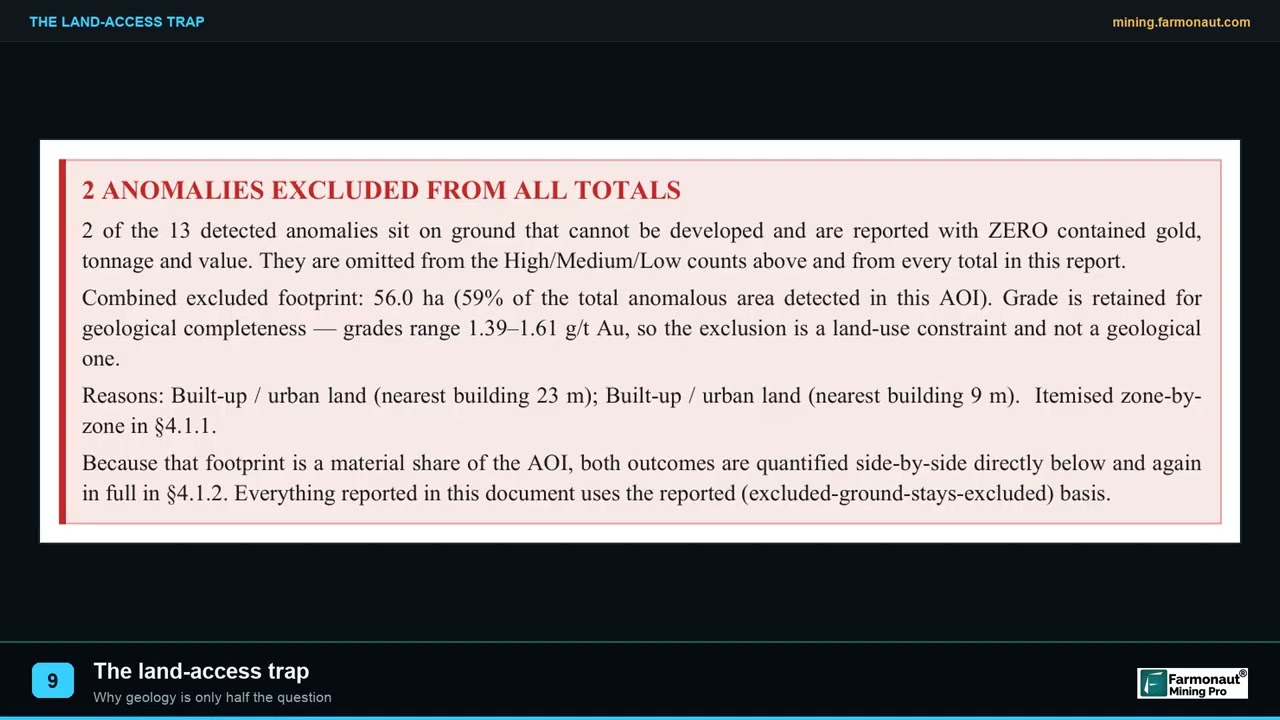
▶ Shows how land access can block mineable ground even when the rock is good. · 2:05
Frequently asked questions
Which country is best for gold mining investment?
On the Fraser Institute’s 2025 index, the top jurisdictions were Nevada, Ontario and Saskatchewan. For sheer scale, Australia has the largest reserves (13,000 tonnes) and China the highest output (380 tonnes), according to the USGS. Best depends on whether you value stability or the size of the opportunity.
What are the safest jurisdictions for gold mining investment?
Nevada, Ontario and Western Australia are the strongest combination of gold relevance and stable rules in the 2025 survey, with fixed, published royalties and tax schedules. Safe still carries risk, because commodity prices, costs and permit timing still apply.
Is Nevada a good place to invest in gold mining?
Nevada ranked first in 2025 and accounted for about 64% of US gold production in 2025, according to the USGS. Its net proceeds tax rates run up to 5%. Most claims are on federal land, so check the claim and surface rules.
Which African country is best for gold mining investment?
Botswana ranked seventh worldwide in the Fraser survey, mainly for diamonds and copper. For gold, Ghana was eighth of 14 African jurisdictions with a score of about 55%, and it has the largest African output in the USGS table. All African gold jurisdictions carry more fiscal and political risk than Nevada or Ontario.
Is Canada good for gold mining investment?
Ontario and Saskatchewan placed second and third in the 2025 survey. Ontario’s mining tax is 10% of profit (5% for remote mines). Canada also produced 200 tonnes in 2025 and holds 3,200 tonnes of reserves.
Which country has the most gold reserves?
Australia, with 13,000 tonnes of reserves, followed by Russia at 12,000 and South Africa at 5,000 (USGS, 2026).
What is the Fraser Institute survey?
An annual survey of senior mining executives. The Investment Attractiveness Index combines geology (about 60%) and policy (about 40%). The 2025 edition covered 68 jurisdictions and drew 256 responses from 2,304 executives contacted.
Do higher gold prices raise taxes?
In some places. Ghana’s gold royalty moves in steps from 5% to 12% as the price rises, which means a higher price shifts more of each ounce to the state. Other jurisdictions have flat rates.
Which countries nationalised gold mines recently?
Burkina Faso transferred five gold assets to its state miner SOPAMIB in June 2025. Mali held Barrick’s Loulo-Gounkoto complex under provisional administration before a November 2025 settlement.
How can a small investor get exposure to gold mining?
Most small investors buy shares in listed producers, royalty companies or funds, which are regulated by the exchanges where they trade. Buying a claim or licence directly carries title, access and permitting risk that this page’s five-step check is designed to expose. This is not investment advice.
How can I check the ground before buying a licence?
Review the public register, the surface rights and any land-access constraints first, then compare geology. Satellite imagery can map alteration and structures across a licence boundary, which helps decide where a field programme is worth the cost.
This page is for information only. It is not investment advice and does not recommend any company, country or security. Tax and royalty rules change; confirm current terms with the regulator or a qualified adviser before you commit money. Gold prices are shown for the date and source given. Anyone prospecting or sampling in the field needs the landowner’s permission and the right licence, and must follow local safety rules.
Farmonaut mining
Screen your ground from space before you commit
Request a quote to have your licence or target area screened with satellite data, so jurisdiction and geology are checked together.

Mining Pro sample view, synthetic data
Sources
- US Geological Survey, Mineral Commodity Summaries 2026: Gold: pubs.usgs.gov
- Fraser Institute, Annual Survey of Mining Companies 2025: fraserinstitute.org
- Streetwise Reports, The Aure Report: Fraser 2025 top ten jurisdictions: theaureport.com
- Geomechanics, Nevada tops Fraser survey: policy and permitting lessons: geomechanics.io
- Streetwise Reports, biggest policy gains in the Fraser rankings (23 March 2026): streetwisereports.com
- MyJoyOnline, Ghana falls in global mining investment attractiveness report: myjoyonline.com
- KPMG TaxNewsFlash, Ghana reduced growth and sustainability levy (May 2026): kpmg.com
- Graphic Online, Ghana offers levy cut as sweetener for higher gold royalty (3 February 2026): graphic.com.gh
- Nevada Department of Taxation, Net Proceeds of Minerals Tax: tax.nv.gov
- Nevada Department of Taxation, Net Proceeds of Minerals Bulletin 2024-25: tax.nv.gov
- Ontario Ministry of Finance, Mining tax: ontario.ca
- Government of Western Australia, Mineral royalties in WA fact sheet: wa.gov.au
- TanzaniaInvest, Bank of Tanzania domestic gold purchase programme: tanzaniainvest.com
- Mining Technology, Barrick and Mali deal (25 November 2025): mining-technology.com
- Mining Weekly, Mali recovers $1.2bn in arrears from miners (2 December 2025): miningweekly.com
- Mining Technology, Burkina Faso nationalises gold mining assets (13 June 2025): mining-technology.com
- Kitco, gold spot price (5 November 2026): kitco.com
- Trading Economics, gold (5 November 2026): tradingeconomics.com
- TaxLawGH, Ghana Minerals and Mining (Royalties) Regulations, L.I. 2517 schedule: taxlawgh.com
Discussion
Questions, corrections or field experience? Share them below. First-time comments are reviewed before they appear, and your email is never published.
No comments yet. Be the first to add a question or your experience.

 Vulcan International Limited
 Kidepo Associates
 GKY Mining
 Alkimy SARL
 Double A Trading
 GemSprout Metals Limited
 Qader Group
 Ileys General Trading
 SG Gold Mining LLC
 VRV Global Pte Ltd
 Omsri International FZE
 G.I.T.T.
 Jaunita Erss Ltd
 Almosi SARL
 SRK Consulting
 Berks Gold Limited
 Mwerezi Minerals Company Limited
 Mining SARL
 SenGold Invest SAS
 Sean Mining Limited

 Exploration consultancy · South Africa · Gold










