

Reviewed August 2026 against World Gold Council production data, USGS Mineral Commodity Summaries, and UK Companies House filings.
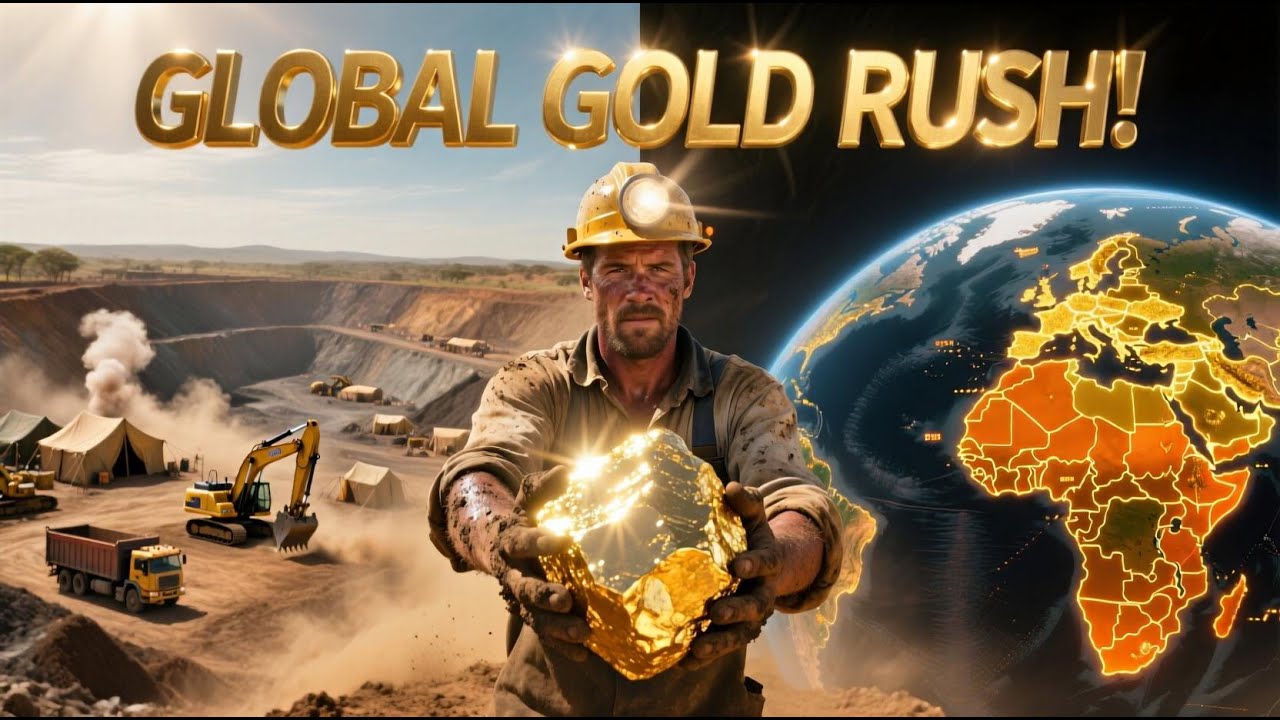
China mines more gold than any other country — an estimated 380 tonnes in 2024 — with Russia (330t) and Australia (284t) close behind; together those three account for 27.2% of the world’s 3,661-tonne annual total, per the World Gold Council. Chile still dwarfs every copper rival outright, at 5.507 million tonnes in 2024, but the Democratic Republic of Congo has pulled ahead of Peru for second place. Below is the full ranked picture for both metals, sourced and dated, plus a separate, honest answer for readers searching Daskusta Exploration Services Ltd — a name with real search volume but no matching entry in any public company registry checked for this piece.
Contents
- Top 20 Gold Producing Countries, Ranked
- Top 20 Copper Producers Worldwide
- Gold and Copper, Compared and Sourced
- Calculate a Country’s Output Value
- Satellite-Based Mineral Detection
- Is “Daskusta Exploration Services Ltd” Real?
- Industry Trends Shaping Supply
- Key Takeaways
- FAQ
- Conclusion
Top 20 Gold Producing Countries, Ranked
Gold’s value isn’t only monetary — its conductivity and corrosion resistance make it a component in precision electronics, satellite hardware, and defense systems, which is part of why supply concentration matters to more than jewelers and central banks. The chart below ranks the 12 largest producers using World Gold Council data compiled by Visual Capitalist, cross-checked against Geoscience Australia’s own figure for Australia: both put Australia’s 2024 output at 284 tonnes, down from 294 tonnes in 2023 — a match that gives confidence in the rest of the series.

The Full Top 20, in Published Order
- China – 380 t
- Russia – 330 t
- Australia – 284 t
- Canada – 202 t
- United States – 158 t
- Ghana – 141 t
- Mexico – 140 t
- Indonesia – 140 t
- Peru – 137 t
- Uzbekistan – 129 t
- Mali – 100 t
- South Africa – 99 t
- Brazil – 84 t
- Colombia – 66 t
- Papua New Guinea – 50 t
Kazakhstan, Burkina Faso, Sudan, the Democratic Republic of Congo, Argentina and Chile round out the top 20 in USGS and World Gold Council’s published order. None of those six had a figure independently confirmed for this review, so rather than guess, use the World Gold Council’s downloadable production dataset for this year’s exact tonnage — it’s updated as national statistics agencies report.

Who Gained and Who Lost Ground in 2024
A static ranking hides the direction of travel, and that’s where the World Gold Council’s own year-on-year figures are more useful than any single tonnage snapshot. Against 2023, Mexico’s output rose 11% (+14t), Canada rose 7% (+14t), Peru rose 5% (+7t), and Guinea rose 6% (+4t). On the other side, the United States fell 9% (-16t), Australia fell 3% (-10t), Bolivia fell 14% (-7t), and the DR Congo’s gold output fell 8% (-4t) even as its copper output climbed — a reminder that a country’s ranking in one metal says nothing about the other. In Australia specifically, gold export earnings still climbed to a record $36 billion in 2024, up from $28 billion in 2023, because price gains outran the volume decline — a point Geoscience Australia makes explicitly in its 2025 minerals resources overview.
Top 20 Copper Producers Worldwide
Copper’s concentration is even starker than gold’s. Chile alone produced 5.507 million tonnes in 2024, according to Chile’s own Copper Commission, Cochilco — a 4.9% jump from 2023’s 5.2504 million tonnes, which was itself a two-decade low. Set against a 2023 world total of 22.4 million tonnes reported by the International Copper Study Group, Chile alone accounted for roughly a quarter of everything mined that year.

Behind Chile, the real story of the last three years is the Democratic Republic of Congo overtaking Peru for second place. The DRC’s central bank put 2023 output at about 2.84 million tonnes against Peru’s 2.76 million tonnes, according to Mining Weekly. By 2024, Peru’s Ministry of Energy and Mines recorded a further slip to 2,736,150 tonnes, a 0.7% decline, reported by Kitco News via Reuters. The DRC’s 2024 figure is where sources genuinely disagree — secondary reports citing USGS’s Mineral Commodity Summaries 2025 put it near 3.3 million tonnes, while others citing the International Copper Study Group put it closer to 2.99 million tonnes. That gap is normal: central-bank, ministry, and USGS-modeled estimates use different methods and get revised on different schedules, which is exactly why this article names its source for every number rather than presenting one blended “truth.”

The Full Top 20, in Published Order
- Chile – 5.507 Mt (2024, Cochilco)
- DR Congo – 2.84 Mt (2023, DRC central bank)
- Peru – 2.736 Mt (2024, Peru Ministry of Energy and Mines)
- China
- United States
- Australia
- Zambia
- Mexico
- Russia
- Kazakhstan
- Indonesia
- Canada
- Poland
- Mongolia
- Argentina
- Brazil
- Iran
- Uzbekistan
- Vietnam
- Papua New Guinea
Positions 4 through 20 are listed in USGS’s most recently published order; exact tonnage for that group wasn’t independently confirmed for this review, so treat the order as reliable and check USGS’s copper commodity summary (published every January) or the ICSG’s monthly bulletin for current figures rather than a fixed number that will be a year stale by the time you read it.

Gold and Copper, Compared and Sourced
At current spot prices — gold at $4,334.41 per troy ounce and copper at $6.58 per pound, both as of August 7, 2026 per Trading Economics and Trading Economics respectively — the table below lines up the figures this article actually verified, with the primary source for each.
| Country | Metal | 2023 output | 2024 output | Y/Y change | Primary source |
|---|---|---|---|---|---|
| China | Gold | — | 380 t | — | World Gold Council, via Visual Capitalist |
| Russia | Gold | — | 330 t | — | World Gold Council, via Visual Capitalist |
| Australia | Gold | 294 t | 284 t | -3% | Geoscience Australia; World Gold Council |
| Canada | Gold | 188 t | 202 t | +7% | World Gold Council, Full Year 2024 Gold Demand Trends |
| United States | Gold | 174 t | 158 t | -9% | World Gold Council, Full Year 2024 Gold Demand Trends |
| Mexico | Gold | 126 t | 140 t | +11% | World Gold Council, Full Year 2024 Gold Demand Trends |
| Peru | Gold | 130 t | 137 t | +5% | World Gold Council, Full Year 2024 Gold Demand Trends |
| Chile | Copper | 5.2504 Mt | 5.507 Mt | +4.9% | Cochilco, via Expomin |
| DR Congo | Copper | 2.84 Mt | 2.99–3.3 Mt (sources vary) | Not reconciled | DRC central bank / USGS MCS 2025 |
| Peru | Copper | 2.76 Mt | 2.736 Mt | -0.7% | Peru Ministry of Energy and Mines, via Kitco/Reuters |
Calculate a Country’s Output Value
Plug any country’s tonnage from the tables above into the fields below to see roughly what that output is worth at today’s price, and what share of world supply it represents.
Estimated value: $39.44 billion — Share of world output: 10.4%
Farmonaut: Satellite-Based Intelligence for Faster Mineral Discovery
Modern mineral exploration increasingly runs on satellite data, AI, and remote sensing rather than boots-on-ground surveying alone. Farmonaut’s satellite-based mineral detection platform is built around that shift: it compresses early-stage exploration from months or years down to days, cuts discovery cost by up to 80–85%, and avoids the ground disturbance that comes with traditional test-pitting and drilling grids before a target is confirmed.
- Uses multispectral and hyperspectral satellite data to identify the spectral signatures of gold, copper, and other target minerals.
- Flags mineralized zones, alteration halos, and structural features across large regions before any ground crew deploys.
- Delivers georeferenced, high-resolution reports built for investment and exploration decisions.
- Extends to lithium, cobalt, uranium, and rare-earth targets alongside legacy commodities like gold and copper.

Client Workflow
- Step 1: Define the area of interest by coordinates or boundary file, and specify target minerals.
- Step 2: Farmonaut selects the optimal satellite data and workflow for the commodity and region.
- Step 3: You receive an actionable, professional report within days. Get a custom quote or contact the team.
Is “Daskusta Exploration Services Ltd” Real? How to Check Any Exploration Company
A meaningful number of searches go looking for “Daskusta Exploration Services Ltd,” “Daskusta Exploration Ltd,” “Daskusta Exploration Services,” and “Daskusta exploration services share news” — almost always because the name surfaced somewhere (a pitch, a syndicated article, a social post) and the searcher wants to know if it’s a real, regulated operator before taking it further, or whether there’s actual share/stock news to find. Here’s what a direct registry check returns, and the exact steps to run the same check on any exploration or mining-services company that reaches you.
Searching the UK Companies House register for “Daskusta” in August 2026 returns zero matches, active or dissolved. The closest similarly spelled entity on file is DASKUS LTD (company number 13431905), incorporated in Liverpool in June 2021 and dissolved in December 2022. Its registered activity codes (64301 and 64306) classify it as an investment trust — not a mining, quarrying, or exploration-services business — so it isn’t a match under a shortened name. There is no “share news” to report because no filer by that name turned up in the UK register or in a spot check of SEC company-search tools; if a specific stock exchange or ticker was mentioned to you, that exchange’s own listing directory, not a search engine, is the only reliable place to confirm it.
A Five-Step Check for Any Exploration or Mining-Services Company
- National company registry. UK: Companies House — free, and returns incorporation date, status, filing history, and activity codes in seconds.
- Securities regulator. US: the SEC’s EDGAR company and full-text search at sec.gov. Canada: SEDAR+. A company soliciting investment without appearing in either, where that filing is required, is a hard stop.
- The stock exchange’s own listing directory — not a search engine — for the LSE, TSXV, ASX, or wherever the company claims to trade.
- The mining regulator or geological survey for the country where the company claims to hold ground — USGS, Natural Resources Canada, or Geoscience Australia for the countries covered in this piece. Exploration licenses are usually public record.
- Independent trade press, not press releases. Real drill results tend to get covered by outlets like Mining Weekly, not only repeated by the company’s own newswire.
Run that checklist against Daskusta Exploration Services Ltd and every box comes back empty as of this review — a more useful answer than a generic “about DESL’s services” page for anyone who actually needs to know whether to trust the name.
Industry Trends Shaping Gold and Copper Supply
Beyond the yearly tonnage tables, a handful of structural trends are steering where new gold and copper actually gets found and mined:
- Automation and AI in mining: robotics and predictive analytics are shifting cost and safety curves at both greenfield and legacy sites.
- Supply concentration risk: with Chile and the DR Congo together supplying well over a third of world copper, and China, Russia, and Australia supplying over a quarter of world gold, disruption in any one country moves global price and availability quickly.
- Recycling: gold and copper already have among the highest recycling rates of any industrial metals, and both the World Gold Council’s supply data and ICSG’s factbook track recycled volume separately from new mine output — worth checking if you need total supply, not just mined tonnage.
- Resource nationalism and export policy: Indonesia’s smelting requirements, the DRC’s export dynamics, and Peru’s permitting environment all show up directly in the year-on-year swings in the tables above.

Key Takeaways
Frequently Asked Questions
Which country produces the most gold?
China, at an estimated 380 tonnes in 2024, per World Gold Council data. Russia (330t) and Australia (284t) rank second and third.
Which country produces the most copper?
Chile, at 5.507 million tonnes in 2024 per Cochilco — roughly double the output of second-place DR Congo.
Is Daskusta Exploration Services Ltd a real, registered company?
A UK Companies House search for “Daskusta” returned no matches as of August 2026, and no matching filer turned up in a US securities search either. See the verification section above for the exact steps to check for yourself.
How do I check if a mining or exploration company is legitimate?
Check its national company registry, its relevant securities regulator, the actual stock exchange’s own listing directory, the mining regulator for wherever it claims to hold ground, and independent trade press. All five are free to search.
How can mining companies benefit from Farmonaut’s solutions?
Companies using Farmonaut’s satellite mineral detection and 3D prospectivity mapping can pinpoint high-potential targets, cut unnecessary fieldwork, lower cost, and align exploration with ESG expectations. Contact us to get started.
Conclusion
The gold and copper rankings above will keep shifting — Peru’s ministry, Chile’s Cochilco, and the World Gold Council all publish updates on their own schedules, which is exactly why every figure here carries its source and its vintage rather than a bare number. What won’t go stale is the method: check the primary source directly, compare year-on-year direction rather than trusting a single snapshot, and apply the same five-step registry check to any exploration company — named Daskusta or otherwise — before treating its claims as fact.

 Tipareth Mines
 GemSprout Metals Limited
 Qader Group
 Ileys General Trading
 SG Gold Mining LLC
 VRV Global Pte Ltd
 Omsri International FZE
 G.I.T.T.
 Jaunita Erss Ltd
 Almosi SARL
 SRK Consulting
 Berks Gold Limited
 Mwerezi Minerals Company Limited
 Mining SARL
 SenGold Invest SAS
 Sean Mining Limited
 NTS Group (Pty) Ltd
 Mine4Africa
