

Hiring technical advisers · Buyer's guide
Mining Consultants in Australia: Perth, Brisbane, Hiring
Name the document you need, then hire the firm whose named people have done it on your deposit style. Perth took about 71% of Australian mineral exploration spending in the June quarter 2026 (ABS), so much of the demand for advisers sits there.
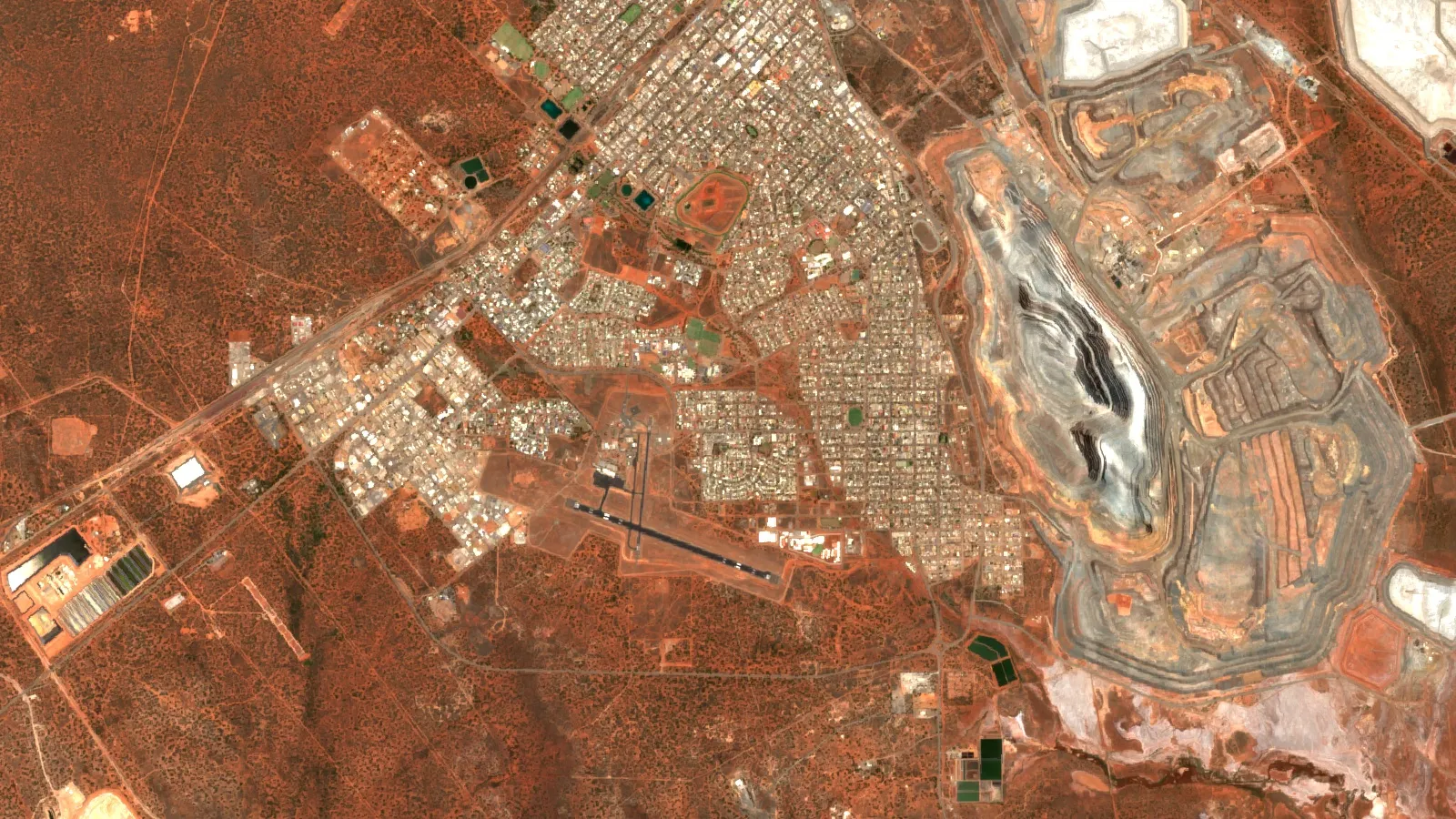
Key takeaways
- Western Australia accounted for A$843.6 million of A$1,189.8 million of Australian mineral exploration spending in the June quarter 2026, about 71% (ABS, original series).
- About 77% of that quarter’s exploration spend (A$915.3 million) was near existing deposits, so most adviser work is resource and mine-life definition (ABS, Table 3b).
- A JORC Competent Person must belong to AusIMM, the AIG or a Recognised Professional Organisation and have at least five years’ relevant experience; AusIMM Chartered Professional is a separate status (JORC).
- SRK says its Australian practice began in Perth in 1994 and gained its Brisbane office through a 1997 merger (SRK).
- Build the fee from named people times days times a quoted day rate, then compare it with the exploration programme it supports.
In this article
- What mining consultants do in Australia
- Why Perth is the centre of the market
- Mining consultants in Perth: what to expect
- Mining consultants in Brisbane and the eastern states
- Where the money goes: gold, iron ore and brownfield work
- Credentials: Competent Person, Chartered Professional and RPGeo
- How to hire a mining consultant in 8 steps
- What to ask on the first call
- How much do mining consultants cost in Australia
- Geotechnical and geological consultants Pty Ltd: how to read the company name
- What a good scope and report should contain
- When satellite data helps before you hire
- Common mistakes when hiring a mining consultant
- Frequently asked questions
To hire a mining consultant in Australia, decide first what document you need (a resource estimate, a mine plan, a geotechnical review or a due-diligence report), then pick a firm whose named people have done that exact job on your commodity and deposit style. Perth is a main hub for this work: Western Australia took about 71% of the country’s mineral exploration spending in the June quarter 2026 (A$843.6 million of A$1,189.8 million, ABS). Brisbane is the second centre for Queensland and eastern-states work. This guide covers what the firms do, how to compare them, which credentials matter, how to write a brief and how to budget a job.
It is written for licence and tenement owners, independent consultants, investors and mining-company staff. It is general information, not advice on any engagement, and the firms named are examples taken from their own websites, not a ranking.
What mining consultants do in Australia
A consultancy sells independent technical judgement for a fixed task. Most Australian work falls into a handful of types, and many firms cover several of them.
- Geology and resource estimation. Building a geological model from drill data and calculating a Mineral Resource (the part of a deposit with reasonable prospects of being mined, classed by confidence as Inferred, Indicated or Measured).
- Mine planning and studies. Pit or underground designs, schedules, cost models and scoping, pre-feasibility and feasibility studies.
- Geotechnical and hydrogeological work. Slope stability, ground support, dewatering and tailings advice, usually based on core logging and test data.
- Metallurgy and processing. Test-work design and flowsheet review, to estimate how much metal a plant recovers.
- Exploration management. Target generation, drill programme design, data compilation and on-site geologists for hire.
- Due diligence and valuation. An independent technical review of a project before a purchase, a float or a financing.
- Environment, approvals and community. Baseline studies and permit applications, often handled by separate specialist firms.
The first two are where most paying clients start, because a bank, a buyer or a stock exchange will ask for them. If your plan is to sell, the buyer’s technical team will read this work first, as covered in our guide to how to sell a mine.
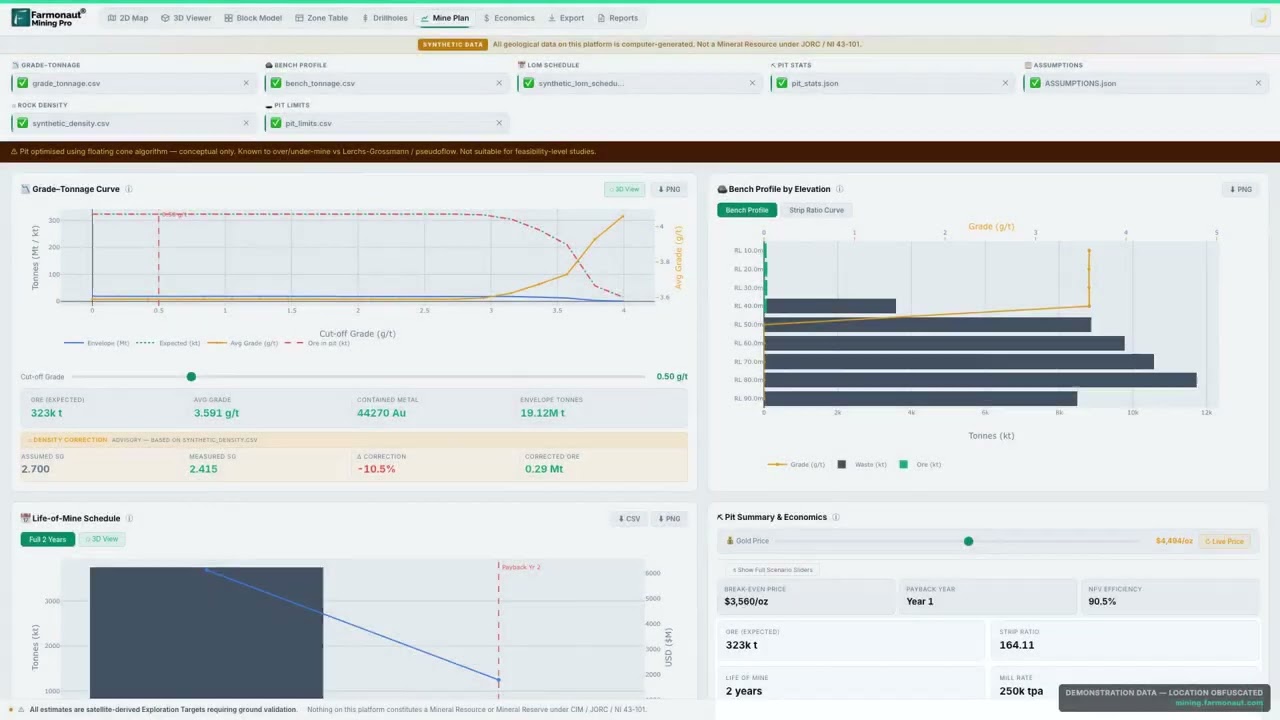
▶ Walks through mine-plan costs, all-in sustaining cost and engineering, the kind of study an adviser builds. · 14:58
Why Perth is the centre of the market
Most of the money is spent in Western Australia. In the June quarter 2026 Australian explorers spent A$1,189.8 million on minerals (original, not seasonally adjusted), and Western Australia accounted for A$843.6 million of it (ABS, Mineral and Petroleum Exploration, Australia, released 31 August 2026). Queensland was next at A$127.6 million, then New South Wales at A$69.5 million and South Australia at A$64.1 million.
Chart
Western Australia dominates exploration spending
Mineral exploration expenditure by state, June quarter 2026, A$ million (original series)
The mix matters when you pick a firm. In Western Australia, gold took A$461.1 million and iron ore A$231.7 million of the state’s A$843.6 million that quarter. Nationally, gold was A$565.6 million, iron ore A$234.7 million and copper A$124.3 million (ABS, same release, Table 5). A Perth firm therefore tends to have deep experience of Yilgarn-style gold and Pilbara iron ore. If your project is a Queensland copper or coal prospect, ask for people who have worked in that geology, wherever the office is.
Spending is not steady, which affects how fast firms can start your job. Western Australia’s quarterly figure fell to A$543.6 million in March 2025 and reached A$843.6 million in June 2026, so ask each firm how soon senior staff can start.
Mining consultants in Perth: what to expect
Firms working on Western Australian projects range from global groups to two-person specialist shops. The larger ones can staff a feasibility study with geologists, mining engineers, geotechnical engineers and cost estimators under one contract. Specialists, often former staff of the larger firms, are common for resource estimation, grade control, structural geology and mineral processing.
Examples from firms’ own pages:
- SRK Consulting (Australasia): SRK says its Australian practice was established in Perth in 1994 and merged with the geoscience consultancy Etheridge Henley Williams in 1997, which added the Brisbane office (SRK Australia press release).
- Orelogy: describes itself as a technical mining consultancy covering open pit and underground mining, established in 2005 and acquired by the ASX-listed Perenti Group in February 2022. Its site lists seven or more in-house Competent Persons (Orelogy).
- Snowden Optiro: says on its site that it is part of Datamine Software and offers advisory work in geology, mining and corporate topics, plus training and software (Snowden Optiro).
Ownership changes often. A firm that was independent a few years ago may now sit inside a mining-services group or a global engineering company, which matters if you need a report with no link to a contractor that might later bid for your work. Ask who owns the firm and whether any related business sells drilling, contract mining or software to your project.
Mining consultants in Brisbane and the eastern states
Brisbane is the main centre for Queensland work and is also used for other eastern-states projects. Queensland recorded A$127.6 million of mineral exploration in the June quarter 2026, after A$84.7 million in March 2026 and A$139.0 million in September 2025 (ABS). By mineral, Queensland’s June quarter 2026 spend was coal A$49.4 million, copper A$29.6 million and gold A$23.3 million (ABS, Table 5), a mix unlike Western Australia’s.
Chart
Western Australia and Queensland exploration, by quarter
Mineral exploration expenditure, A$ million per quarter (original series)
Several firms operate from more than one city. AMC Consultants, with its head office in Melbourne, says it offers technical mining advice from feasibility studies to geotechnical audits, plus a separate advisory team (AMC Advisory). AMC states it has advised the industry for more than 40 years and is now part of AFRY (AMC Consultants). The takeaway: a Brisbane, Melbourne or Perth address says little about where the people who will do your work sit. Ask for the names, their locations and what they have done recently.
If your ground is in a particular state, read the regulator’s rules before briefing anyone. For Western Australia, our guide to WA mining tenements explains tenement types and fees, and the national picture is in the Australia mining map.
Where the money goes: gold, iron ore and brownfield work
The ABS splits exploration spending between “new deposits” (greenfield ground) and “existing deposits” (drilling near known mineralisation). In the June quarter 2026, A$274.5 million went to new deposits and A$915.3 million, about 77%, to existing ones (ABS, Table 3b). For an adviser that means most work is resource definition, extension drilling and mine-life studies, not first-pass target generation.
Chart
Gold takes almost half of Australian exploration spend
Mineral exploration expenditure by mineral sought, Australia, June quarter 2026, A$ million
If you hold greenfield ground, you may need a different adviser than a firm built around resource modelling: someone who can compile regional geophysics, geochemistry and satellite data into drill targets. For regional gold context by state, see gold exploration in Australia and the guide to Australian gold deposits by state.
Credentials: Competent Person, Chartered Professional and RPGeo
Three labels appear on consultant biographies, and they are not the same thing.
- Competent Person. Under the JORC Code, any public report of Exploration Results, Mineral Resources or Ore Reserves must be based on work by a Competent Person. That person must be a Member or Fellow of the Australasian Institute of Mining and Metallurgy (AusIMM), of the Australian Institute of Geoscientists (AIG), or of a Recognised Professional Organisation, and must have at least five years’ experience with the style of mineralisation and the activity being reported. The company must get the person’s prior written consent to the form and context of the report (JORC, Competent Persons).
- AusIMM Chartered Professional (CP). An accreditation programme run by AusIMM (AusIMM, Chartered Professionals). JORC says the two terms are easily confused: a Competent Person must write the words out in full and not use “CP”, which is reserved for Chartered Professionals.
- Registered Professional Geoscientist (RPGeo). A registration run by the AIG, which also publishes a member directory and a code of ethics (AIG).
JORC also says each person must test their own competence for every project, so a Competent Person for gold resource estimation is not automatically one for another deposit style. Ask the firm to name the Competent Person for your deposit and check the membership with the institute. The JORC Code review is still under way: the code-update page carries notices up to August 2026 (a webinar on 20 August 2026) and says the new Code will only start after it is finalised, ASX consults on any Listing Rule changes and a transition period ends (JORC, Code update). Check that page before you commission a report. For listed companies, ASX Listing Rule 5.22 adds that an announcement must name the Competent Person, say whether that person is an employee or related party, and name the professional organisation they belong to (ASX, mining reporting FAQs).
How to hire a mining consultant in 8 steps
- Write the deliverable in one sentence. “An Inferred and Indicated resource estimate for the North pit, reported to the JORC Code” is a brief; “look at our project” is not.
- Collect your data first. Assays, collar and survey files, QA/QC results, geological logs, maps, previous reports and tenement details. Messy data is the most common reason for overruns.
- Shortlist three to five firms. Use each firm’s own project list, referrals from your lawyer or broker, and the AIG member directory. Include one small specialist.
- Ask for named people and recent work. Who will be the Competent Person, who does the modelling, and how many similar deposits have they done recently?
- Check independence and conflicts. If the report goes to a bank, a buyer or an exchange, ask whether the firm or its owner has any interest in the project, the buyer or a contractor.
- Agree scope, milestones and format. A fixed fee suits a defined report; time-and-materials suits open-ended review. Add a draft-review round and say who owns the models and files.
- Plan the consent and disclosure. If you will publish results, the Competent Person’s written consent must be in place before release.
- Read the draft critically. Check that every number in the summary can be traced to the data you supplied, and that the limitations are written plainly.
Infographic
Hiring an adviser in five moves
- 1Define the deliverableOne sentence naming the report and the standard.
- 2Prepare the dataAssays, logs, maps, reports, tenement details.
- 3Shortlist and compareNamed people, recent work, independence.
- 4Agree scope and feeMilestones, draft round, file ownership.
- 5Review the draftTrace every number back to your data.
What to ask on the first call
A short call shows more than a brochure. Ask who exactly will work on the job and what share of their time it will take. Ask for two recent jobs in the same commodity and deposit style, and what went wrong on either. Ask what data they will need, in what format, and by when, because delay on your side usually moves the finish date. Ask how they handle a change in scope: an hourly extension is normal, but a vague “variation” clause is not. Finally, ask what they will not do. A firm that says “we do not do metallurgy, we would subcontract it” is easier to trust than one that offers everything.
Request the proposal in writing, with named staff, hours or days by person, deliverables, the standards used (JORC Code, VALMIN Code or another) and what is excluded. Compare proposals line by line, not on the headline price. A lower fee that leaves out a site visit, QA/QC review or a draft round may cost more by the end.
How much do mining consultants cost in Australia
Firms quote per job or per day, and the price depends on seniority, the number of people, travel to site and how fast you need the result. Because a rate card is not published by most firms, the practical way to plan is to build the budget from the bottom up: people multiplied by days multiplied by a day rate you have been quoted, plus site travel and a contingency. The calculator below does that and shows the fee as a share of the exploration programme it supports. Money is in Australian dollars and excludes GST unless you add it.
Calculator
What will a consulting job cost, and how big is it next to your drilling budget?
Enter the days and day rate you were quoted, plus your own exploration budget.
- Fees before travel and contingency: $54,000
- Contingency amount: $6,000
- Share of the exploration programme: 13.2%
Example values only, not a benchmark or a market rate. Use the day rates in your quotes. Amounts are in A$ and exclude GST. Rates are inputs: example, use today’s price from your quote.
Geotechnical and geological consultants Pty Ltd: how to read the company name
Many small firms trade as “Pty Ltd”, an Australian proprietary limited company. The suffix says the firm is a private company, not that it is large or small, qualified or not. Check the Australian Business Number on the Australian Business Register, ask for evidence of professional indemnity insurance, and ask which institute each named geologist or engineer belongs to. For geotechnical work in particular, ask who signs the slope or underground design, what their qualification is, and who reviewed the data.
What a good scope and report should contain
A resource report should include a clear data summary, how the geological model was built, the estimation method, the checks on the result (such as comparing estimated to input grades) and the classification logic. A study should list assumptions with their sources and show the cost and price inputs separately so you can change them. Ask for the digital files, not just the PDF, so your next adviser can reuse the model.
Block models, the grids of small cells that carry grade and tonnage estimates, are a core output of resource work. The video below explains what a block model is and how to read one.
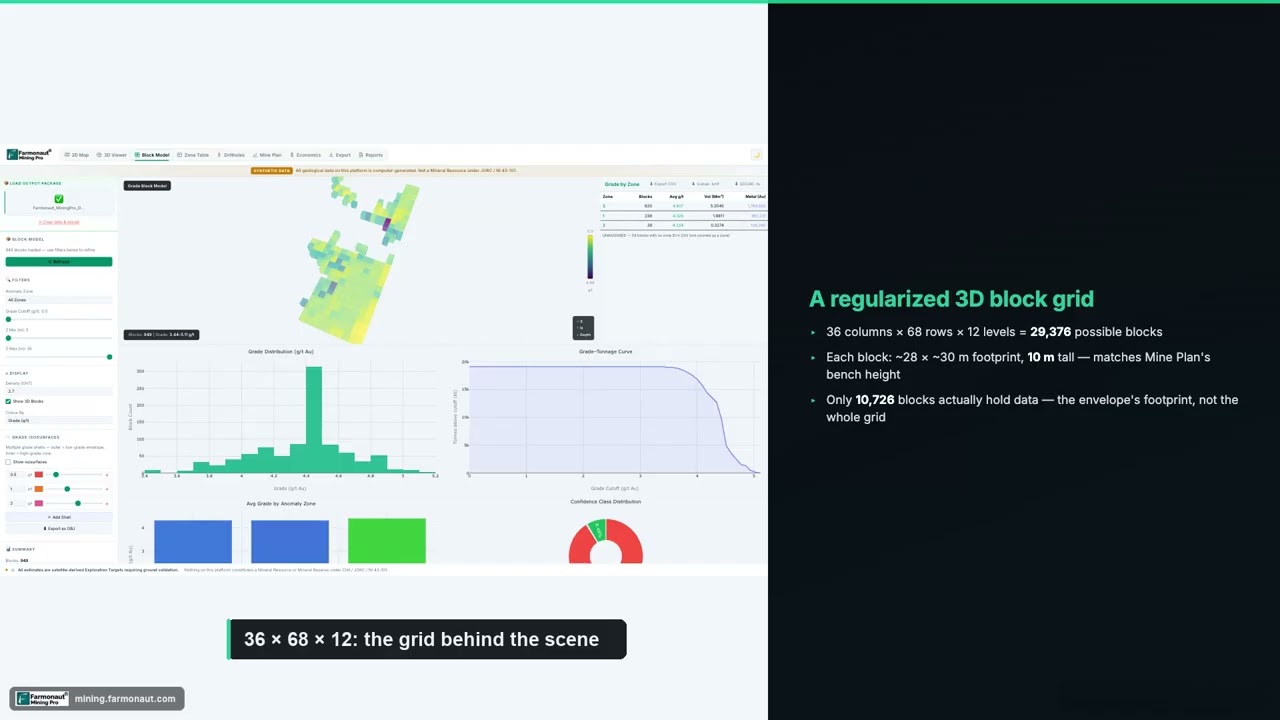
▶ Explains what a block model is and how to read one. · 5:23
When satellite data helps before you hire
Advisers charge for time, so every hour spent finding and cleaning basic data is paid for. Screening a licence area with satellite imagery before the first meeting can show alteration, structure and land use, and can help you decide where drilling or an adviser’s time is best spent. It does not replace a Competent Person, sampling or drilling, and satellite results are exploration targets, not a Mineral Resource. If you plan to model the ground in three dimensions afterwards, see 3D geological modelling software compared.
▶ Explains the six instrument families used in remote sensing for mining. · 2:01
Common mistakes when hiring a mining consultant
- Choosing by office address instead of by who does the work.
- Buying a “resource” from someone who is not a Competent Person for that deposit style.
- Skipping the data audit, then paying day rates to fix it.
- Giving no budget range, so the firm scopes a larger study than you can fund.
- Forgetting to ask who owns the models and the final files.
- Not checking whether the firm is linked to a drilling or contract-mining business that would benefit from the result. For drilling contractors, see our guide to choosing an exploration drilling contractor.
Frequently asked questions
What does a mining consultant do?
A mining consultant gives independent technical advice for a defined task, such as estimating a resource, planning a mine, assessing ground stability or reviewing a project before a deal. The client owns the question; the consultant owns the method and signs the work.
Who are the biggest mining consultants in Australia?
There is no single public ranking. Firms with their own pages cited here include SRK Consulting, AMC Consultants, Orelogy and Snowden Optiro. Size matters less than whether the named team has done your type of deposit recently.
Where are most mining consultants based?
Most of the exploration money is spent in Western Australia: about 71% of national mineral exploration spending in the June quarter 2026 (ABS). Firms’ own pages list their offices, and many work across all states, so check where the named people are based.
What is the difference between a Competent Person and a Chartered Professional?
A Competent Person meets the JORC Code’s membership and five-year experience rules for a given type of work. A Chartered Professional holds an AusIMM accreditation. JORC treats the terms as different, and a person can hold one without qualifying for the other.
Do I need a JORC-compliant report?
If you publicly report exploration results, resources or reserves, the JORC Code requires a Competent Person’s work behind them. A private owner may not need one for an internal review, but a buyer or financier often asks for the same standard.
How long does a resource estimate take?
It depends on data quality and deposit complexity. Tidy databases and a simple deposit move faster; a deposit with many drilling campaigns and unresolved QA/QC issues takes longer. Ask each firm for a timeline tied to the date you supply the full dataset.
How do I check a consultant’s credentials?
Ask for the person’s name and membership class, then check it with AusIMM or AIG (AIG publishes a member directory). For a JORC report, ask the firm to confirm the Competent Person’s name and experience for your deposit style.
Should I hire a big firm or a small specialist?
Use a larger firm when the job needs several disciplines under one contract and one point of liability. Use a specialist for a narrow, well-defined task. Many owners use both: a specialist for the model and a larger firm for the study.
What does “geotechnical and geological consultants Pty Ltd” mean?
It is typically a company name: “Pty Ltd” marks an Australian proprietary limited company. Verify the Australian Business Number and the named people’s qualifications.
Can I use satellite data instead of a consultant?
No. Satellite screening can narrow targets and cut early cost, but it cannot produce a Mineral Resource. Use it to prepare for the adviser’s work, not replace it.
What should I give a consultant before the first meeting?
Your tenement details, location and access notes, all assay and drilling files, previous reports, a map of the area and a one-sentence statement of the deliverable and deadline.
What is the minimum budget for hiring a consultant?
There is no fixed minimum. A small desktop review is a few person-days; a feasibility study is a team over months. Use the calculator above with your own quoted rates.
This page is for information only. It is not legal or investment advice and does not recommend any firm. Check each person’s credentials and the current JORC Code yourself.
Farmonaut mining
Screen your ground before you brief an adviser
Request a quote to have your licence area mapped from satellite data so your consultant starts with a clear picture.

Mining Pro sample view, synthetic data
Sources
- ABS, Mineral and Petroleum Exploration, Australia, June 2026: abs.gov.au
- ABS, Table 4: exploration expenditure by state (June 2026): abs.gov.au
- ABS, Table 3b: exploration by type of deposit (June 2026): abs.gov.au
- ABS, Table 5: exploration by mineral sought (June 2026): abs.gov.au
- JORC, Competent Persons: jorc.org
- JORC, Code update: jorc.org
- AusIMM, Chartered Professionals: ausimm.com
- AIG, Australian Institute of Geoscientists: aig.org.au
- SRK Australia press release, 25 years in business: srk.com
- AMC Consultants: amcconsultants.com
- Orelogy: orelogy.com
- Snowden Optiro: snowdenoptiro.com
- ASX, Mining reporting FAQs (Listing Rule 5.22): asx.com.au
Discussion
Questions, corrections or field experience? Share them below. First-time comments are reviewed before they appear, and your email is never published.
No comments yet. Be the first to add a question or your experience.

 Tipareth Mines
 GemSprout Metals Limited
 Qader Group
 Ileys General Trading
 SG Gold Mining LLC
 VRV Global Pte Ltd
 Omsri International FZE
 G.I.T.T.
 Jaunita Erss Ltd
 Almosi SARL
 SRK Consulting
 Berks Gold Limited
 Mwerezi Minerals Company Limited
 Mining SARL
 SenGold Invest SAS
 Sean Mining Limited
 NTS Group (Pty) Ltd
 Mine4Africa











