
Diamond exploration · Company comparison
Diamond Exploration Companies: Explorers Compared
Diamond exploration companies are fewer than they were: Rio Tinto reported final Diavik production in March 2026, Ekati went into receivership in July and juniors are turning to copper and gold. This guide compares who is still looking, with dated facts.
Key takeaways
- The world mined 107.9 million carats worth US$9.53 billion in 2024, 22 percent fewer carats and 30 percent less value than in 2019 (Kimberley Process).
- Rio Tinto reported final production at Diavik, its last diamond mine, in March 2026, and Ekati entered receivership on 14 July 2026 (Miningmx; National Jeweler).
- De Beers and Endiama announced a new kimberlite field in Angola in August 2025, and on 1 October 2026 Mountain Province agreed to hand its 49% of Gahcho Kué to De Beers.
- In the Slave craton more than 300 kimberlites were found and fewer than 1 percent were rich enough to mine (GIA, Gems & Gemology).
- Check stage, value per carat, cash, partner, resource date and direction before comparing any explorer.
In this article
- Ten diamond explorers and producers compared
- What the Kimberley Process data shows about the market
- Where explorers look for kimberlites
- How a diamond project moves from first sample to mine
- How to compare diamond exploration companies
- Grade and value calculator for a diamond project
- What satellite screening can and cannot do for a diamond licence
- Frequently asked questions
Active diamond exploration companies are fewer than they were. Rio Tinto reported in March 2026 that Diavik, its last diamond mine, had delivered its final production (Miningmx, citing Bloomberg), Canada’s Ekati mine went into receivership in July (National Jeweler), and Anglo American is still selling De Beers. The firms that keep drilling are the majors with a large ground position, producers that test the ground around their own mines, and a short list of juniors, several of which now put their money into copper or gold.
The market explains the retreat. The Kimberley Process counted 107.9 million carats of rough diamonds mined worldwide in 2024, worth US$9.53 billion (Kimberley Process, 2024 annual global summary). Against 2019 that is 22 percent fewer carats and 30 percent less value. This page compares ten named companies by project, stage and latest dated news, shows where kimberlites are found, walks through the stages of a project, and gives you a way to test a company’s numbers. It is a fact guide, not investment advice.
Ten diamond explorers and producers compared
The table mixes three kinds of company on purpose. A reader who wants to know who is looking for the next pipe needs to see who is paying for that search, and in 2026 that is rarely a pure exploration company. Every row shows the latest dated fact from a filing, a company page or a trade report.
| Company | Type | Main ground | Latest dated fact |
|---|---|---|---|
| De Beers (Anglo American) | Major | Angola exploration; Gahcho Kué, Canada (51%) | With Endiama, announced a new kimberlite field in Lunda Sul on 12 August 2025; diamond potential not yet confirmed (Diamond World). Anglo is selling the business (National Jeweler, 30 July 2026). |
| ALROSA (sanctioned) | Major | Yakutia and other Russian districts | Lists 12 primary kimberlite pipes and 8 placer deposits in development, with JORC resources of 1,064 million carats and reserves of 628 million carats (company website, read 5 November 2026). |
| Rio Tinto | Major, exited | Diavik (Canada); Argyle (Australia) closed 2020 | Final Diavik production reported in March 2026; its diamond unit lost US$79 million in 2025 (Miningmx). |
| Lucara Diamond (TSX: LUC) | Producer | Karowe, Botswana | Updated feasibility study for the underground project: US$779 million capital, 4.5 million carats over 10 years, underground production from the first half of 2028 (Mining.com, 6 January 2026). |
| Mountain Province Diamonds | Producer, restructuring | 49% of Gahcho Kué, Northwest Territories | First-quarter 2026: 2.0 million carats recovered on a 100% basis, average price US$34 per carat against US$72 a year earlier, net loss C$65.1 million. On 1 October 2026 it agreed to transfer its 49% to De Beers in exchange for debt forgiveness, keeping a right to buy back if De Beers sells by 31 December 2029 (Brief Glance; first-quarter data: company release, 12 May 2026). |
| Burgundy Diamond Mines (ASX: BDM) | Producer, in insolvency | Ekati, Northwest Territories | Creditor protection on 1 May 2026; receivership ordered on 14 July after no viable bids, with closure expected by mid-August (National Jeweler). |
| Star Diamond Corporation (TSX: DIAM) | Developer | Star-Orion South, Fort à la Corne, Saskatchewan | Pre-feasibility study under way with a C$3.0 million budget; site on care and maintenance; cash of C$58 thousand at 30 June 2026 (second-quarter release, 14 August 2026). |
| North Arrow Minerals | Junior | Kraaipan Gold Project, Botswana (724 km², earning up to 80%); earlier diamond projects Naujaat, Pikoo and Loki | Its 2026 news is about gold: Tlou drilling returned 1.9 g/t Au over 20 m, reported 4 November 2026 (company website). |
| Botswana Minerals (formerly Botswana Diamonds) | Junior | Botswana diamond licences; eight copper licences over about 7,000 km² | Keeps its diamond assets while moving toward copper; an AI review of a 95,000 km² database ranked diamond targets, including previously unrecognised kimberlite anomalies (interim statement, 16 March 2026). |
| Endiama (Angola) | State company | Catoca and Luele kimberlites and new concessions | Angola as a whole produced about 15.2 million carats in 2025 at US$101.94 per carat, and the national regulator targets 16.2 million carats in 2026 (Miningmx, 16 April 2026). |
Majors: De Beers and ALROSA
De Beers announced a new kimberlite field in Angola in August 2025. It returned to Angola in 2022. By late 2024 airborne surveys had singled out eight high-potential targets, and in July 2025 the first drill hole into a priority cluster hit kimberlite. The joint venture with Endiama called it the first new kimberlite field found by De Beers in more than three decades, and said the type of kimberlite and its diamond content still had to be tested with more drilling, ground geophysics and laboratory work (Diamond World, 14 August 2025). A kimberlite is not a mine. The next sections show how rarely one becomes the other.
Ownership of De Beers is about to change. Anglo American’s chief executive said on 30 July 2026 that the sale was in its final phase, which he called the most challenging, that Anglo was not exclusive with any bidder, that the sale would be private rather than a listing, and that regulatory approval would take about a year after signing. De Beers reported first-half revenue of US$1.6 billion, down 19 percent, and said demand for larger, higher-quality stones held up while smaller and lower-quality stones faced pressure from lab-grown diamonds (National Jeweler). Anglo has cut the book value of the business to US$2.3 billion from US$9.1 billion (Miningmx). A buyer will set the exploration budget, so any plan that depends on De Beers drilling should wait for the new owner’s statement.
Russia, where ALROSA is the main operator, mined 37.3 million carats in 2024, worth US$3.34 billion, at an average of US$89 per carat (Kimberley Process). ALROSA publishes its resource and reserve tables on its own site on a JORC basis, without a stated date, so check the current version before you quote them. ALROSA has been designated by the U.S. Treasury under Executive Order 14024 (7 April 2022), and Canada, the United Kingdom, New Zealand and the Bahamas also sanctioned it (U.S. Treasury); anyone buying from or dealing with it should take legal advice.
Producers that explore around their own mines
The producers still spending on geology do it where a plant and infrastructure already exist. Lucara’s underground project at Karowe is the largest capital item in this list. The January 2026 feasibility update puts after-tax net present value at US$432 million and says US$436 million of the US$779 million capital had already been spent (Mining.com). That is a mine-life extension, not a discovery, and it shows what the economics of a deep kimberlite look like when the pit runs out.
Gahcho Kué shows the other side, and it has since changed hands on paper: on 1 October 2026 Mountain Province agreed to transfer its 49% to De Beers (Brief Glance). Mountain Province’s share of production rose, but the average price fell to US$34 per carat, the joint venture paused waste stripping at the Tuzo pit, and the company described a “highly constrained and challenging financial environment” in its May 2026 release (Mountain Province). With Ekati closing, National Jeweler says Canada is left with one diamond mine. Angola is the opposite case: the national regulator is targeting more volume and counting on outside explorers, and the Catoca and Luele kimberlites supply about 90 percent of national output (Miningmx).
Juniors and companies that changed direction
Star Diamond’s Star-Orion South in Saskatchewan is the undeveloped Canadian project in this list. Its latest filing says the Star-Orion South site is on care and maintenance, the pre-feasibility study depends on raising money, and the company needs more financing to continue as a going concern (Star Diamond). The geology is not the issue; funding is.
North Arrow and Botswana Minerals show the usual junior response. Botswana Minerals keeps its diamond licences and North Arrow has held diamond projects; both now lead with another metal. For a licence owner it is worth asking what data such a company already holds: Botswana Minerals describes more than 375,000 line kilometres of airborne geophysics, ground surveys, soil sampling and drill records over about 95,000 km² (interim statement, 16 March 2026).
For a wider look at Canadian operators, see the guide to Canadian diamond mining companies, and for the contractors that drill the holes, the guide to diamond drilling companies in Canada. Neither is the same as the explorers above: a drilling contractor is paid by the metre, an explorer is paid only if the pipe is worth mining.
What the Kimberley Process data shows about the market
The Kimberley Process publishes production by country each year, with volume in carats and value in US dollars. It is the most complete public record of how much rough the world mines and what it is worth. The 2024 summary lists 107.9 million carats at an average of US$88.35 per carat. Reading the annual summaries for 2019 to 2024 side by side shows the squeeze: output fell in 2020, recovered to 2022, then dropped again, while value fell faster than volume in 2023 and 2024.
Chart
World rough diamond production value
US$ billion, all producing countries, by year
The 2022 peak of US$15.96 billion came when the carat price averaged US$132.30. By 2024 the average was US$88.35 (Kimberley Process, 2022). That fall in price per carat, more than any lack of geology, is why exploration budgets were cut. A kimberlite that looked viable at US$130 per carat can fail at US$90. Bloomberg, cited by Miningmx, also points to lab-grown stones, which were in nearly half of US engagement rings in the first eight months of 2025, and to natural prices more than 40 percent below their pandemic peak (Miningmx).
Two cautions on the data. Kimberley Process values are declared at the point of production and are averages across all qualities, so a mine of large gem stones can sit far above the national figure. And the annual summaries are revised, so quote the edition you used. The USGS notes that natural diamond deposits have been found in more than 35 countries and that synthetic diamond supplies nearly all industrial use (USGS Mineral Commodity Summaries 2026), which is why the gem market, not the industrial one, funds exploration.
Where explorers look for kimberlites
Diamonds form deep in the mantle under old, thick, cool continental roots called cratons. Only those roots are cold enough, at high enough pressure, to keep diamonds stable, so explorers start with the map of ancient crust. The Gemological Institute of America’s review of diamond geology calls this Clifford’s Rule: rich deposits sit on cratons, with exceptions where diamonds occur in lamproite off the craton (GIA, Gems & Gemology).
Chart
Rough production by country, 2019 and 2024
Million carats, selected producing countries
The same review gives the odds, and they are sobering. In two well-explored cratons, systematic work reported in the 2013 GIA review found more than 80 kimberlite pipes in the Kimberley craton and more than 300 in the Slave craton. Only 10 percent and 50 percent of them held diamonds, and none in the Kimberley craton and fewer than 1 percent in the Slave craton were rich enough to mine. The authors add that, apart from the Canadian finds of the 1980s and 1990s, none of the producing countries has seen a major diamond-bearing pipe discovered in recent decades (GIA). That is the context for the De Beers announcement in Angola.
| District | Operating or recently closed mines | 2024 output and value per carat (Kimberley Process) |
|---|---|---|
| Slave craton, Canada | Gahcho Kué (operating); Ekati (receivership, July 2026) and Diavik (final production reported March 2026) | Canada: 13.3 million carats, US$80.70 |
| Central Botswana | Karowe (Lucara) | Botswana: 18.1 million carats, US$74.99 |
| Lunda provinces, Angola | Catoca, Luele | Angola: 14.0 million carats, US$100.68 |
| Yakutia, Russia | Mir and other ALROSA pipes | Russia: 37.3 million carats, US$89.37 |
| Kaapvaal craton, southern Africa | Cullinan and other South African mines; Lesotho mines | South Africa: 5.3 million carats, US$124.03; Lesotho: 0.7 million carats, US$333.49 |
The table is a map of where the money has been made, not a list of where the next discovery will be. For a fuller look at the geology of one famous pipe see the Cullinan mine guide, and for how kimberlite fits among other deposit styles see types of ore deposits.
How a diamond project moves from first sample to mine
Explorers work in stages and stop as soon as one stage fails. Each stage costs more than the last, so the order matters more than the method.
Infographic
Diamond project in 6 stages
- 1Regional dataDesk study of geology, craton maps and magnetic data.
- 2Indicator mineralsSample till or stream sediment; measure grain chemistry.
- 3GeophysicsTurn the grain trail into drill targets.
- 4Drill testFind kimberlite and test it for diamonds.
- 5Bulk sampleProcess large samples to get carats and stone values.
- 6Resource and financeResource estimate, studies, then funding.
Regional data and indicator minerals
The first step is a desk study of geology and any magnetic data, followed by sampling of till or stream sediment for kimberlite indicator minerals such as garnet, Mg-ilmenite, chromite and Cr-diopside. A grain is only called a kimberlite indicator after its chemistry is measured; looks alone are not enough. A Manitoba Geological Survey study shows the method in a glaciated region: it sampled till along rivers, used ice-flow direction to work out where the grains came from, and built on an earlier aeromagnetic survey (Manitoba Geological Survey, GS2021-9). In glaciated ground the grains travel far from the source, which is why GIA stresses perseverance and scientific method. The guide to indicator grains and kimberlite pipes covers this stage in detail.
Geophysics, drilling and the first diamonds
Airborne magnetic and electromagnetic surveys turn a grain trail into drill targets, as in Angola, where airborne survey data gave De Beers and Endiama the target cluster they drilled in July 2025. A hole that meets kimberlite is then tested for diamonds, first with small samples and later with large ones. Finding kimberlite is the easy part of the sentence and the hard part of the job: the GIA figures above say fewer than 1 percent of the Slave craton pipes were mineable.
Bulk sample, resource and finance
A bulk sample, processed through a pilot plant, gives the carats and the stone values that matter. A resource estimate, pre-feasibility and feasibility study follow, then financing. Star Diamond shows how long the last step can take: its pre-feasibility study was engaged in September 2025, carries a C$3.0 million budget and is still waiting on financing in August 2026 (Star Diamond).
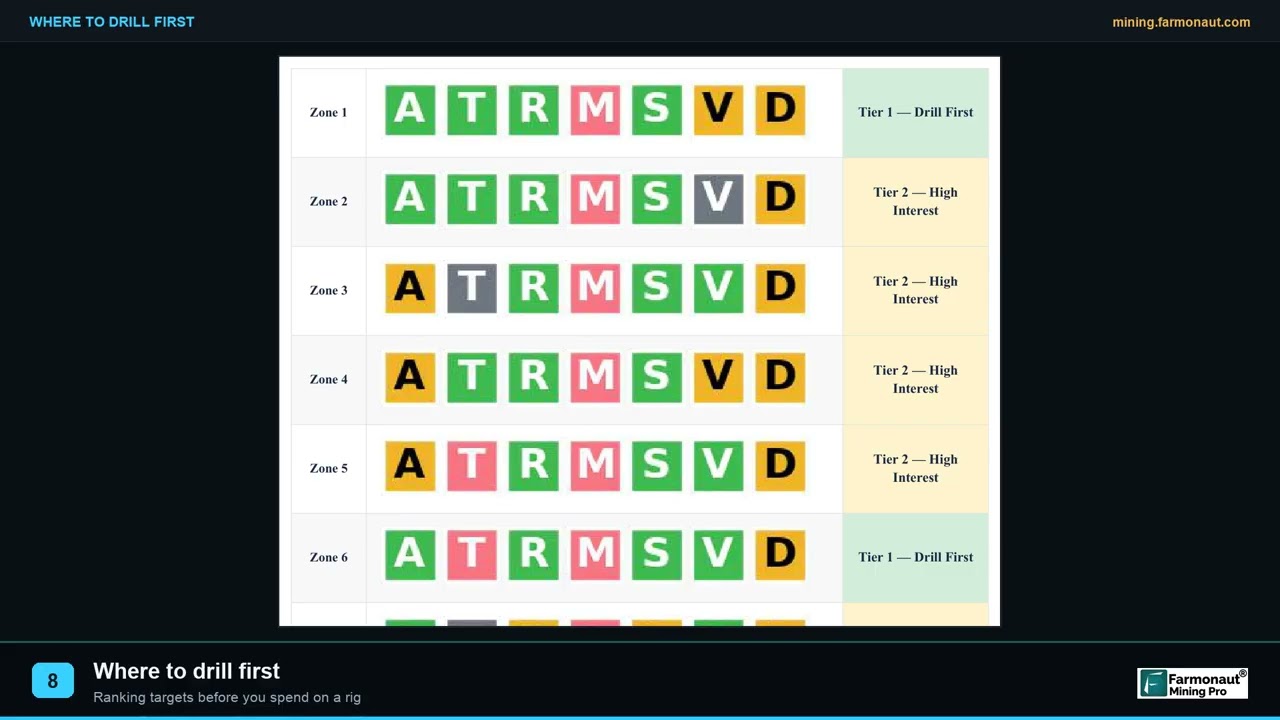
▶ Shows how satellite targets are ranked into a drill order. · 2:19
How to compare diamond exploration companies
Use the same six questions for every name on your list. They are questions about the project, not a view on any share price.
Chart
Average rough value per carat, 2024
US$ per carat, for selected producing countries
1. Which stage is the project at?
A company with indicator minerals and one drill hole is at a different risk level from one with a bulk sample. The GIA odds apply most to the first group. Label each project: target, kimberlite found, diamondiferous, bulk-sampled, resource, feasibility.
2. What is a carat worth?
Grade in carats per hundred tonnes means little without value per carat. The 2024 Kimberley Process averages range from US$10.84 per carat in Congo (Kinshasa) to US$416.88 in Namibia. A rich, low-value pipe can earn less per tonne than a poor, high-value one. Ask for a parcel valuation from a named valuer, with the date and the size of the parcel.
3. How much cash is left?
Read the latest quarterly report. Star Diamond’s second-quarter 2026 release shows cash of C$58 thousand, against C$724 thousand at the end of 2025, and states that it needs more financing to continue. Mountain Province’s May 2026 release described talks with lenders, its joint venture partner and governments; on 1 October 2026 it agreed to hand its 49% of Gahcho Kué to De Beers for debt forgiveness, with a six-month grace period from noteholders and Dunebridge (Brief Glance). A cash line and a going-concern note tell you more than a news headline.
4. Who is the partner or buyer?
Ekati found no viable bidders over an eight-week sales process in 2026. Majors and state companies, such as Endiama in Angola, are the likeliest partners. Check whether the partner has a right to buy production, a share of future upside, or a first claim on the asset.
5. Is the resource classified and how old is the report?
A JORC or NI 43-101 table with a stated date is a statement of confidence; an exploration target is not a resource. See the video below for the difference. Star Diamond’s resource is stated in a technical report dated 24 July 2024, so any price assumption in it is more than two years old.
6. Has the company changed direction?
North Arrow and Botswana Minerals show the pattern: if most of a company’s news is about copper or gold, assume the diamond ground gets less money and less attention.
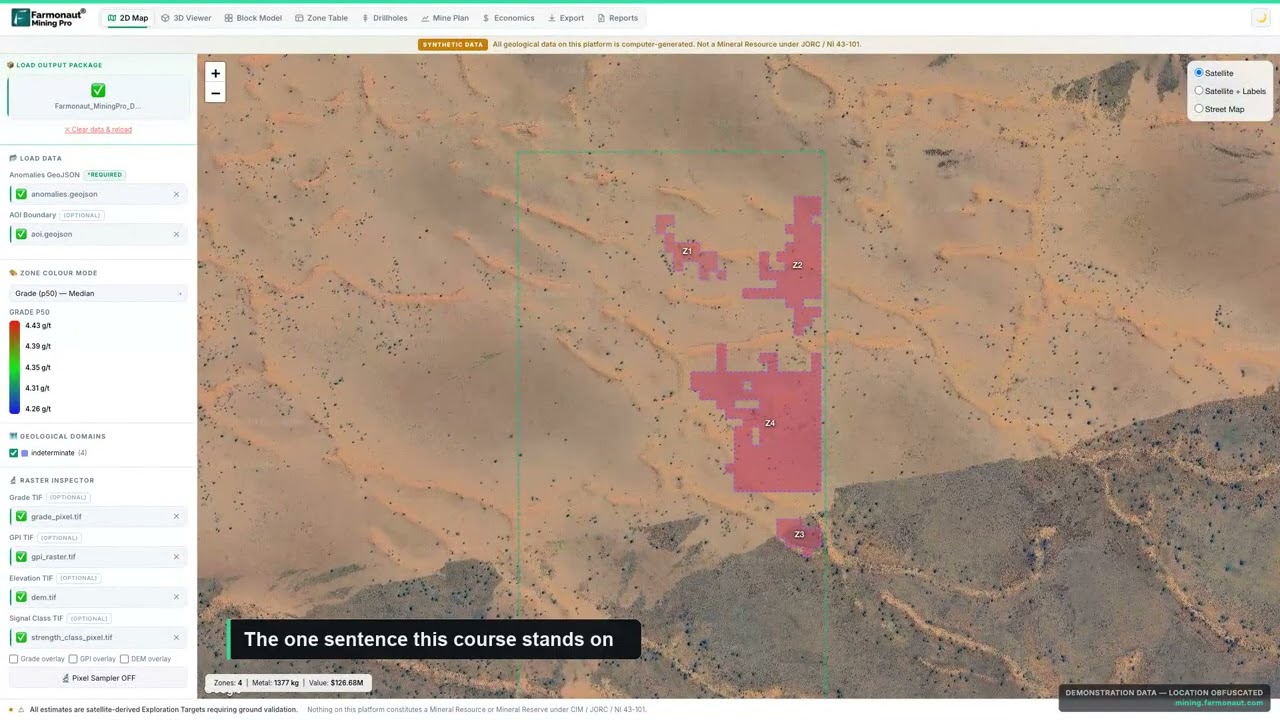
▶ Explains what an exploration target is and what it takes to become a classified resource. · 4:14
Grade and value calculator for a diamond project
Use the calculator below to sort the numbers in any announcement. Enter your own ore tonnage, grade in carats per hundred tonnes, a value per carat and a cost per tonne. It returns carats per year, revenue, operating margin and the break-even price. The break-even price per carat is the number to hold against the price averages in the chart above: if it sits above the national average for the country, the project needs large, high-value stones to work.
Calculator
What does my diamond project earn per tonne?
Enter your own tonnage, grade, value per carat and cost per tonne.
- Revenue per year (US$): $40,000,000
- Operating margin per year (US$): $10,000,000
- Break-even price per carat (US$): $75
- Break-even grade at your price (cpht): 30.0
Example values only, not a benchmark or a quote. Grade is in carats per hundred tonnes (cpht). Price is an input: use a current parcel valuation. Money in US$.
What satellite screening can and cannot do for a diamond licence
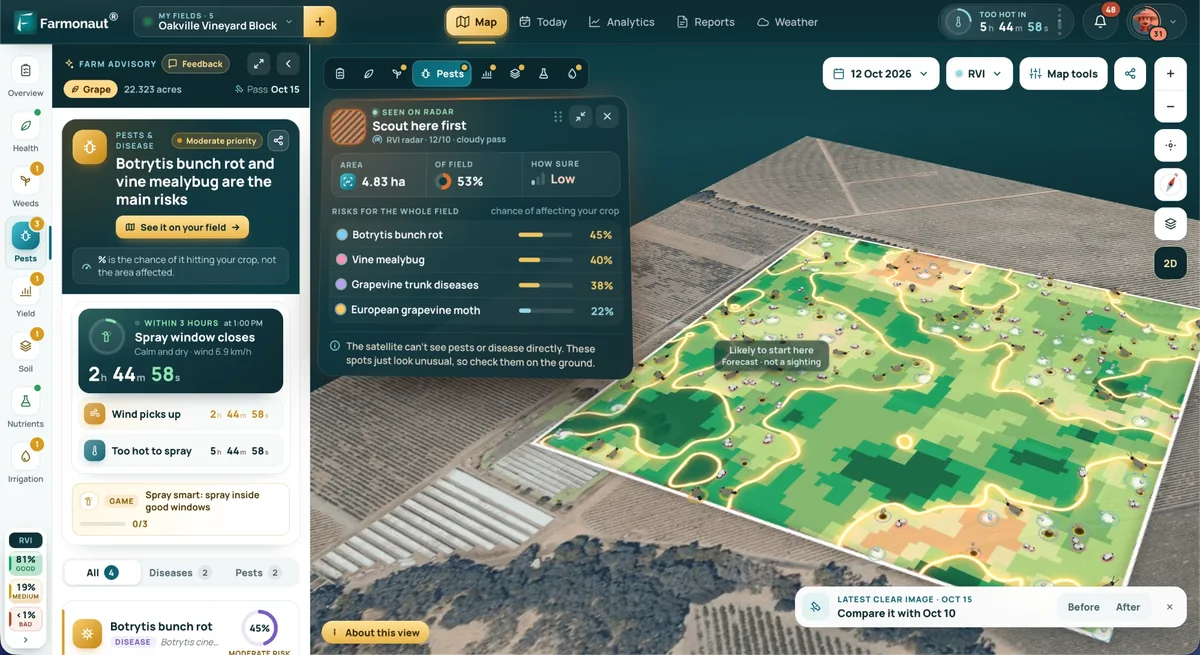
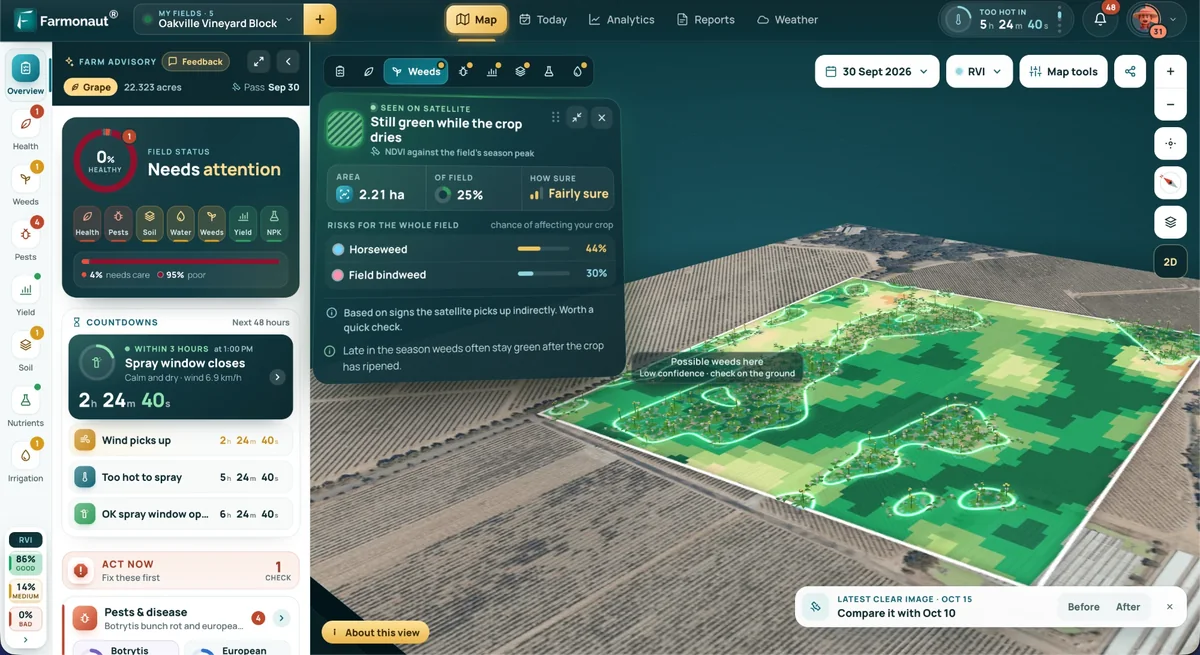
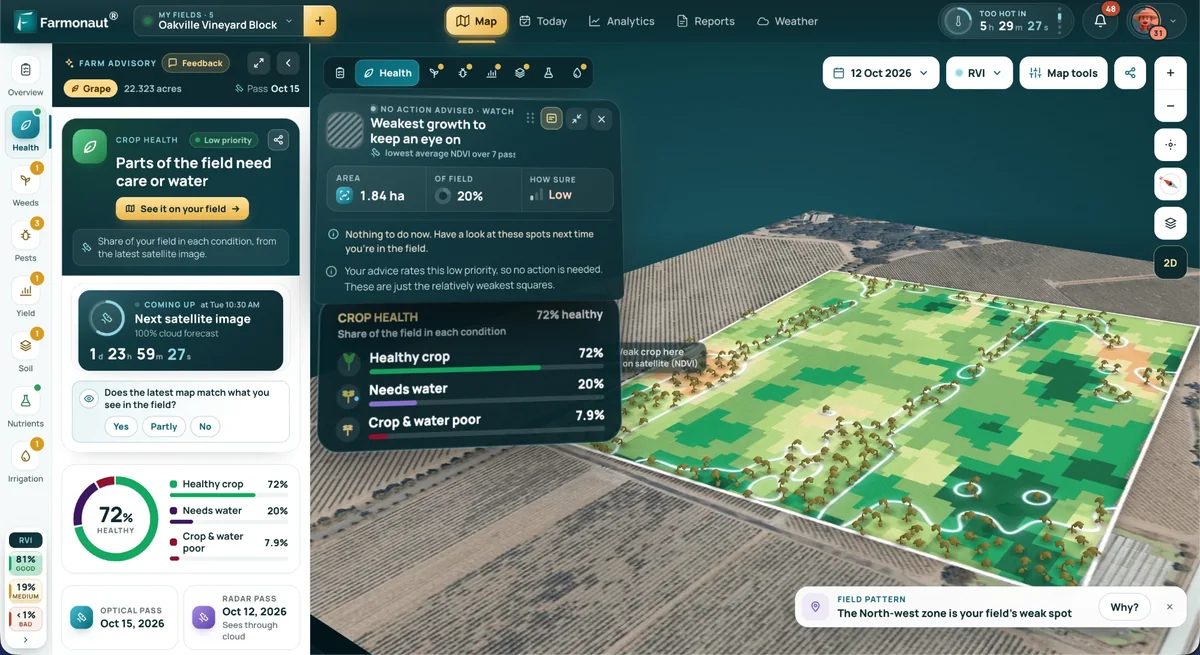
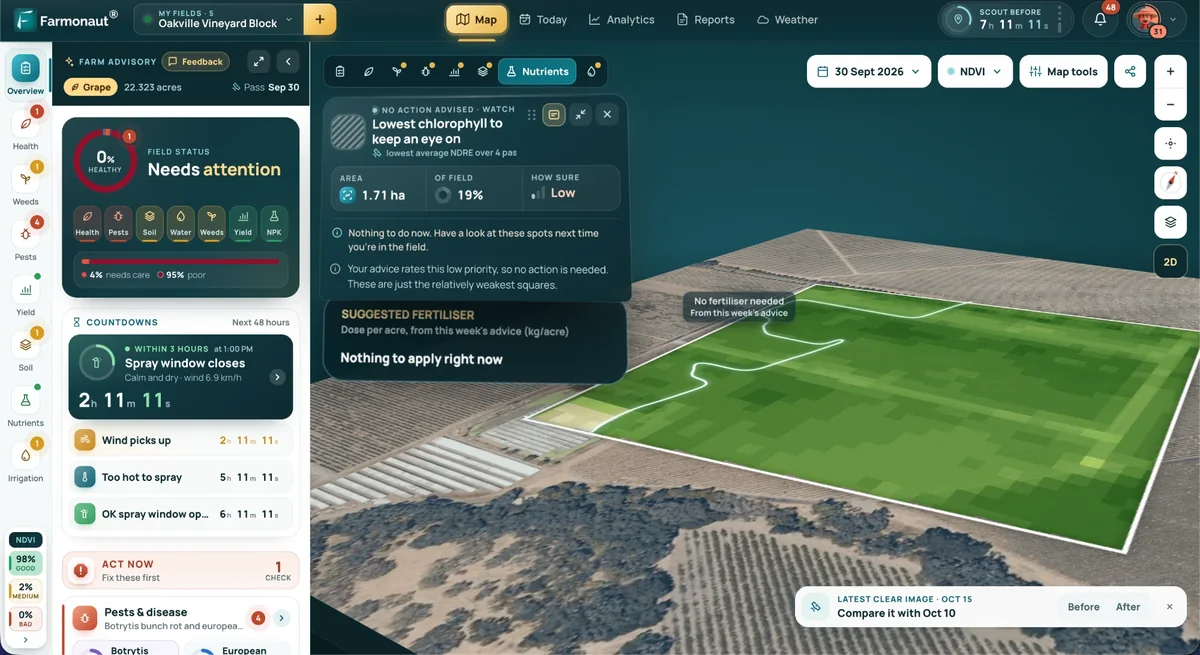
A satellite cannot see a diamond, and it cannot see a kimberlite buried under sand, lake sediment or till. The GIA review makes the same point about the difficulty of finding a pipe buried below surface deposits and vegetation. What imagery can do is narrow the area: it maps surface geology, drainage, lineaments and vegetation or soil patterns that sometimes sit over a pipe or its dispersal train, and it lets a licence owner rank ground before paying for sampling.
That is the one role for a service such as Farmonaut: a satellite screen of a licence that produces exploration targets for a consultant to check with indicator sampling and geophysics. The output is a target list, not a resource, and not a promise of diamonds. If you hold or are buying diamond ground, the sensible order is: screen the licence, confirm the targets on the ground, then spend on drilling.
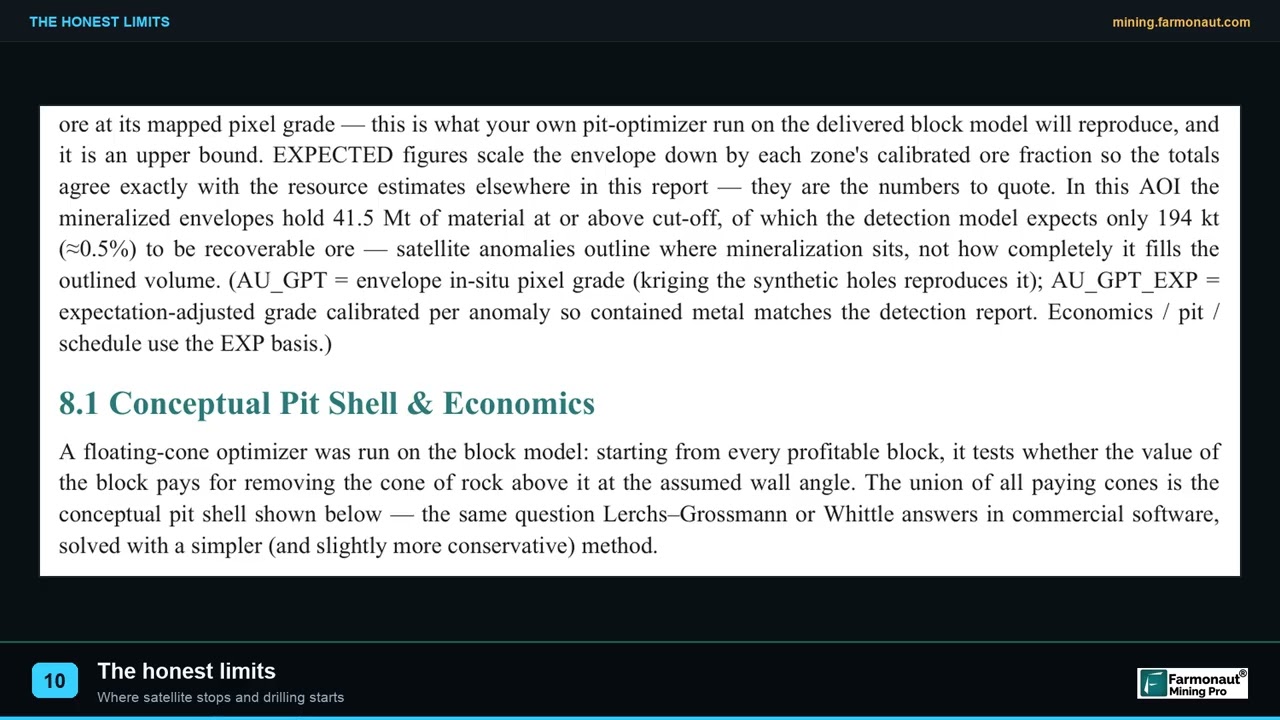
▶ Covers the limits of satellite exploration that matter in due diligence. · 2:08
Frequently asked questions
What do diamond exploration companies do?
They look for kimberlite or lamproite pipes, and for alluvial gravels, that contain diamonds in sufficient grade and value to mine. Work runs from regional sampling and geophysics through drilling and bulk sampling to a resource estimate.
Which diamond exploration companies are active now?
The majors covered here are De Beers, which is exploring with Endiama in Angola, and ALROSA, which lists 12 primary pipes in development in Russia. Juniors and producers include Lucara, Mountain Province, Star Diamond, North Arrow and Botswana Minerals, though several now lead with other metals. See the comparison table above for dated facts on each.
Is Rio Tinto still exploring for diamonds?
Rio Tinto reported in March 2026 that Diavik had delivered its final production and, according to Bloomberg via Miningmx, has left the diamond business after more than 50 years. It will keep processing and selling remaining stones.
How many kimberlites turn into mines?
Very few. In the Slave craton of Canada more than 300 kimberlites were found and about half carried diamonds, but fewer than 1 percent were rich enough to mine (GIA, Gems & Gemology).
How do explorers find kimberlites?
They follow indicator minerals such as garnet and chromite in till or stream sediment, check their chemistry, then use airborne magnetic and electromagnetic surveys to pick drill targets. Ice flow direction decides where the grain trail leads in glaciated country.
Why are diamond explorers moving into copper and gold?
Natural diamond prices are more than 40 percent below their pandemic peak and lab-grown stones are taking market share, so investors fund other metals more readily. Botswana Minerals describes the weak diamond market as the reason for its pivot, and North Arrow’s 2026 drilling is for gold.
Who is buying De Beers?
No buyer had been confirmed by 30 July 2026, the latest Anglo American update used here. In mid-July a Botswana minister said Anglo had picked the Global Diamond Consortium, chaired by Gareth Penny, as preferred bidder; Anglo did not confirm it, and on 30 July its chief executive said the sale would be private and was not exclusive to one bidder (National Jeweler, 21 and 30 July 2026). Another consortium led by Nir Livnat of Diacore was still in the running. Check Anglo’s latest announcement before relying on this.
What does it cost to explore for diamonds?
Costs depend on terrain, depth of cover and stage, so no single figure applies. As a late-stage example, Star Diamond budgeted C$3.0 million for a pre-feasibility study on Star-Orion South. Early indicator sampling costs far less than drilling and bulk sampling.
Can satellites find diamonds?
No. Satellites can map surface geology and patterns that help rank ground, but only sampling and drilling can show whether a pipe carries diamonds.
Which countries produce the most diamonds by value?
Russia led in 2024 at US$3.34 billion, followed by Angola, Botswana and Canada, each between US$1.0 billion and US$1.5 billion (Kimberley Process, 2024).
Can I buy shares in diamond exploration companies?
Several are listed, including Lucara (TSX: LUC), Star Diamond (TSX: DIAM) and Burgundy (ASX: BDM). This page gives facts, not buy or sell advice, and none of the figures above are forecasts.
This page is for information only. It is not investment advice or legal advice. Company status changes quickly; confirm facts in current filings and confirm licence rules with the regulator.
Farmonaut mining
Screen your diamond licence from space
Consultants and licence owners can rank ground with satellite imagery before paying for sampling and drilling.
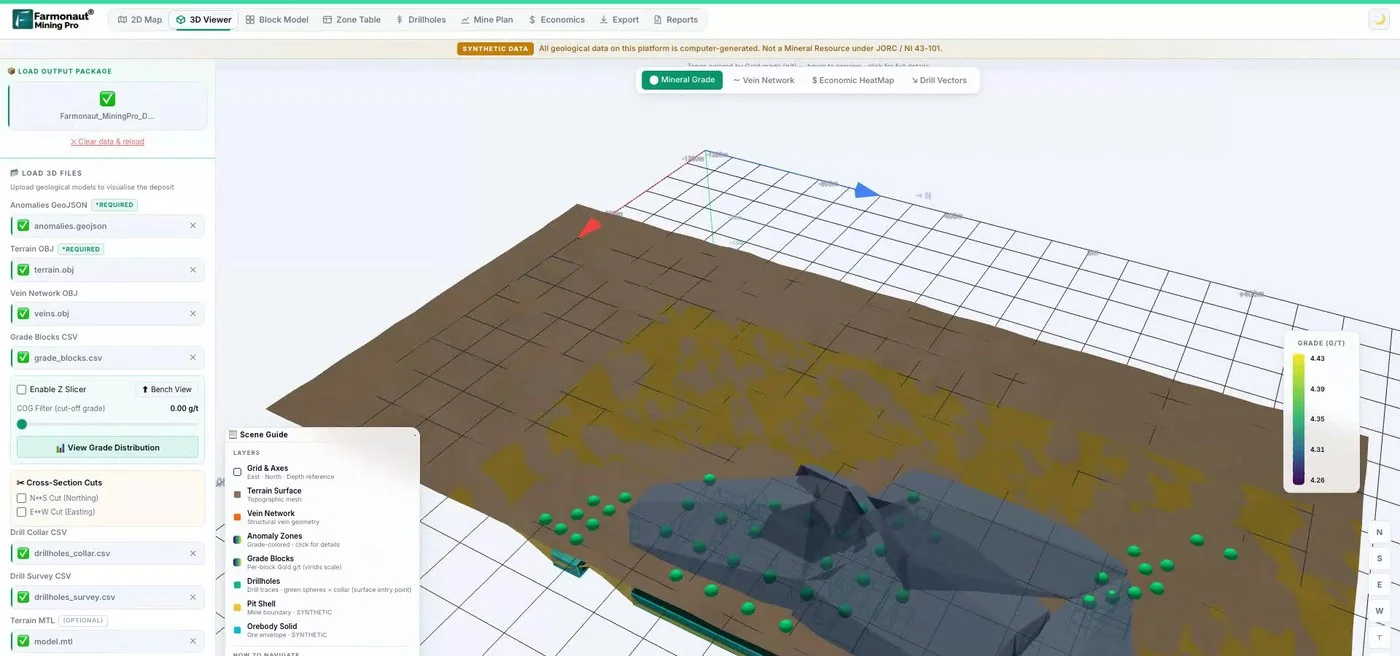
Mining Pro sample view, synthetic data
Sources
- Kimberley Process, Annual Global Summary 2024: kimberleyprocessstatistics.org
- Kimberley Process, Annual Global Summary 2023: kimberleyprocessstatistics.org
- Kimberley Process, Annual Global Summary 2022: kimberleyprocessstatistics.org
- Kimberley Process, Annual Global Summary 2021: kimberleyprocessstatistics.org
- Kimberley Process, Annual Global Summary 2020: kimberleyprocessstatistics.org
- Kimberley Process, Annual Global Summary 2019: kimberleyprocessstatistics.org
- USGS, Mineral Commodity Summaries 2026: Diamond (industrial): pubs.usgs.gov
- GIA, Recent Advances in Understanding the Geology of Diamonds: gia.edu
- Manitoba Geological Survey, GS2021-9, kimberlite-indicator-mineral results: gov.mb.ca
- Diamond World, De Beers and Endiama kimberlite field in Angola (14 Aug 2025): diamondworld.net
- National Jeweler, De Beers sale in final phase (30 Jul 2026): nationaljeweler.com
- Miningmx, Rio Tinto exits diamonds (26 Mar 2026): miningmx.com
- Mining.com, Lucara backs Karowe expansion (6 Jan 2026): mining.com
- Mountain Province Diamonds, first quarter 2026 results (12 May 2026): tools.prnewswire.com
- National Jeweler, Ekati to close (16 Jul 2026): nationaljeweler.com
- Star Diamond Corporation, second quarter 2026 results (14 Aug 2026): smb.grandforksgazette.ca
- North Arrow Minerals, company website: northarrowminerals.com
- Botswana Minerals, interim statement (16 Mar 2026): investegate.co.uk
- Miningmx, Angola targets 7% diamond output rise (16 Apr 2026): miningmx.com
- ALROSA, Resources and Assets: alrosa.ru
- Brief Glance, Mountain Province restructuring with De Beers (1 Oct 2026): briefglance.com
- U.S. Treasury, sanctions on Russian state-owned enterprises including ALROSA (7 Apr 2022): home.treasury.gov
- National Jeweler, Anglo selects Penny consortium as preferred bidder (21 Jul 2026): nationaljeweler.com
Discussion
Questions, corrections or field experience? Share them below. First-time comments are reviewed before they appear, and your email is never published.
No comments yet. Be the first to add a question or your experience.

 Faith At Work (Pty) Ltd
 Geotech Mining Solutions plc
 Vulcan International Limited
 Kidepo Associates
 GKY Mining
 Alkimy SARL
 Double A Trading
 GemSprout Metals Limited
 Qader Group
 Ileys General Trading
 SG Gold Mining LLC
 VRV Global Pte Ltd
 Omsri International FZE
 G.I.T.T.
 Jaunita Erss Ltd
 Almosi SARL
 SRK Consulting
 Berks Gold Limited
 Mwerezi Minerals Company Limited
 Mining SARL
 SenGold Invest SAS

 Exploration consultancy · South Africa · Gold