

Reviewed September 2026 against the Province of British Columbia’s forestry news releases and Natural Resources Canada’s national forest inventory.
Try it: Enter values above to see the estimate. →
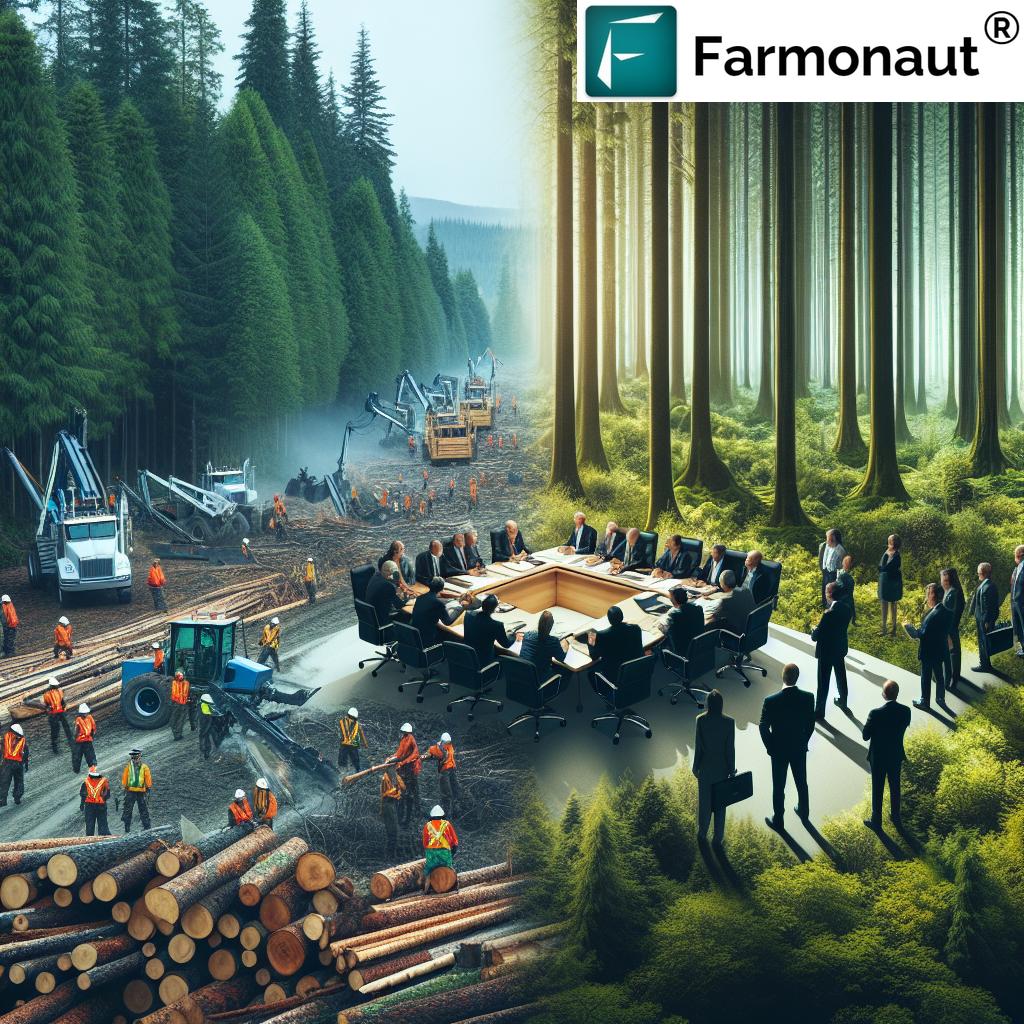
British Columbia logged an estimated 38,300 hectares of old-growth forest in 2021, down from 65,500 hectares in 2015, according to provincial government data. That decline looks like progress until you weigh it against what independent researchers have found: roughly 80% of the productive old-growth forest on Vancouver Island and the southwest mainland had already been logged as of 2021. This article lays out the actual hectares, the government’s own numbers, and the five conservation approaches that work in practice — with the sources and refresh paths so you can check the current figures yourself.
Table of Contents
- Old-Growth Logging in BC: The Numbers
- What “Old Growth” Means and What’s Actually Left
- Deferrals: What’s Protected and What Isn’t
- Old-Growth Logging Across Canada, Not Just BC
- Five Ways to Protect Old-Growth Forests
- The Economic Trade-Off
- How Satellite Monitoring Fits In
- Calculator: Estimate a Cutblock’s Carbon Loss
- FAQ
- Try it: Enter values above to see the estimate.
Old-Growth Logging in BC: The Numbers
The Province of British Columbia’s own historical data, published alongside its 2022 deferral announcement, shows old-growth harvest volume falling over a six-year span: 65,500 hectares logged in 2015 against a preliminary estimate of 38,300 hectares in 2021 — a drop of roughly 42%. That data comes directly from the Province of British Columbia’s news release, which also states that BC’s Timber Harvesting Land Base — the area legally available for logging — covered 22.3 million hectares between 2017 and 2021.
That 38,300-hectare figure is a preliminary estimate for calendar year 2021; it is the most recent year-specific number the province has published in this format. There is no confirmed government release with 2022, 2023, 2024 or 2025 hectare totals in the same series — if you need a current-year number, check the BC government’s Forestry Statistics portal directly, which updates annually in the second quarter with the prior calendar year’s data.
The hectare decline sounds like a win for conservation. But hectares logged per year is a flow number — it says nothing about how much productive old-growth stock remains in the stock. That’s where the second figure matters more: independent research summarized by The Narwhal’s investigation into BC’s old-growth data found that approximately 80% of productive old-growth forest — meaning stands capable of growing merchantable timber, as opposed to bog or subalpine old growth that was never going to be logged anyway — had already been harvested on Vancouver Island and the southwest mainland as of 2021. In other words, the annual harvest rate is falling in large part because there is markedly less big, valuable old growth left to cut, not only because policy has slowed the rate voluntarily.
This is the number that should anchor every conversation about “how much old growth is left in BC”: not total forest cover, but productive old-growth stock specifically, and it is concentrated in a small remaining footprint on the coast.
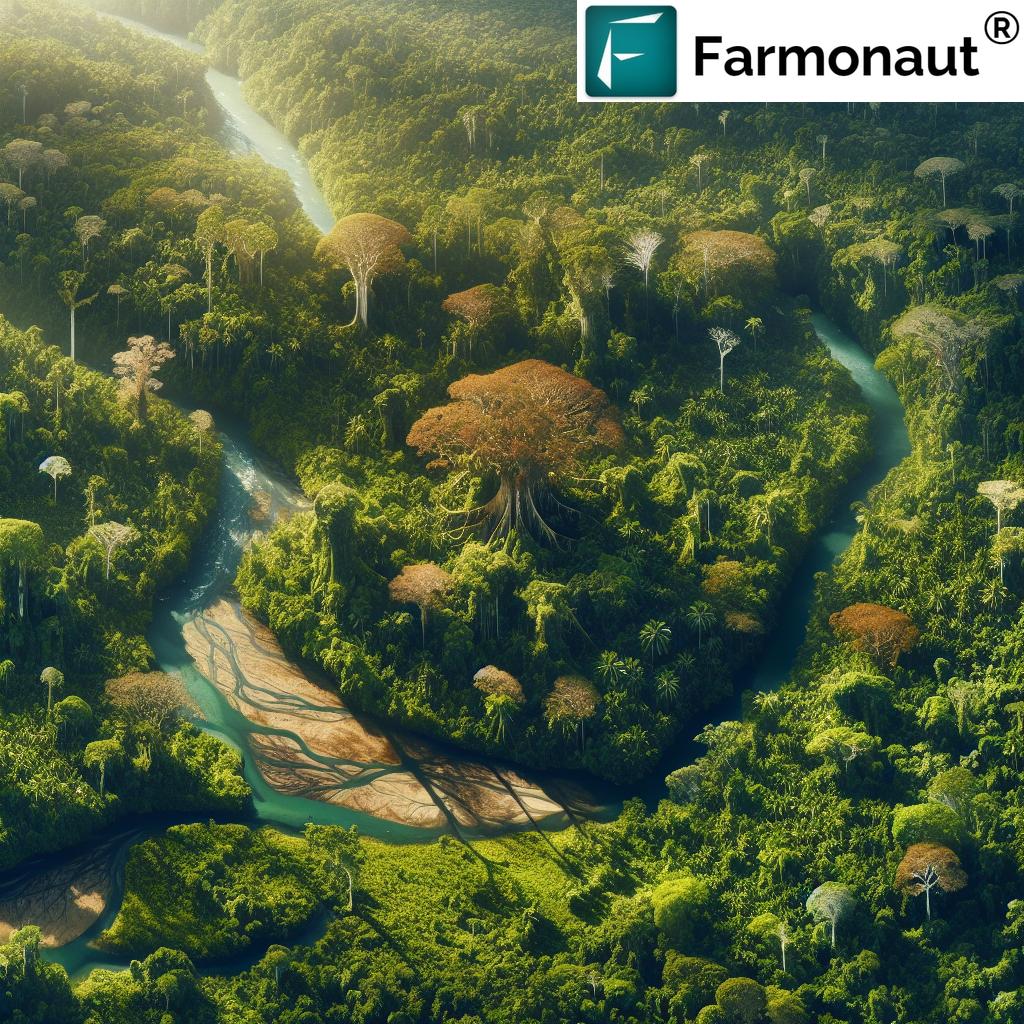
Why the Carbon Number Matters
Coastal temperate rainforest old growth sequesters carbon at a rate of approximately 22 tonnes of CO₂ per hectare per year, according to the Columbia University Climate School’s 2021 analysis of temperate rainforest carbon dynamics. Applied to the 38,300 hectares logged in 2021 alone, that rate implies a meaningful annual carbon-sequestration capacity taken out of production — not counting the carbon released directly from the harvested biomass and disturbed soil, which is a separate and larger accounting question the Columbia analysis does not quantify. If you’re modeling the climate impact of a specific cutblock, multiply its hectares by 22 t CO₂/ha/year to estimate the annual sequestration capacity forgone, and treat that as a floor, not a ceiling, on the true climate cost.
What “Old Growth” Means and What’s Actually Left
BC’s provincial definition ties “old growth” to stand age, and the threshold depends on forest type: coastal stands are generally classified as old growth at 250 years or older, while many interior stands qualify at 140 years or older due to different disturbance regimes (fire versus wind and decay on the coast). This distinction matters because “save old growth” campaigns and news coverage often use footage from iconic coastal cedar and Douglas-fir stands — the kind found in Fairy Creek and on Vancouver Island — while the policy debate spans both coastal and interior forest types with very different histories and current logging pressure.
Two features distinguish old growth from second-growth or plantation forest in ways that matter for conservation value:
- Structural complexity — standing dead trees (snags), downed woody debris, and multi-layered canopies that develop over centuries and cannot be replicated by replanting.
- Continuity of habitat — species like marbled murrelet and northern goshawk depend on structural features that take 150+ years to form; a 60-year-old second-growth stand does not provide equivalent habitat regardless of tree height.
The gap in publicly available data here is real: there is no consistently published county-by-county or region-by-region breakdown of remaining productive old growth across Canada — BC is the only province that publishes hectare-level harvest and inventory data in this format on a recurring basis. If you need old-growth figures for another province, you would need to request them directly from that province’s forestry ministry, since no equivalent public dataset currently exists.
Deferrals: What’s Protected and What Isn’t
As of February 2023, the Province of British Columbia reported 2.1 million hectares of old-growth forest under temporary deferrals — logging pauses intended to give time for longer-term land-use planning, according to the Province’s February 2023 release. That 2.1 million hectares needs two caveats a reader should hold onto:
- It is temporary, not permanent. A deferral is a pause, renewable or expirable by government order, not a legislated protected-area designation. The specific Fairy Creek-area deferral discussed later in this article is itself a temporary order subject to renewal, not a permanent reserve.
- The permanent-versus-temporary split within that 2.1 million hectares is not published. The province’s release states the total deferral area but does not break out how much of it has since converted to permanent protection versus how much remains time-limited or has lapsed. If you need that split for current land-use planning, the source to check is the same Forestry Statistics portal referenced above, cross-referenced against BC’s old-growth strategic review updates.
To put the deferral area in context against total working forest: 2.1 million hectares under deferral is a small fraction of the 22.3 million-hectare Timber Harvesting Land Base — the area of BC forest legally designated as available for harvest between 2017 and 2021. That ratio is the single most useful number for anyone asking “how much of BC’s working forest is actually off-limits to logging right now” — approximately 9%, based on dividing the deferral figure by the harvesting land base, both from the same provincial source.
The Fairy Creek Deferral, Specifically
The most-covered single deferral in this space covers approximately 1,200 hectares of Crown land in the Fairy Creek watershed on Vancouver Island, extended by the BC Ministry of Forests at the Pacheedaht First Nation’s request. This is one deferral among the 2.1 million hectares under deferral province-wide — it draws disproportionate media attention because of the 2020-2021 blockades and nearly 1,200 arrests connected to Teal-Jones Group logging permits in the same watershed, not because it represents an unusually large share of protected area. If you are trying to gauge overall provincial old-growth protection, the 1,200-hectare Fairy Creek deferral is a rounding error against the 2.1-million-hectare total; treat Fairy Creek as a case study in the politics of deferrals, not as a proxy for the province’s overall old-growth strategy.
A separate and unresolved safety issue tied to Fairy Creek is tree spiking — the illegal insertion of metal spikes into standing trees to damage logging equipment and endanger sawmill and falling crews. The Teal-Jones Group has confirmed incidents in the watershed and stated it has detection protocols in place, though at least one incident involved a saw blade striking a spike undetected. The RCMP has investigated these incidents as criminal activity. This is a genuine safety failure mode in the conservation debate and worth naming plainly: sabotage that endangers workers undermines the credibility of conservation advocacy rather than advancing it, and it is treated as a criminal matter, not a protest tactic, by the province and by industry.
Old-Growth Logging Across Canada, Not Just BC
Canada’s total forest area is approximately 369 million hectares, according to Natural Resources Canada’s national forest inventory. That figure represents all forest types and ages nationally, not old growth specifically — Natural Resources Canada’s inventory is a total-forest-cover count, and it does not break out an old-growth-specific national hectare figure in the same release. This is an important distinction because “old growth logging in Canada” searches often conflate total forest area (369 million hectares, mostly boreal forest that is periodically disturbed by fire on natural cycles far shorter than coastal old-growth cycles) with the much smaller, much more contested pool of coastal and interior old-growth stands specifically at risk from harvest.
The national forest inventory updates on a roughly five-year cycle tied to field surveys, with the next update expected in 2026 according to Natural Resources Canada’s published schedule — so a national total-forest-area figure is one of the more stable numbers in this space, unlikely to move much between inventory cycles, while BC’s annual old-growth harvest figures move every year and need the more frequent check described above.
What this means practically: if a source claims a “hectares of old growth logged in Canada” figure at the national level, ask which province or region it is actually describing — BC is the only jurisdiction with old-growth-specific, harvest-year-level public reporting in the format used throughout this article. Other provinces’ old-growth harvest volumes, where they exist, would need to be requested directly from each province’s forestry ministry.
Five Ways to Protect Old-Growth Forests
Setting aside the politics, five approaches actually move the needle on old-growth protection, in ascending order of durability:
1. Temporary Logging Deferrals
The fastest tool available to a provincial government: an order that pauses harvest in a defined area while longer-term planning happens. BC’s 2.1 million hectares under deferral as of February 2023 is the largest example in the country. Durability: low — deferrals expire or can be reversed by a subsequent order, as the Fairy Creek-area deferral’s own extension-to-2026 history shows.
2. Permanent Protected-Area Designation
Provincial parks, ecological reserves, and conservancies remove land from the harvestable base permanently, subject to legislative change. This is the only category on this list that survives a change in government forestry policy without a new order. The gap: the province’s public releases do not break out how much of the 2.1 million deferred hectares has actually converted to this category versus remaining temporary — see the caveat above.
3. Indigenous-Led Land Management
Requests from First Nations for deferrals — as the Pacheedaht First Nation’s request triggered the Fairy Creek-area extension — combine legal standing over traditional territory with long-term stewardship interest that outlasts any single government’s term. This is increasingly the mechanism by which new deferrals originate in BC, and it tends to produce more durable outcomes than deferrals initiated by provincial policy alone, because the underlying rights claim does not expire with an order.
4. Value-Added Second-Growth Substitution
Redirecting mills toward second-growth timber and higher-value finished wood products reduces the economic pressure to access remaining old-growth stands. This does not protect any specific hectare by itself, but it changes the industry’s underlying demand for old-growth-specific timber over time.
5. Independent Monitoring and Verification
Given that independent researchers found the province’s own public data understated productive old-growth loss, third-party verification — satellite-based forest cover change detection, published alongside government figures — is a durable check that does not depend on any single government’s release schedule. This is the approach with the fewest moving parts: it does not require new legislation, only recurring measurement.
| Mechanism | Speed to implement | Durability | Who initiates it | Known BC example |
|---|---|---|---|---|
| Temporary deferral | Fast (single order) | Low — expires/reversible | Provincial government | 2.1M ha under deferral, Feb 2023 |
| Permanent designation | Slow (legislative) | High | Provincial legislature | Provincial parks/conservancies |
| Indigenous-led request | Fast to medium | Medium-high — tied to rights | First Nations | Pacheedaht request, Fairy Creek area |
| Value-added substitution | Slow (market shift) | Indirect | Industry/mills | Second-growth mill retooling |
| Independent monitoring | Ongoing | N/A — a check, not a protection | Researchers/NGOs | The Narwhal’s 2021 data review |
The Economic Trade-Off
Forestry generated approximately $1.9 billion CAD in government revenue for British Columbia in fiscal year 2021/22, according to the same provincial news release that reported the harvest hectare figures. That number is the province’s stumpage and forestry-sector revenue for one fiscal year — it is not broken down between old-growth and second-growth harvest specifically in the public release, and the province has not published a per-hectare or per-cubic-metre value comparing old-growth logs against second-growth timber. If you need that specific split for financial modeling, it is not currently public; the method to obtain it would be a direct request to the BC Ministry of Forests or a review of individual tree farm license financial disclosures, where available.
Similarly, no public dataset breaks out employment figures specifically for old-growth logging operations as distinct from the forestry sector overall — the $1.9 billion figure is sector-wide revenue, not an old-growth-specific jobs count. Anyone citing a specific old-growth jobs number should be asked for their source, because the province’s own releases do not provide one.
What is measurable: the 22.3 million-hectare Timber Harvesting Land Base represents the total area the forestry economy draws from, of which old growth specifically accounted for 38,300 hectares logged in the 2021 preliminary estimate — meaning old-growth harvest represented a small fraction of the total annual cut across the province’s working forest, even though it draws a disproportionate share of public attention because of its irreplaceability once logged.
Sustainable second-growth practices, described in more depth in this overview of sustainable forestry practices and in sustainable forest management techniques, are the main lever available to keep the forestry sector’s $1.9 billion CAD revenue contribution intact while reducing demand on the remaining old-growth stock. A parallel case study on managed-forest value is covered in this piece on sustainable forestry’s economic benefits.
How Satellite Monitoring Fits In
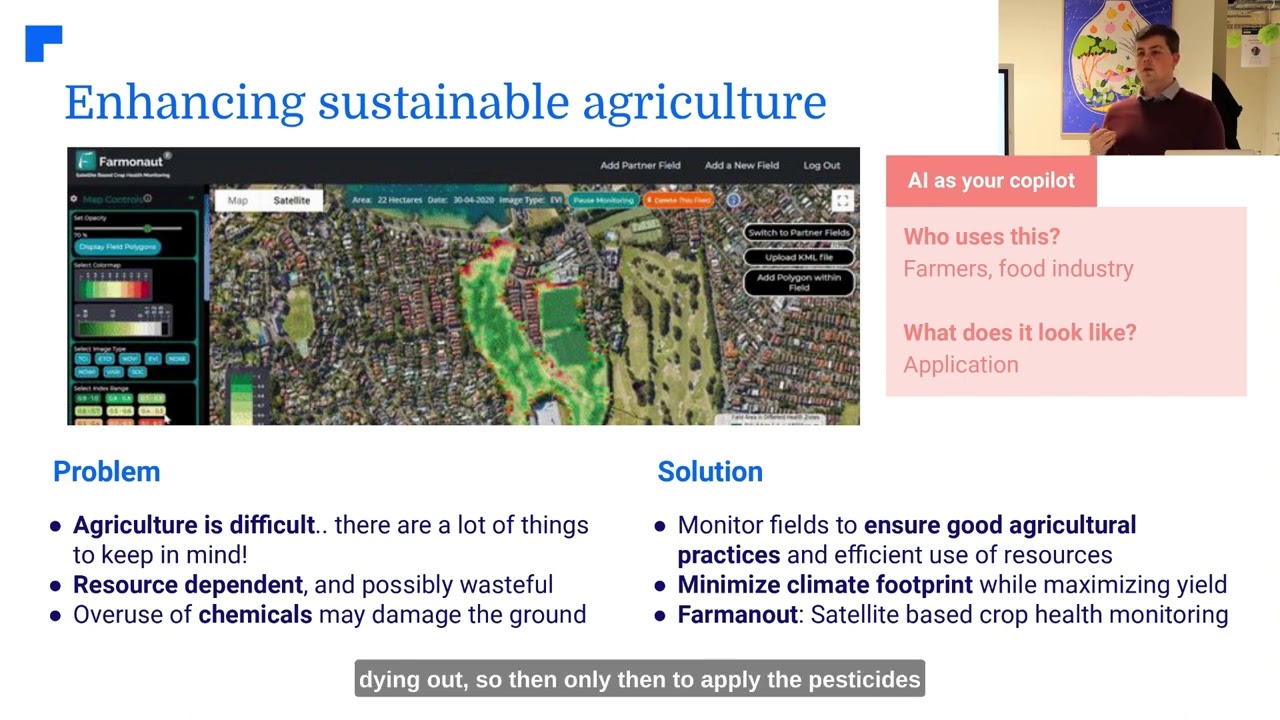
Independent monitoring — the fifth protection mechanism above — is where satellite-based forest cover analysis has a concrete, repeatable role, distinct from the government’s own annual reporting cycle. Farmonaut’s platform uses multispectral satellite imagery to track vegetation health and canopy change over time, the same category of tool used in deforestation monitoring methods more broadly. Applied to a specific cutblock or watershed, this kind of monitoring can flag canopy loss between satellite passes independently of when a government agency next publishes its own harvest figures — useful given that BC’s own hectare-logged data, as discussed above, is published on an annual lag and was itself found by independent researchers to understate productive old-growth loss.
The Farmonaut satellite and weather API and the underlying satellite data API expose this kind of change-detection capability for developers building their own monitoring tools — for a watershed group or research team wanting to track canopy change on a specific deferral area between official government reporting cycles, this is the technical building block rather than a finished old-growth-specific product. The same category of tooling extends into related forest-technology applications, discussed in why forest and mine technology matter together, and into the ecosystem-health lens covered in sustainable forestry practices for ecosystem health.
Farmonaut’s mobile and web apps make this kind of satellite monitoring accessible without a developer background:



Calculator: Estimate a Cutblock’s Annual Carbon Sequestration Loss
Using the Columbia University Climate School’s coastal old-growth sequestration rate of 22 tonnes CO₂ per hectare per year, estimate the annual carbon-sequestration capacity a specific cutblock represents once logged.
Enter values above to see the estimate.
Assumptions: uses a single fixed sequestration rate (22 t CO₂/ha/year) drawn from Columbia University Climate School research on coastal temperate rainforest specifically — interior old growth sequesters at different rates not covered here. This estimates sequestration capacity forgone only; it excludes carbon released directly from harvested biomass, soil disturbance, and decomposition, which would add substantially to the total climate impact and are not quantified in the source cited.
Public Engagement, Indigenous Rights, and Policy Direction
The Fairy Creek deferral's origin — a request from the Pacheedaht First Nation over their traditional territory — reflects a broader and increasing pattern across BC forest policy: Indigenous communities initiating or co-managing deferral and land-use decisions rather than responding to decisions made without them. This shift matters for durability, as noted in the five-mechanisms comparison above, because a rights-based request does not expire on the same terms as a policy-driven order.
For readers wanting to understand the ecological reasoning behind old-growth-specific protection versus general reforestation, the underlying principle is explained further in this piece on ecological plant function, and the biodiversity-and-carbon case for standing forest generally is explored through a different biome in this look at Amazon rainforest biodiversity and agriculture — useful as a comparative case because it shows the same replanting-does-not-equal-replacement principle applying well beyond BC's coast.
Policy direction going forward, based on the mechanisms already in motion, centers on: whether more of the 2.1 million deferred hectares converts to permanent designation, whether the annual old-growth harvest volume continues its 2015-2021 downward trend when the next year's figures are published, and whether Indigenous-led deferral requests continue to be the primary mechanism by which new areas enter deferral status. None of these are predictions this article can verify in advance — they are the specific things to check against the sources named throughout when newer data is published.
How to Check These Numbers Yourself
Every figure in this article traces to a dated, named source. To keep your own understanding current:
- Annual hectares logged: BC government's Forestry Statistics portal, updated annually in Q2 with the prior calendar year's data — the 38,300-hectare figure here is a 2021 preliminary estimate and will have been superseded by newer year-specific releases.
- Deferral area and status: Cross-reference the province's news releases (as cited above) against BC's old-growth strategic review updates for the permanent-versus-temporary split, which is not broken out in the original release.
- National forest inventory: Natural Resources Canada's National Forest Inventory dashboard, updated roughly every five years with field survey data — next scheduled for 2026.
- Carbon sequestration rates: Natural Resources Canada's annual State of Canada's Forests report incorporates updated field data on carbon density in old-growth stands, typically using data two to three years old at time of publication.
FAQ
Q: How much old-growth forest has BC logged?
A: The province's preliminary estimate for 2021 is 38,300 hectares, down from 65,500 hectares in 2015. Independent research puts productive old-growth loss on Vancouver Island and the southwest mainland at approximately 80% as of 2021. Check the BC government's Forestry Statistics portal for any year since 2021.
Q: What is old-growth logging in BC, specifically?
A: It's the harvest of forest stands meeting BC's age thresholds for old growth — generally 250+ years on the coast, 140+ years in the interior — within the province's 22.3 million-hectare Timber Harvesting Land Base.
Q: How can I help save old-growth forests?
A: The five durable mechanisms covered in this article are: temporary deferrals, permanent protected-area designation, Indigenous-led land management requests, value-added second-growth substitution to reduce old-growth demand, and independent satellite-based monitoring to verify government figures.
Q: Is old-growth logging in BC increasing or decreasing?
A: Provincial data shows a decrease in hectares logged annually (65,500 ha in 2015 to 38,300 ha preliminary in 2021), but independent researchers attribute part of that decline to there being markedly less productive old growth left to log, not solely to policy success.
Q: How much old-growth forest is currently protected in BC?
A: 2.1 million hectares were under temporary deferral as of February 2023. This is not the same as permanent protection — deferrals can expire or be renewed by government order — and the split between temporary and permanent status within that total is not currently published.
Q: Is old-growth logging happening elsewhere in Canada, not just BC?
A: Canada's total forest area is 369 million hectares, but old-growth-specific harvest data at the hectare level, in the format covered here, is published consistently only by British Columbia. Other provinces' figures would need to be requested from their respective forestry ministries.
Q: What is tree spiking and why does it matter to this debate?
A: Tree spiking is the illegal practice of inserting metal spikes into standing trees to damage logging equipment, confirmed in incidents in the Fairy Creek watershed and investigated by the RCMP as criminal activity. It endangers forestry workers and is treated as sabotage, not legitimate protest, by both government and industry.

 WICO
WICO Gen Chayat
 Chimera Innovation
 Hiteshi Infotech
 Clubhouse OS
 SkyHarvest
 Polaris Digitech
 Teledarbas
 Wild Oak Farm
 SFX
SFX BACF Africa
 Doodlakine
 Exurbia Geospatial
 FieldZero
 Indico Company
