

Table of Contents
- Introduction: The Urgency of Deforestation Monitoring
- Trivia: Global Impact of Monitoring Tools
- Comparative Table: Deforestation Monitoring Tools
- Tools to Supervise Deforestation: 10 Effective Methods
- 1. Satellite Remote Sensing
- 2. Artificial Intelligence and Machine Learning Analysis
- 3. National Forest Monitoring Systems (NFMS)
- 4. Independent Forest Monitoring (IFM)
- 5. Forest Monitoring Platforms
- 6. Geospatial Data Providers
- 7. Global Forest Watch (GFW)
- 8. High Carbon Stock (HCS) Mapping
- 9. Drones and Unmanned Aerial Vehicles (UAVs)
- 10. Internet of Things (IoT) Sensors
- BONUS: Blockchain Technology for Forestry
- BONUS: Precision Forestry with GPS and GIS
- BONUS: i-Tree Tools
- Trivia: Illegal Logging Detection Impact
- Integrating Farmonaut’s Technology with Deforestation Supervision
- Farmonaut Subscriptions & Pricing
- Frequently Asked Questions (FAQ)
- Conclusion: Toward Sustainable Forestry Practices
Tools to Supervise Deforestation: 10 Effective Methods
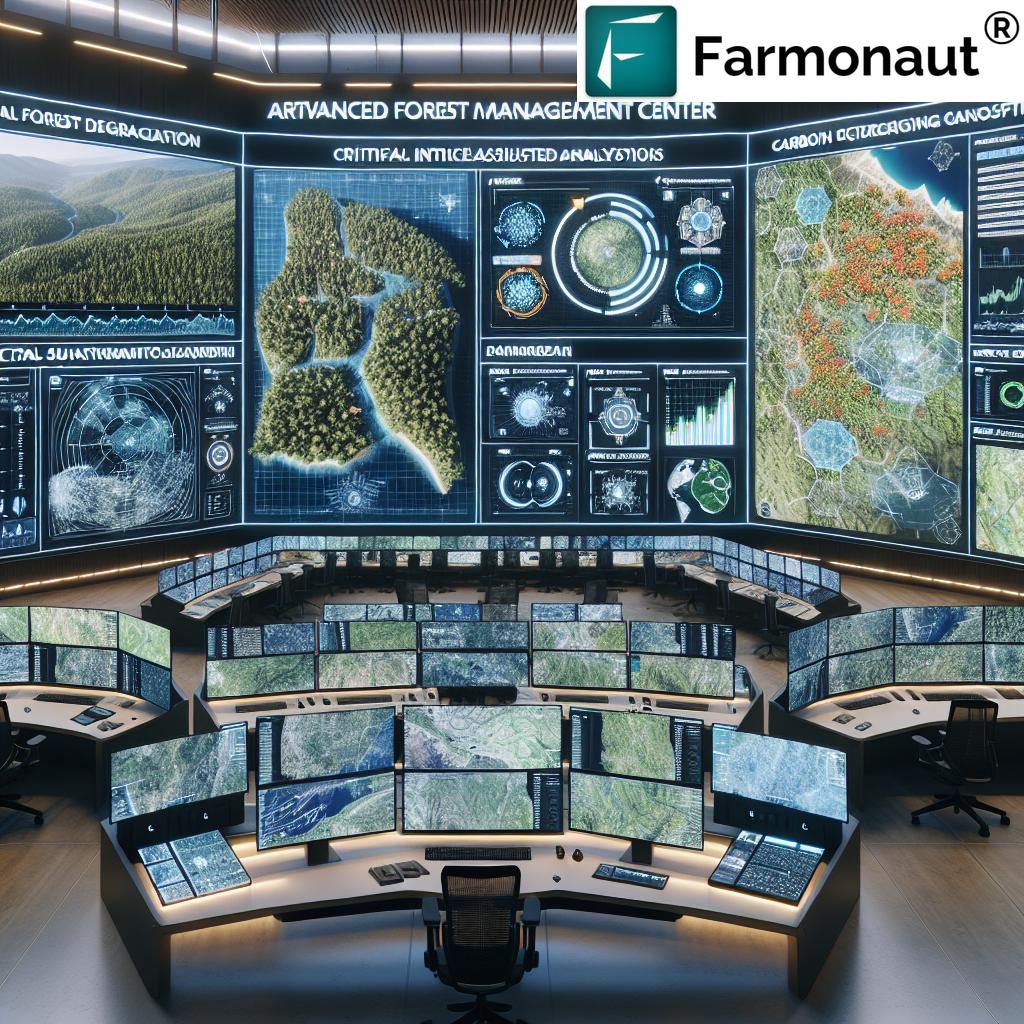
“Over 80% of global deforestation hotspots are monitored using satellite imagery and AI-powered analysis tools today.”
Deforestation monitoring has become a cornerstone of global sustainability efforts. As our planet faces mounting threats from forest loss, the need for timely, accurate, and ongoing monitoring is greater than ever. Forests play a critical role in regulating the global climate, safeguarding biodiversity, and maintaining the stability and livelihoods of countless communities. Yet, rising illegal logging, agricultural expansion, and forest degradation challenge even the most robust conservation strategies.
Technological advancements have introduced a new wave of forest conservation technology. Using satellite imagery, AI, blockchain, and a suite of digital tools, we now have unprecedented capability to track changes, detect illegal activity, and support sustainable land management. These tools not only enhance supervision but also drive innovation in conservation, agriculture, and forestry sectors.
In this comprehensive guide, we will explore 10 of the most effective tools for supervising deforestation—detailing how each works, real-world use cases, and their impact on forestry management and environmental stability. We will also spotlight how modern platforms like Farmonaut are integrating these advanced technologies to make precision forestry and sustainable agriculture both affordable and accessible.



Comparative Table: Deforestation Monitoring Tools and Methods
| Tool Name | Technology Used | Estimated Detection Accuracy (%) | Monitoring Frequency | Area Coverage | Main Application | Cost Estimate |
|---|---|---|---|---|---|---|
| Satellite Remote Sensing | Satellite Imagery, Synthetic Aperture Radar | 85–99% | Real-time to Weekly | Millions of hectares | Detect changes in forest cover, illegal logging | Medium |
| Artificial Intelligence (AI) & Machine Learning | AI, Machine Learning on Satellite Data | 90–98% | Real-time to Daily | Global | Forest change detection, trend analysis | High |
| NFMS | Satellite Data, Ground Observations, Statistical Models | 85–95% | Monthly/Quarterly | National/Regional | Report/verify forest changes, policy support | Medium |
| Independent Forest Monitoring (IFM) | Field Audits, Satellite Images, Legal Analysis | 80–93% | Annual/Bi-annual | Regions and Countries | Legal compliance, transparency | Medium |
| Forest Monitoring Platforms | Satellite, AI, Digital Mapping | 90–99% | Real-time | Scalable to global coverage | Verification, auditing, compliance | Medium |
| Geospatial Data Providers | High-res Optical & SAR Imagery | 90–99% | On-demand/Custom | Thousands to millions of sq.km | Illegal logging, wildfire impact, flooding | High |
| Global Forest Watch (GFW) | Satellite Data, Ground Input | 85–97% | Near-real time | Global | Monitor forest change, conservation | Low (Open Source) |
| High Carbon Stock (HCS) Mapping | LiDAR, Satellite Imagery | 88–95% | Annual/Project-based | Millions of hectares | Carbon mapping, land-use planning | High |
| Drones/UAVs | High-res Aerial Imaging | 90–98% | Weekly/Project-based | 10–50 sq.km/mission | Forest health, illegal activity, surveying | Medium – High |
| IoT Sensors | Environmental Sensors, Connectivity | 75–95% | Real-time | Localised (area network) | Detect fires, soil & forest health | Medium |
| Blockchain | Distributed Ledger Technology | NA — Traceability | Per event/transaction | Supply chain scale | Timber legality & transparency | Medium |
| GPS & GIS Precision Forestry | GPS, GIS Mapping Tools | 90–99% | Real-time/project | Site/Region Specific | Resource tracking, planning | Medium |
| i-Tree Tools | Assessment & Analysis Software | 70–90% | Project/Annual | Urban/Regional | Tree inventory, ecosystem valuation | Low |
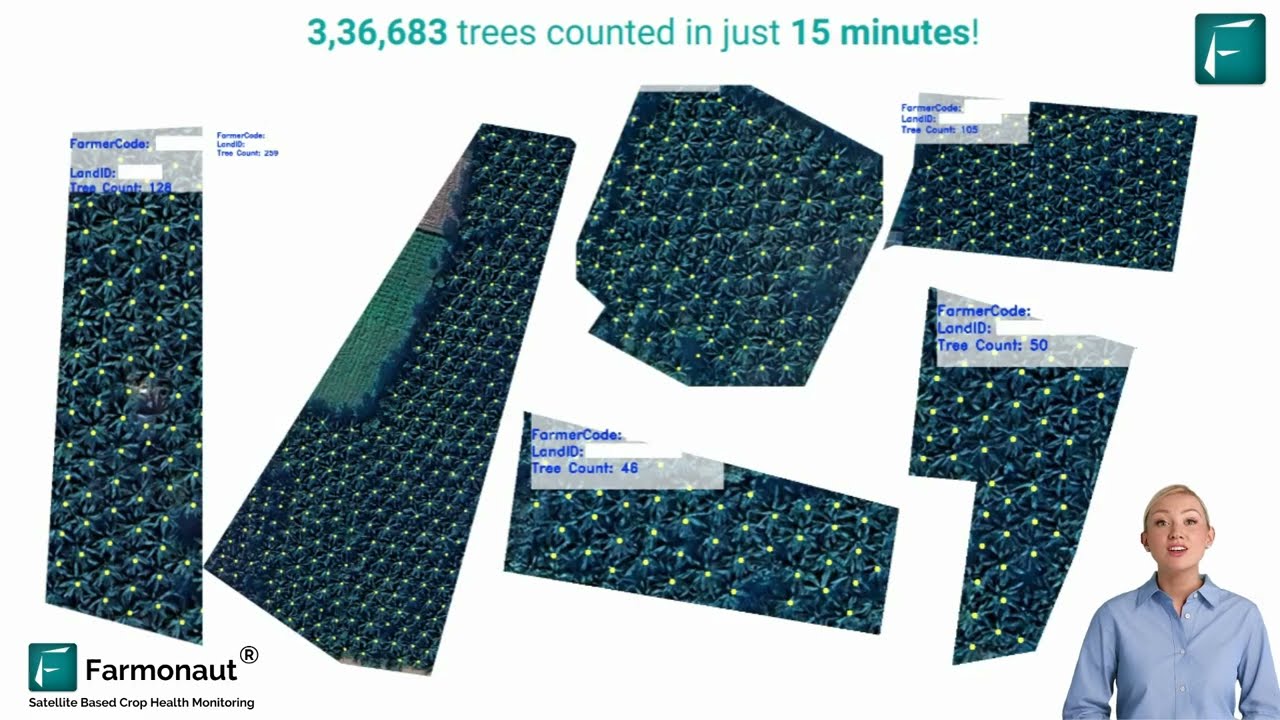
10 Effective Tools and Methods for Deforestation Monitoring & Supervision
Let’s take a detailed look at the critical tools for deforestation monitoring that are transforming how we supervise, detect, and protect our forests.
1. Satellite Remote Sensing: The Foundation of Satellite Forest Monitoring
Satellite remote sensing sits at the heart of modern forest monitoring technology. By providing timely, high-resolution images covering vast and often inaccessible forest areas, satellites such as Landsat and Sentinel-2 have revolutionized our ability to monitor changes in forest cover.
- Can detect illegal logging, land conversion, and degradation with synthetic aperture radar (SAR), which sees through clouds.
- Supports real-time forest change detection—identifying issues like clear cutting or wildfires almost as they happen.
- Enables detailed mapping and change analysis, crucial for both forest conservation and management planning.
For enhanced accuracy and coverage, synthetic aperture radar (as in the LUCA system from CTrees) overcomes weather-related obstacles, ensuring monitoring even in perpetually cloudy regions.
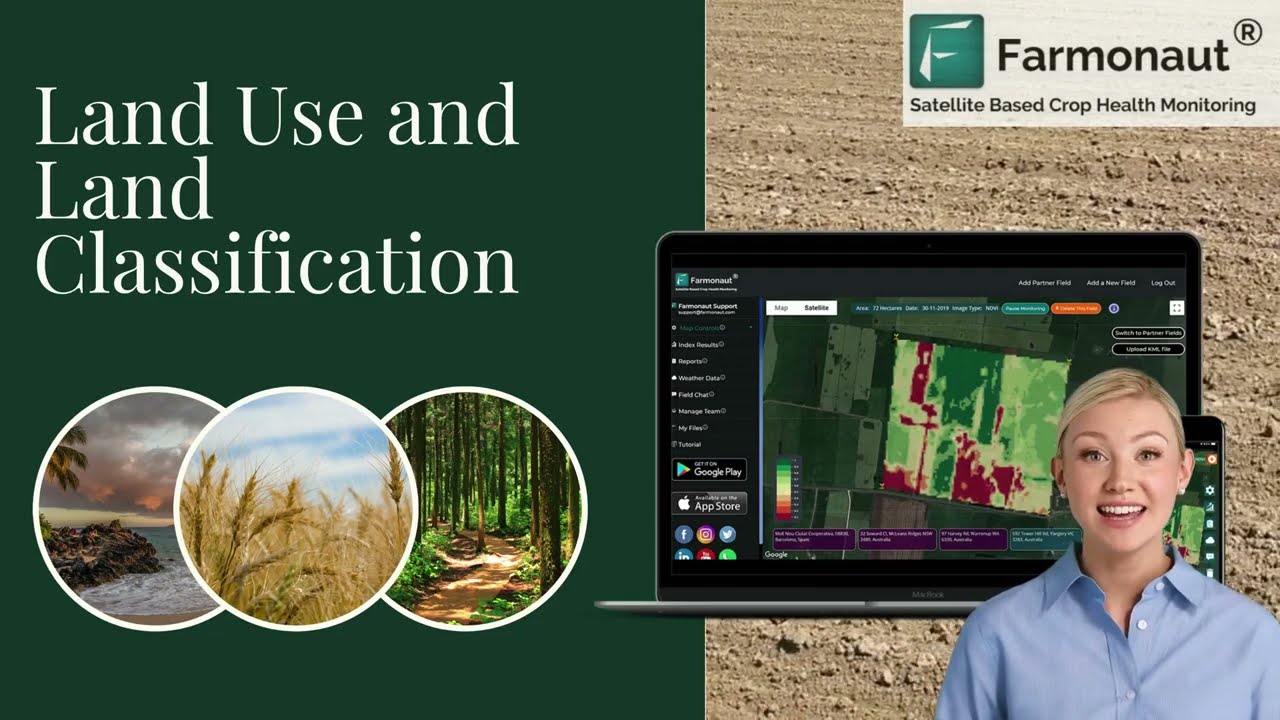
2. Artificial Intelligence and Machine Learning Analysis: AI in Deforestation Monitoring
Artificial intelligence (AI) and machine learning have spurred a new era of high-precision, automated forest change detection. By rapidly analyzing large datasets—such as multi-spectral satellite images—AI unlocks patterns and predicts where deforestation is most likely to occur.
- AI-driven tools classify healthy vs. degraded forests and recognize illegal activity.
- Machine learning models predict deforestation risk by assessing variables (road proximity, past logging) and identify trends often invisible to the human eye.
- Enables proactive interventions, making forest management more timely and effective.
These advances underpin what we refer to as AI in deforestation monitoring, setting a new standard for monitoring effectiveness, speed, and reliability.
Learn more about our innovative AI approach by exploring Farmonaut’s Crop Plantation & Forest Advisory tools, which bring actionable, satellite-powered insights to agency and farmer fingertips around the world.
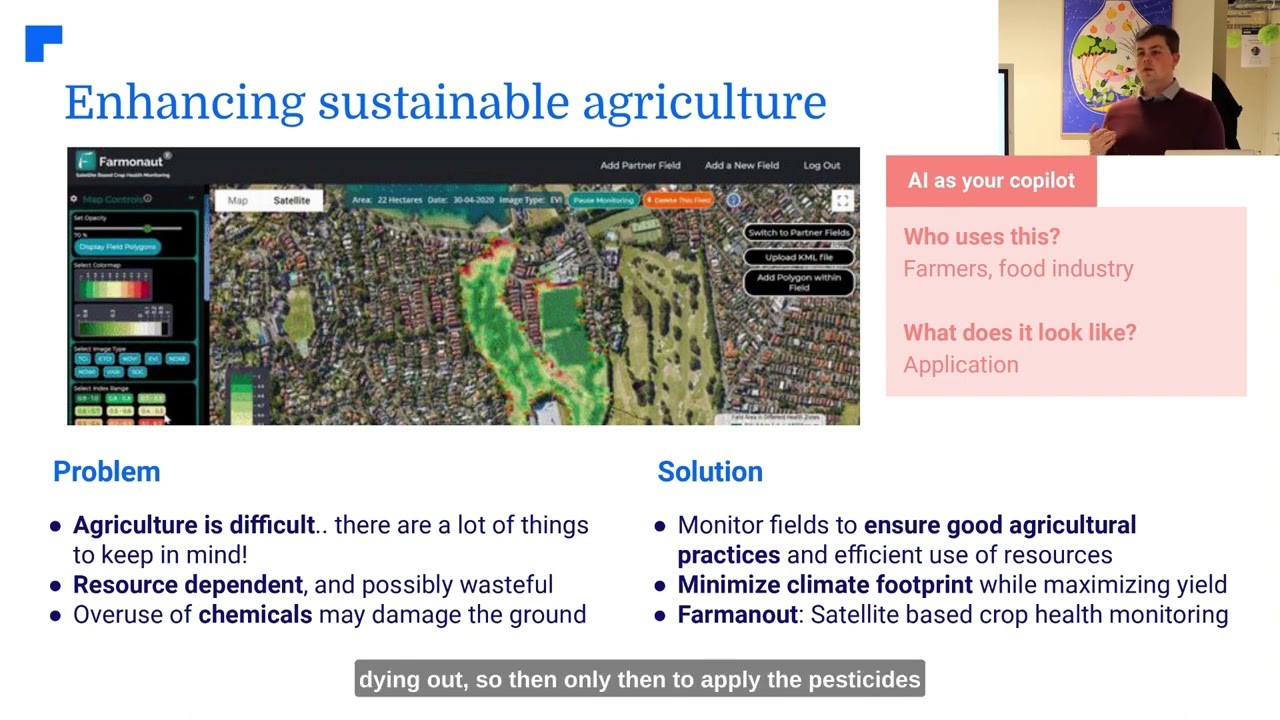
3. National Forest Monitoring Systems (NFMS): Reliable, Statistically-Sound Reporting
National Forest Monitoring Systems (NFMS) are sophisticated networks that blend satellite data, ground-based observations, and advanced statistical models to provide continuous, reliable reporting on national forest resources.
- Essential for policy development and enforcing environmental regulations.
- NFMS allows countries to measure, report, and verify (MRV) forest activities—making them critical for initiatives like REDD+ and carbon reporting.
- FAO-backed systems in over 50 countries ensure robust, unbiased forest monitoring and carbon stock assessments at scale.
Governments and agencies can complement their NFMS with services like Farmonaut’s Satellite Data API for easy integration of near-real-time analytics into their monitoring frameworks.
4. Independent Forest Monitoring (IFM): Elevating Transparency and Legal Compliance
Independent Forest Monitoring (IFM) refers to third-party audits and public oversight to ensure forest laws and regulations are followed.
- Combines on-site assessments with review of satellite images for verification of legal and illegal logging activities.
- Promotes transparency, credibility, and public trust—essential for responsible forest management and global conservation.
- Aids governments, NGOs, and certification bodies in reducing illegal logging and pushing for better legislative frameworks.
IFM is often adopted alongside digital traceability solutions—learn how you can implement blockchain-based product traceability with Farmonaut to support full supply chain transparency and compliance.
“Illegal logging detection rates improved by 60% in regions adopting advanced forest management and remote sensing technologies.”
5. Forest Monitoring Platforms: Digital, Scalable, and Real-Time
As cloud-based and digital platforms integrate more data sources, they empower users to conduct forest health assessment and compliance in real-time:
- Deliver actionable insights for forest management, logging detection, reforestation, and auditing.
- Support compliance with frameworks and certifications through verification, reporting, and data visualization.
- Platforms such as Map My Crop utilize satellite imagery, AI analysis and digital mapping, making them a one-stop solution for organizations large and small.
Want an all-in-one advisory and auditing solution for plantation and forest management? Explore Farmonaut’s Crop Plantation & Forest Advisory platform for robust support across forest areas and planting cycles.
6. Geospatial Data Providers: Versatile Monitoring for Forestry and Environmental Impact
Geospatial data providers (such as SkyWatch) offer access to different satellite image types, including SAR and high-resolution optical images in near-real-time or as needed.
- Facilitates illegal logging detection, wildfire assessment, flood monitoring, and environmental remediation through advanced remote sensing for forestry.
- Scalable solutions for both localized monitoring and global deforestation analysis.
- Supports both agricultural and forestry sectors with flexible, modular data streams.
Organizations with existing systems can integrate such data via APIs—such as the Farmonaut Fleet & Resource Management platform for optimizing forestry machinery deployment and environmental impact reduction.
7. Global Forest Watch (GFW): Accessible Open-Source Deforestation Monitoring
Global Forest Watch (GFW) is an intuitive, open-source web application designed to monitor forests worldwide in near real-time.
- Aggregates satellite imagery, ground-based observations, and community reports.
- Supports global deforestation monitoring, illegal clearing detection, and policy planning for users at any scale.
- Open, transparent, and accessible, it serves as both an educational resource and a decision-making tool.
GFW is particularly effective for NGOs, journalists, government agencies, and the general public seeking direct access to actionable forest change data.
8. High Carbon Stock (HCS) Mapping: Identifying Carbon-Rich Forests
HCS mapping is quickly becoming a critical component of carbon sequestration and forest conservation. It combines optical satellite images and spaceborne LiDAR data to identify and map areas with high carbon stock:
- Helps prioritize conservation and sustainable land use planning by protecting key carbon-rich forests.
- Assists governments, planners, and NGOs make informed sustainable forestry decisions.
- Supports carbon footprinting initiatives for quantifying and managing environmental impact in forestry and agriculture.
9. Drones and Unmanned Aerial Vehicles (UAVs): Real-Time Aerial Insight
Drones and UAVs are redefining forest management tools by offering high-resolution aerial imagery and flexible coverage of remote locations.
- Access hard-to-reach or hazardous areas with minimal ecological footprint.
- Gather detailed imagery and data for forest health assessment, biodiversity analysis, and detecting illegal activities.
- Invaluable for restoration projects, post-fire monitoring, and rapid change detection in active logging zones.
Precision agriculture technologies like ours can integrate drone data with satellite imagery for more comprehensive forest analysis, especially when monitoring rapidly changing environments.
10. Internet of Things (IoT) Sensors: In-situ Monitoring for Early Detection
IoT sensors have transformed in-situ forest monitoring; these small, networked devices continuously collect real-time environmental data:
- Detect temperature rises, smoke, or sudden changes to enable rapid response to wildfires.
- Monitor soil moisture, tree growth, and microclimate—providing granular data on forest health.
- Allow forest managers to track ecosystem health, identify risks, and optimize management practices for both conservation and sustainable yield.
IoT data feeds can be integrated directly into digital platforms like the Farmonaut Large Scale Farm Management Suite for prioritized alerts, reporting, and system-wide resource optimization.
BONUS: Blockchain Technology for Transparency and Traceability
Blockchain ensures full traceability of timber from forest to end user, deterring illegal logging and guaranteeing compliance with sustainability regulations.
- Creates tamper-proof records of each stage in the timber supply chain.
- Streamlines certification and supports consumer confidence by enabling product origin verification.
- Essential for companies seeking to uphold global forestry laws and standards.
For enhanced transparency in your agriculture or forestry supply chain, discover more about Farmonaut Blockchain Traceability Solutions.
BONUS: Precision Forestry with GPS and GIS
Precision forestry combines the spatial accuracy of GPS with the analytical power of GIS to optimize forest management practices:
- Enables location-based monitoring and planning, reducing operational errors, and aligning activities with conservation priorities.
- Helps track asset movement, inventory, and plantation progress for both smallholder and large-scale operations.
BONUS: i-Tree Tools – Ecosystem Service Valuation Suite
i-Tree is an analysis and assessment software suite for quantifying and valuing tree ecosystem services:
- Reports benefits like carbon sequestration, air quality improvements, and stormwater reduction to support balanced urban and rural planning.
- Provides baseline and growth tracking to measure the effectiveness of reforestation, afforestation, and urban tree management.
Integrating Farmonaut’s Solutions with Deforestation Monitoring & Forest Management
As a pioneering agricultural technology company, we at Farmonaut are committed to making precision agriculture and forest supervision solutions scalable and affordable. Through our unique blend of satellite imagery, AI, blockchain, and digital advisory services, we empower stakeholders—farmers, agribusinesses, governments, and NGOs—to enhance their environmental impact assessment and forest management efforts.
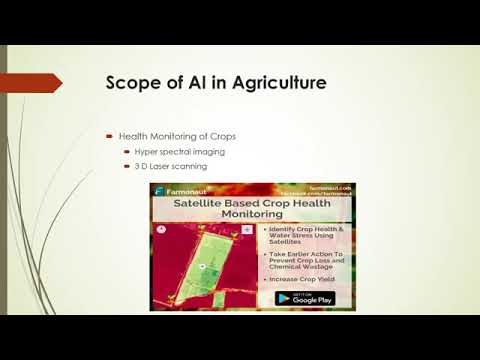
- Real-time forest health assessment: Our app delivers satellite-based insights for detecting forest cover changes, mapping canopy density, and monitoring vegetation health indices (NDVI).
- AI-powered forest and crop monitoring: Our Jeevn AI Advisory System integrates satellite data with AI models for seamless trend analysis and strategic recommendations.
- Blockchain traceability: We offer blockchain-backed product traceability, helping agriculture and forestry stakeholders prove sustainable supply chains and combat illegal logging.
- Resource management: Our Fleet Management Tools boost efficiency by tracking field assets, optimizing machinery deployment and improving operational planning—essential for reducing environmental impact in forest operations.
- Integrated APIs: Developers and businesses can integrate Farmonaut’s satellite/weather data with their own forest management systems using our open API endpoint and developer documentation.
- Scalability: Our subscription plans are suitable for individual farmers, plantation managers, government bodies and large agribusinesses, ensuring cost-efficiency across all scales.
- Carbon footprinting: With Farmonaut’s Carbon Footprinting tool, users can monitor, report, and plan for emissions reduction and compliance with climate regulations in both agriculture and forestry contexts.
- Financing: Our Crop Loan & Insurance Verification service uses satellite data for efficient, fraud-proof loan appraisals and insurance claims in the forest and agriculture sector.
Whether aiming to comply with complex forestry regulations, implement sustainable land use practices, or monitor reforestation efforts at scale, our technology democratizes satellite forest monitoring for all.
Our platform is accessible via Android, iOS, web applications, and API. Users globally benefit from actionable forest management tools, supporting resilience against deforestation’s environmental and economic impacts.
Farmonaut Subscriptions & Pricing Plans
Ready to start supervising deforestation and improve forest conservation? Choose a subscription plan tailored to your monitoring and analysis needs. Farmonaut offers flexible, affordable options for individuals and organizations worldwide.
Frequently Asked Questions (FAQ)
Q1: What is the most accurate tool for deforestation monitoring?
Modern satellite remote sensing (especially using synthetic aperture radar) combined with advanced AI-based analysis offers the highest detection accuracy (upwards of 98% under optimal conditions). Integrating these technologies with ground truthing further enhances the reliability and timeliness of deforestation detection.
Q2: How does AI improve forest management and illegal logging detection?
AI automates image analysis, spots subtle changes faster than human analysts, and predicts zones most at risk of illegal activity. It also helps visualize forest health, trends, and the effectiveness of conservation strategies—vital for modern forest management tools.
Q3: Can real-time forest change detection help prevent environmental damage?
Yes, real-time monitoring using satellites, drones, and IoT sensors allows for timely alerts and early intervention—preventing small issues from escalating into disasters like severe wildfires or irreversible logging.
Q4: Is blockchain only used for timber tracking, or does it support other forms of traceability in agriculture?
Blockchain secures end-to-end traceability for any supply chain—timber, crops, or other agricultural products. It provides immutable records, boosts transparency, and ensures regulatory compliance, supporting sustainable sourcing and responsible practices.
Q5: What is synthetic aperture radar (SAR), and why is it useful for satellite forest monitoring?
SAR is a radar technique used in satellites that captures surface images regardless of cloud cover or lighting. It’s especially effective for forest areas in tropical regions where persistent clouds make optical imagery less reliable, enabling consistent, uninterrupted monitoring.
Q6: How can I integrate Farmonaut’s monitoring tools into my existing forestry workflow?
You can access our monitoring solutions via the web or mobile app, or integrate data and analysis with your systems using the Farmonaut API. For developers, detailed documentation is available here.
Q7: How do I get started with carbon footprint monitoring for my forestry or agriculture business?
Discover how you can monitor and manage your carbon footprint with our real-time analytics and reporting tools tailored for sustainable land use and resource management.
Conclusion: Advancing Sustainability through Effective Deforestation Monitoring
Deforestation monitoring is no longer a matter of manual field surveys alone. The fusion of satellite technology, artificial intelligence, machine learning, IoT sensors, blockchain, drones, and other advanced tools has redefined how we detect, track, and mitigate forest loss on a global scale.
These technologies make it possible to assess forest health, detect illegal logging, and support robust conservation strategies—ensuring forests remain a lasting resource for biodiversity, climate stability, and local livelihoods.
At Farmonaut, our focus is on making these powerful forest management resources affordable and accessible. From real-time forest health assessment to supply chain transparency and carbon monitoring, we deliver actionable tools to governments, organizations, farmers, and researchers around the world—bridging the gap between technology and sustainability.
Join the future of sustainable forestry practices—start monitoring, protecting, and enhancing our forests with the most effective tools available today.

 Grow Indigo
 FFBS
FFBS Jontra
 Kalustyan
 Tucor
Tucor Geno
Geno Hayleys Agriculture
 Linx Agritech
 Adinet
 Save Your Soils
 Grandstream Algérie
 XOS Realty
 Geospatial Lab Africa
 Agro La Gándara
 HIPSAC
 ZOL Zimbabwe
 Juligerm
