

Reviewed August 2026 against USDA NASS’s 2023 Irrigation and Water Management Survey and industry drip-installation cost data.
Try it: Run your own numbers →
Precision Irrigation Systems: Costs, Setup & Real US Data
A precision irrigation system uses soil sensors, weather data, and automated controls to apply water only where and when a crop needs it — instead of running a schedule or flooding a field. In the United States, 212,714 farms irrigated land in 2023, covering 53.1 million acres, according to USDA NASS’s 2023 Irrigation and Water Management Survey. That’s down from 55.9 million irrigated acres in the prior 2018 survey cycle, a decline documented in NASS’s Farm and Ranch Irrigation Survey program — the backdrop against which precision systems are being sold as the way to do more with a shrinking irrigated base.
This guide covers what a precision irrigation system installation actually involves, what it costs per acre, how it compares to older irrigation methods going back to gravity-fed and flood systems, and how to size a system for your own acreage.
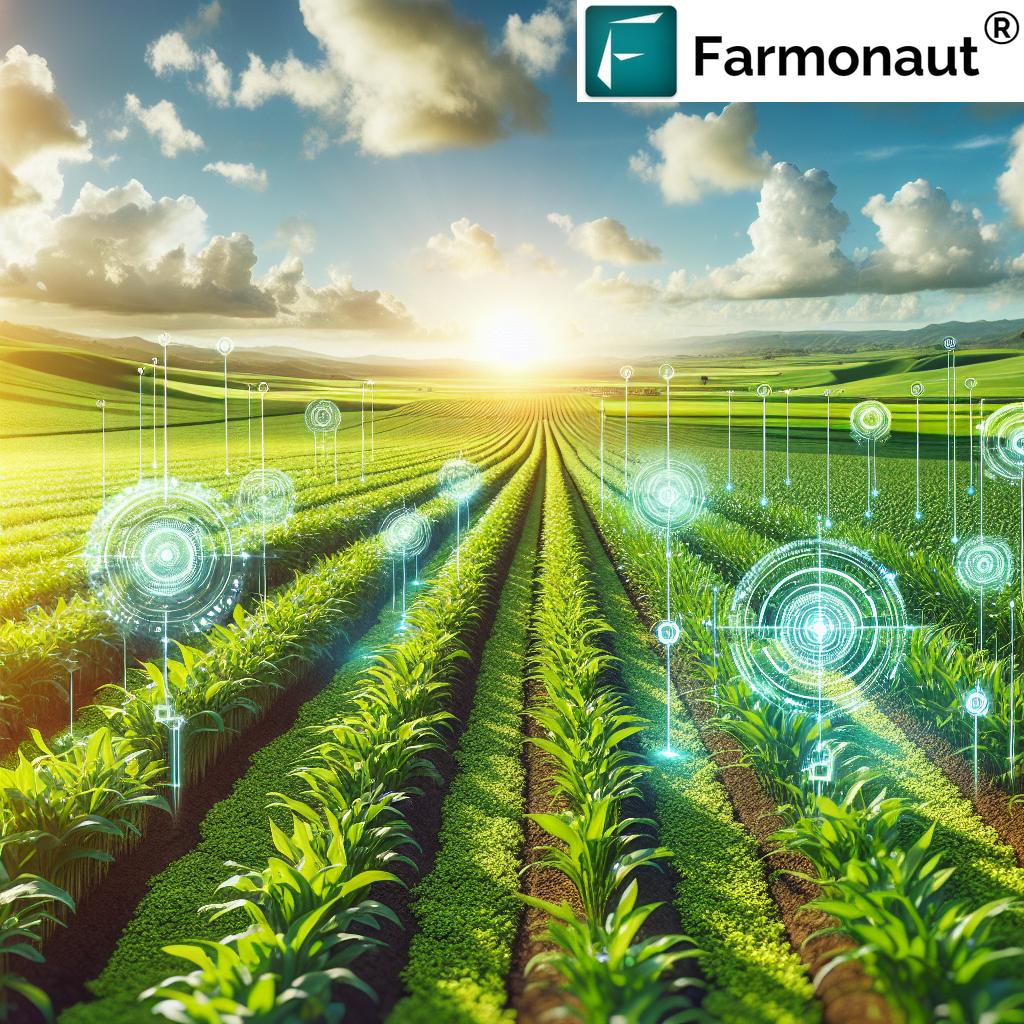
Irrigation Systems: From Ancient Methods to Precision Agriculture
Irrigation itself is not new — gravity-fed canal and flood irrigation systems trace back thousands of years to the Nile, Tigris-Euphrates, and Indus valleys, and furrow and flood methods derived from those same principles are still used on parts of US farmland today, particularly in the West. What has changed is the layer of measurement sitting on top of the delivery method. Ancient irrigation systems solved one problem: getting water from a source to a field. Precision irrigation solves a second, harder problem: knowing exactly how much water each part of that field needs, at that moment, and delivering only that amount.
The practical distinction for a US operation today:
- Gravity/flood irrigation — water moves by gravity across a field, absorbed unevenly; still common in parts of the arid West, but offers no per-zone control.
- Sprinkler irrigation — center-pivot and lateral-move systems dominate US irrigated acreage; efficient relative to flood but still typically applies a uniform rate across a pass unless retrofitted with variable-rate controls.
- Drip/micro-irrigation — water delivered at or below the root zone through emitters; the base layer most precision irrigation systems are built on.
- Precision-controlled systems — any of the above, instrumented with soil sensors, weather data, and automated or variable-rate control, so the amount applied is decided by data rather than a fixed schedule.
- Try it: Run your own numbers
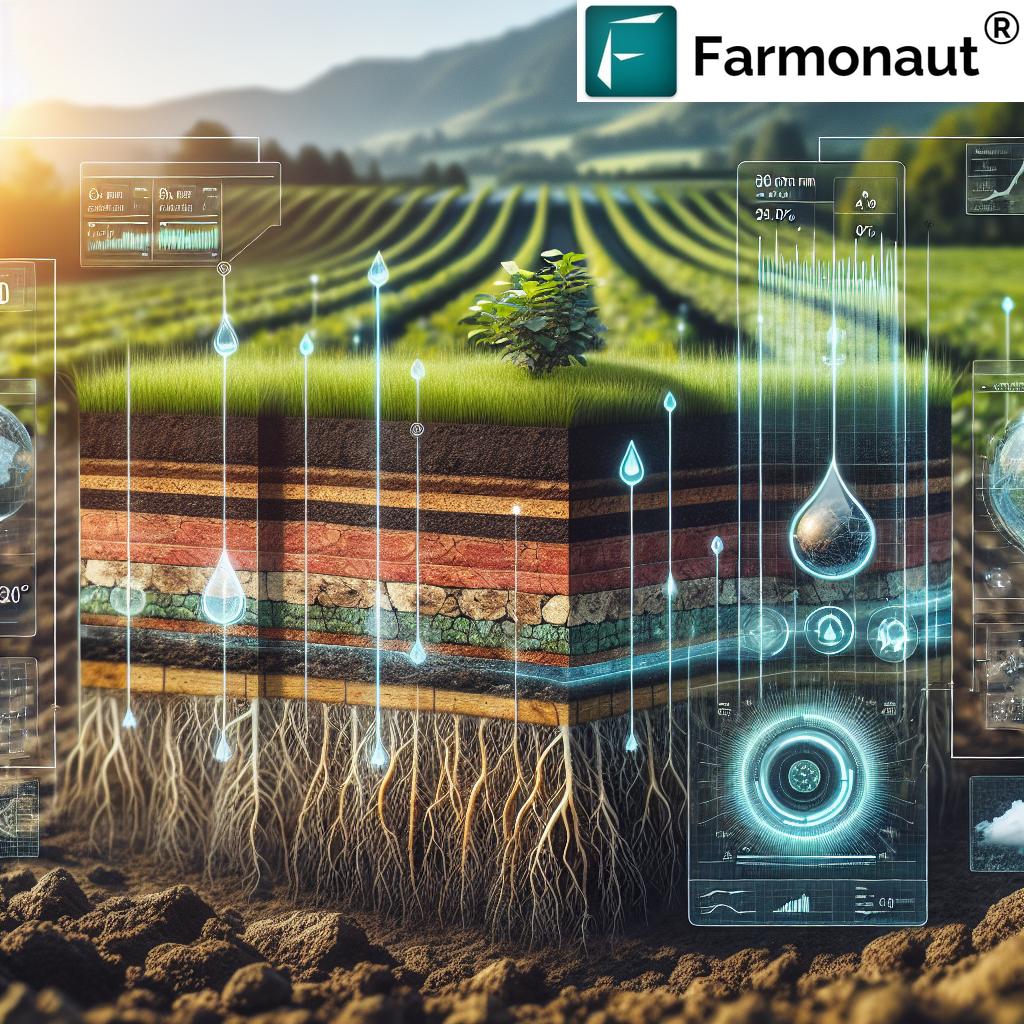
USDA NASS’s 2023 survey found 54% of US irrigation water was drawn from on-farm groundwater wells, with those wells averaging 241 feet in depth — figures that matter because groundwater-dependent operations are exactly the ones where precision scheduling produces the most measurable savings, since every gallon pumped has a direct energy cost attached to it.

Installing a Precision Irrigation System: 7 Components That Work Together
A precision irrigation system installation is rarely one product — it’s a stack of hardware and software layered onto an existing delivery method. Here are the seven components that make up a working system, in the order most installations add them:
-
1. Soil Moisture Sensors: Know Precisely When and Where to Water
- Install soil moisture sensors at multiple depths to identify which zones of a field actually need water before the crop shows stress.
- Sensors report real-time volumetric water content, replacing a fixed calendar schedule with a data-driven trigger.
- This prevents overwatering in low spots and underwatering in sandy patches within the same field.
Pro tip: Pair sensor thresholds with a short-range weather forecast so a scheduled irrigation event is skipped automatically ahead of rain.
-
2. Drip Irrigation Installation: Deliver Water Directly to the Root Zone
- Drip irrigation systems use tubing and emitters to apply water at the root zone, cutting the evaporation and runoff losses that flood and sprinkler methods carry.
- Commercial drip irrigation installation costs run $500 to $2,000 per acre, according to contractor pricing compiled in 2026 by Design Transition Studio’s per-acre irrigation cost breakdown — the spread depends on terrain, water source distance, and whether filtration and automated valves are included.
- Best suited to row crops, orchards, and greenhouse production where per-plant water control pays back the installation cost fastest.
Enhance your drip system by integrating with Farmonaut Carbon Footprinting to track resource efficiency and progress toward sustainability goals.
-
3. AI-Based Irrigation Scheduling: Automate for Peak Efficiency
- AI-powered farm irrigation systems combine soil, crop, and weather data to generate a schedule that updates itself as conditions change.
- This removes the guesswork of a fixed calendar and adjusts automatically to a heat spell or an unplanned rain event.
- Farmonaut’s AI-based Jeevn Advisory puts this scheduling logic on the web and mobile app rather than requiring dedicated on-farm hardware.
-
4. Variable Rate Irrigation (VRI): Customize for Every Field Zone
- Variable rate irrigation retrofits a center-pivot or lateral-move sprinkler so each nozzle bank applies a different rate as it passes over different soil types.
- GIS mapping and satellite-based analytics identify the soil, slope, and crop variation that VRI acts on — the same sprinkler infrastructure most irrigated US acreage already uses, made zone-aware instead of uniform.
- This is the retrofit path for the sprinkler-dominated share of US irrigated acreage, rather than a rip-and-replace to drip.
Link to Farmonaut Large Scale Farm Management for field mapping and resource coordination across zones.
-
5. Real-Time Remote Monitoring: Digitize Your Irrigation Management
- Monitor weather conditions, crop health, and soil moisture remotely via Farmonaut’s platform, available on Android, iOS, or web.
- Historical and live satellite data combine with AI-driven insight to inform scheduling decisions without a site visit.
- Useful specifically for the 212,714 US farms NASS counted with irrigated land in 2023 that manage multiple non-contiguous fields.
Try the Farmonaut Satellite & Weather Data API for developers and agribusinesses integrating this into existing software.
-
6. Drone-Assisted Field Mapping: Detect Stressed Areas Instantly
- Drone-based multispectral and thermal imaging maps a field before a sensor network is installed, showing where moisture and crop stress actually vary.
- This mapping step determines where sensors and drip zones are worth installing, rather than spacing them uniformly.
- Targeted deployment based on a drone survey lowers the effective per-acre cost of the sensor layer.
Explore how satellite and drone data work together in Farmonaut Fleet Management.
-
7. Subsurface & Micro-Sprinkler Systems: Maximize Water Use Efficiency
- Subsurface drip and micro-sprinklers apply water below or right at the soil surface, cutting the evaporation losses that above-canopy sprinklers carry in windy or high-heat conditions.
- Best suited to orchards, vineyards, and other high-value perennial crops where the per-acre installation cost is justified by crop value.
- Combine with Farmonaut Blockchain-Based Traceability Solutions for supply chain transparency and resource accountability.



Comparison Table: Yield, Water Savings & Cost by System Type
Published meta-analyses put yield gains from precision irrigation methods in a 15–40% range and water savings at 20–50%, but do not consistently stratify results by crop — a gap noted in the research for this article. The ranges below reflect that published spread rather than a single-crop guarantee; verify against a trial plot on your own soil before budgeting a full-field rollout.
| System | Yield Increase Range | Water Saved Range | Install Cost (per acre, USD) | Best Fit |
|---|---|---|---|---|
| Soil Moisture Sensors (retrofit) | 15–25% | 20–30% | Low relative to full drip build-out | Any irrigated field, fastest payback |
| Drip Irrigation (new install) | 20–35% | 35–50% | $500–$2,000 | Row crops, orchards, greenhouses |
| AI-Based Scheduling (software layer) | 10–25% | 25–40% | Subscription, no hardware build-out | Any system, added on top |
| Variable Rate Irrigation (sprinkler retrofit) | 15–30% | 25–35% | Higher than sensor retrofit, less than new drip | Existing center-pivot/lateral-move |
| Subsurface & Micro-Sprinkler | 15–25% | 30–40% | Comparable to or above drip | Orchards, vineyards, perennials |
NASS’s 2023 survey does not break out drip-specific acreage nationally — it reports sprinkler versus gravity system totals but does not disaggregate drip and micro-irrigation as a separate national figure. For a state-level system-type breakdown, download the raw survey tables directly from USDA NASS’s 2023 Irrigation and Water Management Survey release.
Drip Irrigation Installation Cost Calculator
Use the calculator below to estimate a total drip irrigation installation cost for your acreage, based on the $500–$2,000 per-acre contractor range reported for 2026.
Run your own numbers
Assumptions: cost range is drawn from 2026 commercial contractor pricing for US drip installation and does not include well, pump, or filtration upgrades if your site lacks them. Water savings percentages are the published range for drip versus a conventional baseline, not a site-specific guarantee — actual savings depend on your existing system, soil, and crop. This tool excludes ongoing energy, maintenance, and emitter-replacement costs.
Key Benefits of Precision Irrigation Systems
Set against the national numbers above, the case for precision irrigation is a case about a shrinking resource base doing more work:
- Water Conservation: Drip and sensor-based systems cut applied water by 20–50% against a conventional baseline, per the yield/water-savings ranges cited above — meaningful against the 54% of US irrigation water pumped from on-farm groundwater wells that NASS reported for 2023.
- Improved Yields: The 15–40% yield range cited in published meta-analyses comes from delivering water matched to crop growth stage rather than a fixed calendar.
- Cost Savings: Lower pumping energy use matters directly where wells average 241 feet deep, as NASS found in 2023 — every foot of lift is an energy cost per gallon.
- Environmental Protection: Reduced runoff and deep percolation cut nutrient leaching from over-application.
- Adaptability: The same sensor-plus-scheduling layer works whether the base delivery method is drip, subsurface, or a retrofitted center-pivot.

How Precision Agriculture Irrigation Works
A precision irrigation system runs on a four-step loop:
- Data Collection — Soil sensors, weather stations, satellites, and drones gather real-time soil moisture, crop condition, temperature, and rainfall data.
- Data Analysis — Software computes the water requirement for each field zone, adjusting for weather and crop growth stage rather than applying a flat rate.
- Irrigation Execution — Automated valves, VRI controllers, or manual adjustment apply water according to the computed plan.
- Continuous Feedback — Monitoring adapts the plan to a sudden rainstorm or heatwave in near real time.
This loop is the durable part of precision irrigation — the sensors and software vendors will change, and the cost figures above will move with inflation and labor rates, but the four-step structure is what any system you evaluate should be judged against.
Essential Components of a Precision Irrigation Installation
A complete irrigation system installation integrates three layers: sensing, delivery, and software.
Data Collection Tools
- Soil Moisture Sensors: Measure water available at the root zone, triggering irrigation only when needed.
- Weather Stations: Feed rainfall, temperature, wind, and humidity data into the scheduling model.
- Remote Sensing (Satellite & Drone): Map large fields to find stressed or variable zones before installing ground sensors.
Irrigation Devices & Systems
- Drip Irrigation: Highest precision, $500–$2,000 per acre installed, per 2026 contractor pricing.
- Micro-Sprinklers: Above-ground, targeted delivery for vineyards and orchards.
- Subsurface Irrigation: Underground distribution for minimal evaporation in high-value perennial crops.
- Variable Rate Irrigation (VRI): Retrofits sprinkler systems to vary rate by zone.
Technology & Software Integration
- IoT Devices: Connect sensors and controllers for automated control and remote alerts.
- AI and Machine Learning: Process multi-source data into a predictive irrigation schedule.
- Mobile Apps & GIS Mapping: Provide remote control, notifications, and field-status visualization.
See Farmonaut’s developer resources for software integration at Farmonaut Satellite & Weather API Developer Docs.
How Farmonaut Makes Precision Irrigation Technology Affordable
Farmonaut’s approach is to move the sensing layer off expensive on-farm hardware and onto satellite imagery, so the entry cost of precision agriculture technology is closer to the low end of the cost ranges above rather than the high end.
- Satellite Crop Health Monitoring: Real-time NDVI and soil moisture data via satellite imagery, without dedicated field hardware.
- AI-Based Jeevn Advisory System: Personalized recommendations for irrigation timing based on weather and crop stage.
- Blockchain Traceability: Tracks crop stage-to-consumer for compliance and resource accounting (Farmonaut Product Traceability).
- Fleet & Resource Management: Coordinates equipment and irrigation logistics via Fleet Management tools.
- Carbon Footprinting: Tracks and reports emissions tied to irrigation energy use at Carbon Footprinting.
Farmonaut’s subscription model scales from a single field to the kind of multi-farm operation NASS counted 212,714 times in the 2023 survey. For plantation, forestry, and advisory use cases, visit Crop Plantation & Forest Advisory.
Get started now with Farmonaut
AI and Advanced Technology in Precision Irrigation
The technology stack behind a modern precision irrigation system:
- AI and Machine Learning — Process historical and current rainfall and crop-health data into a predicted irrigation schedule.
- IoT Devices — Network sensors and controllers for automation and mobile alerts.
- Remote Sensing and Drones — Monitor large or hard-to-reach fields, spotting variation in moisture and plant health from above.
- Blockchain for Water Management — Produces an auditable water-use record for sustainability certification.
What’s Next for Precision Irrigation Technology
The direction of travel, not a dated prediction:
- Self-Learning AI Systems — Refine irrigation recommendations using multi-year seasonal outcome data, not just current-season readings.
- Fertigation Integration — Combine nutrient and water delivery through the same system for compounding efficiency gains.
- Lower-Cost Drone Analysis — As drone hardware costs fall, field-mapping becomes viable for smaller operations, not just large ones.
- Decentralized Water Management — Blockchain and open-data sharing extend auditable water-use tracking beyond single farms.
To track where the underlying data is heading: USDA NASS runs its full Irrigation and Water Management Survey on a five-year cycle, with the next full survey due in 2028 and annual updates published at data.nass.usda.gov in the interim. USGS also updates its Water Use Data Companion with crop irrigation withdrawal figures by watershed on an annual basis. Both are the sources to check for a number more current than anything in this article.
Precision Irrigation FAQ
What is precision farming?
Precision farming (also called precision agriculture) is the practice of managing field inputs — water, fertilizer, seed — at a sub-field level using sensor, satellite, or drone data, rather than applying a uniform rate across an entire field. Precision irrigation is the water-specific application of this approach.
How does precision irrigation compare to older irrigation systems?
Older gravity and flood irrigation systems, some tracing back thousands of years, move water across a field with no per-zone control. Sprinkler systems improved on that but historically applied a uniform rate. Precision irrigation adds soil sensors, weather data, and automated or variable-rate control on top of drip, subsurface, or sprinkler delivery, so the amount applied is decided by real-time field data instead of a fixed schedule.
What does a precision irrigation system installation cost?
Commercial drip irrigation installation ran $500 to $2,000 per acre as of 2026 contractor pricing, depending on terrain, water source distance, and whether filtration and automated valves are included. A sensor-only retrofit on an existing sprinkler system costs less than a full new drip build-out; VRI retrofits fall between the two. There is no single consolidated US government or peer-reviewed source for payback period — build your own estimate using your water and energy costs against the water-savings percentage for your system type.
Which crops benefit the most from precision irrigation?
High-value, water-sensitive crops — fruit, vegetables, grapes, almonds, orchards, and vineyards — see the fastest payback because the per-acre installation cost is small relative to crop value and yield sensitivity to water stress is high.
Can precision irrigation integrate with existing farm equipment?
Yes. Variable rate irrigation is specifically a retrofit of existing center-pivot and lateral-move sprinkler systems, and satellite-based monitoring like Farmonaut’s does not require replacing existing delivery infrastructure at all.
How do I start with Farmonaut?
Download the Farmonaut app (Android, iOS, or Web), or access it via browser for initial monitoring, then add crop health tracking, Jeevn AI advisory, API integration, or blockchain traceability as needed.
Get Started
With US irrigated acreage down from 55.9 million acres in 2018 to 53.1 million in 2023 per USDA NASS, and 54% of that water pumped from on-farm wells averaging 241 feet deep, the economic case for precision irrigation is a case about doing more with a shrinking, costlier-to-pump resource.
- Sign up on the Farmonaut app to start monitoring fields, crops, and water use.
- Upgrade to a subscription for real-time crop health insight, AI advisory, traceability, and resource management that scales with your acreage.
- Explore the developer API at Farmonaut Satellite & Weather Data API for integration into any agtech platform.
- Quantify your resource use with Farmonaut’s carbon footprinting and traceability tools.
Ready to size a precision irrigation system for your acreage?
Get started with Farmonaut today or download the apps for Android and iOS above.
Summary: Precision irrigation systems layer soil sensors, weather data, and automated or variable-rate control onto drip, subsurface, or sprinkler delivery methods, so water is applied by field-zone need rather than a fixed schedule. US irrigated acreage stood at 53.1 million acres across 212,714 farms in 2023, per USDA NASS, down from 55.9 million acres in 2018 — a shrinking base making per-acre efficiency the central argument for adoption. Drip installation runs $500–$2,000 per acre as of 2026 pricing, with published yield gains of 15–40% and water savings of 20–50% depending on system type and baseline. Farmonaut lowers the entry cost by moving the sensing layer onto satellite imagery instead of dedicated field hardware.

 Innomick
 Juligerm
 AdBio
AdBio MISE Maroc
 Drift-Sense
 NWNS
NWNS Red August Group
 Farm Inc
 WeMe Global
 Agrotoken
 Blue BearX
 Insignito
 Croptimum
 DnCubed
 Field Capacity
 Indosistim Teknologi
 Liquify Digital
