

“Tunisia’s pistachio yield can be optimized by tracking NDVI, which detects plant health variations with up to 90% accuracy.”
Pistachio Yield Boost: 7 Satellite Insights Tunisia 2025
In the heart of the arid القصر region and across the Mediterranean landscapes of Tunisia, pistachio cultivation is experiencing a new era—driven by data, technology, and innovation. As global demand for nuts and sustainable agriculture rises, unlocking the full yield potential of pistachio crops requires more than tradition; it demands a scientific, data-driven approach. Modern satellite insights—from NDVI analysis to real-time soil and irrigation metrics—now allow Tunisian producers to leap ahead in optimization, resource management, and climate resilience.
In this guide, we explore 7 essential satellite-driven strategies for boosting pistachio yields in Tunisia for 2025 and beyond. Drawing from leading-edge research, current literature (Ben Salem & Mimoun, 2022, 2023; UC ANR; FAO; Marschner, 2012; and others), and real agronomic data, we’ll map out NDVI trends, nutrient gaps, optimal irrigation, and sustainable management for thriving pistachio orchards.



Whether you are a farmer exploring Farmonaut’s satellite-based crop health monitoring, an agronomist, or an agricultural stakeholder in the Tunisian pistachio sector, the actionable intelligence within this article will equip you to make informed, sustainable, and profitable decisions.
Let’s unlock your pistachio field’s yield in 2025—using the power of satellites.

The Power of Satellite Data for Pistachio Agriculture in Tunisia
Satellite data is revolutionizing how pistachios are grown, monitored, and managed throughout Tunisia. In 2025, almost every aspect of agricultural decision-making can be improved and accelerated by satellite-based insights, such as:
- NDVI (Normalized Difference Vegetation Index): Tracks crop vigor, canopy coverage, and general plant health using multispectral imagery.
- Soil Composition Mapping: Monitors pH, salinity, organic matter, and essential nutrient levels (N, P, K, S, Zn) remotely.
- Irrigation & Water Stress Monitoring: Detects water stress and advises precision drip irrigation schedules—critical in arid regions like القصر.
- Disease & Pest Pressure: Identifies indicators of pest/disease outbreaks by flagging unusual changes in NDVI or thermal signatures.
- Yield Estimation & Forecasting: Projects yields (kg/acre) through the analysis of field-level vegetation indices over the season.
- Sustainable Management Insight: Guides practices that improve soil health and resource use efficiency, supporting sustainable food security.
Farmonaut’s technology is at the forefront—delivering precise, actionable data via web & mobile apps and API solutions for the entire spectrum of Tunisian pistachio cultivation challenges.

NDVI Trends: Detecting Pistachio Crop Health with Precision
In satellite-based agriculture, NDVI emerges as the cornerstone metric for pistachio health and expected yield in 2025. NDVI quantifies “greenness” and live biomass—from canopy coverage to vigor—helping identify stress, nutrient deficiencies, or disease risk before visible symptoms emerge.
For Tunisian pistachio fields, typical NDVI patterns are tightly linked to the phenological stages (from bud break to harvest and dormancy), with benchmark values as follows:
- Winter Dormancy: NDVI is low (0.1–0.3), reflecting minimal active vegetation.
- Spring Bud Break & Leaf Expansion: Rapid NDVI rise as trees exit dormancy and produce new leaves.
- Full Canopy & Kernel Fill (Late Spring–Early Summer): NDVI peaks (0.65–0.8), indicating vigorous, healthy pistachio canopies with optimal photosynthesis capacity.
- Hull Split (Late Summer): Slight NDVI plateau/decrease (0.65–0.8), as fruit matures and some leaves begin natural senescence.
- Harvest (August–September): NDVI drops (0.45–0.65), aligning with leaf yellowing, harvest operations, or post-harvest stress.
- Post-Harvest/Dormancy: NDVI decreases (~0.1), with trees returning to inactive state.
2025 Satellite Analysis Example for Tunisia – Key Insights:
- If a field’s NDVI in September drops sharply below 0.45, it may signal either successful harvest or severe stress (drought, nutrient deficiency, or pest/disease outbreak).
- In the Hull Split stage (240–270 days after establishment), healthy pistachios should sustain NDVI 0.65–0.8. Sudden declines may indicate need for targeted management.
- Sparse or mixed canopy coverage—often seen in new plantations—can lower NDVI values, emphasizing the need for additional field-level confirmation.
Want to monitor NDVI, canopy, and more for your orchards using our API? Explore Farmonaut’s Satellite API here.
For API developer docs: Go here.

How NDVI Drives Pistachio Yield Optimization
- Early Detection: Identify stress before visible symptoms for pre-emptive action.
- Spatial Management: Pinpoint zones of nutrient gap, weeds, or pest hotspot within orchards.
- Yield Prediction: More accurate kg/acre estimates, even in arid or challenging climates.
- Informed Harvest Decisions: Use NDVI drops to time harvest or post-harvest irrigation correctly.
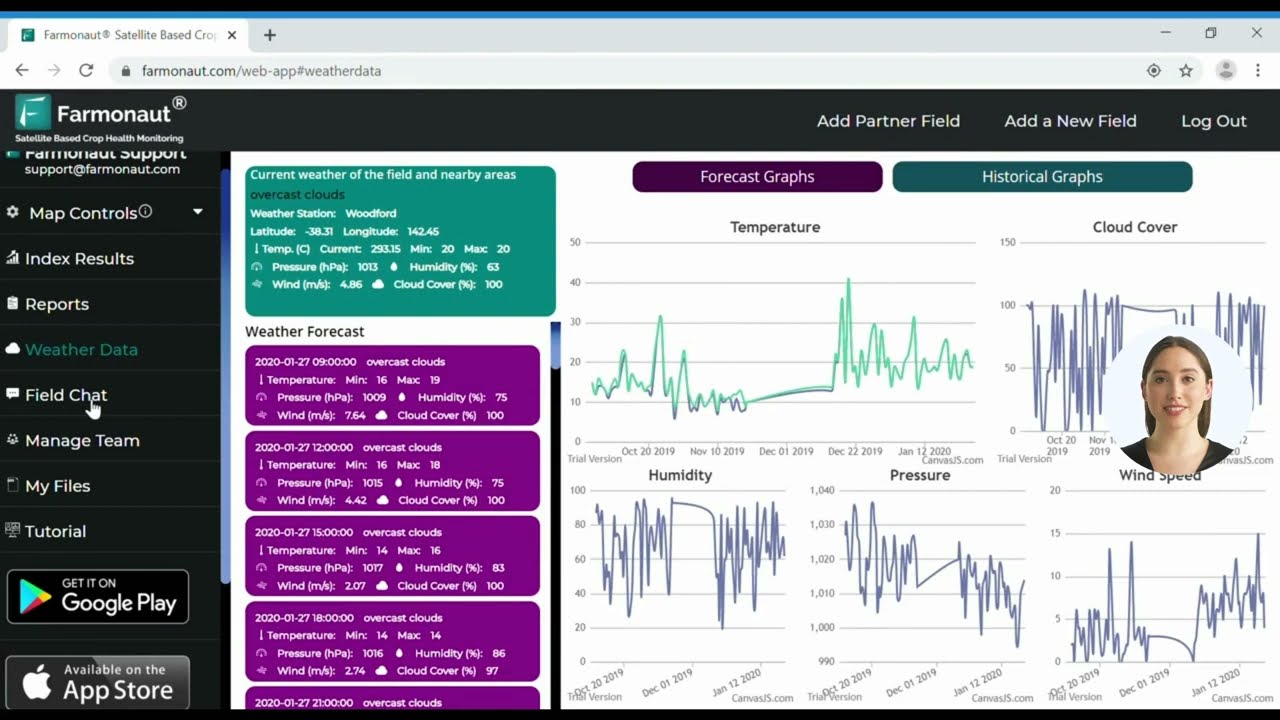
Soil Composition & Management in Tunisian Pistachio Orchards
The success of pistachio cultivation in Tunisia is rooted in soil composition and precise management. In arid and semi-arid regions like القصر, soils typically exhibit moderate salinity, pH 7.2–7.5 (slightly alkaline), and critically low soil organic carbon (SOC)—often 0.11–0.12% where 1–2% is optimal for tree health and nutrient cycling (UC ANR, 2020–2023).
Effective soil monitoring and management ensure resilience to climate variability and maximize nutrient efficiency.
Key Soil Variables Based on 2025 Satellite-Advisory Data:
- pH: Predicted 7.5 (slightly alkaline)—Affects nutrient availability and tree health.
- Salinity: Moderate—Arid conditions and repeated irrigation increase salt risk. Can suppress yield if unmanaged.
- SOC (%): 0.11–0.12%—Significantly lower than ideal. Compost, cover crops, and reduced tillage recommended.
- Bulk Density: ~1.3 g/cm³ at 0-15 cm, standard in pistachio soils (Marschner, 2012).
- Soil Nutrient Composition:
- Nitrogen (N), Phosphorus (P), Potassium (K), Sulfur (S), Zinc (Zn): Tracked by satellite-driven soil chemistry tools and periodic lab sampling.
- Sufficiency ranges: Drawn from California & Mediterranean guidelines (UC ANR, Marschner, 2012; Ben Salem & Mimoun, 2022–2023) applied where local data is unavailable.
Want to empower your agronomy or agro-business with direct, real-time soil health & yield monitoring? Explore the Large Scale Farm Management platform by Farmonaut for advanced monitoring of pistachio fields, soil, and more.

Recommended Soil Enrichment and Correction Practices (2025)
- Organic Matter Addition: Apply compost, manure, and plant cover crops to raise SOC above 1% for improved water retention and nutrient cycling.
- pH Correction: Use gypsum or acidifying fertilizers as needed to gently shift pH and correct nutrient lockout.
- Salinity Management: Schedule periodic leaching events and monitor irrigation water quality, especially when using drip systems in semi-arid and arid regions.
- Balanced Chemical & Organic Fertilizers: Integrate urea (N), diammonium phosphate (P), potassium sulfate (K), gypsum (S), and zinc sulfate (Zn) at recommended application rates tailored by crop stage and detected nutrient gap.
For full traceability and verification of your pistachio product supply chain, visit our Traceability Solutions page. Enhance transparency and food security from farm to fork.
“Satellite insights in 2025 can reveal pistachio nutrient gaps, potentially reducing fertilizer use by over 20% on Tunisian farms.”
Precision Irrigation: Water Management via Satellite Insights (2025)
Water is the limiting factor for sustained pistachio yield in Tunisia’s semi-arid climates. In 2025, satellite data—particularly from NDWI (Normalized Difference Water Index) and reference evapotranspiration models—enables the precision scheduling of irrigation.
Drip irrigation is widely used, delivering water and soluble fertilizers (urea, potassium sulfate, diammonium phosphate, zinc sulfate) directly to the root zone, reducing water loss to evaporation and suppressing weeds.
Satellite-Driven Irrigation Strategies:
- Daily/Weekly Adjustments: In critical stages such as fruit fill or hull split, satellite monitoring advises irrigation every 1–2 days if severe water stress is detected (NDVI, NDWI & SAVI below 0.2).
- Water Stress Alarms: If NDWI or SAVI levels drop below thresholds (e.g., NDWI < 0.1 or SAVI < 0.18), this indicates insufficient soil moisture or canopy stress—prompting increased irrigation or schedule changes.
- Irrigation Cessation: Post-harvest, when trees enter dormancy and NDVI/NDWI values are extremely low, satellites recommend stopping irrigation to avoid water waste and promote natural senescence (as observed Sep 24, 2025, NDVI: 0.11).
- Salinity Mitigation: Overscheduling or inefficient drip irrigation in high-salinity soils accelerates salt accumulation at the wetting front. Satellites help time leaching events and monitor risk.
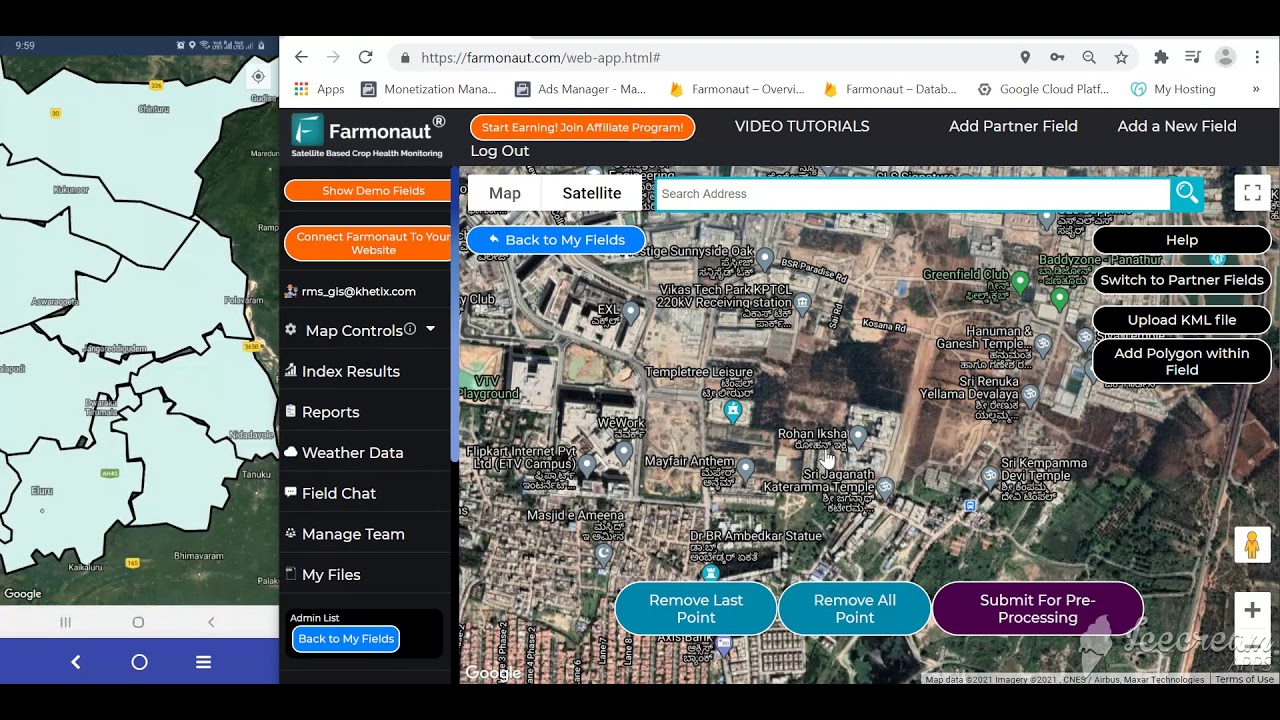
For satellite-based weather and irrigation APIs tailored to Tunisian pistachio farms, check details at Farmonaut’s API platform.
2025 Sample Irrigation Schedule Based on Satellite Insights (Late-Season):
| Date | Irrigation Frequency | Volume (mm) | NDVI/NDWI Status | Advisory |
|---|---|---|---|---|
| Sep 24–30, 2025 | Daily, Early AM | 6.0 mm | NDVI < 0.2 | Maintain high frequency to alleviate severe water stress and enable recovery. |
| Post-Harvest | None | 0 mm | NDVI/NDWI extremely low | Irrigation can be stopped – trees dormant. |
Identifying Nutrient Gaps: Satellite Data for Fertilizer Efficiency
Satellite insights in 2025 do not just analyze vegetation—they now support diagnostics that quantify nutrient gaps (N, P, K, S, Zn) with field-level accuracy. These gaps, identified by Farmonaut and global agtech research, allow more precise, cost-efficient, and eco-friendly fertilizer use.
- Nitrogen (N):
- Recommended form: Urea (46% N), compost (1.1% N).
- Typical application rates (2025): For significant deficiency, 16–18.5 kg/acre (urea) or 700–925 kg/acre (compost), frequency: single application per critical stage.
- Soil sufficiency range: 18.2–27.3 kg/acre N is considered ideal (California, UC ANR).
- Gap example: If current soil N is 10.0–15.0 kg/acre, supplement accordingly to meet yield targets.
- Phosphorus (P):
- Recommended form: Diammonium phosphate (DAP), bone meal (organic).
- Application rates: 10–15 kg/acre (DAP), 200–770 kg/acre (bone meal/compost).
- Ideal range: 13.7–22.8 kg/acre P.
- Potassium (K):
- Sources: Potassium sulfate, wood ash (organic).
- Application: 36–63 kg/acre (potassium sulfate) in deficiency, up to 1000–1825 kg/acre (compost) if organic is preferred.
- Target range: 136–227.5 kg/acre K (UC ANR).
- Sulfur (S):
- Recommended: Gypsum (18% S).
- Typical application: 10–20 kg/acre (chemical), 200–500 kg/acre (organic/compost).
- Zinc (Zn):
- Source: Zinc sulfate and/or high-zinc compost.
- Application: 0.5–1.4 kg/acre (zinc sulfate), up to 50–280 kg/acre (compost).
- Ideal sufficiency range: 0.9–2.7 kg/acre Zn.
With Farmonaut’s real-time advisories, users in Tunisia only apply the exact fertilizer rate needed—reducing input use/cost (~20%) while maintaining or increasing yields.

Why Nutrient Management is Crucial in Arid Tunisian Regions
-
Low Organic Carbon = Lower Fertilizer Use Efficiency:
With typical SOC < 0.15%, nutrients like urea (N) or diammonium phosphate (P) are more susceptible to leaching or fixation. Compost or manure improves retention and gradual release. -
Alkaline pH Challenges:
At pH 7.5, micronutrients like zinc become less available—explaining persistent deficiencies in satellite soil diagnostics. -
Integrated Nutrient Timing:
Apply before or at critical crop stages (kernel fill, hull split) to maximize yield response and avoid waste.
Want to combine nutrient monitoring with environmental reporting? Check out Farmonaut’s carbon footprinting tools for pistachio plantations—drive both productivity and sustainability!

Sustainable Pistachio Farming: Integrated Satellite Strategies
As Tunisian pistachio growers face climate and resource challenges (2021–2025 and beyond), satellite-driven sustainable management becomes the way forward. Combining advanced remote-sensing with proven agronomic guidelines improves yields, cuts costs, and preserves soil, water, and food security.
Key Sustainable Practices for Pistachio in Tunisia—2025+:
-
Integrated Pest and Disease Management (IPDM):
- Monitor for pests like Navel Orangeworm (Amyelois transitella), Pistachio Psyllid (Agonoscena pistaciae), and twig borers using NDVI/thermal anomalies.
- Deploy biological controls, selective insecticides, and sanitation post-harvest (removal of debris, pruning).
-
Weed Suppression:
- Map areas of sparse canopy (low NDVI): high risk for Bermudagrass, Purslane, Mallow (Portulaca oleracea, Malva neglecta).
- Combining organic mulching, hand weeding, and selective herbicide application per satellite-flagged zones maximizes efficacy.
-
Soil Health & Carbon Farming:
- Raise SOC to >1% using repeated organic amendments.
- Implement cover cropping (legumes) to boost soil nitrogen, break disease cycles.
- Monitor all with remote sensing to verify improvements in vegetation and soil organic content.
-
Efficient Water Use:
- Schedule drip irrigation based on actual canopy stress and not on calendar frequency alone.
- Integrate satellite rainfall and evapotranspiration estimates for seasonal water planning.
-
Traceability & Supply Chain Security:
- Utilize blockchain-based traceability systems for verification and transparency throughout the supply chain.
For forest and plantation advisory (including perennial trees), see our Crop Plantation & Forest Advisory tool: Click here.
Table: Satellite-Derived Indicators for Pistachio Yield Optimization
Explore this data-driven summary table to align Tunisian pistachio management with the latest 2025 remote sensing standards:
| Indicator | 2025 Estimated Value Range | Insight | Recommended Action | Expected Yield Impact (% change) |
|---|---|---|---|---|
| NDVI | 0.45–0.80 | 0.65+ = Vigor; <0.45 signals stress/harvest | Raise NDVI through N,P,K fertilization, irrigation, and pest/disease intervention | Up to +30% |
| NDWI (Water Index) | 0.1–0.4 | Low = Severe stress; High = Ample water | Activate/stop irrigation as advised by NDWI drops or spikes | Up to +20% |
| Soil Organic Carbon (SOC %) | 0.11–0.15 (current); Ideal: 1–2 | Low SOC reduces water and nutrient efficiency | Apply compost/organic matter, plant cover crops | +10–15% |
| Soil Salinity (EC) | Moderate | Moderate salinity can suppress pistachio growth | Leaching, monitor water quality, gypsum application | +5–10% |
| Soil pH | 7.5 (predicted) | Slightly alkaline; influences nutrient uptake | Apply acidic fertilizers/organic matter as necessary | +5–8% |
| Nutrient Gap (N, P, K, S, Zn) | Deficits (see section above) | Any moderate/high gap will cap yield | Fertilize with matching chemical/organic sources | +18–25% |
| Canopy Coverage (%) | 75–90 (full); <50 (sparse) | Sparse coverage = higher weed risk | Target NDVI-based weed mapping and suppression | +10% |
FAQ: Satellite Solutions for Pistachio Farms in Tunisia
1. How can NDVI data help Tunisian pistachio farmers in 2025?
NDVI provides an accurate, real-time window into pistachio crop health and canopy coverage, detecting stress, nutrient gaps, pests, or disease up to 90% accuracy. Using this insight, growers can tailor irrigation, fertilization, and other interventions precisely for each zone in their orchards.
2. What specific nutrients do pistachio trees in Tunisia most often lack, and why?
Most Tunisian pistachio orchards show nitrogen (N), zinc (Zn), potassium (K), and sulfur (S) shortages. This is due to low soil organic matter, alkaline pH (7.5), and long-term use of the same land. Satellite-derived soil data guides correction with the right fertilizer at the correct rate and timing.
3. How does precision irrigation work with satellite monitoring in pistachio orchards?
Satellite indices like NDVI and NDWI are analyzed in near-real time. When water stress is detected (NDWI/SAVI drops), systems like Farmonaut’s recommend increased drip irrigation—with volume and frequency tailored to seasonal and phenological stages.
4. Can satellite data reduce fertilizer costs for pistachio production?
Yes. Satellite insight can pinpoint nutrient gaps, reducing average fertilizer use by 20%+ compared to blanket practices—while maintaining, even boosting, yield. Both environmental impact and cost are minimized.
5. What is the optimal timing for pistachio harvest in Tunisia?
Based on satellite NDVI and phenological stage analysis: Harvest occurs August–September, often 270–300 days after planting or start of cycle. A sharp NDVI decrease signals harvest or post-harvest stage.
6. How can I integrate these satellite insights into my farm’s workflow?
Use the Farmonaut web or mobile app, or API to access NDVI, soil health, irrigation, and pest alerts for field-level precision management.
Try the web app here, or get started with mobile via Android or iOS.
Conclusion & Next Steps: Satellite Agriculture for Pistachio Yield in 2025
Satellite data is no longer a future dream for Tunisian pistachio growers—it’s the engine of today’s and tomorrow’s agriculture. Proven in both california and mediterranean research, these seven insights—NDVI trends, soil composition, irrigation intelligence, nutrient gap diagnostics, pest prediction, sustainable practices, and supply chain traceability—deliver measurable results for both smallholders and large orchards.
In summary:
- NDVI and satellite data offer real-time, zone-specific precision for maximizing yield, minimizing waste, and improving sustainability in Tunisia.
- Farmonaut provides accessible, cost-effective monitoring across web, app, and API—making these breakthrough technologies practical for every Tunisian pistachio farmer.
- Act on satellite-driven advisories for fertilizer, irrigation, and crop protection before problems are visible for optimal return.
Optimize machinery with Farmonaut Fleet Management tools here.
For local agronomists, government agencies, agricultural businesses, and farmers in القصر and throughout Tunisia: The path to higher, more sustainable pistachio yields in 2025 is open—powered by satellite monitoring, data, and continual improvement.
Written by Farmonaut—Empowering Tunisian pistachio agriculture with data, technology, and actionable insight.
For full product details, visit farmonaut.com.
Discussion
Questions, corrections or field experience? Share them below. First-time comments are reviewed before they appear, and your email is never published.
No comments yet. Be the first to add a question or your experience.

 Ascentya
 CU Foods
 BeyondTech Global
 Rouge VC
 Yutz Automation
 AgroGreen Dynamics
 AgroRisk
 Oath Inc
 Reddane Farming
 Esri North East Africa
 Cresol
 Atur Kuliner
 MDCV UK
 Zerella Group
 Etech Consulting Madagascar
 Vestlandsforsking
 Delicio
 WB Dev
 Sama Premium
 Prochecker
 Tres Valles
 LACOS Geoinformation
 Magrifly
 LatConnect 60
 Exploration consultancy · South Africa · Gold
 Licence holder · Niger · Gold










