

Smart BioHemp Wood Protectant: Reviews, Coverage & Data
Reviewed August 2026 against the U.S. EPA’s pesticide-ingredient records, USDA’s BioPreferred certification criteria, and USDA NASS’s National Hemp Report.
Try it: Coverage Calculator: How Many Containers Do You Need? →
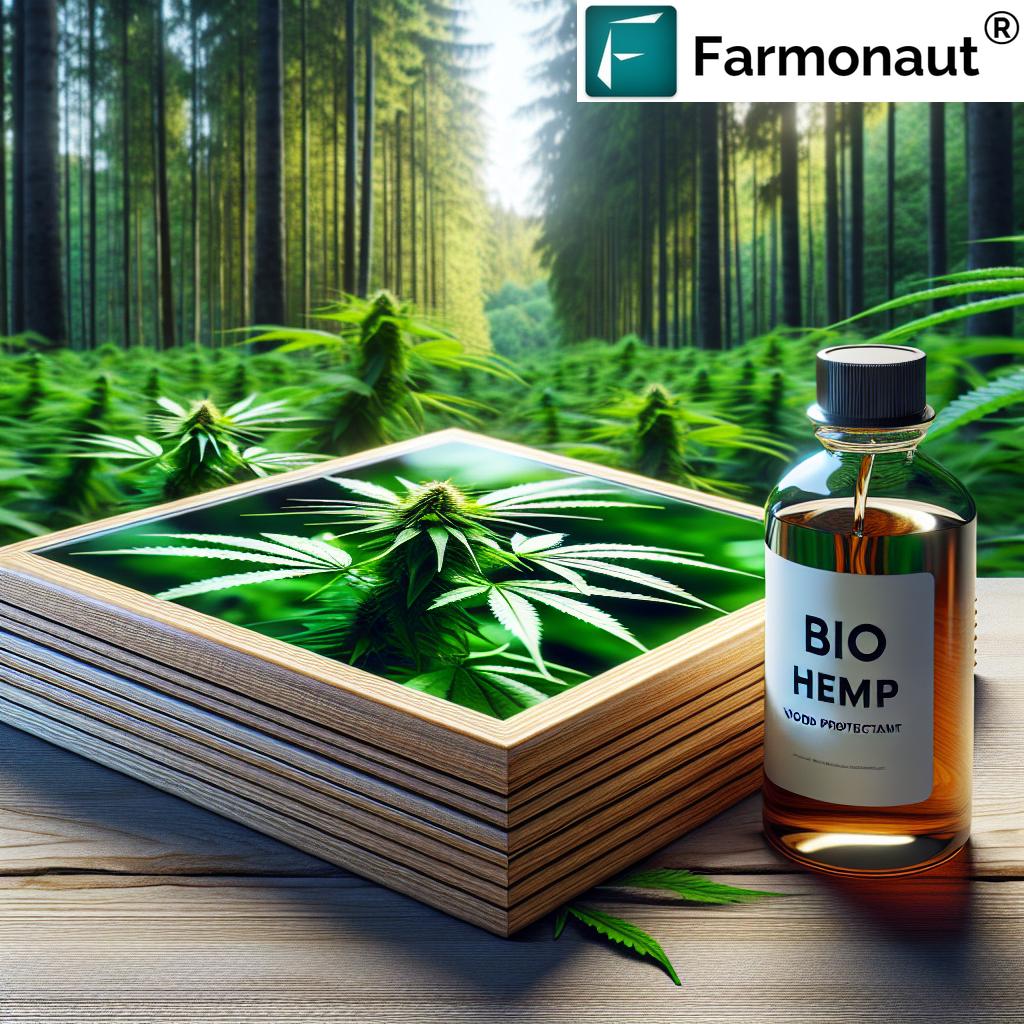
Smart BioHemp Wood Protectant (also searched as “smart bio hemp,” “biohemp,” or “bio hemp wood protectant”) is a USDA BioPreferred-certified, hemp-seed-oil-based penetrating sealer made from hemp grown on U.S. farms. A quart is labeled to cover 75–100 square feet and a gallon 300–400 square feet, applied in two coats, with no respirator or gloves called for in the manufacturer’s application instructions. Its active chemistry — plant oils and waxes — sits outside the EPA’s restricted-use wood-preservative category that covers chromated arsenicals, creosote, and pentachlorophenol.
This page covers what is actually in it, how its regulatory status compares line-by-line to copper- and arsenic-based treatments, what verified review sources say, and a calculator to size a project from your own square footage.
Table of Contents
- What Is Smart BioHemp Wood Protectant?
- The Science: Hemp Seed Oil vs. Regulated Chemical Preservatives
- Comparison Table: Smart BioHemp vs. Conventional Treatments
- Benefits, Section by Section
- Smart BioHemp Reviews: What to Check and Where
- Application Guide
- Beyond the Wood: Farmonaut’s Satellite Tools
- Frequently Asked Questions
- Conclusion
- Farmonaut Subscriptions
- Try it: Coverage Calculator: How Many Containers Do You Need?
What Is Smart BioHemp Wood Protectant?
Smart BioHemp is a plant-based wood protectant for indoor and outdoor wood, built around hemp seed oil pressed from U.S.-grown hemp combined with plant waxes. It is aimed at the same jobs a chemical preservative handles — moisture resistance, UV protection, and surface durability — for farming, agricultural, and forestry wood: barns, fencing, decks, and equipment.
- USDA BioPreferred certified, per the program’s own certification criteria, which require third-party lab verification of biobased carbon content using ASTM D6866, plus a minimum biobased-content threshold that is at least 25% for products outside an established USDA category.
- Manufacturer’s application instructions call for no gloves, mask, or respirator.
- Labeled for barns, fencing, patios, agricultural infrastructure, and farm equipment.

The hemp feeding U.S. wood-protectant products comes from a genuinely small but fast-growing domestic crop. USDA’s National Agricultural Statistics Service (NASS) put total U.S. industrial hemp planted acreage at 49,270 acres for the 2025 crop year, an 8.8% increase over 2024, with 43,710 acres harvested and a total production value of $739.0 million, per the USDA NASS National Hemp Report (published April 2026). Texas led all states at 6,700 planted acres in 2025, followed by Kentucky at 4,800 and California at 4,000.
The Science: Hemp Seed Oil vs. Regulated Chemical Preservatives
Hemp seed oil is a drying oil rich in unsaturated fatty acids and natural antioxidants. Applied to wood, it penetrates the porous surface and polymerizes (cross-links as it cures), forming a barrier that resists water absorption and slows UV-driven breakdown of surface lignin — the mechanism behind calling it a hemp oil wood preservative rather than a surface film like paint. Smart BioHemp’s manufacturer describes university testing of weathering resistance, water resistance, and surface flaking/chalking, though the independent lab report itself is not published for public download — if you need the underlying data rather than the summary claim, request it directly from the manufacturer via that application page.
Hemp seed oil for wood finishing is a small niche inside a hemp economy dominated by floral (cannabinoid) production. Of the $739.0 million in 2025 U.S. hemp production value NASS reported, the categories it breaks out separately are floral at $482.6 million, fiber at $11.3 million, and grain — the category hemp seed oil comes from — at $7.0 million; the remaining roughly $238.1 million falls into categories NASS does not itemize in the summary figures available.
Why Chemical Wood Preservatives Got Regulated in the First Place
Chromated copper arsenate (CCA) was the dominant heavy-duty wood preservative for decks, fences, and playground equipment through the early 2000s. The EPA’s CCA ingredient page states that manufacturers voluntarily discontinued CCA-treated wood for homeowner uses in December 2003, and a peer-reviewed summary hosted by the National Institutes of Health notes that manufacturers requested the cancellation in February 2002, with the EPA’s cancellation taking effect in March 2003 (PMC, National Institutes of Health). The EPA still classifies chromated arsenicals as a restricted-use pesticide, meaning only certified applicators can apply it, and it can still be produced for non-residential uses such as utility poles and permanent foundation supports.
That gap is what today’s residential-registered alternatives fill. The EPA’s Overview of Wood Preservative Chemicals lists three “heavy-duty” chemistries under ongoing regulatory review — chromated arsenicals, creosote, and pentachlorophenol, all restricted-use — against six chemistries registered specifically for residential lumber: alkaline copper quaternary (ACQ), borates, copper azole, copper naphthenate, copper-HDO, and polymeric betaine. None of those six is a plant oil; Smart BioHemp and similar hemp-oil products sit in a different category again, sold as a topical treatment rather than an EPA-registered wood preservative pesticide.
Comparison Table: Smart BioHemp vs. Conventional Treatments
Side-by-side, using EPA and USDA classifications rather than marketing percentages:
| Attribute | Smart BioHemp Wood Protectant | ACQ / copper azole pressure-treated lumber | Legacy CCA-treated wood | Film-forming exterior stain/paint |
|---|---|---|---|---|
| Primary active chemistry | Hemp seed oil + plant waxes | Alkaline copper quaternary or copper azole | Chromated copper arsenate | Synthetic resin + UV-blocking pigment |
| EPA pesticide registration | Not registered/marketed as a pesticide | Registered, general-public use | Restricted-use since Dec. 2003 for new residential wood | Not a registered wood preservative |
| USDA BioPreferred certified | Yes | No | No | No |
| PPE in manufacturer’s instructions | None specified for DIY application | Gloves/eye protection typical on product labels | Certified-applicator handling only | Gloves/ventilation typical on most labels |
| How it’s applied | 2 coats, brush/roller/sprayer, penetrates surface | Pressure-impregnated at the mill | Pressure-impregnated at the mill | 2 coats typical, sits as a surface film |
| Availability of new material | Direct online and select retailers | Home-improvement retailers nationwide | Pre-2003 stock only; cannot be newly made for residential use | Home-improvement retailers nationwide |
Benefits, Section by Section

1. Domestic, Renewable Sourcing
The oil comes from hemp seed grown and pressed on U.S. farms rather than imported petroleum feedstocks used in many conventional preservatives. Domestic sourcing shortens the supply chain and ties the product to the acreage growth shown above — 49,270 planted acres nationwide in 2025. For farm operations tracking their own footprint alongside supplier choices like this, see Farmonaut’s carbon footprinting services.
2. Outside the EPA’s Restricted-Use Wood Preservative List
Because Smart BioHemp is not sold or registered as a pesticide, it is not subject to the certified-applicator restrictions the EPA places on chromated arsenicals. That distinction matters most for farms and small operations applying their own wood treatment without a pesticide applicator’s license. It does not mean regulated preservatives are unsafe when used as labeled — the EPA states it did not find health risks of concern for the general public from existing CCA structures, only for workers at treatment facilities — but it does mean fewer handling restrictions apply to a plant-oil product used on barns, fence posts, and equipment near livestock and crops.
3. Moisture and UV Resistance by Mechanism, Not Just Claim
Hemp oil’s fatty-acid structure is naturally hydrophobic before it even polymerizes, and its antioxidants are the same class of compounds that slow oxidative UV damage in other plant oils used as wood finishes (linseed, tung). That’s the chemical basis for the moisture- and UV-resistance claims; independent, publicly downloadable comparative test data against specific competing products is not available from the manufacturer at the time of this review — request the underlying university testing summary directly if you need it for a purchasing decision.
4. Surface Protection Without a Published Service-Life Multiple
A polymerized oil barrier resists surface cracking and abrasion better than bare, untreated wood — that much is basic wood-finishing chemistry. What isn’t available is an independently published number for exactly how many years longer treated wood lasts versus untreated wood in comparable exposure conditions; treat any specific multiplier you see elsewhere as a marketing estimate unless it links to a named test protocol.
5. Versatile, Documented Use Cases
Labeled uses span barn walls, fence posts, animal enclosures, decks, patios, lumber, and greenhouse frames, indoors and outdoors, on unfinished or well-dried pressure-treated wood. Large operations managing wood assets across many fields alongside crop data can pair this with Farmonaut’s Large Scale Farm Management App for one place to track both.
6. Economic Value — Do the Math for Your Own Project
Total cost of ownership depends on coats, coverage rate, container price, and how long a coat actually lasts before it needs redoing — none of which is a fixed industry number. What’s fixed is the label coverage: roughly 75–100 sq ft per quart and 300–400 sq ft per gallon, at two coats per application, per the manufacturer’s own listings. Run those figures against your own square footage in the calculator below rather than relying on a generic percentage-savings claim. Businesses that need to document sustainable sourcing decisions for customers or auditors can pair that with Farmonaut’s blockchain-based product traceability.
7. Simple, Low-PPE Application
Ready to use out of the container, no mixing: apply with a brush, roller, or sprayer, let the first coat dry overnight, apply a second coat, and let it cure fully before heavy use — cure time depends on temperature and humidity in the room or yard where it’s applied, so warmer and better-ventilated conditions finish faster. It works on dry, unfinished wood as well as well-dried, pressure-treated lumber.
Coverage Calculator: How Many Containers Do You Need?
Assumes the manufacturer’s labeled coverage range (75–100 sq ft/quart, 300–400 sq ft/gallon) and the coat count you enter. Does not account for product waste, trim/edge absorption, or repeat coats beyond what you specify.



Smart BioHemp Reviews: What to Check and Where
For "smart biohemp reviews" and "smart bio hemp wood protectant reviews" searches, the honest answer is that star ratings and review counts on third-party marketplaces change continuously, so any specific number printed here would be out of date within weeks. Instead, use this method: search the product name directly on the retail marketplace where you'd actually buy it (its listings show container size, current price, and the live star rating with review count), and separately check the manufacturer's own site for the university-testing summary referenced above, since that's the closest thing to independent performance data currently published. Cross-reference both before treating either as the final word — a high star average with few reviews carries less weight than a moderate average across dozens of verified purchases.
Application Guide
- Confirm the wood is dry and unfinished (or fully dried, pressure-treated lumber) — low moisture content is what lets the oil penetrate rather than sit on the surface.
- Clean the surface, removing dust, dirt, and any old coating residue.
- Apply the first coat with a brush, roller, or sprayer; let it dry overnight.
- Apply the second coat once the first is dry.
- Let it cure fully before heavy use — warmer, well-ventilated conditions cure faster than cold, damp ones.
Beyond the Wood: Farmonaut's Satellite Tools
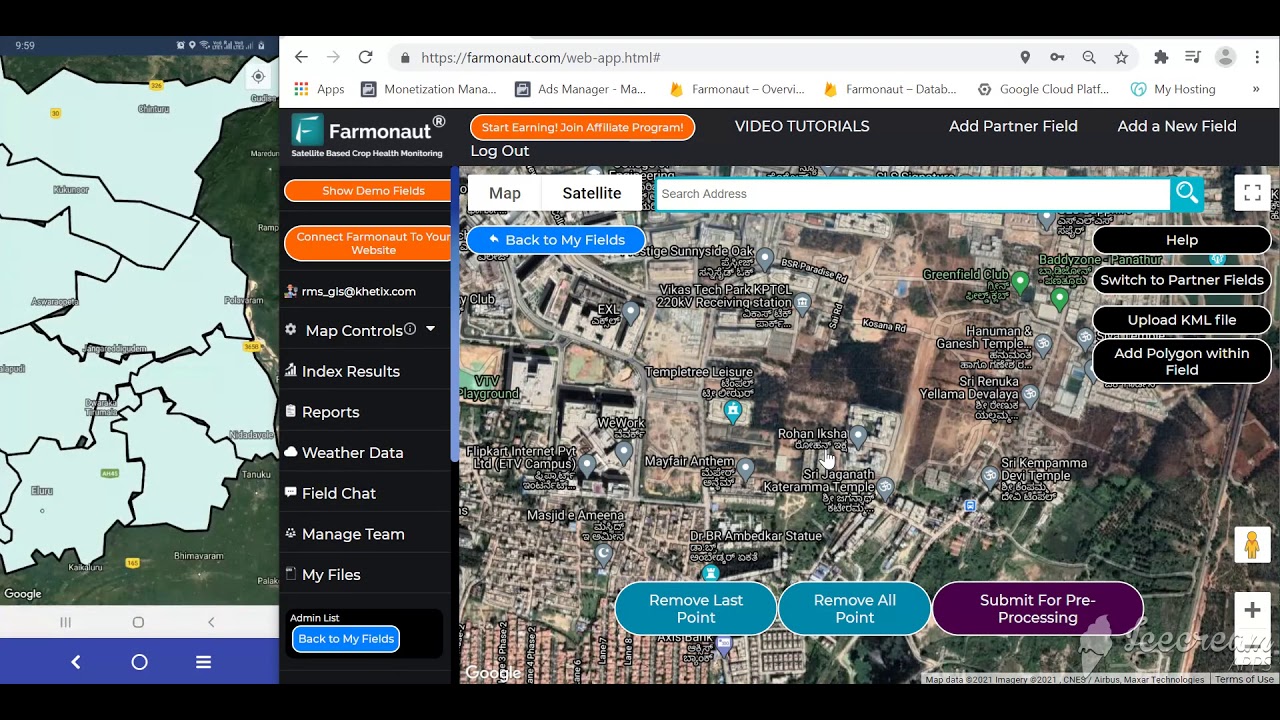
Wood protectants extend the life of farm infrastructure; Farmonaut's satellite tools extend the life and productivity of what that infrastructure supports. Its resource and fleet management tools track equipment and hauling operations, and its satellite and weather API, documented in the developer docs, gives researchers and larger operations direct access to the same imagery and weather feeds behind Farmonaut's consumer apps. Neither tool treats a fence post, but both reduce the guesswork around managing everything the fence post sits next to.
For readers moving beyond a single wood-treatment purchase toward broader input reduction, Farmonaut's guide to chemical-free farming and sustainable soils covers the same underlying shift — away from synthetic inputs and toward practices with a documented lower environmental footprint.
Frequently Asked Questions
- Is Smart BioHemp wood protectant good — what do the reviews actually say?
- Ratings and review counts live on the retail marketplaces where it's sold and change too often to print a fixed number here reliably; check the current listing directly, and cross-check it against the manufacturer's university-testing summary rather than relying on stars alone.
- What is biohemp (Smart BioHemp) made of?
- Hemp seed oil pressed from U.S.-grown hemp, combined with plant waxes — a plant-oil formulation rather than a petroleum-derived or metal-salt preservative.
- Is "bio hemp wood protectant" the same thing as a "hemp oil wood preservative"?
- Yes — both terms describe the same category of product: a penetrating, hemp-seed-oil-based treatment, distinct from EPA-registered pesticide preservatives like copper azole or legacy CCA.
- Does it require a respirator or special PPE to apply?
- The manufacturer's application instructions specify no gloves, mask, or respirator for DIY application, unlike EPA-restricted-use preservatives, which are limited to certified applicators.
- What does "USDA BioPreferred certified" actually guarantee?
- It confirms third-party lab verification (ASTM D6866) of the product's biobased carbon content against a USDA-set minimum for its category — a renewable-content standard, not a performance or safety guarantee.
- How much does one quart or gallon actually cover?
- Per the manufacturer's own product listings: roughly 75–100 sq ft per quart and 300–400 sq ft per gallon, at two coats. Use the calculator above with your own square footage.
- Can it go on pressure-treated wood?
- Yes, on properly dried, pressure-treated lumber as well as unfinished wood, per the manufacturer's application instructions.
Conclusion
Smart BioHemp Wood Protectant's real differentiator isn't a percentage claim — it's regulatory category. Because it's a plant-oil topical treatment rather than an EPA-registered pesticide, it sidesteps the certified-applicator rules that apply to chromated arsenicals and sits in a different handling class from copper-based pressure treatments, while carrying third-party-verified USDA BioPreferred status that neither of those alternatives holds. Coverage (75–100 sq ft/quart, 300–400 sq ft/gallon) and application (two coats, no special PPE) are fixed, checkable facts; service-life multipliers and cost-savings percentages are not independently published, so treat any such figure — including from other sites — as a claim to verify rather than a given.
Whether you're treating a single fence line or managing wood assets across a working farm, the method above — check the regulatory classification, check the coverage math against your own project, check the current review listing directly — holds up regardless of what the specific numbers look like next year.

Flexible, Affordable Farmonaut Subscriptions
To pair sustainable infrastructure choices like wood protection with broader farm management, explore Farmonaut's platform subscriptions below:
Discussion
Questions, corrections or field experience? Share them below. First-time comments are reviewed before they appear, and your email is never published.
No comments yet. Be the first to add a question or your experience.

 Krishify
 TVS Electronics
 BW Pipelines
 WICO
 Gen Chayat
 Chimera Innovation
 SkyHarvest
 Polaris Digitech
 Teledarbas
 Wild Oak Farm
 SFX
 BACF Africa
 Doodlakine
 Exurbia Geospatial
 FieldZero

 Licence holder · Niger · Gold










