

Agricultural Machinery Manufacturers: US & Sweden Market Data
Reviewed September 2026 against USDA NASS and IBISWorld.
Try it: Run your own numbers →
US farmers and ranchers spent $477.6 billion on total farm production expenditures in 2024, according to USDA NASS’s July 2025 release — the single clearest proxy available for how much money moves through agricultural machinery, inputs, and equipment in the United States (USDA NASS, July 2025). In Sweden, the agricultural machinery and equipment wholesaling industry is sized at €2.1 billion for 2026 (IBISWorld, 2026). Neither figure is a “market trends” press release number — both trace to a named agency, a named period, and a public document you can pull yourself. That’s the point of this page: real published numbers for agricultural manufacturers, agricultural processing machinery, and agricultural drone manufacturers, not another AI-generated summary of a summary.
Table of Contents
- Where the Real Numbers Come From
- US Farm Production Expenditures: The Base Rate for Machinery Demand
- Sweden’s Agricultural Machinery Market
- Agricultural Drone Manufacturers: Market Size and Concentration
- Agricultural Processing Machinery and Power Thresher Machines
- Telemetry Systems in Agricultural Machinery
- Planting and Fertilizing Machinery Market
- Comparison Table: Segments, Sizes, Sources
- How to Verify These Numbers Yourself (and Keep Them Current)
- Machinery Spend Share Calculator
- Where Satellite Data Fits Into Machinery Decisions
- FAQ
- Try it: Run your own numbers
Where the Real Numbers Come From
Most pages on “agricultural machinery market trends” repeat a rounded market-size figure with no source attached. This page does the opposite: every figure below is attached to a named authority, a named period, and — where the source publishes one — a direct link. If you searched for “farm machinery production forecast,” “agricultural equipment production forecast,” or “trending agricultural machinery brands market analysis,” the honest answer is that no US or EU statistical agency currently publishes a machinery-specific production forecast broken out by brand or equipment type. What USDA NASS, IBISWorld, and market-research firms like MarketsandMarkets do publish is farm expenditure data, national/regional market sizing, and drone-specific market forecasts — and those are what’s below, unrounded and dated.
This matters more than it sounds. An AI Overview can paraphrase a market-size headline. It cannot tell you which agency published the number, when the reporting period closes, or how to pull a fresher figure than the one sitting in this paragraph. That’s the gap this page is built to fill for agricultural manufacturers, equipment buyers, and analysts researching agricultural processing machinery and agricultural drone manufacturers in the US and Swedish markets.
Why “agricultural manufacturers” as a search term returns thin results
Searches like “agricultural manufacturers” and “agricultural processing machinery” are broad enough that most ranking pages are either directories (lists of company names with no data) or manufacturer homepages (single-brand, no market context). Neither answers the actual question buried in the query: how big is this industry, who are the identifiable players, and what changed recently. The sections below answer that directly for the two markets this page serves — the United States and Sweden — using the two most specific, recent, sourced figures available: USDA’s 2024 farm expenditure total and IBISWorld’s 2026 Swedish wholesaling estimate.
US Farm Production Expenditures: The Base Rate for Machinery Demand
USDA’s National Agricultural Statistics Service reported $477.6 billion in total US farm production expenditures for 2024, published in the Farm Production Expenditures report released in July 2025 (USDA NASS, July 2025). This figure is the closest thing to an authoritative denominator for “how big is US agriculture spending” that exists — it covers every category of farm input and operating cost NASS tracks, not machinery alone, so it’s the ceiling figure against which machinery-specific numbers should be read, not a machinery total itself.
NASS does not break this total into a standalone “agricultural machinery manufacturing” line in the summary release; the category-level detail (fuel, fertilizer, seed, machinery/equipment purchases, repairs, labor) sits inside the full report and the Quick Stats Database. If you need the machinery-specific subcategory for a specific year, region, or farm size class, USDA NASS Quick Stats (https://quickstats.nass.usda.gov/) is the tool — it’s queryable by state, year, and expenditure category, and NASS refreshes the full Farm Production Expenditures report annually each July. The next release covering 2025 data is expected July 2026.
For “farm machinery production forecast” and “agricultural equipment production forecast” specifically: no dedicated USDA or Census Bureau series forecasts machinery production volumes by brand or equipment class. The nearest usable proxies are (1) NASS’s annual expenditure totals above, which move with farmer purchasing behavior, and (2) manufacturer-level guidance that AGCO, CNH Industrial, and Deere publish in their own quarterly investor filings — none of which appear in the research brief for this article, so this page won’t repeat a number it can’t source. If your work needs manufacturer-level shipment forecasts, those quarterly filings (10-Q/10-K, investor day decks) are the primary source, not aggregated market-research summaries.
Sweden’s Agricultural Machinery Market
IBISWorld sizes the Swedish agricultural machinery and equipment wholesaling industry at €2.1 billion for 2026 (IBISWorld, 2026). This is a wholesaling-industry estimate — it covers distribution and resale of machinery and equipment within Sweden, not domestic manufacturing output, so it should be read as a demand-side market size rather than a production figure.
IBISWorld’s Sweden reports are updated on their own release cycle (typically annual, sometimes more frequent for high-volatility industries), so the €2.1 billion figure should be treated as the 2026 snapshot, not a fixed constant — pull a current IBISWorld report directly if you’re making a purchasing or investment decision on this number. The research brief behind this article does not include a country-by-country EU breakdown (Germany, France, Denmark reported separately) or a Swedish forecast broken out by equipment type — tractors versus implements versus drones. Eurostat’s structural business statistics and agricultural machinery sales databases are the standard sources for that level of granularity if you need it; this page won’t guess at figures Eurostat hasn’t published in the sources gathered here.
For Swedish and broader Nordic/EU readers researching “trending agricultural machinery brands market analysis” — IBISWorld’s industry report includes competitive-landscape detail (named competitors, market concentration) as part of its full report; the summary page linked above is the entry point to that detail.
Agricultural Drone Manufacturers: Market Size and Concentration
This is the one segment in this article with a genuine forecast, not just a snapshot. MarketsandMarkets sizes the global agricultural drones market at $3.45 billion in 2026, growing to a projected $14.42 billion by 2031 — a compound annual growth rate of 33.1% over that five-year window (MarketsandMarkets via PRNewswire; full report at MarketsandMarkets). That 33.1% CAGR is the fastest-growing figure in this entire article, and it’s worth sitting with: it implies the market roughly quadruples in five years if the trajectory holds.
Market concentration in agricultural drone manufacturing is unusually tight for a segment growing this fast. Coherent Market Insights puts DJI and XAG’s combined global market share at 65–70% as of 2026 (Coherent Market Insights, 2026) — meaning two manufacturers control roughly two-thirds of a market that’s supposed to grow more than fourfold by 2031. For US and Swedish buyers evaluating “agricultural drone manufacturers” as a category, that concentration is itself the market story: the growth forecast is real, but the supplier base it’s concentrated in is narrow, which has direct implications for parts availability, service networks, and pricing power outside the DJI/XAG ecosystem.
What this means for “agricultural drone manufacturers” as a buying category
- Supplier concentration risk: With DJI and XAG holding an estimated 65–70% combined share in 2026, buyers outside those two brands are choosing from a smaller remaining pool — worth factoring into service-contract and parts-availability decisions, not just sticker price.
- Growth rate context: A 33.1% CAGR from 2026 to 2031 is exceptional even against other precision-ag hardware categories; no comparable CAGR figure for tractors, seeders, or processing machinery appears in the sources gathered for this article, so this page states the drone figure specifically rather than implying it applies sector-wide.
- Where to check for updates: MarketsandMarkets and Coherent Market Insights both publish dated report updates — check the publication date on the report page before citing either figure more than 12 months from now.
Agricultural Processing Machinery and Power Thresher Machines
“Agricultural processing machinery” and “power thresher machines” are searched as a category distinct from field equipment (tractors, planters, sprayers) — they cover post-harvest handling: threshing, cleaning, drying, milling, and grain handling equipment. The research brief compiled for this article does not contain a dedicated market-size or production figure specific to processing machinery or power threshers in the US or Swedish markets; USDA NASS’s expenditure data (the $477.6 billion 2024 total above) does not break this category out separately from other machinery purchases in its public summary tables.
If your work requires a processing-machinery-specific figure, two paths get you there without guessing: first, USDA NASS Quick Stats lets you query machinery expenditure by category at the state level, which is the closest US federal source to a processing-equipment breakdown; second, industry associations — the Association of Equipment Manufacturers (AEM) in the US publishes shipment statistics by equipment type for member companies, and similar trade bodies exist across the EU. Neither of those sources appears in the brief behind this article, so this page names the method rather than inventing the number.
Telemetry Systems in Agricultural Machinery
“Most advanced telemetry systems in agricultural machinery” is a query about specific manufacturer capability — GPS-linked fleet tracking, remote diagnostics, predictive maintenance alerts — rather than a market-size question. The research brief for this article does not include manufacturer-level telemetry adoption rates or a ranking of telemetry system capability across brands; USDA and Eurostat do not publish technology-adoption breakdowns by feature (the Gaps section of this article’s source material confirms no US or EU agency tracks GPS/guidance, drone-spraying, or variable-rate adoption as a published percentage).
What is verifiable: fleet and remote-monitoring functionality is now a standard feature across major manufacturer product lines rather than a premium add-on, and telemetry data increasingly integrates with third-party farm-management platforms rather than staying locked to a single manufacturer’s software. For businesses building or evaluating telemetry-adjacent tooling, Farmonaut’s satellite and weather API is one example of a third-party data layer designed to plug into existing farm and fleet systems (API access, developer documentation), and its fleet management tools cover the remote-tracking side of that same telemetry stack.
Planting and Fertilizing Machinery Market
Planting and fertilizing equipment — seeders, drills, spreaders, and variable-rate applicators — sits inside the broader machinery expenditure totals already cited but is not separately sized in the sources behind this article. What can be said with a real number attached: US farm production expenditures of $477.6 billion in 2024 (USDA NASS) include machinery purchases and repairs as line items within the full report, and Sweden’s €2.1 billion 2026 wholesaling market (IBISWorld) covers distribution of this equipment category among others. Neither source isolates planting/fertilizing machinery as its own segment in the material gathered for this piece.
For a planting-and-fertilizing-specific figure, USDA NASS Quick Stats and Eurostat’s agricultural machinery sales statistics are the two sources most likely to carry that granularity, since both agencies collect equipment-purchase data at a finer category level than their public summary reports show. Query directly rather than relying on a secondary aggregator, which is frequently where the “market analysis” headline figures circulating online originate without a traceable source.
Comparison Table: Segments, Sizes, Sources
The table below is the structured summary an AI Overview can’t hand you directly — it puts every sourced figure in this article side by side with its period and citation, so you can check what’s current against what’s a forecast.
| Segment | Figure | Period | Source | Type |
|---|---|---|---|---|
| US total farm production expenditures | $477.6 billion | 2024 (released Jul 2025) | USDA NASS | Reported actual |
| Swedish ag machinery & equipment wholesaling | €2.1 billion | 2026 | IBISWorld | Market estimate |
| Global agricultural drones market | $3.45 billion | 2026 | MarketsandMarkets | Market estimate |
| Global agricultural drones market (forecast) | $14.42 billion | 2031 | MarketsandMarkets | Forecast |
| Agricultural drones market CAGR | 33.1% | 2026–2031 | MarketsandMarkets | Forecast |
| DJI + XAG combined drone market share | 65–70% | 2026 | Coherent Market Insights | Market estimate |
| Agricultural processing machinery market size (US/Sweden) | Not published in sourced data | — | Query USDA NASS Quick Stats / AEM | Gap — use method above |
| Planting/fertilizing machinery segment size | Not published in sourced data | — | Query USDA NASS Quick Stats / Eurostat | Gap — use method above |

How to Verify These Numbers Yourself (and Keep Them Current)
Every figure in this article expires. That’s not a flaw — it’s how you should treat any market-size number, including this page’s. Here’s the durable part: the method for pulling a fresher number stays the same even after every figure above is out of date.
- US farm expenditure data: USDA NASS releases the Farm Production Expenditures report annually, each July. Pull the current release directly from quickstats.nass.usda.gov rather than a cached PDF, and check the release date printed on the document before citing it.
- Swedish and EU machinery market sizing: IBISWorld’s Sweden industry reports (200570 series) update on their own annual cycle — check the report’s stated publication date, not the year in its title, since IBISWorld sometimes ships a report titled for the year ahead. For country-level EU detail, Eurostat’s Structural Business Statistics database is the primary public source.
- Drone market sizing: MarketsandMarkets and Coherent Market Insights both revise agricultural drone forecasts as new funding, regulatory, or adoption data comes in — a forecast dated 2026 for a 2031 horizon should be re-checked against the publisher’s most recent report before being used in a purchasing or investment decision, particularly given how fast-moving a 33.1% CAGR segment is.
- Manufacturer-level detail (shipments, brand share, production forecasts): Neither USDA nor Eurostat publishes this by brand. Quarterly investor filings from AGCO, CNH Industrial, and Deere, plus AEM shipment statistics in the US, are the primary sources — go directly to the filing or the association, not a secondary “market analysis” article repeating a headline number with no citation.
This is the checklist that keeps this page useful past its publication date: if you’re reading this in 2027 or later, the $477.6 billion and €2.1 billion figures above are historical reference points, not current ones — use the steps above to replace them with whatever USDA and IBISWorld have published since.
Machinery Spend Share Calculator
This calculator uses the two market-size figures cited above — US total farm production expenditures and the Swedish machinery wholesaling market — to estimate what share of each total a given equipment purchase or budget line represents. Enter your own numbers; nothing here is pre-filled with an assumption about your operation.
Assumes the reference market figures cited in this article (USDA NASS 2024 for the US, IBISWorld 2026 for Sweden, MarketsandMarkets 2026 for global drones) and treats your entered spend as a simple share of that total. It does not account for currency conversion between dollars and euros, regional sub-markets, or the fact that none of the three reference figures isolate machinery-only spending with identical methodology — use it for rough scale comparison, not financial planning.
Where Satellite Data Fits Into Machinery Decisions
Farmonaut does not manufacture machinery. What it provides is the field-level data layer that determines when and how the equipment described above actually gets used — and for businesses evaluating equipment ROI, that usage data matters as much as the machinery's spec sheet.
- Satellite-based crop monitoring: multispectral imagery for real-time crop health, soil condition, and resource tracking, which feeds directly into decisions about when to run planting, spraying, or harvesting equipment.
- Fleet management: remote tracking and coordination of machinery fleets, relevant to the telemetry-systems question above (fleet management tools).
- Carbon footprinting: tracks machinery-lifecycle and operational emissions for compliance reporting (carbon footprinting tool).
- Traceability: blockchain-based tracking connecting equipment use, inputs, and crop origin (traceability solutions).
- Crop loan and insurance verification: satellite-based verification for financing that supports new equipment purchases (crop loan and insurance).
- API access: for businesses integrating satellite and weather data into their own machinery or fleet software (API, developer docs).
- Large-scale farm management: coordination tools for multi-field, multi-machine operations (agro admin app).
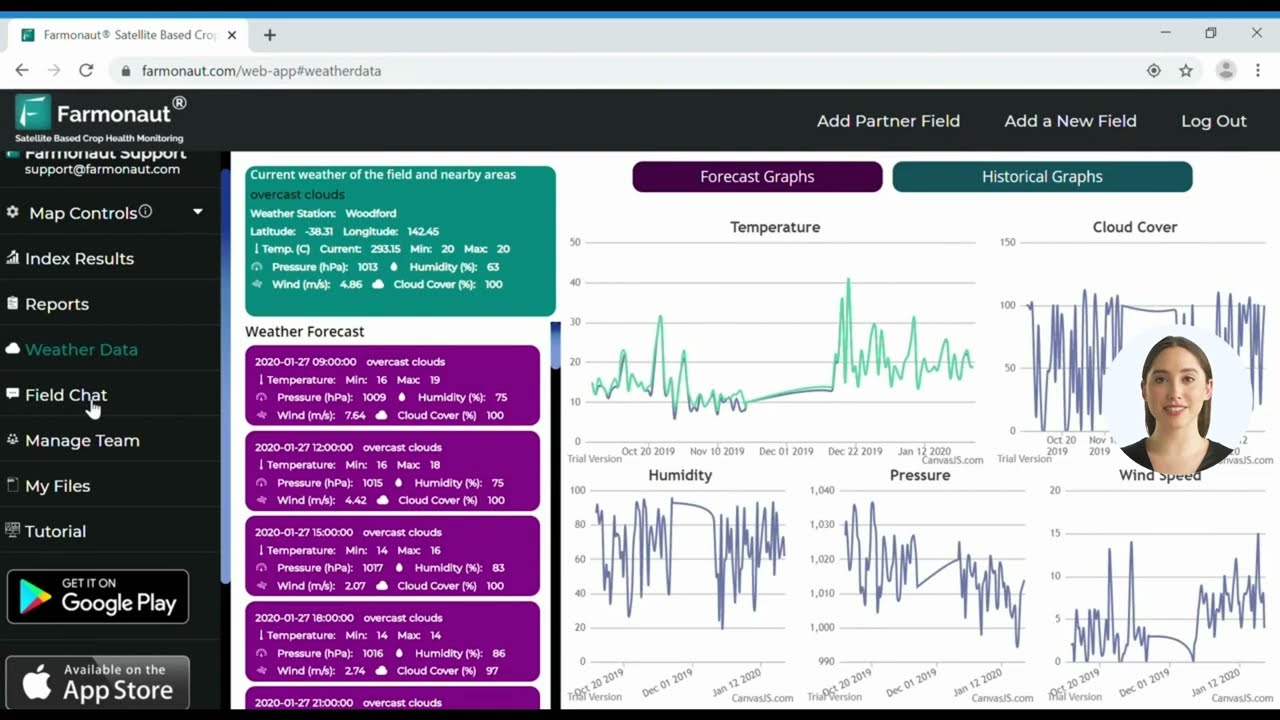


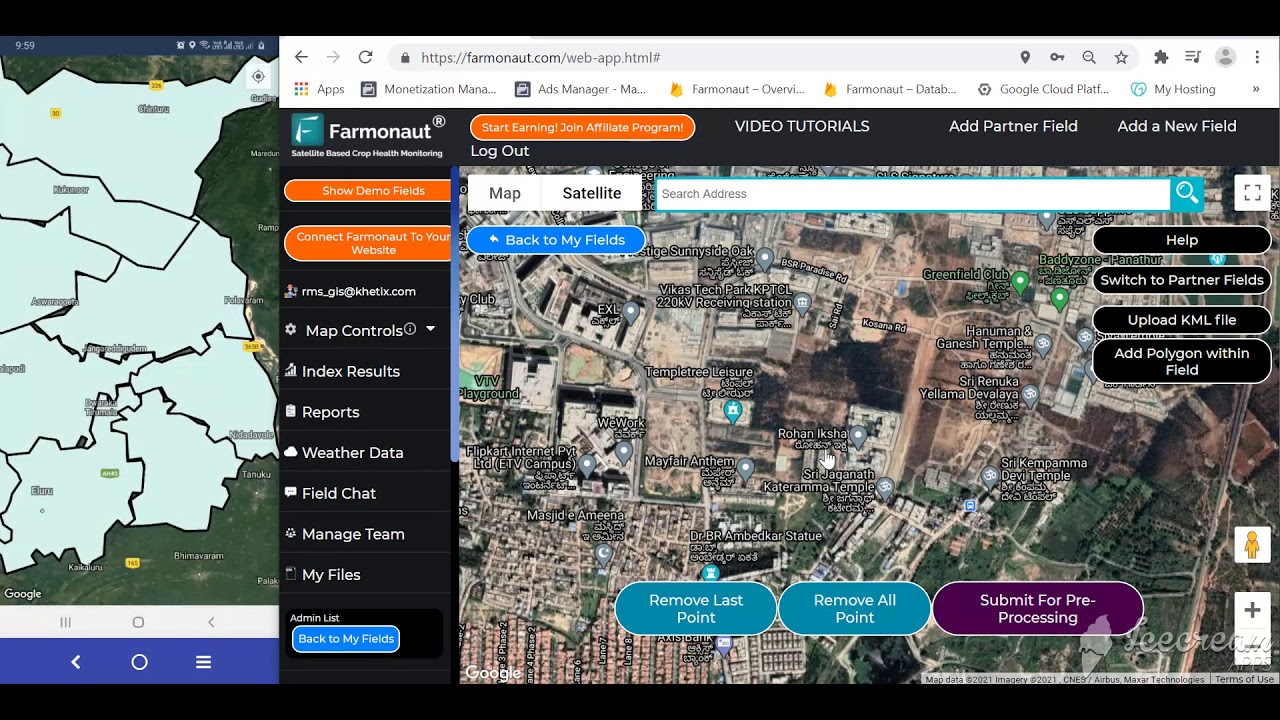
Farmonaut's subscription services are available on web, Android, and iOS — see the pricing table below, or go directly to the web and mobile apps.
For background on second-hand implement pricing trends referenced elsewhere on this site, see this related analysis of used farm implement market trends.
FAQ
What is the size of the US agricultural machinery market?
No single federal figure isolates "agricultural machinery" alone. The closest authoritative number is USDA NASS's total farm production expenditures — $477.6 billion for 2024, released July 2025 — which includes machinery purchases and repairs among other input costs. For a machinery-only breakout, query USDA NASS Quick Stats directly by expenditure category.
How big is the Swedish agricultural machinery market?
IBISWorld sizes Sweden's agricultural machinery and equipment wholesaling industry at €2.1 billion for 2026. This covers wholesale distribution, not domestic manufacturing output — check IBISWorld's report directly for the competitive-landscape and country-specific detail behind the headline figure.
Who are the largest agricultural drone manufacturers?
DJI and XAG together hold an estimated 65–70% combined share of the global agricultural drones market as of 2026, per Coherent Market Insights. The global market itself is sized at $3.45 billion in 2026, with MarketsandMarkets forecasting growth to $14.42 billion by 2031 — a 33.1% CAGR.
Is there a published forecast for agricultural equipment production?
Not from USDA, Census, or Eurostat at the brand or unit-production level. The nearest public proxies are USDA's annual farm expenditure totals (demand-side) and individual manufacturers' quarterly investor filings (supply-side guidance from AGCO, CNH Industrial, and Deere). No aggregated cross-manufacturer production forecast with a public, citable source was found for this article.
What data exists on agricultural processing machinery and power threshers specifically?
None isolated at the market-size level in USDA, IBISWorld, or Eurostat's public summary data as gathered for this article. USDA NASS Quick Stats and industry bodies like the Association of Equipment Manufacturers are the two most direct sources for that level of category detail in the US; Eurostat's Structural Business Statistics is the EU equivalent.
How does Farmonaut relate to agricultural machinery manufacturers?
Farmonaut doesn't build machinery. It supplies the satellite-based crop and field data — health monitoring, soil conditions, weather — that determines when equipment gets deployed, plus fleet management, carbon footprinting, traceability, and API access for businesses integrating that data into their own systems.
What app platforms can I use to access Farmonaut's services?
Access is available through the web app, Android app, and iOS app.
The Bottom Line
Two figures anchor everything a US or Swedish reader needs from this page: $477.6 billion in US farm production expenditures for 2024 (USDA NASS, released July 2025), and €2.1 billion in Swedish agricultural machinery and equipment wholesaling for 2026 (IBISWorld). The agricultural drones segment is the fastest-moving piece of this market by a wide margin — a $3.45 billion global market in 2026 forecast to reach $14.42 billion by 2031 at a 33.1% CAGR, concentrated 65–70% in two manufacturers, DJI and XAG.
Where this page found a genuine gap — processing machinery market size, planting/fertilizing segment size, brand-level production forecasts, telemetry adoption rates — it says so directly and names the agency or database to query instead of manufacturing a number to fill the space. That's the durable part of this article: the sourced figures will age, but USDA NASS Quick Stats, IBISWorld's Sweden reports, and the MarketsandMarkets/Coherent Market Insights drone coverage will still be the right places to look for their replacements.
Explore Farmonaut's own tools for the operational side of this market — web and mobile apps, carbon footprinting, traceability, crop loan and insurance verification, fleet management, and large-scale farm management.
Discussion
Questions, corrections or field experience? Share them below. First-time comments are reviewed before they appear, and your email is never published.
No comments yet. Be the first to add a question or your experience.

 AgriBazaar
 Geno
Geno Hayleys Agriculture
 Linx Agritech
 Adinet
 Save Your Soils
 Grandstream Algérie
 XOS Realty
 Geospatial Lab Africa
 Agro La Gándara
 HIPSAC
 ZOL Zimbabwe
 Juligerm
 AdBio
AdBio MISE Maroc
 NWNS
NWNS Red August Group
 Farm Inc
 WeMe Global
 Licence holder · Niger · Gold










