

AI Adoption: John Deere & 7 Ways AI Transforms Agriculture
“John Deere’s AI-enabled tractors process up to 50 million data points each farming season for precision agriculture.”
“AI adoption in agriculture increases crop yield by an average of 30% through advanced data analytics and automation.”
AI Transformation Fun Facts
- 30% Higher Yields: Adoption of AI and advanced data analytics is linked to substantial yield boost for farmers by 2025 and beyond.
- Over 50M Data Points: Modern John Deere tractors monitor, analyze, and respond in real time across an entire farming season.
- Autonomous Operations: 80% of new John Deere equipment launched in 2025 includes autonomous capabilities.
- Environmental Impact: AI integration can reduce water and fertilizer use by more than 20% through tailored applications.
- Growth Rate: By 2026, global AI investments in agriculture have doubled from 2022 levels, underlining its role as a cornerstone for future food security.
Why AI Adoption Matters: Critical Insights for Agriculture
Today’s AI adoption in agriculture, particularly as exemplified by John Deere, marks a profound shift that is reshaping how farmers manage their operations. By 2025 and marching well into 2026 and beyond, AI is firmly established as the cornerstone of modern agriculture. This transition signifies more than a technological upgrade—it’s a strategic transformation where traditional farming integrates seamlessly with advanced data-driven systems, resulting in smarter, more sustainable agriculture across diverse regions.
- Integration of Hardware & Data: John Deere’s new generation machinery blends IoT sensors, cameras, and AI software for continuous data gathering and autonomous field operations.
- Proactive Management: AI-powered platforms enable farmers to anticipate and solve issues before they impact yield, turning raw data into actionable insights for real-time decision making.
- Sustainability: Data-driven AI approaches are reducing chemical waste, optimizing water usage, and driving environmentally responsible farming methods.
- Human Expertise Remains Essential: While automation increases, skilled farmers interpret AI analytics and adapt strategies, preserving core agricultural knowledge and maximizing technology value.
- Data Ownership: As AI systems amass agronomic data, questions of interoperability, access, and security become paramount in building trust and equitable benefit sharing.

Inside the John Deere AI Ecosystem: Technology Integration in Agriculture
The transition to AI-powered agriculture isn’t just about new equipment—it is about creating a seamless ecosystem that combines hardware, software, and data-driven intelligence. John Deere, traditionally renowned for its durable manufacturing of farm machinery, has evolved into a technology-centric company. The company’s autonomous tractors, precision planters, and embedded sensors are at the heart of this transformation.
- IoT Devices & Sensors: Tractors and planning equipment contain hundreds of sensors & cameras continuously collecting vast amounts of agronomic data.
- Data Analytics: AI algorithms analyze live and historical data streams to predict optimal planting times, customize fertilizer applications, and monitor crop health at unprecedented accuracy.
- Precision Application: Reduces inputs and waste, perfectly aligning water, nutrients, and treatments with actual crop requirements, directly addressing both productivity and environmental impact.

7 Ways AI Transforms Agriculture: Key Takeaways from John Deere’s Approach
Drawing on the AI-driven transformation led by John Deere, and reflecting on industry-wide changes, here are the seven most critical ways AI adoption is revolutionizing agriculture by 2026 and beyond:
-
1. Precision Farming and Variable Rate Applications
AI-powered precision farming utilizes embedded sensors, historical yield maps, and real-time data streams to analyze field variability. With this intelligence, machinery can apply the optimal amount of water, fertilizer, and pesticides based on exact crop requirements, reducing input waste and maximizing yield and resource efficiency.
- Key Takeaway: Precision applications conserve water and agrochemicals, resulting in strong environmental impact and direct input cost savings.
- Proactive management: Soil and crop variability is addressed at a micro-level—often down to square meters—through AI-driven systems.

-
2. Predictive Analytics & Early Warning Systems
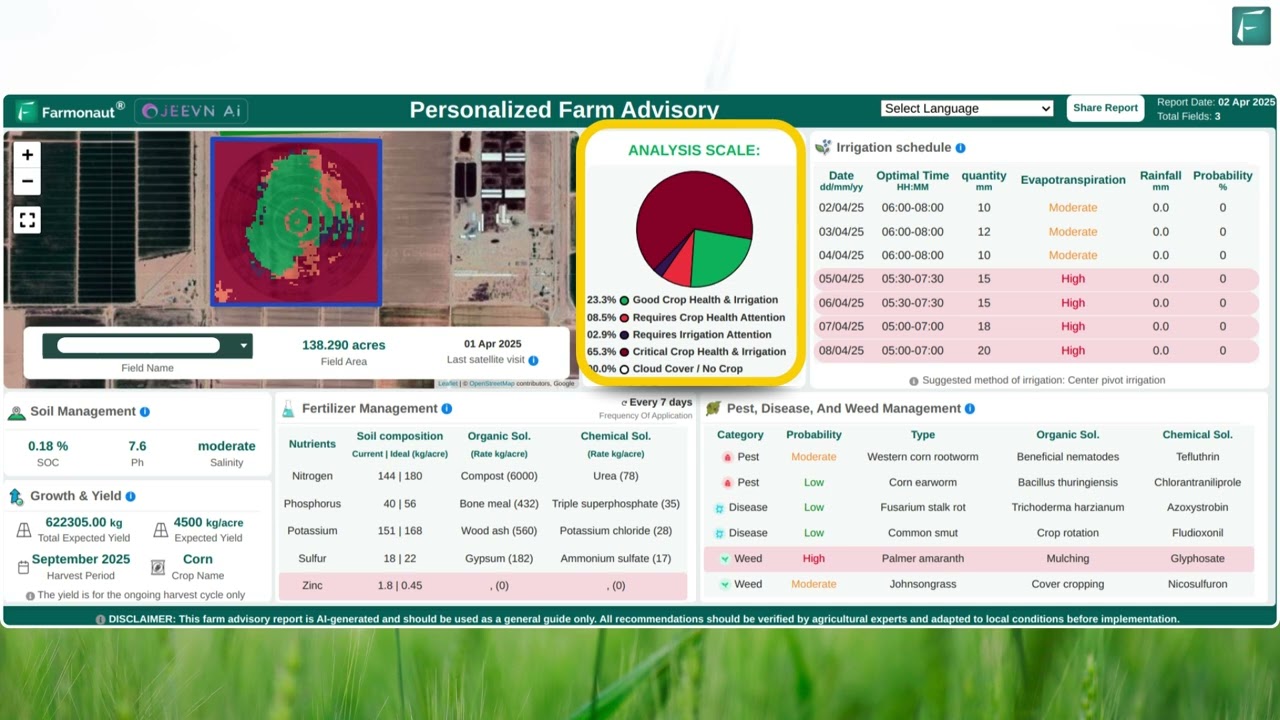
Using large volumes of historical and real-time data—from satellite imagery, weather sensors, and machinery sensors—AI algorithms predict pest infestation, crop disease, water stress, and nutrient depletion well before visual symptoms manifest. These predictive analytics enable farmers to take preventive action, drastically reducing loss of time, yield, and cost.
- Key Takeaway: Predictive analytics convert raw agronomic data into actionable intelligence, allowing farmers to make smarter, preventative decisions.
- Benefit: Reduces waste, optimizes pesticide and fertilizer use, and enhances crop resilience.
-
3. Automated & Autonomous Machinery
The rise of autonomous tractors, combine harvesters, and drones is perhaps the most visible marker of the AI adoption shift. These systems autonomously plant, cultivate, spray, and harvest crops with minimal human intervention, efficiently managing large-scale operations and freeing up valuable time that can be redirected to higher-level farm management.
- Key Takeaway: Automation not only boosts productivity and reduces labor costs, but also ensures precise, on-time agricultural operations across fields—large or small.
- AI in Drones: Drones equipped with AI vision can target weeds, pests, or disease with laser accuracy—minimizing chemical usage and environmental impact.

-
4. Real-Time Crop Health Monitoring & Stress Detection
Real-time crop health monitoring uses continuous imaging from on-field cameras, drones, satellites, and multispectral sensors to spot signs of water stress, nutrient deficiencies, pest infestation, or disease at the earliest stage. AI platforms like John Deere’s Operations Center process this data to send instant alerts or even trigger automatic interventions.
- Key Takeaway: Early stress detection means issues are resolved before they result in lost yield, supporting better resource management and resilient production cycles.
- Precision value add: Through constant monitoring, AI ensures each plant receives exactly what it needs, when it needs it.

-
5. Resource Optimization and Environmental Sustainability
As we look towards 2026 and beyond, the dual priorities of heightened productivity and environmental responsibility are inseparable. AI-driven agriculture at John Deere leverages data to minimize chemical runoff and lower greenhouse gas emissions. By optimizing input application and leveraging precision irrigation, AI reduces the environmental footprint at every stage of production.
- Key Takeaway: Sustainability objectives are embedded in the core of modern technology adoption, making responsible resource use a measurable outcome of innovation.
- By 2025: Emission and carbon footprint monitoring are now a standard feature in advanced agricultural ecosystems, assisting compliance and environmental stewardship.

-
6. Blockchain-Based Traceability & Supply Chain Insights
Supply chain transparency is rapidly becoming an industry requirement. Blockchain-based traceability—now embedded in some advanced AI platforms—ensures end-to-end product tracking, secures sensitive data, and meets growing consumer demand for authenticity. As illustrated by the broader industry approach, integrating AI with blockchain is setting new standards for trust and operational efficiency.
- Key Takeaway: Traceability solutions powered by AI and blockchain build trust, verify product provenance, and mitigate fraud and supply chain risks.
- Farmonaut’s Approach: Discover more on blockchain-based traceability for agriculture and supply chains.
-
7. Fleet, Equipment, and Farm Management Automation
AI-driven fleet and equipment management platforms are redefining operational efficiency across large-scale farms and agribusinesses. Automated tracking, scheduling, and real-time diagnostics reduce downtime, extend the life of machinery, and bring transparency to resource management.
- Key Takeaway: Smarter management of resources and logistics via AI reduces costs, enhances productivity, and simplifies farm operations—even at the largest scale.
- Explore Solutions: Learn about AI-driven fleet & equipment management for agriculture and beyond.

Comparison Table: AI Applications in Agriculture
| Application Name | Brief Description | Estimated Productivity Gain (%) | Environmental Impact | Example Implementation |
|---|---|---|---|---|
| Precision Farming | Site-specific input application, leveraging real-time sensors & AI. | 5-10% yield increase | Up to 20% less water & fertilizer use | John Deere’s ExactApply tech |
| Predictive Analytics | AI models forecast weather, pest outbreaks & disease. | 10-20% reduction in crop loss | Minimizes pesticide waste & over-application | John Deere Operations Center analytics |
| Automated Machinery | Autonomous tractors, drones, and harvesters run by AI. | Up to 35% labor efficiency | Lowers fuel & chemical footprint | John Deere Autonomous 8R Tractor |
| Crop Health Monitoring | Multispectral imaging and AI detect stress & disease early. | 5-15% less yield loss | Early issue response reduces chemical use | AI-driven satellite/camera analysis |
| Resource Optimization | Real-time management of inputs for sustainability. | 10-25% input savings | Lower greenhouse gas emissions | Precision irrigation & spray systems |
| Blockchain Traceability | End-to-end tracking of products & data for food safety. | Indirect gain: Higher market access |
Reduces waste & prevents fraud | Farmonaut Traceability Solutions |
| Fleet/Equipment Automation | AI tracks, schedules, and maintains farm assets. | 10-20% reduction in downtime | Extended life for equipment | Farmonaut Fleet Management Platform |
✔ Five Ways AI Is Transforming Farm Management
- Smarter Resource Use: AI integration customizes fertilizer and water application, reducing waste.
- Predictive Insights: Farmers get actionable alerts about disease, pests, or weather risks before visual signs appear.
- Enhanced Equipment Lifespan: Automated machine monitoring signals repair and maintenance needs, reducing costly downtime.
- Yield Optimization: Historical and in-season data allows for continual adjustment, maximizing output field by field.
- Supply Chain Assurance: Blockchain ensures traceability—building consumer trust and meeting global compliance.
📊 Key Benefits of Data-Driven AI Integration in Agriculture
- Increased Yield: Up to 30%+ average boost by 2026.
- Lower Environmental Impact: Up to 20% reduction in water and fertilizer use, lowering input costs and pollution.
- Smarter Decision-Making: Real-time notifications allow proactive interventions.
- Improved Profit Margins: Savings on labor and optimized input use add directly to the bottom line.
- Enhanced Compliance: Ease in tracking carbon footprinting and regulatory requirements.



Challenges and Solutions in AI Integration: Key Learnings from John Deere’s Case
While the John Deere approach exemplifies success in AI adoption by combining hardware, data, and automation, there are critical challenges facing agriculture and related industries:
- Data Ownership: Who owns the vast amounts of farm data generated by AI-powered equipment?
- Interoperability: Can data be safely shared across different brands, systems, and industries?
- Accessibility: Is digital literacy keeping pace with technology? Are solutions affordable and user-friendly?
- Security: How is sensitive agronomic and supply chain data protected against breaches and misuse?
- Regulatory Change: Guidelines and frameworks must evolve to address this fast-moving, data-driven era.
AI, Productivity & Sustainability: The Future Impact
A defining feature of AI adoption in agriculture is its strong alignment with sustainability and productivity objectives. The digital transformation led by John Deere and related innovators is both a response to and a driver of modern agri-food challenges—from shrinking labor pools to more frequent climate shocks. Future-focused approaches achieve:
- Higher Productivity: AI-driven insights ensure more food is grown per unit input—key for an expanding population.
- Reduced Environmental Impact: Targeted application means less chemical, water, and fuel usage.
- Enhanced Farmer Resilience: Predictive, adaptive systems help farmers withstand market and climate shocks and enable data-driven access to crop loans & insurance.
- Verifiable Supply Chains: Blockchain verifies origins and quality, meeting consumer and regulatory demands for transparency.
Farmonaut: Enabling Data-Driven Agriculture for All (2026 and Beyond)
Satellite technology and AI-driven platforms are democratizing access to agronomic insights—bridging the gap between large corporations and individual farmers. At Farmonaut, our mission is to make satellite-driven insights affordable and accessible worldwide, not just in agriculture, but also in mining, infrastructure, and defense.
- Satellite-based Monitoring: Our platform uses multispectral satellite imagery to track crop health, water stress, and soil conditions—delivered in real-time via Android, iOS, web, and API.
- AI-Driven Advisory: Our Jeevn AI system analyzes weather, soil, and vegetation data, providing actionable recommendations instantly.
- Blockchain Traceability: Enables product authenticity and prevents fraud across the agricultural supply chain.
- Fleet Management: Our tools help to optimize field logistics, reducing resource wastage and operational costs by maximizing equipment uptime.
- Environmental Impact: Our carbon footprinting module helps organizations monitor, report, and improve environmental sustainability.
Fleet management boosts field efficiency with AI-driven vehicle tracking and maintenance. Carbon footprinting enables compliance and eco-certification. Product traceability offers tamper-proof transparency and food safety. Crop loan & insurance verification secures financing with satellite data evidence. Invest in the future through Farmonaut’s satellite, AI, and blockchain solutions.
AI Adoption in Agriculture: Frequently Asked Questions (FAQ)
What is a key takeaway regarding AI adoption, illustrated by the John Deere case?
A key takeaway regarding AI adoption, illustrated by the John Deere case, is that: Integrating advanced AI technologies with traditional farm operations drives transformative change, improving productivity, sustainability, and resilience by enabling precise, data-driven, and automated decision-making.
How does AI in agriculture support sustainability and reduce environmental impact?
AI-based systems optimize resource application, such as water and fertilizer, only where and when needed. This precision reduces chemical runoff, curbs water overuse, and minimizes greenhouse gas emissions, directly supporting both environmental and economic goals for the farm sector.
How do AI, IoT, and blockchain work together in agriculture?
IoT devices collect continuous field data (soil, weather, equipment). AI analyzes this data to provide real-time recommendations or automate actions (e.g., irrigation). Blockchain adds a secure, immutable record for supply chain traceability. Together, these technologies create an integrated, transparent, and efficient agricultural system.
Is AI replacing farmers or human expertise in agriculture?
No, AI is not replacing farmers. Instead, it augments human expertise by providing intelligence and automation, allowing skilled operators to focus on strategic decision-making, equipment management, and adapting to new challenges. Digital literacy and ongoing training remain vital in maximizing AI’s benefits.
How can small and medium farms access AI and satellite-driven insights?
Affordable, accessible solutions are now available through platforms like Farmonaut, which leverage satellites and AI to provide practical, actionable insights—even via mobile apps and APIs. Subscription models make advanced technologies scalable and cost-effective, ensuring that farms of any size can participate in the data-driven revolution.
Summary: The Future Landscape of AI in Agriculture (2026 and Beyond)
A key takeaway regarding AI adoption, illustrated by the John Deere case, is that: By 2026, integrating advanced technologies into age-old sectors like agriculture is not only transformative but also indicative of the coming era—where data, automation, and human collaboration define resilience and success.
AI-enabled agriculture is now central to global food security, climate resilience, and sustainable growth. The combination of predictive algorithms, real-time data, autonomous machinery, and robust traceability is fueling smarter, more adaptive farming systems. As Farmonaut advances its satellite and AI-powered ecosystem, our mission is clear: make actionable agronomic insights accessible and affordable for every farmer, every business, and every government—empowering the entire value chain, not replacing the essential knowledge and experience of the people feeding the world.
Ready to step into the future of agriculture?
- Get started with AI-driven crop, resource, and environmental monitoring:
API Access
| API Documentation
For mining, infrastructure, and geospatial audiences:
Leverage Farmonaut’s advanced AI, satellite monitoring, and blockchain for sustainable resource management and operational transparency—ensuring your business is resilient, competitive, and ready for 2026 and beyond.

 Liquify Digital
 Ascentya
 CU Foods
 BeyondTech Global
 Rouge VC
 Yutz Automation
 AgroGreen Dynamics
 AgroRisk
 Oath Inc
 Reddane Farming
 Esri North East Africa
 Cresol
 Atur Kuliner
 MDCV UK
 Zerella Group
 Etech Consulting Madagascar
 Vestlandsforsking
 Delicio
 WB Dev
 Sama Premium
 Prochecker
 Tres Valles
 LACOS Geoinformation
 Magrifly
