

AI in Agriculture Security: Innovations for Food Security
“AI-powered agriculture has boosted crop yields by up to 20% globally, significantly advancing food security.”
Table of Contents
- Introduction: The New Age of AI in Agriculture Security
- The Critical Importance of Food Security and Agriculture in 2025
- The Transformative Force of Artificial Intelligence in Agriculture Security
- Precision Farming: Maximizing Yields with AI-Powered Tools
- AI for Crop Disease Detection and Resilient Crop Production
- Pest Management and Farmland Security through AI & Drones
- Supply Chain Security: AI-Driven Optimization
- AI in Crop Breeding and Sustainable Development for Food Security
- Farmland Security: Safeguarding Agricultural Assets
- Farmonaut’s Satellite, AI, and Blockchain Solutions for Agricultural Security
- Key AI Applications in Agriculture Security: Comparative Feature Table
- Policy, Ethics & The Need for Equitable AI in Agriculture Food Security
- FAQs: AI in Agriculture Security & Food Security Agriculture
- Conclusion: The Future of AI-Driven Agriculture Food Security
Introduction: The New Age of AI in Agriculture Security
The year 2025 marks a pivotal era for AI in agriculture security, as global populations surge and climate change induces unpredictable weather patterns. The demand for innovative solutions that ensure stable food supplies has never been more urgent. Food security agriculture now sits at the intersection of sustainability, productivity, and technological advancement, driven by the integration of artificial intelligence (AI), IoT, and satellite-based tools.
At its core, AI in agriculture security is about enhancing farmland security, optimizing crop production, and safeguarding food systems worldwide. The marriage of AI with agricultural practices is fundamentally reshaping how we approach food security and agriculture—from precision farming and disease prediction to next-level supply chain management.
In this comprehensive guide, we’ll explore how advanced AI-powered technologies are revolutionizing modern agriculture food security, offering a blueprint for resilient, sustainable, and productive farming systems well into the coming decades.
The Critical Importance of Food Security and Agriculture in 2025
By 2025, the challenges facing agriculture food security are more complex than ever. Rapid population rise, urbanization, and climate change have increased the pressure on food systems to deliver stable, nutritious supplies globally. Traditional methods alone cannot support the growing demand, nor do they provide resilience against destructive weather events, pest infestations, or resource depletion.
The intertwining of food security and agriculture is undeniable: only resilient, efficient, and sustainable farming practices can ensure an abundant, safe, and accessible food supply. AI in agriculture security directly addresses not just yield maximization, but the sustainability and protection of vital farm resources, supply chains, and land assets. In essence, AI is the key to unlocking the future of food security worldwide.
The Transformative Force of Artificial Intelligence in Agriculture Security
Artificial intelligence has emerged as a transformative force in agriculture, fundamentally reshaping how food is produced, protected, and distributed. AI-based tools and technologies allow for unprecedented levels of precision, efficiency, and adaptability—across the full spectrum of food security agriculture challenges. Here’s how:
- Data-Driven Decisions: Continuous collection of vast datasets—from satellites, drones, and sensors—provides a granular understanding of soil quality, crop health, moisture levels, and pest presence.
- Machine Learning Algorithms: Powerful AI models analyze real-time data, offering detailed insights and actionable recommendations to optimize every aspect of crop production and farm management.
- Resource Optimization: Targeted deployment of water, fertilizers, and pesticides minimizes waste and maximizes yield, crucial for preserving farmland and preventing degradation.
- Supply Chain Resilience: Smart logistics platforms, cold chain monitoring, and AI-driven analytics protect food supplies from post-harvest losses, spoilage, and disruptions.
- Enhanced Security: AI-based surveillance and rapid alert systems safeguard agricultural assets against both environmental and human threats.
As these innovative solutions become central to agriculture food security, sectors worldwide are witnessing a new era—where technology is at the core of resilient, secure, and sustainable food systems.

Precision Farming with AI: Maximizing Yields, Minimizing Waste
A revolution is underway with AI-powered tools in precision farming—optimizing crop production, resource use, and farmland security. Precision agriculture leverages satellites, drones, and sensors to collect vast datasets on soil quality, moisture, and crop health, while machine learning algorithms analyze these data streams to generate detailed, actionable recommendations tailored to specific plots of land.
With this targeted approach, farmers benefit by:
- Maximizing yields: Pinpointing optimal planting times, seed density, and irrigation intervals for each microzone within the farm
- Minimizing waste: Reducing overuse of water, fertilizers, and pesticides, optimizing input allocation, and preserving soil health
- Enhancing resilience: Quickly adjusting to weather disturbances or changing conditions, thereby lowering operational risks
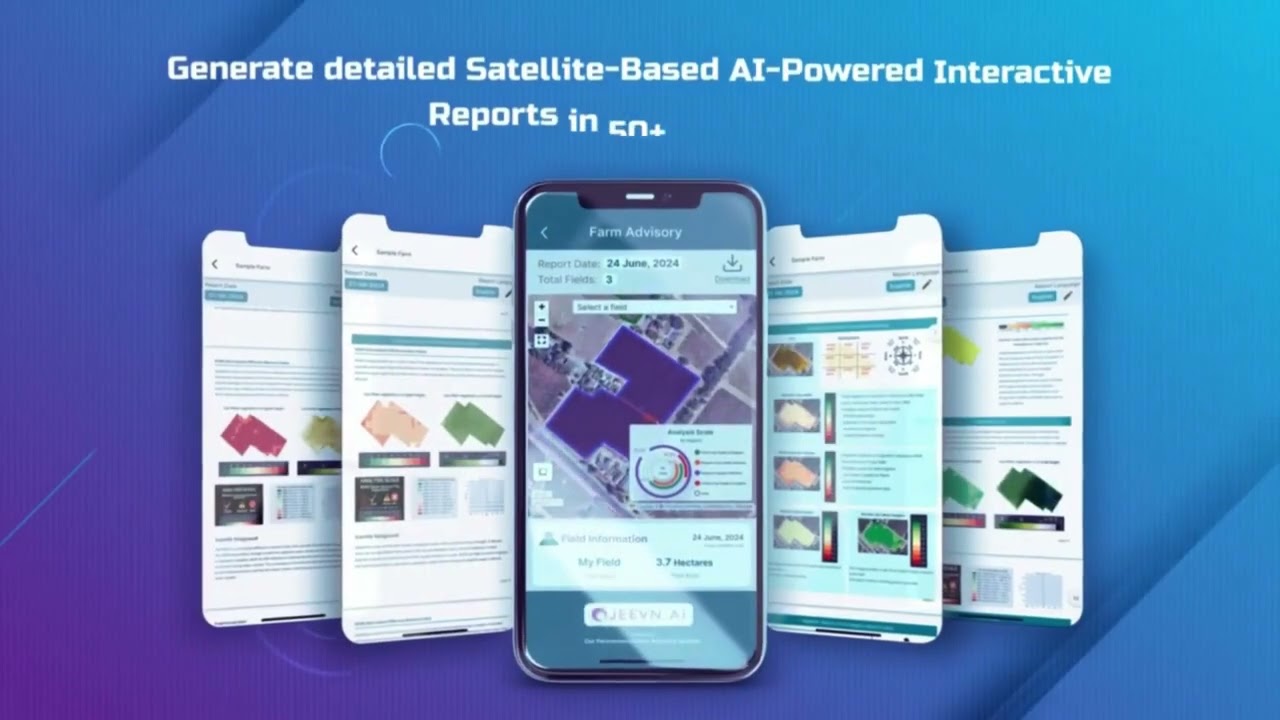
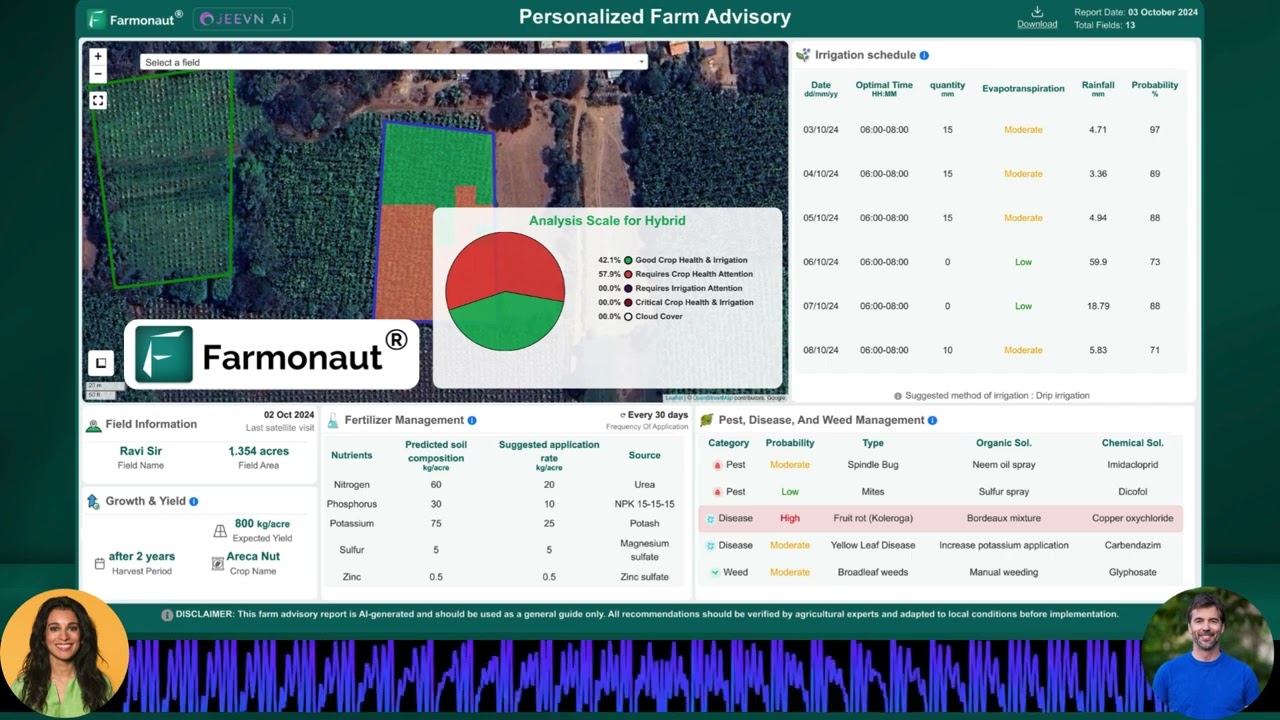
The global adoption of AI-enabled precision farming tools—including the use of Farmonaut’s Jeevn AI Advisory System—is leading to a new standard of sustainable and productive agriculture.
Tip: For farmers seeking to implement satellite-driven precision farming, Farmonaut’s crop plantation and forest advisory platform is accessible directly through mobile and web. This tool democratizes advanced technology for both large-scale farms and individual growers.

Key Takeaway: Precision AI technologies underpin food security agriculture by maximizing output, minimizing resource waste, and building farms resilient to modern challenges.



For those who want to integrate precision agriculture and satellite insights into their proprietary systems, Farmonaut’s robust API and developer documentation enable seamless technical adoption.
“Over 50% of food security projects now integrate AI for predictive analysis and sustainable farming strategies.”
AI for Crop Disease Detection and Resilient Crop Production
Crop diseases and pest infestations are among the top threats to food security agriculture. Traditionally, the spread of disease could go undetected until extensive damage was done, resulting in catastrophic losses. AI image recognition technologies and predictive analytics have changed this paradigm entirely.
How AI Transforms Disease Detection
- Early detection: Machine learning models analyze plant images from satellites, drones, or smartphones, rapidly identifying subtle signs of disease outbreaks before they spread extensively.
- Predictive modeling: Historical and real-time datasets are used to predict disease or pest outbreaks, enabling timely intervention and preventing large-scale crop failure.
- Targeted response: Actionable recommendations allow farmers to apply treatments with surgical precision—significantly reducing unnecessary pesticide use and protecting overall crop health.
By enhancing early detection mechanisms, AI systems are maintaining stable food supplies and building more resilient agricultural systems in the face of evolving diseases and climate change.

A proactive, AI-based disease management strategy is now paramount to maintaining food security and agriculture, especially in regions vulnerable to climate extremes and unpredictable weather.
To ensure transparency and traceability throughout the food system, explore Farmonaut’s blockchain-based traceability platform. This empowers agricultural supply chains by mitigating food fraud and supporting robust food security infrastructure with data-driven verification!
Pest Management and Farmland Security through AI & Drones
Effective pest management is central to farmland security and food security agriculture. AI-powered drones now monitor vast farming areas, detect pest presence, and enable rapid, targeted interventions—from automated spraying to real-time alerts.
- Image processing and recognition: AI-equipped drones autonomously scan crops and soil, identifying pest infestations or weed growth patterns invisible to the naked eye.
- Reduced chemical input: Automated, precision targeting minimizes pesticide waste and preserves soil health, promoting sustainable farming and reducing environmental impact.
- Farmland security: Drones also monitor farm perimeters, livestock, and equipment—detecting unauthorized land use, theft, or vandalism before significant loss occurs.
These innovative AI solutions reinforce defenses against external and environmental threats, paving the way for secure and sustainable food production systems.

For a deeper dive into resource management and farm vehicle safety, visit Farmonaut’s fleet and resource management platform. This helps optimize logistics, ensure equipment accountability, and support large-scale farm operations efficiently.
Supply Chain Security: AI-Driven Optimization
Food security and agriculture extend beyond the farm gate: AI-enabled smart logistics, storage optimization, and supply chain analytics are essential to reducing post-harvest losses and stabilizing food availability worldwide.
- Smart cold storage: AI-driven cold chain units autonomously monitor and adjust temperature and humidity—preventing spoilage and ensuring that produce reaches distant markets in top condition. This reduces losses and protects food security, especially in regions with fragile infrastructure.
- Predictive logistics & demand modeling: AI forecasts demand and supply fluctuations, adjusts distribution routes, and ensures efficient delivery of agricultural products—minimizing delays and food waste throughout the supply chain.
- Blockchain-enabled traceability: Technologies like those offered by Farmonaut enable accurate tracking of food origin and movement, improving transparency and consumer trust.
To improve supply chain transparency and fortify food security, learn how blockchain-based traceability can help.
AI in Crop Breeding and Sustainable Development for Food Security
Intelligent crop breeding is a game-changer for agriculture food security in 2025. By mining genomic and agricultural datasets, AI algorithms accelerate the identification and development of disease-resistant, climate-tolerant, and nutrient-rich crop varieties.
- Speed and accuracy: AI shortens the conventional crop development cycle, rapidly suggesting optimal genetic crosses for desired qualities.
- Targeted solutions: Models can prioritize traits like drought resistance, pest tolerance, or vitamin-enrichment specific to regional climate challenges or dietary goals.
- Sustainable agriculture: Every breakthrough reduces reliance on chemical inputs, cutting costs and environmental impact while ensuring robust, reliable food supplies.
To explore climate-smart and regenerative farming tools, check Farmonaut’s environmental impact and carbon footprinting platform, which supports sustainable practices and compliance in agriculture food security.
Farmland Security: Safeguarding Agricultural Assets
In food security agriculture, the definition of ‘security’ is broader than ever. Non-environmental threats—such as theft, vandalism, and encroachment—can cripple farm operations. Here, AI-based surveillance and IoT systems come to the rescue:
- Drones and ground sensors: Provide continuous, autonomous surveillance of farm boundaries, equipment, and livestock.
- Real-time alerts: AI algorithms instantly detect unauthorized activity or perimeter breaches—triggering rapid human or automated responses.
- Safeguarding investments: By preventing losses and ensuring operational continuity, these solutions strengthen the foundation of resilient food production systems.
For robust management of large-scale operations, Farmonaut’s large scale farm management solution is invaluable—offering satellite-aided task assignment, monitoring, and analytics, all integrated with AI for superior farmland security.
Farmonaut’s Satellite, AI, and Blockchain Solutions for Agricultural Security
At Farmonaut, our mission is to make advanced satellite-driven AI insights accessible and affordable to governments, organizations, and farmers globally. Our comprehensive platform combines real-time crop monitoring, blockchain-based traceability, AI advisory systems, and resource management tools—all pivotal for modern AI in agriculture security.
Our core technologies include:
- Satellite-Based Monitoring: We use multispectral imagery to monitor crop health (NDVI), soil conditions, and structural integrity for agriculture, infrastructure, and more.
- Jeevn AI Advisory System: Delivers tailored weather forecasts, actionable crop insights, and timely strategies using advanced machine learning algorithms.
- Blockchain Traceability: Our integration secures supply chains and reduces fraud, safeguarding every agricultural resource’s journey from field to market.
- Resource & Fleet Management: We enable seamless logistics and task management, reducing costs and optimizing both human and machine resources. Learn more at our fleet management page.
- Environmental Impact Monitoring: We offer real-time reporting for carbon footprinting and sustainable farming—critical for the future of resilient food systems. View details here.
Our subscription-based model adapts to a variety of operational needs, ensuring scalable, cost-effective access to cutting-edge AI and satellite tools for any agricultural context. For more details, see our subscription options below.

Key AI Applications in Agriculture Security and Their Impact on Food Security
| AI Application | Estimated Impact on Crop Yield (%) | Estimated Reduction in Losses (%) | Contribution to Food Security | Notable Use Cases |
|---|---|---|---|---|
| AI-Powered Crop Disease Detection | +15–18% | Up to 30% | High — Prevents outbreak-driven large-scale crop failure | Machine vision apps; satellite crop surveillance |
| Yield Prediction via AI Analytics | +10–15% | Up to 12% | High — Enhances planning, maintains stable supply | Remote field analytics, agronomic planning |
| Supply Chain Traceability (AI + Blockchain) | –– | Up to 25% post-harvest | Medium/High — Reduces fraud, ensures transparency | Farmonaut Traceability, product authentication |
| Automated Pest Management | +7–12% | Up to 20% | High — Protects crops, reduces pesticide overuse | AI drones, IoT pest sensors |
| Smart Irrigation and Resource Optimization | +12–22% | Up to 18% | High — Conserves water, boosts resilience | Satellite imagery, smart metering tools |
| Climate Prediction and Weather Analytics | Improves overall ROI | –– | Medium — Mitigates crop loss due to weather | Satellite, IoT-integrated AI systems |
| AI-Based Surveillance & Asset Protection | Ensures operational continuity | Up to 10% theft loss | Medium — Secures farmland, assets & resources | Drone fencing, sensor networks |
Policy, Ethics & The Need for Equitable AI in Agriculture Food Security
Widespread, equitable access to AI technologies is imperative for the global advancement of food security agriculture. Governments and organizations in 2025 are investing in:
- AI-focused digital literacy programs for smallholders to bridge the urban-rural technology divide
- Infrastructure development—expanding reliable internet, access to sensors, and digital advisory platforms
- Policy frameworks to protect data privacy, mandate transparency, and ensure AI implementations support sustainability, rather than exacerbate resource depletion
- Ethical AI deployment—from minimizing algorithmic bias to aligning with environmental regulations
Achieving resilient, equitable, and sustainable food systems will require ongoing vigilance and stakeholder collaboration, supported by transparent, data-driven AI in agriculture security.
FAQs: AI in Agriculture Security & Food Security Agriculture
Q1: What is AI in agriculture security and why is it critical for food security?
AI in agriculture security refers to the use of artificial intelligence technologies—such as machine learning, sensors, drones, and satellite data—to protect and optimize agricultural resources and outputs. It enhances food security by enabling early disease detection, precision input use, real-time monitoring, and end-to-end supply chain traceability.
Q2: How do AI-powered systems help farmers adjust to unpredictable climate patterns?
AI models analyze historical and real-time weather datasets to predict disturbances. This enables farmers to adjust planting and irrigation schedules, mitigating losses from climate extremes—key for maintaining stable crop yields and food supplies.
Q3: Are AI solutions only for large-scale commercial farms?
No. Platforms like Farmonaut offer affordable, scalable solutions accessible to individual farmers, cooperatives, businesses, and governments, ensuring even smallholders benefit from AI in agriculture security advancements.
Q4: What steps should farmers take to integrate AI into their agricultural operations?
Farmers can start by adopting AI-driven monitoring tools (e.g., satellites or image-analysis apps), subscribing to real-time advisory systems, and exploring supply chain traceability. For integration, Farmonaut’s API and developer resources make transition seamless for any size operation.
Q5: How will AI in agriculture security evolve by 2030?
We can expect deeper integration of AI, blockchain, and satellite tech—further automating diagnosis, input management, and transparent food supply networks. AI will grow ever more central to resilient, sustainable farm systems, policy planning, and global food security strategies.
Conclusion: The Future of AI-Driven Agriculture Food Security
AI in agriculture security is the cornerstone of tomorrow’s global food security. As populations rise, climates shift, and supply chains grow more complex, artificial intelligence is powering the innovative, resilient, and sustainable transformations our food systems need.
From precision agricultural tools and disease prediction, to AI-driven supply chain management and blockchain-based traceability, each layer of technology advances the dual goals of increasing food production while safeguarding resources and infrastructure.
Looking beyond 2025, the commitment to equitable access, robust policy frameworks, and ethical AI deployment will shape the future of food security and agriculture—for every farmer, every region, and every consumer. Farmonaut remains dedicated to delivering advanced, accessible AI-powered solutions—empowering our clients and communities to thrive in a rapidly evolving, data-driven world.
Ready to join the AI-enabled agricultural revolution? Get started with Farmonaut’s platform today.
“AI is not just a trend in agriculture—it is the engine of food security for the decades to come.”

 Disease Free Life
 WebsEdge
 Blickwinkel
 Agricultural Credit Policy Council
 BayWa
BayWa MCSOD
MCSOD Marei Nursery
 eKGIS
eKGIS Mostas Tech
 Native Seeds
 Andex
Andex FCF India
 Unifrutti Gulf
 Deluxe Conseil
 TVS Electronics
 WICO
WICO Chimera Innovation
