

Reviewed September 2026 against UK DEFRA biodiversity statistics, the State of Nature 2023 report, and USDA NASS/ERS organic agriculture data.
Try it: Run your own numbers →
Table of Contents
- What Is a Farming & Wildlife Advisory Group (FWAG)?
- What FWAGs and Farm Advisory Services Actually Do
- Comparison Table: 7 Practices FWAG-Style Advisors Recommend
- 1. Field Margins & Hedgerows
- 2. Diversified Crop Rotations
- 3. Reduced Tillage & Regenerative Soil Management
- 4. Smart Water Management
- 5. Integrated Pest Management
- 6. Agroforestry & Shelterbelts
- 7. Carbon Sequestration & Climate-Smart Agriculture
- Multi Farming: Diversifying Enterprises Alongside Wildlife Goals
- Calculator: What Would Your Farm’s Hedgerow Grant Cover?
- How Farmonaut Supports Advisory-Led Farming
- Frequently Asked Questions
- Conclusion
What Is a Farming & Wildlife Advisory Group (FWAG)?
A Farming and Wildlife Advisory Group (FWAG) is a network of regional advisory bodies in the UK — historically organized county-by-county (Norfolk, Suffolk, the South West, Cambridgeshire/Hertfordshire/Essex/Bedfordshire, and others) — that sends trained ecologists and agronomists onto working farms to advise on integrating wildlife conservation with commercial farming. The abbreviation “FWAG” is often searched on its own, and it refers to this same movement: independent, farm-level advice on hedgerows, habitat, water quality, and land management that sits alongside — not instead of — government agri-environment schemes.
FWAGs are not a single national body with a public membership count. There is no unified registry publishing “farms advised per year” figures, so if you are trying to size the network, the honest answer is: ask your regional FWAG group directly, or check whether your specific advisor is registered with the UK’s Sustainable Farming Incentive network via DEFRA’s biodiversity and wildlife statistics collection, which tracks agreement counts rather than advisory-body membership.
What FWAG-style advice covers in practice: field margin and hedgerow management, crop rotation planning, water protection, integrated pest management, agroforestry design, and carbon planning — the same seven areas this article works through below, each with the figures currently available to size it.
A farming and wildlife advisory group gives independent land-management advice. A “farm advisory service” is the broader category — it can include government extension officers, private agronomists, or co-operative advisors. FWAGs are one specific, historically UK-rooted example of the latter.
The scale of the problem these groups exist to address is documented, not anecdotal. The State of Nature 2023 report found UK species populations have declined by an average of 19% since 1970, and — more specific to farmland — 60% of species associated with farmed landscapes are in decline, according to the Joint Nature Conservation Committee’s UK Biodiversity Indicators. Those two figures, from those two sources, are the baseline every FWAG-style habitat recommendation in this article is trying to move.
What FWAGs and Farm Advisory Services Actually Do
The practical work of a farming & wildlife advisory group breaks into five recurring activities:
- ✔ Habitat surveys: walking fields to map existing hedgerows, margins, and wetland corners, then recommending what to add or restore.
- 📊 Data-backed recommendations: increasingly drawing on satellite imagery and soil data rather than visual inspection alone.
- ⚠ Scheme navigation: helping farmers apply for the agri-environment agreements that pay for hedgerow and habitat work — in England, that’s the Sustainable Farming Incentive and related Countryside Stewardship options.
- ✔ Compliance support: since UK hedgerow protections became statutory law in 2024, advisors help farmers understand cutting dates and buffer strip requirements.
- ✔ Landscape-scale coordination: connecting neighbouring farms so habitat corridors span farm boundaries rather than stopping at a fence line.
- Try it: Run your own numbers
The money behind this work is public and specific. The UK government has committed £2.7 billion annually to sustainable farming and nature recovery funding for the 2026–2029 period, per DEFRA’s official statistics collection. As of April 2024, 55,000 agri-environment agreements were active under the Sustainable Farming Incentive and related schemes — the mechanism through which most FWAG-recommended habitat work actually gets funded on the ground.
DEFRA republishes agri-environment statistics on a rolling basis. Before quoting the 55,000-agreement figure to a client or in a grant application, check the live count at the DEFRA biodiversity and wildlife statistics collection — the number moves as new agreements sign and old ones lapse.
Comparison Table: 7 Practices FWAG-Style Advisors Recommend
| Practice | Documented Scale (with source) | Primary Wildlife/Environmental Target | Funding or Verification Route |
|---|---|---|---|
| Field Margins & Hedgerows | 60,000 miles of UK hedgerow under management agreements (2024, DEFRA) | Pollinators, songbirds, hedgehogs | Sustainable Farming Incentive hedgerow options |
| Diversified Crop Rotations | 73.4% of US farmland under conservation/reduced-till or no-till (2022, USDA Census) | Soil fauna, below-ground biodiversity | USDA NRCS conservation programmes |
| Reduced Tillage & Regenerative Soil | 73.4% of US ag land under reduced/no-till (2022, USDA Census of Agriculture) | Soil microbes, earthworms | USDA EQIP cost-share |
| Smart Water Management | No unified US/UK runoff-reduction dataset published; measure locally via water-company catchment monitoring | Amphibians, fish, aquatic insects | Catchment Sensitive Farming (UK), EPA nonpoint-source grants (US) |
| Integrated Pest Management (IPM) | No national adoption percentage published; check state extension IPM adoption surveys for your region | Ladybirds, spiders, barn owls | State/county extension IPM programmes |
| Agroforestry & Shelterbelts | 85,000 metres of new hedgerow planted in England (2024–2025, Farming and Countryside Programme) | Woodpeckers, wrens, wild bees | Woodland Creation Grants, Countryside Stewardship |
| Carbon Sequestration | 39,506 US certified organic producers as a proxy for regenerative-practice adoption (2022, USDA NASS) | Whole food-web support via soil carbon | Carbon credit schemes, USDA organic certification cost-share |
Treating the table above as fixed. Every DEFRA and USDA figure here carries a publication date because these datasets are refiled on a schedule — DEFRA updates hedgerow and agreement statistics quarterly, and USDA’s next full Organic Survey results are expected in October 2026. Check the source link before using a figure in a grant application or report.
1. Enhancing Field Margins & Hedgerows: The Foundation of FWAG Advice
Field margins and hedgerows are the single most common recommendation from any farming & wildlife advisory group, and they are now also a matter of UK statute. Hedgerow protections became law in England in 2024, per DEFRA’s Rural Payments blog, which set mandatory buffer strips and cutting-date restrictions rather than leaving hedgerow management purely voluntary.
The scale of what’s already under management is documented: 60,000 miles of UK hedgerow sit under agri-environment scheme agreements as of 2024, spread across 20,000 separate farm agreements — an average of three miles of managed hedgerow per participating agreement. On top of that existing base, 85,000 metres of new hedgerow were planted in England during the 2024–2025 scheme year alone, according to the Farming and Countryside Programme’s 2024–2025 annual report. The national target is 45,000 miles of hedgerow creation or restoration by 2050 — so the current 60,000-mile managed base is not the finish line, it’s roughly a third of the multi-decade ambition when both are measured together.
- ✔ Buffer strips: native flowers or grasses that trap runoff and support wild bees and butterflies.
- ✔ Hedgerows: now subject to statutory cutting-date and buffer rules in England as of 2024.
- ✔ Wetland corners: low spots left to revert to wetland create breeding grounds for amphibians and insects.
Farms with documented hedgerow and margin management are increasingly favoured for agri-environment scheme renewals in the UK. Since these are statutory obligations as of 2024, keeping a satellite-dated record of margin and hedgerow condition is now a compliance tool, not just a biodiversity one.



2. Diversified Crop Rotations for Ecosystem Health
Diversified rotations — legumes, cover crops, cereals, root vegetables, sometimes grazing livestock — are a standard recommendation because they break pest and disease cycles and build soil fauna diversity. The clearest available proxy for how far US farms have moved on this is tillage practice: 73.4% of US agricultural land was under conservation, reduced-tillage, or no-till management as of the 2022 USDA Census of Agriculture. That figure covers tillage rather than rotation diversity specifically — there is no published national percentage for crop rotation or cover-crop adoption on its own, so if you need a rotation-adoption figure for a specific US state or UK county, the honest path is to check your state’s NASS field office data or your county’s DEFRA-administered scheme uptake, rather than relying on a single national average.
- ✔ Legume cover crops: fix nitrogen, reduce fertiliser needs, support pollinator foraging.
- ✔ Multi-species rotations: discourage buildup of crop-specific pests and diseases.
- ✔ Livestock integration: grazing animals add organic matter, boosting microbial diversity.

No peer-reviewed or USDA figure directly ties crop rotation adoption to a specific pollinator or bird sighting increase. If you’re citing a wildlife benefit from rotation diversity for a grant application, use your own farm’s monitoring data or your regional FWAG’s habitat survey rather than a national percentage — none currently exists.
3. Reduced Tillage & Regenerative Soil Management
Reduced and no-till systems are core to nearly every farm advisory group’s soil recommendations, because tillage disrupts soil structure, destroys micro-habitats, and exposes carbon stores to erosion. The US figure is unambiguous: 73.4% of US agricultural land was under conservation tillage, reduced-tillage, or no-till practices as of the 2022 Census of Agriculture — meaning roughly one in four US acres was still under conventional intensive tillage at that point. There is no equivalent single UK-wide percentage published in the sources available for this article; UK tillage adoption is tracked regionally through DEFRA’s Sustainable Farming Incentive uptake data rather than a single national headline figure.
- ✔ No-till drilling: seeds planted without plowing, preserving habitat for soil-dwelling species.
- ✔ Organic matter additions: compost and cover crops feed soil fauna and improve nutrient cycling.
- ✔ Erosion control: minimal soil disturbance reduces surface runoff and sediment loss.
A farm advisory service can give location-specific transition guidance — matched to your soil type and rotation — with far more precision than a national average allows.

4. Smart Water Management: Protecting Aquatic Life
Water protection advice from a farming and wildlife advisory group covers buffer strip design, controlled drainage, and input-timing adjustments that reduce fertiliser and pesticide runoff into watercourses. There is no unified US or UK dataset in the research available for this article quantifying aquatic-species recovery tied to these measures nationally — that kind of before-and-after data tends to exist only at the catchment level, published by individual water companies or river trusts. If you manage land in a water-quality priority catchment, ask your regional agency (in England, that’s a Catchment Sensitive Farming officer; in the US, your state’s EPA nonpoint-source pollution programme) for the monitoring data specific to your catchment rather than a national estimate.
- ✔ Buffer vegetation: grassy or wooded strips filter pollutants before they reach streams.
- ✔ Wetland restoration: re-wilding low-lying areas creates aquatic habitat.
- ✔ Optimized application timing: reduces fertiliser and pesticide waste and off-site impact.
This work is also increasingly a compliance requirement rather than a purely voluntary one, as UK and US water-quality rules for farming tighten.
Use satellite-driven traceability tools to monitor and document sustainable input use and support compliance with export and local water-quality regulations.
Developer? Access real-time farm advisory and water-use insights via our API (view developer docs).

5. Integrated Pest Management (IPM): Harnessing Biodiversity for Pest Control
Integrated pest management is a recurring recommendation because it reduces reliance on broad-spectrum chemical controls that harm beneficial wildlife alongside target pests. As with rotation adoption, there is no single published national adoption percentage for IPM across the US or UK in the sources available here — extension-service adoption surveys exist at the state level in the US, and DEFRA does not publish a unified IPM uptake figure. The practices themselves are well-documented even without a national percentage attached:
- ✔ Crop diversity: mixed crops confuse pests while attracting varied predatory insects.
- ✔ Habitat strips: support beneficial ladybirds, spiders, birds, and bats.
- ✔ Threshold-based control: pesticides used only when pest counts cross a documented economic threshold, not on a fixed calendar.
Applying broad-spectrum insecticides on a fixed schedule rather than a threshold can collapse beneficial insect populations, leading to pest outbreaks that are harder to control than the original problem.

6. Agroforestry & Shelterbelt Integration
Agroforestry — planting trees, shrubs, or wooded belts in and around cropland or pasture — is one of the most funded categories of advice a farming & wildlife advisory group gives, precisely because it’s directly tied to the hedgerow and woodland creation grants discussed in Tip 1. The 85,000 metres of new hedgerow planted in England during 2024–2025, and the national 45,000-mile creation and restoration target by 2050, both fall under this category as much as under pure hedgerow management — the categories overlap in practice on most farms.
- ✔ Alley cropping or silvopasture: trees grown alongside annual crops or grazing create vertical habitat layers.
- ✔ Shelterbelts: rows of native trees and shrubs support pollination and reduce wind erosion.
- ✔ Riparian buffers: trees along streams further protect aquatic wildlife.
A farm advisory group can provide tailored planting plans and connect you to the grants that fund them.
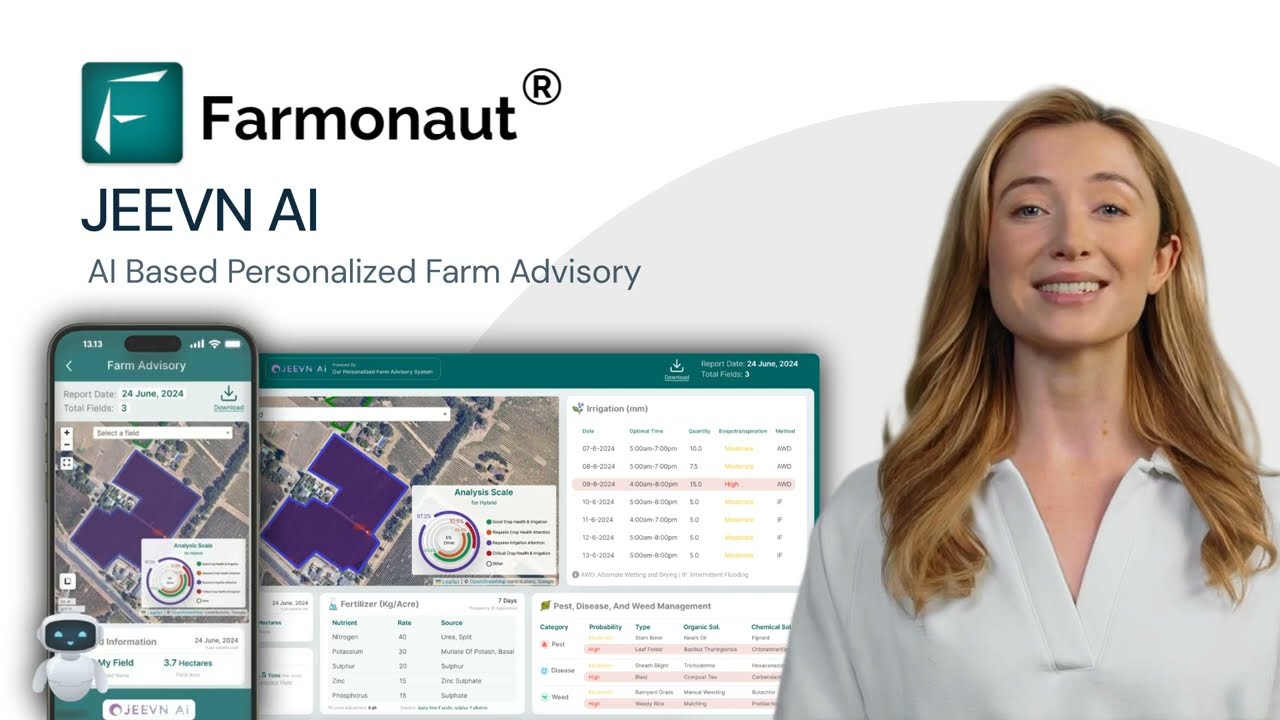
Carbon footprint analysis via satellite imagery helps document your agroforestry planting over time — useful evidence when applying for hedgerow or woodland creation grants that require proof of establishment.
7. Carbon Sequestration & Climate-Smart Agriculture
Carbon sequestration advice — cover cropping, perennial integration, agroforestry — sits at the intersection of every other practice on this list. There is no single UK or US figure in the sources available here quantifying farm-level carbon sequestration gains directly, but the scale of underlying practice adoption gives a usable proxy: 39,506 US operations were certified organic producers as of the 2022 USDA NASS Organic Production Survey, generating $9.6 billion in organic agricultural product sales that year according to the USDA Economic Research Service. Organic certification is not identical to carbon-focused regenerative practice, but the two overlap heavily in required practices — cover cropping, reduced synthetic inputs, rotation diversity — which is why this is the closest documented figure available.
- ✔ Cover cropping: living roots year-round feed soil biology and protect against erosion.
- ✔ Perennial integration: deep-rooted species store carbon deeper in soil layers.
- ✔ Agroforestry: trees remain among the most effective carbon sinks available in farmed landscapes.
The next full USDA Organic Survey results, which will update the 39,506-producer figure, are expected in October 2026 — check the USDA NASS Organic Production page directly for the refiled count once published.

Multi Farming: Diversifying Enterprises Alongside Wildlife Goals
“Multi farming” — running more than one enterprise on the same holding, such as combining arable cropping with livestock, agroforestry, or a habitat-focused stewardship scheme — is a natural extension of the advice above rather than a separate discipline. A farming and wildlife advisory group typically frames multi-enterprise diversification as risk management: a farm with cropping, grazing, and a paid stewardship agreement running concurrently is less exposed to a single bad harvest or a single collapsed commodity price than a monoculture operation.
In practice, multi farming overlaps directly with the seven practices above: silvopasture (Tip 6) is multi farming by definition — trees plus livestock on the same land. A rotation that alternates cash crops with a grazed cover crop (Tip 2) is multi farming applied to a single field across years rather than across the farm in a single season. The UK’s 55,000 active agri-environment agreements and the £2.7 billion in 2026–2029 funding referenced earlier both explicitly support this kind of diversification — stewardship payments are structured to sit alongside, not replace, existing farm income streams.
Calculator: What Would Your Farm’s Hedgerow Grant Cover?
Use the figures above to estimate how much of your own hedgerow or margin restoration a per-metre grant rate could realistically cover — enter your own planned length, your own quoted rate, and your own available budget.
Run your own numbers
Assumptions: this is a simple linear cost estimate (length × rate) and does not include site preparation, aftercare, fencing to protect young hedgerow, or the specific percentage a grant scheme actually reimburses versus what you must fund yourself. UK per-metre rates vary by scheme option and region — confirm your exact rate with your Sustainable Farming Incentive agreement or your regional FWAG advisor before budgeting against it.
How Farmonaut Supports Advisory-Led Farming
Farming advisory services increasingly rely on satellite data to make recommendations precise rather than general. Farmonaut provides a suite of real-time, AI-powered advisory tools that give farmers, landowners, and policymakers the same kind of field-level data that underpins the hedgerow, rotation, and carbon figures cited throughout this article.
- ✔ Real-time crop monitoring: multispectral satellite imagery tracking vegetation health, soil conditions, and input efficacy.
- ✔ AI-powered Jeevn Advisory: tailored advice on weather, crop health, and field operations (get started here).
- ✔ Blockchain traceability: validates agricultural product journey and sustainability claims (learn more here).
- ✔ Environmental impact tracking: quantifies farm carbon footprints to support stewardship scheme evidence requirements.
- ✔ Resource & fleet management: optimizes logistics and reduces operational costs (details).
This is accessible via Android/iOS, desktop browser, and API (explore the API or developer docs), so operations from single-farm holdings to multi-site enterprises can document the same practices a farming and wildlife advisory group recommends.
For multi-site operations running the kind of diversified, multi-enterprise farming described above, the large-scale farm management platform covers crop planning, environmental compliance, and group reporting across sites.
For end-to-end crop, plantation, and forest advisory, the agricultural advisory app covers major crops, regions, and sustainable practice monitoring tools.
Subscription-based access is available with a transparent, scalable pricing model:
Frequently Asked Questions: Farming & Wildlife Advisory Group Services
What is a Farming & Wildlife Advisory Group (FWAG)?
A farming & wildlife advisory group is a regional advisory body — historically organized county-by-county in the UK — offering independent, farm-level guidance on integrating wildlife conservation with productive agriculture: hedgerow and margin management, rotation planning, water protection, and habitat design. There is no single national FWAG registry publishing unified membership or farms-advised figures; contact your regional group directly for local capacity.
What does FWAGS stand for and is it different from FWAG?
FWAGS and FWAG refer to the same movement — Farming and Wildlife Advisory Group(s) — with the “S” sometimes reflecting the plural of the regional-group structure rather than a distinct organization.
How do farm advisory services promote sustainability?
By integrating crop, livestock, and ecological management: soil health guidance, pest control planning, water conservation, biodiversity habitat design, and support navigating agri-environment funding such as the UK’s Sustainable Farming Incentive or USDA conservation cost-share programmes.
Which sustainable practices have documented wildlife or environmental benefits?
Field margins and hedgerows (60,000 miles under active UK management as of 2024), reduced tillage (73.4% of US farmland under conservation or no-till as of 2022), and organic/regenerative practice adoption (39,506 US certified organic producers, $9.6 billion in 2022 sales) are the categories with the most current published figures. Water management and IPM adoption lack unified national percentages — check regional catchment or state extension data instead.
What role does satellite technology play in modern advisory services?
Satellite monitoring, AI-driven insights, blockchain traceability, and resource management apps supply the field-level data that turns general advisory recommendations into precise, farm-specific plans — and provide the documentation many stewardship schemes require as evidence of practice adoption.
How can Farmonaut help with farm advisory and sustainability?
Farmonaut provides satellite-based monitoring, AI-powered advisory for real-time crop, soil, and environmental management, blockchain traceability for product integrity, and carbon impact analysis — supporting the same practices a farming and wildlife advisory group recommends, with field-level data behind them.
Conclusion: Supporting Sustainable Agriculture and Biodiversity with Advisory Groups
A farming and wildlife advisory group’s core value is turning general sustainability advice into practices matched to your specific fields, soil, and region. The seven practices covered here — margins and hedgerows, diversified rotations, reduced tillage, water management, integrated pest management, agroforestry, and carbon-focused soil management — are where FWAGs and equivalent advisory services concentrate their guidance, and multi-enterprise (“multi farming”) diversification is largely these same practices applied across a whole holding rather than a single field.
Where a figure exists — UK hedgerow mileage, US tillage adoption, US organic sector scale — this article has named the number, its date, and its source, and flagged where to check for the refiled version. Where no unified figure exists — IPM adoption rates, catchment-level runoff reduction, rotation-specific wildlife counts — that gap is stated plainly rather than filled with an invented average, because the honest path for those figures is your regional FWAG, your state extension office, or your own farm’s monitoring data.

 Nale Network
 Exurbia Geospatial
 FieldZero
 Indico Company
 Kubota
 FFBS
FFBS Jontra
 Kalustyan
 Tucor
Tucor Geno
Geno Hayleys Agriculture
 Linx Agritech
 Adinet
 Save Your Soils
