

Table of Contents
- Introduction: The Integrated Farming System Model in 2026
- Trivia: Yield and Fertilizer Reduction
- What Is the Integrated Farming System Model?
- Why Integrated Farming? Central Role in Modern Agriculture
- Integrated Farming System Model: 7 Yield-Boosting Ideas
- Comparative Impact Table: IFS Elements at a Glance
- Integrated Farming System Model Images & Visualization
- Key Benefits of Integrated Farming System Models in 2026 & Beyond
- Site Planning, Implementation & Risk Management
- Monitor, Plan & Optimize with Farmonaut’s Satellite Tools
- Frequently Asked Questions
- Conclusion
Integrated Farming System Model: 7 Yield-Boosting Ideas for Sustainable Agriculture
The integrated farming system model remains a cornerstone for sustainable agriculture in 2026, empowering smallholders and commercial farms alike to maximize productivity, soil health, and climate resilience. This comprehensive guide explores how thoughtfully configured IFS models elevate resource efficiency, buffer against environmental risk, and open up diverse revenue streams—all while nurturing the ecosystem.
On this page, we’ll break down each core component of the integrated farming model, showcase integrated farming system model images for practical inspiration, and present seven proven ideas that help you boost yields while enhancing soil and water management. Whether you’re planning a new IFS project, optimizing existing plots, or seeking scalable layouts for your farm enterprise, this is your go-to knowledge base for IFS in 2026 and beyond.



Integrated farming system models turn agricultural waste into valuable inputs, drastically reducing reliance on external fertilizers, feeds, and energy while boosting resource efficiency.
What Is the Integrated Farming System Model?
The integrated farming system model (IFS) is a holistic approach to modern agriculture that combines crops, livestock, agroforestry, aquaculture, and smart water planning into one synergistic framework. The essence is integration: resources and outputs from one enterprise become valuable inputs for another, reducing waste, external dependencies, and costs.
With climate risks intensifying and the need for environmental stewardship growing, the IFS model enables farmers to:
- Strengthen soil health and fertility
- Optimize labor and resource use
- Diversify crops, incomes, and market opportunities
- Enhance resilience against market and climate shocks
- Boost ecological services, biodiversity, and carbon sequestration
Focus on Synergy & Sustainability
Through integration of crops with livestock, trees, fish, and resource-recycling systems, farm enterprises can:
- Utilize crop residues as animal feed
- Return manure to fields as organic fertilizer
- Harvest rainwater and reuse effluents for irrigation
- Reduce pest pressure with natural enemies and intercropping
- Create year-round income streams from diverse products
Integrated farming system models can be custom-built for smallholders, commercial farms, or scalable agribusinesses seeking both profitability and environmental sustainability in 2026 and beyond.
Why Integrated Farming? Central Role in Modern Agriculture
IFS is not just a trend in global agriculture—it has become a central framework for productive, resilient, and sustainable farming in regions experiencing soil depletion, water scarcity, and frequent climate shocks.
Integrated farming system models diversify farm revenue, attract sustainability-minded investors, and align with ESG (Environmental, Social, and Governance) priorities across the supply chain.
- ✔ Key benefit: Integrated farming system models ensure year-round employment and income stability for smallholders and family farms.
- 📊 Data insight: Multiple enterprise models (crop + livestock + fish + trees) can boost system productivity by 15–30% compared to monoculture plots.
- 🌱 Biodiversity: Integration of agroforestry and forest farming enhances pollinators, soil biota, and ecosystem services.
- 🛡️ Risk reduction: Diversified farm outputs reduce vulnerability to price shocks, droughts, and pests.
- ⚠ Risk or limitation: Initial training and capital requirements can be higher for integrated systems compared to single-commodity farms.
Integrated Farming System Model: 7 Yield-Boosting Ideas
Let’s explore seven core elements—each representing a yield-boosting idea within the integrated farming model. Thoughtful integration and site-specific planning can maximize their combined benefit:
- Crop–Livestock Integration
Synergistic cycles of animal feed, manure fertilization, and organic residues for soil building. - Agroforestry and Forestry Integration
Use of windbreaks, multipurpose trees, and microclimate management to shelter crops, improve soil, and diversify output (fruit, timber, fuelwood). - Fisheries and Aquaculture
Integrated pond or canal systems for fish, aquatic crops (duckweed, macrophytes), and nutrient recycling. - Horticulture and Understory Farming
High-value vegetables, spices, or fruits intercropped with trees or grown in forest plots—year-round and diversified income. - Resource Recycling & Organic Matter Management
Composting, vermiculture, biogas, rainwater harvesting, and effluent reuse to close nutrient and water cycles. - Water Planning & Smart Irrigation
Optimized irrigation, drainage, rainwater capture, and scheduling using real-time monitoring and precision tools. - Climate-Smart & Adaptive Design
Site-specific planning based on rainfall, soil type, landscape, and diversification to buffer shocks and enhance resilience.

1. Crop–Livestock Integration: The True Heart of IFS Models
- Crop residues (straw, haulms, bran) become feed for cattle, sheep, goats, and poultry.
- Manure and urine are cycled back as rich, organic nutrient sources, reducing dependence on synthetic fertilizers.
- Fodder crops are grown in rotation with main crops, improving soil health and structure.
- Livestock lifecycle planning (seasonal grazing, feed alignment) dovetails with planting, harvest, and field operations.

Farmonaut’s carbon footprinting solution is instrumental for farmers and enterprises aiming to reduce emissions and monitor climate-smart practices adopted through IFS. Track, certify, and improve your farm’s carbon performance in real time with satellite-driven analytics.
2. Agroforestry and Forestry Integration: More than Just Trees
- Plant windbreaks and shelterbelts—neem, eucalyptus, mango, or acacia trees—on plot perimeters to protect against wind, reduce evaporation, and preserve microclimates.
- Intercrop fodder and fuelwood species with timber or fruit trees, creating layered production and ecosystem services.
- Forest strips (buffer zones) offer shade, organic matter, and pest suppression through enhanced biodiversity.
Planting trees without considering root space, sunlight competition, or irrigation needs can reduce crop yields instead of boosting system productivity. Use integrated planning kits to design optimal layouts.
3. Fisheries and Aquaculture: Make Every Drop and Pond Matter
- Integrated fish ponds utilize field drainage, canals, and farm effluents for raising carp, catfish, or tilapia.
- Floating aquatic crops (duckweed, azolla, water spinach) convert nutrients from fish waste back into feed for livestock or fish themselves.
- Fish pond silt or effluent is channeled for irrigation—providing biofertilizer for vegetable or fruit fields.
- Use biofilters, lotus, or water hyacinth to purify water, close nutrient loops, and support biodiversity.

4. Horticulture and Understory Farming: Boost Income with Diversity
- Grow vegetables, fruits, mushrooms, herbs, spices, or medicinal crops beneath agroforestry canopies, next to fish pond bunds, or in shaded alley plots.
- Vertical and polyculture designs (stacking crops in layers) maximize space and photosynthesis.
- Rotation of high-value crops provides cash flow between major harvesting or grazing periods.

Explore Farmonaut’s blockchain-based traceability tools to certify your IFS horticulture products and streamline compliance for premium market access.
📈 Visual List: 5 Key Benefits of Horticulture Integration
- Boosts farm revenue through niche and premium crops.
- Enhances soil organic matter and water retention in mixed cropping plots.
- Improves household nutrition with greater food diversity.
- Supports year-round market presence via phased harvests.
- Reduces pest/disease risk with crop rotation and intercropping.
5. Resource Recycling & Organic Matter Management
- Composting all farm waste—crop residues, livestock bedding, green manure, vermiculture—to close the nutrient loop.
- Biogas units convert manure and plant materials into clean energy for farm use (smokeless fuel, lighting, heating), and rich slurry for fertilizer.
- Rainwater harvesting structures—check dams, tanks, percolation pits—store runoff for use during dry spells and reduce soil erosion.
- Effluent and greywater reuse in irrigation brings both water and nutrients to the field.

6. Water Planning & Smart Irrigation: Every Drop Counts
- Precision irrigation (drip, sprinkler, or smart scheduling) slashes water use by 10–25% in IFS layouts.
- Rainwater capture structures (ponds, tanks, swales) reduce offsite runoff and provide critical moisture for multiple enterprises.
- Integrate fish ponds or small reservoirs adjacent to crops to reuse water, improve on-farm humidity, and enhance microclimates.
- Regularly assess farm drainage configuration—especially in microarid or hilly regions—and add channels, terraces, or bunds strategically.
Integrate rainwater harvesting with satellite-based water stress mapping via platforms like Farmonaut to pinpoint high-benefit zones for storage and irrigation investment. Start optimizing your plots now with large-scale farm management tools.
7. Climate-Smart & Adaptive Farm Design
- Model your IFS layouts on field topography: position livestock sheds, fish ponds, tree belts, and irrigation units for best sunlight, slope, and microclimate benefit.
- Stagger planting/harvesting cycles to buffer seasonal and climate risk—never leave soils bare in off-seasons.
- Use site-specific data: soil health, rainfall patterns, temperature trends to customize configuration and enterprise combinations.
- Adopt digital simulation kits or software to model water, nutrient, labor, and financial flows for different IFS scenarios.
Ignoring site limitations (soil depth, water table, slope, drainage) leads to failed IFS projects. Start with soil testing, water availability mapping, and pilot trials before scaling up!
🧩 Visual List: Steps to IFS Planning Success
- Assess land and resources (soil, water, slope, microclimate)
- Identify compatible IFS components (crops, livestock, forestry, fisheries)
- Develop site-specific layouts for enterprises
- Invest in training, management kits, and digitized record-keeping
- Monitor and adapt based on outcomes, using satellite & AI tools

Comparative Impact Table: IFS Elements at a Glance
| IFS Element | Component Description | Estimated Yield Increase (%) | Soil Health Impact (Rating: ★ to ★★★★★) |
Resource Efficiency (Water/Resource Use Reduction) |
Climate Resilience (Score: 1–10) |
|---|---|---|---|---|---|
| Crop–Livestock Integration | Combines crop residue recycling with manure fertilization and rotational grazing | 20–30% | ★★★★★ | 15–25% reduction | 9 |
| Agroforestry/Forestry | Intercropped fruit, fodder, or timber trees with crops and livestock areas | 15–25% | ★★★★☆ | 10–20% reduction | 8 |
| Fisheries/Aquaculture | Fish ponds & aquatic crops with nutrient cycling and pond water irrigation | 15–22% | ★★★☆☆ | 12–18% reduction | 7 |
| Horticulture/Understory | Vegetable, fruit, & spice crops beneath trees or along pond margins | 15–25% | ★★★☆☆ | 12–15% reduction | 8 |
| Resource Recycling | On-farm compost, biogas, vermiculture, and effluent reuse | 18–26% | ★★★★★ | 18–35% reduction | 10 |
| Water Planning & Smart Irrigation | Rainwater harvesting, storage, and precision drip/sprinkler irrigation | 15–20% | ★★★★☆ | 20–35% reduction | 9 |
| Climate-Smart Design | Site-specific layouts, adaptive scheduling, and enterprise risk buffering | 10–15% | ★★★☆☆ | 10–18% reduction | 10 |
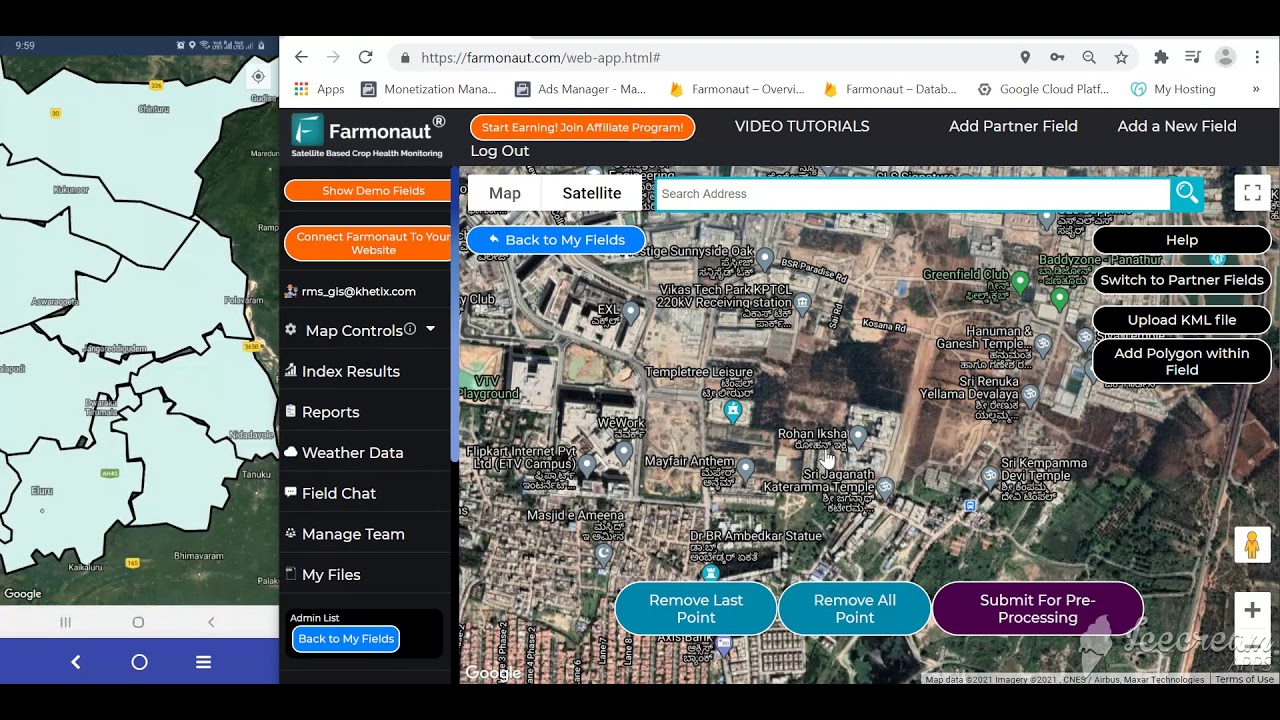
Explore Farmonaut’s fleet and large-scale field management solutions to optimize machine and labor allocation, logistics, and resource flows in your integrated farming system model project—directly from your app or browser.
Integrated Farming System Model Images & Visualization
Proper planning is key to turning integrated farming system model concepts into viable, climate-resilient plots and farm layouts. Images and simulation kits guide spacing, timing, and energy flows across enterprises:
- IFS conceptual models—showing arrows for biomass, waste, water, and feed movement
- Site layouts—with adjacent fields for crops, fish ponds, and livestock enclosures, shaded by fringe trees
- 3D digital visualizations—for large-scale projects, modeling soil, irrigation, drainage, and climate factors
Data-driven layout planning and simulation kits increase financial returns in large or commercial IFS projects by minimizing downtime and optimizing resource sharing across plots.
Most leading projects employ a combination of illustrated integrated farming system model images, printable layout sheets, and software-based simulations for real-time, site-specific planning—accelerating efficiency in resource allocation, planting, labor, and enterprise scheduling.
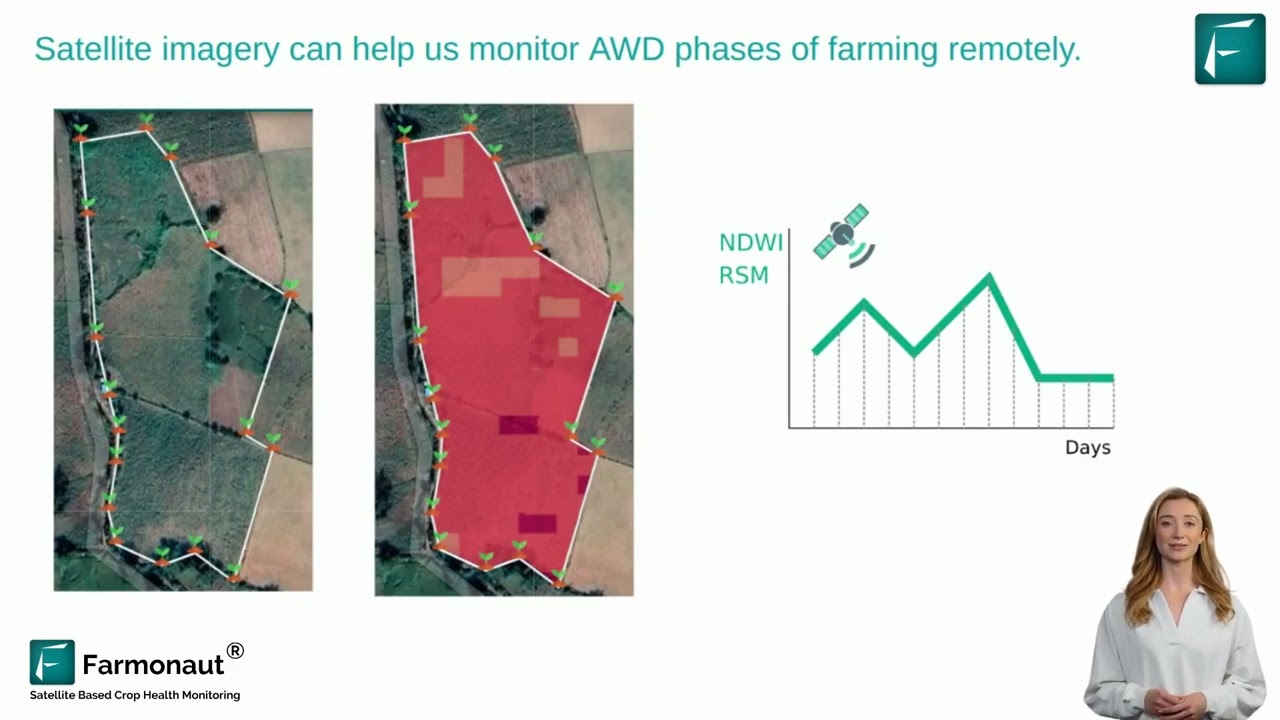
For a complete guide to farm mapping and real-time monitoring, explore Farmonaut’s open satellite-based monitoring API for both web and mobile applications. Developers can leverage Farmonaut’s API documentation to build customized dashboards and digital IFS simulation kits.
Key Benefits of Integrated Farming System Models in 2026 & Beyond
The adoption of an integrated farming system model is driven by multifunctional benefits, each proven to increase sustainability, reduce inputs, and maximize returns:
- 🌱 Soil health is continually improved with organic cycling, living root cover, and deep-rooted tree species.
- ♻️ Resource efficiency rises via waste recycling and lower input needs—saving energy and reducing costs.
- 📉 Pest and disease risk naturally drops in diversified systems with mixed crops, livestock, and trees.
- 🌳 Biodiversity and carbon sequestration climb steadily in IFS plots.
- 💹 Financial resilience grows, as income is insulated against single-commodity market or climate shock.
- 🧑🌾 Labor is optimized; employment becomes steadier throughout the year, reducing migration and off-season underemployment.
- 💧 Water is conserved, stored, and reused more effectively—vital in drought-prone and water-stressed regions.
Certified IFS models can help qualify plots for satellite-based crop loans and insurance, supporting farmers in accessing funding and reducing financial risk in unpredictable climates.
Site Planning, Implementation & Risk Management in IFS Models
- 🔬 Site Suitability: Begin with climate, soil, water, and slope assessment—match enterprise combos to site strengths (soil health, water table, microclimates).
- 💰 Initial Capital & Labor: Plan for startup investments (livestock, trees, biogas plants, irrigation kits) and year-round labor needs.
- ⚠️ Risk Management: Diversify crops, avoid mono-cultures, and build in pest/disease monitoring buffers.
- 📊 Monitoring & Adaptation: Collect regular data (soil nutrients, water use, yields) and adapt layouts or cropping plans each season.
- 👨🏫 Training: Invest in IFS planning courses, digital record-keeping, and extension services for continuous improvement.
Use a combination of on-farm demonstration plots and simulation kits to pilot new IFS configurations before full-scale adoption—reducing both technical and financial risk.
Monitor, Plan & Optimize with Farmonaut’s Satellite Technology
At Farmonaut, we believe that satellite-driven data is the future of integrated, resilient, and sustainable agriculture. Our web and mobile platforms help:
- Monitor crop health, soil quality, vegetation, and water use in real time across multiple enterprise plots (NDVI, soil moisture, input needs, disease detection)
- Plan integrated layouts using historical weather, rainfall, temperature, and land cover maps
- Integrate fleet management for tractor and implement tracking, optimizing energy and labor in IFS operations
- Access large-scale farm management tools for enterprise-level decision support
- Verify IFS practices and outputs for crop loan, insurance, and supply chain traceability, via blockchain-powered documentation
To get started:
- Monitor your farm plots anytime, anywhere, via the Farmonaut Web and Mobile App: Try the Farmonaut platform.
- Integrate IFS field data with APIs: Leverage Farmonaut API and developer docs for customized workflows.
- Enhance water, soil, and labor management in your IFS project with advanced fleet and machinery tools.
- Achieve sustainability certification with Farmonaut’s carbon footprint tracking solutions.
Farmonaut Subscription Plans
We offer flexible, affordable subscription options—tailored for smallholders up to large-scale commercial farms. Scale as your integrated enterprise grows.
Ready to uplevel your planning and output? Get actionable, satellite-driven insights for all your integrated farming system models in one dashboard.
IFS mapping and real-time monitoring are not just for farmers! Stakeholders in mining, infrastructure, or defense leverage Farmonaut’s geospatial intelligence for land restoration, environmental auditing, and carbon accounting.
Frequently Asked Questions: Integrated Farming System Model
- What is the main advantage of an integrated farming system model?
- The main advantage is system synergy—outputs (residues, manure, water) from one part of the farm become valuable inputs for another, boosting yield, soil health, efficiency, and resilience far above that of monoculture systems.
- How do IFS models improve climate resilience?
- By diversifying enterprises (crops, livestock, agroforestry, aquaculture) and linking them through resource and waste cycling, IFS models buffer against market, weather, pest, and disease shocks. Site-specific layouts further minimize risk.
- Can I use IFS models on small plots, or only on large farms?
- IFS models are highly scalable. Even smallholder families with under one hectare can combine vegetable beds, poultry, tree strips, fish tanks, and compost to build year-round, resilient income—even in resource-constrained environments.
- What kinds of images or kits are used for IFS planning?
- Farmers and planners use a mix of illustrated configuration images (IFS arrows, layouts, spacing), simulation spreadsheets or apps for nutrient/water/labor planning, and satellite maps to visualize resource flows for each plot or enterprise block.
- Which Farmonaut solutions are most useful for integrated farming?
- Farmonaut’s satellite-based monitoring apps, carbon footprinting, fleet/resource management, and blockchain-based traceability products are highly relevant for planning, optimizing, and documenting IFS projects at any scale.
Conclusion: Why Integrated Farming System Model Remains Central in 2026–27
The transition to integrated farming system models is a defining trend in 21st-century agriculture—offering a practical, scalable framework for both smallholder and commercial farms to achieve sustainability, climate resilience, and productive livelihoods. By combining crops, livestock, agroforestry, horticulture, fisheries, and advanced water/resource planning, IFS models deliver:
- Up to 30% yield improvement over monoculture plots
- Reductions of 40% or more in chemical input costs
- Enhanced soil health and organic matter every year
- Multiple, diversified income streams and steady labor
- Measured gains in climate resilience and biodiversity
Don’t miss out on the future of sustainable agriculture. Use integrated farming system model images, configuration kits, and satellite-driven digital tools to plan your next IFS project for 2026 and beyond.
For those seeking evidence-based adoption, frameworks like Farmonaut bring the power of satellite monitoring, carbon tracking, and digital field management—making the promise of fully integrated, climate-ready farming models a reality for all, at every scale.
Ready to plan your integrated farming system model? Download the Farmonaut app or access our powerful APIs to optimize your IFS project for the future of agriculture.
Discussion
Questions, corrections or field experience? Share them below. First-time comments are reviewed before they appear, and your email is never published.
No comments yet. Be the first to add a question or your experience.

 Sarvome
 Polaris Digitech
 Teledarbas
 Wild Oak Farm
 SFX
SFX BACF Africa
 Doodlakine
 Exurbia Geospatial
 FieldZero
 Indico Company
 Kubota
 FFBS
FFBS Jontra
 Licence holder · Niger · Gold










