

Reviewed August 2026 against USDA Forest Service research publications, UF/IFAS Extension and the CITES Trade Database.
Mahogany’s Impact on Local Ecosystems: What the Measurements Show
Mahogany’s effect on an ecosystem depends almost entirely on whether it is growing inside its native range. Inside it — southern Florida’s rockland and coastal hammocks, the Greater Antilles, and the neotropics from Mexico south to Bolivia — mahogany is a scarce, slow-recruiting canopy tree whose flowers feed a wide insect guild and whose branches host a state-listed endangered mistletoe. Outside it, the same species escapes plantations: on one Caribbean island, researchers counted mahogany juveniles at densities up to 86 times higher than anything recorded in the tree’s Amazonian home range, while its leaves suffered roughly one-third the insect damage of neighbouring native trees.
That asymmetry — protected in one place, spreading in another — is the single most important thing to understand about this tree, and it is the reason a blanket answer to “is mahogany good or bad for local ecosystems” is wrong in both directions.
- 60 cm — minimum diameter cutting limit for big-leaf mahogany in Brazil; simulations of 10,000 trees put the median time to reach it at 74 years, with a full range of 33–180 years (Free et al., Forest Ecology and Management 330:46–54, 2014).
- 12.5% — share of mahogany seedlings in that model surviving to commercial size.
- November 2003 — big-leaf mahogany placed on CITES Appendix II for logs, sawn wood, veneer and plywood (Grogan & Barreto, Conservation Biology 19(3), 2005).
- 0.2–0.8 juveniles per m² — mahogany regeneration measured in a Dominica national park, against 0–0.0093 per m² in Brazilian native forest (Norghauer et al., PLOS ONE, 2011).
- Threatened — Florida’s legal status for Swietenia mahagoni under the state Regulated Plant Index.
Table of Contents
- Which tree is actually “mahogany” — and what searchers call it
- Impact on local ecosystems: native range vs. introduced range
- Roots and fruit: the two features people search for most
- Mahogany tree uses and what the wood is worth
- Is mahogany sustainable? A five-step check
- Rotation reality-check calculator
- The carbon claim you should not repeat
- Refresh table: every figure and where to get a newer one
- Monitoring plantations and canopy change from orbit
- Frequently asked questions
- Get access to Farmonaut solutions
- Conclusion
- Jump to the calculator
Which Tree Is Actually “Mahogany” — And What Searchers Call It
Two species carry the name legitimately. Swietenia mahagoni, West Indian or small-leaf mahogany, is native to the tropical rockland and coastal hammocks of Florida’s southernmost counties and the Greater Antilles; the Florida Native Plant Society records it as growing 30–70 ft tall with strong hurricane wind resistance and lists it as Threatened by FDACS. Swietenia macrophylla, big-leaf or Honduran mahogany, ranges from Mexico through Central America into Bolivia and is the species that dominates world trade.
Because this page draws searches in several languages, the terminology is worth pinning down: মেহগনি গাছ (mehogoni gachh) in Bengali and pohon mahoni in Indonesian and Malay both refer to these same Swietenia species as planted outside their native range. Searches for pohon mahoni dan buahnya — the mahogany tree and its fruit — and akar mahoni — mahogany roots — are asking about two specific structures, and both are covered in detail further down. A third group of timbers, the African Khaya species, is sold as “African mahogany” and is not Swietenia at all, which matters enormously when you are checking paperwork.
| Name in trade | Botanical identity | Native range | CITES status | How to distinguish it |
|---|---|---|---|---|
| West Indian / Cuban mahogany | Swietenia mahagoni | South Florida hammocks, Bahamas, Cuba, Hispaniola, Jamaica | Appendix II | Smaller leaflets (4–6 pairs); capsules 2–5 in; state-Threatened in Florida |
| Big-leaf / Honduran mahogany | Swietenia macrophylla | Mexico to Bolivia | Appendix II since Nov 2003 (logs, sawn wood, veneer, plywood) | Larger leaflets; the species in nearly all commercial paperwork |
| African mahogany | Khaya spp. | West and Central Africa | Not Swietenia; check current Appendix listings before assuming | Different genus entirely; a CITES permit for Swietenia does not cover it |
| “Philippine mahogany” / lauan | Shorea spp. and others | Southeast Asia | Unrelated family (Dipterocarpaceae) | A trade nickname only — no botanical relationship to mahogany |
Big-leaf mahogany carries an Endangered listing on the IUCN Red List, most recently assessed in 2023, on grounds of population reduction across its range. Verify the current category at iucnredlist.org before quoting it, because Red List assessments are revised on their own schedule rather than annually.



Impact on Local Ecosystems: Native Range vs. Introduced Range
Inside its native range, mahogany is rare and recruits badly
The romantic version of this story casts mahogany as a keystone species holding tropical forests together. The measured version is more interesting. Big-leaf mahogany is strongly light-demanding, occurs at very low adult densities, and regenerates poorly under closed canopy. Free et al. (2014) modelled growth from 32 stem discs and 10,000 simulated trees in the Brazilian Amazon and found that only 12.5% of seedlings survived to reach 60 cm diameter, and that trees at the 75th percentile of growth needed 70 years to get there. Native-range juvenile densities in the same literature are on the order of 0 to 0.0093 individuals per square metre — effectively a scattering.
What mahogany does contribute in its native and naturalised Caribbean range is well documented at flowering. The Florida Native Plant Society notes that S. mahagoni flowers attract small butterflies and moths plus “many species of ants, thrips, small beetles, flies, bees, and wasps,” and that the tree is the host plant for mahogany mistletoe, Phoradendron rubrum — itself listed as Endangered in Florida. That single relationship is a concrete ecological dependency: remove the host, and a state-endangered parasitic plant has nowhere to live.
Outside its native range, the same tree behaves like an invader
The most rigorous measurement of mahogany’s ecosystem impact outside its home range comes from Cabrits National Park, a 531-hectare protected area on Dominica in the Lesser Antilles. Norghauer and colleagues published the survey in PLOS ONE in 2011, working on trees planted in the 1960s and early 1970s (the exact planting records were destroyed by Hurricane David in 1979).
They surveyed 133 mature stems of 20 cm diameter or greater, 127 of them S. macrophylla, and estimated the reproductive threshold at 25.1 cm dbh. Juvenile mahogany density ran 0.2 to 0.8 individuals per square metre — up to roughly 86 times the upper end of native-range figures. Leaf damage on Cabrits mahogany averaged about 3.0% (median 2.6%), against 8.4% to 21.8% across nine native Dominican tree species and 11–43% for mahogany in its native range. Only 10.5% of saplings showed hollow stems, and the authors found no visual confirmation at all of the mahogany shoot borer Hypsipyla grandella, which attacks 12–81% of trees in Amazonian plantations. Their conclusion: natural enemy release, with the population “at an intermediate stage of the invasion process.”
Florida shows an early version of the same pattern. The Florida Native Plant Society entry notes reports that S. mahagoni “may be becoming invasive in some southern Florida areas beyond its natural range” — a tree that is legally Threatened in the hammocks of Miami-Dade and Monroe counties, and simultaneously spreading from landscape plantings further north. Both statements are true at once. Elsewhere in the literature, mahogany leaf litter has been shown to suppress the growth of native seedlings under the canopy, which is the mechanism you would expect behind a thinning understory.

Roots and Fruit: The Two Features People Search For Most
Mahogany roots (akar mahoni)
The UF/IFAS Extension fact sheet ST-608 is blunt about the practical problem: mahogany “can form large surface roots” that lift sidewalks and curbs when the tree is planted only 5 to 6 feet from hard surfaces, and it recommends root barriers to drive roots deeper at planting. This is the single most common reason municipal arborists restrict where mahogany goes in a streetscape. The flip side of a wide, anchoring root plate is storm performance: IFAS credits the dense, strong wood with good wind resistance on properly trained trees, while warning that trees allowed to develop multiple leaders lose that advantage — pruning to a single leader when young is the intervention that matters.
One genuine disagreement in the sources is worth flagging rather than smoothing over. IFAS describes S. mahagoni as “quite resistant to salt spray”; the Florida Native Plant Society entry states the tree is not salt-tolerant. If you are planting within reach of coastal spray, treat that as unresolved and consult your county Extension office for local observations rather than trusting either statement alone.
Mahogany fruit (pohon mahoni dan buahnya)
The fruit is a woody, upright capsule 2 to 5 inches long, brown at maturity, splitting into five even parts to release winged seeds that disperse on the wind. IFAS puts fruiting from summer through winter and flags the capsules as a litter consideration for paved areas. Two things follow from that description. First, wind-dispersed winged seeds from a canopy tree explain how plantation mahogany reaches unplanted ground — this is the dispersal engine behind the Dominica densities above. Second, the five-valved capsule is the fastest field check that you are looking at a true Swietenia rather than a look-alike sold under the same trade name.
For growers, the other IFAS specifics are the planting envelope: mature height 40–60 ft (occasionally 75 ft) with a comparable 40–60 ft spread, fast growth, semi-evergreen habit, compound leaves of 4–6 leaflet pairs, USDA hardiness zones 10B–11, high drought tolerance, and tolerance of clay, sand or loam at either acidic or alkaline pH provided drainage is good. Recorded insect pests include tent caterpillars, tip moth, webworm, scale, leaf notcher and leaf miner, with borers attacking already-stressed trees.
Mahogany Tree Uses and What the Wood Is Worth
Mahogany wood earns its reputation on dimensional stability rather than raw hardness. The USDA Forest Products Laboratory technical sheet for S. macrophylla gives shrinkage from green to ovendry as 3.0% radial, 4.1% tangential and 7.8% volumetric, and notes the wood air-seasons and kiln-dries readily without appreciable warping or checking. Low, even shrinkage is precisely why the timber ended up in the applications it did: furniture and cabinetry, boat hulls and trim, guitar bodies and necks, pattern-making, veneer, panelling and interior joinery. For engineering values on this and other imported species, the reference is the Wood Handbook: Wood as an Engineering Material (FPL-GTR-282, 2021, ed. Robert J. Ross).
Pricing is where honest reporting has to replace a confident number. There is no reliable public spot price for Swietenia sawnwood: the ITTO Tropical Timber Market Report, published twice monthly and the closest thing to a reference price series for tropical hardwoods, frequently carries no quotation for mahogany at all, because CITES-regulated volumes are small and traded bilaterally. If you need a defensible figure, quote a specific ITTO issue on the date you read it, or get a mill quotation in writing.
What you can anchor is the domestic hardwood market a US buyer would compare against. Penn State Extension’s Pennsylvania Timber Market Report for the third quarter of 2025, published 17 November 2025 and issued quarterly, reported standing-timber (stumpage) averages per thousand board feet, International 1/4″ scale, from surveyed timber companies, consultants and state land agencies.
Ranges behind those averages are wide — Northern red oak spanned $322–$746/MBF in the Northeast and $243–$614 in the Southwest — which is the practical point: species matters less than region, grade and haul distance. Any mahogany quotation you receive should be interrogated the same way.

Is Mahogany Sustainable? A Five-Step Check That Outlives the Numbers
The regulatory answer and the biological answer diverge, and that gap is the whole story. Big-leaf mahogany was placed on CITES Appendix II in November 2003 covering logs, sawn wood, veneer sheets and plywood, as documented by Grogan and Barreto in Conservation Biology 19(3):973–976 (2005), published through the Forest Service’s International Institute of Tropical Forestry. Appendix II requires an exporting state to certify that a shipment was harvested legally and non-detrimentally.
The biological test is harder. Free et al. (2014) concluded that Brazil’s framework — a 60 cm minimum cutting diameter on a 60-year cycle — does not add up when the median tree needs 74 years to reach that diameter and the spread runs 33 to 180 years. Their recommendation was longer cutting cycles, higher retention of seed trees, and active silvicultural treatment. Plantation data points the same way: Wadsworth and Gonzalez, working a Puerto Rican plantation between ages 40 and 69 and publishing in Forest Ecology and Management 255:320–323 (2008), found that although diameter growth slowed with age, heartwood increment rose across the entire 69 years — the valuable fraction of the stem keeps building long after the tree stops widening quickly, so short rotations sell the cheap part.
Here is the durable version of the check, which works regardless of what the numbers do next:
- Name the species in Latin. “Mahogany” on an invoice is meaningless. Swietenia macrophylla, Khaya ivorensis and Shorea spp. carry different legal obligations.
- Ask for the CITES export permit number and the country of harvest for any Swietenia product in the listed forms, then check the recorded trade for that species and exporter yourself in the CITES Trade Database, which holds over a million records back to 1975 and is queried by species and year range.
- Confirm the US import declaration. Importers of covered plant products must file a Lacey Act declaration with USDA APHIS naming the scientific name, country of harvest, quantity and value. Ask to see it.
- Test the rotation arithmetic against the diameter. If the seller claims a 25-year plantation rotation to 60 cm, ask for the measured annual diameter increment that produces it. Use the calculator below.
- Check certification at the certificate, not the logo. FSC and PEFC both publish searchable certificate databases; a claim without a verifiable certificate number is decoration.
For plantation owners, the compliance burden is where remote monitoring pays for itself. Satellite time series document canopy cover and disturbance on a fixed cadence, blockchain-backed traceability ties a stem to a shipment, and carbon footprinting tools produce the emissions figures buyers increasingly ask for in writing.
Rotation Reality-Check Calculator
Enter your own measured increment and stocking to see how long your stand actually needs to reach a legal cutting diameter, and how many stems per acre survive to get there.
Run your own numbers
Assumes the increment you enter stays constant, which it will not — Wadsworth and Gonzalez (2008) measured diameter growth slowing with age while heartwood increment kept rising, so long rotations look worse here than in reality. The 12.5% default survival is the Free et al. (2014) modelled figure for Amazonian mahogany reaching 60 cm; substitute your own inventory remeasurement. Excludes thinning, mortality from storms or shoot borer, log grade, extraction cost and price.
The Carbon Claim You Should Not Repeat
A figure circulates online that mahogany forests sequester up to 150 tonnes of carbon per hectare per year. It is not defensible, and repeating it undermines every other number in a sustainability document. Measured tropical carbon accumulation rates are two orders of magnitude lower. Heinrich and colleagues, publishing in Nature Communications 12:1785 (19 March 2021), reported regrowth in secondary Brazilian Amazon forest at 3.0 ± 1.0 Mg C per hectare per year in the western Amazon and 1.3 ± 0.3 in the east, consistent with earlier field estimates of 2.95 ± 0.4 and 3.05 ± 0.5 Mg C ha⁻¹ yr⁻¹ for stands under 20 years old.
At the western rate, twenty years of regrowth accumulates about 60 Mg C per hectare in total — less than half of what the discredited claim asserts for a single year. Mahogany's real climate contribution is durable carbon locked in long-lived wood products plus the standing stock of a forest that is not cleared, and both are worth quantifying honestly against measured local increment.
Refresh Table: Every Figure and Where to Get a Newer One
| Figure | Value and vintage | Source | How to get a fresher number |
|---|---|---|---|
| Recorded Swietenia trade volumes | Records from 1975 onward, >1 million rows | CITES Trade Database (UNEP-WCMC) | Query Swietenia macrophylla at trade.cites.org for a year range of five years or less; reported annually by parties |
| US hardwood stumpage benchmark | Northern red oak $419–$665/MBF average by region, Q3 2025 | Penn State Extension | Quarterly report; read the newest quarter at extension.psu.edu |
| Tropical hardwood export prices | No consistent mahogany quotation | ITTO Tropical Timber Market Report | Published twice monthly; cite the specific issue and date, or obtain a written mill quotation |
| Florida protected-plant counts | 448 endangered, 118 threatened, 9 commercially exploited; 54 federally endangered, 14 federally threatened | FDACS Division of Plant Industry | Check the FDACS endangered plants page; the Regulated Plant Index (Rule 5B-40) is amended by rulemaking |
| Extinction-risk category | Endangered, assessed 2023 | IUCN Red List | Search the species at iucnredlist.org; reassessed on an irregular cycle, not annually |
| Your own stand's increment | Site-specific | Your inventory | Tag permanent plots, remeasure dbh at a fixed interval, and use the measured increment in the calculator above |
Monitoring Plantations and Canopy Change From Orbit
Every claim above about spread, canopy loss or growth rate is ultimately an observation problem, and observation is what satellite monitoring does cheaply and repeatably.
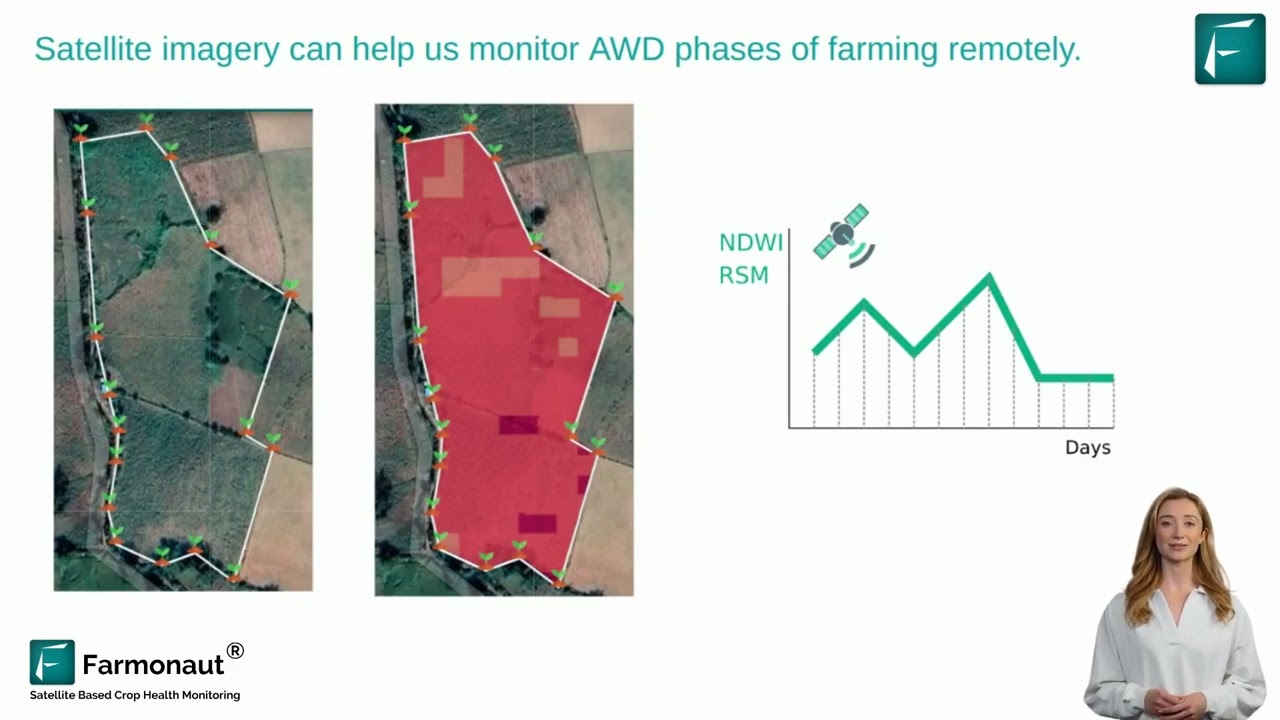
- Canopy and vegetation change: our platform uses multispectral satellite data to track vegetation indices over a fixed revisit cycle, so a clearing or a declining block shows up as a break in a time series rather than a rumour.
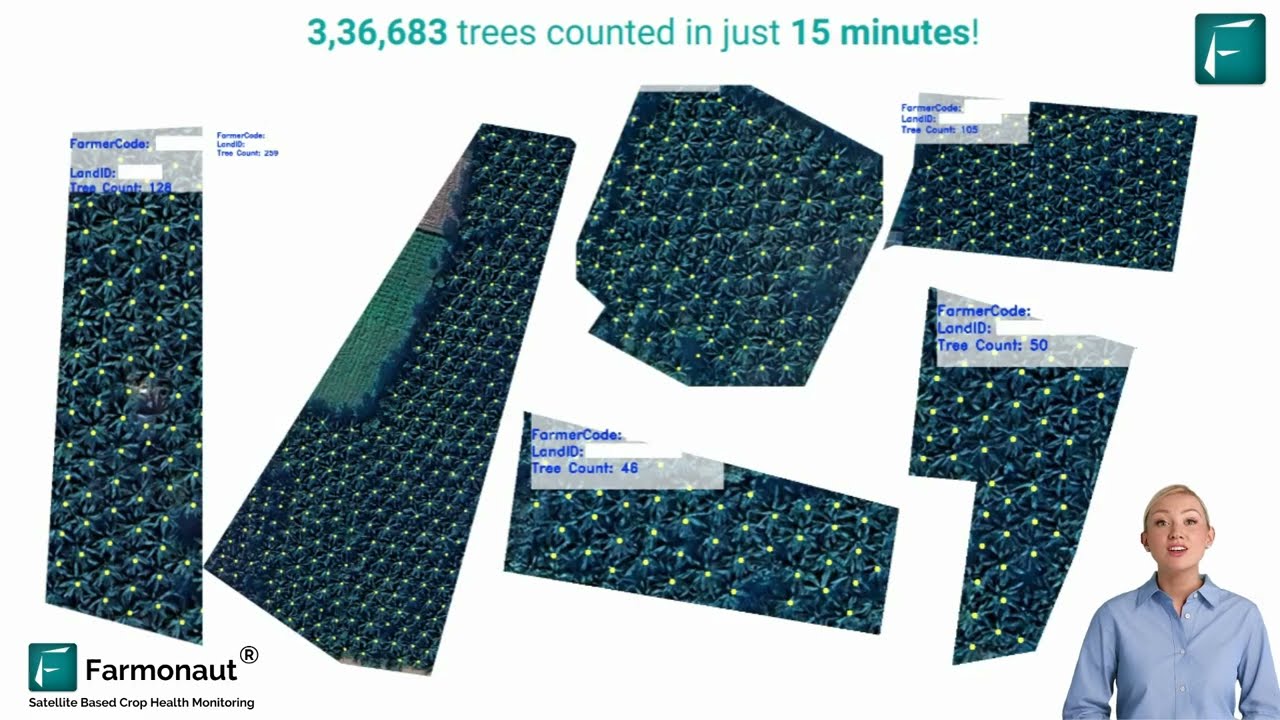
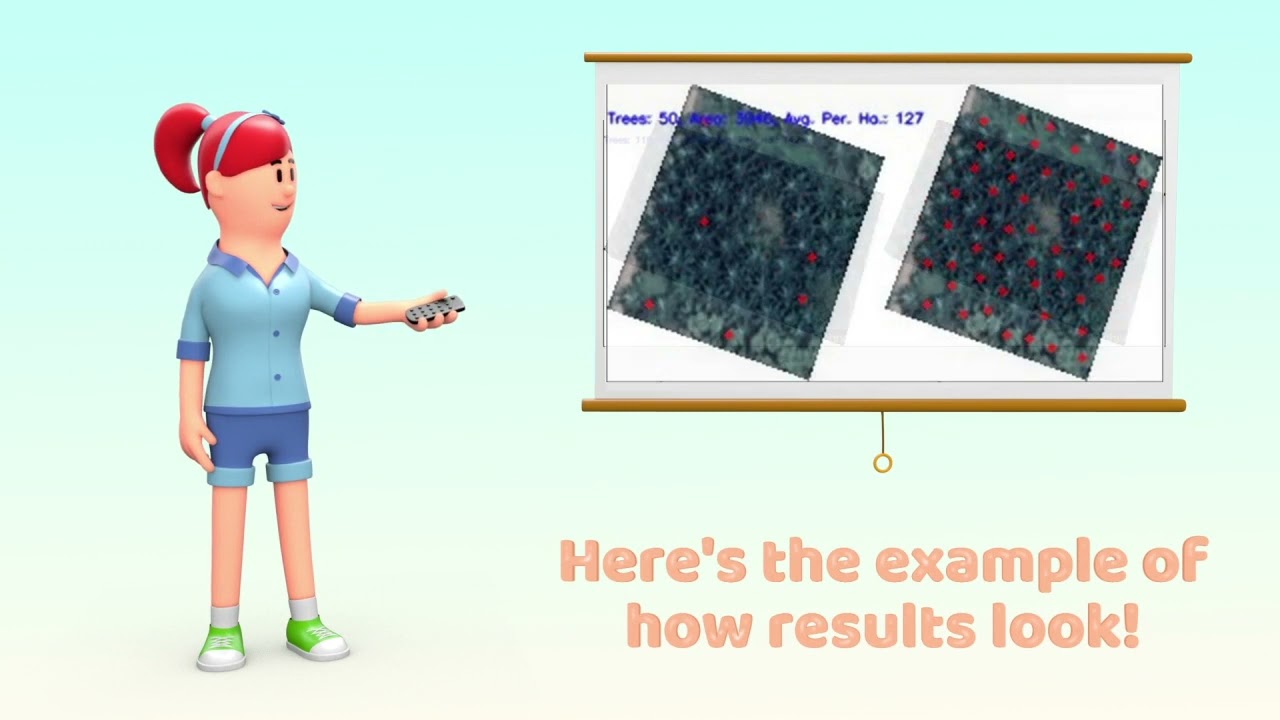
- Stem counting and mapping: automated tree detection produces stem counts and locations, which is the input the rotation calculator above needs and the baseline any retention requirement is measured against.
- Jeevn AI advisory: combines satellite and weather inputs into field-level guidance on timing and stress, useful where borer pressure and drought interact.
- Traceability and reporting: blockchain traceability and carbon footprinting produce the audit trail a CITES- or Lacey-exposed buyer asks for.
- Logistics: fleet management covers haulage between stump and mill, usually the largest controllable cost line.
- Integration: pull the data into your own dashboards through our API, with developer documentation here, and manage multi-site estates through large-scale administrative tools.

Frequently Asked Questions
Is mahogany good or bad for local ecosystems?
Both, depending on location. In its native south Florida hammocks and Caribbean and neotropical range it is a scarce canopy tree supporting a broad pollinator guild and hosting the Florida-endangered mahogany mistletoe. Introduced beyond that range it escapes plantings; measured juvenile densities on Dominica reached 0.2–0.8 per m² against 0–0.0093 per m² in Brazilian native forest, with leaf damage of about 3.0% versus 8.4–21.8% for native neighbours.
Why does introduced mahogany grow so much more aggressively?
Natural enemy release. The Dominica survey found no confirmed presence of the mahogany shoot borer Hypsipyla grandella, which attacks 12–81% of trees in Amazonian plantations, and only 10.5% of saplings had hollow stems. Without its specialist defoliator and borer, the tree keeps the growth it would otherwise spend on repair.
Is mahogany sustainable to buy?
It can be, but not on trust. Big-leaf mahogany has been on CITES Appendix II since November 2003 for logs, sawn wood, veneer and plywood. Ask for the Latin species name, the CITES export permit number, the country of harvest and the Lacey Act declaration, then verify the certificate number in the issuing scheme's database and the trade record in the CITES Trade Database.
How fast does a mahogany tree grow, and how long to harvest?
UF/IFAS classes growth as fast for landscape purposes, but reaching commercial diameter is slow: modelled trees needed a median 74 years to reach 60 cm dbh, range 33–180 years. In a Puerto Rican plantation measured between ages 40 and 69, diameter growth slowed with age while heartwood volume increment kept increasing throughout.
What are the main mahogany tree uses?
Furniture and cabinetry, boatbuilding, musical instruments, veneer, panelling, flooring and pattern-making — driven by low, even shrinkage (7.8% volumetric green to ovendry, per the USDA Forest Products Laboratory) and easy seasoning rather than exceptional hardness.
Will mahogany roots damage a driveway or sidewalk?
They can. UF/IFAS warns that large surface roots lift sidewalks and curbs when the tree is planted only 5–6 feet away, and recommends root barriers at planting to direct roots deeper. Give the tree room proportional to its 40–60 ft mature spread.
Can I cut a mahogany on my own Florida property?
Swietenia mahagoni is listed as Threatened on Florida's Regulated Plant Index, harvesting from the wild requires an FDACS permit, and local tree ordinances apply separately. Check both the state listing and your county or municipal code before any removal.
Get Access to Farmonaut Solutions
Conclusion
Mahogany is not a single ecological story. In the hammocks of Miami-Dade and Monroe counties it is a state-Threatened native carrying an endangered mistletoe and a wide pollinator guild. In the neotropics it is a light-demanding tree whose median 74-year climb to a 60 cm cutting limit makes a 60-year cutting cycle arithmetically doubtful. On Dominica it is an escaping plantation species regenerating at densities its native forests never show, released from the borer and defoliator that hold it in check at home.
The useful response to all three is the same: measure the stand in front of you. Tag plots, remeasure diameter on a fixed interval, feed your own increment into the rotation check rather than a brochure figure, and verify every sourcing claim against a permit number and a database record rather than a logo. The published figures in this article will age; the method will not.
Discussion
Questions, corrections or field experience? Share them below. First-time comments are reviewed before they appear, and your email is never published.
No comments yet. Be the first to add a question or your experience.

 YelloSkye
 GalaxEye Space
 Sun Palm Australia
 Grandstream Algérie
 XOS Realty
 Geospatial Lab Africa
 Agro La Gándara
 HIPSAC
 ZOL Zimbabwe
 Juligerm
 AdBio
AdBio MISE Maroc
 NWNS
NWNS Red August Group
 Farm Inc
 WeMe Global
 Agrotoken
 Blue BearX
 Insignito
 Licence holder · Niger · Gold
 Licence holder · Nigeria · Gold + lithium










