

Multitrophic & Raceway Aquaculture: Top 7 Technologies 2026
Explore innovation and sustainability in aquaculture – from multitrophic and raceway systems to high-value geoduck and integrated izumi aquaculture. Your expert guide to eco-friendly food production and aquatic resource management for 2026 and beyond.
2025 and beyond marks a crucial turning point for sustainable food production. As aquaculture emerges as a critical component, innovative approaches—particularly multitrophic aquaculture, raceway aquaculture, geoduck aquaculture, and izumi aquaculture—are reshaping our ability to produce healthy, protein-rich food and manage aquatic resources efficiently. This comprehensive guide explores the top 7 technologies setting new benchmarks for environmental stewardship, economic viability, and resilience in aquatic farming systems globally.
Key Insight: By integrating multitrophic aquaculture, raceway systems, and advanced monitoring, the aquaculture sector can simultaneously maximize yield, minimize environmental impact, and create diversified income opportunities for rural and coastal communities.
Aquaculture Trivia
“Raceway aquaculture systems can increase water use efficiency by up to 90% compared to traditional pond methods.”

Key Developments Transforming Aquaculture in 2026
The aquaculture sector is rapidly evolving, with a particular focus on environmental sustainability, cutting-edge aquaculture technologies, and efficient resource management. From addressing diminishing wild fish stocks to meeting the rising global demand for quality protein, new methods and integrated systems like multitrophic aquaculture, raceway aquaculture, and izumi aquaculture are setting higher standards for sustainable food production within both freshwater and coastal contexts.
- ✔ Focus on Sustainability: Key aquaculture technologies aim to minimize waste discharge and carbon footprints.
- 📊 Data-Driven Decisions: AI, IoT sensors, and satellite monitoring drive better water management and adaptive feeding.
- ⚠ Risks Remain: Disease, invasive species, and excessive nutrient loads require ongoing innovation and management.
- 🌱 Integrated Land Use: Aquaculture is increasingly integrated into agricultural and forestry planning for holistic stewardship.
- 💡 Global Impact: New aquaculture techniques are poised to transform rural economies and secure food systems worldwide.
Pro Tip: Use real-time satellite and AI-powered monitoring to track aquatic environmental parameters, improve yield, and detect risks promptly—try platforms offering remote, mobile-friendly dashboards.

Top 7 Aquaculture Technologies 2026
– Advancing Sustainability, Yield, and Resource Efficiency
- 🌊 Multitrophic Aquaculture (MTA): Integrates multiple trophic levels in one system for natural nutrient cycling.
- 💧 Raceway Aquaculture: Offers precise water and feed management for freshwater species.
- 🦪 Geoduck Aquaculture: Supports high-value shellfish with ecological benefits in coastal zones.
- 🌾 Izumi Aquaculture: Combines pond aquaculture with terrestrial crop production for smallholder farm efficiency.
- 🚀 Recirculating Freshwater Systems: Ensures minimal water use and waste discharge.
- 🤖 AI-Driven Monitoring and Management: Enhances operational efficiency and sustainability.
- 🔗 Blockchain Traceability & Carbon Monitoring: Delivers transparency and low-carbon aquatic supply chains.
1. Multitrophic Aquaculture (MTA): Mimicking Ecosystems for Sustainability
Multitrophic aquaculture (MTA) embodies the integration of various aquatic species from different trophic levels—such as fish, seaweed, and shellfish—within a single system. By imitating the nutrient cycles of natural ecosystems, this method reduces waste discharge, enhances resource efficiency, and supports year-round production.
- ✔ Key benefit: Waste from fish is recycled as nutrients for seaweed and shellfish.
- 📊 Data insight: Integrated multitrophic systems can increase total biomass yield by 25–35% per unit input.
- 🚀 Efficiency boost: Advanced MTA platforms leverage IoT, AI, and satellite analytics for monitoring nutrients, temperature, and water quality in real-time.
Examples: Salmon-farmed with mussels in Norway; shrimp–tilapia–seaweed combos popularizing in Asia’s coastal zones.
Investor Note: MTA is increasingly favored by eco-certification bodies and premium markets, especially where environmental regulations encourage nutrient recycling and integrated, sustainable aquaculture methods.
- 📈 Future trend: By 2026, multitrophic aquaculture is projected to become mainstream in eco-labeled seafood supply chains and regional land-use planning, particularly in agriculture-forestry-fisheries interfaces.

2. Raceway Aquaculture: High-Efficiency Freshwater Systems
Raceway aquaculture systems are linear, flow-through tanks or concrete channels optimized for cultivating high volumes of trout, tilapia, and catfish. These units enable precise control of quality parameters—especially oxygen levels and water flow—directly impacting fish growth rates and overall health.
- ✔ Key benefit: Raceway technologies are highly efficient; some can manage water consumption down to 800–1,200 liters per kilogram yield, compared to 5,000+ in traditional ponds.
- 📊 Data insight: Water use efficiency increases up to 90% in advanced raceway aquaculture systems (see trivia above).
- 🤖 Automation advantage: Integrated with sensors, cloud-based dashboards, and automated feeding for optimal, precise control and reduced labor costs.
Raceway aquaculture has become a cornerstone for food security in regions near managed freshwater resources, particularly in Asia, Europe, and South America.
How to Increase Efficiency in Raceway Systems?
- Install real-time dissolved oxygen and nutrient monitoring.
- Leverage automated AI-based feed management and waste removal.
- Integrate with satellite-powered water quality alerts for proactive risk reduction (Farmonaut’s crop and aquaculture monitoring platform is designed for such holistic ecosystem management).
Common Mistake: Overlooking the need for water recirculation and biofilter maintenance in raceway setups can cause degradation in fish health and increased disease outbreaks. Prioritize scheduled cleaning and sensor-based alerts!

3. Geoduck Aquaculture: High Value, Coastal Sustainability
Geoduck aquaculture centers on farming the world’s largest burrowing clams, prized for their culinary value and ecological roles as natural water filters in sensitive coastal and forestry zones. Geoducks help support balanced estuarine environments while providing businesses with lucrative harvests.
- ✔ Key benefit: Geoducks filter excess nutrients and improve local water clarity—a unique ecological advantage.
- 📊 Data insight: Modern geoduck aquaculture achieves up to 15–20% higher survival and growth rates thanks to hatchery advances and sediment management.
Locations: West Coast of North America, Australia, and China’s coastal provinces are leading global production.



Environmental Alert: Protection of tidal habitats is key to geoduck aquaculture’s long-term success. Pair with satellite-based environmental impact monitoring for regulatory compliance: Farmonaut Carbon Footprinting.

4. Izumi Aquaculture: Integrated Pond-Based Agricultural Production
Izumi aquaculture, rooted in Japanese tradition, is an innovative, low-impact approach that combines fish farming with rice paddies or other terrestrial crop systems. This optimizes land and water use, recycles nutrients, and enhances community-level resilience—especially in rural agricultural areas.
- ✔ Key benefit: Maximizes land productivity per input while sustaining multiple income streams (fish, rice, vegetables).
- 📊 Data insight: Integrated izumi aquaculture can lower the need for synthetic fertilizers by 15–25%, thanks to natural nutrient cycling.
- 💧 Water synergy: Irrigation requirements for rice and pond aquaculture co-benefit one another, reducing waste.
Particularly relevant in Southeast Asia, Southern China, and parts of Africa and South America where smallholder mixed farming dominates.
Why Invest in Izumi Aquaculture?
- 🧑🌾 Supports smallholders, empowering marginalized rural producers.
- 🌏 Reduces reliance on expensive farm inputs and enables economic diversification.
- 🌿 Mitigates runoff and preserves soil and water quality.
Discover
Farmonaut’s aquaculture and crop loan/insurance solutions—enhancing financial inclusion and production stability in integrated izumi systems.
Investor Opportunity: Blockchain-based traceability for izumi and integrated aquaculture could enhance end-consumer trust and unlock premium value in domestic and export markets. See Farmonaut Traceability Solutions.
“By 2026, integrated multitrophic aquaculture could boost sustainable seafood production by 30% in eco-certified farms.”
5. Next-Generation Freshwater Aquaculture: Recirculation & Automation
Freshwater aquaculture is vital for food production in inland areas lacking marine access. New aquaculture technologies have enabled closed-loop recirculation, biological filtration, and sophisticated water quality management, drastically reducing discharge and facilitating sustainable intensification.
- ✔ Resource efficiency: Some recirculating systems now achieve up to 98% water reuse rates, with minimal effluent output.
- 📊 Performance: Yields increase by 20–40% above conventional pond systems due to stable optimal growth conditions.
- 🤖 Automation: Sensors and AI-based automation enable accurate, data-driven management for fish health, growth, and feeding schedules.
Commonly used for indoor tilapia, catfish, pangasius, and ornamental fish farming. Monitoring platforms (like those offered by Farmonaut Large-Scale Farm Management) help manage these complex systems remotely, improving outcomes for commercial operators.
6. Intelligent Monitoring & AI-Driven Management Systems
Advanced aquaculture technologies harness artificial intelligence, IoT sensors, and real-time satellite data for continuous monitoring of environmental variables. This precision approach enables rapid decision-making and risk mitigation in both multitrophic and raceway aquaculture:
- ✔ Early warning for water quality shifts, oxygen drops, or predator intrusion.
- 💹 Adaptive feeding algorithms reduce feed waste and accelerate fish growth rates.
- 🚨 Biosecurity alerts for emerging disease or contamination events.
- 📱 Remote management via mobile or web platform—critical for regional or dispersed farming operations.
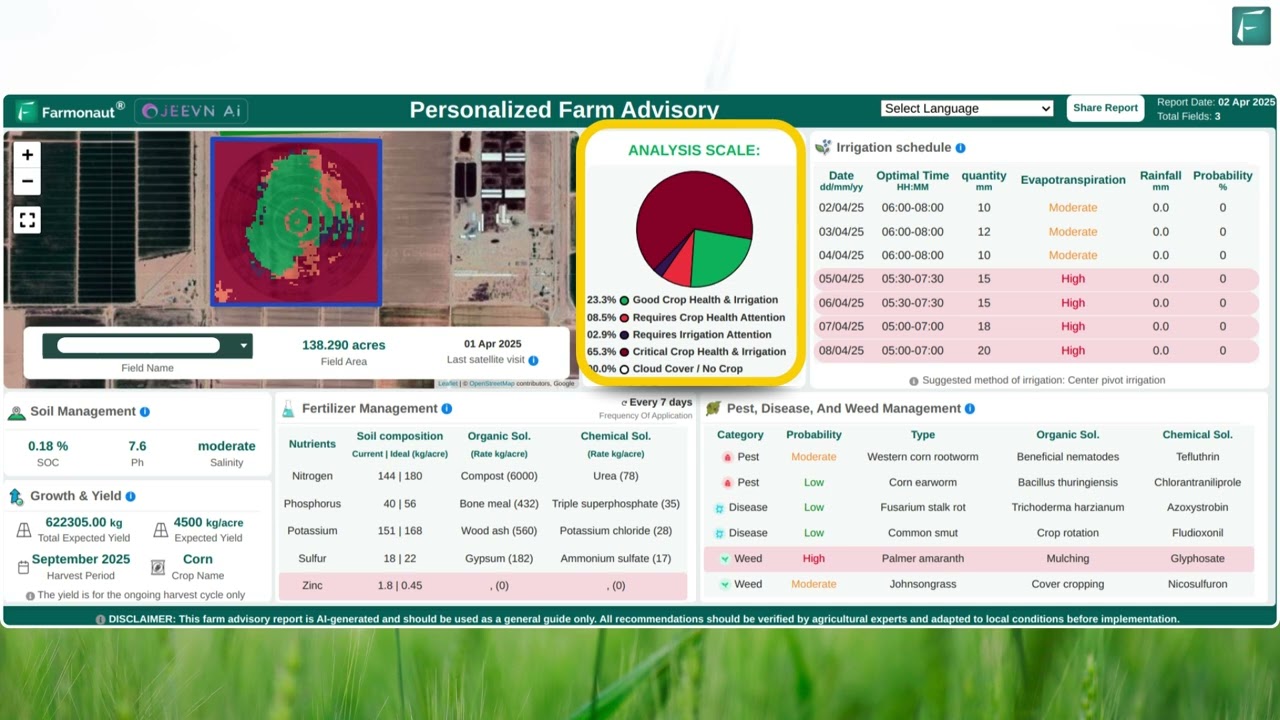
Modern platforms such as Farmonaut’s Jeevn AI system offer customizable dashboards for resource and environmental management in aquaculture, agriculture and forestry.

7. Integrated Blockchain Traceability & Carbon Footprinting
Blockchain-based traceability and satellite-powered carbon footprinting are rapidly gaining prominence for ensuring transparency, sustainability, and compliance in global aquaculture supply chains. These technologies bring competitive advantages for eco-minded producers and enable consumer verification for responsible seafood imports and exports.
- 🔗 Traceable supply chains improve market access (especially in the EU, North America, and Japan).
- 🌱 Carbon reporting facilitates regulatory compliance and access to green finance.
- 💴 Premium prices and consumer loyalty for low-carbon, certified aquaculture brands.
Use Farmonaut’s Traceability System and Farmonaut Carbon Footprinting tools to ensure supply chain authenticity, carbon compliance, and traceable sustainability—from hatchery to harvest.
Comparative Technologies Table: Top 7 Aquaculture Innovations
| Technology Name | System Type | Sustainability Score (1–10) | Estimated Yield Increase (%) | Resource Efficiency (L water/kg yield) | Carbon Footprint Reduction (%) | Common Applications |
|---|---|---|---|---|---|---|
| Multitrophic Aquaculture (MTA) | Multitrophic, Integrated | 9.5 | 25–35 | 900–1,400 | 35–50 | Fish, seaweed, shellfish (mixed species) |
| Raceway Aquaculture | Freshwater, Linear | 8.5 | 30–40 | 800–1,200 | 25–40 | Trout, tilapia, catfish |
| Geoduck Aquaculture | Shellfish, Coastal | 9.0 | 15–20 | 500–900 | 20–35 | Geoduck, other burrowing clams |
| Izumi Aquaculture | Pond-Based, Integrated (Crop/Fish) | 8.0 | 20–25 | 1,200–1,800 | 15–25 | Fish–rice, fish–vegetable, smallholder |
| Recirculating Freshwater Systems | Freshwater, Recirculating | 9.2 | 20–40 | 400–750 | 40–60 | Catfish, tilapia, high-density farms |
| AI-Driven Monitoring | Smart/Automated, Any System | 8.8 | 15–30 | Varies (typically +10% efficiency) | 15–40 | All species, medium/large scale |
| Blockchain Traceability/Carbon Footprinting | Integrated Monitoring | 9.7 | N/A (enables market/value premium) | Varies (supports resource tracking) | 50+ | All systems, eco-certified value chains |
Data Analytics: Comparative tables help clarify complex technology choices for investors, operators, and regulators—driving informed decision-making towards sustainability goals in aquaculture.

Farmonaut: Satellite Technology & Aquaculture Innovation
At Farmonaut, we are dedicated to accelerating the digital transformation of agriculture, fisheries, and aquaculture globally. Our platform leverages satellite imagery, AI-based advisory, and blockchain traceability for holistic resource management and environmental stewardship. We offer:
- 🌐 Affordable real-time monitoring via web/mobile app across remote or distributed aquaculture zones.
- 🤝 AI-powered advisory for feeding, water quality, risk alerts, and ecosystem health (Jeevn AI).
- 🔗 Blockchain-based traceability for regulatory compliance and premium supply chain value.
- 🌍 Environmental impact monitoring and carbon footprinting—digitally prove sustainability commitments for stakeholders.
- 💡 Data-driven insights to enable sustainable growth, particularly at the intersection of agriculture, forestry, and fisheries in 2026 and beyond.
Explore Farmonaut’s API for integrating satellite-powered aquaculture analytics into your own dashboards and control systems.
Developer documentation for integrating with Farmonaut’s monitoring platform.
How These Technologies Reshape Food Systems & Resource Management
- 🌱 Holistic Integration: Multitrophic aquaculture reduces waste while boosting total ecosystem production.
- 💦 Water Security: Raceway and recirculating systems enable fish production with minimal water consumption, critical in arid/agricultural regions.
- 🌍 Low Carbon Food: Carbon tracking and energy-efficient systems are aligning the aquaculture sector with global climate goals.
- 🔒 Traceable & Safe Supply Chains: Blockchain traceability and monitoring combat fraud and strengthen market access.
- 🚨 Resilient Communities: Diversified, integrated aquaculture strengthens rural economies, lowers input costs, and improves nutrition.
Farmonaut’s solutions empower decision-makers to plan, monitor, and verify these impacts at local, regional, and national scales, supporting resilient aquatic food systems for 2026 and beyond.
Implementation Tip: Start with small-scale pilots for advanced aquaculture systems, leveraging digital tools for risk management and adaptive scaling as efficiencies increase.
Frequently Asked Questions
What is multitrophic aquaculture and how does it enhance sustainability?
Multitrophic aquaculture (MTA) is the combined cultivation of multiple aquatic species belonging to different trophic levels—often fish, shellfish, and seaweed—within the same system. Waste from one species becomes a resource for another, mimicking natural ecosystems. This process reduces overall waste and increases biomass yield, leading to more sustainable aquaculture practices.
How does raceway aquaculture improve water use efficiency?
Raceway aquaculture systems use long, narrow flow-through tanks that maximize oxygen distribution and waste removal. They allow water to be reused efficiently—sometimes up to 90% more effectively than traditional ponds—resulting in substantial resource savings and improved fish health.
Where is geoduck aquaculture best implemented?
Geoduck aquaculture is most suited for estuarine and tidal coastal zones with stable, high-quality water and sandy, burrow-friendly substrates. Leading sites include the Pacific Northwest (U.S./Canada), Australia, and Asia-Pacific coastal regions.
What are the main advantages of izumi aquaculture for smallholders?
Izumi aquaculture enables smallholder farmers to produce both rice (or other crops) and fish from limited land, improving income stability, lowering fertilizer costs through nutrient cycling, and boosting local food and economic security in rural regions.
How does blockchain traceability apply to aquaculture?
Blockchain creates a tamper-proof record of production steps and product movements from origin to market. In aquaculture, it ensures authenticity, complements eco-certification, and supports carbon-neutral brand claims, unlocking premium value and regulatory trust.
What role does Farmonaut play in aquaculture innovation?
We provide satellite-based monitoring, real-time AI advisories, blockchain traceability, and environmental analytics for diverse aquaculture systems. Our solutions empower users to optimize yields, mitigate risks, ensure sustainability, and access financing—all from a single, digital platform.
Conclusion
The next decade will see aquaculture becoming central to global food production and resource management. With the adoption of advanced, integrated, and technology-driven systems—including multitrophic aquaculture, raceway aquaculture, geoduck aquaculture, izumi aquaculture, and AI-powered operational tools—farmers and businesses can produce more food with fewer resources and lower environmental impacts.
At Farmonaut, our mission is to make these cutting-edge aquaculture technologies accessible, transparent, and scalable for all. Whether you are a rural community leader, commercial fish operator, agricultural planner, or sustainability advocate, there has never been a better time to invest in sustainable, efficient, and resilient aquaculture systems for 2026 and beyond.
For developers and solution architects: integrate aquaculture data via the Farmonaut API and explore the API Developer Docs.
Final Takeaway: The future of aquaculture is sustainable, integrated, and digital. Adapt, adopt, and amplify your impact with the top technologies outlined above!

 Godrej Agrovet
 Hayleys Agriculture
 Linx Agritech
 Adinet
 Save Your Soils
 GalaxEye Space
 Grandstream Algérie
 XOS Realty
 Geospatial Lab Africa
 Agro La Gándara
 HIPSAC
 ZOL Zimbabwe
 Juligerm
 AdBio
AdBio MISE Maroc
 NWNS
NWNS Red August Group
 Farm Inc
 WeMe Global
 Agrotoken
 Blue BearX
 Insignito
 DnCubed
 Indosistim Teknologi
 Liquify Digital
 CU Foods
 BeyondTech Global
 Rouge VC
 AgroRisk
 Oath Inc
 Esri North East Africa
 MDCV UK
 Etech Consulting Madagascar
 Vestlandsforsking
 WB Dev
 Sama Premium
 Tres Valles
 Blickwinkel
 Agricultural Credit Policy Council
 eKGIS
eKGIS Mostas Tech
 Andex
Andex Deluxe Conseil
 WICO
WICO Chimera Innovation
 SkyHarvest
 Teledarbas
 Exurbia Geospatial
 FieldZero
