

Peach Leaf Curl, Curly Leaf Disease & Virus Treatment 2026
– Next-Gen Management, Resistant Cultivars & Innovative Agritech
Table of Contents
- Summary: Managing Key Plant Health Challenges in 2025 & Beyond
- Introduction: The Growing Threat of Leaf Curl Diseases in Modern Agriculture
- Understanding Peach Leaf Curl: Pathogen, Symptoms & Impact
- Innovative Peach Leaf Curl Management in 2026
- Squash Leaf Curl Virus: Symptoms, Transmission & 2026 Management
- Curly Leaf Disease in Tomatoes: Emerging Viral Challenges & Solutions
- Ivory Curl Tree: Forestry Leaf Curl Issues and Sustainable Practices
- Comparative Disease Management Solutions Table
- Modern Technology & Precision Tools in Leaf Curl Disease Management
- Farmonaut Satellite Agritech Solutions
- FAQs: Peach & Curly Leaf Disease Treatment in 2026
- Conclusion: Towards Sustainable Yields and Plant Health in 2026
Summary: Managing Key Plant Health Challenges in 2025 & Beyond
Maintaining healthy crops against peach leaf curl, squash leaf curl virus, and related curly leaf disease tomatoes is key to ensuring sustainable yields in modern agriculture. In 2025 and beyond, leveraging innovative management tactics, resistant cultivars, and technology-driven solutions—such as satellite-based monitoring and AI-powered recommendations—is transforming how farmers and agronomists confront the advancing spectrum of viral and fungal threats affecting fruit, vegetable, and even forestry crops.
Introduction: The Growing Threat of Leaf Curl Diseases in Modern Agriculture
In today’s modern agriculture, leaf curl diseases like peach leaf curl, squash leaf curl virus (SLCV), and related curly leaf disease tomatoes continuously pose significant challenges for fruit and vegetable growers globally. Managing these diseases is critical for maintaining sustainable yields and ensuring the economic viability of farming operations. As 2026 approaches, breakthroughs in disease-resistant cultivars, precision agritech solutions, and a deep understanding of pathogen biology are revolutionizing the management of these persistent plant diseases. Integrating new knowledge, satellite-based monitoring, and eco-friendly strategies is now essential for achieving resilient, healthy, and productive crops and forestry species like the ivory curl tree.



Understanding Peach Leaf Curl: Pathogen, Symptoms & Impact
What is Peach Leaf Curl Disease?
Peach leaf curl is a widespread fungal disease caused by Taphrina deformans that attacks peach plants and nectarine trees. Especially prevalent in humid, wet climates, it is one of the most damaging plant health challenges facing fruit growers worldwide. If unmanaged, this disease can notably reduce yield and tree vitality, affecting economic returns, particularly on susceptible varieties like Elberta peach.
Lifecycle: How Does Peach Leaf Curl Spread?
The lifecycle of Taphrina deformans involves:
- Overwintering spores: Surviving winter on bark and bud scales
- Infection: Spores infect emerging leaves as conditions become wet and cool in early spring
- Disease development: Infection causes leaves to become distorted, thickened, discolored (often red or yellow)
- Defoliation: Severe cases lead to leaf drop, weakening tree vitality and predisposing trees to future pest and disease infections
Symptoms: Recognizing Peach Leaf Curl
- Curled, thickened, and distorted leaves (often reddish or purplish in color)
- Blistered leaves with waxy appearance
- Premature leaf drop
- Stunted growth and weak fruit set
- Reduced fruit quality in affected peach plants

Economic and Agricultural Impact
In 2025 and beyond, peach leaf curl continues to directly impact fruit yields and the economic viability for growers. In high-risk regions, up to 80% of leaves can show symptoms, with estimated annual yield loss reaching 40% in unmanaged orchards. Such widespread impact emphasizes the critical need for robust management and the deployment of resistant cultivars.
The Elberta peach, a popular variety in the US and southern Europe, is particularly susceptible. New varieties released in 2025-2026 are demonstrating increased resistance, thanks to advanced breeding and gene editing.
Innovative Peach Leaf Curl Management in 2026
Integrated Approach for Sustainable Crop Health
- Preventative Applications: Timely fungicide applications—principally copper-based compounds and synthetic fungicides (like chlorothalonil)—remain foundational. These are best applied during the dormant season before bud break.
- Resistant Cultivars: Adoption of gene-edited or traditional breeding lines known for curl resistance is trending. Over 60% of new cultivars released in 2025 show notable resistance—a testament to scientific progress.
- Pruning & Cultural Practices: Proper pruning improves air circulation—crucial for lowering humidity and thus disease pressure. Removing infected leaves and debris reduces future overwintering pathogens.
- Forecasting & Precision Agritech: The era of satellite-based monitoring and remote-sensing data allows for actionable disease forecasting and the precision timing of sprays, maximizing efficacy while minimizing environmental impact.
Key Steps in Peach Leaf Curl Control
- Apply registered fungicides (copper, chlorothalonil) before bud break.
- Utilize precision forecasting tools to better time chemical applications—reducing both cost and environmental load.
- Select and plant resistant peach cultivars for long-term orchard health.
- Maintain orchard hygiene and proper pruning to minimize disease spread.
- Monitor vegetation health in-season using satellite and app-based solutions for early detection of stress or declining canopies.

Best Fungicidal Products (2025–2026 Update)
- Copper Oxychloride, Copper Hydroxide: Broad-spectrum, accepted in most regulatory systems, effective for preventative control of peach leaf curl.
- Chlorothalonil: Widely used, high effectiveness against Taphrina deformans.
- Bordeaux Mixture: Traditional, organic-friendly copper-sulfate-lime blend, effective but less frequently used due to labor intensity.
Always follow local regulatory guidelines concerning chemical applications for fruit crops.
Peach Leaf Curl in Urban Gardens & Small Orchards
In home gardens and urban orchards, integrated management combining physical removal of infected leaves, careful pruning, and timely fungicide sprays is effectively minimizing curl symptoms in 2025-2026. New phone app-based decision tools allow gardeners to monitor bud development and receive hyper-local spray reminders.
“Scientists identified more than 20 tech-based solutions for squash and tomato curly leaf diseases by mid-2025.”
Squash Leaf Curl Virus (SLCV): Symptoms, Transmission & 2026 Management
What is Squash Leaf Curl Virus?
The squash leaf curl virus (SLCV) represents a damaging group of geminiviruses that mainly affect squash, pumpkin, and melon crops. These viruses are vectored by whiteflies (Bemisia tabaci), making rapid field-to-field spread possible in many vegetable-growing regions.
Early recognition and management are essential to minimize yield losses and maintain fruit quality in affected crops.
Key SLCV Symptoms in Squash and Related Crops:
- Curling and severe distortion of young leaves
- Upward cupping with yellowing (“chlorosis”) and stunted plant growth
- Deformed or small fruits, reduced marketable yield
- Roughened leaf texture, premature senescence
Left unchecked, SLCV and related viruses can cause up to 60% yield loss in susceptible varieties, according to 2025 data from major North American and Middle Eastern squash-producing regions.

SLCV Transmission Cycle & Challenges
- Main vector: Whiteflies (especially in warm climates)
- No seed transmission; rapid field spread via insect movement
- Viruses can survive on weed hosts and in perennial plants
- Often co-infects with other cucurbit viruses
Squash Leaf Curl Virus Treatment: Modern Integrated Practices (2025–2026)
-
Vector Control:
Reflective mulches, insect-proof netting, UV-blocking greenhouse plastics, and biopesticides specifically targeting whitefly. -
Genetic Resistance:
Exciting advances in gene-edited resistant squash cultivars (CRISPR-modified lines, multi-virus resistant hybrids). - Crop Sanitation & Rotation: Remove post-harvest residues and rotate out of cucurbits to break disease cycles.
- Early Detection & Precision Monitoring: Satellite and drone imagery (e.g., Farmonaut’s solutions), and app-based reporting to rapidly ID outbreaks.
- Spray Scheduling: Targeted use of insecticides, when necessary, ideally using real-time vector monitoring alerts to minimize impact and resistance risk.

Practical SLCV Management Steps
- Scout fields weekly for whitefly activity and early leaf curl symptoms
- Use resistant squash cultivars for at-risk production zones
- In high-pressure seasons, cover seedbeds with insect nets
- Remove alternate weed hosts harboring the virus
- Leverage digital apps for timely vector forecasts and precision pesticide scheduling
2025–2026 Resistant Squash Cultivars
- SupraShield F1 (multi-virus resistance)
- Defender XGS (gene-edited, whitefly tolerance)
- Virucurb Hybrid Series (bred for wide-spectrum resilience)
Economic Implications of Curly Leaf in Squash
Unchecked outbreaks can devastate smallholder and commercial vegetable growers, especially those relying on high-value squash fruit for local and export markets. With climate variability, increased vector pressures are projected for coming years—making early detection, predictive modeling, and the widespread planting of resistant cultivars more crucial than ever.
Curly Leaf Disease in Tomatoes: Emerging Viral Challenges & Solutions
Curly Leaf Disease Tomatoes: What Growers Need to Know in 2026
Tomatoes face their own unique curly leaf disease issues, most notably from viral pathogens like Tomato Yellow Leaf Curl Virus (TYLCV) and physiological disorders in response to environmental stressors. Globally, TYLCV and related viruses continue to rank among the most significant viral threats to open-field and greenhouse tomato crops.
Symptoms of Tomato Curly Leaf & Related Viruses
- Upward or downward leaf curling; leaves become thickened and brittle
- Stunted plant growth with shortened internodes
- Pale yellowing and poor fruit set/low quality yield
- In severe cases, almost total yield loss in susceptible varieties


Modern Integrated Practices for Curly Leaf Disease Tomatoes (2025–2026)
- Vector Management: Use sticky traps, mesh covers, and biocontrols for whitefly and thrips monitoring.
- Resistant Tomato Cultivars: Adoption of multi-virus resistant hybrids (e.g., TYLCV-shielded lines), now widely accessible to both commercial and smallholder farmers from 2025 onward.
- Planting Date Optimization: Schedule crops to avoid peak vector activity seasons (data available via integrated apps).
- Strict Field Sanitation: Remove plants with early symptoms, sterilize tools, and manage weed hosts.
- Digital Crop Scouting: Use phone apps, satellite, and drone imagery for real-time detection and risk mapping in large tomato farms.
Resistant Tomato Varieties (2025-2026 highlight):
- ShieldMax F1 (TYLCV and TSWV resistance)
- GoldGuard 25 (multi-viral shielded line)
- BioResist Open Series (gene-edited, heat- and virus-tolerant)
Physiological and Environmental Causes of Curl in Tomatoes
Not all curly leaf symptoms in tomatoes are viral—environmental stressors such as herbicide drift, rapid water fluctuations, and nutritional imbalances can cause similar symptoms.
Mitigation includes:
- Regular soil nutrient monitoring
- Reducing sudden irrigation changes
- Preventing exposure to herbicides and growth regulators
Ivory Curl Tree: Forestry Leaf Curl Issues and Sustainable Practices
Imperatives of Forest Plant Health:
The Ivory Curl Tree Example
The ivory curl tree (Buckinghamia celsissima), admired in both forestry and urban landscapes, can also suffer leaf curl wracking symptoms, mainly due to fungal pathogens but sometimes insect pests or environmental extremes. While the tree’s core use is ornamental and timber, maintaining its health is vital for urban sustainability and wood quality.
- Symptoms: Curled, misshapen leaves, reduced vigor, increased secondary pest invasion
- Causes: Fungal pathogens (such as powdery mildew), aphids and psyllids, nutrient deficiencies, or drought/flooding stress
- Management Practices: Prune infected branches, boost soil health, monitor for pests using digital forestry apps
Embracing precision silviculture—such as satellite-based canopy health monitoring and predictive weather-driven risk models—assists in achieving healthier, resilient ivory curl trees amidst climate variability.
Comparative Disease Management Solutions Table
| Disease Name | Main Symptoms (2025) | Estimated Annual Yield Loss (%) | Innovative Treatments (2025) | Resistant Cultivars (2025) | Recommended Agritech Tools/Apps (2025) |
|---|---|---|---|---|---|
| Peach Leaf Curl (Taphrina deformans) | Curled/thickened leaves, red/purple discoloration, early leaf drop, stunted fruit set | Up to 40% | Dormant season copper/chlorothalonil sprays, satellite-driven precision timing, pruning, orchard hygiene | CRISPR-resistant peaches, Elberta-resistant lines, SpringDefend 2025 | Farmonaut Crop Health App, SentinelAg, PeachIPM Mobile |
| Squash Leaf Curl Virus (Geminivirus group) | Upward leaf curling, yellow mosaic, stunted growth, rough fruit surface | Up to 60% | Vector control (whitefly netting & biopesticides), gene-edited resistance, digital vector alerts, reflective mulches | SupraShield F1, Defender XGS, Virucurb Hybrids | Farmonaut Advisory, SquashShield App, VectorAlert Pro |
| Curly Leaf Disease (Tomato) (TYLCV/TSWV/Physiological) | Upward/downward curl, brittle leaves, stunted growth, reduced fruit set | 30–90% | Resistant hybrids, biocontrols for vectors, crop forecasting apps, date optimization, digital scouting | ShieldMax F1, GoldGuard 25, BioResist Open | Farmonaut Farm Management, TomatoMonitor, Traceability Blockchain System |
Modern Technology & Precision Tools in Leaf Curl Disease Management
Leveraging Satellite, AI, and Blockchain–Enabled Traceability
- Satellite Remote Sensing: Monitor large acreages for early disease stress signals (e.g., NDVI drop zones, leaf discoloration patterns), spot outbreaks early, and model risk across fields or orchards.
- App-Based Decision Support: Farmer apps provide tailored recommendations, based on weather, cultivar, and pathogen forecasts for curl disease sprays and cultural interventions.
- AI-Powered Predictive Analytics: Tools ingest climate, pest, and crop stage data to model and alert on high-risk windows, allowing fine-tuned action.
- Blockchain Traceability: Secure, transparent disease-status reports, ensuring only healthy, disease-free fruits (like tomatoes or peaches) move through supply chains.
- Precision Input Application: Drones and smart sprayers linked with satellite insights reduce unnecessary chemical use, securing both crop quality and environmental health.
Benefits of Tech-Driven, Integrated Disease Management Solutions
- Reduces over-application of chemicals—environmentally friendly
- Increases detection efficiency and saves time on the ground
- Supports sustainable, cost-effective fruit and vegetable production
- Empowers farmers and agronomists with actionable insights, whether for one tree or 10,000 hectares
- Supports rural economies by improving crop yields and minimizing market disruptions from disease outbreaks
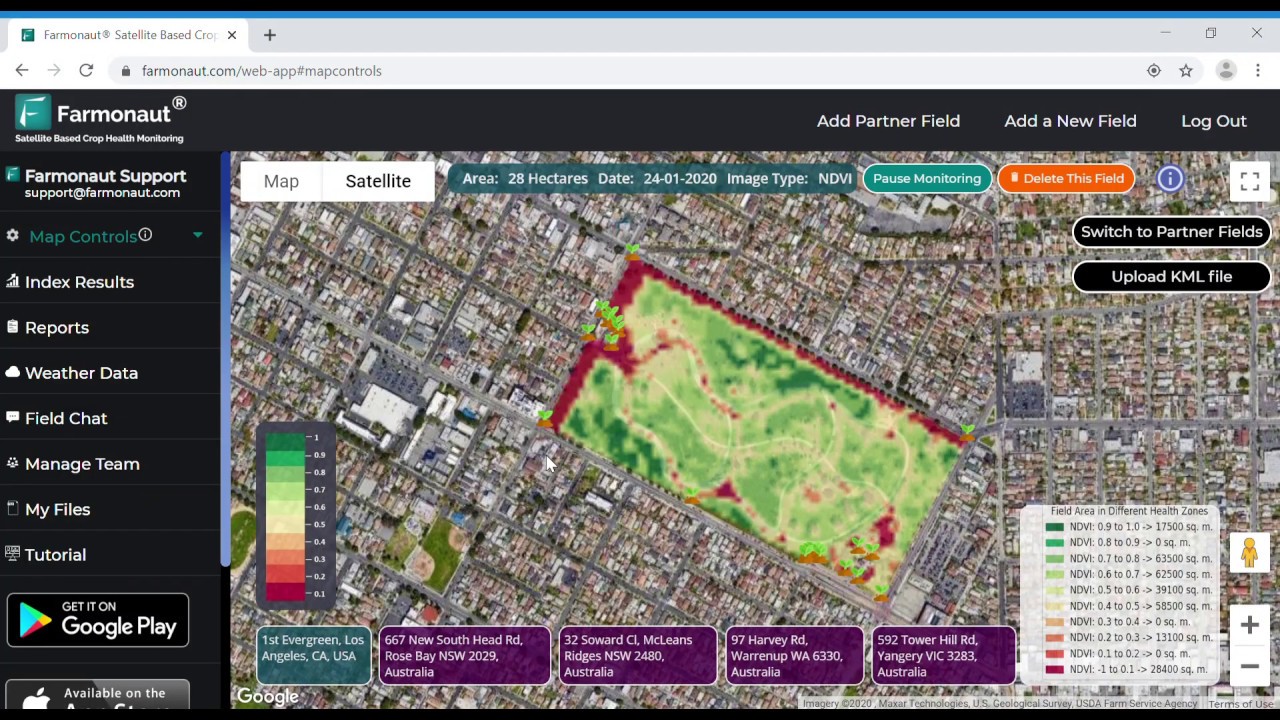
Farmonaut Satellite Agritech Solutions
At Farmonaut, we believe precise, data-driven plant health management is not just the future—it’s current reality for fruit and vegetable growers combating peach leaf curl and related curly leaf diseases. Our satellite-based Platforms provide:
- Real-time crop health monitoring—quickly highlighting stress areas and allowing early, targeted interventions for disease outbreaks or environmental shocks
- AI-based Advisory System (Jeevn AI)—analyzing satellite, weather, and ground data for tailored disease and pest management advice
- Blockchain Traceability—ensuring transparent harvest-to-market tracking for disease-free crops (critical for global peach and tomato trade)
- Resource & Fleet Management—improving logistics for large, dispersed farms needing timely vector control or fungicide spray applications
Learn about Farmonaut’s API for agritech partners and how satellite analytics can be integrated into your crop or forestry management software.
Check Farmonaut API Developer Docs for integration details and use cases in disease and risk monitoring.

Our mission is to democratize advanced agritech for all users—whether you manage a single orchard or oversee multi-hectare intensive operations. With Farmonaut’s app and APIs, detecting threats like peach leaf curl, squash leaf curl virus, and tomato curly leaf disease is more accessible, rapid, and actionable than ever—directly supporting sustainable, resilient, and profitable crop management.
FAQs: Peach & Curly Leaf Disease Treatment in 2026
- What causes peach leaf curl and how can it be prevented?
- Peach leaf curl is caused by the fungus Taphrina deformans. Prevention focuses on dormant season fungicide applications (copper, chlorothalonil), planting resistant cultivars, and maintaining orchard hygiene through pruning and debris removal.
- How do I recognize squash leaf curl virus symptoms?
- Look for upward curling, puckering or yellowing of leaves, stunted plants, and poor fruit set—particularly after periods of intense whitefly activity.
- Are resistant cultivars effective against curly leaf diseases?
- Yes. Thanks to advances in genetic research and breeding, many new peach, squash, and tomato cultivars released since 2025 demonstrate substantial resistance, reducing both incidence and severity of those diseases.
- What is the best practice for tomato curly leaf management?
- Integrated approach: start with resistant cultivars, rigorous vector monitoring (whiteflies), timely planting, digital scouting, and strong field sanitation. Use precision timing (guided by weather and vector pressure) for pesticides only when required.
- Can technology help minimize chemical use for these diseases?
- Absolutely—satellite-driven risk maps, predictive analytics, and sensor-linked sprayers all help optimize intervention, often reducing reliance on broad-spectrum sprays and supporting both yields and environmental stewardship.
- How does Farmonaut support leaf curl disease management?
- Farmonaut delivers real-time monitoring, AI-based disease risk advisory, and blockchain traceability—empowering growers to respond early, optimize interventions, and ensure only healthy, compliant fruit and vegetables reach market.
Conclusion:
Towards Sustainable Yields and Plant Health in 2026
As we move into 2026 and beyond, peach leaf curl, squash leaf curl virus, and curly leaf disease in tomatoes remain persistent threats that demand an integrated, technology-first approach. Mixing resistant cultivars, precision fungicide and vector control, and advanced agritech tools ensures both high-quality, abundant yields and minimized environmental impact.
With the accessibility of satellite-based digital platforms and decision support systems, all growers—from peach orchards to intensive tomato or squash producers—can sustainably overcome disease challenges and secure their economic and environmental future.
At Farmonaut, we are dedicated to making these tools accessible, actionable, and scalable for all growers, corporate clients, and stakeholders across agriculture, forestry, and allied industries.
Together, we can innovate, monitor, and protect the crops that feed our communities and economies—ensuring every leaf, fruit, and tree thrives, sustainably and profitably.

 Adinet
 Save Your Soils
 YelloSkye
 GalaxEye Space
 Grandstream Algérie
 XOS Realty
 Geospatial Lab Africa
 Agro La Gándara
 HIPSAC
 ZOL Zimbabwe
 Juligerm
 AdBio
AdBio MISE Maroc
 NWNS
NWNS Red August Group
 Farm Inc
 WeMe Global
 Agrotoken
 Blue BearX
 Insignito
