

Table of Contents
- Introduction: Phosphogypsum Use in Agriculture
- What is Phosphogypsum? Origins, Production, and Composition
- How Does Phosphogypsum Function in the Soil?
- 7 Powerful Soil Benefits of Phosphogypsum
- Comparative Benefits Table: Phosphogypsum vs. Conventional Soil Amendments
- Application, Management & Regulatory Considerations
- Environmental & Sustainability Perspectives
- How Farmonaut Empowers Sustainable Soil & Crop Management
- FAQs About Phosphogypsum in Agriculture
- Wrapping Up: Building a Sustainable Cropping System



Phosphogypsum Use in Agriculture: 7 Powerful Soil Benefits
In the modern era of sustainable soil management, phosphogypsum use in agriculture emerges as a game-changing practice for improving soil structure, replenishing essential nutrients, and boosting crop yields. As a byproduct of phosphoric acid used in agriculture (central to phosphate fertilizer production), phosphogypsum has long been both a practical solution and a topic of environmental debate. However, with rigorous research, stricter regulatory guidelines, and precision farming tools, phosphogypsum is fast being recognized for its remarkable potential in sustainable agriculture.
This comprehensive guide takes an in-depth look at how phosphogypsum, as an innovative soil amendment, can positively reshape soil quality, nutrient supply, and environmental outcomes—aligning with the urgent need for resource-efficient, sustainable cropping systems.

What is Phosphogypsum? Origins, Production, and Composition
Understanding phosphogypsum begins with its origin: it is a byproduct generated during the production of phosphoric acid used in agriculture—a core component in the manufacture of fertilizers. The primary phosphogypsum component is calcium sulfate dihydrate (CaSO4•2H2O), a compound closely related to naturally occurring gypsum.
For every ton of phosphoric acid produced, several tons of phosphogypsum result. This material has a distinctive composition:
- ✔ Calcium sulfate (the main active constituent)
- 📊 Sulfur (as sulfate), vital for protein synthesis and plant growth
- ✔ Residual phosphorus, adding to the pool of phosphorus in agriculture
- ⚠ Minor impurities: trace metals, fluoride, and, rarely, radionuclides—underlining the need for quality assurance
Its chemical makeup—especially the balance of calcium, sulfur, and residual phosphate—makes it highly relevant among alternative soil amendments (like lime and natural gypsum) for farmers, agronomists, and policy makers designing resilient cropping systems.

How Does Phosphogypsum Function in the Soil?
Phosphogypsum interacts complexly with the soil matrix:
- ✔ When applied as a soil amendment, its soluble calcium displaces sodium ions (cation exchange), aiding the remediation of sodic soils with high sodium content.
- 📊 The introduction of calcium encourages the flocculation of clay particles, leading to improved porosity, drainage, and root penetration.
- ✔ Sulfate acts as a slow-release sulfur source, supporting protein synthesis and vital plant metabolic activities.
- ⚠ Its residual phosphorus fraction, though less plant-available than traditional superphosphate fertilizers, nevertheless contributes to the overall P pool.
- ✔ Its relatively low solubility ensures a measured, sustainable release of nutrients without rapid, destabilizing shifts in soil salinity.
📋 Visual List: Key Effects of Phosphogypsum on Soil
- 🌱 Alleviates sodicity: Reduces sodium toxicity, especially in arid soils.
- 🧬 Boosts calcium & sulfur supply: Critical for crop quality and disease resistance.
- 🔄 Improves structure: Promotes clay flocculation, rooting, and nutrient uptake.
- 💧 Enhances water movement: Reduces crusting and accelerates infiltration.
- 🎯 Complements P and S fertilization: Fits into balanced nutrient management.

7 Powerful Soil Benefits of Phosphogypsum Use in Agriculture
1. Enhanced Soil Structure & Porosity
One of the most powerful benefits of phosphogypsum use in agriculture is its capacity to improve soil structure. By providing a source of soluble calcium, phosphogypsum causes flocculation of clay particles within compacted, poorly-drained, or sodic soils (common in arid regions or irrigated land).
- ✔ Improved porosity means better aeration, reduced risk of surface crusting, and increased root growth depth.
- 📊 Root penetration is enhanced, supporting resilient crops even in frigid or hardpan soils.
This restructuring effect is particularly valued in citrus groves, vineyards, and row crops where root expansion and water infiltration are keys to yield.
2. Calcium Supply for Structural Strength & Cation Exchange
The primary benefit from agriculture gypsum (including phosphogypsum) is its role in delivering bioavailable calcium to the soil. Calcium:
- 📊 Displaces excess sodium on the soil’s cation exchange complex, alleviating sodicity
- ✔ Improves structural stability, making clay soils friable and easy to cultivate
- ✔ Is essential for cell wall strength, optimizing crop quality and shelf-life
By maintaining an ideal calcium-to-magnesium ratio, roots can better uptake other nutrients as well, supporting balanced crop growth.
3. Sulfur Supplementation for Vital Crop Functions
Modern agriculture often struggles with sulfur deficiency, due to reduced atmospheric deposition. Thankfully, phosphogypsum provides a steady input of sulfate-sulfur:
- ✔ Sulfur is required for protein synthesis, chlorophyll formation, and robust plant metabolism.
- 📊 Crops with high sulfur requirements—such as cereals, oilseeds, and many vegetables—particularly benefit from a slow-release sulfur source.
By dovetailing with phosphorus and nitrogen fertilization, the sulfur in phosphogypsum boosts crop quality, flavor, and disease resistance.
4. Supplemental Phosphorus for Long-Term P Pools
Unlike standard P fertilizers (superphosphate, ammonium phosphate), the residual phosphorus in phosphogypsum is not immediately plant-available. However, with appropriate management, it does:
- ✔ Gradually add to the total soil phosphorus pool as minerals weather or microbial processes unlock bound P.
- 📊 Complement P management, especially when both calcium and sulfur are required in the fertilization program.
For farmers committed to maximizing resource efficiency and minimizing waste, integrating phosphogypsum is a practical supplement to boost phosphorus in agriculture.
5. Amelioration of Salinity & Sodicity in Problematic Soils
Saline and sodic soils devastate agricultural productivity by impairing water movement and increasing toxic sodium levels. Here, the use of phosphogypsum offers several agronomic benefits:
- ✔ Gypsum’s calcium neutralizes exchangeable sodium, minimizes soil particle dispersion, and prevents structural collapse.
- 🛑 Improves saline soil drainage, accelerates leaching of excess salts, and restores root zone quality.
Successful management of salinity and sodicity is critical in regions with intensive irrigation, low rainfall, or poor soil drainage.

6. Minimizing Rapid Salinity Shifts — A Sustainable Advantage
While quick-acting lime sources can sometimes trigger rapid, destabilizing shifts in soil salinity, phosphogypsum’s relatively low solubility (compared to lime) provides:
- ✔ Sustained, incremental nutrient release that reduces risk of osmotic shock and leaching losses
- 🛡️ Greater management control for farmers dealing with sensitive crops or variable soils
The practice of slow-release nutrient amendment supports both agronomic and environmental sustainability.

7. Circular Economy: Transforming a Byproduct into a Sustainable Resource
The phosphogypsum use in agriculture story is not only about plant growth and nutrient delivery—it’s about converting an industrial byproduct, once viewed as a disposal challenge, into a sustainable pillar of modern soil management.
- ###♻️ Aligns with global resource efficiency: Reduces landfill need and repurposes viable minerals for food production
- ✔ Supports circularity in agriculture: Every ton reused in the field is a ton diverted from waste, bringing agriculture full-circle into the age of sustainable intensification

🌎 Visual List: Sustainability Advantages of Phosphogypsum Use
- ♻️ Reduces industrial landfill — turns waste into wealth
- 🌿 Minimizes mining of virgin gypsum
- 🤝 Aligns fertilizer and soil amendment inputs
- 🌎 Supports climate-smart agriculture
- 📝 Fits circular economy models in agri-policy

Comparative Benefits Table: Phosphogypsum vs. Conventional Soil Amendments
The following table provides a clear, side-by-side assessment to help farmers and agronomists synthesize the value of phosphogypsum use in agriculture compared with conventional soil amendments:
| Soil Amendment | Calcium Content (mg/kg, estimated) |
Sulfur Content (mg/kg, estimated) |
Phosphorus Content (mg/kg, estimated) |
Impact on Soil pH | Improvement in Crop Yield (%) | Environmental Sustainability Score (1-least, 5-most) |
|---|---|---|---|---|---|---|
| Phosphogypsum | 200,000 – 230,000 | 170,000 – 200,000 | 400 – 800 (residual P) | Neutral (does not raise or lower pH significantly) | 10 – 20 | 5 |
| Agricultural Gypsum (Natural) | 180,000 – 210,000 | 150,000 – 180,000 | ~0 | Neutral | 5 – 15 | 4 |
| Lime (Calcium Carbonate) | 260,000 – 320,000 | ~0 | ~0 | Raises pH (alkaline effect) | 5 – 10 | 3 |
| Superphosphate Fertilizer | ~0 | Varies (low) | 60,000 – 90,000 | Slightly acidic | 10 – 20 | 2 |
Note: These values are estimated and may vary by source material.
Environmental Sustainability Score: Based on lifecycle, waste reuse, and toxicity considerations.
Application, Management & Regulatory Considerations for Phosphogypsum
Proper management and regulatory adherence are foundational for realizing full phosphogypsum benefits without environmental or practical setbacks.
Key Application Principles
- ✔ Soil testing — the bedrock of safe and productive application; use soil analysis to tailor rates for calcium, sulfur, sodium, and phosphorus levels.
- 📊 Application rates — typically vary by crop type (row crops vs. groves), soil texture, and targeted remediation (sodic/compacted soils).
- 📦 Incorporate into topsoil before planting or during a dedicated soil conditioner phase for maximum root access.
- 👏 Monitor crop and soil response over time, using remote sensing/NDVI for field-level tracking. (Farmonaut’s large scale farm management tools provide real-time satellite-based insights for this task.)
Regulatory Guidance & Quality Control
- ✔ Only use phosphogypsum that meets national (e.g. US EPA, EU, Indian FCO) and regional standards—especially regarding impurities like fluorides, heavy metals, and radionuclides.
- ⚠ Never apply untested byproduct material; rigorous source quality is critical.
- 📊 Log application rates and monitor runoff where required by law (especially in areas near water bodies or sensitive ecosystems).
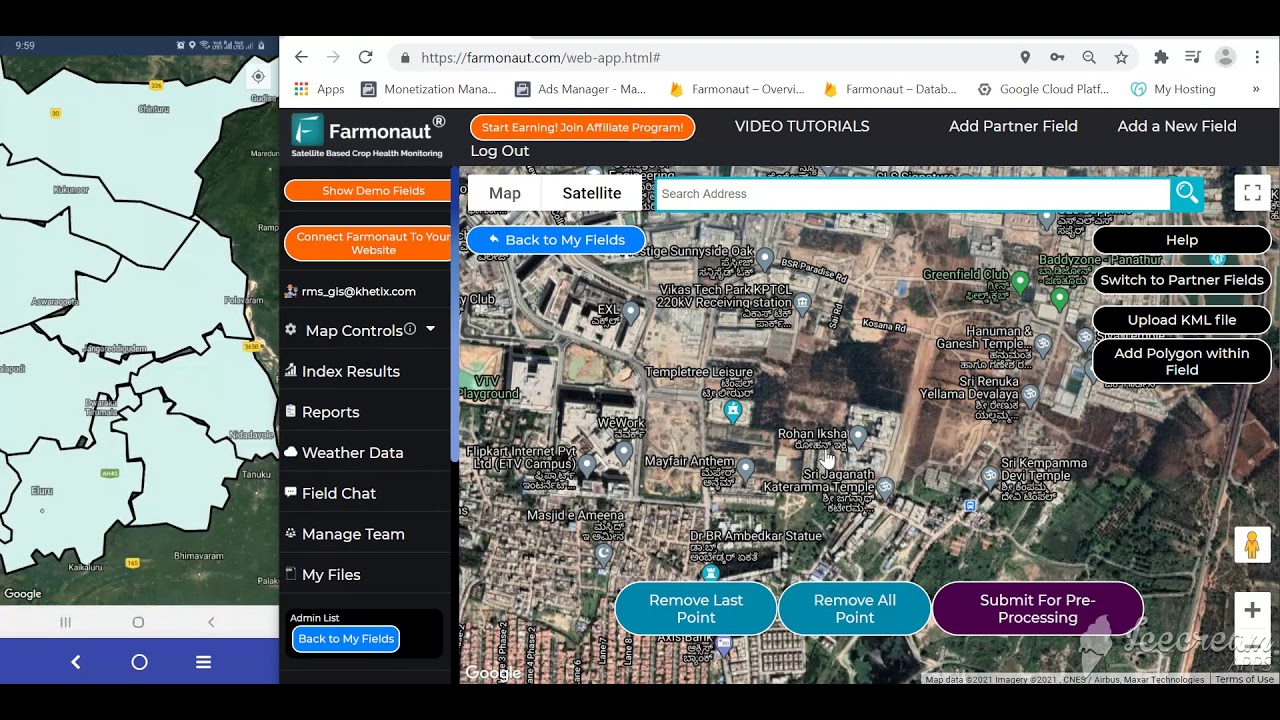
Environmental & Sustainability Perspectives on Phosphogypsum Use
The discussion around phosphogypsum in agriculture increasingly focuses on environmental impacts, especially as global agriculture seeks sustainable, resource-efficient solutions:
- 🌱 Phosphogypsum recycles a major industrial byproduct, supporting circular economy goals.
- 🌱 Reduces the industrial footprint of fertilizer production by finding a high-value, low-risk end-use.
- 🌱 For every ton used, equivalent natural resources (such as mined gypsum) are spared.
However, its use must be matched by strict sourcing, quality control, and environmental monitoring:
- ⚠ Possible contaminants require batch testing—trace metals and radionuclides are the main concern, but modern processing ensures these are usually well within safety limits for regulated sources.
- ⚠ Local environmental regulations may restrict or guide rates/applications—always consult local policy makers or agronomic extension services.
With these protocols, phosphogypsum can be a ‘win-win’ for farmers and the environment, transforming significant waste into a catalyst for crop quality and soil resilience.
To help agricultural enterprises measure and improve their environmental footprint, Farmonaut’s carbon footprinting service leverages satellite monitoring to provide field-scale carbon assessments. This supports sustainable management, carbon credits, and reporting for regulatory compliance.
How Farmonaut Empowers Sustainable Soil & Crop Management
As the need for data-driven sustainable agriculture and nutrient management grows, our team at Farmonaut provides advanced tools enabling farmers and agri-businesses worldwide to:
- ✔ Monitor crop and soil health via satellite imagery, including NDVI, moisture, and nutrient markers (see our large scale farm management tools for enterprises managing multi-field portfolios).
- ✔ Receive AI-based agronomic recommendations aligned with site-specific requirements—our Jeevn AI Advisory System analyzes satellite data for tailored fertilization, irrigation, and crop protection advice.
- 🌏 Track carbon intensity from land use practices for compliance and sustainability reporting (carbon footprinting service).
- 🔐 Leverage blockchain-powered traceability for food origin and supply chain transparency (see product traceability for agri & mining sectors).
- 🎯 Integrate with your agri-business workflow through our comprehensive API (API developer docs here), bringing satellite-powered insight to any app or farm management system.
Frequently Asked Questions (FAQ) on Phosphogypsum in Agriculture
1. What is phosphogypsum and where does it originate?
Phosphogypsum is a byproduct produced during the production of phosphoric acid, primarily for use in fertilizer manufacture. It mainly consists of calcium sulfate (gypsum), with residual sulfur and phosphorus compounds.
2. What crops benefit most from phosphogypsum amendments?
Crops sensitive to soil compaction, low calcium, or sulfur deficiency—such as citrus, grapes, cereals, oilseeds, and vegetables—often see notable yield and quality improvement with phosphogypsum application.
3. Is phosphogypsum suitable for all soils?
Not all soils require phosphogypsum. It’s most beneficial on sodic, saline, compacted, or sulfur-deficient soils. Always conduct comprehensive soil tests before application.
4. Could contaminants in phosphogypsum pose hazards?
The presence of trace metals or radionuclides is possible, but regulated phosphogypsum is tested for safety. Only purchase and apply material that adheres to regulatory standards.
5. Does phosphogypsum replace other fertilizers?
No. Think of phosphogypsum as a valuable supplement rather than a replacement for primary fertilizer inputs, especially for phosphorus. Use in conjunction with traditional nutrients, guided by soil test results.
6. How do I monitor field results after application?
Regularly inspect crop response, conduct follow-up soil analysis, and consider using satellite monitoring solutions (such as from Farmonaut) for objective field-wide tracking of vegetative health, moisture, and nutrient levels.
Wrapping Up: Building a Sustainable Cropping System with Phosphogypsum
Phosphogypsum use in agriculture represents a future-ready, sustainable solution for soil management that directly addresses the challenges of degraded soils, imbalanced nutrients, and industrial byproduct waste. By providing a slow-release source of calcium, sulfur, and residual phosphorus—coupled with a strong environmental rationale—phosphogypsum offers significant yields, quality, and sustainability benefits for farms worldwide.
- ✔ Strengthens soil structure for better crop rooting and yields
- ✔ Delivers essential calcium and sulfur, supporting protein formation and plant health
- ✔ Ameliorates sodicity and salinity, especially in arid and irrigated regions
- ✔ Promotes circular economy and resource efficiency
- ✔ Aligns with a data-driven, sustainable, and environmentally responsible agriculture model
Farmers and agronomists are encouraged to incorporate phosphogypsum thoughtfully—always guided by soil tests and best practices, and to leverage advanced technologies like those from Farmonaut for monitoring and decision support.
For field-scale advisory, remote monitoring, and resource management capabilities, explore our Crop Plantation & Forest Advisory solutions—empowering precision and sustainability in every hectare.
By marrying science, technology, and stewardship, the prospects of a greener, more productive, and sustainable farming future are well within reach!
Discussion
Questions, corrections or field experience? Share them below. First-time comments are reviewed before they appear, and your email is never published.
No comments yet. Be the first to add a question or your experience.

 IRE Soil
 Blickwinkel
 Agricultural Credit Policy Council
 BayWa
BayWa MCSOD
MCSOD Marei Nursery
 eKGIS
eKGIS Mostas Tech
 Native Seeds
 Andex
Andex FCF India
 Unifrutti Gulf
 Deluxe Conseil
 TVS Electronics
 WICO
WICO Chimera Innovation
 Licence holder · Niger · Gold
 Licence holder · Nigeria · Gold + lithium










