

Topshot, Hotshot, Asulox, Infinity, Finalsan: 5 Herbicides Shaping Sustainable Weed Control in 2025
Understanding Herbicides and Their Types
Herbicides are indispensable tools in modern agriculture and forestry, playing a critical role in weed management to ensure healthy crop and tree growth. As we advance into 2025 and beyond, the development and application of powerful herbicides like Topshot herbicide, Hotshot herbicide, Asulox herbicide, Infinity herbicide, and Finalsan herbicide continue to evolve. These solutions offer farmers, foresters, and land managers more efficient, environmentally conscious options for controlling unwanted vegetation and supporting sustainable food and resource production.
To make informed decisions in agriculture, forestry, mining, and infrastructure, it’s essential to understand the 5 types of herbicides recognized based on their primary mode of action and application. Below, we break down these fundamental categories:
- Selective Herbicides: Target specific weed species without harming the main crop. Common in row crops and cereals for precision weed control.
- Non-Selective Herbicides: Kill all vegetation they contact, suitable for land clearing and preparing seedbeds in agriculture or forestry.
- Pre-Emergence Herbicides: Applied before weed seeds germinate, creating a chemical barrier that prevents growth.
- Post-Emergence Herbicides: Applied after weeds have emerged, controlling active, visible vegetation.
- Systemic Herbicides: Absorbed by plants and translocated throughout their tissues, effectively killing the entire plant.
These types and their application play a pivotal role in weed management practices, reducing competition for water, nutrients, and sunlight, and thereby improving yields for crops and forestry plantations.

What is in each product
The five brand names below are sold by different companies, in different countries, for very different jobs. Check the label that applies where you farm before buying.
| Product | Maker / market | Active ingredient | Main use on the label |
|---|---|---|---|
| TopShot (Martin’s) | Control Solutions, USA | Metsulfuron-methyl 25% (SDS) | Broadleaf weeds in home lawns (EPA label 53883-345) |
| Hotshot | Corteva, Australia | Aminopyralid 10 g/L + fluroxypyr 140 g/L | Climbing buckwheat and broadleaf weeds in winter cereals; lantana and pasture weeds (Hotshot label) |
| Asulox | UPL | Asulam | Bracken control; no longer authorised in the UK or EU (NFU) |
| Infinity | Bayer, Canada | Pyrasulfotole 37.5 g/L + bromoxynil 210 g/L | Post-emergent broadleaf weeds in wheat, barley and triticale (Bayer Canada) |
| Finalsan | Neudorff, North America | Ammoniated soap of fatty acids | Non-selective contact burndown; OMRI listed (Neudorff) |
Two of these names are also used for unrelated products. “Topshot 60 OD” sold in Kenya is a penoxsulam and cyhalofop rice herbicide. Match the product to the label for your country.
Comparative Herbicide Features Table: 5 Types of Herbicides for Sustainable Agriculture (2025 & Beyond)
1. Topshot Herbicide: Selective Weed Control for Cereal Crops in 2025
Martin’s TopShot is a selective, post-emergence lawn herbicide containing 25% metsulfuron-methyl, registered for residential lawns in the US (EPA label 53883-345). It is not a cereal-crop product.
Key Features of Topshot Herbicide
- ✔ Selective action: Targets only specific broadleaf weed species in cereals.
- 🚜 Post-emergence application: Applied when weeds are already visible, ensuring precise removal.
- 🌱 Enhanced formulation for 2025: Minimizes soil residues, aligning with new environmentally conscious farming practices.
- 📈 Supports yield optimization: Shields crops from nutrient and water competition, improving overall growth and economic returns.
- ♻ Eco-friendly integration: Compatible with precision agriculture and sustainable management systems.

Practical Application Example
TopShot’s label lists weeds such as dollarweed, dandelion, white clover, shepherdspurse and wild garlic in lawns (EPA label). Rotate it with herbicides from other groups to slow resistance.
- ✔️ Minimal impact on beneficial soil microbes and insects
- ⚠️ Effective against herbicide-resistant weed species
- ♻️ Aligns with eco-label and sustainability certification guidelines
- 💧 Reduces water usage by minimizing need for re-sprays
- 👨🌾 Improves harvest efficiency and quality
Using TopShot weed killer on lawns
Martin’s TopShot is registered in the US as a residential lawn product under EPA Reg. No. 53883-345, an alternate brand name of Martin’s Dollarweed Killer (EPA label). It contains 25% metsulfuron-methyl, a sulfonylurea (ALS inhibitor) herbicide.
- Lawns it is labelled for: Kentucky bluegrass, fine fescue, bermudagrass, centipedegrass, zoysiagrass (Meyer and Emerald) and St. Augustinegrass.
- Weeds on the label: dollarweed, dandelion, white clover, henbit, chickweed, wild garlic, wild onion, Virginia buttonweed, oxalis and many more broadleaves, plus bahiagrass, foxtail and ryegrass.
- Rate: one 1.8 mL ampule treats 2,500 sq ft, mixed in a hose-end sprayer or a 1 to 3 gallon pump sprayer.
- Cautions: do not use on vegetable gardens or where roots of desirable trees reach into the treated area, and keep children and pets off until the spray dries.
Because it also kills ryegrass and bahiagrass, it can injure lawns overseeded with ryegrass. Read the current label on the pack before mixing.
2. Hotshot Herbicide: Systemic Solution for Land Clearing & Forestry
Hotshot is a Corteva herbicide sold in Australia containing 10 g/L aminopyralid and 140 g/L fluroxypyr. Its label covers climbing buckwheat and other broadleaf weeds in winter cereals, plus lantana and certain pasture weeds (Hotshot label).
Why Choose Hotshot Herbicide?
- 🌐 Systemic kill: Absorbed and translocated throughout the plant, targeting both above- and below-ground tissues.
- 💪 Long-lasting results: Fewer applications are needed compared to contact-only options.
- 🌲 Forestry and land restoration: Supports tree and reforestation programs by clearing invasive species.
- 🏗️ Infrastructure readiness: Widely employed to maintain clear operational zones for mining and major construction.
- 🌱 Minimal impact on future crops: Degrades in soil under recommended conditions, readying land for subsequent planting with minimal delay.

- 💡 Benefit: Streamlines land conversion for agriculture and forestry by completely eliminating old root systems.
- 🧑🔬 Data Insight: Herbicide resistance management is integral to Hotshot’s 2025 formulation, helping to slow the emergence of resilient weed species.
- ⚠️ Risk/Limitation: Must avoid drift onto neighboring crops to prevent unintended damage.
- ⚙️ Efficiency: Reduces operational costs by minimizing manual or mechanical clearing.
3. Asulox Herbicide: Specialist for Bracken and Invasive Ferns in Forestry
Asulox (asulam) was the main herbicide for bracken. Its EU approval was withdrawn in 2012 and, after England’s last emergency authorisation in 2023, maker UPL stopped pursuing UK approval, so no authorisation was sought for 2024 (NFU; Scottish Government). Where historically used, it controlled bracken ferns (Pteridium aquilinum) and similar invasive species that threaten young tree plantations and forest biodiversity. Its systemic and selective action ensures that target weeds are removed without harming beneficial ground flora or saplings, promoting healthy growth and sustainable ecosystem regeneration.
- 🌿 Highly effective against bracken and ferns: A proven solution for forest managers to arrest invasions quickly.
- 🌱 Selective impact: Targets ferns while allowing non-target vegetation to prosper, maintaining biodiversity.
- 🌳 Supports early-stage forest development: Reduces competition for water and nutrients for young trees.
- ⏳ Long-lasting results: Its systemic entry ensures repeat infestations are minimized for several growing cycles.
- 🔎 Favored by environmental regulators: Low soil movement and moderate persistence support responsible use.

Forest operations favor Asulox for maintaining biodiversity while ensuring sustainable timber yield. Where Asulox is not available, bracken is managed by cutting, rolling or other approved herbicides.
4. Infinity Herbicide: Advanced Broad-Spectrum Weed Control for Future-Ready Agriculture
With new weed challenges and cropping patterns emerging in 2025 and beyond, Infinity herbicide stands at the forefront of agricultural innovation. It combines Group 27 pyrasulfotole and Group 6 bromoxynil for post-emergent control of broadleaf weeds in wheat, barley and triticale (Bayer Crop Science Canada).
- 🌾 Broad-spectrum coverage: Combines Pyrasulfotole and Bromoxynil for knockdown and residual impact.
- 🎯 Fewer applications needed: Extended control period reduces labor, fuel, and operational costs for farmers.
- 🌱 Pre- and post-emergence flexibility: Enables season-long weed management.
- 📉 Lower environmental footprint: Innovative formulation for rapid environmental degradation, reducing risks to water & soil.
- ⭐ Integrated pest management (IPM) compatible: Complements biological and cultural control methods.

- 📊 Data Insight: Trials show Infinity herbicide reduces the number of necessary weed applications by up to 30% compared to legacy products.
- 🔋 Operational Efficiency: Less fuel consumed and fewer passes across the field directly lower GHG emissions.
5. Finalsan Herbicide: Rapid Vegetation Clearance for Mining & Infrastructure in 2025
Finalsan herbicide , made by Neudorff from ammoniated soap of fatty acids, is a non-selective contact herbicide. Its label covers weeds around vegetables, fruit, trees and shrubs, and on hard surfaces such as patios and walks (Neudorff). Its ability to deliver a quick kill of all vegetation ensures the safe, seamless operation of heavy machinery and the protection of critical assets.
- ⭐ Immediate results: Visible vegetation kill within hours of application for urgent clearance needs.
- ⚡ Safe for non-crop areas: Limited residual soil impact, minimal risk to nearby waterways with proper use.
- 🧰 Essential for mining & construction: Reliable for areas requiring zero-vegetation for productivity and maintenance.
- ♻️ Eco-conscious: Degrades rapidly, supporting compliance with new environmental impact standards.
- 🔒 Infrastructure protection: Prevents root penetration and potential structural damage.

Integrating Herbicides & Sustainability in Modern Agriculture, Forestry, and Mining: 2025 & Beyond
The effective and responsible use of herbicides is closely linked with ongoing efforts towards sustainable agriculture and environmental stewardship. As technology and regulation continue to evolve, land managers across farming, forestry, mining, and infrastructure sectors are adopting new practices that balance productivity with ecological responsibility.
How Herbicides Fit Within Sustainable Practices:
- 🌍 Integrated Weed Management (IWM): Combining selective and systemic herbicides with mechanical weeding, cover cropping, and biological control for resilient weed management.
- 📉 Reduced herbicide volumes: Precision application using site-specific maps (see Farmonaut’s Large Scale Farm Management tools) for targeted control and minimized drift.
- ♻️ Lower environmental footprint: Using advanced formulations like those in Infinity herbicide and Topshot herbicide that degrade rapidly or have limited soil mobility.
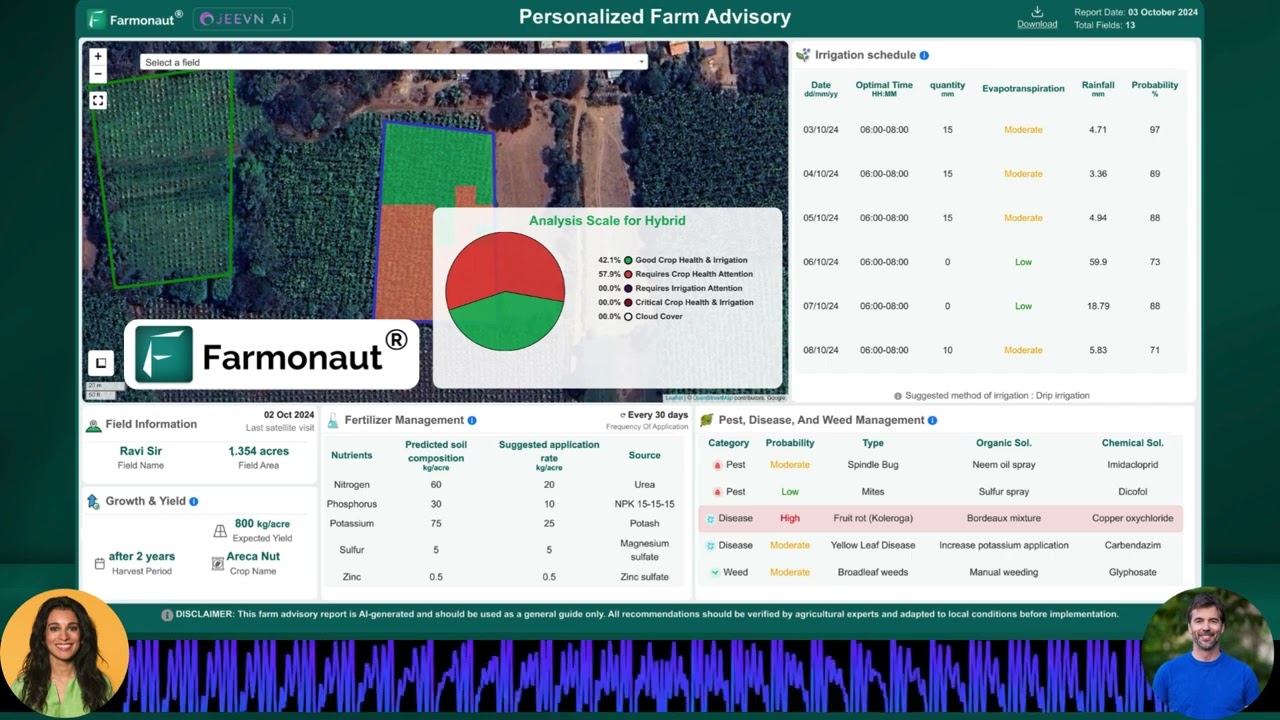
- 🔬 AI-driven Monitoring: Utilizing platforms like Farmonaut’s Jeevn AI (details here) for identifying weed hotspots at early stages, reducing need for widespread applications.
- 🌾 Traceability & compliance: Ensuring transparency in herbicide use and adherence to regional guidelines with blockchain-based product traceability (learn more).
- 🌱 Ecosystem restoration: Responsible herbicide use accelerates recovery of ecosystems affected by invasive weeds.
- 🧬 Herbicide resistance management: Rotating active ingredients and integrating non-chemical tools delays resistance.
- 🔄 Circular agriculture: Improved weed control supports cover cropping and crop rotation cycles.
- 👨🌾 Farmer profitability: Precision herbicide use limits waste and operational expenses.
- 🌡️ Climate adaptation: Maintaining weed-free zones boosts crop and tree resilience against climate extremes.
Farmonaut Satellite & AI: Empowering Herbicide Management for Sustainable Agriculture & Mining
We at Farmonaut enable land managers, farmers, mining operators, and infrastructure planners to optimize weed control through satellite-driven, AI-powered monitoring. Our technologies include:
- 🛰️ Satellite Crop & Vegetation Monitoring: Real-time NDVI and soil health insights for targeted herbicide application.
- 🧠 AI Advisory Systems (Jeevn AI): Precision zone mapping, weather forecasts, and best-practice recommendations for every field or mining site.
- 🔗 Blockchain-based Traceability: Transparent record-keeping of all herbicide applications for compliance and sustainability audits.
- 🚜 Fleet & Resource Management: Helps minimize operational costs and ensures safety by guiding application teams efficiently (see fleet tools).
- ☑️ Environmental Impact Tracking: Track carbon outputs and adoption of eco-friendly herbicides for reporting to regulatory bodies and certification programs (carbon tracking here).
Our subscription-based web and mobile platform (access here) ensures users across sectors—from small farmers to industrial mining operators—can monitor, plan, and manage herbicide use for safe, profitable, and sustainable operations.
Developers can easily integrate Farmonaut’s data-driven insights into their workflow via our robust API (API Docs).



Quick Insights & Pro Tips for Using Herbicides Efficiently in 2025
Herbicide Safety & Application FAQs
What are the 5 types of herbicides and how are they used in 2025?
The 5 types of herbicides are:
1. Selective (specific weeds in crops/forestry), 2. Non-selective (total vegetation kill for land clearing), 3. Pre-emergence (prevents weed seeds germination), 4. Post-emergence (targets actively growing weeds), 5. Systemic (absorbed and distributed throughout plant tissues).
In 2025, these are chosen based on weed pressure, cropping pattern, and sustainability priorities.
How do I ensure environmentally responsible herbicide use?
Always follow the label, use precision application techniques (drones, spot-sprayers), and integrate mechanical/biological controls wherever possible. Track application history and results using digital tools like Farmonaut for best results.
Are any of these herbicides suitable for organic farming?
Most herbicides listed here are intended for conventional operations. Finalsan Herbicide , based on fatty acid soaps, is OMRI listed for certified organic use in the US (Neudorff); check each market’s rules.
How does Farmonaut help manage herbicide resistance?
Our satellite & Jeevn AI-driven platform identifies repeat weed outbreaks and provides rotation recommendations, helping delay resistance and supporting sustainable manual and chemical management integration.
How do I access Farmonaut’s app and farmer advisory services?
Download our Android or iOS app from the buttons above, or access the web version here. Subscription plans are available for individual users, businesses, and government/enterprise clients.
Conclusion & Future Outlook: Herbicides and Sustainable Growth in 2026 and Beyond
As herbicide technology and regulations advance, products like Topshot herbicide, Hotshot herbicide, Asulox herbicide, Infinity herbicide, and Finalsan herbicide demonstrate a remarkable spectrum of selective, systemic, and broad-spectrum options for managing weeds in agriculture, forestry, mining, and infrastructure maintenance. Their varying modes of action, tailored application rates, and compatibility with sustainable practices let growers, foresters, and land managers address region-specific weed challenges.
By integrating these 5 types of herbicides within modern, digitally empowered management systems—increasingly informed by AI, blockchain, and satellite imagery—businesses and governments can achieve high productivity with minimized environmental impact. Responsible use, as part of a wider integrated management approach, propels the entire sector forward into a future where yield, quality, traceability, and ecological health go hand-in-hand.
As we enter 2026 and beyond, precision agriculture, traceability, and environmental monitoring platforms like those provided by Farmonaut will continue to empower users globally, making advanced weed control not only efficient but also environmentally conscious and economically viable.
- ✔️ 5 Key Types of Herbicides Explained
- 🌱 Sustainable Weed Control Strategies
- 🛰️ Satellite & AI Tools for Herbicide Planning
- 📈 Comparative Table for Informed Choices
- 🌏 2026-Ready Sustainable Practices
Take the Next Step to Digital Weed Management
Ready to revolutionize your weed management? Access the Farmonaut app for real-time guidance, subscribe to data-rich advisory services, or consult the Crop Plantation & Forest Advisory to get tailored, sustainable weed control plans for your land.

 Dreamz Tech
 Wild Oak Farm
 SFX
SFX BACF Africa
 Doodlakine
 Exurbia Geospatial
 FieldZero
 Indico Company
 Kubota
 FFBS
FFBS Jontra
 Tucor
Tucor
