

Rideau Arcott Sheep: Canada’s 2026 Farming Success
“Sustainable Rideau Arcott farming reduced feed costs by 30% while enhancing adaptability in diverse Canadian climates.”
Table of Contents
- Summary: The Rideau Arcott Sheep’s Role in Advancing Sustainable Livestock Farming in 2025
- Origins and Development of the Rideau Arcott Sheep Breed
- Key Traits & Characteristics: Rideau Arcott’s Edge
- Sustainability Impact & Environmental Efficiency
- Rideau Arcott Sheep vs. Traditional Breeds: Sustainability & Efficiency
- Sustainable Farming Practices: Modern Management for 2026
- Rideau Arcott Sheep in Modern Agricultural Systems
- Genetic Improvement & Research Driving Future Efficiency
- Impact on Livestock Efficiency, Welfare, and Resilience
- Integrating Farmonaut: Satellite Tech and Smart Livestock
- Economic, Social, and Global Impact of Rideau Arcott Sheep
- Key Insights, Pro Tips & Common Mistakes
- FAQ: Rideau Arcott Sheep & Sustainable Farming
- Conclusion & Takeaways for Canadian Farmers
Summary: The Rideau Arcott Sheep’s Role in Advancing Sustainable Livestock Farming in 2025
The Rideau Arcott sheep breed, a product of intense scientific breeding led in Canada during the 1980s by Agriculture and Agri-Food Canada’s Livestock Research Branch, has emerged as a vital, sustainable, and productive livestock solution – not just for Canadian farmers but also across the globe. By 2025 and into 2026, this sheep breed stands at the intersection of scientific innovation and practical farming needs, representing a new era of efficiency, environmental stewardship, and profitability.
With prolific reproductive traits, high adaptability, rapid growth, and efficient feed conversion, Rideau Arcott sheep streamline meat production while reducing environmental footprints and input costs. Their integration into modern farming systems supports Canada’s agricultural sustainability goals, addressing both global food security and the practical challenges of a changing climate. This blog explores the origins, traits, sustainability impacts, and future outlook for this remarkable breed, and provides Canadian farmers with actionable insights for 2026 and beyond.



Origins and Development of the Rideau Arcott Sheep Breed
The Rideau Arcott sheep is not just another livestock breed; it is the deliberate result of a crossbreeding program initiated in Canada at the federal Animal Research Centre, Ottawa (“ARC-OTT”, giving the breed its distinctive name) as part of the Agriculture and Agri-Food Canada Livestock Research Branch in the 1980s. This program’s aim was to combine superior maternal traits, high reproductive rates, rapid growth, and excellent carcass quality into one breed, catering to the needs of modern, sustainable agriculture.
Genetic lineage was carefully mixed by involving multiple breeds in precisely calculated ratios:
- Finnish Landrace (noted for high prolificacy and fertility)
- Suffolk (muscle development and meat quality)
- East Friesian (milking ability)
- Ile de France (growth rates and body conformation)
- Border Leicester (hybrid vigor and hardiness)
Through intensive, data-driven selection and ongoing research, the resulting Rideau Arcott sheep emerged as a dual-purpose breed adept at both reproduction and meat production.
Key Traits & Characteristics: Rideau Arcott’s Edge
If there’s one reason farmers in Canada and globally are excited about Rideau Arcott sheep in 2026, it’s the breed’s unique combination of traits that maximize productivity, minimize resource use, and support sustainable farming. Here’s what sets this breed apart:
1. Superior Reproductive Performance
- ✔ High fertility rate: Ewes display prolific lambing rates, with twins and triplets the norm, boosting flock output.
- ✔ Early puberty & short generation interval: Rapid onset of reproductive maturity means more lambs per year and enhanced income potential.
- ✔ Multiple births: Average 2-3 lambs per birthing, sometimes even quadruplets.
2. Rapid Growth & Efficient Feed Conversion
- 📊 Fast weight gain: Lambs reach market size sooner, shortening the feed cycle and reducing costs per unit produced.
- 📊 High feed efficiency: Less feed needed for each kilogram of meat, promoting sustainable production.
- 📊 Excellent milking ability: Ewes produce more milk to nurture fast-growing lambs, increasing survival and healthy weights.
3. Hardiness and Climate Adaptability
- ⚡ Hardiness: Robust health minimizes disease issues, lowering veterinary and input costs.
- ⚡ Climate resilience: Thrive in both temperate and colder environments—from prairie winters to wet coastal regions.
- ⚡ Versatility: Adapt to diverse geographic and management systems, broadening where and how they’re raised.
4. Welfare-Friendly Temperament
- 💚 Docility: Calm behavior supports safer, lower-stress handling and welfare-friendly management practices.
- 💚 Maternal abilities: Good mothers ensure higher lamb survival and easier flock oversight.
5. Additional Key Traits
- Lambing rates that far surpass traditional breeds, exceeding 250% per ewe annually.
- Lower input costs due to accelerated growth and high feed conversion ratios (FCR).
- Proven performance across years of commercial farming and research trials.

Sustainability Impact & Environmental Efficiency
As agricultural systems evolve to meet the global demand for sustainable food production, Rideau Arcott sheep stand at the forefront of environmentally conscious livestock farming in 2026. Here’s why:
- Lower feed inputs per meat output: High efficiency means less grain and hay needed per market lamb, reducing resource drain.
- Reduced methane and emissions: Shorter lambing intervals and higher productivity mean less total livestock required to meet output—cutting greenhouse gas impacts per kg of meat.
- Adaptability to rotational grazing and integrated agri-systems: These sheep improve pasture quality, control invasive plants, and build soil fertility through carbon-sequestering grazing methods.
- Better land utilization: Can thrive on less-than-optimal soils, often turning marginal land into highly productive pasture.
- Supports climate-smart strategies: Breed resilience enables farmers to mitigate climate change pressures on agricultural outputs, especially faced with unpredictable Canadian weather.

Rideau Arcott Sheep vs. Traditional Sheep Breeds: Sustainability & Efficiency Comparison Table
| Trait | Rideau Arcott Sheep (Estimated Value) |
Traditional Sheep Breeds (Estimated Value) |
Sustainability Impact / Notes |
|---|---|---|---|
| Fertility Rate | 200–270% (lambs/ewe/year) | 120–150% (lambs/ewe/year) | High reproductive rates mean fewer ewes needed for same lamb output, reducing overall resource demand. |
| Growth Rate | 400–500g/day (lambs) | 200–350g/day | Faster growth means less feed and time to market size, lowering cost per unit produced. |
| Lambing Frequency | 2 lambings/18 months | 1 lambing/year | Accelerated flock turnover boosts productivity. |
| Feed Conversion Ratio (FCR) | 3.0–3.5:1 (kg feed : kg gain) | 4.0–5.0:1 | Lower FCR equals greater efficiency and less environmental impact per lamb. |
| Climate Adaptability | Excellent (all Canadian regions) | Variable, often region-restricted | Improved resilience allows use of marginal land, increases farm viability in growing regions. |
| Average Annual Wool Yield | 2–3 kg/ewe | 2.5–5 kg/ewe | Lower wool yield offset by greater meat production and ease of management. |
| Environmental Footprint per Animal | Lower (due to higher output & efficiency) | Higher (per unit sold) | Rideau Arcott reduces emissions, land use, and inputs needed per kg lamb produced. |
✔ Key Rideau Arcott Sheep Sustainability Benefits:
- 🌱 Exceptional reproductive rates support high-volume meat production in smaller farm footprints
- 🌎 Broad Canadian climate adaptability maximizes utilization of diverse regions
- 💡 Feed efficiency reduces both cost and carbon footprint
- 📈 Shorter generation intervals accelerate return on investment (ROI) for sustainable sheep farming
- 👩🌾 Lower labor and input requirements empower small and mid-size farmers to scale profitably
Sustainable Farming Practices: Modern Livestock Management for 2026
To fully realize the potential of Rideau Arcott sheep, farmers are adopting a range of sustainable management practices throughout Canada and globally:
- Intensive rotational grazing: Manage pastures for soil health, biodiversity, and optimum fodder utilization.
- Smart supplementation: Use efficient, feed-balanced rations to maximize growth and reproductive performance.
- Low-stress handling systems: Improve both animal welfare and productivity with docility-focused flock management.
- Automated record-keeping and performance tracking: Employ technology for data-driven breeding decisions (see Farmonaut’s advanced remote farm management tools).
- Pest and parasite control: Integrated with climate-smart livestock health protocols.
- Sustainable agri-input sourcing: Reduce chemical dependence, emphasize closed-loop pasture systems.

🌿 Visual List: Enhancements to Sustainable Livestock Systems (2025–2026)

Carbon Sequestration: Multi-paddock grazing enhances soil carbon, aligns with Canada’s net-zero climate targets.

Blockchain Traceability: Full farm-to-market traceability solutions for livestock bolster consumer confidence.

Fleet Management: Efficient equipment and vehicle use lowers on-farm emissions (visit Fleet Management Solution).

Rideau Arcott Sheep in Modern Agricultural Systems
By 2026, as Canadian agriculture and livestock sectors pivot toward efficiency, animal welfare, and environmental stewardship, the Rideau Arcott sheep breed is rightfully positioned as the cornerstone of modern farming systems. Key synergies include:
- Integrated crop-livestock systems: Rideau sheep improve pasture, reduce weed pressure naturally, and build organic matter for next season’s cash crops.
- Less intensive resource needs: Smaller infrastructure investments support flock expansion and better ROI for new Canadian farmers.
- Tech-enabled farm management: Modern large-scale farm management apps from companies like Farmonaut make real-time livestock monitoring both accessible and affordable.
- Strong local food systems: More consistent lamb supply, including in Canadian North and remote regions, decreases reliance on imports and boosts self-sufficiency.
In 2026, Rideau Arcott sheep’s genetic and environmental adaptability allows them to outperform traditional breeds in both harsh Canadian winters and intensively managed pastures, ensuring sustainable livestock production even in regions with frequent climate variability.

Genetic Improvement & Research Driving Future Efficiency
Groundbreaking genetic research and technology-driven breeding are at the heart of Rideau Arcott’s ongoing success. Ongoing selection programs utilize advanced genomic insights to refine traits crucial for 2026 farming:
- Disease resistance for reduced antibiotic use and enhanced welfare.
- Wool and carcass quality to increase value across multiple revenue streams.
- Resilience to emerging pathogens and climate change-induced stress.
- Adoption of blockchain traceability (see Farmonaut’s system) for ethical, transparent breeding records.
The continued use of advanced technologies in sheep management and research means the Rideau Arcott sheep breed can rapidly adapt to future challenges in agriculture, food traceability, and animal welfare.
As carbon markets and regenerative agriculture credits mature in Canada and globally, high-efficiency breeds like Rideau Arcott, combined with satellite-driven carbon footprint monitoring, offer sheep producers new revenue streams and premium pricing potential.
Impact on Livestock Efficiency, Animal Welfare, and Resilience
The Rideau Arcott sheep breed delivers measurable impact for farmers and the environment:
- Efficiency: More lambs and meat per ewe, per hectare, per hour invested.
- Resilience: Stable productivity in the face of drought, cold snaps, or new disease threats.
- Animal Welfare: Docility, maternal skill, and easy handling contribute both to ethical standards and to reduced stress-induced productivity losses.
- Food Security: Reliable, predictable outputs for local Canadian and global supply chains.
As Canadian livestock systems strive for higher productivity with less environmental impact, Rideau Arcott sheep offer both a future-proof and practical solution for farmers seeking to meet 2026 demands.
🗂️ Visual List: Why Choose Rideau Arcott Sheep for Modern Canadian Farms?
Higher lambing rates mean faster returns per flock cycle.
Proven resilience from the Rockies to the Maritimes.
High-quality, traceable meat fetches better prices.
Fewer resources needed per kilogram of protein produced.
Continuous improvement for future sustainability.
Failing to match advanced genetics with data-driven pasture management prevents farmers from fully maximizing Rideau Arcott sheep’s sustainability potential in Canada’s evolving agricultural landscape.

Integrating Farmonaut: Satellite Tech and Smart Livestock Systems
For Canadian sheep farmers who want to advance sustainability, optimize efficiency, and harness data-driven management in 2026, satellite technology is a game-changer. We at Farmonaut provide practical, accessible solutions for:
- Real-time land and pasture analysis: Use multispectral imagery and AI-powered farm management platforms to optimize grazing, track feed availability, and maintain pasture health.
- Advanced resource management: Integrate with fleet management and logistics tools to streamline equipment use and lower operational costs.
- Environmental impact monitoring: Utilize carbon footprint tracking tools to document greenhouse gas reductions and qualify for sustainability certifications.
- Blockchain-based traceability: Implement traceability systems for secure, transparent meat supply chains demanded by modern consumers.
- Satellite-powered advisory systems: Our Jeevn AI offers real-time climate and operational advice tailored for livestock and crop operations of all sizes.
Developers can easily integrate satellite-based insights for livestock planning via our API & Developer Documentation.
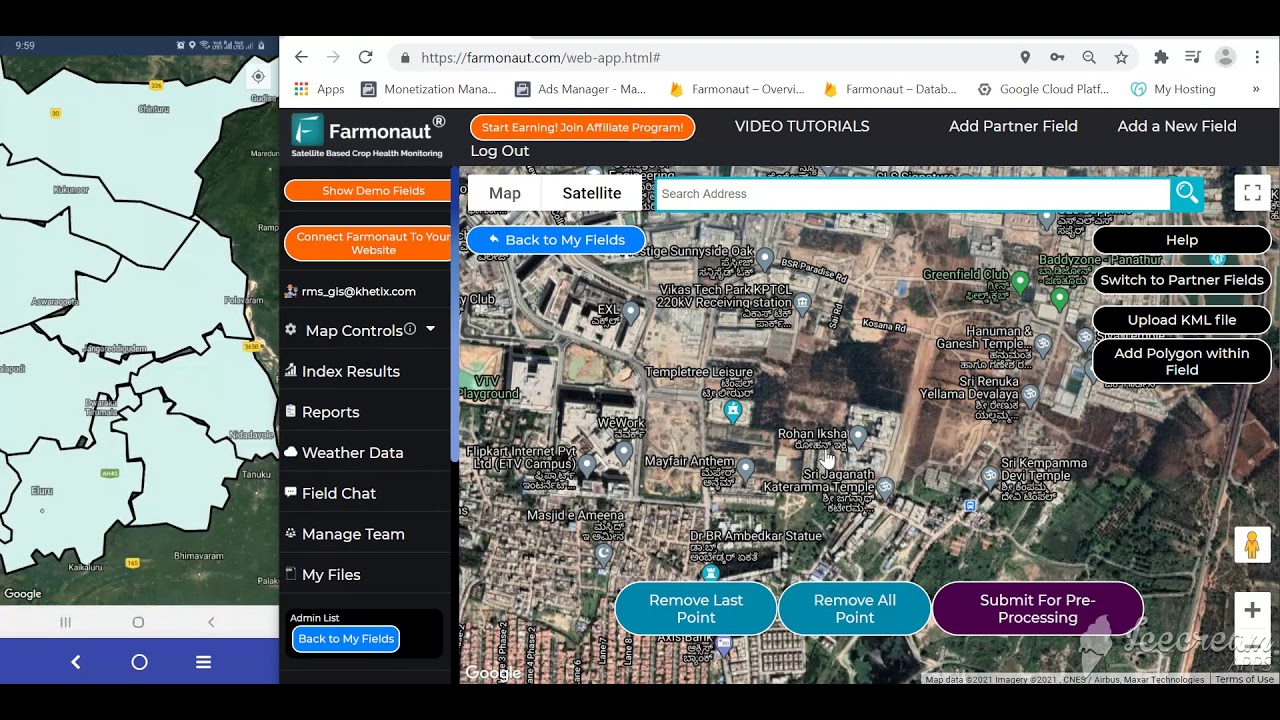
Start integrating satellite monitoring with pasture planning as early as flock establishment. Leveraging Farmonaut’s remote sensing can maximize both forage productivity and Rideau Arcott sheep performance, giving your operation a competitive edge in 2026 and beyond!
Economic, Social, and Global Impact of the Rideau Arcott Sheep
The economic and community impact of Rideau Arcott sheep is profound:
- 🔹 Reliable revenue streams: Prolific, steady output secures farmer income with less operational volatility.
- 🔹 Inclusive food systems: Adaptability supports production in remote and less-developed Canadian regions, helping local food security.
- 🔹 Diversification: Smaller farms can achieve scale and profitability without excessive expansion or costly new infrastructure.
- 🔹 Boosted rural economies: Livestock income sustainability supports rural communities, agri-businesses, and services.
- 🔹 Global relevance: Rideau Arcott genetics and farming practices are being adapted in other countries facing similar climate and food security challenges.
This breed truly represents the intersection of scientific innovation and practical farming needs—making it a centerpiece in advancing Canadian agricultural systems and setting benchmarks for livestock sustainability worldwide.
Attempting to maximize numbers without monitoring pasture regeneration can lead to overgrazing—even with efficient breeds. Use integrated data systems and adjust stocking rates regularly.
⚠ Top Five Common Mistakes in Modern Sheep Farming:
- 🚫 Over-reliance on grain-based feeds at the expense of pasture health
- 🚫 Failing to rotate breeding groups and genetics for ongoing improvement
- 🚫 Neglecting real-time weather or pasture analytics
- 🚫 Ignoring market demand for traceable, premium sheep meat
- 🚫 Underestimating the value of sheep wellbeing in flock success
FAQ: Rideau Arcott Sheep & Sustainable Farming
Q1. Why are Rideau Arcott sheep more efficient than traditional breeds?
Rideau Arcott sheep were developed through crossbreeding multiple superior genetic lines, leading to higher reproductive rates, rapid growth, exceptional feed conversion, and adaptability to various climates. This results in more meat, less feed, and smaller overall environmental footprint per animal.
Q2. How do Rideau Arcott sheep support sustainable agriculture?
By needing fewer resources per kilogram of lamb produced, improving pasture health, and fitting easily into regenerative grazing systems, Rideau Arcott sheep help reduce emissions, promote soil health, and align with sustainable farming goals in 2026 and beyond.
Q3. What technology can I use to maximize Rideau Arcott sheep productivity?
You can integrate satellite imagery, remote sensing, and AI-driven management platforms (like those offered by Farmonaut) for pasture monitoring, resource management, and climate-smart advisory. These tools enhance flock health and profitability, while lowering input costs.
Q4. Are Rideau Arcott sheep suitable for small and large Canadian farms alike?
Absolutely. Their productivity, docility, and efficient resource use make them flexible for both small family farms and larger commercial production systems throughout Canada and globally.
Q5. How can I access traceability or carbon footprinting for my sheep operation?
Visit Farmonaut’s product traceability page for blockchain solutions, or our carbon footprinting solutions to qualify for sustainability certifications and meet market demand for transparency.
Key Insights, Pro Tips & Best Practices for 2026
Conclusion & Takeaways for Canadian Farmers
The Rideau Arcott sheep breed isn’t simply a testament to Canadian innovation—it’s a living model for advancing sustainable livestock farming. Its exceptional traits, adaptability to diverse agricultural systems, welfare-friendly genetics, and high productivity ensure that it will remain a staple of Canadian (and global) sheep farming for years to come.
For farmers aiming to thrive through 2026 and beyond, integrating data-driven technologies (like those offered by Farmonaut), smart breeding selection, and regenerative grazing methods will maximize the breed’s full potential. The result: more resilient agricultural businesses, greater food security, stronger rural economies, and the delivery of premium, sustainable protein to Canadian and global markets.
Whether you manage a small family flock or a large-scale operation, Rideau Arcott sheep offer a proven, efficient—and above all, sustainable—pathway to success in modern livestock agriculture.
Embrace the future—make Rideau Arcott the foundation of your 2026 sheep farming strategy!

 FFBS
FFBS Jontra
 Yaduka Agrotech
 Kalustyan
 Tucor
Tucor Geno
Geno Hayleys Agriculture
 Linx Agritech
 Adinet
 Save Your Soils
 Grandstream Algérie
 XOS Realty
 Geospatial Lab Africa
 Agro La Gándara
 HIPSAC
 ZOL Zimbabwe
 Juligerm
