

Table of Contents
- Introduction: AI in Agriculture—Case Studies Transforming the Future
- Trivia: AI Increases Crop Prediction Accuracy
- The 2025 Landscape: Why AI Stands at the Forefront of AgriTech Innovation
- Case Study Impact Comparison Table: AI Agriculture Case Studies at a Glance
- Enhancing Crop Monitoring & Pest Management: AI in Agriculture Case Studies
- Optimizing Irrigation and Resource Use with AI
- Predictive Analytics for Yield Forecasting: Maximizing Productivity
- Autonomous Systems: How AI is Powering Next-Gen Agricultural Machines
- Critical Challenges and the Road Ahead for Sustainable Agriculture
- Farmonaut’s Role: Accessible, Sustainable Satellite-Driven AI Solutions
- Trivia: AI Precision Irrigation Reduces Water Usage
- Frequently Asked Questions (FAQ) on AI in Agriculture
- Conclusion: AI Agriculture Case Studies—Driving a Resilient Future
AI Agriculture Case Studies: 5 Ways AI Transforms Farming
AI in Agriculture: Transforming Farming with Case Studies Driving a Sustainable Future
In 2025, AI in agriculture stands at the forefront of technological innovation worldwide. Case studies across India, the United States, Brazil, and Japan are demonstrating AI’s pivotal role in enhancing productivity, sustainability, and resilience in agriculture. With AI-driven solutions, farmers and agritech leaders are revolutionizing traditional farming methods by leveraging precise, data-driven insights. These impact every aspect of farming—enabling optimal crop monitoring, resource management, irrigation efficiency, predictive yield analytics, and more. This article dives deep into the significant impacts of AI in agriculture case studies, highlighting how AI adoption is shaping modern farming practices and what that means for the sustainable, food-secure future the world is driving toward.
“AI-driven crop monitoring increases yield prediction accuracy by up to 30% in modern farms.”
The 2025 Landscape: Why AI Stands at the Forefront of AgriTech Innovation
By 2025, the agriculture industry stands transformed by artificial intelligence (AI). AI in agriculture case studies illustrate the role of AI as an essential enabler for farmers to overcome challenges such as climate change, water scarcity, labor constraints, and market volatility.
AI-powered solutions now provide actionable insights through real-time data analysis and predictive analytics. As a result, farming has evolved from relying on intuition and routine to a highly optimized, technology-centric industry focused on precision, efficiency, and sustainability.
- Global population growth and food demand are driving the adoption of advanced AI models and algorithms.
- AI-based sensors, autonomous systems, and machine learning are critical to efficient resource use and improved yields.
- AI solutions enable timely interventions for pest management, soil health analysis, weather forecasts, and water management.
The technology is fast becoming more accessible, and becoming a staple of modern, sustainable agricultural practices worldwide.

Case Study Impact Comparison Table: AI Agriculture Case Studies at a Glance
One of the best ways to grasp the impacts of AI agriculture case studies is to visually compare case studies from around the world. The table below summarizes major transformation areas—from crop monitoring to autonomous systems. Here you’ll see how AI applications are driving increased efficiency, resource savings, and sustainability in farming.
| Case Study Name / Location | AI Application | Problem Addressed | Estimated Improvement | Outcomes |
|---|---|---|---|---|
| CropIn (India) | AI-based Crop Monitoring & Pest Management | Inefficient pest detection, delayed nutrient interventions | Up to 20% yield increase, 30% reduction in pesticide use | Healthier crops, less chemical use, smarter interventions |
| California Central Valley (USA) | AI-driven Precision Irrigation Systems | Water scarcity and wasteful irrigation methods | 30% water savings, no yield loss | Improved resource efficiency, sustainable water use |
| Solinftec (Brazil) | AI Predictive Analytics for Yield Forecasting | Uncertainty in yields, inefficient supply chains | Up to 15% less post-harvest waste, more accurate market planning | Reduced losses, optimized logistics, better profitability |
| Japanese Rice Farms (Japan) | Autonomous Planting Robots | Labor shortages, inefficient manual planting | 40% reduction in labor cost per hectare | Higher efficiency, mechanized planting, rural revitalization |
| Kenya & Uganda (East Africa) | AI, Blockchain & Precision Farming (Coffee) | Low yields, poor traceability, unsustainable practices | 196% increase in farmer profits, traceable supply chain | Sustainable growth, transparency, improved rural incomes |
Enhancing Crop Monitoring & Pest Management: AI in Agriculture Case Studies
One of the most influential applications of artificial intelligence in agriculture is crop monitoring and pest management.
Historically, farmers relied on periodic manual observation or basic machinery for monitoring their farmlands. By 2025, this has changed dramatically. AI-powered drones, satellite imaging, and computer vision algorithms now provide continuous, precise surveillance over vast rural areas, enabling rapid detection of subtle crop health changes, pest infestations, and soil conditions.
A prime case study comes from India’s agritech startup CropIn. CropIn uses AI-driven remote sensing to regularly analyze crop health, identify early signs of nutrient deficiencies or pest attacks, and forecast threats. Their machine learning models leverage a complex array of data—from multispectral satellite imagery to ground-based sensors—detecting problems at a much earlier stage than is possible with the naked eye. This enables timely interventions: reduced pesticide use, less crop waste, and optimized outputs.
- Key impacts: Up to 20% yield increase, 30% cut in pesticide applications, improved crop health, and lower environmental impact due to minimized chemical inputs.
- How it works: Real-time data from drones and satellite sensors is analyzed by AI systems to identify patterns invisible to human monitors, ensuring preventative interventions.
- Supports precision agriculture: Instead of blanket spraying, AI pinpoints the exact locations and times for interventions—cutting waste and cost.
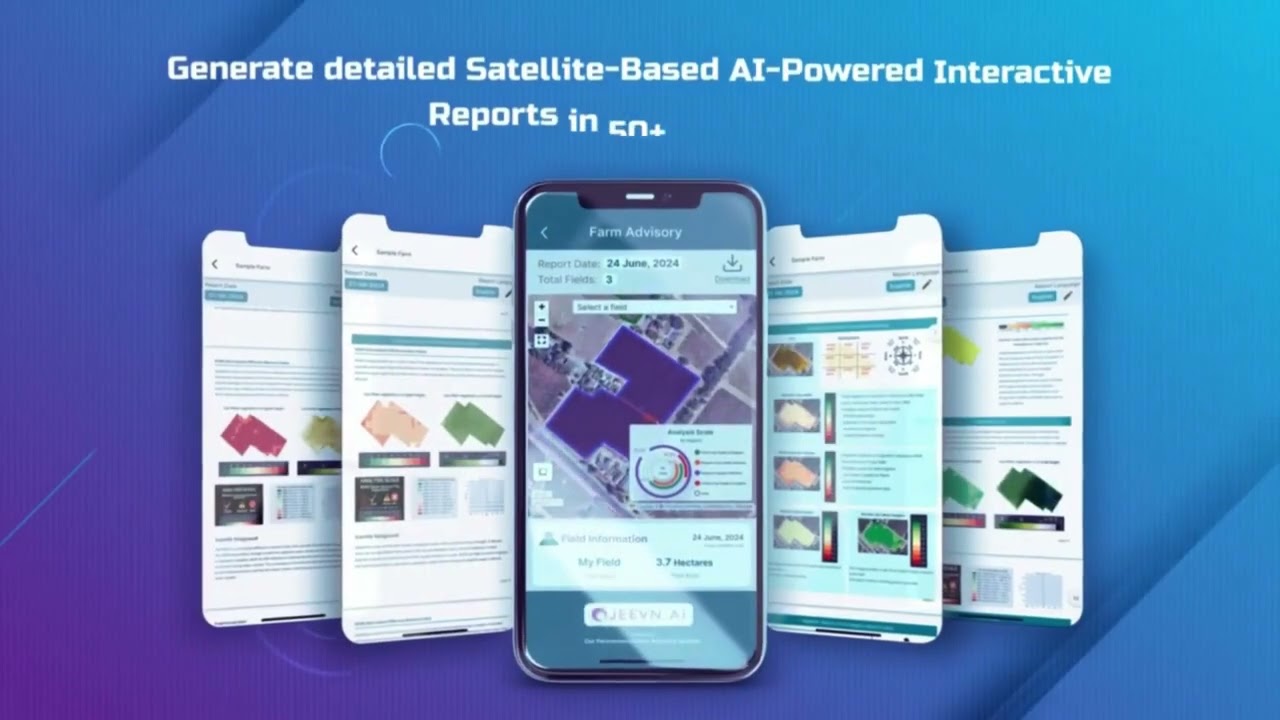
AI-powered crop monitoring solutions also generate actionable maps and reports. Farmers and agricultural consultants can track outbreaks, recovery trends, and long-term soil health, making it easier to unlock greater productivity through truly data-driven management practices.
Did you know? Real-time Satellite-based Environmental Impact Monitoring now enables farms worldwide to track their carbon footprint and resource use, driving compliance and sustainability.

Precision Tools for Detection and Response
- AI-enabled satellites and drones monitor vast, remote or hard-to-access fields, making agricultural monitoring effective at scale.
- Algorithms recognize visual signatures of disease, pest attacks, and water stress from images, delivering insights instantly to digital platforms.
- These systems minimize crop losses and help farmers in regions like rural India and California’s Central Valley rapidly respond to unpredictable conditions.

Today, AI in agriculture case studies prove that computer vision and machine learning models do not just help in rapid detection but also drive sustainable practices by allowing for more precise and minimal interventions. This reduces waste, maximizes input efficiency, and keeps farming both profitable and planet-friendly.



Explore live AI-powered satellite crop monitoring and API integrations with Farmonaut’s accessible platform—tailored to modern, innovative farming needs.
Optimizing Irrigation and Resource Use with AI
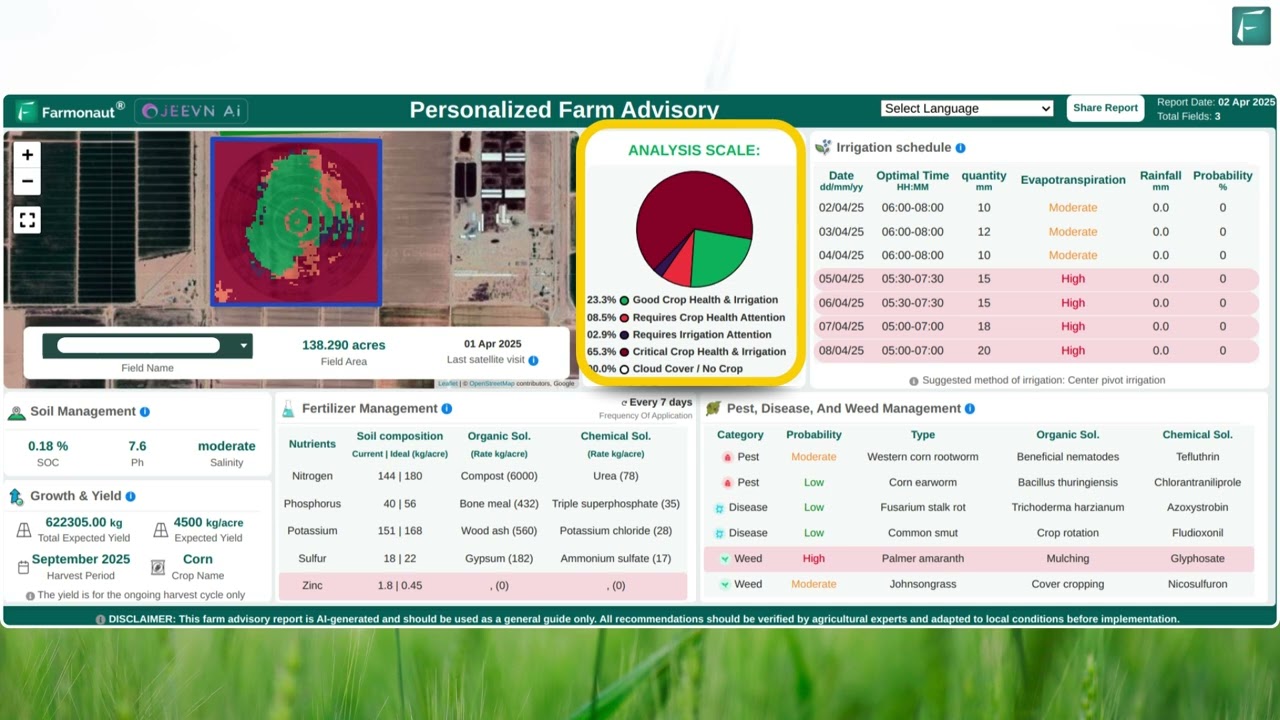
Water scarcity remains a critical challenge for agriculture globally, especially as climate change increases unpredictability in rainfall and water sources. AI-powered precision irrigation systems have emerged as groundbreaking solutions, delivering spectacular improvements in resource efficiency and crop yields.
A notable case is in California’s Central Valley, a region heavily dependent on agriculture but plagued by drought and strict water regulations. Here, AI-driven irrigation technologies integrate data from soil moisture sensors, weather forecasts, and live crop observation to automate water delivery.
- Farmers employ algorithms that calculate the exact amount and timing of water required, minimizing waste while maintaining yield.
- AI-based smart irrigation controllers shut off or adjust water application in response to real-time conditions—such as soil moisture dropping below thresholds, or imminent rainfall detected by weather models.
According to AI agriculture case studies in the region, these systems have resulted in:
- Up to 30% reduction in water use without compromising crop productivity.
- Improved sustainability through optimized resource allocation.
- Scalable models that can be adapted for different crops and field sizes, from rural smallholders to large agribusinesses.
This combination of digital soil and crop data with AI-enabled irrigation is also helping the world’s most water-scarce regions adapt to future food security challenges.

AI-powered irrigation is not limited to efficient water management. In India, AI platforms combine satellite imagery, ground sensor networks, and predictive analytics to make precision irrigation recommendations for rice, wheat, sugarcane, and fruit crops. This technology also enables sustainable management of groundwater and reduces costs for rural farmers.
Explore AI-powered fleet and large scale farm management as efficient water and input allocation is only one aspect of a full resource optimization suite, delivered through advanced satellite, sensor, and AI orchestration.
The Next Generation of Water Management
- AI algorithms process thousands of data points—from evaporation rates, rainfall, and past consumption to crop growth stages—to provide exact, daily water requirements.
- Digital apps/web platforms are making these features accessible to farmers worldwide, democratizing advanced water management without expensive hardware.
Want more information on integrating advanced weather and satellite-powered irrigation solutions?
Get started via our Fleet and Resource Management tools—powerful AI-driven capabilities to coordinate your operations, save water, and maximize output.
“Precision irrigation using AI reduces water usage by nearly 25% in sustainable agriculture case studies.”

For developers and enterprise partners, discover detailed satellite, weather, and crop monitoring API integrations at sat.farmonaut.com/api or browse developer documentation here.
Predictive Analytics for Yield Forecasting: Maximizing Productivity
A critical advantage of modern AI in agriculture case studies is the power of predictive analytics to forecast crop yields with high accuracy. This enables farmers, agribusinesses, and governments to make more informed decisions on planning, logistics, and market engagement.
Take Brazil, the world’s agricultural powerhouse, where companies like Solinftec have adopted AI models to analyze historical yield data, real-time weather forecasts, and market trends. The results:
- Accurate yield forecasts weeks or months in advance, based on probabilistic models that factor in rainfall variability, pest risks, and expected input prices.
- More efficient harvest scheduling and supply chain management, drastically cutting post-harvest waste.
- Optimized market strategies to maximize profitability and minimize surplus-related losses.
- Lower risk for farmers and financial institutions—yield insurance and crop loans are now backed by reliable digital data.
In other words, AI-powered predictive analytics enhance supply chain transparency, reduce uncertainty, and ensure that every harvest is channeled efficiently from farm to fork.
Want to learn about AI-based satellite crop verification for agricultural loans and insurance?
See how advanced digital solutions reduce risks, fraud, and streamline financing for farmers and banks across India, Brazil, and beyond.

Blockchain-Based Traceability for Enhanced Transparency
In regions like East Africa, AI and blockchain are being integrated for traceability solutions in high-value crops such as coffee. With traceable digital footprints across every stage, consumers and importers gain confidence in the authenticity and sustainability of agricultural products.
Explore Blockchain Traceability for agricultural supply chains,
one of the newest frontiers allowing growers, exporters, and retailers to assure authenticity and origin in a transparent, secure manner.
Autonomous Systems: How AI is Powering Next-Gen Agricultural Machines
AI is not only about algorithms and analytics. Autonomous robots, tractors, and harvesters now rank among the most visible symbols of AI’s role in modern agriculture.
A notable case study from Japan highlights widespread adoption of autonomous rice-planting robots. These machines use AI and computer vision to navigate complex field geometry, plant seeds at optimal depth and spacing, and save substantial labor costs. In an era of rapidly aging rural populations—especially in developed and developing Asian countries—this technology ensures stable food production into the future.
- Key benefits: 40% or more cost reduction in planting, increased seedling survival, and enables reallocation of human workers to higher-value tasks.
- In North America: Large-scale farm equipment (such as combines and sprayers) are increasingly AI-powered, running day and night to optimize fuel use, reduce chemical inputs, and generate detailed digital records for compliance and management.
- Across global markets: Smaller, modular AI-driven robots can monitor, weed, and manage specialty crops with precision.
These innovations are reshaping labor distribution, mechanizing tasks that were once labor-intensive, and making farming both attractive and viable for new generations.
For more on AI-driven crop plantation and forestry digital advisory solutions,
see how new-gen technologies advise on optimal sowing, thinning, and harvesting cycles.
Making AI Adoption Accessible
The democratization of AI-powered robots and autonomous machinery, supported by open platforms and affordable digital solutions, is increasing accessibility even for smallholder farmers in rural regions.
- Autonomous machines now supplement, rather than replace, rural labor—filling gaps, enabling scalability, and improving the safety and predictability of agricultural work.
- The long-term value: Higher productivity, more sustainable resource use, and new skills for the future agricultural workforce.
Critical Challenges and the Road Ahead for Sustainable Agriculture
While AI in agriculture case studies reveal enormous possibilities, significant challenges remain:
- Digital literacy: Many rural farmers still lack access to training, digital infrastructure, and reliable connectivity.
- Data privacy and security: Sensitive farm and yield data must be protected from misuse, especially as digital traceability expands.
- Localization: AI algorithms must be tailored to unique soil, weather, and crop conditions across different regions and nations.
- Infrastructure: Stable electrical and digital networks are critical for real-time monitoring and intervention, especially in rural areas.
- Affordability: Ensuring cost-effective solutions for both smallholders and large-scale farms remains a significant hurdle.
- Change management: Adopting new methods always requires trust-building, clear demonstration of value, and ongoing support.
The good news: AI adoption grows more accessible every year, especially as government, business, and tech organizations invest in digital infrastructure, affordable devices, and open-access platforms that put vital tools into every farmer’s hands.
Farmonaut’s Role: Accessible, Sustainable Satellite-Driven AI Solutions
As we’ve journeyed through global AI agriculture case studies, it’s clear that satellite imagery, real-time remote monitoring, and AI-powered advisory are driving forces in transforming modern farming. At Farmonaut, our mission is to make such satellite-driven insights affordable and accessible for everyone—empowering farmers, agribusinesses, governments, and innovators worldwide with the precise, actionable information they need at every decision point.
- Our platform combines multispectral satellite imaging, AI models, and machine learning to assess crop health, soil conditions, and environmental impact for fields of any size.
- With real-time advisory and weather forecasting via our Jeevn AI system, users receive personalized recommendations to optimize inputs, scheduling, and interventions—right from their phone or desktop.
- Accessible through Android, iOS, and web apps, our system delivers advanced digital agriculture tools directly to the field.
- Blockchain traceability, API integrations, and environmental management tools help build trust, improve sustainability, and drive efficiency in supply chains and on-farm operations.
Our value proposition: Technology that democratizes data. Our solutions are designed for scalability, affordability, and sustainable impact, helping users of all sizes—especially in rural and developing agricultural regions—thrive in the evolving digital landscape.
Interested in exploring our subscription plans?
Frequently Asked Questions (FAQ) on AI in Agriculture
1. What is the primary role of AI in agriculture?
AI acts as a transformative enabler in agriculture by providing precision, data-driven insights for crop monitoring, irrigation, pest management, predictive analytics for yields, and resource optimization. This revolutionizes traditional farming methods, drives sustainability, and boosts productivity.
2. How do AI agriculture case studies demonstrate increased sustainability?
Notable AI agriculture case studies showcase dramatic reductions in resource use (such as water and chemical inputs), minimized waste, and more resilient crops. Technologies like smart irrigation and satellite-based monitoring help ensure that interventions are timely and minimal, supporting long-term ecological health.
3. What are the main AI-powered technologies transforming farming?
- Satellite and drone-based crop monitoring with computer vision
- AI-driven precision irrigation and soil management
- Predictive analytics for yield and market forecasting
- Autonomous robots for planting, harvesting, and field scouting
- Blockchain-based traceability for transparent supply chains
4. Are AI-driven tools accessible for small and rural farms?
Yes. The latest AI-driven platforms—including Farmonaut’s web, Android, and iOS solutions—are designed for affordability and ease of use, making advanced agri-technology accessible for everyone, from smallholder farmers to large enterprises.
5. Where can I try out apps or APIs for satellite crop monitoring and AI-powered agriculture?
Download the Farmonaut app on Web, Android, or iOS.
For developers, explore the Farmonaut API and developer documentation.
Conclusion: AI Agriculture Case Studies—Driving a Resilient Future
AI-driven innovations in agriculture are set to redefine the sector’s landscape by 2025 and beyond. Through intelligent crop monitoring, precise resource management, predictive analytics, and autonomous machinery, AI empowers farmers and the agribusiness community to meet the needs of a growing world population in a sustainable, innovative way.
Case studies from India, the United States, Brazil, Japan, and East Africa highlight how AI adoption is enabling smarter, more efficient farming practices. These transformations—spanning reduced water and input use, enhanced yield prediction, and mechanized fieldwork—are the blueprint for agriculture moving forward.
As access to AI-driven agricultural systems continues to become more democratized and digital infrastructure improves, the role of AI will only grow—enabling the next generation of farmers to thrive, even in the face of climatic, environmental, and economic uncertainty.
Get started with accessible, AI-powered satellite monitoring, resource optimization, and digital advisory today:
Begin optimizing your crops, resources, and sustainability reporting—with Farmonaut’s affordable, scalable AI-powered satellite solutions.

 Godrej Agrovet
 Hayleys Agriculture
 Linx Agritech
 Adinet
 Save Your Soils
 GalaxEye Space
 Grandstream Algérie
 XOS Realty
 Geospatial Lab Africa
 Agro La Gándara
 HIPSAC
 ZOL Zimbabwe
 Juligerm
 AdBio
AdBio MISE Maroc
 NWNS
NWNS Red August Group
 Farm Inc
 WeMe Global
 Agrotoken
 Blue BearX
 Insignito
 DnCubed
 Indosistim Teknologi
 Liquify Digital
 CU Foods
 BeyondTech Global
 Rouge VC
 AgroRisk
 Oath Inc
 Esri North East Africa
 MDCV UK
 Etech Consulting Madagascar
 Vestlandsforsking
 WB Dev
 Sama Premium
 Tres Valles
 Blickwinkel
 Agricultural Credit Policy Council
 eKGIS
eKGIS Mostas Tech
 Andex
Andex Deluxe Conseil
 WICO
WICO Chimera Innovation
 SkyHarvest
 Teledarbas
 Exurbia Geospatial
 FieldZero
