

“By 2025, AI-driven plant breeding is projected to accelerate crop variety development by up to 40%.”
Artificial Intelligence in Plant Breeding: Revolutionizing Agriculture in 2025
As the global populations continue to rise and climate change exacerbates the challenges faced by agriculture, the need for innovative solutions in crop improvement has never been more urgent. In 2025, AI in plant breeding is at the forefront of transforming crop variety development for resilient, sustainable agriculture. With artificial intelligence in plant breeding, breeders now unlock previously impossible capabilities, making the process faster, more efficient, and more precise. This revolution is enabling the development of high-yielding, climate-resilient crops that can thrive in a wide variety of environmental conditions.
In this comprehensive guide, we’ll uncover 7 powerful advancements in AI plant breeding set to define resilient and sustainable agriculture in 2025 and beyond. We’ll also explore how solutions like Farmonaut are bolstering this transformation by harnessing artificial intelligence, big data, and satellite analytics.



Introduction: Why AI in Plant Breeding is Urgent in 2025
Traditional plant breeding is a lengthy, often decade-spanning process—from evaluating genetic diversity under varying environmental conditions to painstainkingly selecting plants for desirable traits like drought tolerance, pest resistance, or enhanced nutritional quality. But in an age where climate change is exacerbating challenges such as heatwaves, new pests, and erratic rainfall, this pace is no longer acceptable. Global agriculture, feeding billions of people, requires not just new varieties but better ones—fast.
This is where AI in plant breeding steps in, integrating massive datasets from genomics, phenomics, environmental variables, and field trials. Machine learning algorithms analyze complex genetic markers and trait interactions, uncovering patterns and predicting outcomes that are simply beyond human capability. These predictive models allow breeders to focus efforts on only the most promising genotypes, slashing trial and error and shrinking breeding cycles from years to just seasons.

The Role of AI in Modern Plant Breeding
AI in plant breeding revolutionizes the entire breeding process by:
- Accelerating the discovery of genetic markers and trait combinations with machine learning
- Integrating high-throughput phenotyping—using AI-powered image recognition and sensor platforms
- Predicting performance under future climatic conditions and variable environments
- Identifying gene-trait interactions for disease resistance, pest tolerance, and yield improvement
- Facilitating genomic selection, where genetic information is used to estimate the value of plants without extensively phenotyping every generation
- Reducing trial and error—focusing resources on top candidates
- Enabling precision breeding: matching specific genotypes to environmental constraints
The impact is profound—from rice and maize in Asia, to wheat in Europe, to climate-smart legumes in Africa—thanks to AI’s ability to transform data into actionable breeding decisions.

7 Powerful AI Advancements in Plant Breeding for 2025
Let’s explore the seven most impactful innovations in AI plant breeding shaping agriculture and ensuring food security, sustainability, and adaptability for a changing world in 2025.
1. AI-Powered Genomic Selection
Genomic selection stands out as one of the most transformative techniques in artificial intelligence in plant breeding today. By integrating AI-driven analytics, breeders can:
- Analyze massive genomic datasets to associate genetic markers with desirable traits (e.g., drought, disease resistance, or protein content).
- Predict breeding values of potential parent lines without extensively phenotyping every plant generation.
- Uncover complex trait interactions and gene networks that traditional statistics might miss.
AI models—typically based on machine learning algorithms—process multidimensional genomic data and phenotype information to estimate the likelihood that a particular genotype will express target traits in the field, even under unpredictable environmental conditions. This approach drastically reduces breeding cycles, achieves up to 20% yield increase in trials, and enables the rapid stacking of multiple beneficial genes—ushering in a new era of faster, more efficient plant breeding.
2. AI Disease and Pest Detection
A major bottleneck for crop improvement is managing plant diseases and pests. AI-powered platforms—leveraging advanced image recognition, drone-based sensors, and real-time data analytics—now automatically capture disease and pest symptoms in the field, long before they devastate yields.
- Computer vision systems instantly analyze leaf size, color, and lesion patterns for early disease diagnosis, outpacing the human eye.
- Machine learning models use training datasets from thousands of images, recognizing new or resistant pests and pathogens rapidly.
- Feedback is delivered to breeders in real time—enabling the selection of varieties with inherent disease and pest resistance.
By integrating AI in plant breeding pipelines, the selection process for resilient genotypes becomes not only more accurate but also future-proof—anticipating threats as climate change introduces new disease pressures.

AI Disease & Pest Detection: Benefits for Sustainable Agriculture
- Up to 40% reduction in pesticide usage with AI-controlled interventions
- Minimizes crop losses from undetected outbreaks
- Enables breeding of pest-resistant, environmentally friendly varieties
3. Precision Cross-Breeding with AI
Precision cross-breeding is revolutionized by AI tools that can simulate vast combinations of parent lines and anticipate which crosses will yield the best trait combinations for yield, resilience, and nutritional value.
- AI-based predictive models analyze multidimensional trait datasets—including biomass growth, root architecture, and nutrient uptake—to select the optimal parental pairs.
- This process can simulate thousands of potential outcomes instantly, focusing breeders’ resources on only the most promising crosses.
The result is a pipeline that delivers diverse, elite crop varieties tailored for specific regions and climates, supporting global food security and agricultural sustainability.
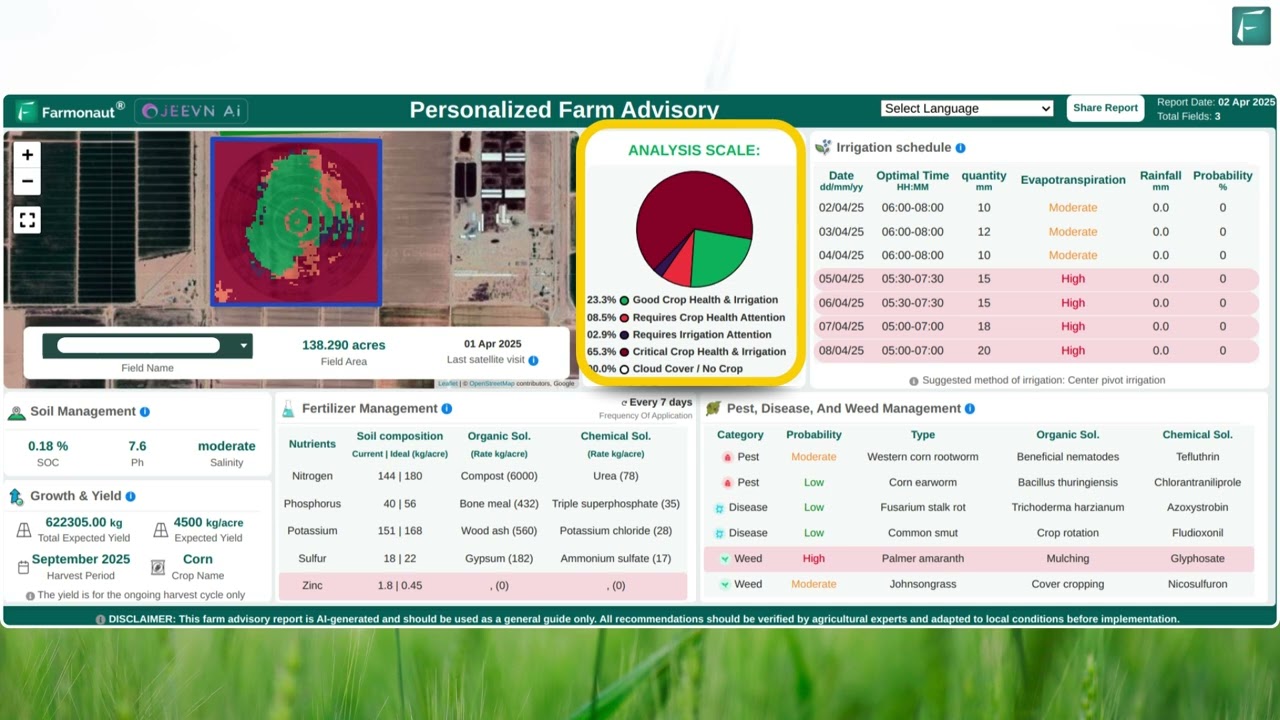
For instance, using AI-powered breeding decision support integrated with remote sensing (like Farmonaut’s AI-based advisories, utilizing satellite data), breeders can match variety traits to microclimates, maximizing adaptation and minimizing risk of failure.
Key Outcomes:
- Estimated time savings of 18–24 months in variety development cycles
- Increased predictability and cross success rates
- Rapid deployment of climate-adapted crops
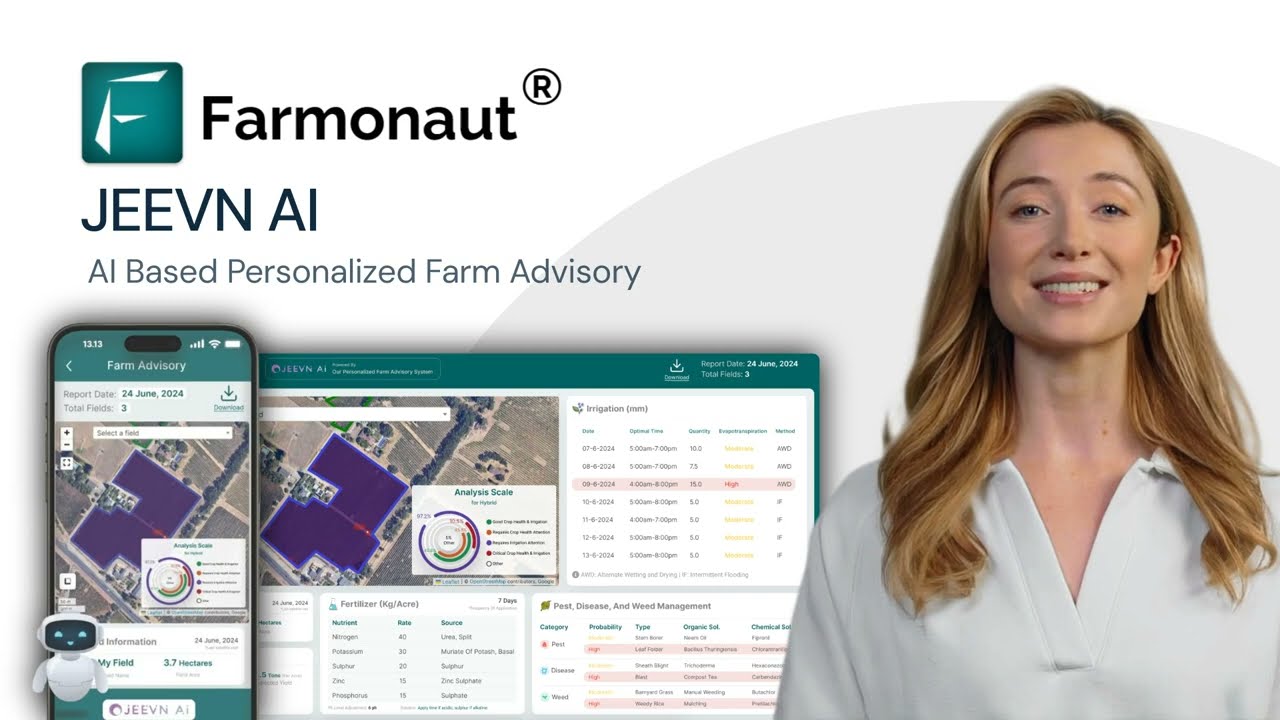
Explore Farmonaut’s Crop Plantation & Forest Advisory —
Gain AI-driven, satellite-based advice for precision farm management and crop selection.
4. AI-Driven Climate Resilience Modeling
Climate variability poses a severe risk to crop production worldwide. By integrating environmental simulation models with historical and real-time climate data, AI in plant breeding enables:
- Prediction of variety performance under future scenarios of heat, drought, flood, or changing pathogen pressures.
- Identification of genetic traits that underpin resilience to stressors—e.g., drought tolerance, heat resistance, and water-use efficiency.
AI-powered climate modeling allows breeders to select or stack traits that help crops not only survive but thrive in extreme or shifting environmental conditions—a crucial leap for global food security and sustainability.
Discover our Carbon Footprinting Tool — Monitor, manage, and reduce the environmental impact of your agricultural operations.
5. Automated High-Throughput Phenomics
Phenotyping—the measurement of plant traits and performance—is often the biggest bottleneck for breeders. AI-powered high-throughput phenomics platforms equipped with robotics, drones, and sensors now automatically capture, analyze, and report data on:
- Leaf size, greenness, and shape
- Biomass growth and root architecture
- Stress response indicators (e.g., early wilting or nutrient deficiency symptoms)
Imaging and sensor data is processed instantly by AI algorithms, identifying subtle or early-stage differences that may escape human observers, accelerating the selection process and improving breeding accuracy.

Benefits at a Glance:
- Scales up the data collection—from hundreds to tens of thousands of plants each day
- Provides real-time feedback to breeders and agronomists
- Reduces subjectivity and speeds up selection cycles
Access Large-Scale Farm Management Solutions — Visualize crop health and optimize performance across vast hectares using satellite and AI technologies.
6. Blockchain and AI Traceability in Breeding Pipelines
One of the greatest challenges in breeding programs is ensuring traceability, data integrity, and transparency in breeding pipelines. AI in plant breeding combined with blockchain transforms this landscape:
- Immutable records of trait selection, parental crosses, and environmental test data
- Automated verification of trait transmission and accurate reporting of genomic selections
- Enhanced trust and regulatory compliance for breeders and stakeholders
Farmonaut’s Product Traceability platform leverages AI and blockchain to ensure every step is documentable and secure. This is crucial for breeding resiliency and supply chain integrity in a globalized agricultural market.
Why It Matters:
- Prevents seed fraud and preserves genetic purity
- Increases value for certified, documented varieties
- Builds consumer trust in climate-smart and sustainable crops
7. AI-Enabled Smart Advisory Systems
From field-level recommendations to national crop strategy, AI-driven advisory platforms are changing how breeders, farmers, and policymakers approach variety selection and crop management. By integrating satellite imagery, IoT data, and predictive models:
- Users receive customized advisories on variety suitability, sowing dates, irrigation schedules, and input application for optimal performance
- AI systems consider historical data, live weather, soil conditions, and pest emergence patterns
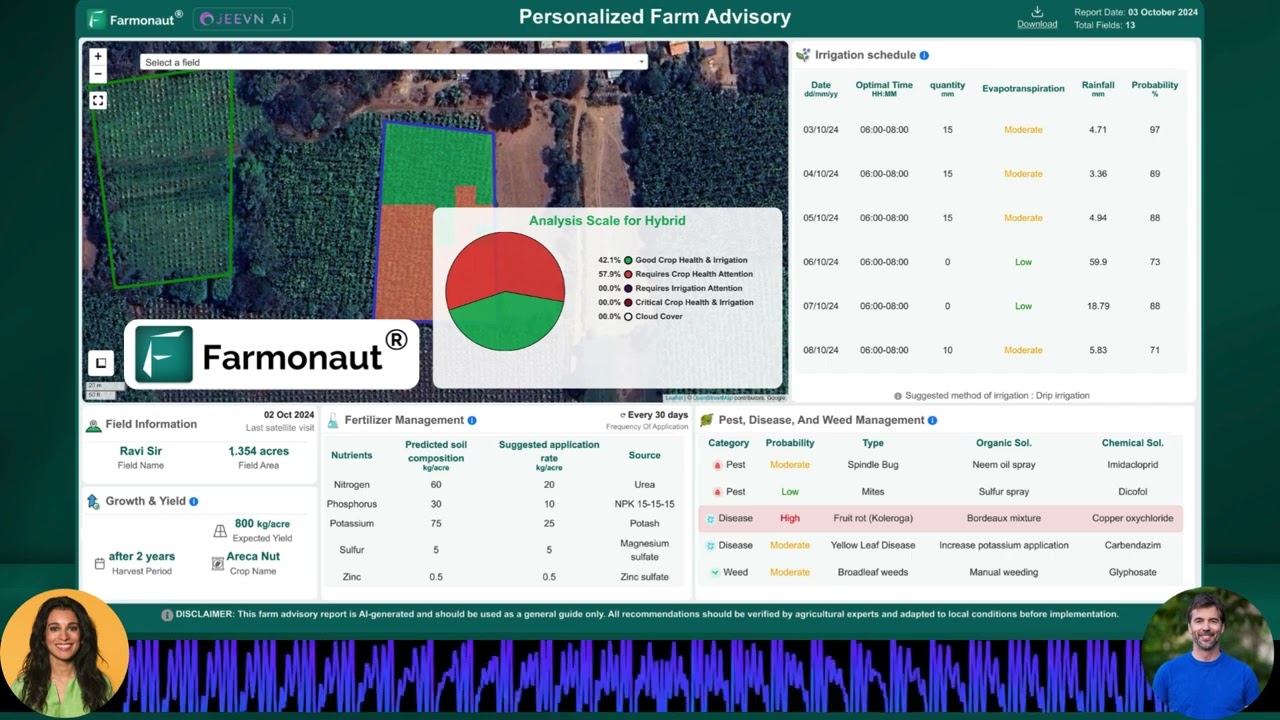
We are proud that Farmonaut’s Jeevn AI Advisory System delivers real-time, actionable insights for farmers, breeders, and agronomists. By integrating AI, satellite, and weather data, our platform enhances productivity, sustainability, and adaptation across geographies.
Looking to integrate AI-driven automation in your operation? Learn about our robust satellite & AI APIs and developer documentation to seamlessly build scalable, data-driven solutions.
“Over 60% of new resilient crop varieties in 2025 will utilize artificial intelligence in their breeding process.”
Comparison Table: AI Advancements in Plant Breeding for 2025
| AI Advancement | Main Application | Potential Yield Increase (%) | Estimated Time Savings (months) | Environmental Benefit | Tech Readiness (2025) |
|---|---|---|---|---|---|
| AI-Powered Genomic Selection ML models predict trait inheritance & value |
Faster, more effective gene stacking | Up to 20% | 18–36 | Optimized input use, reduced trial fields | Mainstream Adoption |
| AI Disease & Pest Detection Image recognition & field sensors |
Early identification, resistance breeding | 10–16% | 12–18 | 40% less pesticide requiremen | Widespread (2025) |
| Precision Cross-Breeding with AI Trait simulation, optimal cross selection |
Diversified, climate-ready varieties | 12–24% | 18–24 | Birth of resilient, region-adapted seeds | Rapid Growth |
| AI-Driven Climate Resilience Modeling Simulation of variety x environment fit |
Crops for unpredictable weather | 10–18% | 12–24 | Reduced failure, resource optimization | Piloting/Scaling |
| High-Throughput AI Phenomics Automated trait capture & data mining |
Speeding trait assessment, selection | Variable (up to 15%) | 12–24 | Efficient resource usage, lower waste | Mainstream in elite programs |
| Blockchain & AI Traceability Certified, transparent breeding records |
Integrity & trust in seed supply chain | Indirect | 6–12 | Fraud reduction, better compliance | Piloting (2025) |
| AI Smart Advisory Systems Real-time, contextual crop advice |
Empowers breeders, farmers, policymakers | 5–15% | 6–18 | Input optimization, yield gain | Rapid Expansion |
Farmonaut: Supporting AI-Driven Strategies Across Agriculture
We at Farmonaut empower breeders, businesses, and governments with satellite-driven data, AI-based advisory systems, blockchain-enabled traceability, and precise resource management—essential for the next generation of AI plant breeding. Our mission is to make advanced artificial intelligence in agriculture and satellite analytics affordable and globally accessible—so that innovation isn’t limited by geography or scale.
- Real-time crop monitoring via satellites (vegetation health, NDVI, soil conditions), improving trial design and field selection for breeding
- Jeevn AI Advisory System: personalized insights, early warning of environmental stress, and adaptation guidance
- Blockchain-based product traceability, securing every step from initial cross to final variety
- Environmental Impact and Sustainability Tools: carbon footprint tracking, regulatory compliance, and climate adaptation (See our carbon footprinting platform)
- Crop Loan & Insurance Verification: enabling secure, data-driven access to finance for breeders, farmers, and researchers through satellite verification
- Fleet Management Solutions: optimize logistics for large breeding and field-testing operations using real-time vehicle tracking and reporting
All our solutions are accessible via Android, iOS, and web/browser apps—plus robust API access for scalable, custom integrations. From genomic selection to last-mile sustainability, we’re here to help you climb the next step of the agricultural innovation ladder.
Challenges & The Future Outlook of AI in Plant Breeding
While the advances in AI in plant breeding are remarkable, several challenges remain key to realizing their full potential:
- Data Quality & Integration: Effective AI relies on high-quality, standardized genomic, phenomic, and environmental datasets—often scattered and inconsistent globally.
- Multidisciplinary Collaboration: Breeders must collaborate with data scientists, climatologists, agronomists, and software engineers for success.
- Equitable Access: Ensuring AI tools benefit not just large enterprises but also smallholders and public breeding programs in developing regions is crucial for global impact.
- Interpretability & Trust: Breeders need confidence and transparency in AI-driven recommendations—not just “black box” predictions.
- Ethics & Privacy: Security and ownership of genetic data must be respected as AI penetrates sensitive nodes of the agricultural value chain.
Looking forward, as AI matures and gene editing tools like CRISPR become mainstream, we expect further acceleration in crop improvement, faster adaptation to environmental stress, and a new wave of AI-driven, democratized agricultural innovation. Platforms such as ours will continue to enable researchers and farmers everywhere to harness these breakthroughs for a future of resilient, nutritious, and sustainable crops.
Frequently Asked Questions: AI in Plant Breeding (2025 and Beyond)
What is AI in plant breeding?
AI in plant breeding refers to the use of artificial intelligence (AI), particularly machine learning algorithms and data analytics, to accelerate and optimize the process of developing new crop varieties. AI analyzes massive genomic, phenomic, and environmental datasets to guide breeders in selecting the most promising genotypes and trait combinations.
How does machine learning improve plant breeding?
Machine learning identifies patterns in complex datasets that traditional statistics may overlook. It predicts performance, uncovers gene-trait linkages, and enables breeders to focus resources on the most promising crosses—making selection more accurate, faster, and cost-effective.
Why is phenotyping critical in plant breeding, and how does AI help?
Phenotyping determines how plants express their genetic potential under varying environments—but it’s often slow and subjective. AI’s computer vision and robotics automate trait measurement, making phenotyping faster, more objective, and scalable to thousands of plants daily.
What role does AI play in breeding climate-resilient crops?
AI integrates climate data and simulation models to predict how different genotypes will perform under future weather patterns. By identifying traits associated with resilience—like drought or heat tolerance—AI enables breeders to select or develop varieties better suited to changing environments.
Can small-scale breeders and farmers use AI in plant breeding?
Yes. As satellite, AI, and cloud-based advisory systems become more affordable and accessible (like via Farmonaut’s modular platform), breeders and growers of all sizes can leverage AI tools for smarter, faster crop improvement and field management.
How does blockchain enhance traceability in breeding?
Blockchain creates immutable records for each step of the breeding process—from initial cross to variety release—ensuring authenticity, regulatory compliance, and consumer trust in the seed supply chain.
Where can I access AI and satellite tools for crop management?
Explore Farmonaut’s Web App, Android App, and iOS App. Our platform brings AI-based advisory, crop monitoring, traceability, and resource management to your fingertips—anywhere in the world.
Conclusion: AI in Plant Breeding Will Shape Sustainable Agriculture for 2025 and Beyond
The integration of AI in plant breeding is transforming the way the world develops new crop varieties, addressing urgent challenges posed by climate change, population growth, and environmental pressure. With breakthroughs in genomic selection, phenotyping, predictive modeling, and data-driven advisories, agriculture is becoming more resilient, productive, and sustainable.
The journey toward data-driven, sustainable farming is just beginning. As we move deeper into 2025, AI plant breeding will remain at the center of efforts to ensure global food security, environmental stewardship, and economic opportunity for growers and researchers everywhere.
Ready to harness the future of agriculture? Join us at Farmonaut as we democratize AI and satellite-driven insights—empowering you for the next evolution in plant breeding and crop management.

 Doodlakine
 Nale Network
 Exurbia Geospatial
 FieldZero
 Indico Company
 Kubota
 FFBS
FFBS Jontra
 Kalustyan
 Tucor
Tucor Geno
Geno Hayleys Agriculture
 Linx Agritech
 Adinet
