

Satellite Banana Crop Advisory: One Crop Finishing, One Just Starting

Janarthanan Paramasivam runs two fields across just under eight acres near Coimbatore, Tamil Nadu: a banana block ten months in the ground and heading into harvest, and an onion field that had not been sown yet. In the same week the advisory withdrew every nutrient from one and prescribed all five, daily, on the other.
Most case studies compare two fields of the same crop. This one compares two fields at opposite ends of the crop cycle on the same farm in the same week — a banana block being finished and an onion field being started. It is the clearest available demonstration that a per-field advisory is not producing variations on one plan; it is producing genuinely different plans.
The account has received 17 advisories across eight satellite passes between 28 June and 31 July 2026. The grower submitted feedback on 29 June, against both fields, and reported that the report helped optimise both his irrigation and his fertiliser application — each by an estimated 30–50%. He rated his first pair of advisories; this article opens those, and then follows what the next seven passes did.
On the pass of 31 July the banana field was prescribed nothing at all — nitrogen, phosphorus, potassium, sulphur and zinc all zero, application frequency zero days. The onion field, in the same week, was prescribed all five nutrients at a frequency of every one day. One farm, one week, and the two instructions are as far apart as instructions get.
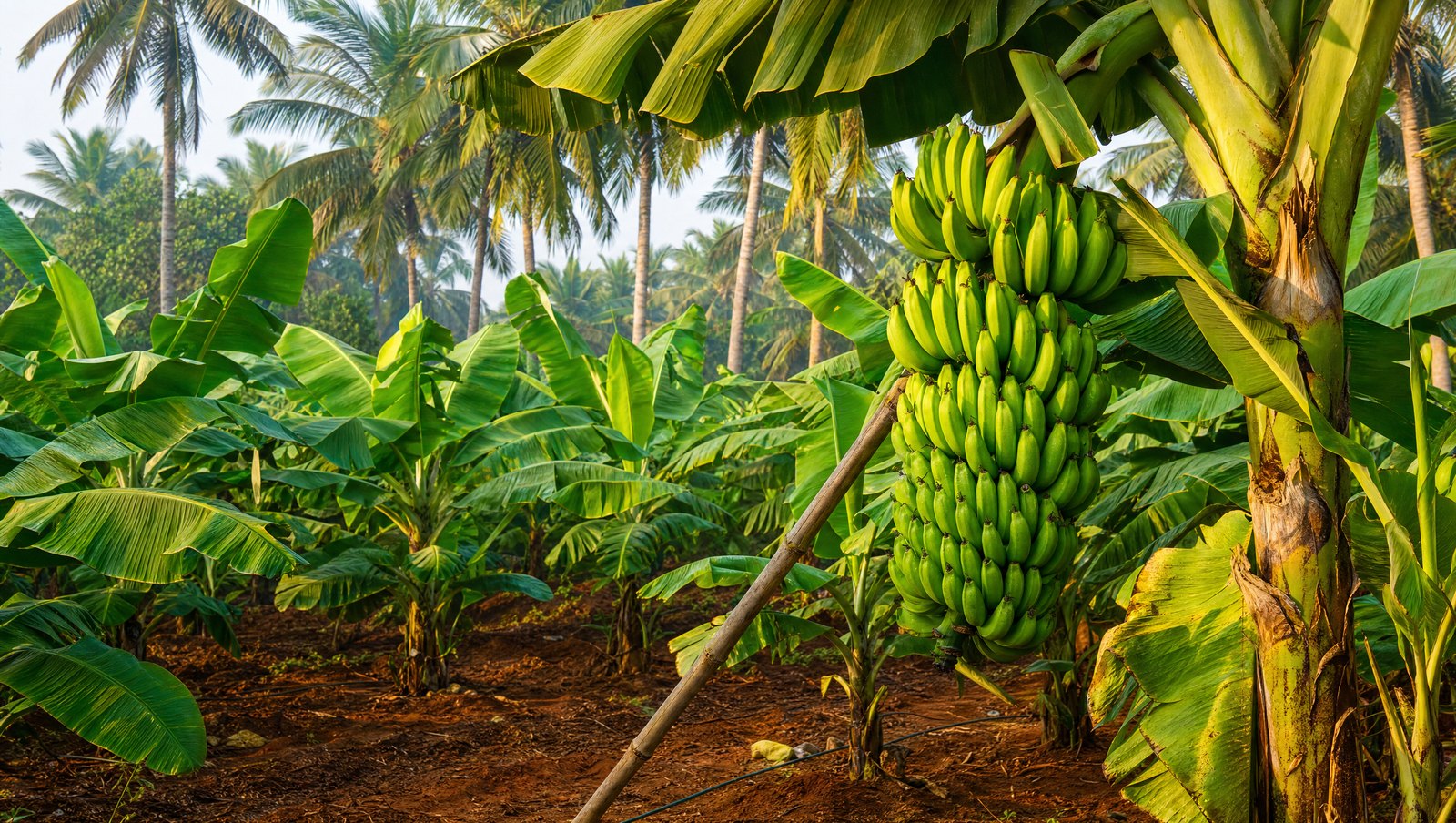

Two fields, two calendars, eight acres
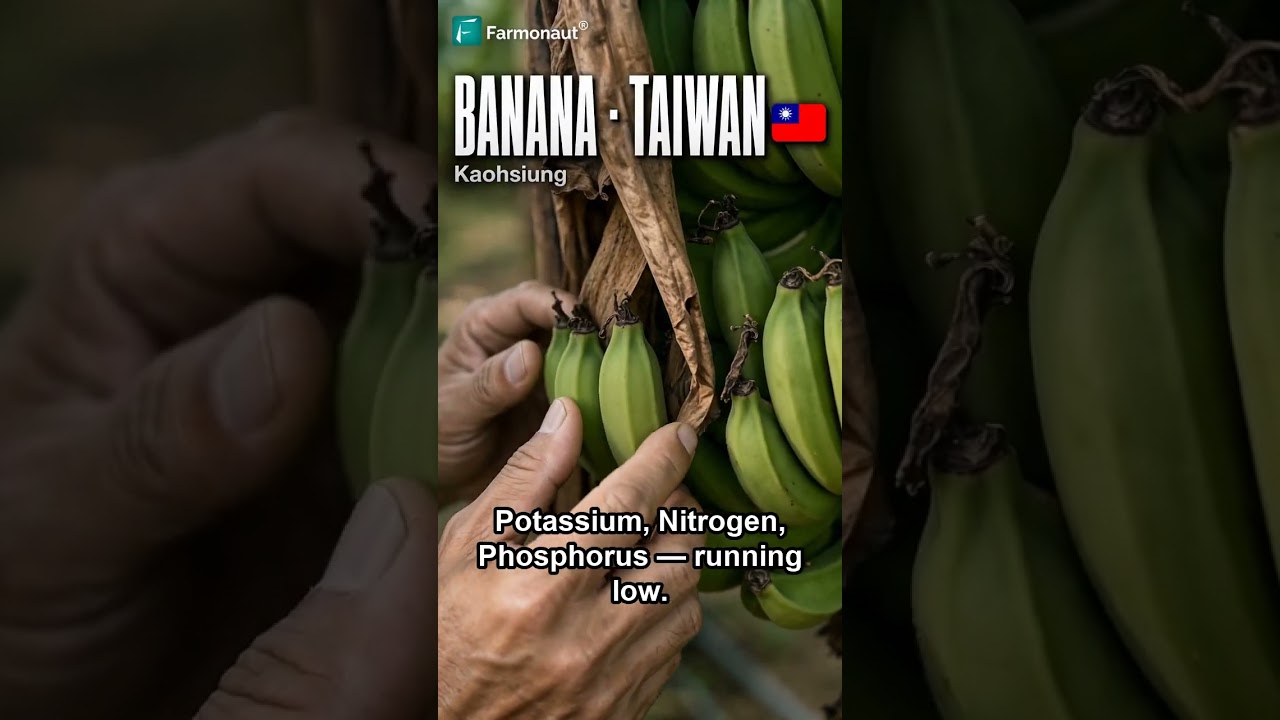
The banana block is 2.55 acres, planted in October 2025. The onion field is 5.33 acres, recorded as sown on 1 July 2026 — which is to say that when monitoring began on 28 June, there was no crop in it. The advisory’s stage label for that first pass reads, accurately, “Not Yet Established”.
| Field | Acres | Sown | Stage, 31 July | Water | Nutrients | Frequency | Yield est. | Harvest |
|---|---|---|---|---|---|---|---|---|
| Banana | 2.55 | Oct 2025 | Harvest / post-harvest | 16.0 mm | 0 of 5 | 0 days | 10,500 kg/acre | Year-round |
| Onion | 5.33 | Jul 2026 | Leaf development, 3–5 leaves | 20.0 mm | 5 of 5 | Every 1 day | 4,000 kg/acre | Oct 2026 |
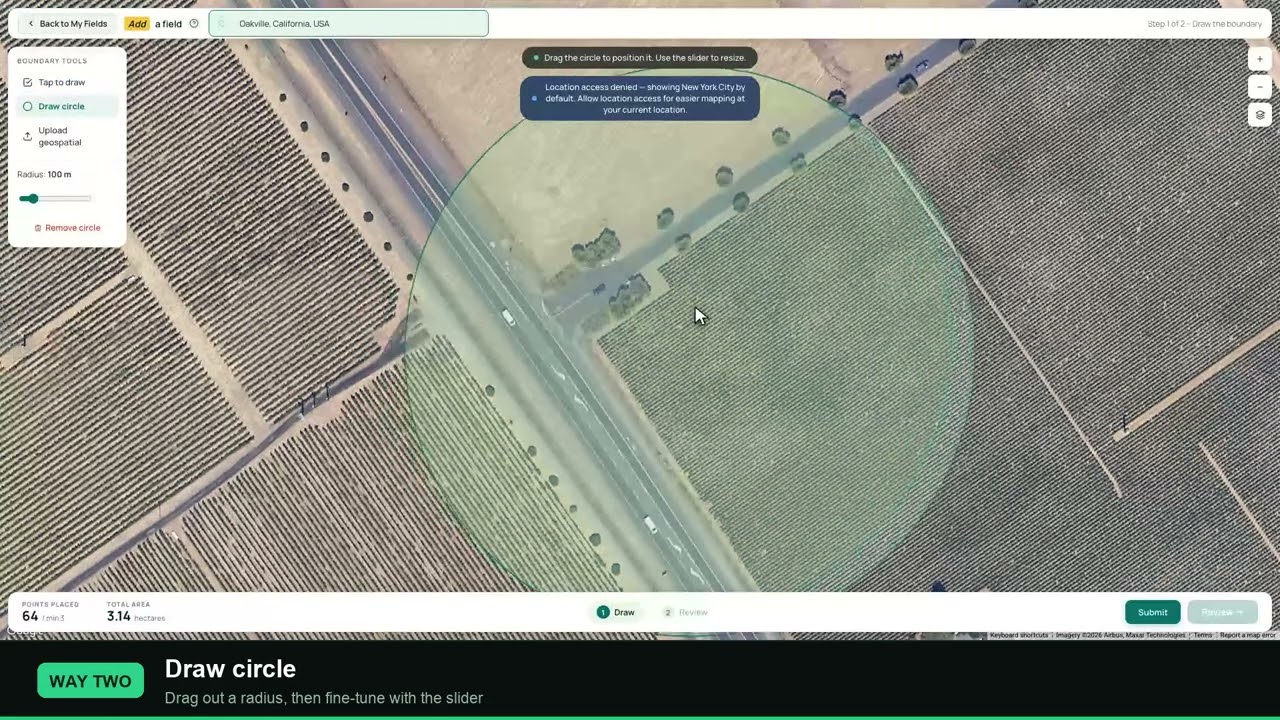
What the satellite banana crop advisory delivers per field
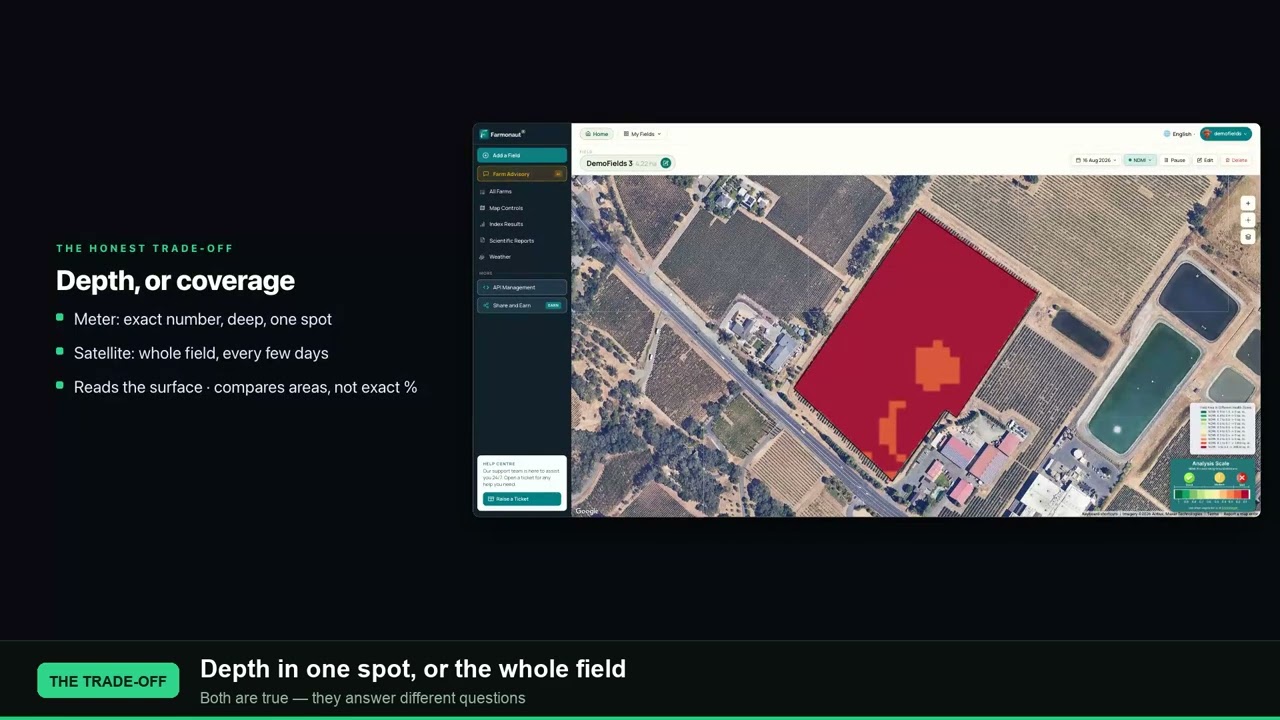
Each field receives its own report per satellite pass: a seven-day irrigation schedule with the delivery method quoted and two alternatives priced in millimetres per day, per-nutrient fertiliser rates with an organic and a chemical source and an application frequency, pest and disease risk as percentage scores, weed pressure, soil chemistry and a yield estimate with a harvest window.
At an eight-pass cadence over five weeks, the interesting output is not any single report but the sequence. On the banana field that sequence covers an entire reproductive endgame.
The banana field: five stages in five weeks, and water that follows them
Across the eight passes the advisory recorded the banana moving through inflorescence emergence (shooting) → flowering (anthesis) → fruit set and development → harvest → post-harvest. The water schedule moves with it, and the shape is the important part.
The peak comes on 1 July, at anthesis: 42.0 mm across all seven days, with no rest day. Anthesis is when the banana inflorescence emerges and fruit set happens, and moisture stress in that window permanently limits bunch size. The advisory pushed water up, not down.
By 31 July, post-harvest, the same field was on 16.0 mm across four days — 62% less water than at anthesis, on the same field, five weeks later. Nothing about the field changed except where the crop had got to.
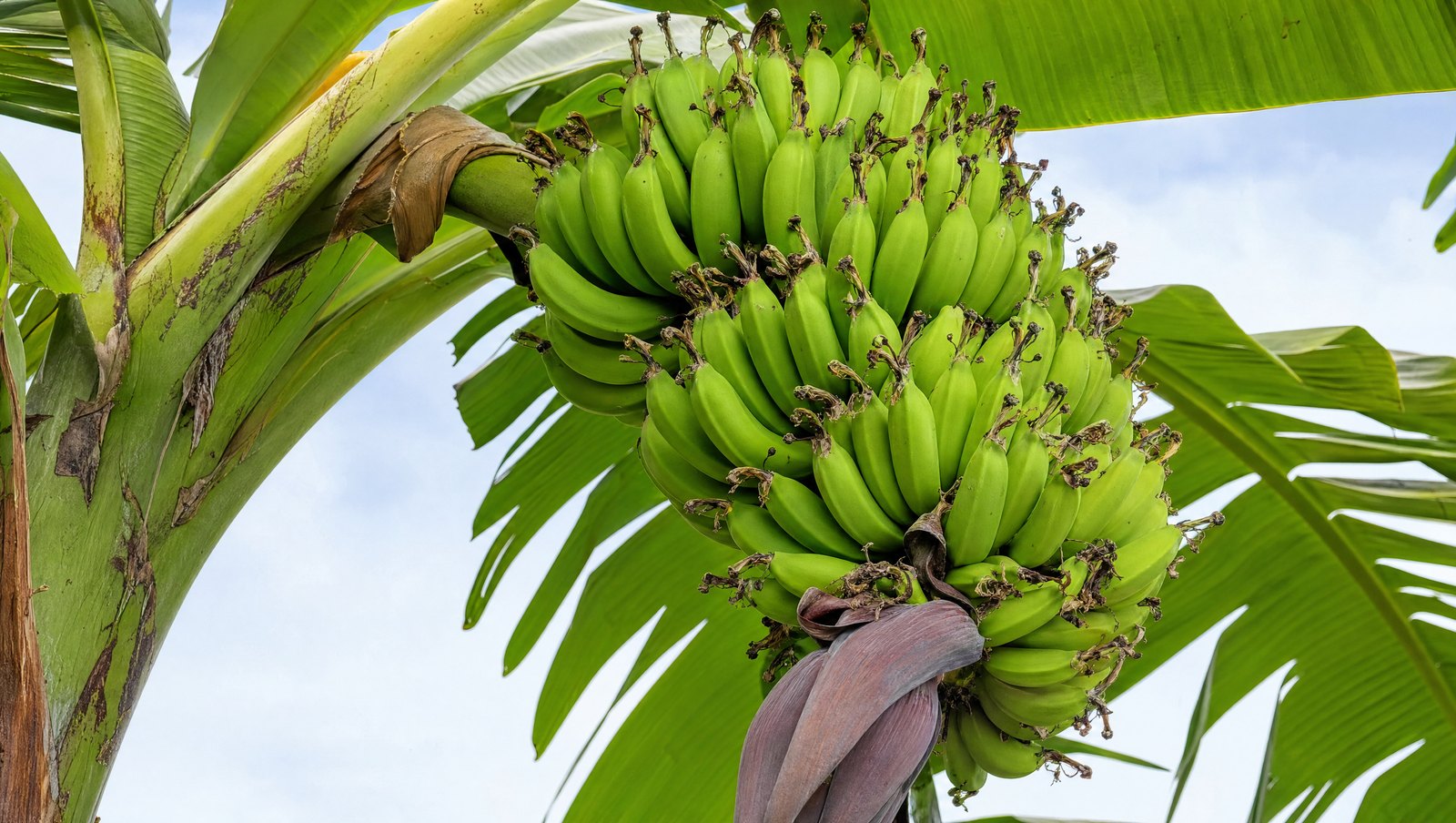
On banana the saving is not in watering less all season — it is in watering hard at anthesis and backing off afterwards. A uniform cut across the season would take the water out of the one week where it converts directly into bunch weight.
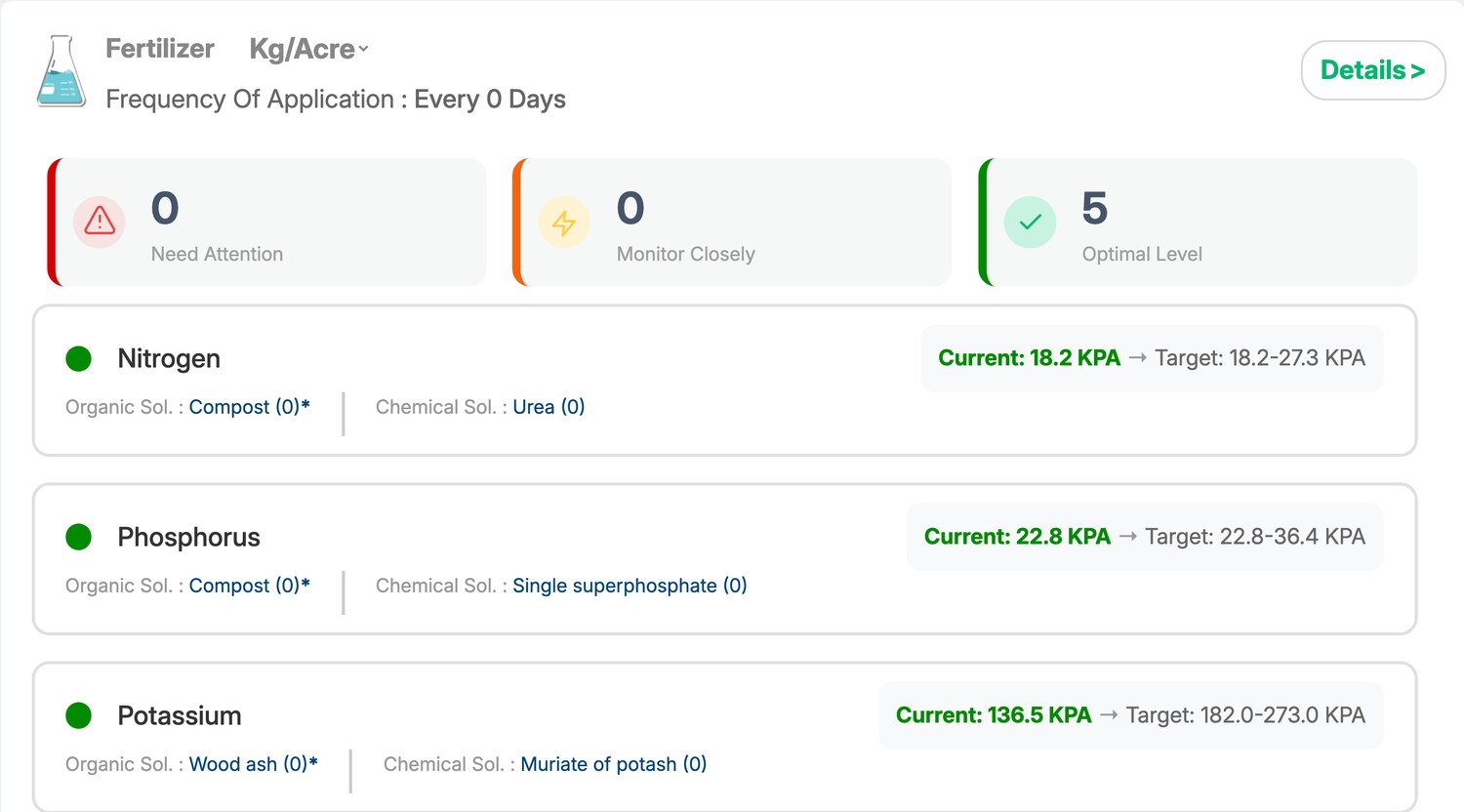
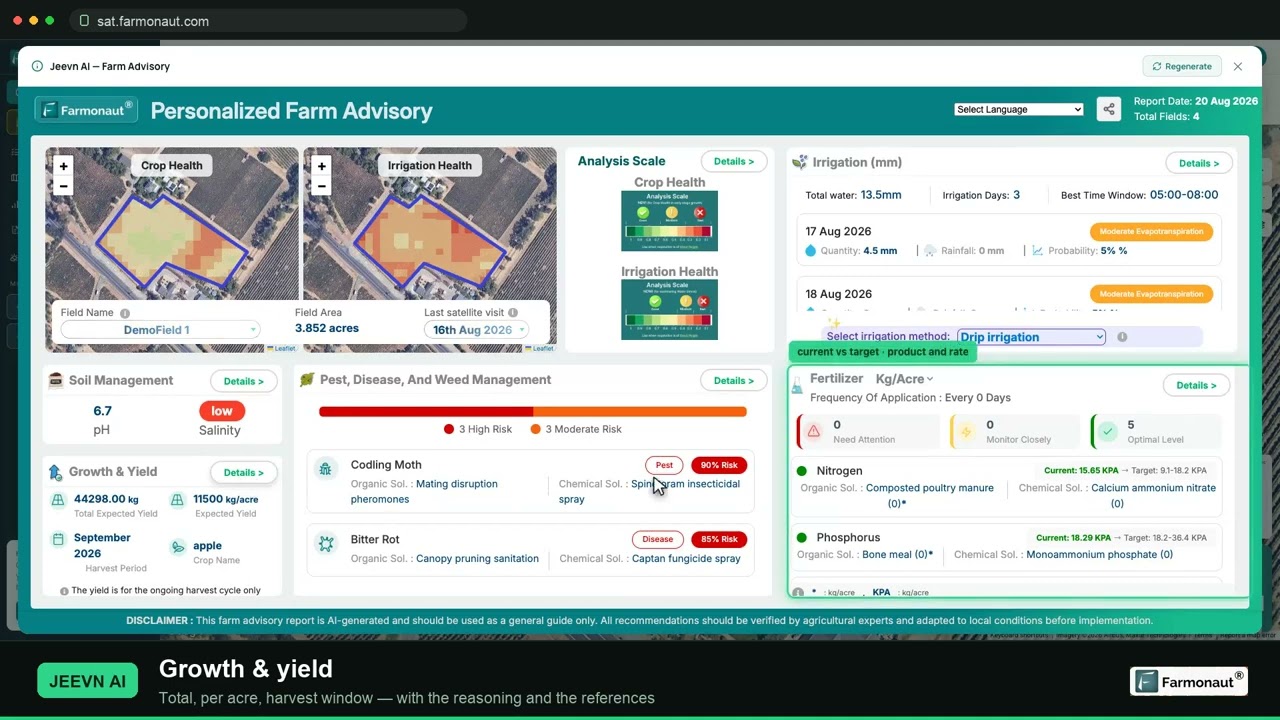
The nutrient programme tracks the same clock. Potassium arrives at 37.9 kg/acre on 6 July as fruit begins to set — potassium is what fills a banana bunch — then steps down to 11.38 for three passes, and on 26 July, the pass labelled Harvest, it goes to zero and stays there. On 31 July the card shows all five nutrients at zero with an application frequency of zero days, and every source line reading none.
The onion field: a nutrient plan for a field with no crop in it
The onion field went the other way, and its first advisory is the one worth pausing on. On 28 June, three days before the recorded sowing date, with the stage reading “Not Yet Established”, the advisory prescribed 75.0 kg/acre of potassium — the largest potassium figure anywhere in this account — alongside 11.1 each of nitrogen and phosphorus.
That is a basal-then-maintain pattern, and it is the correct agronomy for onion: the crop is a shallow-rooted, short-season bulb that responds to potassium and phosphorus placed where the roots will find them, before the roots exist. Through planting the rate held at 45.5, dropped to 22.1 at emergence, and settled at a maintenance 10.0 kg/acre from the 2–4 leaf stage onward — where it has stayed for four consecutive passes.

Onion is also a sulphur crop — sulphur drives the pungency compounds that determine market grade — and the advisory prescribes 10.0 kg/acre of sulphur against a reading of 8.0 on a 10–20 target. It is not a large number, but it is the right nutrient to be watching on this crop, and it is being watched every pass.
Irrigation: the advisory prices drip below the flood it quotes
The onion field’s schedule is quoted against flood irrigation at 5.0 mm per day — and in the same table, drip is listed at 4.0. Twenty per cent less water per event, for the same requirement, published on every pass.
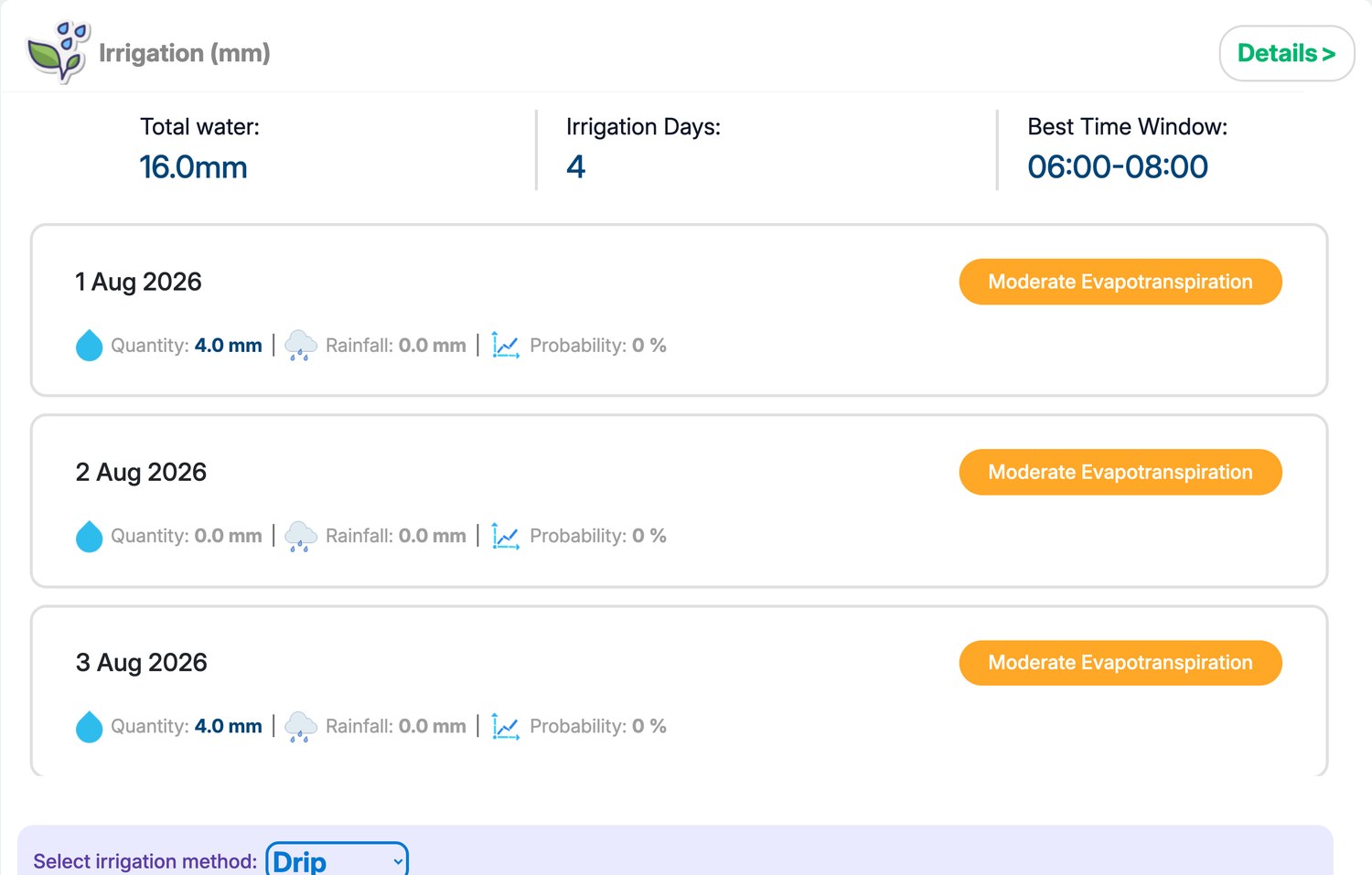
The banana field is already on drip, quoted at 4.0 mm per day, with sprinkler at 5.0 and furrow at 6.0 — a 50% premium. Read together, the two fields make the same point from opposite directions: the field on drip is being shown what it is saving, and the field on flood is being shown what it could save.
The onion field’s most valuable advisory arrived three days before the crop did.
Pest and disease: the report screens both fields every pass
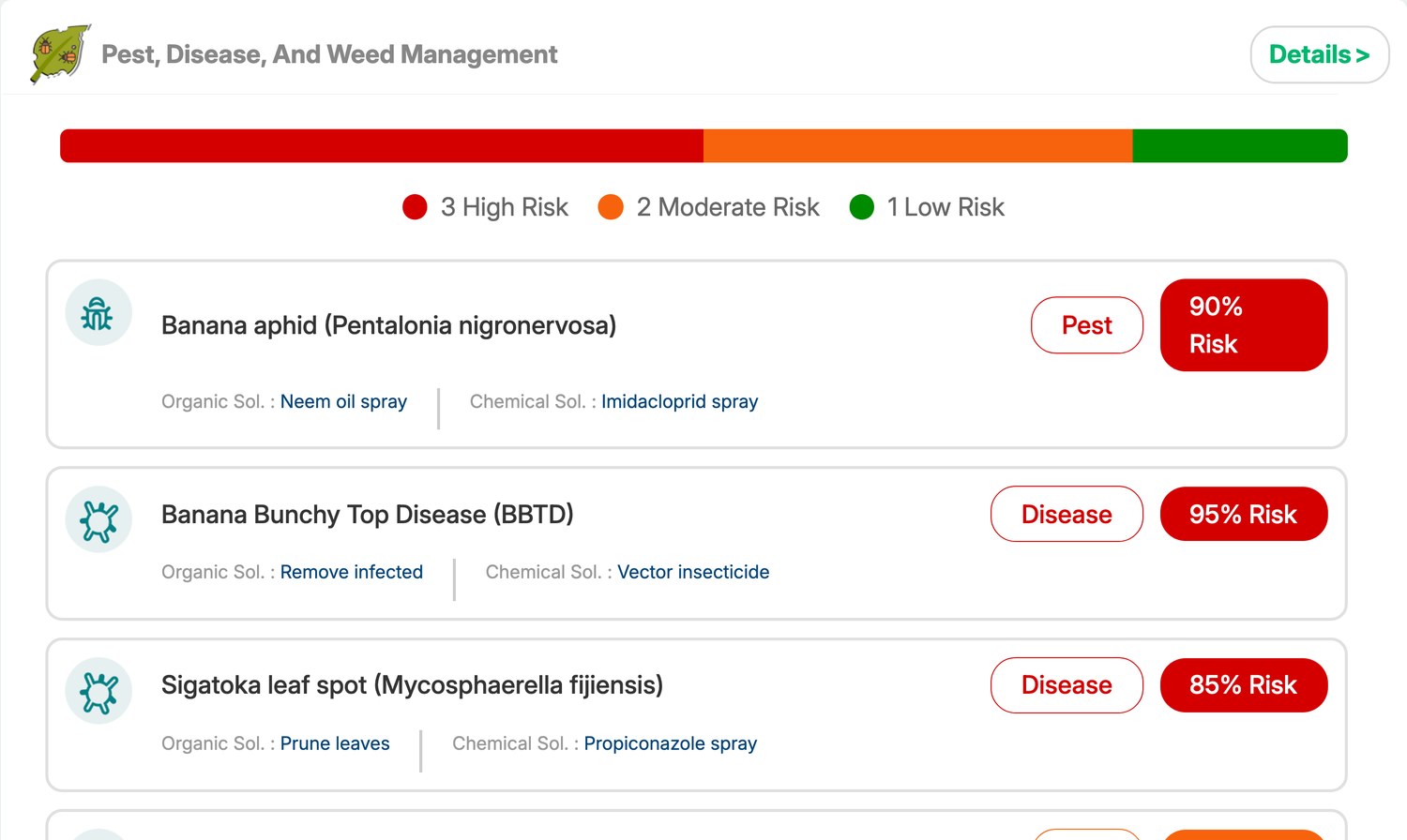
The two pest lists have nothing in common, because the crops have nothing in common. On the banana field the advisory raised banana bunchy top disease at 95%, banana aphid (Pentalonia nigronervosa) at 90% — the aphid is the vector that transmits it — Sigatoka leaf spot (Mycosphaerella fijiensis) at 85% and burrowing nematode (Radopholus similis) at 65%.
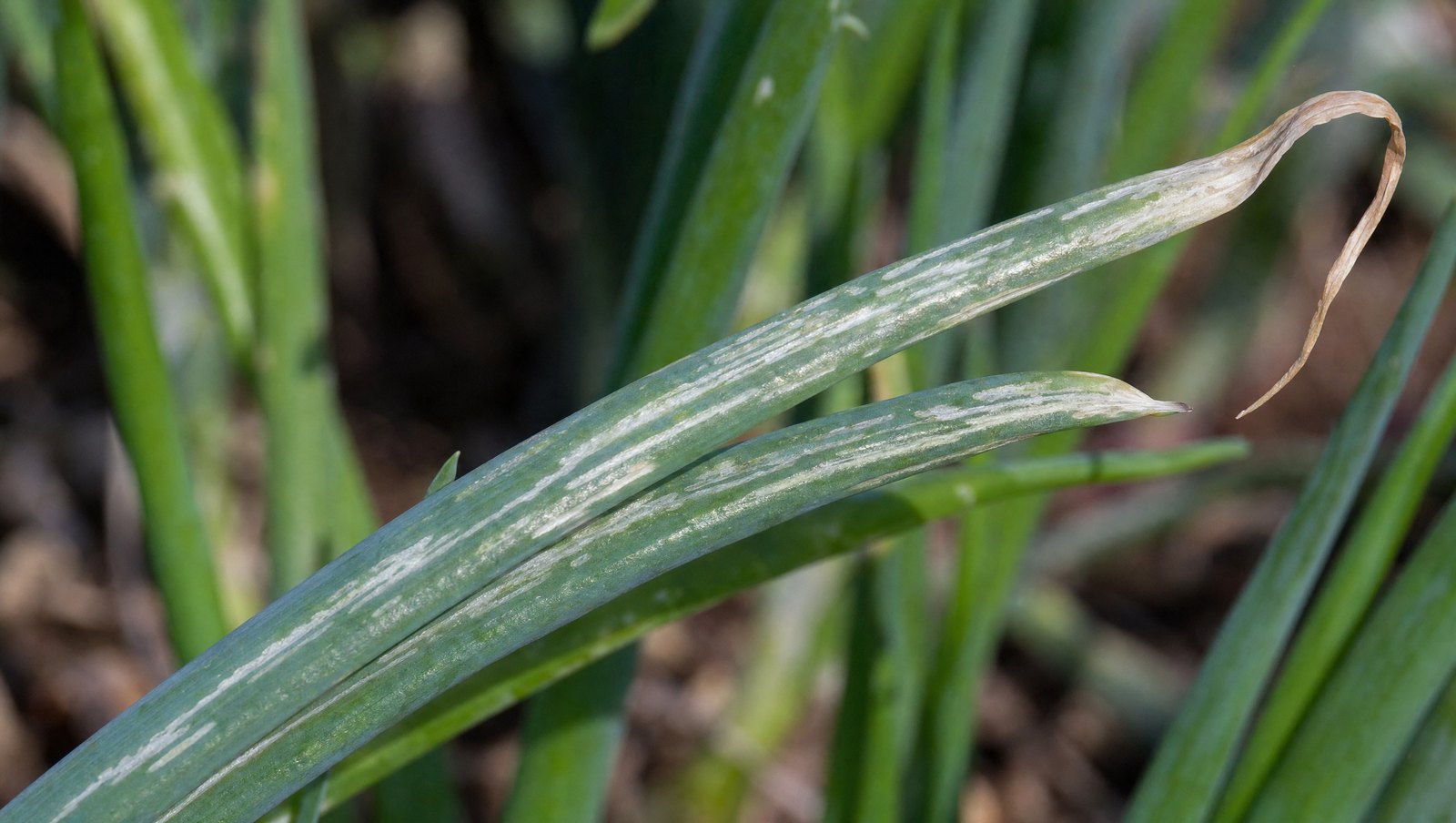
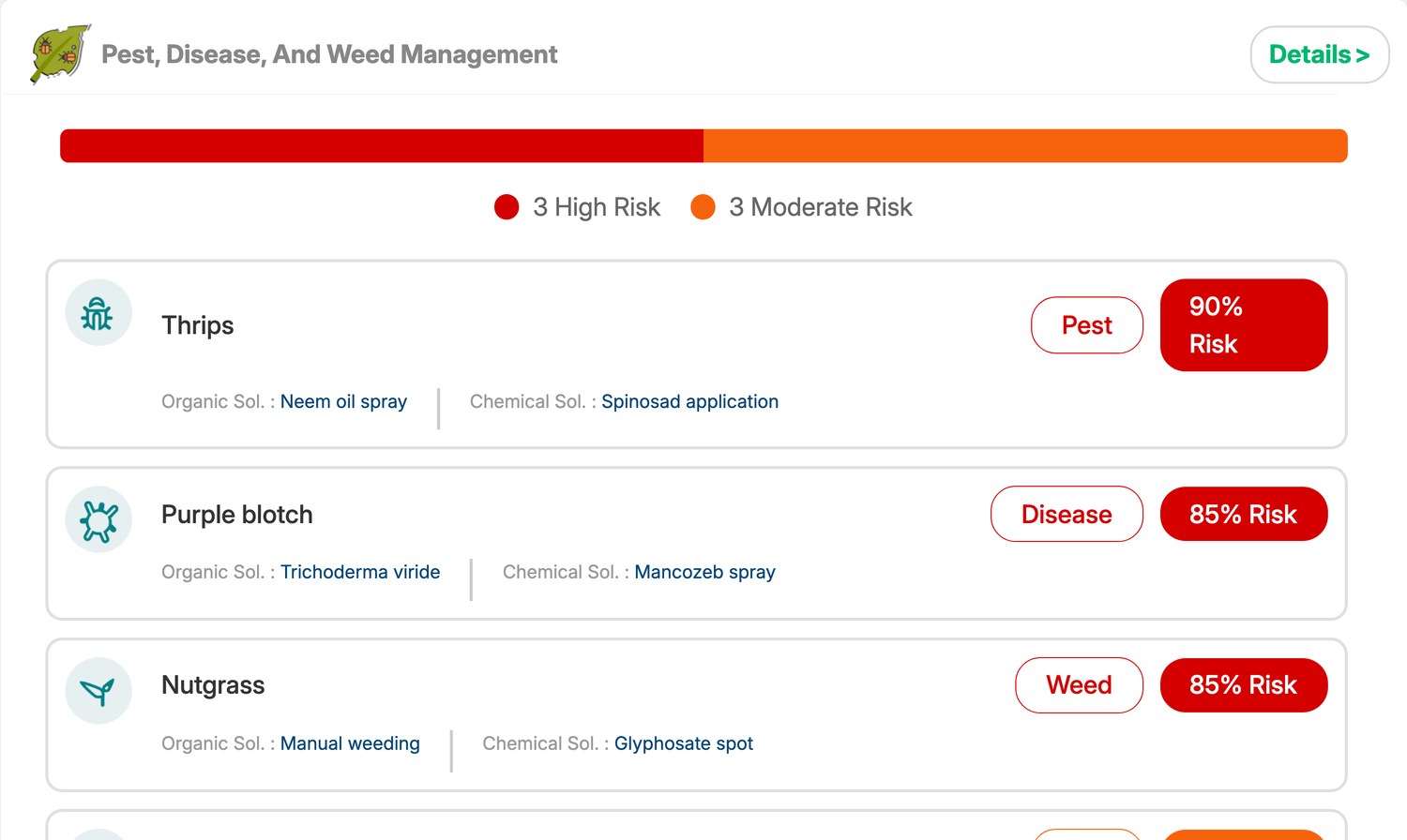
On the onion field it raised thrips at 90%, purple blotch at 85%, downy mildew at 70% and onion maggot at 70%. Thrips is the defining onion pest of the Tamil Nadu season: it rasps the leaf surface, reducing the photosynthetic area that builds the bulb, and it also spreads iris yellow spot virus.
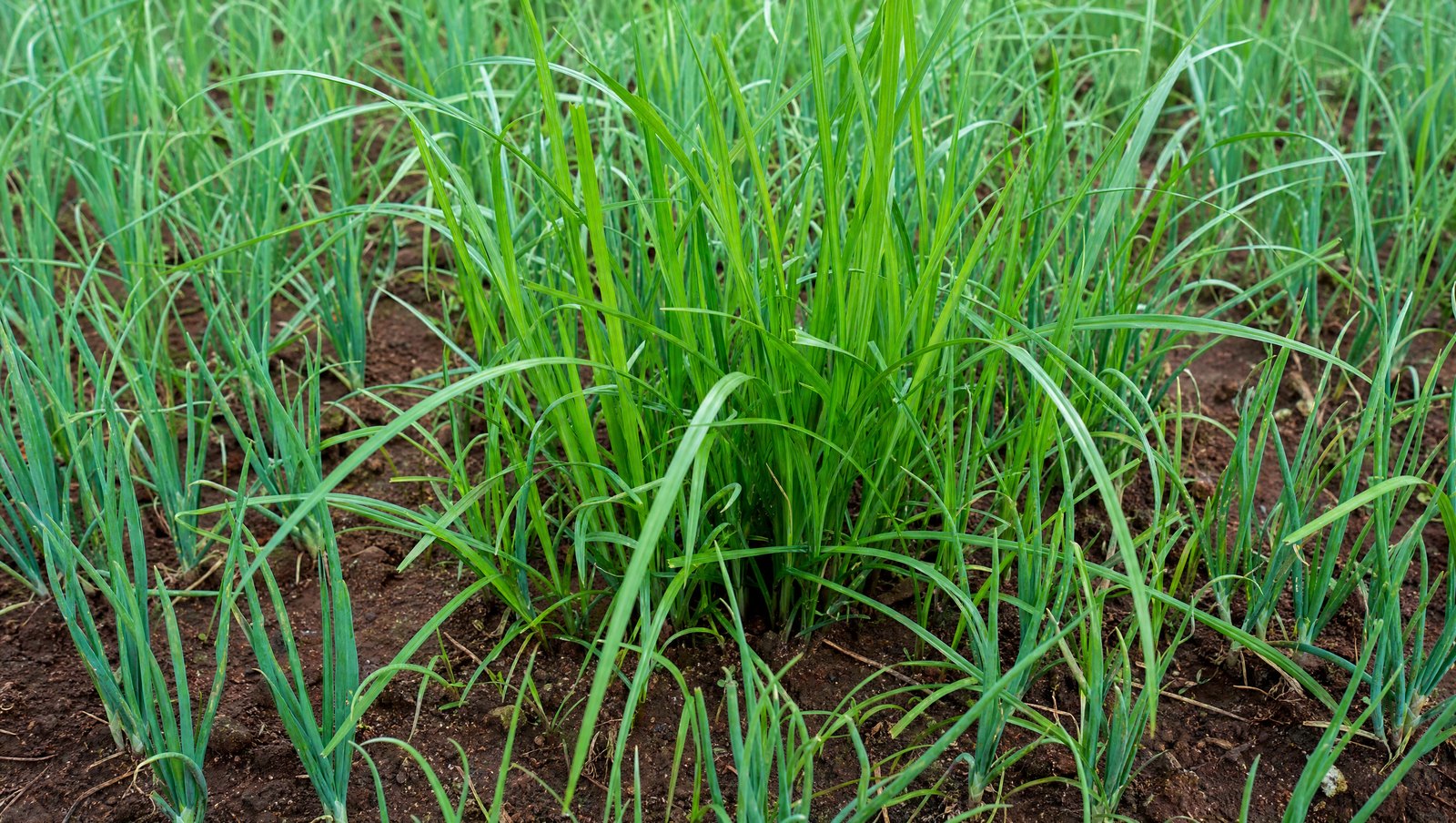
Weed pressure differs in emphasis rather than in kind. Both fields carry Cyperus rotundus (nutgrass) — at 75% on the banana and 85% on the onion — and the onion is the field that matters, because onion is a poor competitor with a shallow root system and nutsedge emerges through the bed faster than the crop covers it.

What the numbers add up to
| Mechanism in the advisory | What it delivers on these two fields |
|---|---|
| Water set by growth stage, per field | Banana from 42.0 mm at anthesis to 16.0 post-harvest — 62% less |
| Nutrient withdrawn entirely at harvest | Banana prescribed 0 of 5, frequency zero days, from 26 July |
| Nutrient front-loaded before sowing | Onion given 75.0 kg/acre of potassium three days before the recorded sowing date |
| Maintenance rate once established | Onion potassium settles at 10.0 kg/acre for four consecutive passes |
| Delivery methods priced in millimetres | Drip 20% below the onion’s flood; furrow a 50% premium on the banana’s drip |
| Disease scored with its vector | Bunchy top 95% with banana aphid 90% beside it |
One farm, one week. Everything withdrawn on one field; all five nutrients, every day, on the other.
Banana and onion are both high-input crops with concentrated decision points — one bunch per plant cycle, one bulb per season. Both savings visible here come from timing rather than from buying anything: stopping the banana’s nutrient programme at harvest, and putting the onion’s potassium in before the roots exist rather than after.
Grower-reported outcomes, as submitted
The cards below reproduce Janarthanan Paramasivam’s answers to our in-app feedback questionnaire for the advisory dated 29 June 2026, submitted against both fields, exactly as recorded.
The percentages are the grower’s own estimates from a structured form rather than metered volumes, and they were given on his first pair of advisories. What the seven passes that followed show independently is that the guidance moved with each crop: the banana’s water fell 62% between anthesis and post-harvest, and its nutrient programme was withdrawn entirely at harvest.
Why the pre-sowing advisory matters most
The single most useful report in this account is arguably the one issued before the onion existed. Onion is sown into a prepared bed, and the potassium and phosphorus a bulb crop needs are most effective when they are already in the root zone rather than broadcast onto a standing crop weeks later. By the time a deficiency is visible in onion leaves, the bulb-sizing window is already narrowing.
Getting that dose right needs two things the advisory had: the field boundary, and the intended sowing date. With those, it produced a basal recommendation of 75.0 kg/acre of potassium for a field with bare soil in it — and then stepped the rate down automatically as the crop emerged and established, without the grower having to reset anything.
That only works if the recorded sowing date is right. The stage sequence, the crop coefficient behind the water figures and the basal-then-maintain nutrient pattern all key off it. An out-of-date sowing date is the most common way to get a technically correct advisory for the wrong week of the crop’s life.
The soil is the shared constraint and it is unremarkable in the useful sense: pH 6.5 on both fields, organic carbon 0.15% on the banana and 0.14% on the onion, flagged low on both, salinity low throughout. Carbon that low means nutrients do not sit in the profile between applications — which is the agronomic reason the onion’s programme runs at every one day rather than as two or three seasonal splits.
Coimbatore district draws heavily on groundwater and banana is among the thirstiest crops grown on it. The difference between the banana field’s anthesis week and its post-harvest week is 26 mm across 2.55 acres — water that, applied out of habit after harvest, produces no fruit at all because the fruit has already been cut.

Why per-field beats per-farm on two fields
The yield estimates are not comparable and should not be averaged: 10,500 kg/acre on the banana against 4,000 on the onion, with harvest windows of year-round and October 2026 respectively. One is a perennial cut bunch by bunch; the other is a single-season bulb lifted once.
That is the whole argument in miniature. With two fields there is no statistical subtlety to appeal to — the crops are simply doing different things, and a farm-level plan would have to pick one of them to be right about. On the pass of 31 July, a single plan would either have fed a banana crop through its own harvest or starved a four-week-old onion field on a daily programme.
Underneath sits a per-pixel read of each field boundary, resolved through crop coefficients and regional pest models, at a three-to-five day cadence. Seventeen advisories over eight passes in five weeks is what caught a banana moving through four stage changes and an onion going from bare soil to five leaves.
Running this on your own farm
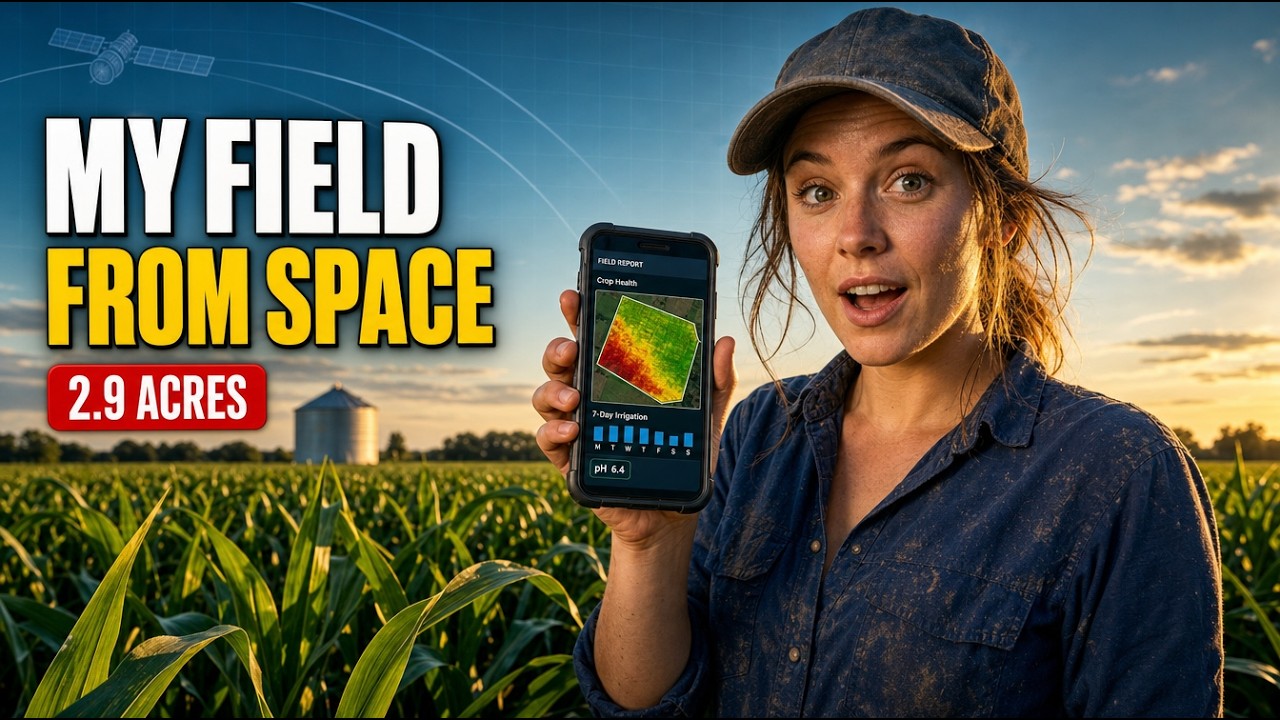
- Map the field before you sow it. The onion field’s most valuable advisory arrived three days before the crop did, and it set the basal potassium dose.
- Keep the sowing date current. Everything downstream — stage, water, the basal-then-maintain nutrient pattern — keys off it.
- Water hard at anthesis on banana, then back off. 42.0 mm in the anthesis week and 16.0 after harvest is not inconsistency; it is the crop’s actual requirement.
- Stop feeding a fruit crop at harvest. The advisory takes the nutrient programme to zero, frequency included, and continuing it delays finishing rather than adding yield.
- Check the alternative method on the card. On the onion field drip is quoted 20% below the flood the schedule uses — a conversion case computed weekly on your own ground.
Explore the platform at sat.farmonaut.com, read more about our satellite and AI-based farm advisory in the JEEVN AI overview, or talk to our team about monitoring a mixed horticultural farm. JEEVN AI is a paid product; plan detail is on the platform.
Two crops, two calendars
Map each field, set its crop and sowing date, and get per-field irrigation, nutrient and pest guidance from satellite passes over your own ground.
Frequently asked questions
What is a satellite banana crop advisory and what does it deliver?
It is a per-field report built from satellite passes over your own boundary, giving a seven-day irrigation schedule with the delivery method quoted and two alternatives priced in millimetres per day, per-nutrient fertiliser rates with an organic and a chemical source and an application frequency, pest and disease risk as percentage scores, weed pressure, soil chemistry and a yield estimate with a harvest window. On this farm two fields each received their own across eight passes, producing 17 advisories in five weeks.
Why did the banana field’s water fall from 42 mm to 16 mm a week?
Because the crop moved from anthesis to post-harvest. At anthesis — when the inflorescence emerges and fruit set happens — moisture stress permanently limits bunch size, so the advisory prescribed 42.0 mm across all seven days. Five weeks later, with the bunch cut, the requirement had fallen to 16.0 mm across four days. Same field, 62% less water, entirely because of stage.
Why does the advisory prescribe no fertiliser at all on the banana field?
Because it is at harvest and post-harvest. From the pass of 26 July the card shows all five nutrients at zero with an application frequency of zero days and no sources named. Continuing to feed a fruit crop through harvest delays finishing rather than adding yield, and the nutrient does not reach a bunch that has already been cut.
Can you get an advisory for a field before the crop is sown?
Yes, and on this farm it was the most valuable report in the sequence. On 28 June, three days before the onion’s recorded sowing date and with the stage reading “Not Yet Established”, the advisory prescribed 75.0 kg/acre of potassium as a basal dose — placed in the root zone before the roots existed, which is the correct agronomy for a shallow-rooted bulb crop.
Why does the onion’s potassium fall from 75 kg/acre to 10?
Because it is a basal-then-maintain pattern. The heaviest dose lands before sowing, the rate holds at 45.5 through planting, drops to 22.1 at emergence and settles at a maintenance 10.0 kg/acre from the two-to-four leaf stage onward. The step-down happens automatically as the recorded stage advances — nothing has to be reset by hand.
Does the advisory show what a different irrigation method would cost?
Yes, on every pass. The onion field’s schedule is quoted against flood at 5.0 mm per day with drip listed at 4.0 — 20% less for the same requirement. The banana field is already on drip at 4.0, with sprinkler at 5.0 and furrow at 6.0, so the premium on flood-family delivery is visible as a weekly number rather than a general claim.
Are the pest probabilities confirmed infestations?
No — they are modelled risk scores from satellite indices, weather and regional pest pressure, working as a scouting priority list. On this farm their value is coherence: banana bunchy top disease is scored at 95% with the banana aphid that transmits it at 90%, so the guidance is actionable even though the virus itself cannot be sprayed.
Glossary
- Anthesis
- The flowering phase in banana, when the inflorescence emerges and fruit set occurs. The most moisture-sensitive week in the cycle, and the reason the advisory prescribed water on all seven days.
- Basal dose
- Fertiliser applied to the bed before or at sowing, so the nutrient is already in the root zone as roots develop. On this onion field it was 75.0 kg/acre of potassium, three days before the recorded sowing date.
- Banana bunchy top disease
- An aphid-transmitted virus that stunts banana plants and destroys productivity. Untreatable once a plant is infected, so management targets the vector and removes infected mats.
- Thrips
- A tiny sucking insect that rasps onion leaf surfaces, leaving silvery streaks. Because it removes photosynthetic area rather than damaging the bulb directly, its cost appears at harvest as reduced bulb size.
- Application frequency
- How often the advisory expects the prescribed rate to be delivered. Every one day implies fertigation; zero days means no programme at all.
Case-study basis: JEEVN AI field advisories for a single Farmonaut account — all 17 advisories generated for the account’s two fields across the eight satellite passes from 28 June to 31 July 2026 — plus the account’s in-app feedback submission dated 29 June 2026, which covered both fields and was recorded against the account’s first pair of advisories. Crops, region, field count and area are reported from the account’s own records on the platform; the account holder is named as recorded on his Farmonaut account and precise field locations are withheld. The reported percentages are the grower’s own estimates from a structured feedback form, not metered or invoiced measurements; the 62% water figure is our own calculation from the advisories’ own daily quantities, comparing the banana field’s anthesis week of 1 July with its post-harvest week of 31 July. All nutrient, pest, soil and yield figures are read directly from the advisories. Soil pH and organic carbon are modelled from satellite indices and regional soil characteristics rather than measured from laboratory samples. Pest, disease and weed percentages are modelled probabilities, not confirmed infestations. Yield figures are estimates, not guarantees. Imagery: the five platform screenshots are genuine captures of this account’s own advisory data; the five wider field photographs are AI-generated illustrative imagery, each labelled as such in its caption, and do not depict the grower or his fields. JEEVN AI is a paid product.
Discussion
Questions, corrections or field experience? Share them below. First-time comments are reviewed before they appear, and your email is never published.
No comments yet. Be the first to add a question or your experience.

 Zerella Group
 Agroes
 Etech Consulting Madagascar
 Vestlandsforsking
 Agritein
 Delicio
 WB Dev
 Sama Premium
 Prochecker
 Tres Valles
 LACOS Geoinformation
 Magrifly
 LatConnect 60
 WebsEdge
 Blickwinkel
 Agricultural Credit Policy Council
 Marei Nursery
 eKGIS
eKGIS Mostas Tech
 Andex
Andex
