

Angus Simmental Cross, Simmental Hereford & Irish Simmental Genetics 2026: Unlocking Beef Herd Sustainability
Table of Contents
- Introduction
- 2025 Market Overview: The Surge of Crossbred Cattle
- Angus Simmental Cross: Modern Composite of Quality and Efficiency
- Simmental Hereford Cross: Durability, Temperament, and Adaptability
- Irish Simmental Genetics: Sustainability and Technological Leadership
- Comparison of Crossbred Cattle Genetic Traits (2025 Estimates)
- Technology & Innovation: Catalysts for Genetic Improvement and Sustainability
- Practical Implications for Beef Producers in 2025 & Beyond
- How Farmonaut Empowers Modern Beef Production
- Frequently Asked Questions (FAQ)
- Conclusion: Navigating Beef Herd Success in 2026 and Beyond
“By 2025, Irish Simmental genetics are projected to increase herd productivity by up to 17% compared to traditional lines.”
Introduction: The Rise of Strategic Crossbred Cattle Genetics
The dynamic landscape of modern beef cattle production in 2025 and on into 2026 is reshaping how farmers think about sustainability, adaptability, and productivity. As climate, consumer demand, and industry pressures rise, it’s increasingly critical to adopt crossbreeding systems that deliver hybrid vigor and drive operational excellence. Among the leading approaches, Angus Simmental cross, Simmental Hereford cross, and Irish Simmental genetics are spearheading improvements in herd performance, environmental sustainability, and market competitiveness.
This comprehensive guide explores the strengths, genetic traits, and operational benefits of these innovative beef breeds, providing actionable insights for beef producers across regions, with a focus on leveraging technology and responsible breeding to optimize herd quality, adaptability, and profitability.



Crossbreeding strategies, especially the Angus Simmental cross, Simmental Hereford cross, and Irish Simmental genetics, unlock substantial improvements in growth rates, carcass quality, and sustainable adaptability—crucial for beef producers facing evolving market and climate challenges in 2026.
2025 Market Overview: The Surge of Crossbred Cattle in the Agricultural Sector
In the agricultural sector, demand for high-performing beef cattle with balanced productivity, efficiency, and adaptability has never been higher. Crossbred cattle, particularly the Angus Simmental cross, Simmental Hereford cross, and Irish Simmental, continue to gain traction due to their unbeatable blend of genetic strengths and market responsiveness.
- ✔ Consumer demands for superior meat quality and traceability fuel interest.
- 📊 Data-driven breeding programs prioritize measurable gains in growth, marbling, and yield.
- ⚠ Environmental goals push for lower greenhouse gas emissions per kilogram produced.
- ✔ Farmers strategically select breeds to suit diverse climates and operational systems.
- ✔ Hybrid vigor: Crosses exhibit better reproductive, health, and adaptability traits than single breeds.

Angus Simmental Cross: Modern Composite of Quality and Efficiency
The Angus Simmental cross leads the way as a contemporary composite breed, popular among commercial beef producers in both feedlot and pasture systems. This cross combines the Angus breed’s renowned marbling, early maturity, and market acceptance with the Simmental’s rapid growth, larger frame, and strong maternal characteristics.
Why the Angus Simmental Cross Is Especially Prized in 2025 and Beyond
- ✔ Marbling & Quality: Angus genes contribute to superior marbling and beef tenderness, producing premium carcass traits.
- 📊 Growth Efficiency: Simmental crosses boast remarkable average daily gain rates and efficient feed conversion (lower input, higher output), reducing emissions per kg of meat produced.
- ✔ Early Maturity: Calves mature earlier, shortening production cycles and improving overall herd turnover.
- ✔ Adaptability: Crossbreds exhibit robust health and thrive in a variety of geographical regions and climates, making them suitable for diverse beef systems.
- ✔ Maternal Strength: Enhanced fertility and strong mothering—key for calf survival and herd replacement.
To further improve carcass quality and feed efficiency, utilize digital monitoring solutions for grazing management and animal health. Measuring carbon footprint can optimize sustainability for beef operations.
In integrated beef production systems, these crossbreds are increasingly relied upon for both intensive feedlot finishing and regenerative, grass-fed programs. Their efficient feed conversion rates directly support lower costs and reduced environmental impact per kilogram of beef.
- ✔ Flexible market adaptation: Suitable for premium retail programs and export markets concerned with sustainability credentials.
- ✔ Supports precision grazing: Technology like NDVI (from satellite providers) allows for targeted pasture management to further bolster their performance.

“Simmental Hereford crossbreeds demonstrate 12% higher adaptability in variable climates versus single-breed cattle, enhancing sustainable farming.”
Simmental Hereford Cross: Durability, Temperament, and Adaptability
The Simmental Hereford cross is strategically integrated in operations where climate challenges, herd health, and docility are top priorities. This choice is particularly favored in variable weather regions where resource efficiency and animal resilience are critical.
- ✔ Hereford genetics: Widely recognized for gentle temperament, disease resistance, and weather hardiness.
- 📊 Simmental contribution: Increased muscle, improved maternal ability, and higher milk yield boost calf growth and herd sustainability.
- ✔ Docility: Calmer cattle are easier to handle and less susceptible to stress-related health and productivity issues.
- ✔ Pasture productivity: Excellent foraging ability paired with hardy frames support pasture-based beef systems, reducing reliance on external feeds.
- ✔ Strong calving ease: Crosses are known for smoother, lower-intervention calving—minimizing veterinary interventions and lost productivity.

Strategic Benefits of Simmental Hereford Crosses in 2026
- ✔ Supports various climates: Suited for temperate and harsh regions where single-breed cattle might underperform.
- ✔ High adaptability: Innovation-driven selection delivers more robust, all-purpose cattle for diverse production systems.
- ✔ Calf viability: Maternal and disease-resistant genes ensure excellent calf survival and early weight gains.
- 💪 Durability—Enhanced by Simmental robustness and Hereford resistance
- 🌱 Sustainability—Supports pasture-based, lower-input farming
- 🤝 Temperament—Docility ensures low-labor management
- 📉 Lower Veterinary Costs—Reduced stress and higher disease resilience
Some producers overlook the importance of hereford-based crosses for pasture systems. Focusing only on terminal traits can compromise herd longevity and adaptability—always weigh temperament, maternal qualities, and resiliency!
Irish Simmental Genetics: Sustainability and Technological Leadership
Within the European agricultural sector and globally, Irish Simmental genetics are acclaimed for substantial progress in genomic selection, sustainability, and overall herd productivity. By 2025 (and projected to 2026 and beyond), Irish Simmental breeders leverage advanced performance recording and artificial intelligence to maximize improvements in fertility, carcass merit, and adaptability—an approach that positions Irish beef and dairy systems at the forefront of environmental and market-responsive cattle production.

Distinct Advantages of Irish Simmental Genetics
- ✔ Genetic improvement programs: Ireland’s Simmental breeders rely on AI, genomic tools, and national performance data to enhance feed efficiency, milk yield, and reproductive success.
- ✔ Superior carcass merit: A targeted focus on both muscle development and optimal fat cover—ensuring consistent, market-friendly beef quality.
- 📊 Higher herd sustainability: Early maturing, efficient cows reduce input costs and environmental load (less resource use per finished animal).
- ✔ Adapted to diverse regions: Successfully perform in both extensive and intensive systems, from lush Irish pastures to international feedlots.
- ✔ Milk production: Excellent maternal lactation ability supports thriving, fast-growing calves, a key metric for profitable beef and dairy cross-operations.
Data-rich Irish Simmental genetics paired with digital traceability traceability solutions enhance transparency and trust, making them an attractive asset for both beef supply chains and forward-thinking agricultural investors in 2026.

Comparison of Crossbred Cattle Genetic Traits (2025 Estimates)
Technological innovation and data-driven breeding empower producers to objectively compare leading crossbreeds. Below is a table that synthesizes estimated trait performance for the Angus Simmental cross, Simmental Hereford cross, and Irish Simmental genetics in 2025. These values reflect industry reports, genetic trend analyses, and typical production data—showing where technology makes the most difference.
| Breed Type | Estimated Calving Ease (%) | Avg. Daily Gain (kg) | Milk Yield (litres/year) | Disease Resistance (Score: 1-10) | Sustainable Adaptability (Score: 1-10) |
|---|---|---|---|---|---|
| Angus Simmental Cross | 88 | 1.50 | 5,000 | 8.5 | 9 |
| Simmental Hereford Cross | 92 | 1.37 | 4,800 | 9 | 9.5 |
| Irish Simmental Genetics | 87 | 1.46 | 5,200 | 8.7 | 9.7 |
- 📈 Simmental Hereford Cross sets the bar for calving ease and adaptability—ideal for tough climates.
- 🥇 Irish Simmental delivers highest milk yield and leading sustainable adaptability scores.
- ⚡ Angus Simmental Cross dominates daily gain for fast, efficient beef production.

Technology & Innovation: Catalysts for Genetic Improvement and Sustainability
Beyond genetic selection, technology and innovation are revolutionizing the way beef producers manage, monitor, and continuously improve their herds. The integration of satellite-based monitoring, AI-driven analytics, and blockchain traceability transforms how we assess performance, maintain environmental goals, and respond to emerging agricultural challenges.
Modern Strategies in Precision Cattle Farming:
- 🛰️ Satellite monitoring: Delivers real-time health and pasture status insights; maximizes resource allocation and herd movement.
- 🤖 Artificial Intelligence & Machine Learning: Predicts performance trends and offers actionable recommendations for genetics and nutrition.
- 🔗 Blockchain traceability: Ensures supply chain transparency, heightening consumer trust and enabling premium program participation.
- 📲 Mobile & API-powered platforms: Enable seamless access to data on the go for both large-scale enterprises and smaller producers.
- 🌱 Environmental impact tracking: Calculate and reduce carbon footprint using digital tools—boosting eligibility for sustainable beef incentives.

In 2026, pairing AI-driven herd management systems with robust fleet management solutions provides beef producers with deeper operational insight, improved logistics, and more sustainable, data-driven breeding plans.
Practical Implications for Beef Producers in 2025 & Beyond
Making the right decisions about which crossbred genetics to introduce or expand in a beef operation requires attention to regional environment, market requirements, and forward-looking sustainability goals. The Angus Simmental cross, Simmental Hereford cross, and Irish Simmental genetics provide unique tools for addressing these challenges.
Hybrid vigor is most fully captured when crossbreeding systems maintain strong, unrelated parent stock and regularly access updated genetic evaluations for performance, health, and reproductive traits.
2026 Beef Producer Checklist:
- ✔ Define production goals: Market orientation (premium, processor-ready, export), environmental compliance, and resource input.
- ✔ Assess local climate and pasture systems: Match crossbreed to region for robustness (Simmental Hereford for tough climates; Angus Simmental for integrated systems).
- ✔ Review carcass traits and growth rates: Prioritize average daily gain, marbling, milk, and maternal strength as needed.
- ✔ Leverage genomic and digital tools: Access up-to-date evaluations and performance benchmarks for better selection decisions.
- ✔ Invest in traceability and environmental tracking solutions: Essential for market premiums and compliance.
Top 5 Benefits of Crossbred Cattle Genetics
- 💡 **Hybrid vigor** boosts growth, fertility, and calf survival over single-breed systems.
- 🌎 **Environmental gains** with lower emissions and resource use per finished animal.
- 💰 **Premium beef quality** for higher market returns—thanks to marbling, yield, and meat characteristics.
- 📈 **Long-term herd sustainability** through maternal and resilience traits.
- 🔬 **Genetic improvement** is easier to track, evaluate, and accelerate using digital and genomic tools.
Access to real-time performance benchmarks and Farmonaut’s API and developer docs offer beef cattle enterprises measurable management advantages for staying competitive in 2026 and beyond.
How Farmonaut Empowers Modern Beef Production
At Farmonaut, we recognize that the future of beef systems is in continuous innovation, sustainability, and actionable intelligence. Our platform is designed for both large-scale enterprises and individual farmers, providing cutting-edge satellite, AI, and blockchain-based traceability tools to inform breeding and operational decisions.
- ✔ Satellite-based crop and pasture monitoring: Real-time NDVI, biomass, and soil insights to optimize feed resources for crossbred cattle systems.
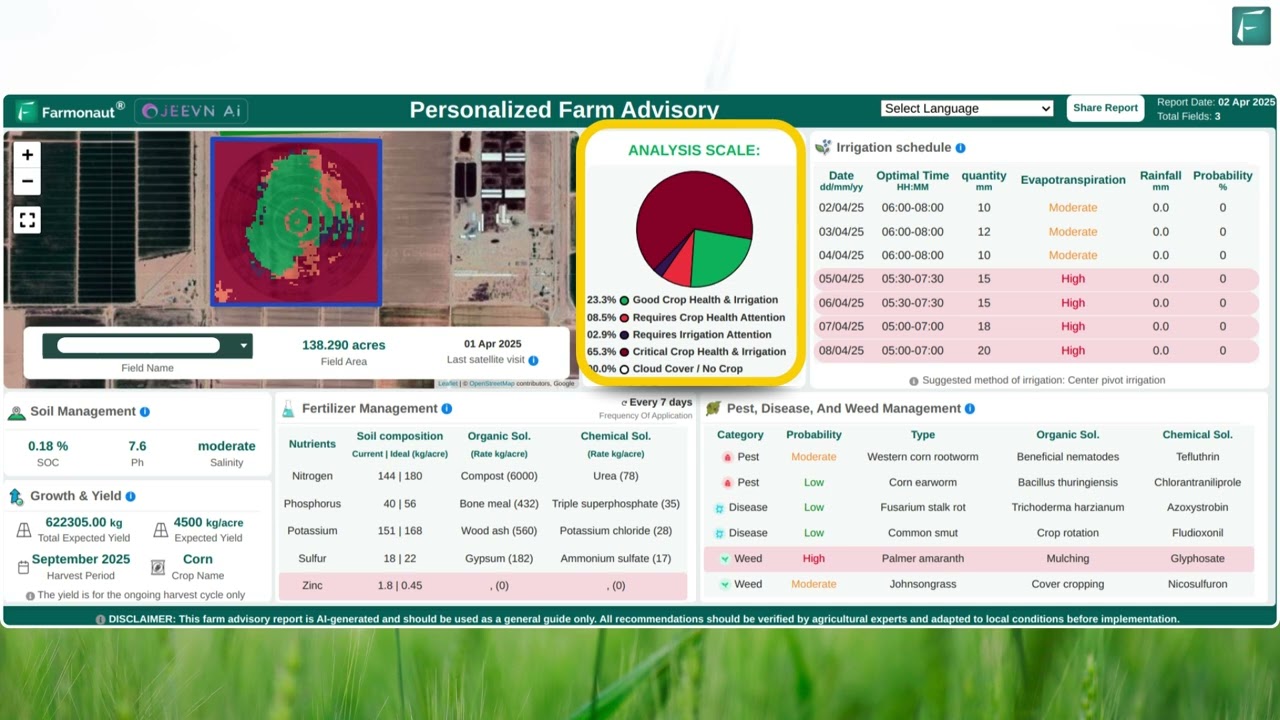
- ✔ Jeevn AI advisory: Actionable, AI-driven recommendations for herd health, grazing schedules, and environmental compliance—tailored for beef farms and ranches.
- ✔ Traceability solutions: Blockchain-powered recordkeeping for genetic, health, and carcass traits—building credibility for export, retail, and premium beef programs.
- ✔ Environmental impact monitoring: Carbon footprint and emissions analytics help producers align with regulatory and market-driven sustainability targets.
- ✔ Fleet and resource management: Enhance on-farm logistics—especially for extensive beef enterprises—improving efficiency and reducing costs.
Our modular subscription tiers allow users to select services according to scale, frequency, and functionality needs—supported by web, mobile, and API integration.
Farmonaut’s carbon footprinting platform empowers beef and mixed operations to demonstrate compliance and optimize for environmental stewardship in a transparent, tech-driven process.
Frequently Asked Questions (FAQ)
Q1: What is the main benefit of using Angus Simmental cross, Simmental Hereford cross, or Irish Simmental compared to single-breed cattle?
A: These crossbreeds offer hybrid vigor, delivering faster growth rates, improved fertility, heightened disease resistance, better adaptability, and superior carcass and milk yields. This translates to higher productivity and sustainability for modern beef farming.
Q2: How do these crossbred genetics enhance environmental sustainability in beef production?
A: By improving feed conversion efficiency and growth rates, these genetics lower emissions (per kg beef produced) and reduce resource use, helping producers meet environmental goals and market expectations.
Q3: What role does technology like Farmonaut play in cattle breeding and management?
A: Digital tools—from satellite monitoring to AI-driven herd insights and blockchain-based traceability—enable producers to precisely track performance, make data-backed decisions, and comply with sustainability requirements.
Q4: Which crossbreed is best for harsh climates or pasture-only systems?
A: The Simmental Hereford cross excels in variable and harsh conditions, thanks to its unmatched durability, foraging ability, and adaptability.
Q5: Can commercial producers access all of these technologies on mobile platforms?
A: Yes. Farmonaut’s solutions are available via Android, iOS, and web apps—allowing easy access to satellite data, AI insights, and traceability for producers of any scale.
Conclusion: Harnessing Angus Simmental Cross, Simmental Hereford Cross, and Irish Simmental Genetics for a Sustainable Beef Future
The drive toward more sustainable, adaptable, and productive beef herds is fundamentally shifting the landscape of modern cattle production. Through the scientifically guided application of Angus Simmental cross, Simmental Hereford cross, and Irish Simmental genetics, farmers and enterprises are equipped to meet the challenges of climate change, shifting consumer demands, and market pressures—now and well into 2026.
- Crossbred cattle deliver superior performance in growth, carcass quality, and survivability—directly enhancing operational profitability and sustainability.
- Technology-driven tools, like those offered by Farmonaut, amplify these advantages by providing real-time, actionable intelligence for breeding, grazing, and environmental management.
- Strategic selection—guided by data—ensures each farm can optimize its unique system: whether the focus is feedlot finishing, pasture resilience, export premium, or sustainability compliance.
In conclusion, the integration of hybrid genetics with leading-edge technology truly represents the pinnacle of modern cattle farming—empowering today’s producers to build sustainable, profitable, and resilient herds fit for the future.

 Godrej Agrovet
 Hayleys Agriculture
 Linx Agritech
 Adinet
 Save Your Soils
 GalaxEye Space
 Grandstream Algérie
 XOS Realty
 Geospatial Lab Africa
 Agro La Gándara
 HIPSAC
 ZOL Zimbabwe
 Juligerm
 AdBio
AdBio MISE Maroc
 NWNS
NWNS Red August Group
 Farm Inc
 WeMe Global
 Agrotoken
 Blue BearX
 Insignito
 DnCubed
 Indosistim Teknologi
 Liquify Digital
 CU Foods
 BeyondTech Global
 Rouge VC
 AgroRisk
 Oath Inc
 Esri North East Africa
 MDCV UK
 Etech Consulting Madagascar
 Vestlandsforsking
 WB Dev
 Sama Premium
 Tres Valles
 Blickwinkel
 Agricultural Credit Policy Council
 eKGIS
eKGIS Mostas Tech
 Andex
Andex Deluxe Conseil
 WICO
WICO Chimera Innovation
 SkyHarvest
 Teledarbas
 Exurbia Geospatial
 FieldZero
