

Reviewed August 2026 against USDA NASS, farmdoc daily (University of Illinois), and Mississippi State University Extension.
Try it: Run your own numbers →
Agricultural storage is any structure built to hold grain, equipment, or inputs between harvest and sale, and the United States is running out of spare room in it. On-farm and off-farm grain storage combined stood at 25.4 billion bushels as of December 1, 2022, per USDA NASS — 15.58 billion bushels on-farm, 11.822 billion off-farm. But farmdoc daily at the University of Illinois reported that as of December 1, 2025, on-farm storage was running at 80% utilization and off-farm at 65%, leaving an aggregate national surplus of just 5% of capacity. That squeeze is why “agricultural storage,” “agricultural buildings,” and “agricultural storage warehousing” searches are climbing: farmers and builders are trying to work out whether to add capacity now, what a steel building or fabric dome actually costs per bushel, and whether a bin pencils out against a public elevator rate.



What Is Agricultural Storage?
Agricultural storage covers any building or structure that holds farm output or inputs safely between production and use: grain bins and silos, hay and forage barns, equipment and machine sheds, cold storage for perishables, and input sheds for seed, feed, or chemicals. The defining requirement is protection from moisture, pests, temperature swings, and theft, at a cost that stays below the value of what is being protected.
For grain specifically, USDA NASS tracks two categories separately: on-farm storage (bins and structures on the producer’s own land) and off-farm storage (commercial elevators, cooperatives, and terminal facilities). As of December 1, 2022, the US had 15.58 billion bushels of on-farm capacity and 11.822 billion bushels off-farm, a combined 25.4 billion bushels, according to USDA NASS Grain Stocks data. On-farm capacity has exceeded off-farm capacity for years, a structural shift that has moved much of the storage decision onto individual operations rather than shared cooperative infrastructure.
State-level detail on capacity, facility counts, and historical trends for any state is published directly by USDA NASS. Anyone benchmarking a storage build against a regional peer group rather than a national average should start with the NASS Statistics by State tool, which carries current state-by-state grain storage figures rather than the national aggregate cited above.
US Grain Storage Capacity and the Utilization Squeeze
The core fact behind current interest in agricultural storage is a utilization squeeze that farmdoc daily at the University of Illinois documented using data as of December 1, 2025: on-farm storage was running at 80% utilization and off-farm storage at 65%, leaving an aggregate national surplus of only 5% of total capacity. farmdoc daily’s analysis, titled “US Grain Storage Capacity Growth Has Stopped,” ties that tight margin directly to a construction slowdown — capacity additions that used to arrive steadily have flattened even as production volumes have not.
A 5% surplus cushion means a single strong harvest, a rail or barge disruption, or a basis spike that delays selling can leave grain with nowhere to go on short notice. That is the practical stakes behind “agricultural storage” as a search term: it is no longer a routine infrastructure question but a capacity-planning one, and the farmdoc daily analysis is the most current public accounting of how tight that margin has become.
USDA NASS releases updated Grain Stocks data, including total on-farm and off-farm storage, on the 10th of each month; the most recent full state-by-state inventory is published as of December 1 each year. Pull current figures directly from the NASS Statistics by State tool. farmdoc daily republishes its capacity and utilization analysis periodically at farmdocdaily.illinois.edu — check for a newer post before citing the 80%/65%/5% figures above as current.
Agricultural Buildings: Steel-Frame, Bin, and Bag Options
“Agricultural buildings” as a search term covers several structurally distinct approaches to the same problem, and choosing wrong is expensive because these structures are meant to last decades. Metal, bolted-frame construction dominates on-farm bin building; flat, general-purpose steel buildings cover machine sheds and mixed-use storage; and, at the low-commitment end, polypropylene grain bags offer a temporary option with no permanent structure at all.
- Steel grain bins: Metal bins with a concrete pad and basic aeration ran $4.00 to $4.50 per bushel of capacity in fall 2024, per Mississippi State University Extension — up from $2.50 per bushel cited by the University of Tennessee in 2022 and quoted in the same Mississippi State report, reflecting several years of steel and labor cost inflation.
- General-purpose steel agricultural buildings: National Steel Buildings put 2026 construction cost at $18 to $28 per square foot for a steel agricultural building. The Metal Buildings Institute’s 2026 figures for a basic agricultural storage building, fully installed, run somewhat wider at $25 to $45 per square foot — the gap reflects site prep, foundation work, and finish level, which vary by builder and region.
- Polypropylene grain bags: The lowest-commitment option, running $0.06 to $0.17 per bushel in materials cost for 2024–2025, per industry pricing compiled by agri-systems.com and the Metal Buildings Institute. Bags require no permanent foundation but offer none of a bin’s long-term durability or theft/pest protection.
- Try it: Run your own numbers
The spread between $0.06 per bushel for a bag and $4.50 per bushel for a fully built bin is the entire decision in miniature: a bag defers the capital cost but offers no reusable asset and weaker protection against moisture and pests, while a bin is a multi-decade investment that only pencils out if the farm will use most of that capacity most years. That tradeoff is exactly what the calculator further down this page is built to run for a specific bushel count.

Learn more: Farmonaut’s Carbon Footprinting tools help track the material and operational footprint of a new storage build against a farm’s broader sustainability reporting.
Agricultural Storage Domes: Where They Fit and Where They Don’t
Fabric-covered agricultural storage domes are marketed for bulk commodity storage — sand, aggregate, fertilizer, and in some cases grain — on the strength of large clear spans without interior columns. What the research behind this article could not confirm is a market-share breakdown: USDA and NASS do not publish an enumeration of fabric dome installations against steel-bin or steel-building counts, and no independent registry exists to check a vendor’s installation claims against. If a dome-versus-steel comparison matters for a purchase decision, the only reliable path is asking each vendor bidding on a project for verifiable installation references in a comparable climate and commodity, since no public dataset can substitute for that.
What the National Steel Buildings and Metal Buildings Institute figures above do confirm is that steel construction has well-documented, current per-square-foot and per-bushel costs ($18–$28/sq ft general steel building; $25–$45/sq ft basic installed structure; $4.00–$4.50/bushel for a concrete-pad metal bin). Dome vendors do not publish a comparably sourced national cost range, so any dome quote should be checked against these steel benchmarks on a like-for-like span and finish basis before treating it as a saving.
1) Confirm span and clear-height needs against the equipment or commodity you’re storing. 2) Get climate-specific snow and wind load ratings in writing for your county, not a national average. 3) Ask for expected recoating or membrane-replacement intervals — fabric domes and painted steel age differently. 4) Price grain handling equipment (elevators, augers, aeration) separately, since neither structure type includes it by default. 5) Request three verifiable customer references within a comparable climate zone, and check them.

Agricultural Storage Warehousing: Construction Costs by Size
For general agricultural storage warehousing — machine sheds, input storage, mixed-use buildings — National Steel Buildings’ 2026 pricing puts a steel agricultural building at $18 to $28 per square foot of construction cost. The Metal Buildings Institute’s 2026 agricultural building cost calculator gives a wider band, $25 to $45 per square foot for a basic storage building fully installed, which includes more of the foundation and finish work that a bare shell quote leaves out. A builder quoting strictly the structural shell will land nearer the National Steel Buildings range; a quote for a complete, ready-to-use building will land nearer the Metal Buildings Institute range.
Grain-specific storage adds a further layer: bin construction is priced per bushel rather than per square foot, because a bin’s footprint scales with height as well as floor area. Mississippi State University Extension’s fall 2024 figures — $4.00 to $4.50 per bushel for a metal bin with concrete pad and basic aeration — are the current reference point; the same report cites a 2022 University of Tennessee estimate of $2.50 per bushel, showing the direction and scale of recent cost inflation in bin construction specifically.
How to get a current quote: Both National Steel Buildings and the Metal Buildings Institute update their cost tables as steel prices and regional labor rates shift. Check metal-buildings.org/grain-storage-building for the latest grain-building-specific range before budgeting, and get at least two regional quotes, since steel and labor costs vary by state and by season.
Own vs. Rent: The Bushel Math on Public Storage
Building storage is only half the decision; the other half is whether owning beats paying a commercial elevator’s public storage rate. Mississippi State University Extension put the 2024 public (commercial) grain storage rate at $0.33 per bushel annually. Against a $4.00–$4.50 per bushel construction cost for a metal bin, that annual rate is the number a farm needs to divide its per-bushel ownership cost by to find a payback period — and the answer depends heavily on how many years the bin will actually be filled, since an under-used bin never recovers its construction cost against the $0.33-per-bushel alternative.
Financing is available for farms that decide to build: the USDA Farm Service Agency’s Farm Storage Facility Loan program offers up to $500,000 per applicant, with repayment terms of 3 to 12 years, as of May 2025. That financing detail matters for the payback calculation, since a 12-year term spreads a bin’s construction cost over roughly the same horizon most bins are expected to remain useful before major maintenance.
Documented, not published: USDA and university extension sources do not publish an on-farm storage adoption rate — the share of US grain farms that actually have on-farm storage capacity. Government statistics report aggregate bushels and facility counts, not that proportion. A farm-level adoption comparison has to come from a state extension office or a farm’s own peer network rather than a national figure, because none currently exists in public data.
Platforms like Farmonaut Traceability record location, quality, and movement history for stored grain, which can support Farm Storage Facility Loan documentation and insurance claims when a lender or insurer needs a verifiable paper trail rather than a farmer’s own estimate.

Comparison Table: Steel Bin vs. Steel Building vs. Fabric Dome
| Structure Type | Cost Basis | Vintage / Source | Best Fit |
|---|---|---|---|
| Metal grain bin (concrete pad, basic aeration) | $4.00–$4.50 per bushel | Fall 2024, Mississippi State University Extension | On-farm grain storage sized to actual production volume |
| General steel agricultural building | $18–$28 per square foot | 2026, National Steel Buildings | Machine sheds, input storage, mixed-use buildings |
| Basic agricultural storage building, fully installed | $25–$45 per square foot | 2026, Metal Buildings Institute | Turnkey storage where foundation and finish are included in one quote |
| Polypropylene grain bag | $0.06–$0.17 per bushel (materials only) | 2024–2025, industry pricing | Temporary overflow capacity, no permanent structure |
| Fabric-covered dome | No independently verified national range; vendor quote required | Not published by USDA, NASS, or the sources above | Very large clear-span bulk storage where a vendor can supply verifiable local references |
Public storage at a commercial elevator runs $0.33 per bushel annually, per Mississippi State University Extension’s 2024 figure — the benchmark every ownership option above should be measured against before committing to a build.
Calculator: Storage Building Cost & Break-Even
Enter your target bushel capacity, expected fill rate, and the years you plan to use it to see a construction cost range and how it compares to paying the public storage rate over the same period.
Run your own numbers
Assumptions: bin construction cost calculated at $4.00–$4.50 per bushel of capacity (Mississippi State University Extension, fall 2024); public elevator storage compared at $0.33 per bushel per year (Mississippi State University Extension, 2024). Excludes land, permitting, financing costs, and regional labor variation — get a local quote and check current Farm Storage Facility Loan terms before budgeting a real build.
Satellite-Smart Farm Infrastructure Management
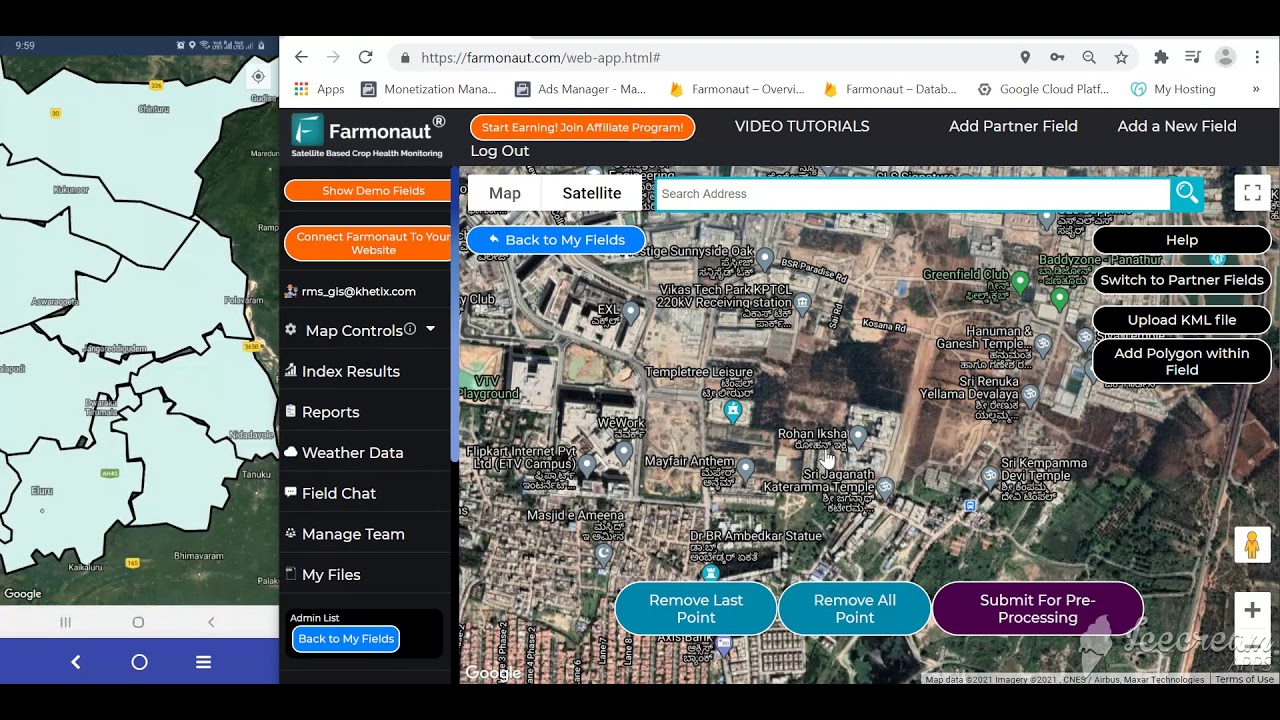
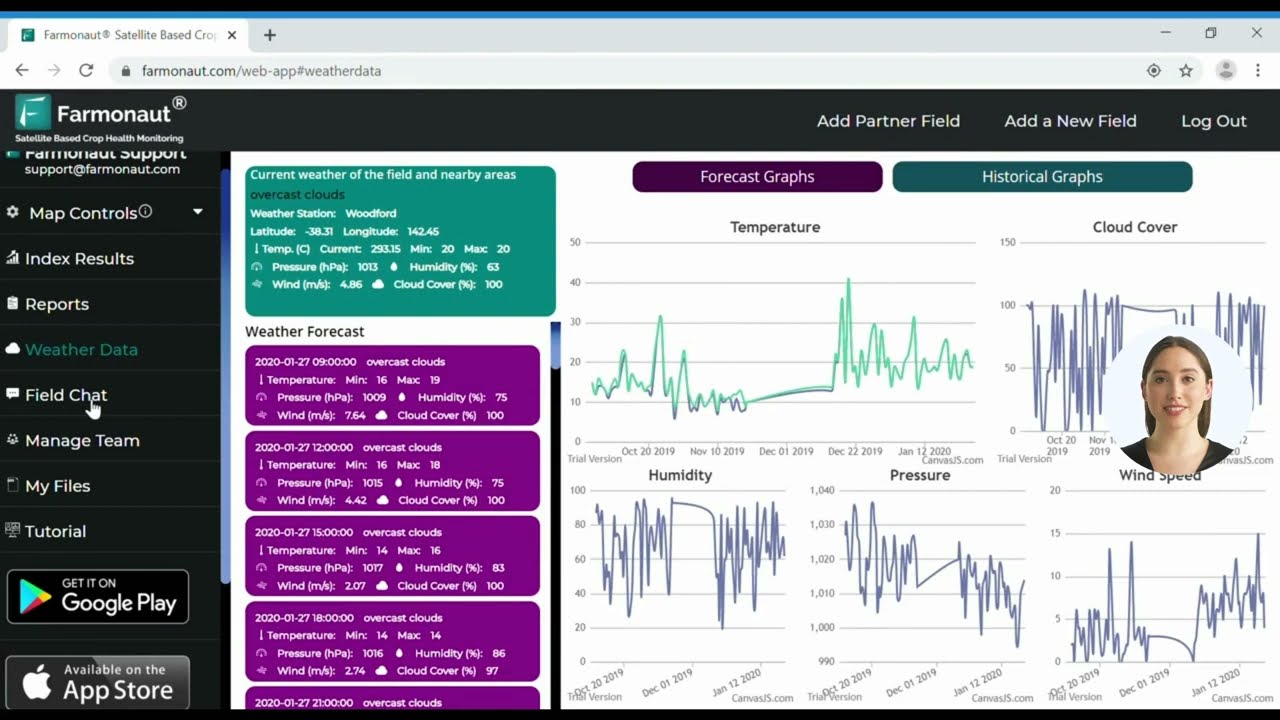
Storage buildings are one part of a farm’s infrastructure; managing what goes into and out of them is the other. Farmonaut’s satellite platform gives farms visibility into the crop conditions and yield estimates that determine how much storage capacity they’ll actually need before harvest arrives.
- 🛰 Satellite-Based Monitoring: Crop condition and soil health data to help plan storage capacity ahead of harvest rather than reacting to it.
- 🔗 Blockchain Traceability: Farmonaut Traceability records grain location, quality, and movement for buyers, lenders, and insurers.
- 🚚 Fleet & Resource Management: The Fleet Management Platform schedules equipment and maintenance around storage-building and machine-shed use.
- 🌍 Environmental Impact Tracking: Carbon Footprinting tools quantify the footprint of new storage construction and operation.


Choose a Farmonaut Subscription Plan
FAQ: Agricultural Storage and Buildings
What is agricultural storage?
Agricultural storage is any structure — grain bin, silo, machine shed, cold store, or input warehouse — built to protect farm output or supplies between production and use. In US grain reporting, USDA NASS splits it into on-farm capacity (15.58 billion bushels as of December 1, 2022) and off-farm capacity (11.822 billion bushels, same date), for a combined 25.4 billion bushels.
What does agricultural storage cost to build?
A metal grain bin with a concrete pad and basic aeration ran $4.00 to $4.50 per bushel of capacity in fall 2024, per Mississippi State University Extension. A general steel agricultural building runs $18 to $28 per square foot (National Steel Buildings, 2026), or $25 to $45 per square foot for a basic building fully installed (Metal Buildings Institute, 2026). Polypropylene grain bags, the lowest-cost option, run $0.06 to $0.17 per bushel in materials.
Are agricultural storage domes cheaper than steel buildings or bins?
There is no USDA-, NASS-, or university-published national cost range for fabric domes comparable to the steel figures above, so any dome cost claim should be checked against a current vendor quote and local references rather than assumed to undercut steel construction.
How much US grain storage capacity exists, and how full is it?
Combined on-farm and off-farm capacity was 25.4 billion bushels as of December 1, 2022, per USDA NASS. As of December 1, 2025, on-farm storage was running at 80% utilization and off-farm at 65%, leaving a national surplus of just 5% of capacity, per farmdoc daily at the University of Illinois.
What’s the difference between agricultural storage warehousing and a grain bin?
Warehousing typically refers to a general-purpose steel building priced per square foot ($18–$45/sq ft, depending on finish level), used for machine storage, inputs, or mixed commodities. A grain bin is a dedicated, usually cylindrical structure priced per bushel of capacity ($4.00–$4.50/bushel), built specifically for bulk grain with aeration and moisture control.
Is it cheaper to own storage or pay a commercial elevator?
Commercial (public) grain storage cost $0.33 per bushel annually in 2024, per Mississippi State University Extension. Whether owning beats that rate depends on how many years a bin gets used and at what fill rate — a bin built at $4.00–$4.50 per bushel needs roughly 12 to 14 years of near-full annual use to match that public rate, before financing costs. The USDA Farm Service Agency’s Farm Storage Facility Loan program, up to $500,000 per applicant with 3- to 12-year terms as of May 2025, is one financing route for a build decision.
How does Farmonaut help with storage planning?
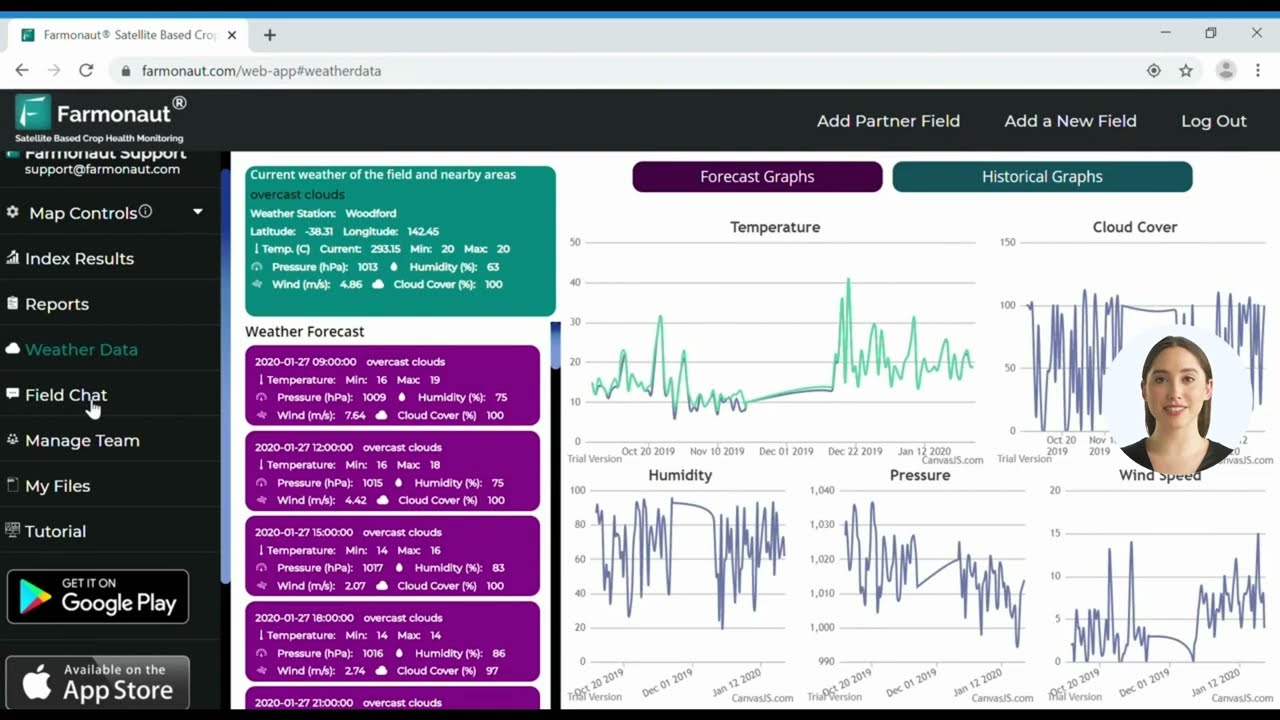
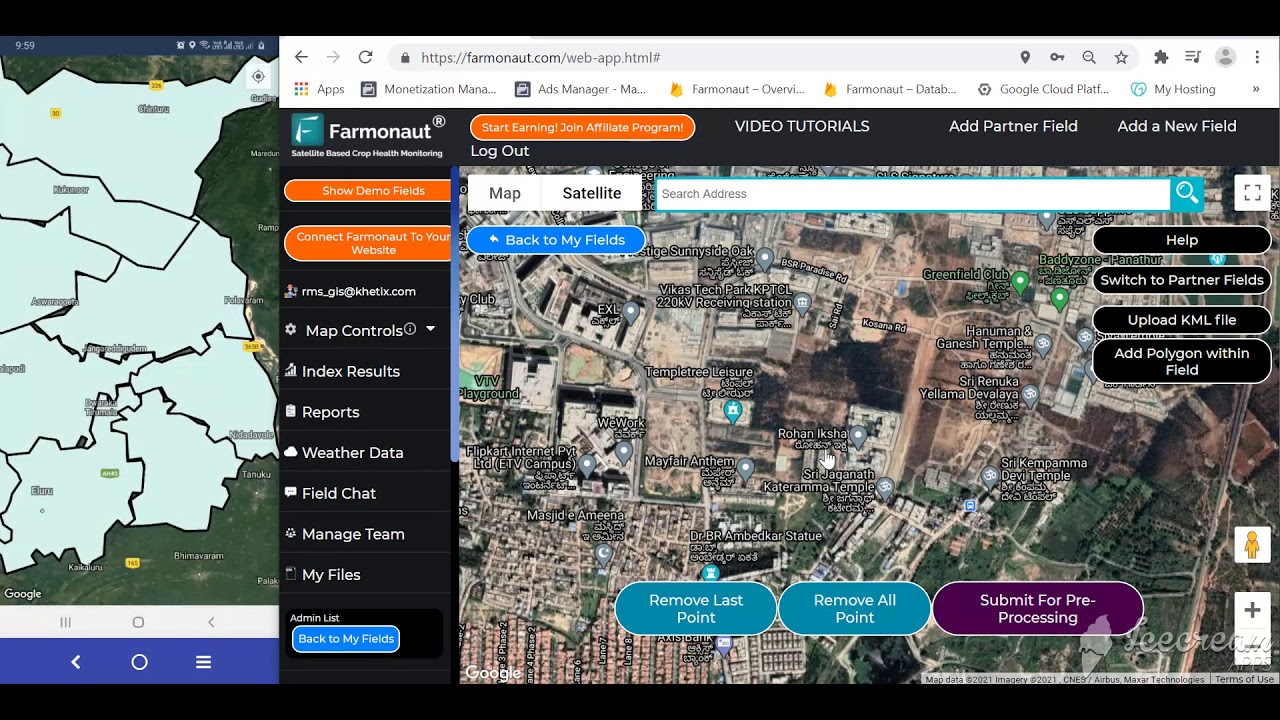
Farmonaut’s satellite monitoring gives advance visibility into crop condition and expected yield, helping farms size storage needs ahead of harvest, while Traceability and Carbon Footprinting tools support post-harvest record-keeping and sustainability reporting.





Conclusion: Sizing Storage to a Tight Market
The numbers behind this search — 15.58 billion bushels on-farm, 11.822 billion off-farm, 80% on-farm and 65% off-farm utilization, and a 5% national surplus cushion — describe a US grain storage system with little slack in it. That is the durable reason to plan a storage build carefully rather than as a one-year event: whichever structure type fits a given operation, the decision should rest on current NASS capacity data for the relevant state, a same-season quote checked against the National Steel Buildings and Metal Buildings Institute cost bands above, and a break-even comparison against the public storage rate before signing a contract.
Check farmdoc daily’s most recent utilization update and USDA NASS’s Statistics by State data before finalizing any budget built on the figures in this article — both are refiled on a predictable schedule, and a build decision should use the newest numbers available, not last year’s. For the construction-cost side, farmdoc daily and Metal Buildings Institute both republish on a schedule tied to steel pricing cycles, not a fixed calendar date.

 Anaxee Digital Runners
 Patrick America
 Red Dog Management
 Liquify Digital
 CU Foods
 BeyondTech Global
 Rouge VC
 AgroGreen Dynamics
 AgroRisk
 Oath Inc
 Reddane Farming
 Esri North East Africa
 Cresol
 MDCV UK
 Zerella Group
 Etech Consulting Madagascar
 Vestlandsforsking
 Delicio
 WB Dev
 Sama Premium
 Prochecker
