

Air Quality Control for Mining: Sensors, Limits & Compliance
Reviewed August 2026 against the Mine Safety and Health Administration (MSHA) and the Federal Register.
Air quality control for mining means continuously measuring respirable dust and gas concentrations at the source and using that data to trigger ventilation, water sprays, or work stoppages before exposure limits are breached. In the United States, the baseline just moved: MSHA’s respirable crystalline silica rule, published April 18, 2024, cut the permissible exposure limit (PEL) in half and added a mandatory sampling trigger. Any mine air quality monitoring programme built around the old rule is now out of date, and the compliance clock is already running for most operators.
Table of Contents
- What Changed and Why It Matters Now
- The 2024 MSHA Silica Rule: Numbers and Deadlines
- Sensor Types Used in Mine Air Quality Monitoring
- Comparative Matrix: Sensor Technology for Mining
- From Detection to Control: Ventilation and Dust Suppression
- Diesel Particulate Matter Limits Underground
- Silica Exposure Margin Calculator
- Where “Lemon Quality Control” Fits — and Where It Doesn’t
- Compliance Costs and What Happens If You Miss the Deadline
- Satellite Data as a Second Layer Above Ground Sensors
- FAQs
- Conclusion: How to Verify You’re Still Compliant
- Farmonaut Subscriptions (Pricing Table)
- Jump to the calculator
What Changed and Why It Matters Now
For decades, US mine air quality regulation traced back to two statutes: the Federal Coal Mine Health and Safety Act of 1969, which established the first federal dust measurement mandates for coal mining, and the Federal Mine Safety and Health Act of 1977, which created MSHA and unified safety standards across coal and metal/nonmetal operations. Both laws assumed periodic sampling was good enough. The 2024 silica rule breaks with that assumption and pushes operators toward continuous, sensor-based monitoring instead of quarterly spot checks.
That shift is also showing up in procurement data. IndexBox market analysis published in 2025 estimated that 70% of new mining projects are now implementing digital air quality monitoring for real-time compliance, rather than relying solely on personal dust monitors read after the fact (IndexBox, 2025). MSHA’s own exposure assessments have found that 27% of US miners work in conditions where air contaminants exceed permissible limits (MSHA) — a figure worth checking against MSHA’s current enforcement data before you assume your site is the exception.

Why This Page Covers Both “Control” and “Monitoring”
Mine air quality monitoring and mining air quality control are two halves of the same system, and regulators now expect them wired together. Monitoring means measuring respirable crystalline silica, particulate matter (PM2.5 and PM10), methane (CH4), carbon monoxide (CO), sulfur dioxide (SO2), nitrogen oxides (NOx), and hydrogen sulfide (H2S) at fixed and personal sampling points. Control means acting on that data — adjusting ventilation, triggering dust suppression, or pulling crews out — fast enough to matter. A sensor that logs an exceedance without triggering a response satisfies neither health protection nor, increasingly, the letter of the rule.
- Health protection: silicosis, pneumoconiosis (black lung), and chronic obstructive pulmonary disease (COPD) are the diseases the exposure limits exist to prevent.
- Incident mitigation: early detection of methane or CO buys time before explosion or asphyxiation risk becomes acute.
- Environmental management: dust and gas control also limits fugitive emissions leaving the site boundary.
- Regulatory compliance: MSHA’s exposure limits are enforceable minimums, not guidance — violations carry citations and civil penalties.

The 2024 MSHA Silica Rule: Numbers and Deadlines
This is the single most important regulatory fact for anyone running air quality control for mining in the United States right now, so the numbers deserve to be stated exactly. MSHA’s final rule, published in the Federal Register on April 18, 2024, lowers the permissible exposure limit (PEL) for respirable crystalline silica to 50 micrograms per cubic meter of air (µg/m³) as an 8-hour time-weighted average — half the previous limit of 100 µg/m³ (Federal Register / MSHA, 2024).
The rule also sets an action level of 25 µg/m³ — half the new PEL — that triggers mandatory air sampling even before the exposure limit itself is breached. In practice, that means a mine air quality monitoring programme calibrated only to alarm at 50 µg/m³ is already non-compliant with the spirit of the rule; sampling obligations kick in at half that concentration.
Compliance deadlines are staggered by mine type:
- Coal mine operators: compliance required by April 14, 2025.
- Metal and nonmetal mine operators: compliance required by April 8, 2026.
Both dates come from MSHA’s own final rule summary (MSHA, 2024). If your operation is metal/nonmetal, that second deadline has either just passed or is immediately ahead depending on when you’re reading this — confirm the current status directly against MSHA’s rule page rather than this article, since enforcement guidance and any extensions would be posted there first. The rule itself is not expected to be revisited on a fixed schedule; MSHA’s regulatory history shows major exposure-limit revisions happening roughly once every five to ten years, so the fastest way to catch a future change is to monitor MSHA’s silica rulemaking page directly rather than waiting for secondary coverage.

Sensor Types Used in Mine Air Quality Monitoring
An air quality sensor for mining is not one device — it’s a category, and the right choice depends on what contaminant matters most at a given point in the operation. Five sensor families cover most deployments:
- Laser-based sensors: use light-scattering to measure particulate matter (PM2.5, PM10) in real time without contact.
- Electrochemical sensors: specialize in low-level detection of toxic gases — CO, NO2, H2S — and are compact enough for personal monitors.
- Optical particle counters: count and size individual particles in situ, useful for dust-rich zones like drill and blast sites.
- Photoionization detectors (PID): detect volatile organic compounds (VOCs) and low-concentration hazardous gases such as benzene and toluene.
- Metal-oxide semiconductor (MOS) sensors: rugged, wide-range gas detectors for CO, NO2, H2S, and methane (CH4), often used where durability matters more than precision.
None of these sensors substitutes for the personal or area sampling MSHA’s silica rule requires once the 25 µg/m³ action level is crossed — they’re the environmental layer that tells you when a formal sample is needed, not a replacement for it.
Comparative Matrix: Sensor Technology for Mining
| Sensor Type | Key Features | Monitoring Capability | Estimated Accuracy (%) | Deployment in Mining | Relevant to Which MSHA Requirement |
|---|---|---|---|---|---|
| Laser-Based Sensors | Real-time, non-contact PM measurement; low maintenance | PM2.5, PM10 | 95–99% | Surface & underground | Silica PEL/action-level screening |
| Electrochemical Sensors | Gas-specific; highly sensitive; compact | CO, NO2, H2S, O2 | 90–98% | Surface & underground | Toxic gas exposure limits |
| Optical Particle Counters | Particle sizing/counting; fast response | PM1, PM2.5, PM10 | 95–99% | Sampling stations | Dust suppression trigger points |
| Photoionization Detectors (PID) | VOC/low-level hazardous gas detection | VOC, benzene, toluene | 85–95% | Surface & underground | Volatile gas compliance |
| Metal-Oxide Semiconductor (MOS) | Durable, wide-range gas detection | CO, NO2, H2S, CH4 | 80–95% | Surface & underground | Explosive/asphyxiant gas alarms |

From Detection to Control: Ventilation and Dust Suppression
Sensor data is only useful once it drives a control action. Modern air quality control for mining pairs the sensor types above with three response mechanisms:
- Adaptive ventilation: fan speed and airflow routing adjust to real-time gas and particulate readings instead of running at a fixed rate all shift.
- Localized extraction and dust suppression: sensors at drilling and blasting sites trigger water sprays or chemical suppressants at the moment dust generation spikes, rather than on a fixed schedule.
- Automated alerts and shutdowns: when a reading crosses a preset threshold — such as the 25 µg/m³ silica action level — the system can notify personnel and, where configured, halt work in that zone.
The economics matter here too. Equipment manufacturers and industry practice put continuous air quality monitoring stations at mid-sized mining operations in a $150–300 per month operating cost range (industry interviews, supplier estimates, 2024–2025) — figures that come from supplier guidance rather than a peer-reviewed source, so treat them as a starting point for your own quote rather than a guaranteed number. A specific installed capex figure per mine — sensors, wiring, dashboard licensing — is not published in any dataset available for this article; the only reliable way to get one for your site is to request itemized quotes from at least two monitoring vendors against your mine’s actual layout and headcount.



Farmonaut’s multi-platform apps deliver environmental monitoring data alongside site imagery, accessible via web, Android, and iOS, giving site managers and safety engineers a mobile view of conditions alongside ground sensor readings.

Diesel Particulate Matter Limits Underground
Silica isn’t the only air contaminant under active federal rulemaking. A separate Federal Register action addresses diesel particulate matter (DPM) emissions from equipment operating underground in US coal mines, setting a limit of 2.5 grams per hour per equipment unit (Federal Register / MSHA, 2026). For underground coal operators, this means air quality control for mining now has to account for two independent contaminant streams — respirable silica and diesel exhaust — each with its own limit, sampling method, and equipment implication. A gas sensor package built only around methane and CO will miss both.
Silica Exposure Margin Calculator
Use your own shift-average sensor reading against MSHA’s 2024 limits to see how much margin you have before hitting the action level or the PEL.
Assumes a single shift-average reading and MSHA’s 2024 respirable crystalline silica limits (25 µg/m³ action level, 50 µg/m³ PEL). It does not account for multi-shift cumulative exposure, respirator use, or mine-specific ventilation plans — use it as a screening check, not a substitute for MSHA-compliant sampling.
Where “Lemon Quality Control” Fits — and Where It Doesn’t
Lemon quality control is a distinct discipline from mine air quality monitoring — it covers grading citrus fruit for size, blemishes, brix (sugar content), and rind condition in packing houses and processing lines, not airborne contaminant detection. If you arrived here searching for produce-grading standards, this page won’t serve that need well, and the reason is deliberate: this article covers air quality sensors and control systems for mining operations specifically, and Farmonaut’s agricultural quality-monitoring content lives on separate pages built around crop and produce grading rather than industrial air contaminants. The connection between the two topics is limited to the shared phrase “quality control” and the fact that both increasingly rely on sensor-driven, real-time measurement rather than manual spot checks — but the sensors, thresholds, and regulatory bodies involved don’t overlap.

Compliance Costs and What Happens If You Miss the Deadline
MSHA’s silica rule doesn’t just set limits — it changes what operators must document. Under the rule, mines are expected to:
- Sample respirable crystalline silica whenever exposure is reasonably expected to be at or above the 25 µg/m³ action level.
- Maintain records demonstrating exposures stay under the 50 µg/m³ PEL as an 8-hour time-weighted average.
- Provide medical surveillance and respiratory protection where engineering controls alone cannot bring exposure under the limit.
- Meet the April 14, 2025 deadline (coal) or April 8, 2026 deadline (metal/nonmetal) for full implementation (MSHA, 2024).
What isn’t published in any dataset reviewed for this article is a census of how many active US mines currently meet these standards versus how many are still out of compliance, or a documented before/after study tying air quality monitoring adoption to occupational disease reduction at named US sites. Both would be useful benchmarks, and neither exists in public form as of this writing — the honest approach is to say so rather than estimate a number. If you need a current compliance snapshot for a specific mine, MSHA’s mine data retrieval system publishes citation and inspection history by mine ID, refreshed on a rolling basis as inspections close.
Beyond the regulatory floor, sensor-driven control also supports broader environmental goals: reducing fugitive dust that could otherwise settle into nearby water bodies or soils, and demonstrating the kind of proactive risk management that underpins a mining company’s standing with regulators, insurers, and local communities. That’s a real operational benefit, but it sits downstream of the compliance requirement — get the MSHA numbers right first.
Farmonaut’s Carbon Footprinting tools extend this same monitoring logic to emissions reporting, helping mining companies document environmental performance alongside air quality data. For operations needing an audit trail for supply chain or resource claims, Farmonaut’s Blockchain-Based Product Traceability provides tamper-evident record keeping that pairs naturally with compliance documentation. Read more on the broader economics in is mining a profitable business.
Satellite Data as a Second Layer Above Ground Sensors
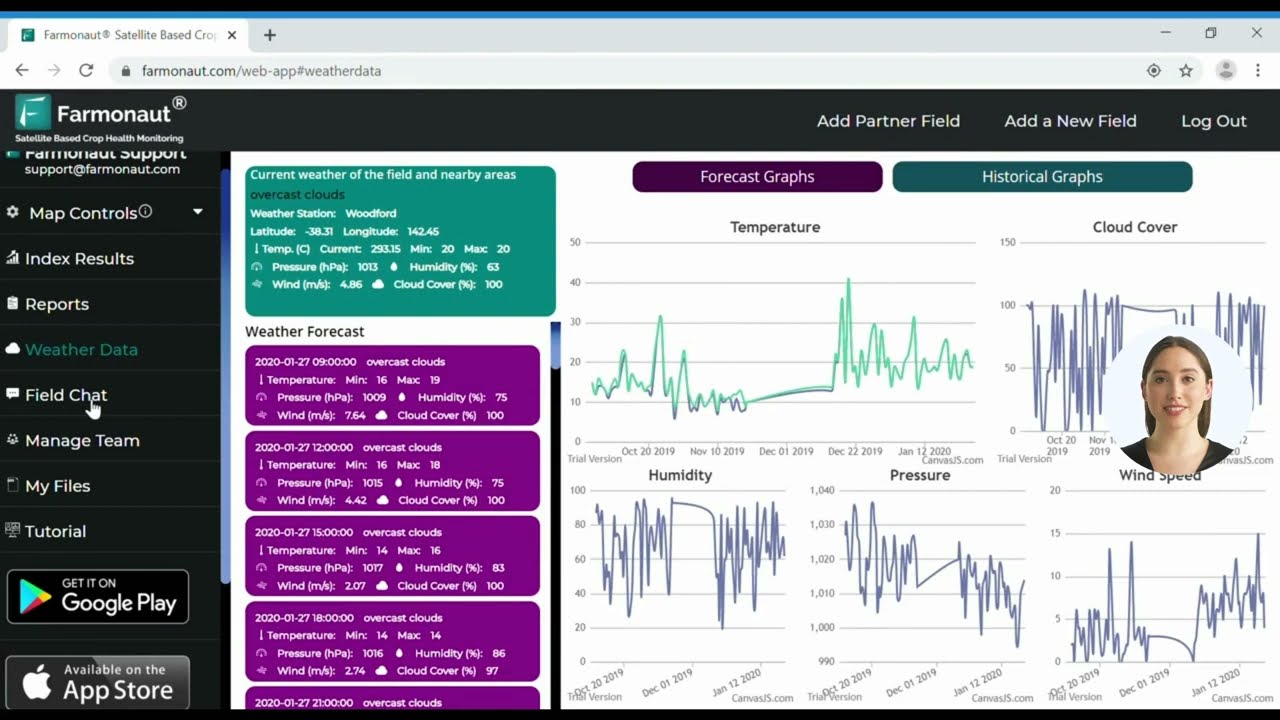
Ground sensors measure a point; satellites measure a plume. Farmonaut’s satellite imagery adds a site-wide view that ground-based air quality sensors can’t provide on their own — tracking dust plume extent, identifying diffuse fugitive emission sources across a large surface footprint, and giving environmental teams a way to cross-check whether a localized sensor reading reflects a site-wide pattern or an isolated event.
- Satellite-based monitoring: multispectral imagery supports site-wide tracking of dust plumes and land disturbance alongside point-source sensor data.
- AI-driven analysis: Farmonaut’s Jeevn AI Advisory System combines sensor readings, imagery, and weather data into operational recommendations.
- Environmental impact tools: carbon footprinting and impact monitoring support sustainability reporting that complements MSHA compliance records.
- Blockchain traceability: tamper-evident tracking of extraction and transit data for regulatory reporting and stakeholder confidence.
The platform is accessible via Android, iOS, and web, plus an API for enterprise dashboard integration, with developer documentation covering endpoint setup for teams building custom monitoring workflows.
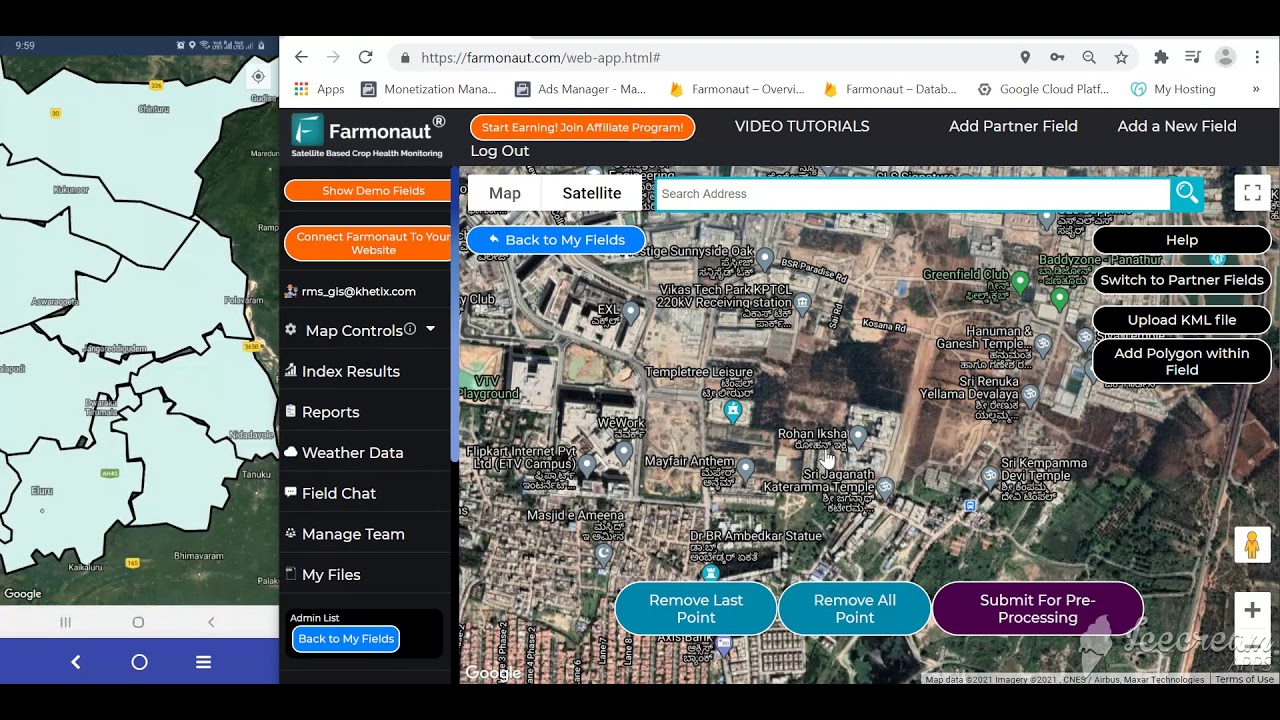
Farmonaut’s Fleet & Resource Management tools help mining operations manage vehicle logistics and reduce emissions from haul fleets, a meaningful contributor to site-wide air quality alongside drilling and blasting dust. Explore Farmonaut’s Large-Scale Resource Management platform for the full set of monitoring and reporting tools.
FAQs
What is the current MSHA limit for respirable crystalline silica in mining?
50 micrograms per cubic meter of air (µg/m³) as an 8-hour time-weighted average, effective under MSHA’s rule published April 18, 2024 — half the prior limit of 100 µg/m³. An action level of 25 µg/m³ triggers mandatory sampling even below the full limit (Federal Register/MSHA).
When do mines have to comply with the new silica rule?
Coal mine operators had to comply by April 14, 2025. Metal and nonmetal mine operators must comply by April 8, 2026 (MSHA).
Which contaminants does air quality control for mining typically cover?
Respirable crystalline silica, particulate matter (PM2.5 and PM10), methane, carbon monoxide, sulfur dioxide, nitrogen oxides, hydrogen sulfide, volatile organic compounds, and — for underground coal — diesel particulate matter, capped at 2.5 grams per hour per equipment unit under a separate 2026 Federal Register action.
What sensor types are used for mining air quality sensor deployments?
Laser-based particulate sensors, electrochemical gas sensors, optical particle counters, photoionization detectors, and metal-oxide semiconductor sensors — each suited to different contaminants and site conditions, detailed in the comparative matrix above.
Is “lemon quality control” related to mine air quality monitoring?
No. Lemon quality control refers to citrus grading for size, blemishes, and sugar content in produce operations, an entirely separate discipline from industrial air contaminant monitoring covered on this page.
How much does continuous air quality monitoring cost at a mid-sized mine?
Industry supplier estimates put ongoing operating costs for continuous monitoring stations at $150–300 per month for a mid-sized operation (2024–2025 industry guidance). Installed capex varies by site layout and isn’t published as a standard figure — request itemized quotes from monitoring vendors for your specific site.
Conclusion: How to Verify You’re Still Compliant
The durable part of this topic isn’t the number — it’s the method for checking it. Three steps hold up regardless of when you’re reading this: first, confirm the current PEL and action level directly on MSHA’s silica rulemaking page, since exposure limits are revised on multi-year cycles rather than annually. Second, check your mine type’s compliance deadline against MSHA’s final rule summary rather than a secondary source. Third, if you operate underground coal equipment, cross-check diesel particulate emissions against the 2.5 grams-per-hour limit in the Federal Register action separately from silica compliance, since they’re governed by different rulemakings with different timelines.
Air quality sensor mining technology — laser particulate sensors, electrochemical gas detectors, and the ventilation and dust-suppression systems they trigger — is the mechanism for staying inside those limits day to day. Satellite imagery and fleet-level tools add a site-wide check that ground sensors alone can’t provide. Neither replaces the underlying regulatory obligation, which is worth re-verifying against MSHA’s own pages on a schedule, not assumed to be static.
Farmonaut Subscriptions (Pricing Table)
Choose the right Farmonaut subscription for advanced environmental, agricultural, and mining-focused satellite solutions:
Discussion
Questions, corrections or field experience? Share them below. First-time comments are reviewed before they appear, and your email is never published.
No comments yet. Be the first to add a question or your experience.

 Dalgety Minerals Pty Ltd
 Vortex Minerals Pty Ltd
 Faith At Work (Pty) Ltd
 Geotech Mining Solutions plc
 Vulcan International Limited
 Kidepo Associates
 GKY Mining
 Alkimy SARL
 Double A Trading
 GemSprout Metals Limited
 Qader Group
 Ileys General Trading
 SG Gold Mining LLC
 VRV Global Pte Ltd
 Omsri International FZE
 G.I.T.T.
 Jaunita Erss Ltd
 Almosi SARL
 SRK Consulting
 Berks Gold Limited
 Mwerezi Minerals Company Limited
 Mining SARL
 SenGold Invest SAS
 Exploration consultancy · South Africa · Gold










