

Lithium · Joint venture guide
Albemarle Joint Ventures: Who Owns Which Lithium Mine
Albemarle owns 49% of Talison Lithium (Greenbushes) and 50% of the Wodgina mine with MinRes. This page shows the partners, 2026 output and results from filings, and how to read a mining joint venture.
Key takeaways
- Albemarle holds 49% of Talison Lithium, owner of Greenbushes, and 50% of Wodgina with Mineral Resources (Albemarle, 2026).
- Greenbushes made 1.41 million tonnes of spodumene concentrate in the year to June 2026 at a production cash cost of A$415 per tonne, 100% basis (IGO annual report, 2026).
- Albemarle’s Energy Storage segment reported a realised price of US$19.53 per kg LCE in Q2 2026, up 60.5% on a year earlier (Albemarle, 2026).
- Albemarle idled its Kemerton hydroxide plant on 11 February 2026 but said its Greenbushes and Wodgina stakes were not affected (Albemarle, 2026).
- A JV stake is not the same as offtake or cash: Albemarle holds half the Greenbushes offtake, and IGO received no TLEA dividends in its year to June 2026.
In this article
- Albemarle's lithium joint ventures at a glance
- Why lithium counts as an energy storage mineral
- Which countries supply the lithium behind these ventures
- Greenbushes and the 49% Talison stake
- What a lithium pegmatite looks like on the ground
- Wodgina and the 50/50 venture with MinRes
- Kemerton: the conversion step in Albemarle's own plant
- Joint ventures Albemarle has sold
- How these ventures show up in Albemarle's results
- How a mining joint venture works
- Work out your share of a joint venture mine's output
- What to check before relying on lithium JV numbers
- Where satellite screening fits
- Frequently asked questions
Albemarle (NYSE: ALB) shares the two biggest lithium mines in its portfolio with partners. It owns 49% of Talison Lithium, which runs the Greenbushes mine in Western Australia, and 50% of Wodgina, a Pilbara mine run by Mineral Resources (MinRes), according to Albemarle’s own mining interests page. Both ventures feed lithium into batteries for cars and grid storage. This page sets out who owns what, how each venture is built, what the filings show for Albemarle’s 2026 results, and how to read a mining joint venture without being misled by the headline stake.
A joint venture (JV) is an agreement where two or more companies share the cost, risk and output of one project. In mining the partners usually pay for the mine in proportion to their stakes and take the product the same way. Some JVs are set up as a separate company; others are only a contract. That difference changes how profit reaches the partners, and it is explained in a later section.
Albemarle’s lithium joint ventures at a glance
The table lists the lithium ventures named in Albemarle’s and its partners’ filings. Stakes are as stated by each company on the date shown.
| Venture | Albemarle stake | Partners | Asset and location | Operator |
|---|---|---|---|---|
| Talison Lithium (held through Windfield Holdings) | 49% | Tianqi Lithium (51% of the Tianqi-IGO vehicle TLEA) and IGO (49% of TLEA) | Greenbushes hard-rock lithium mine, south-west Western Australia | Talison Lithium |
| Wodgina joint venture | 50% | Mineral Resources (50%) | Wodgina hard-rock lithium mine, Pilbara, Western Australia | MinRes |
Sources: Albemarle and the IGO annual report for the year to June 2026. Albemarle describes the Kemerton hydroxide plant as its own (see below), so Kemerton is not listed as a joint venture.
Two other Albemarle ventures had nothing to do with lithium mining: the Eurecat catalyst joint venture and the Ketjen refining catalyst business. Both were sold down in early 2026 and are covered under “Joint ventures Albemarle has sold”.
Why lithium counts as an energy storage mineral
Lithium is the key input to modern rechargeable batteries, which is why it is treated as an energy storage mineral. The U.S. Geological Survey estimates that batteries took 88% of world lithium use in its 2026 Mineral Commodity Summaries, ahead of ceramics and glass at 4% and lubricating greases at 2%. USGS ties the rise to rechargeable batteries for electric vehicles, grid storage, portable electronics and electric tools.
Chart
Where world lithium is used
Estimated share of global end use, per cent
That is why a venture such as Greenbushes matters beyond one mine. A tonne of spodumene concentrate (the mineral concentrate sold by a hard-rock mine) is the raw feed for lithium hydroxide and carbonate, the chemicals that battery makers buy. Owning a share of the feed, and of the conversion plant, gives a company a position in an early step of the battery supply chain.
Two terms recur on this page. SC6 is spodumene concentrate standardised to 6% lithium oxide (Li2O), the usual trading basis. LCE is lithium carbonate equivalent, a way of putting all lithium products on one scale so volumes can be added together.
▶ What mining does for an economy, from exports and jobs to energy-transition minerals. · 5:03
Which countries supply the lithium behind these ventures
Australia mined an estimated 92,000 tonnes of contained lithium in 2025, more than any other country, in the USGS estimates. China was second and Chile third. Both of Albemarle’s mine ventures sit in Western Australia, so they sit in the largest source region by tonnage. USGS also lists Australian reserves at 8.4 million tonnes of contained lithium, behind only Chile at 9.2 million.
Chart
Lithium mine production, selected countries, 2025 estimate
Tonnes of contained lithium
The ranking changes quickly. Argentina, Zimbabwe and Mali are all expanding; USGS shows Mali rising from 770 tonnes in 2024 to an estimated 9,400 tonnes in 2025 after two new operations started. Treat any production table as a snapshot and check the date.
National surveys count differently from USGS. Geoscience Australia’s preliminary tables for December 2025 show Australia’s economic demonstrated lithium resources at 9,578 kilotonnes of contained lithium, up 9% from 8,799 the year before, and an Australian production estimate of 118 kilotonnes for 2025 (against 92 kilotonnes in the USGS table). The gap comes from different methods, which is why this page names the source of each number.
For more on how Australian spodumene projects compare, see our guide to lithium in Australia: spodumene deposits, output and targets.
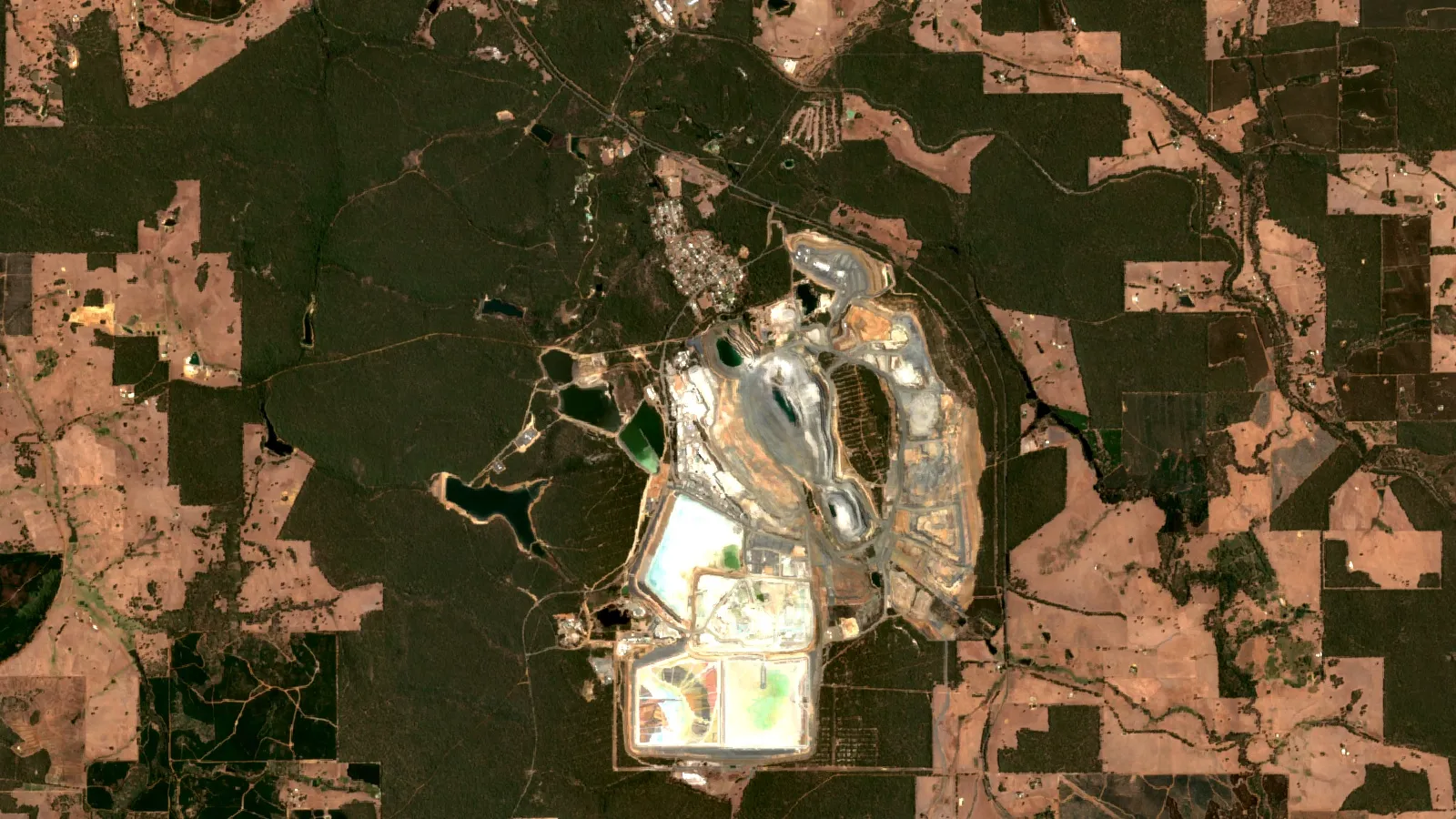
Greenbushes and the 49% Talison stake
Greenbushes, about 250 kilometres south of Perth, is the world’s largest hard-rock lithium mine according to Reuters-sourced coverage on Mining.com, and IGO describes it as hosting the highest ore reserve grade of any hard-rock lithium mine. It is owned and operated by Talison Lithium. Albemarle holds 49% of Talison; the other 51% sits with Tianqi Lithium Energy Australia (TLEA), itself a joint venture in which Tianqi Lithium holds 51% and IGO 49%.
Chart
Greenbushes revenue and EBITDA, 100% basis
A$ million, years to 30 June
Multiplying the layers gives the look-through stakes. IGO states that its indirect interest in Greenbushes is 24.99% (49% of 51%). By the same arithmetic, Tianqi’s indirect share through TLEA is about 26.01% (51% of 51%). Albemarle’s 49% is held through Windfield Holdings, the vehicle it shares with TLEA. Tianqi’s figure is calculated from the stakes the companies publish; IGO and Albemarle state theirs directly.
Albemarle’s February 2026 announcement adds a second point: the company holds half of the offtake rights from Greenbushes through the Australian JV. Offtake means the right to buy product; it is a contract term, and it can differ from the ownership stake.
What Greenbushes produced and what it cost
IGO’s annual report for the year to 30 June 2026 gives the operating numbers on a 100% basis, in Australian dollars. Spodumene concentrate output was 1.41 million tonnes, down 5% from 1.48 million the year before, because of lower throughput and recovery. Revenue rose to A$2,858 million from A$1,788 million as lithium prices recovered, and EBITDA (earnings before interest, tax, depreciation and amortisation) rose to A$2,099 million from A$1,173 million. Production cash cost was A$415 per tonne of concentrate, against A$325 a year earlier, and capital spending was A$355.7 million, half the prior year’s level.
Resources and reserves
For the end of 2025, IGO reported a Greenbushes mineral resource of 457 million tonnes of ore grading 1.6% Li2O (a mineral resource is the part of a deposit with reasonable prospects of economic extraction) and an open-pit ore reserve of 176 million tonnes at 1.9% Li2O (an ore reserve is the part a company has shown can be mined at a profit under stated assumptions). The 2025 estimate included the first underground resource at Greenbushes, 132 million tonnes at 1.5% Li2O. In 2025 the mine treated 6.16 million tonnes of ore at 1.9% and made 1.35 million tonnes of concentrate, a yield of roughly 22%.
The June fire at CGP3
Greenbushes has several processing plants. The newest, CGP3 (chemical-grade plant 3), was being ramped up when a fire stopped it in June 2026. Albemarle dates the fire 9 June; IGO’s quarterly report says 7 June. IGO reports that CGP3 was offline for about seven weeks and restarted in early August 2026. Albemarle said in its second-quarter 2026 results that it expected minimal impact on Energy Storage sales volume, partly because Wodgina produced more than planned.
What a lithium pegmatite looks like on the ground
Greenbushes is a pegmatite, a coarse-grained igneous rock that forms from the last, mineral-rich melt of a cooling granite. Talison describes the Greenbushes pegmatite as about 2,525 million years old, more than 3 kilometres long and up to 300 metres wide in its main zone. The lithium zone runs for more than 2 kilometres and is rich in spodumene, which often makes up half of the rock. Tin was mined in the area from 1888, tantalum from the 1940s, and the first lithium plant opened in 1983.
The age of the district is a useful reminder. Greenbushes was a known mining area for nearly a century before its lithium was developed at scale. New lithium discoveries often come from re-reading old mining districts with modern data, not only from empty ground. Our video on how satellites help find lithium in Nigeria shows one such approach.

▶ How satellite data was used to look for lithium in Nigeria. · 10:49
Wodgina and the 50/50 venture with MinRes
Wodgina lies in the Pilbara, about 1,525 kilometres north of Perth. MinRes describes the venture as an unincorporated joint venture, 50% MinRes and 50% Albemarle, with MinRes managing everything from exploration to processing. There are three processing trains with a combined capacity of about 750,000 tonnes a year of spodumene concentrate at 5.5% Li2O. Concentrate goes by road to Port Hedland for export. The host rocks are weathered in the upper 20 to 50 metres and harder below.
MinRes reports Wodgina on a 50% attributable basis, so each partner’s share is the figure it publishes. In MinRes’s ASX release of 29 July 2026, Wodgina’s sales for the year to 30 June 2026 were 317,000 dry metric tonnes of SC6 (spodumene concentrate at 6% Li2O), above guidance of 270,000 to 290,000 as all three trains were used more. Doubling that share gives a rough 100% figure of about 634,000 tonnes, which sits below the plant’s nameplate capacity of about 750,000 tonnes a year (MinRes quotes that at 5.5% Li2O grade; Albemarle quotes it as SC6).
In the June quarter 2026, Wodgina’s attributable sales were 91,000 tonnes SC6 at an average realised price of US$2,450 per tonne (CIF, meaning cost, insurance and freight to the buyer), up 15% on the March quarter, according to the MinRes quarterly report. Attributable production was 94,000 tonnes of concentrate, with plant recovery of 68% as the plant moved fully onto Stage 3 ore.
The figures show a limit of reading a JV stake. The operator reports on its own basis, here 50% attributable, while Albemarle reports its share in its own results. Always confirm whether a number is 100% or attributable before comparing mines or adding stakes together.
Kemerton: the conversion step in Albemarle’s own plant
Mines sell concentrate. Chemical plants turn it into lithium hydroxide. Albemarle’s plant at Kemerton, in Western Australia, processes spodumene from Greenbushes. Albemarle bought out MinRes’s 40% share of the plant in October 2023 and owns all of it. Albemarle calls it its own plant and does not describe it as a joint venture.
Infographic
From mine to battery chemical in 4 steps
- 1Mine the orePegmatite ore is drilled, blasted and hauled from the open pit.
- 2Make concentrateCrushing and flotation lift the ore to spodumene concentrate such as SC6.
- 3Convert to chemicalsA plant such as Kemerton turns concentrate into lithium hydroxide.
- 4Sell to battery makersHydroxide or carbonate goes to cathode and cell makers.
It has been scaled back. On 11 February 2026 Albemarle said it would idle Train 1, the last operating line, and place it in care and maintenance. That followed the 2024 decision to idle Train 2 and to stop work on Trains 3 and 4. Chief executive Kent Masters said recent price improvements alone were not enough to offset the challenges facing Western hard-rock lithium conversion. Albemarle expected no effect on 2026 volumes, because it would meet hydroxide demand from other plants, and it said its Greenbushes and Wodgina holdings were not affected. In its second-quarter 2026 filing Albemarle booked charges of $7.3 million for the quarter and $33.2 million for the half-year tied to the Kemerton decision and other restructuring actions.
The lesson for readers: owning a share of a world-class mine does not guarantee that the downstream plant earns a profit. Mining and conversion are separate businesses with separate costs.
Joint ventures Albemarle has sold
Albemarle’s 2026 deals reduced its non-lithium joint ventures. In the first quarter of 2026 the company divested its controlling interest in its refining catalyst solutions business and its full 50% interest in the Eurecat joint venture, according to its second-quarter 2026 results release. It sold a 51% stake in Ketjen’s refining catalyst business on 2 March 2026. The buyer’s law firm reports that KPS Capital Partners and Albemarle now own about 51% and 49% of that business. The retained performance catalyst business stays inside Albemarle.
The deals leave lithium as the main business of the joint ventures that remain. Separately, Albemarle expects 2026 capital spending of about $500 million, down about 15% from 2025.
How these ventures show up in Albemarle’s results
Albemarle reported its second-quarter 2026 numbers with the following Energy Storage segment figures (the segment that sells lithium). Comparison is with the second quarter of 2025.
| Energy Storage segment | Q2 2025 | Q2 2026 | Change |
|---|---|---|---|
| Net sales (US$ million) | 717.7 | 1,276.7 | +77.9% |
| Sales volume (kilotonnes LCE) | 59 | 65 | +11.0% |
| Average realised price (US$ per kg LCE) | 12.17 | 19.53 | +60.5% |
| Adjusted EBITDA (US$ million) | 219.7 | 723.5 | +229.3% |
Source: Albemarle second-quarter 2026 results, “Energy Storage Results” table. Adjusted EBITDA is a non-GAAP measure: Albemarle removes items it treats as one-off.
The same release says cash from operating activities was $710 million, helped by the timing of an increased dividend from the Talison joint venture. A dividend is cash paid by a company to its shareholders. IGO, the other Talison-side partner, reported a share of TLEA net profit of A$207.3 million for its year to June 2026 but received no dividends from TLEA in that year. Profit and cash are different things in a JV, and the partners’ reporting years and timing differ.
For 2026 Albemarle guides to Energy Storage sales volume of 225 to 235 kilotonnes LCE and says about 40% of its salts volume (one-third of total volume) is sold under long-term agreements. It also notes that the Talison CGP3 fire delayed the plant’s ramp-up and that higher Wodgina volumes partly offset it.
How a mining joint venture works
The same two words cover very different legal setups. Reading the right one tells you how cash flows.
Incorporated and unincorporated ventures
Greenbushes is held through an incorporated joint venture: a company (Talison) owns the mine, and its shareholders get dividends when the board decides to pay them. IGO’s report describes TLEA as an incorporated JV. Wodgina is unincorporated: the partners own undivided shares of the assets by contract, and each normally takes its share of product. This is why Albemarle can sell Wodgina concentrate directly, while a Talison dividend is a cash payment to a shareholder.
Equity accounting and proportionate share
Many companies record an incorporated JV on a single line, “share of profit of associates”. The company’s 49% share of profit shows up even when no cash has arrived. Albemarle’s second-quarter results release shows a separate line for its proportionate share of Windfield income tax expense, which is how the Talison holding reaches its accounts.
Offtake and marketing rights
A partner may have the right to buy a set share of production. At Greenbushes, Albemarle has half the offtake rights, even though its ownership is 49%. Always check the offtake agreement, because it decides who sells the product and who carries the price risk.
Operators and control
The operator runs the mine day to day and issues the operating reports. Talison operates Greenbushes and MinRes operates Wodgina, so the information Albemarle can publish depends on what the operator discloses and when.
Work out your share of a joint venture mine’s output
The calculator below turns a joint venture’s output and your stake into an attributable tonnage and a rough cash margin. Use the 100% output from the operator’s report, your percentage stake, and a price and cost you trust. The default numbers are round examples loosely based on Wodgina (about 634,000 tonnes on a 100% basis, 50% stake), not a forecast, and cost definitions differ between operators, so match the cost basis to the price basis.
What to check before relying on lithium JV numbers
Lithium prices have moved sharply, and every joint venture shares that exposure. USGS data shows the average real price of battery-grade lithium carbonate peaked at $63,700 per tonne in 2022 and fell to an estimated $9,000 in 2025. In 2026 the market has swung again: on 12 October 2026 the most active lithium carbonate contract on the Guangzhou Futures Exchange touched 104,680 yuan per tonne (about $15,640), its lowest since December 2025, and Reuters reported that the contract was down about half from a 33-month high of 209,880 yuan on 13 May 2026. Exchange prices can differ from the prices in a mine’s sales contracts.
Chart
Average real price of battery-grade lithium carbonate
US dollars per tonne, annual average
- Stake versus offtake. Ownership and the right to buy product can differ, as at Greenbushes.
- Basis of the numbers. Operators report on a 100% basis or an attributable basis. Check which one before comparing mines.
- Cost definitions. A production cash cost, an FOB cost and an all-in cost are not the same thing. IGO’s Greenbushes cash cost excludes offsite and royalty costs.
- Currency. IGO and MinRes report in Australian dollars unless stated; Albemarle reports in US dollars.
- Plant outages. The June 2026 CGP3 fire and the Kemerton idling show that single-plant problems change volumes.
- Dividend timing. Profit in a JV is not the same as cash paid to partners.
- Reserve life. Compare reserve tonnes and grade (176 million tonnes at 1.9% Li2O at Greenbushes open pit) with the current mining rate.
This page is for information only and does not recommend buying or selling any security. Company figures come from filings and results releases, and they can be restated.
Where satellite screening fits
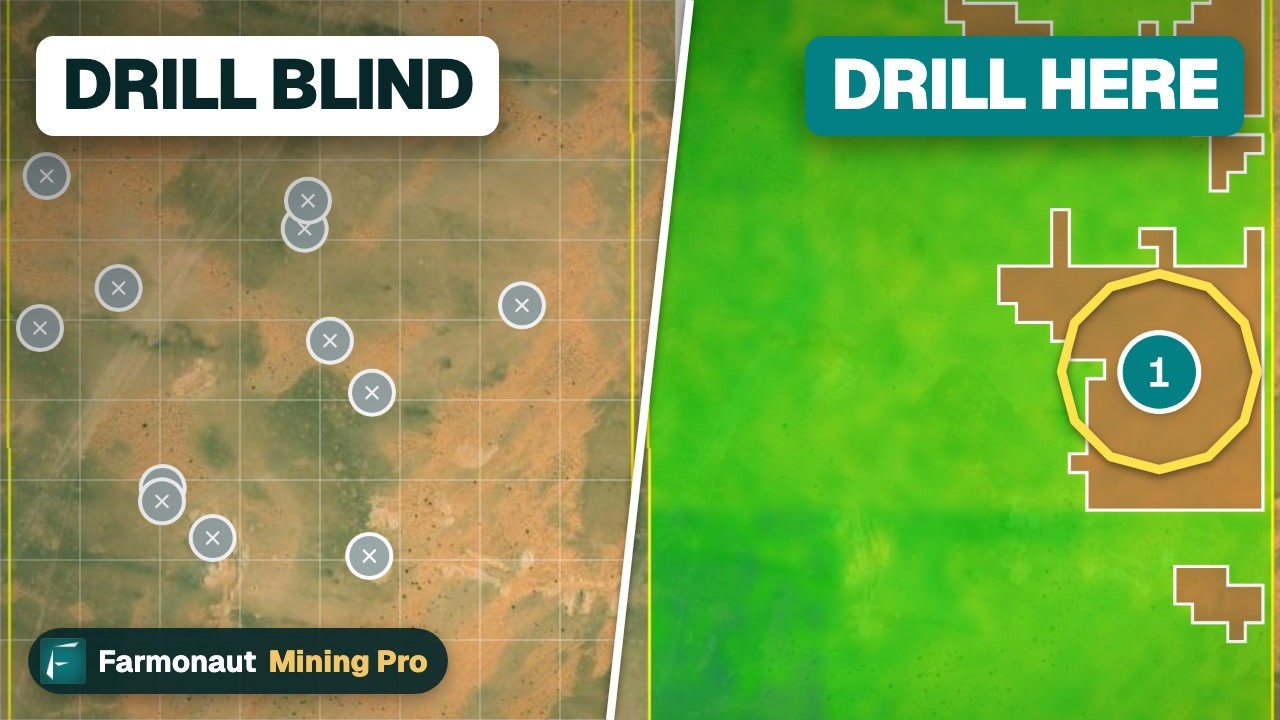
Joint ventures are formed after a deposit is known. The earlier step is deciding where to look. Satellite imagery can map outcrop, structure and alteration over a large licence area quickly, which helps rank targets before field crews and drill rigs are committed. A satellite result is an exploration target; it sits ahead of a resource estimate and needs sampling and drilling to confirm.
Farmonaut’s satellite-based mineral detection service takes a polygon, KML or KMZ of your area and reports lithium among 20+ detectable minerals. To discuss a licence area, use the mining query form or contact us. For how lithium deposits differ by type, see lithium deposits: pegmatite, brine and clay explained, and for a Canadian example of spodumene pegmatites, spodumene in James Bay.
▶ How mineral exploration from space helps decide where to drill. · 4:26
For a closer look at a related question, see our guide: Gina Rinehart Mine Sites: What She Owns, and Wodgina.
If this topic matters to you, read Carlsbad NM Potash Mines: Who Owns Them Now next.
Frequently asked questions
What joint ventures does Albemarle have in lithium?
Two mine ventures: a 49% interest in Talison Lithium, which owns and operates the Greenbushes mine, and a 50% interest in the Wodgina mine with Mineral Resources. Both are in Western Australia, according to Albemarle’s mining interests page.
How much of Greenbushes does Albemarle own?
Albemarle holds 49% of Talison Lithium. The other 51% is held by Tianqi Lithium Energy Australia, which is itself owned 51% by Tianqi Lithium and 49% by IGO, giving IGO an indirect 24.99%.
Who operates the Wodgina lithium mine?
MinRes manages all operations at Wodgina, from exploration through mining and processing, while Albemarle holds a 50% interest in the joint venture.
Is Wodgina an incorporated or unincorporated joint venture?
MinRes describes it as an unincorporated joint venture. The partners hold shares of the assets by contract rather than through a separate company.
Does Albemarle still produce lithium hydroxide at Kemerton?
No. Albemarle placed Train 1, the last operating line, into care and maintenance on 11 February 2026, after idling Train 2 in 2024. The plant processed spodumene from Greenbushes.
What is the difference between a joint venture and a subsidiary?
A subsidiary is controlled by one company. A joint venture is shared control between partners, set by an agreement. Accounting treatment depends on the control each partner has and the legal form of the venture.
What do SC6 and LCE mean?
SC6 is spodumene concentrate at a standard 6% lithium oxide grade. LCE is lithium carbonate equivalent, a common unit that lets carbonate, hydroxide and concentrate volumes be compared.
Which countries mine the most lithium?
USGS estimates 2025 mine production at 92,000 tonnes of contained lithium in Australia, 62,000 in China and 56,000 in Chile, out of a world total of 290,000 tonnes.
Why does the lithium price matter to a joint venture partner?
Revenue, margin and dividends all follow the price of concentrate and chemicals. Albemarle’s Energy Storage segment reported a 60.5% higher realised price in the second quarter of 2026 than a year earlier, and its adjusted EBITDA rose 229.3%.
Can satellite data find lithium pegmatites?
Satellite data can screen a licence area for outcrop, structure and alteration patterns linked to pegmatites and rank targets for field checks. It does not replace sampling, and results are exploration targets, not resource estimates.
This page is for information only. It is not investment advice. It names companies and gives filed figures, not price targets or recommendations to buy or sell.
Farmonaut mining
See a licence area from space before drilling
Investors can see how satellite data screens a licence area for minerals as an exploration target, ahead of a resource estimate.

Mining Pro sample view, synthetic data
Keep reading
Sources
- Albemarle, Mining Interests: albemarle.com
- Albemarle, Second Quarter 2026 Results: albemarle.com
- Albemarle, Plans to Idle its Kemerton Lithium Hydroxide Processing Plant (11 February 2026): investors.albemarle.com
- IGO, Annual Report 2026: igo.com.au
- IGO, Greenbushes CY25 Resource and Reserve Estimates: igo.com.au
- Mineral Resources, Wodgina: mineralresources.com.au
- Mineral Resources, Q4 FY26 Quarterly Activity Report: mineralresources.com.au
- Talison Lithium, Greenbushes overview: talisonlithium.com
- USGS, Mineral Commodity Summaries 2026: Lithium: pubs.usgs.gov
- Mining.com (Reuters), Chinese lithium prices tumble to nearly 10-month low (12 October 2026): mining.com
- Mining.com, Lithium price sinks to five-month low (22 July 2026): mining.com
- Paul, Weiss, KPS acquires controlling stake in Ketjen refining solutions business (5 March 2026): paulweiss.com
- Mineral Resources, FY26 results and quarterly release on ASX (29 July 2026): announcements.asx.com.au
- IGO, Quarterly Report for the period ended 30 June 2026 (ASX, 28 July 2026): announcements.asx.com.au
- Geoscience Australia, Australia’s Identified Mineral Resources 2026 preliminary tables: ga.gov.au
Discussion
Questions, corrections or field experience? Share them below. First-time comments are reviewed before they appear, and your email is never published.
No comments yet. Be the first to add a question or your experience.

 Swati Minerals
 Faith At Work (Pty) Ltd
 Geotech Mining Solutions plc
 Vulcan International Limited
 Kidepo Associates
 GKY Mining
 Alkimy SARL
 Double A Trading
 GemSprout Metals Limited
 Qader Group
 Ileys General Trading
 SG Gold Mining LLC
 VRV Global Pte Ltd
 Omsri International FZE
 G.I.T.T.
 Jaunita Erss Ltd
 Almosi SARL
 SRK Consulting
 Berks Gold Limited
 Mwerezi Minerals Company Limited
 Mining SARL
 SenGold Invest SAS

 Exploration consultancy · South Africa · Gold










