

Gemstone geology · Origin and price guide
Where Is Benitoite Found? Origin, Mines and Facts
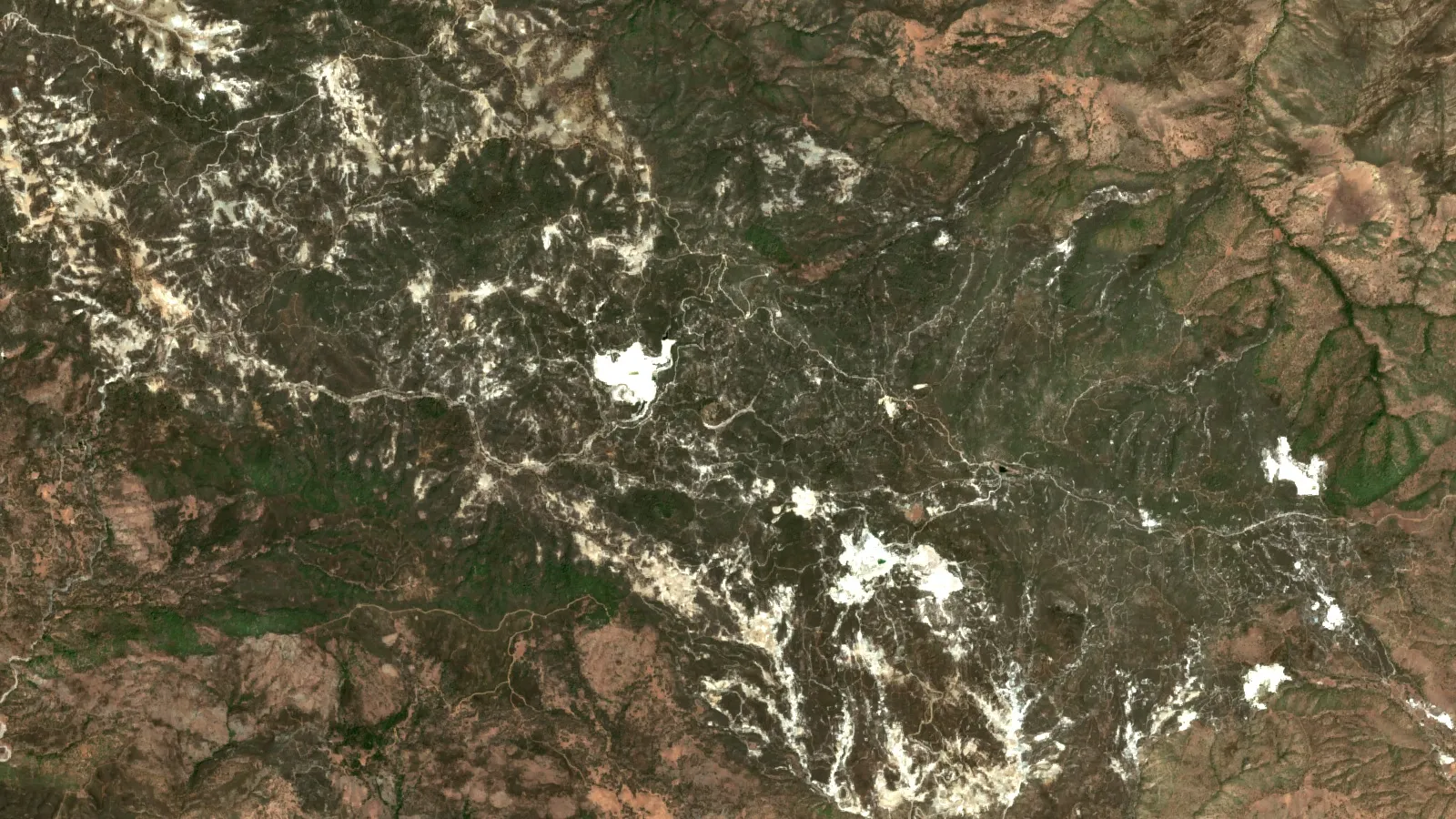
Gem-quality benitoite comes from one mine in San Benito County, California, where it grew in natrolite veins in altered blueschist inside serpentinite. This page maps every site, tracks dealer prices and sets the gem beside Al Jalamid, a Saudi phosphate mine.
Key takeaways
- Commercial-quantity gem benitoite is known from one source, the Benitoite Gem Mine in San Benito County, California (the nearby Junnila claim has also yielded gem material); the mineral is confirmed at nine places worldwide, nearly all with crystals too small to cut (GIA, 1997).
- The mine has yielded about 5,000 carats of faceted stones in total, and only about 40 cut stones over 3 carats since 1967 (GIA, 1997, owners’ estimates).
- Dealer asking prices run from about US$1,500 a carat for pale stones to US$6,500 to US$8,500 for a clean fine-blue 1 ct stone (Gem Rock Auctions and Capistrano Mining, dealer pages).
- Al Jalamid is a separate matter: a Saudi open-pit phosphate mine with a 288.90 Mt ore reserve at 18.60% P2O5 at 31 December 2025 (Ma’aden Integrated Report 2025).
- Saudi Arabia mined about 10 million tonnes of phosphate rock in 2025, roughly 4% of the world total (USGS, 2026).
In this article
- Where is benitoite found? Every confirmed locality compared
- How benitoite formed: the geology behind its origin
- The Benitoite Gem Mine: history, owners and output
- Benitoite price per carat: what dealers list
- Can you visit or dig for benitoite in California?
- Al Jalamid: the Saudi phosphate mine that shares the name
- How Saudi phosphate compares with the world
- Mining effects and land use: what the record shows
- How to read a gem or phosphate claim: a checklist
- Frequently asked questions
Commercial-quantity gem benitoite comes from one place: the Benitoite Gem Mine in the New Idria district of San Benito County, California, in the Diablo Range south-east of San Francisco. A 1997 study in Gems & Gemology, the journal of the Gemological Institute of America, states that this is the only known source of commercial quantities of the gem, and that the mineral has been confirmed at nine places in the world, almost all of them with crystals too small to cut (Laurs, Rohtert and Gray, GIA, 1997).
This page answers the origin question in full: the rocks it grows in, the theory of how it formed, the mine’s history and output, the price ranges dealers list, and the rules for visiting. It also covers Al Jalamid, which is a different kind of mine altogether: an open-pit phosphate mine in northern Saudi Arabia run for Ma’aden, the Saudi mining group. The two share nothing geologically, but searchers meet both names together, so the page sets them side by side with sourced numbers for each.
Terms used below. Benitoite is a barium titanium silicate with the formula BaTiSi3O9. Serpentinite is a rock made mostly of serpentine minerals, formed when mantle rock is altered by water. Blueschist is a metamorphic rock that forms under high pressure and low temperature, typical of subduction zones. Natrolite is a white zeolite mineral that often fills veins. A carat is 0.2 grams. Rock phosphate is ore mined for fertiliser, and its grade is quoted as P2O5, the phosphorus pentoxide content. Beneficiation is the crushing, washing and flotation step that turns ore into a higher-grade concentrate.
Where is benitoite found? Every confirmed locality compared
The table lists the best-documented sites from the 1997 GIA survey and the Handbook of Mineralogy entry. The California sites sit in one small area. The others hold crystals of a millimetre or two that no jeweller can use.
| Locality | Host rock setting | Crystal size and use |
|---|---|---|
| Benitoite Gem Mine, New Idria district, San Benito County, California | Natrolite veins in altered blueschist inside a serpentinite body | Source of all commercial gem production (GIA, 1997) |
| Junnila claim, same district | Altered blueschist in serpentinite | Gem-quality material reported, the only other site that has produced it (GIA, 1997) |
| Mina Numero Uno, Victor claim and Santa Rita Peak, same district | Altered blueschist in serpentinite | Small platy crystals up to a few millimetres, not gem grade (GIA, 1997) |
| Big Creek and Rush Creek, Fresno County, California | Gneissic metamorphic rocks near granodiorite | Small grains, not gem grade (GIA, 1997) |
| Diamond Jo quarry, Magnet Cove, Hot Spring County, Arkansas | Gas cavities in syenite | Colourless, blue and pink crystals of 1 to 2 mm (GIA, 1997) |
| Ohmi, Niigata Prefecture, Japan | Dike cutting a serpentinite body | Mineral occurrence (Handbook of Mineralogy) |
| Broken Hill, New South Wales, Australia | High-grade granite gneiss | Rare accessory mineral (GIA, 1997) |
The pattern is clear: outside San Benito County the mineral is a curiosity for collectors and mineralogists. The same Handbook of Mineralogy entry gives the hardness as 6 to 6.5 on the Mohs scale and notes a blue glow under short-wave ultraviolet light, which fee-dig operators use to help visitors spot crystals in dirt. For a broader view of how rare other ores and gems are, see our rarest ore ranking.
How benitoite formed: the geology behind its origin
The New Idria district is built around a serpentinite body about 23 km by 8 km that runs along the crest of the Diablo Range. According to the GIA study, it was pushed upward during the late Jurassic when two plates collided, and it carried slices of the Franciscan rock sequence with it. Those slices, called tectonic inclusions, are mostly blueschist and greywacke, derived from oceanic crust and sediments that were scraped onto the continental margin. The district has been prospected since 1853 for mercury, chromium, gold, asbestos, gems and mineral specimens.
Benitoite sits in a very particular spot in this setting. At the Gem Mine it lies entirely inside the blueschist, in a zone at least 60 m long and about 3 m thick, as natrolite veins that also carry black neptunite and brown joaquinite. The same study reports that in the New Idria district the mineral is found only in blueschist bodies within serpentinite, and that the more altered the blueschist, the more benitoite it holds.
How the barium and titanium came together is still argued. Earlier workers proposed that titanium came from fluids tied to small syenite intrusions, or from the serpentinite, with barium coming from the blueschist. A later model put the action at the contact between blueschist and greenstone. The 1997 authors favour a version in which barium and titanium were released by the alteration of the blueschist in the presence of magnesium- and calcium-rich fluids produced as the serpentinite metamorphosed. They also note that the cause of the mineral’s blue colour is not settled; GIA’s own reading list says the colour source remains elusive after several investigations (GIA, 2020).
One practical fact comes from the U.S. Geological Survey. Its mineral-resource database logs the Gem Mine site as an actinolite asbestos occurrence in glaucophane schist, the same blue-grey host rock (USGS Mineral Resources Data System, record 193). Fibrous minerals and gems share this ground, which is why dust control matters on any visit.
The Benitoite Gem Mine: history, owners and output
Crystals were found in early 1907 in the San Benito Mountains, and the University of California geologist George Louderback described the new mineral that year, naming it after the county. The GIA study notes that credit for the find is disputed; the name most often given in popular accounts is the prospector Couch, and a 2025 magazine profile dates his strike to 22 February 1907 (Edible Monterey Bay, winter 2025 issue). The Dallas Mining Company worked the deposit in an active period from 1907 to 1911, and a lessee named Clarence Cole held it from 1952 to 1967. Elvis Gray and William Forrest then worked it for decades with water, screens and a gravity jig, and benitoite became California’s state gemstone on 1 October 1985.
Chart
Faceted benitoite cut from the Gem Mine, by period
Carats, owners’ estimates reported in 1997
Ownership then changed: a collector-site history says the mine was sold in 2000 to Benitoite Mining Inc. and in 2004 or 2005 (sources differ) to Dave and John Luke Schreiner (The Arkenstone, iRocks), and the 2025 profile says the family now runs the Benitoite Mining Co. as a fee-dig business. A dealer page promoting the dig says commercial mining is no longer conducted at the mine, and the 1997 estimate below is the production total given in the GIA study.
The 1997 study sets out a production record, built from the Dallas company’s account books and interviews with the miners. Roughly 2,500 carats of faceted stones were cut from the mine’s first sixty years, about 2,000 carats more since 1967, and around 500 carats entered the market through informal channels. The authors put the total at about 5,000 carats of faceted benitoite over the life of the mine.
Size is the story. The same study counted what Forrest and Gray had cut since 1967. Most stones are small, and a stone over 3 carats is a rarity.
| Size class of cut stone | Approximate number of stones |
|---|---|
| Under 0.25 ct | About 2,000 |
| 0.25 to 1 ct | About 1,500 |
| 1 to 2 ct | About 500 |
| 2 to 3 ct | About 50 |
| 3 to 4 ct | About 25 |
| Over 4 ct | About 15 |
The largest stone the authors report is a 15.42 ct gem cut from rough found in the early 1990s. The figures are the owners’ own estimates as of 1997, so they are approximate. For more on the mine and its company, see our guide to the benitoite mining company and mines and the notes on benitoite mine and ore.
Benitoite price per carat: what dealers list
There is no auction index or exchange price for benitoite. Stones sell through specialist dealers, so published numbers are asking prices, not appraisals, and the dates on dealer pages are not always shown. With that caveat, the picture is consistent: price depends on colour first, then size, then clarity and cut. In 1997 the GIA authors compared the appearance and price of faceted benitoite to fine sapphire and tanzanite. A 2025 magazine profile called gem-quality stones worth roughly $8,000 a carat.
Chart
Benitoite asking prices per carat by quality
US$ per carat, dealer pages (not appraisals)
One dealer guide lists faceted stones from $1,500 to $8,000 a carat, with medium blue 1 ct stones near $4,000, light grey-blue or violet-blue at $2,000 to $3,000 and very pale or colourless stones at $1,500 to $2,000; it prices rough at $75 to $400 a carat (Gem Rock Auctions guide). A second dealer, which also sells fee-dig days, lists a clean, rare 1 ct stone between $6,500 and $8,500 and says clean, well-cut stones over 2 ct trade near $10,000 a carat (Capistrano Mining). Both are sellers, so read them as the top of the asking range.
Three checks protect a buyer. Ask for the stone’s origin and whether it has been treated; the 1997 study records that a few orange benitoites were made by heating colourless material, and that exceptionally rare pink and colourless stones exist. Ask for the weight of the finished stone, because price per carat climbs steeply with size. And look at it under ultraviolet light, since benitoite glows blue. For another gem value guide on this site, see the benitoite gemstone value page or the green diamond price guide.
Calculator
What would a parcel of cut gems earn after rough and cutting costs?
Enter your own stone weight, prices, cut yield and cutting cost.
- Rough needed (carats): 50.0
- Cost of the rough: $10,000
- Value of the finished parcel: $30,000
Example values only, not a benchmark and not an offer. Prices are inputs: example, use today’s price (US$ per carat). The cut yield is an example: it is the share of rough weight that ends up in finished stones. Dealer rough prices of US$75 to US$400 a carat appear in the Gem Rock Auctions guide cited above.
Can you visit or dig for benitoite in California?
Yes, but not at the original pit. The 2025 Edible Monterey Bay profile reports that the Schreiner family hauls dirt from the Gem Mine grounds by dump truck to a road-camp compound, where visitors screen it for a fee of $140 for adults and $75 for children aged 12 and under. The owner estimates that about one visitor in twenty finds a stone of real value, and that even the smallest stones can be worth $90 to $160. A dealer page that promotes the dig shows the same fees, with digging on Saturdays by reservation only (Capistrano Mining). Prices and dates change, so confirm with the operator before you travel.
The land around the mine is a separate matter. The Bureau of Land Management manages the Clear Creek Management Area, about 63,000 acres of public land in the San Benito Mountains that includes the Serpentine Area of Critical Environmental Concern. On 6 September 2024 the BLM issued an emergency closure of the area because of the Boone Fire; that was the latest notice as of September 2024, so check the BLM before visiting (BLM, 6 September 2024). Before that, the BLM had restored access on 2 October 2023 once repairs to Clear Creek Road were finished, with permits issued online (BLM, 2 October 2023). The profile adds that the area contains naturally occurring asbestos, and that the BLM requires entry permits and limits visitors to main roads.
Check the current status with the BLM Central Coast Field Office before any trip. Prospecting needs the permission of the landowner or a valid claim, and you should never use mercury to recover anything. This page is not legal advice.
Al Jalamid: the Saudi phosphate mine that shares the name
Al Jalamid is an open-pit phosphate mine in the Northern Borders Region of Saudi Arabia. The U.S. Geological Survey’s Saudi Arabia yearbook chapter describes it as the rock source for Ma’aden Phosphate Company, which processes it into ammonium phosphate fertiliser at Ras Al Khair on the Gulf coast (USGS Minerals Yearbook, Saudi Arabia, 2022). Ma’aden’s integrated report states that at 31 December 2025 that company was owned 70% by Ma’aden, through its subsidiary, and 30% by SABIC, the Saudi chemicals group (Ma’aden Integrated Report 2025).
The mine’s scale is set by Ma’aden’s annual report for 2023, which describes an open pit producing about 10 million tonnes of ore a year and a beneficiation plant with a capacity of about 5 million tonnes a year of phosphate concentrate, railed to Ras Al Khair (Ma’aden Annual Report 2023). The same statements assume the mine closes in 2053 and carry a closure and rehabilitation provision for it of SAR 122.7 million at 31 December 2023.
The 2025 integrated report adds a reserve table. Reserves are the part of a deposit shown to be economic to mine. Resources are the wider tonnage with reasonable prospects of mining. The figures below are the ore reserves at 31 December 2025, with the Al Jalamid change from a year earlier.
| Phosphate deposit (Ma’aden) | Ore reserve, Mt | Grade, % P2O5 | Note |
|---|---|---|---|
| Al Jalamid | 288.90 | 18.60 | Up from 246.00 Mt at 19.13% a year earlier |
| Al Jalamid 1 (licence area) | 125.05 | 20.15 | Up from 102.00 Mt at 20.18% |
| Al Khabra | 252.64 | 17.16 | Feeds Wa’ad Al Shamal |
| Umm Wu’al B4-5 | 334.00 | 15.63 | Unchanged |
Measured, indicated and inferred resources at Al Jalamid total 432.62 Mt at 18.20% P2O5, and the report lists a further exploration licence area at the site with 1,489 Mt of indicated and inferred resource at 16.50%. The report names the competent persons and the consulting firm behind the estimates, which is the check to make for any resource figure. At group level, Ma’aden produced 6,723 thousand tonnes of DAP (diammonium phosphate fertiliser) in 2025, up 9% on 2024, at an average realised price of $695 a tonne against $583 a year earlier, and says its Phosphate 3 Phase 1 expansion passed 60% completion on budget and is on track for commissioning in 2027. For a ranked view of the Saudi mining sector, see our comparison of mining companies in Saudi Arabia.
▶ Follows the money from the ground up: what mining does for an economy in exports, jobs and revenue. · 5:03
How Saudi phosphate compares with the world
The U.S. Geological Survey estimates Saudi Arabia mined 10 million tonnes of phosphate rock in 2025, about 4% of a rounded world total of 250 million tonnes, and holds 1 billion tonnes of reserves out of 73 billion worldwide (USGS Mineral Commodity Summaries, February 2026). China produces 110 million tonnes and Morocco, with 50 billion tonnes of reserves, dominates the reserve base. The USGS puts the 2025 US average value at $100 a tonne at the mine (f.o.b. mine); that is a US figure, not a Saudi one.
Chart
Phosphate rock mine production, eight largest producers
Million tonnes, 2025 estimate
The USGS credits two mines for Saudi rock output: Al Jalamid and Al Khabra, which feeds the Wa’ad Al Shamal complex. The yearbook series runs from 6.1 million tonnes in 2018 to 9.5 million in 2019, then 9.0 to 9.2 million tonnes a year to 2022. The USGS figures for 2024 and 2025, on its later summary, are 10 million tonnes each year. Phosphate rock is the raw material behind most mineral fertiliser, so these numbers matter for farm costs in every importing country; our explainer on phosphate mining and processing trends goes through the process step by step.
The calculator below turns an ore tonnage, a concentrate yield and a price into a gross margin. The defaults are examples, not Ma’aden’s results; use today’s price and your own costs.
Calculator
What is a phosphate concentrate stream worth?
Enter your own ore rate, yield, price and cost.
- Concentrate produced per year (Mt): 5.0
- Gross sales per year (US$ million): 500.0
- Reserve life at this ore rate (years): 29
Example values only, not Ma’aden’s results. The 10 Mt a year ore rate is the Al Jalamid figure in Ma’aden’s 2023 annual report and the 289 Mt reserve rounds the 288.90 Mt reported at 31 December 2025; yield, price and cost are examples. Price is an input: example, use today’s price (US$ per tonne of concentrate). Margin is before tax, royalties and capital.
Mining effects and land use: what the record shows
The two mines have very different footprints. The benitoite operation is small and seasonal: the 1997 study describes a front-end loader, high-pressure water jets, screens and a gravity jig, with hand sorting at the end of each day and work in the spring months when water is available. The hazards are the ones in the rock: fibrous asbestos minerals and fine dust. An open-pit phosphate mine moves millions of tonnes a year and has to plan for water, waste rock and closure. Ma’aden’s closure provision for Al Jalamid is one public measure of that obligation.
For readers new to the topic, the video below walks through the seven main environmental impacts of mining in plain words, from land loss to water use. Use it as background; the figures for each mine are in the sections above.

▶ The seven environmental impacts of mining explained in plain words, with satellite maps and sourced numbers. · 2:31
How to read a gem or phosphate claim: a checklist
Whether you are valuing a gem parcel, a fertiliser project or a mining stake, the same questions stop most errors. First, find the deposit by name and licence, not by the company’s marketing name; Ma’aden’s report lists Al Jalamid as a mine and names the subsidiary set up to exploit it. Second, check whether a figure is a reserve or a resource, and the date. Third, check the grade measure: P2O5 for phosphate, carats and size class for gems. Fourth, check whether a price is an asking price, a realised average or a government statistic. Fifth, follow the ownership chain to the filing.
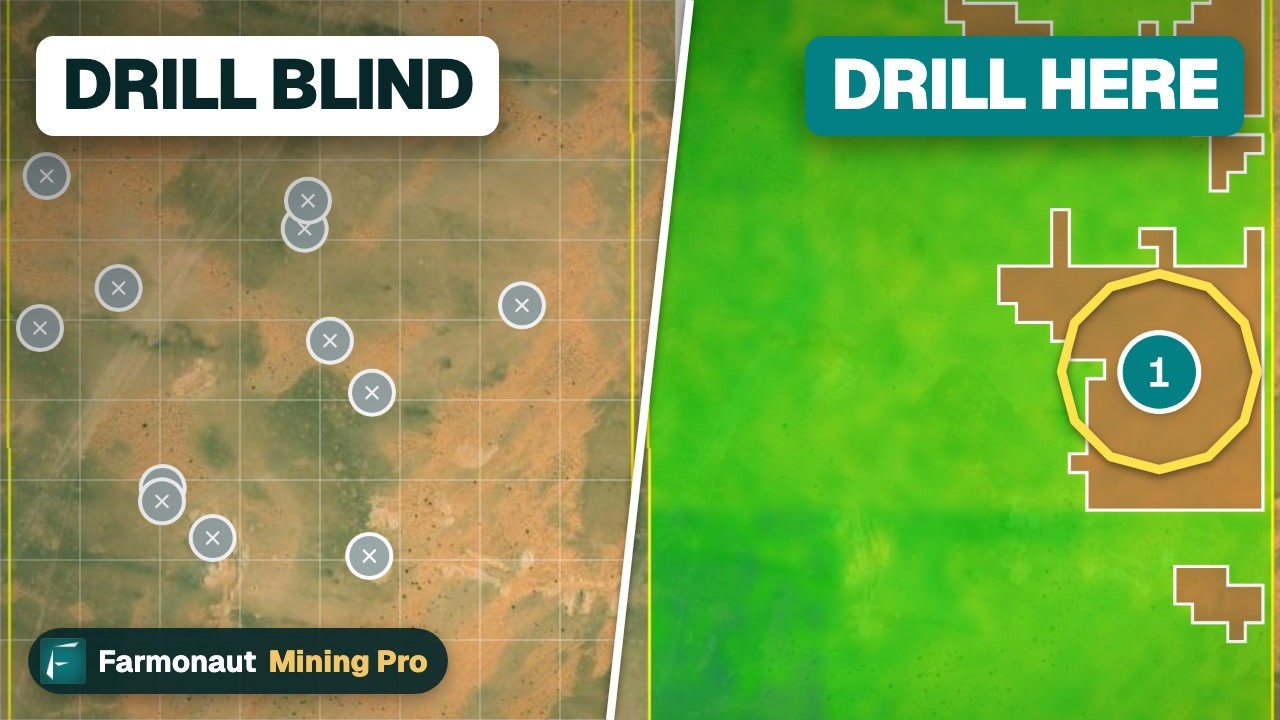
For a licence of your own, a satellite survey is a way to rank ground to sample first: it reads surface rock types and alteration across the whole licence before drilling, with reports delivered in 5 to 20 business days. It cannot see a vein of gems, so it narrows where to look and does not replace sampling.

▶ Satellites cannot see a gold nugget; they map the rock around it, such as iron stains, clay minerals and cracks. · 4:25
Frequently asked questions
Where is benitoite found?
Gem-quality benitoite is found only at the Benitoite Gem Mine and the nearby Junnila claim in the New Idria district of San Benito County, California. Small, non-gem crystals are known from Fresno County in California, Arkansas, Japan and Australia (GIA, 1997).
Why is benitoite so rare?
It needs an unusual mix of barium, titanium and silica, concentrated in altered blueschist inside a serpentinite body. Only one deposit has produced it in commercial quantities, and the mine has yielded an estimated 5,000 carats of faceted stones in total (GIA, 1997).
How much is benitoite worth per carat?
Dealer asking prices range from about $1,500 for pale stones to $6,500 to $8,500 for a clean, fine blue stone of one carat, and near $10,000 a carat above 2 carats. A 2025 magazine profile gives about $8,000. These are asking prices, not appraisals.
How did benitoite form?
The leading model says barium and titanium were freed when blueschist was altered by magnesium- and calcium-rich fluids from the metamorphosed serpentinite, and the crystals grew in natrolite veins. The authors of the 1997 study say the origin has been argued since the discovery.
Is benitoite the California state gem?
Yes. California designated benitoite its official gemstone on 1 October 1985, according to GIA.
Can the public dig for benitoite?
Yes, at a fee-dig day run by the mine’s owners, reported at $140 for adults and $75 for children aged 12 and under in the winter 2025 issue of Edible Monterey Bay. Confirm the current price and dates with the operator.
Is the area around the mine open to the public?
The surrounding Clear Creek Management Area is BLM land. The BLM issued an emergency closure on 6 September 2024 for the Boone Fire, as of September 2024. Check current status with the BLM Central Coast Field Office.
Does benitoite contain asbestos?
No. Benitoite itself is a barium titanium silicate. The rock it occurs in is a different matter: the USGS lists the Gem Mine site as an actinolite asbestos occurrence in glaucophane schist, so dust control matters.
What is Al Jalamid?
Al Jalamid is an open-pit phosphate mine in the Northern Borders Region of Saudi Arabia, supplying Ma’aden Phosphate Company. It mines about 10 million tonnes of ore a year and has a beneficiation plant of about 5 million tonnes a year of concentrate (Ma’aden, 2023).
How much phosphate is left at Al Jalamid?
Ma’aden reports ore reserves of 288.90 million tonnes at 18.60% P2O5 at Al Jalamid, and 125.05 million tonnes at 20.15% at the adjoining Al Jalamid 1 area, at 31 December 2025.
How does Saudi Arabia rank in phosphate rock?
The USGS estimates Saudi Arabia mined 10 million tonnes in 2025, below China (110 million), Morocco (36 million), the United States (20 million), Russia (14 million) and Jordan (12 million).
This page is for information only. It is not investment, valuation or legal advice. Gem prices are dealer asking prices, not appraisals. Confirm access rules with the landowner and the Bureau of Land Management. Get permission before you prospect, hold the right licence, and never use mercury.
Farmonaut mining
Get a quote to screen your licence from space
Send your licence polygon and we quote a satellite screening report that ranks areas to sample first.

Mining Pro sample view, synthetic data
Keep reading
Sources
- Laurs, Rohtert and Gray, Benitoite from the New Idria District, Gems & Gemology, GIA (1997): gia.edu
- GIA, Historical Reading List: Benitoite (2020): gia.edu
- Handbook of Mineralogy, Benitoite (Mineral Data Publishing, RRUFF): rruff.net
- USGS Mineral Resources Data System, asbestos record 193: The Gem mine: mrdata.usgs.gov
- BLM, Clear Creek Management Area closed due to Boone Fire danger (6 September 2024): blm.gov
- BLM, Restores motorized vehicle access to the Clear Creek Management Area (2 October 2023): blm.gov
- Edible Monterey Bay, Unearthed Wonders (winter 2025 issue): ediblemontereybay.com
- The Arkenstone, iRocks, Benitoite Gem Mine of San Benito, California: irocks.com
- Gem Rock Auctions, Benitoite gemstone guide (dealer): gemrockauctions.com
- Capistrano Mining Company, Benitoite (dealer and fee-dig page): capistranomining.com
- USGS, Mineral Commodity Summaries 2026: Phosphate Rock (2026): pubs.usgs.gov
- USGS, 2022 Minerals Yearbook: Saudi Arabia: pubs.usgs.gov
- Ma’aden, Integrated Report 2025: minedocs.com
- Ma’aden, Annual Report 2023: minedocs.com
Discussion
Questions, corrections or field experience? Share them below. First-time comments are reviewed before they appear, and your email is never published.
No comments yet. Be the first to add a question or your experience.

 Riverside Resources Limited
 Congo Mining Solutions
 Mining SARL
 SenGold Invest SAS
 Sania Corporation
 Sean Mining Limited
 NTS Group (Pty) Ltd
 Mine4Africa
 Lithspo Minerals Limited
 Tintina Mining Group
 Dalgety Minerals Pty Ltd
 Vortex Minerals Pty Ltd
 Faith At Work (Pty) Ltd
 Geotech Mining Solutions plc
 Vulcan International Limited
 Kidepo Associates
 GKY Mining
 Alkimy SARL
 Double A Trading

 Licence holder · Nigeria · Gold + lithium










