

Pilbara heavy-haul rail · Facts and fleet guide
BHP Iron Ore Train: Length, Payload and 7 Efficiency Gains
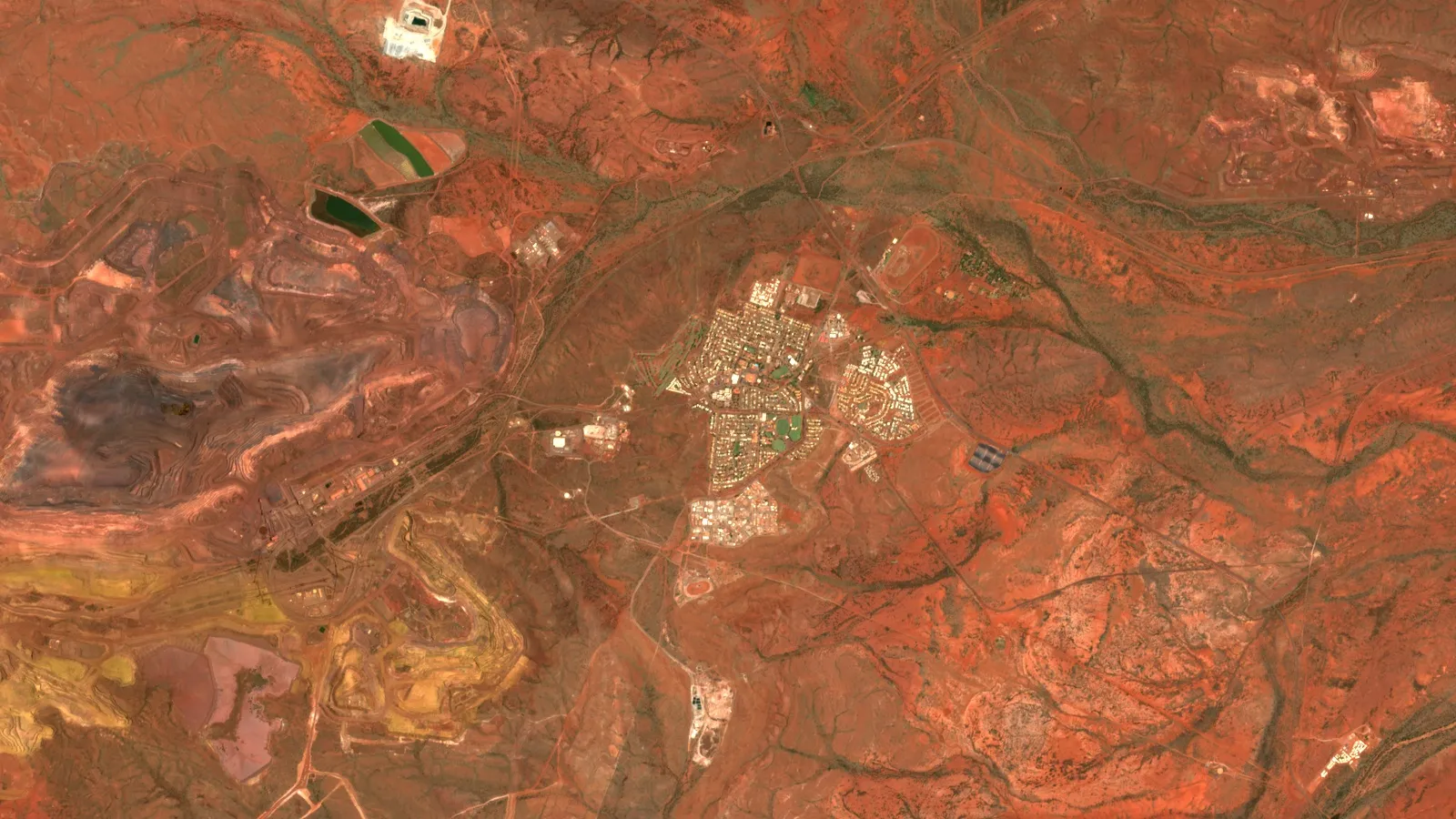
A standard BHP iron ore train has 268 wagons, runs about 2.9 km and can carry up to about 37,000 tonnes of ore on the 426 km Mount Newman line to Port Hedland.
Key takeaways
- Standard train: 268 wagons, about 2.9 km, up to 138 tonnes of ore per wagon.
- The record train of 21 June 2001 had 682 wagons, ran about 7.35 km and carried 82,000 tonnes of ore.
- WAIO produced a record 291 Mt on a 100% basis in the year to June 2026 (BHP).
- Autonomous AutoHaul trains in the Pilbara belong to Rio Tinto, not BHP.
- Use the calculator to turn annual tonnage and cycle time into trains per day and train sets.
In this article
- BHP iron ore train facts: length, weight and wagons
- BHP's record train: the heaviest on record
- Why mining trains matter so much in the Pilbara
- 7 ways the BHP iron ore train boosts efficiency
- How the train moves ore from mine to port
- How BHP iron ore trains compare with other Pilbara railways
- The runaway train: what happened in 2018
- How to size a heavy-haul train fleet
- Where satellite data fits in rail and mine planning
- Frequently asked questions
A standard BHP iron ore train has about 268 wagons and runs about 2.9 km, and each wagon carries up to 138 tonnes of ore. That works out at up to roughly 37,000 tonnes of ore per trip, on a run of about eight hours from Newman to Port Hedland in Western Australia, according to the Mount Newman railway record.
This guide covers the figures people look for: length, payload, locomotives and route. It then sets out seven specific ways the system raises efficiency, compares it with the other Pilbara railways, and gives a calculator for sizing a heavy-haul fleet. Consultants can use the same arithmetic to test a rail assumption on their own project.
BHP iron ore train facts: length, weight and wagons
BHP runs two railways in the Pilbara, the iron ore region of north-west Western Australia. The Mount Newman line is the longer of the two, at 426 km. The shorter Goldsworthy railway runs 208 km from the Yarrie mine to Finucane Island, with 90-wagon trains and wagons of up to 126 tonnes. You may also see these called BHP Billiton iron ore trains, which reflects the company’s earlier name.
Chart
Ore carried per train on selected Pilbara services
tonnes of ore; BHP and Goldsworthy figures are calculated maximums
| Item | Mount Newman line figure | Note |
|---|---|---|
| Wagons per train | 268 | Standard consist (the make-up of a train) |
| Train length | About 2.8 to 2.9 km | Published figures differ slightly |
| Ore per wagon | Up to 138 tonnes | Maximum, not an average |
| Ore per train | Up to about 37,000 tonnes | Our arithmetic: 268 x 138 |
| Locomotives | Typically four SD70ACe | Two at the head, two mid-train by remote control |
| Newman to Port Hedland | 426 km, about eight hours | Mainline, excluding spurs |
| Track gauge | 1,435 mm | Standard gauge |
| Opened | 22 January 1969 | Mount Newman line |
Treat single-train payload figures with care. The list of longest trains gives a train weight of 43,000 tonnes with 24,200 tonnes of ore, which does not agree with 268 wagons at up to 138 tonnes. A figure of about 42,000 tonnes of ore, seen on some websites including an older version of this page, did not match either source. Gross weight includes the wagons and locomotives, while payload counts only the ore, so check which one a number means before you use it. The wagon-based figure above is a ceiling and real loads vary.
BHP’s record train: the heaviest on record
On 21 June 2001 BHP ran a record train over 275 km from Yandi to Port Hedland. It had 682 wagons, was about 7.35 km long, weighed 99,734 tons in total and carried 82,000 tonnes of ore. Eight GE AC6000CW diesel-electric locomotives were spread along its length to keep coupling forces under control, and a single driver was in charge, as the longest trains record describes.
That was a one-off run and not a daily service. It held the length record too, until the list’s current holder: a 696-wagon, 7.602 km Transnet train in South Africa in 2026. It carried about 2.2 times the ore of a standard train at full wagon load. BHP once ran 336-wagon trains of more than 3 km as well, but the same list says these seem to have stopped after the trunk line was fully double-tracked in May 2011. One possible reading for planners, and our inference rather than a BHP statement: once a line has two tracks, more short trains may suit it better than fewer very long ones.
Why mining trains matter so much in the Pilbara
Australia produced an estimated 980 million tonnes of usable iron ore in 2025, about 38% of the 2.6 billion tonne world total, according to the USGS Mineral Commodity Summaries 2026. Almost none of that ore has value until it reaches a ship, and the mines lie hundreds of kilometres inland.
BHP’s Western Australia Iron Ore business (WAIO) produced a record 291 million tonnes on a 100% basis in the year to June 2026, or 257 million tonnes for BHP’s share, per its July 2026 operational review. The same review reports an average realised price of US$84.56 per wet tonne for that year. If all 291 million tonnes moved in trains at the full wagon load, that would be about 7,900 loaded trains a year, or about 22 a day. This is our own estimate, not a BHP figure, and real trains will not always be full.
The ore itself comes in lump and fines products, and our guides to types of iron ore and the main uses of iron explain where it goes after the port.
▶ What mining adds to an economy through exports, jobs and revenue · 5:03
7 ways the BHP iron ore train boosts efficiency
Each point below describes a feature that a public record supports. We have left out percentage savings, because BHP does not publish a before-and-after table for fuel, delivery time or downtime that we could verify.
1. Long trains with distributed power
Placing remote-controlled locomotives mid-train spreads the pulling and braking effort along its length. The record train used the same idea, spreading its locomotives to limit coupling forces and help on curves. A single crew can therefore move far more ore than a shorter head-hauled train would allow.
2. Wagons built for dense ore
Iron ore fills a wagon’s weight limit long before its volume, so a heavy-haul wagon is designed around axle load, the weight each axle may place on the track. At up to 138 tonnes a wagon, payload per metre of train is what drives the economics. Every extra tonne per wagon reduces the number of trips for the same annual tonnage.
3. Double track on the trunk line
The trunk line was fully double-tracked in May 2011. Loaded and empty trains no longer have to wait for each other in passing loops, so trains can run more often. Passing loops remain a limit on any single-track spur.
4. Train control from one remote centre
Train control moved to Perth at the end of 2012, and trackside signals and monitoring are watched from the Integrated Remote Operations Centre there, about 1,500 km from the line. Having one view of mines, trains and port helps controllers match train arrivals with loading and unloading slots.
5. Train protection and a rail technology upgrade
The Mount Newman line uses automatic train protection (ATP), which can intervene if a train exceeds its authority. BHP also runs a multi-year Rail Technology Program. Its July 2026 review says a planned reduction in tie-in work on that program, along with other improvements across the rail network, contributed to better efficiency and record shipments. Unlike Rio Tinto, whose AutoHaul system runs autonomous trains, the public records used here do not describe BHP’s trains as autonomous.
6. Reliable car dumpers at the port
A car dumper tips each wagon to empty it at the port, and it can be the tightest step in the whole chain. BHP’s review says car dumper performance improved after the CD3 rebuild was completed in the first quarter of its 2026 financial year. That rebuild had cost 4.3 million tonnes on a 100% basis, which shows how much one machine at the end of the line can matter.
7. One owner from mine to ship
The WAIO technical report (June 2022) describes five mining hubs and four processing hubs linked by more than 1,000 km of BHP-owned rail to two port facilities at Port Hedland, with train load-out stations near the ore handling plants. A single owner can schedule mine output, trains and ships as one system. It can also use stockpiles as a buffer, as it did in 2026 when an inventory drawdown at the Central Pilbara Hub supported record volumes.
How the train moves ore from mine to port
Trains load at a train load-out station, which fills each wagon from a bin as the train moves slowly beneath it. They then run north to Port Hedland, where the wagons are emptied at a car dumper and the ore goes to stockyards before being loaded onto ships. The empty train returns south. Spur lines feed the mainline from Mount Whaleback, Orebodies 18, 23 and 25, Jimblebar, Yandi and Area C. New ground still connects to this network: BHP’s July 2026 review says ore from its Ministers North deposit will use the existing Yandi screening and rail facilities.
Infographic
One BHP ore train cycle in 5 steps
- 1LoadWagons fill at a train load-out station near the mine.
- 2Run northThe loaded train joins the mainline toward Port Hedland.
- 3DumpA car dumper tips the wagons at the port.
- 4ShipOre moves through stockyards to the ships.
- 5ReturnThe empty train runs south for its next load.
Chart
WAIO iron ore production by quarter
million wet tonnes, BHP share; quarters to June 2026
Quarterly output shows why spare capacity matters. WAIO’s quarterly production moved between about 61 and 68 million tonnes (BHP share) over the five quarters to June 2026. The technical report also notes that tropical cyclones have at times closed mining, rail and port operations, and that seven days a year are built into the production plan for such interruptions. A rail system has to catch up after such stoppages, which is one reason a network is not sized on average tonnage alone.
How BHP iron ore trains compare with other Pilbara railways
Four separate groups run iron ore railways in the Pilbara. Network size and train size do not follow each other: Rio Tinto has the largest network, while the payload per train is broadly similar among BHP, Fortescue and Roy Hill.
Chart
Iron ore rail network length in the Pilbara
km of line or track, as published; BHP is stated as more than 1,000 km (2022)
| Railway | Operator | Length | Published train payload | Opened |
|---|---|---|---|---|
| Hamersley & Robe River | Rio Tinto | About 1,700 km | Varies by service | 1966 |
| Mount Newman and Goldsworthy | BHP | More than 1,000 km | Up to about 37,000 t (calculated) | 1969 and 1966 |
| Fortescue railway | Fortescue | 620 km | 34,404 t in 244 cars | 2008 |
| Roy Hill railway | Hancock Prospecting | 344 km | 35,000 t | 2015 |
The tonnage on each system differs too. Fortescue reported record shipments of 201.3 million tonnes in its 2026 financial year. Rio Tinto reported Pilbara shipments of 157.7 million tonnes (100% basis) in the first half of 2026. Fortescue’s line was also designed for 40-tonne axle loads, 2.5 to 5 tonnes heavier than the other Pilbara systems at the time it was completed. BHP, Fortescue and Roy Hill all reach the sea at the Port of Port Hedland. Our Australia mining map shows how these mines sit across the country.
The runaway train: what happened in 2018
In November 2018 a loaded BHP train with 268 wagons and four locomotives ran away without its driver. The driver had left the cab to inspect a wagon near Hester siding when the train began to move. It travelled more than 90 km in 50 minutes before staff at the Perth centre, about 1,500 km away, derailed it deliberately at a set of points at Turner siding, about 120 km south of Port Hedland, as the ABC reported at the time.
The Australian Transport Safety Bureau later published a report on the event, titled Runaway and derailment of loaded ore train M02712, dated 17 March 2022. The event shows the two sides of heavy-haul rail: a very long, very heavy loaded train stores huge energy, and remote control can still act on it at a distance. Anyone assessing a rail option should give braking and securing procedures the same attention as tonnage.

▶ Seven environmental impacts of mining, explained in clay · 2:31
How to size a heavy-haul train fleet
Consultants reviewing a rail concept can start with four numbers: annual tonnage, wagons per train, tonnes per wagon, and the full cycle time for one round trip, including loading, unloading and waiting. The calculator below turns those into trains per day, train sets, and wagons. A train set is one complete train of locomotives and wagons.
- Add time for delays. A cycle time based only on running speed will understate the fleet. Add time for crossings, maintenance and queueing at the port.
- Check the weakest step. Track, load-out and dumper capacity may each limit output before the number of trains does.
- Compare private and third-party access. Fortescue spent A$2.5 billion on its own line after legal battles over access to existing railways, so access can decide whether a project stands up at all.
- Use wet or dry tonnes consistently. BHP reports WAIO output in wet tonnes, so match your tonnage basis to your wagon limit.
Calculator
How many trains would your tonnage need?
Enter your own tonnage, train make-up and cycle time.
- Tonnes per train: 26,000
- Train sets in service: 10.5
- Wagons in service: 2,107
Example values only, not BHP figures, benchmarks or a design. Results assume full loads every trip and no spare trains. Add allowances for maintenance and delays.
Where satellite data fits in rail and mine planning
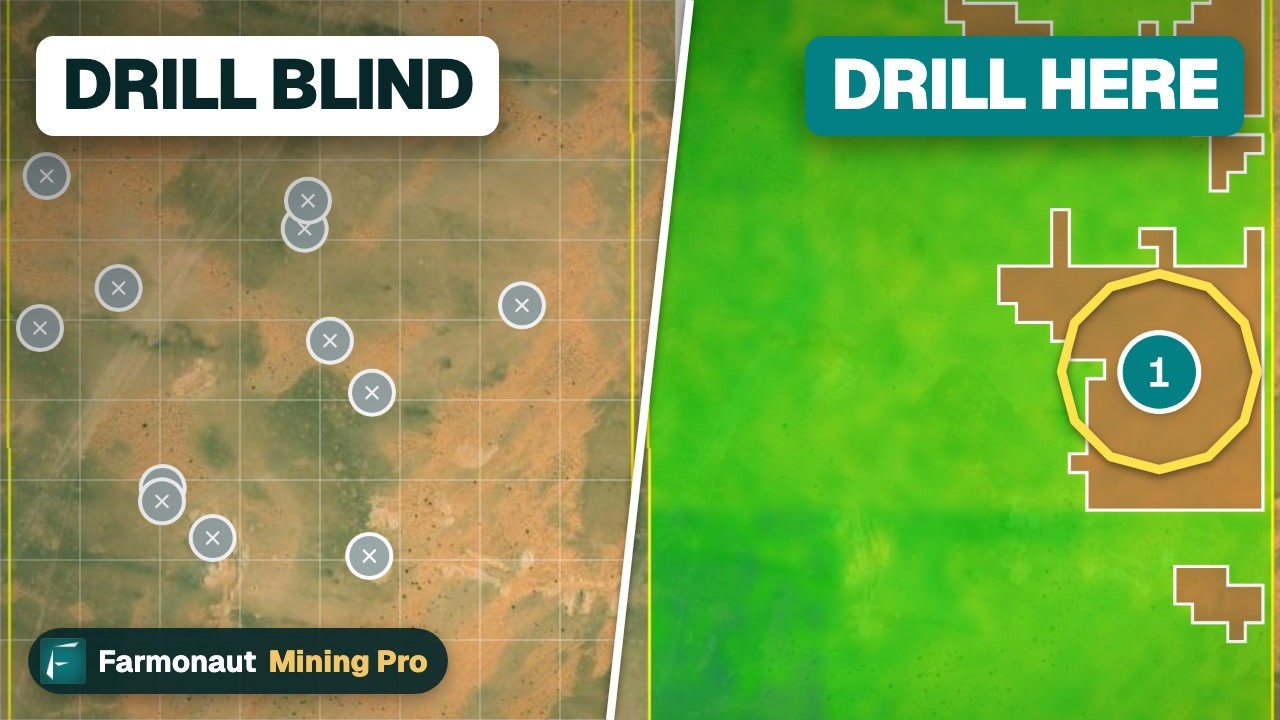
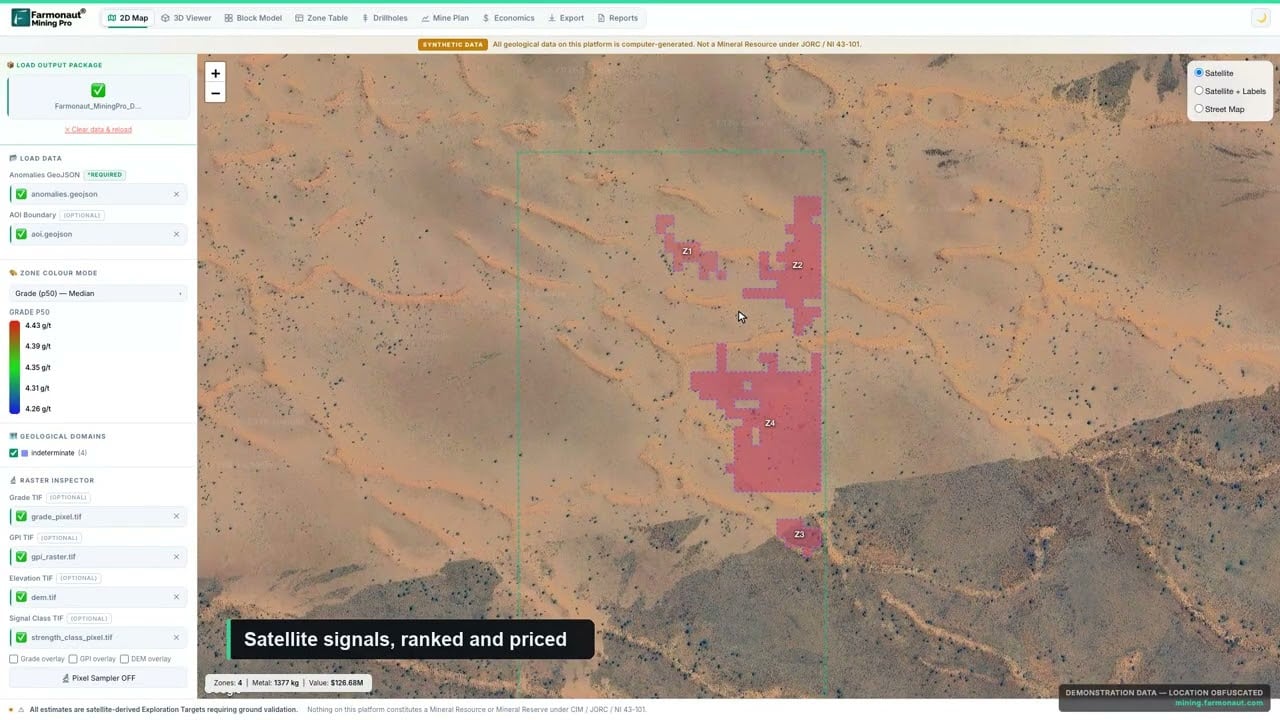
A railway only earns a return if there is enough ore within reach of it. Before drilling, sponsors often screen ground along a planned corridor or around an existing spur. Satellite-based mineral detection can flag alteration and structure across a licence as exploration targets, ahead of any resource estimate, and it does not replace drilling. To discuss an area, request a quote or contact the team.
▶ A short look at Farmonaut Mining Pro, using de-identified demo data · 4:56
Frequently asked questions
How long is a BHP iron ore train?
A standard Mount Newman train has 268 wagons and is about 2.8 to 2.9 km long. The record train of 21 June 2001 was about 7.35 km long.
How much iron ore does a BHP train carry?
Up to about 37,000 tonnes, based on 268 wagons at up to 138 tonnes each. That is a calculated ceiling. Published single-train figures differ, and some mix up gross train weight with ore payload.
How many wagons does a BHP iron ore train have?
A standard Mount Newman train has 268 wagons. Goldsworthy line trains have 90 wagons.
How many locomotives pull a BHP ore train?
Typically four SD70ACe locomotives, with two at the head and two mid-train under remote control. The 2001 record train used eight.
Where does the BHP iron ore train run?
From Newman and nearby mines in the Pilbara, Western Australia, north to Port Hedland. The Mount Newman line is 426 km long, and the journey typically takes about eight hours.
Is the BHP iron ore train the longest train in the world?
No. The 2001 BHP train, at about 7.35 km, is still listed as the heaviest on record, but the same list names a 7.602 km Transnet train in South Africa, run in 2026, as the longest to date. Daily BHP trains are about 2.9 km long.
Are BHP iron ore trains driverless?
BHP’s rail operation uses train protection and remote train control, but the Pilbara’s well-known autonomous system, AutoHaul, belongs to Rio Tinto.
What happened to the BHP runaway train?
In November 2018 a loaded train ran away while its driver was outside the cab. It covered more than 90 km in 50 minutes before being deliberately derailed at Turner siding, about 120 km south of Port Hedland.
How much iron ore does BHP move each year?
WAIO produced 291 million tonnes on a 100% basis in the year to June 2026, or 257 million tonnes for BHP’s share. Production is not the same as tonnes railed, although the two are closely linked.
Who else runs iron ore trains in the Pilbara?
Rio Tinto, Fortescue and Hancock Prospecting’s Roy Hill each run their own iron ore railways alongside BHP’s two lines.
More from Farmonaut: bhp iron ore train 7 ways trains boost efficiency.
This page is for information only. It is not investment or engineering advice.
Farmonaut mining
Map your mining site from space
Map alteration and structure across a project area or rail corridor to plan field work.

Mining Pro sample view, synthetic data
Keep reading
Sources
- Wikipedia, Mount Newman railway line: en.wikipedia.org
- Wikipedia, Longest trains: en.wikipedia.org
- Wikipedia, Goldsworthy railway: en.wikipedia.org
- Wikipedia, Hamersley & Robe River railway: en.wikipedia.org
- Wikipedia, Fortescue railway: en.wikipedia.org
- Wikipedia, Roy Hill railway: en.wikipedia.org
- ABC News, BHP runaway iron ore train (7 Nov 2018): abc.net.au
- BHP, Operational review for the year ended 30 June 2026: announcements.asx.com.au
- BHP, Western Australia Iron Ore technical report summary (June 2022): minedocs.com
- USGS, Mineral Commodity Summaries 2026: Iron Ore: pubs.usgs.gov
- Fortescue, June 2026 quarterly production report: announcements.asx.com.au
- Rio Tinto, 2026 half year results: riotinto.com
- Wikipedia, Port Hedland: en.wikipedia.org
Discussion
Questions, corrections or field experience? Share them below. First-time comments are reviewed before they appear, and your email is never published.
No comments yet. Be the first to add a question or your experience.

 Jaunita Erss Ltd
 Almosi SARL
 SRK Consulting
 Berks Gold Limited
 Mwerezi Minerals Company Limited
 Mining SARL
 SenGold Invest SAS
 Sean Mining Limited
 NTS Group (Pty) Ltd
 Mine4Africa
 Lithspo Minerals Limited
 Tintina Mining Group
 Dalgety Minerals Pty Ltd
 Vortex Minerals Pty Ltd
 Faith At Work (Pty) Ltd

 Licence holder · Nigeria · Gold + lithium
 Client · Somalia · Gold










