

Reviewed September 2026 against Geoscience Australia, Opals Down Under, and USGS Mineral Commodity Summaries.
Try it: Run your own numbers →
Black Opal Hunting: Lightning Ridge, Sites & the Opal App
Lightning Ridge, New South Wales produces almost all of the world’s black opal, and Australia as a whole accounts for roughly 95% of global precious opal production, according to Geoscience Australia’s mineral facts page.1 If you’re searching for black opal hunting, an opal hunt app to plan a trip, or a garnet-hunting spot closer to home in the United States, this guide separates what’s actually documented — permits, production shares, real tools — from the marketing language that surrounds gemstone hunting online.
Three things this article will and won’t do: it will tell you exactly where black opal comes from and why Lightning Ridge dominates; it will tell you honestly what an “opal hunt app” is and isn’t (there is no published download or user-adoption data for opal-identification apps, and we say so rather than inventing a number); and it will give US readers a sourced, current picture of where garnet hunting is commercially real, using USGS figures rather than guesswork.
Black Opal Hunting: Why Lightning Ridge Dominates
Black opal is the rarest commercial opal variety: a dark body tone that makes its play-of-color read more intensely than in white or crystal opal. Nearly every gem-quality black opal on the market traces back to one place — Lightning Ridge, New South Wales, Australia — because the region’s Cretaceous-age sediments (weathered claystone known locally as “the level”) happen to host the specific silica-and-water conditions that produce dark-toned opal. There is no comparable black opal field anywhere else in the world at commercial scale; Ethiopia, the United States, and Mexico produce opal, but not black opal in meaningful volume.
Two figures anchor the scale of Australia’s dominance: Geoscience Australia states the country supplies about 95% of the world’s precious opal,1 and industry sourcing from Opals Down Under puts roughly 70% of global opal production specifically through Coober Pedy, South Australia — a boulder- and white-opal field, distinct from Lightning Ridge’s black opal seams.2 That gap between Australia’s overall share and Coober Pedy’s share is exactly why Lightning Ridge, not Coober Pedy, is the correct answer when someone is specifically after black opal.
On value, the broader gemstone trade has not been a straight line up. USGS trade-derived figures cited in its 2024 Mineral Commodity Summaries show opal export value fell 29% year-over-year in 2024, a reminder that gem markets move with global demand cycles and currency swings, not just supply.3 There is no published, itemized annual tonnage figure for Lightning Ridge or Australia-wide opal output — Geoscience Australia and national trade databases don’t break it out at that granularity — so if you need current volume rather than value share, the method is to check Geoscience Australia’s minerals data releases and the Australian Bureau of Statistics trade data directly rather than relying on a single fixed number here.
Read a first-person account of the region from someone who actually mines it: Opal Mining for Tourists: Star Opal Stone, by the Opal Miner. For how modern exploration teams find seams before they ever put a shovel in the ground, see Remote Sensing in Mineral Exploration: Top 7 Discovery Methods.
What Lightning Ridge Fossicking Actually Involves
- Formation: silica-rich groundwater percolating through weathered claystone over geological time, precipitating hydrated silica in cracks and voids — the source of the “play of color.”
- Access: most productive ground is held under mining leases; visitor “fossicking” happens on designated public fossicking areas and mine tailings (“mullock heaps”) where noodling (hand-sorting waste dirt) is permitted.
- Tools that matter on-site: a UV torch for spotting opal in mullock at night, a pick and sieve for noodling, and — for anyone leasing or working a claim rather than noodling tailings — GPR and drone-based seam mapping to cut down blind digging.
Opal Hunt App: What Exists, What Doesn’t
People searching “opal hunt app” are usually looking for one of two different things, and it’s worth separating them because the honest answer differs: (1) a mineral-identification app that helps confirm whether a stone you’ve found is opal, or (2) a location/planning app that shows fossicking fields, claims, and access rules near you.
On category one — identification — there is no published download-count or active-user data for opal-specific identification apps such as those sometimes marketed as “Opal ID” or similar names; app stores don’t disclose that data publicly, and we’re not going to invent a number to fill the gap. What we can tell you is what these apps are mechanically capable of: basic ones use your phone’s camera plus a color/pattern comparison against a photo library, which is a rough first screen at best — it cannot replace a jeweler’s refractometer or a gemological lab test for confirming opal versus glass, resin, or a doublet/triplet composite.
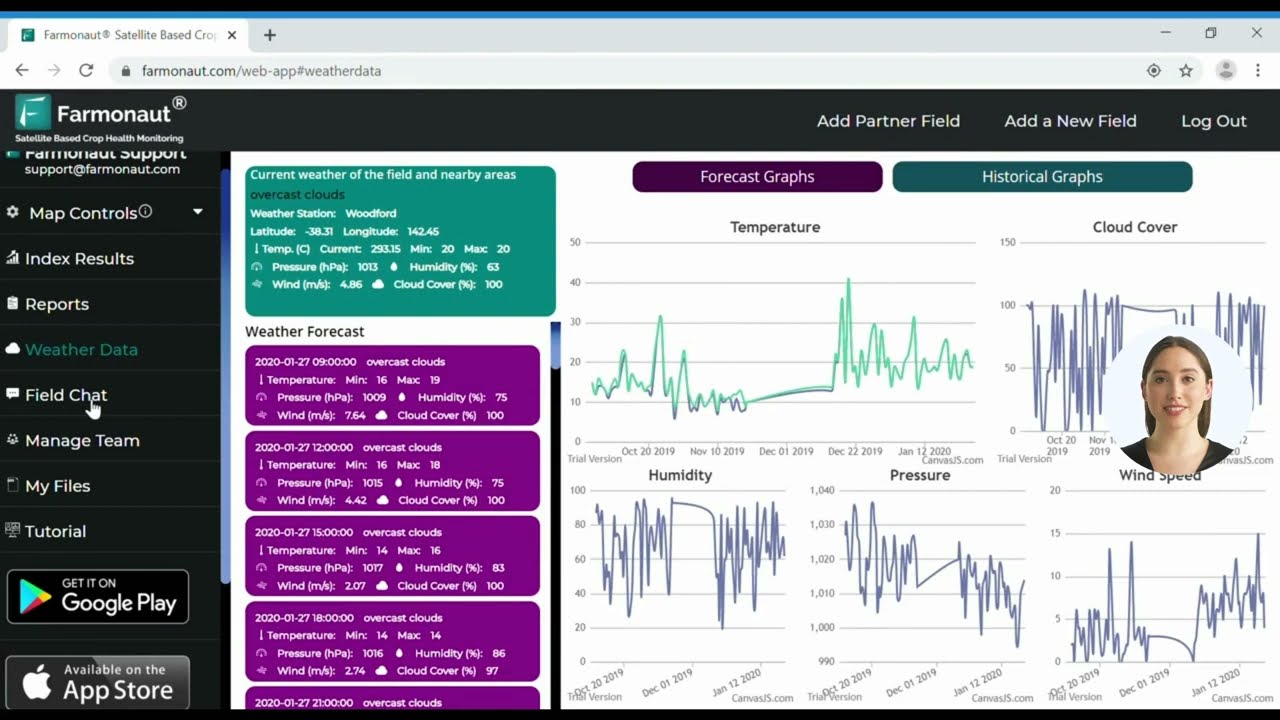
On category two — planning — this is where satellite and mapping data genuinely help, and it’s the gap Farmonaut’s tools are built to fill: multispectral imagery and terrain data can show surface disturbance patterns, historical mining footprints, and vegetation stress that correlate with known fossicking ground, letting you narrow a search area before you drive out. That’s a very different claim from “an app finds opal for you,” and treating it that way sets the wrong expectation. Explore the web app, then check it against your own trip:



If you’re comparing tools before a trip, ask any “opal hunt app” three concrete questions: does it show current fossicking-permit boundaries (not just general regional shading), does it disclose its imagery date, and does it let you export or verify a coordinate against the relevant state mining department’s own map. If it can’t answer all three, treat it as entertainment, not a prospecting tool.

Opal Hunting Near Me: Fields Beyond Lightning Ridge
For US and Australian readers, “opal hunting near me” resolves very differently depending on which continent “near me” is on.
In Australia, beyond Lightning Ridge (black opal) and Coober Pedy (roughly 70% of global volume, mostly white and crystal opal),2 the other established fields are Andamooka in South Australia and the Queensland boulder opal belt around Yowah and Quilpie. All operate under state-issued fossicking or mining permits — there is no free-for-all digging even on public fossicking land.
In the United States, opal hunting is real but on a much smaller scale, with no field approaching Australian output. Nevada’s Virgin Valley is the best-known US opal locality, producing black and fire opal on a seasonal, permit-limited basis through a handful of private claims that charge dig fees. Idaho’s Spencer Opal Mine, the best-documented US public-access opal dig, runs seasonal fee-digging for fire opal — see Spencer Opal Mine, Idaho: 7 Trends Shaping Its Future for site-specific detail on access windows and what’s been found there recently.
Responsible sourcing matters more as demand grows: our Traceability platform documents chain-of-custody for mined materials, and our mineral management guide covers how land-holders track extraction across leases where multiple parties may operate.

Black Opal Locations at a Glance
Because “black opal locations” is a narrower, higher-intent search than opal hunting generally, here is the direct answer: gem-quality black opal is commercially mined almost exclusively around Lightning Ridge and the surrounding fields of Grawin, Glengarry, and Sheepyard in far-northern New South Wales. Small quantities of dark-toned opal have been reported from Mintabie (South Australia, now largely inactive) and from a handful of overseas localities, but none produce black opal at a scale that shows up in trade statistics. If a listing elsewhere claims “black opal” from outside this belt, it is worth asking a gemologist to confirm body tone and origin before paying a premium price — body-tone grading (N1 to N9 on the trade’s standard scale) is the industry test, and dealers who can’t produce a grading report on a “black opal” claim are the exception, not the rule.

Garnet Hunting Near Me: The US Picture
Garnet is a fundamentally different search than opal, because it’s abundant, occurs on every continent, and has real industrial demand independent of gem quality. In the United States specifically, USGS’s Mineral Commodity Summaries 2025 puts a hard number on the domestic industry: US garnet crude production was valued at $17 million in 2025, produced by just 3 companies nationwide.4 That’s a small, concentrated industry — not a diffuse hobbyist resource — and the geography is specific: USGS records 1 garnet-mining company operating in Montana and 2 operating in New York as of the same report.4
That $17 million figure is almost entirely industrial abrasive- and filtration-grade garnet — the material used in waterjet cutting and sandblasting media — not gem-grade rough. USGS does not publish a separate retail or gem-grade garnet pricing series, which is a real gap: if you want current gem-garnet prices, the method is to check retail rough/cut dealers (e.g., established US gem and mineral show vendors) directly, since no federal agency tracks that market the way it tracks industrial mineral value.
For hobbyist “garnet hunting near me” in practice, the classic US public-access sites remain concentrated in the Appalachians (garnet-bearing schist exposures in states like North Carolina and New York) and in a scatter of Western pegmatite and metamorphic terrains, typically through state-run or privately operated pay-to-dig sites rather than open public land — always confirm with the specific site or state geological survey before digging, since garnet-bearing ground is frequently on private or leased mineral rights even where the surface looks like public land. Our Gem and Crystal Mining Near Me guide covers pay-to-dig site mechanics in more depth, and if you’re near the Appalachians specifically, cross-reference against USGS’s per-state figures above before planning a trip around commercial-scale expectations — three companies nationwide means most garnet hunting near you will be hobbyist-scale, not industrial tailings.

Garnet Hunting Near Me: A Short Checklist
- Confirm whether the site is a pay-to-dig operation, a state-designated fossicking area, or private land requiring separate permission — USGS production data won’t tell you this; the state geological survey or site operator will.
- Ask what garnet species is present (almandine, pyrope, spessartine, grossular) — this changes both color and hardness, and matters for cutting.
- Bring a hand lens or loupe and a hardness pick; garnet’s Mohs hardness (6.5–7.5 depending on species) helps distinguish it from softer look-alike minerals in the field.
- Check for seasonal closures — Appalachian sites in particular often close over winter months for weather and access reasons that vary by operator.
Hotspots & Technology Comparison Table
This table consolidates the sourced facts above into one reference: what’s produced where, what share of the global market it represents, and what’s actually documented versus what requires local verification.
| Gemstone | Location | Documented Figure | Source & Date | Access Type |
|---|---|---|---|---|
| Black Opal | Lightning Ridge, NSW, Australia | Part of Australia’s ~95% global opal share | Geoscience Australia | Mining leases + public fossicking/mullock areas, permit required |
| Opal (white/crystal/boulder) | Coober Pedy, South Australia | ~70% of global opal production | Opals Down Under, 2025 | Public fossicking permitted; ~150,000 visitors/year per tourism estimates |
| Opal | Virgin Valley, Nevada, USA | No published tonnage; small, seasonal | Check claim operator directly | Private claims, dig fees, seasonal only |
| Opal (fire) | Spencer Opal Mine, Idaho, USA | No published tonnage; fee-dig site | See site guide linked below | Public fee-digging, seasonal window |
| Garnet (industrial) | United States (Montana, New York + 1 other) | $17M crude production value, 3 companies (2025) | USGS Mineral Commodity Summaries 2025 | Commercial mine sites, not open to hobbyist digging |
| Garnet (gem/hobby) | Appalachian belt, USA | No federal production/price series | Check state geological survey | Mostly pay-to-dig or permitted private land |
Trip Cost-Per-Find Calculator
Fee-dig and fossicking trips have real, comparable costs — entry or permit fees, travel, and time — so use the calculator below to work out your break-even cost per stone found for any site you’re considering, using your own numbers rather than an average that won’t match your trip.
Run your own numbers
Assumptions: this calculator only totals cash costs you enter (fee + travel) and divides by your own estimate of keepable finds — it does not value the stones themselves, does not account for gas/food beyond what you enter as “travel,” and does not predict how many stones you will actually find. Use a conservative find estimate; most fee-dig operators will tell you their typical visitor yield if you ask before booking.
Permits, Fossicking Rules & What to Check Locally
Rules differ by jurisdiction and change independently of anything in this article, so treat the following as a checklist for what to verify, not a substitute for the current rule itself.
- Australia (NSW, SA, Qld): fossicking generally requires a state-issued fossicking licence or permit, restricts mechanized equipment on public fossicking land, and prohibits digging on active mining leases without the leaseholder's consent. Check the relevant state's Department of Regional NSW, Department for Energy and Mining (SA), or Department of Resources (Qld) page before a trip — these are updated independently of this article.
- United States: there is no federal "fossicking licence"; rules are set at the claim, state, or land-manager level (BLM, state land office, or the private fee-dig operator). Public-land rockhounding rules for personal-use quantities exist on some BLM land but do not apply to active mining claims, which are frequently held privately even on land that otherwise looks public.
- Site rehabilitation: most modern permits, in both countries, require refilling holes and limiting surface disturbance — a condition worth confirming before you dig, since violations can affect access for everyone at a shared site.
For garnet specifically, remember the USGS figures above: with only 3 companies mining industrial garnet in the entire United States,4 almost every hobbyist "garnet hunting near me" site you'll find is either a small commercial pay-to-dig operation or informal digging on land where you must independently confirm mineral rights — it is not large-scale industrial ground open to the public.
Where Satellite Monitoring Fits — and Where It Doesn't
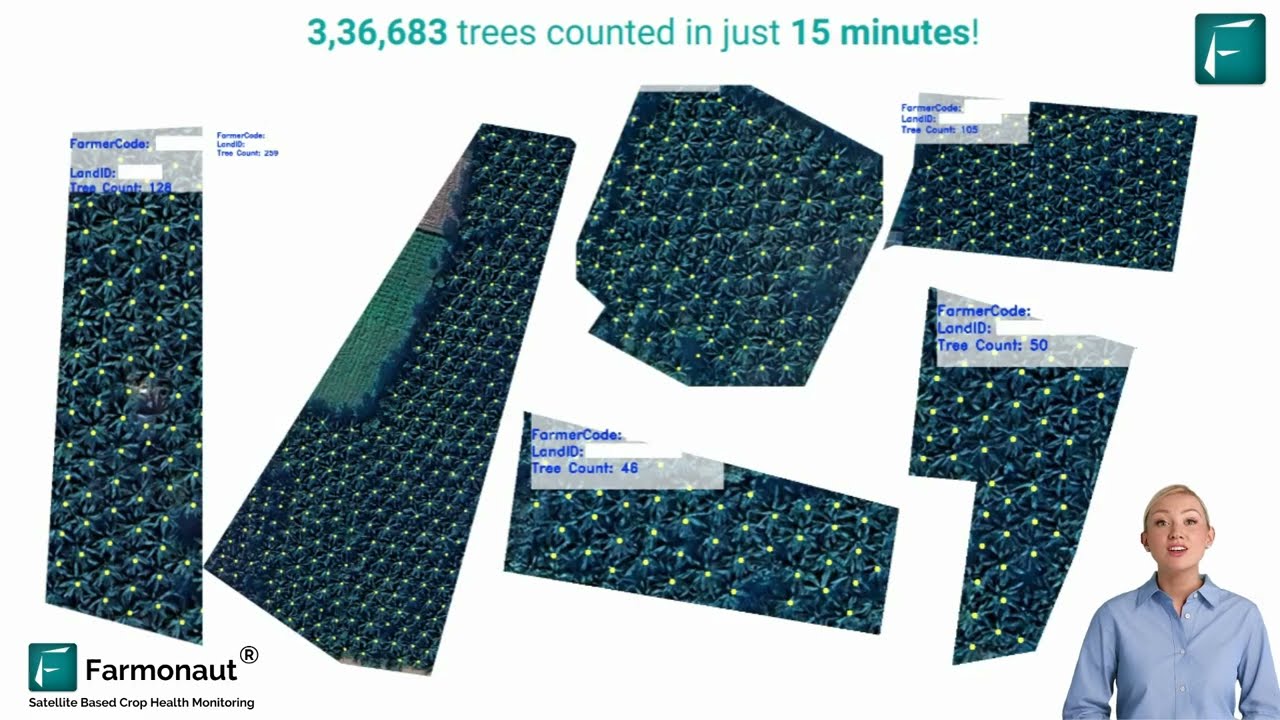
To be direct about scope: Farmonaut's satellite and AI tools do not locate individual gemstones, and no legitimate remote-sensing platform can — opal and garnet occur in seams and pockets too small for satellite resolution to detect directly. What multispectral and terrain data genuinely support is upstream and downstream of the actual digging: identifying disturbed ground and historical extraction footprints from imagery, tracking environmental compliance across a mining lease, and giving buyers a documented chain of custody once a stone leaves the ground.
- Satellite-based monitoring: multispectral analysis of surface disturbance and vegetation stress across known mining regions — useful for narrowing search areas, not pinpointing stones.
- Blockchain traceability: our Traceability platform documents a gemstone's chain of custody from mine to buyer, relevant given how thin the record-keeping is around informal fossicking trade.
- Carbon footprinting: our Carbon Footprinting tool tracks emissions from mining and haulage operations for operators who need to report on it.
- Fleet management: for operators running vehicles and machinery across a lease, our Fleet Management platform centralizes logistics and equipment tracking.
- API access: developers can pull satellite-derived layers directly via our API, documented at the developer docs.
- Large-scale land administration: for operators managing wider land holdings alongside a mineral lease, see the large-scale farm admin app.
Subscriptions & pricing: Farmonaut offers tiered subscription access for individuals, businesses, and government-scale deployments.
FAQ
-
Q: Where does black opal actually come from?
A: Almost exclusively Lightning Ridge and its surrounding fields in far-northern New South Wales, Australia. No other region produces gem-quality black opal at commercial scale. Australia overall supplies about 95% of the world's precious opal.1 -
Q: Is there a reliable opal hunt app that finds opal for me?
A: No published app reliably identifies opal from a photo with lab-grade accuracy, and there's no public data on how many people use the identification apps that exist. Location/planning apps built on satellite and terrain data (including Farmonaut's) can help you narrow a search area, but always verify claim boundaries against the relevant state mining department before digging. -
Q: What's the difference between Lightning Ridge and Coober Pedy?
A: Lightning Ridge produces black opal specifically. Coober Pedy, which accounts for roughly 70% of global opal production,2 is primarily a white and crystal opal field. They are different geological settings. -
Q: Is garnet hunting near me worth it in the United States?
A: As a hobby, yes, at established pay-to-dig or permitted sites, mainly in the Appalachians. As an industrial venture, the US market is small and concentrated — USGS counted only 3 companies mining industrial garnet nationwide in 2025, worth $17 million in crude production value combined.4 -
Q: Are opal export values rising or falling?
A: USGS trade-derived figures show global opal export value fell 29% year-over-year in 2024,3 underscoring that gem markets fluctuate with demand and currency, not a one-way trend. -
Q: What regulations apply to fossicking?
A: They vary by state and country and change independently of any article. In Australia, check the relevant state department (NSW, SA, or Qld); in the US, check BLM rules for the specific land and the individual claim or site operator, since most productive ground is privately held even where it looks public.
Conclusion
The concrete facts worth remembering: Australia supplies about 95% of the world's precious opal, Coober Pedy alone accounts for roughly 70% of that global volume, and Lightning Ridge remains the only commercially significant source of true black opal.1,2 On garnet, the US industry is small and specific — three companies, $17 million in 2025 crude production value, concentrated in Montana and New York.4 Opal export values fell 29% in 2024, a reminder that this market moves.3
None of these figures are static — production values, company counts, and export data are republished annually by USGS, and Geoscience Australia updates its mineral facts pages independently. Before you plan a trip or make a buying decision based on a number in this article, check it against the live source: USGS Mineral Commodity Summaries publishes annually each spring, and Geoscience Australia's minerals pages update on their own schedule. That habit — verify the year, verify the source — is the one part of this guide that won't go stale.
Sources: 1. Geoscience Australia, Opal — Australian Mineral Facts. 2. Opals Down Under, Australian Opal Mining Fields. 3. USGS Mineral Commodity Summaries 2024 — Garnet. 4. USGS Mineral Commodity Summaries 2025 — Garnet.

 Alkimy SARL
 Double A Trading
 GemSprout Metals Limited
 Qader Group
 Ileys General Trading
 SG Gold Mining LLC
 VRV Global Pte Ltd
 Omsri International FZE
 G.I.T.T.
 Jaunita Erss Ltd
 Almosi SARL
 SRK Consulting
 Berks Gold Limited
 Mwerezi Minerals Company Limited
 Mining SARL
 SenGold Invest SAS
 Sean Mining Limited
 NTS Group (Pty) Ltd
