

Silver-lead-zinc stock · Fact guide
Bunker Hill Mining Stock: Ticker, Debt and Restart
Bunker Hill Mining Corp. trades as BNKR (TSX) and BHLL (OTCQB) and announced its first concentrate shipment on 31 July 2026. This page sets out its debt, the EPA clean-up bill and restart targets, and separates Gold Hill, Utah and King of the Hills.
Key takeaways
- Tickers are TSX: BNKR and OTCQB: BHLL; shares were consolidated 1-for-35 on 6 March 2026 (company release, 31 July 2026; SEC prospectus, March 2026).
- The first concentrate shipment to Teck’s Trail smelter was announced on 31 July 2026 (concentrate was first produced by 29 June 2026); commercial production is defined as 90 days above 65% of 1,800 tpd, targeted for end of 2026 (Form 10-Q, June 2026).
- US$14 million of a US$19 million EPA cost-recovery bill remained at 30 June 2026, with talks on a second amendment open (Form 10-Q, June 2026).
- The silver loan (US$70.0 million) is the largest liability; derivative warrants (US$32.6 million, non-cash) come next, then the Sprott debt (US$14.8 million) (Form 10-Q, 30 June 2026).
- Gold Hill, Utah (Desert Hawk) and King of the Hills (Western Australia, Vault Minerals) are separate from Bunker Hill (Idaho).
In this article
- How we checked the facts on this page
- Bunker Hill Mining stock: listing, ownership and key numbers
- Bunker Hill Mine history and the Superfund clean-up bill
- Bunker Hill restart timeline: from first concentrate to commercial production
- Bunker Hill balance sheet: debt, silver loan and warrants
- Silver, lead and zinc: the metals behind the mine
- Gold Hill, Utah: a different district and a different company
- King of the Hills gold mine is in Western Australia, not Nevada
- Utah and Idaho mining companies at a glance
- How to research a mining stock from filings
- Frequently asked questions
Bunker Hill Mining Corp. trades as BNKR on the Toronto Stock Exchange and as BHLL on the OTCQB in the United States. It owns the Bunker Hill Mine at Kellogg in northern Idaho, a silver, lead and zinc mine that closed in 1981 and announced its first concentrate shipment in more than 45 years on 31 July 2026 (Bunker Hill news release, 31 July 2026). The company says it expects commercial production by the end of 2026. This page gives the facts from the company’s filings and from government sources: listing, ownership, debt, the Superfund clean-up bill, the restart timeline and the metals involved.
Searches for Bunker Hill often return pages about two unrelated places: Gold Hill in Utah and a “King of the Hill” mine said to be in Nevada. They are different companies in different countries from Bunker Hill in Idaho, so each gets its own short section below. This is information only and not investment advice.
How we checked the facts on this page
Every company figure comes from a document the company filed with the US Securities and Exchange Commission (SEC) or released itself, and carries its date. Metal statistics come from the US Geological Survey (USGS). We left out price targets, forecasts and opinions. A short glossary helps with the terms: concentrate is ore that has been crushed and processed to a higher-grade product for a smelter; tpd means tons per day; a streaming or royalty deal gives a financier a share of future metal or revenue in return for money paid now; Superfund is the US programme for cleaning up the most contaminated sites.
Bunker Hill Mining stock: listing, ownership and key numbers
The company is incorporated in the United States and runs its project through a wholly owned subsidiary, Silver Valley Metals Corp. Its common shares were consolidated 1-for-35 on 6 March 2026, so share prices quoted before that date on older charts are not comparable (SEC prospectus supplement, March 2026). At 30 June 2026 it had 46,685,293 shares outstanding (Form 10-Q, June 2026). The shares moved from the TSX Venture Exchange to the main Toronto Stock Exchange, where trading began on 25 March 2026 (Form 10-Q, June 2026); the March 2026 prospectus still names the TSX Venture Exchange.
| Item | What the filing says | Source and date |
|---|---|---|
| Tickers | TSX: BNKR; OTCQB: BHLL | Company release, 31 July 2026 |
| Project | Bunker Hill Mine, Silver Valley, Shoshone County, Idaho; 100% owned | SEC prospectus, March 2026 |
| Land | 440 patented mining claims over more than 5,700 acres, 35 of them with surface rights (about 259 acres) | SEC prospectus, March 2026 |
| Plant | 1,800 tpd, expandable to about 2,500 tpd with modest extra capital | Company release, 31 July 2026 |
| Main financiers | Sprott (about 29.6%) and Teck (about 23.9%) after the June 2025 deals, before later share issues; Monetary Metals (silver loan) | SEC prospectus, March 2026 |
| Reserves | Probable reserves in a pre-feasibility study; not a full feasibility study | SEC prospectus, March 2026 |
The company’s own risk factors say it has no operating history of recent production, depends on further financing, and that its mine plan is not based on a feasibility study (SEC prospectus supplement, March 2026). Net losses were US$11.6 million in 2023, US$15.6 million in 2024 and US$13.6 million in 2025 according to the same document.
Bunker Hill Mine history and the Superfund clean-up bill
The mine sits in the Silver Valley, which has been mined since the 1880s. The company reports historic output of more than 165 million ounces of silver, about 3 million tons of lead and 1.3 million tons of zinc from ore mined between 1885 and 1981 (Bunker Hill Mining Corp.). The smelter and mine closures in the early 1980s cost the local communities about 2,400 jobs within months, and the US Environmental Protection Agency listed the Bunker Hill site on the National Priorities List in 1983 because of metal contamination and high blood lead levels in children (Idaho Department of Environmental Quality, Coeur d’Alene Basin). The Superfund site covers more than 1,500 square miles.
Chart
EPA cost-recovery payment schedule
US$ million due each 1 November (2029: US$2 million plus interest)
The mine is inside the Superfund area, and the company took on part of the clean-up cost when it bought the mine. Under an amended 2021 settlement, it owes the EPA US$19 million in cost recovery. After payments made through 2024, US$14 million of principal remained at 30 June 2026, secured by two payment bonds of US$9.999 million and US$4.001 million. The EPA agreed in the fourth quarter of 2025 to hold off enforcing late payments, including the 1 November 2025 instalment, while the two sides discuss a second amendment; those talks were still open at 30 June 2026 (Form 10-Q, June 2026). The company pays the Idaho Department of Environmental Quality (IDEQ) US$100,000 a month toward the cost of treating mine water at the Central Treatment Plant, with a reconciliation to actual cost when IDEQ invoices (Form 10-Q, June 2026, note 7).
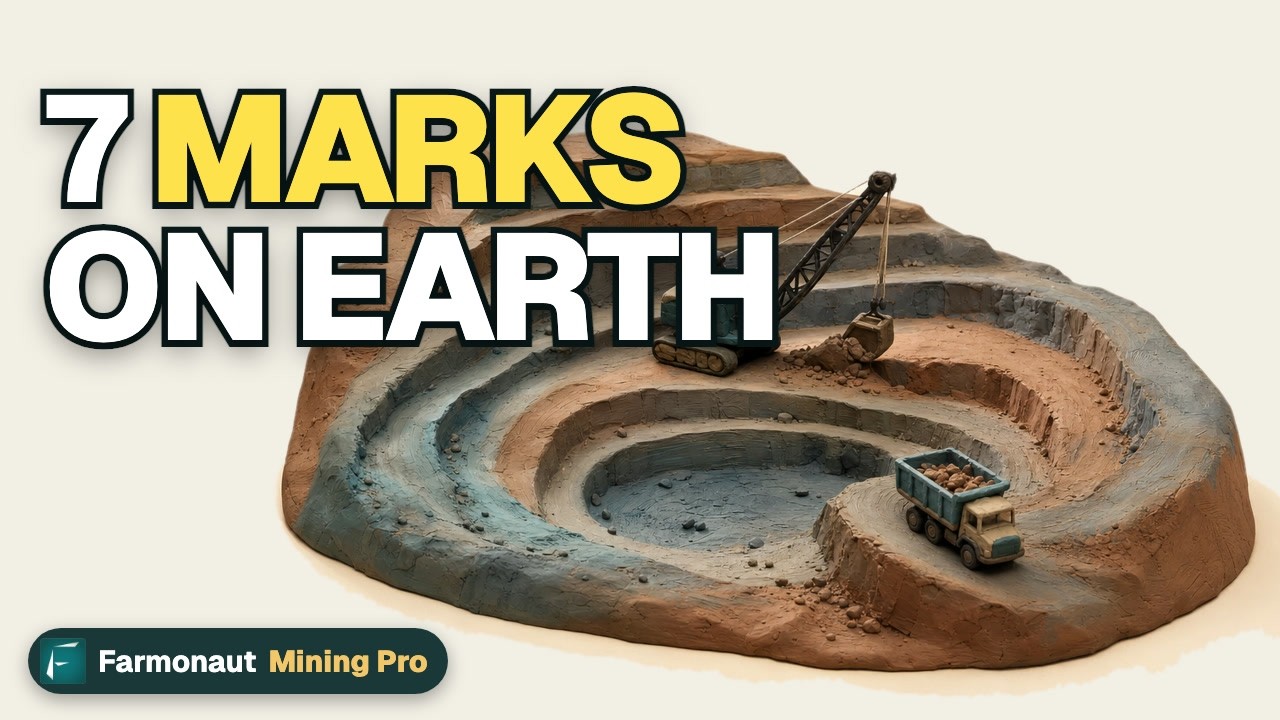
▶ The 7 environmental impacts of mining, explained in clay with satellite maps. · 2:31
Bunker Hill restart timeline: from first concentrate to commercial production
The company’s definition of commercial production is 90 days at more than 65% of the 1,800 tpd plant rate with stable operations, and it expected to reach that by the end of 2026 (Form 10-Q, June 2026). The first concentrate was trucked about 140 miles (220 km) to Teck’s Trail smelter in British Columbia. The release did not give a tonnage or grade for the shipment and said the plant was still being tuned during commissioning. A paste backfill plant, which returns tailings underground as mine fill, was described as substantially complete with final commissioning expected within three weeks of 31 July 2026.
Infographic
From restart to commercial production in 5 steps
- 1RehabilitateDewater and repair the upper mine and surface infrastructure.
- 2BuildComplete the 1,800 tpd plant, filter press and paste backfill plant.
- 3CommissionStart the plant in phases from January 2026 and tune it.
- 4ShipFirst concentrate produced by 29 June 2026; shipment to Teck’s Trail smelter announced 31 July 2026.
- 5ProveHold above 65% of plant rate for 90 days: the company’s test for commercial production.
The 2023 pre-feasibility study (effective 29 August 2022) set initial capital at US$54.9 million, a net present value of US$62.8 million at a 5% discount rate, an after-tax internal rate of return of 36% and a payback of 2.1 years. Those figures date from 2022 inputs, so they are a starting point and not a current forecast. The December 2025 resource estimate uses a net smelter return cut-off of US$70 per ton, with prices of US$20 per ounce silver, US$1.00 per pound lead and US$1.20 per pound zinc (SEC prospectus supplement, March 2026). A net smelter return (NSR) is the revenue per ton of ore after smelter charges, and the cut-off is the minimum value that justifies mining a block.
On 5 October 2026 the company reported that surface drilling had started on a newly acquired property called PAGE, with first holes crossing near-surface sulfide mineralization (Bunker Hill Mining Corp.). Drill intercepts are not resources until they are modelled and reported.
Bunker Hill balance sheet: debt, silver loan and warrants
Most of the money behind the restart is borrowed or streamed. The Sprott debt facility is US$15 million. Sprott also holds life-of-mine gross revenue royalties of 1.85%, 1.5% and 1.65% from its separate deals, and the 1.5% royalty was granted for advancing the US$15 million facility. Teck gave a US$10 million standby prepayment facility at 13.5% a year until 30 June 2027 and 15% after that; US$5 million was drawn on 30 July 2026 and a further US$1 million was drawn by 21 August 2026, leaving about US$4 million undrawn (Bunker Hill release, 21 August 2026). Monetary Metals provided a silver loan of up to 1.2 million ounces that is repaid in silver, so a rising silver price raises the repayment cost (SEC prospectus supplement, March 2026). The 10-Q says talks continue with Monetary Metals about changing or restructuring that loan.
Chart
Selected liabilities
US$ million, balance sheet carrying values
The 10-Q reports a working capital deficit of US$11.8 million at 30 June 2026, against working capital of US$6.5 million at 31 December 2025. It also reports shareholders’ equity of US$11.0 million, up from a deficiency of US$56.1 million, which it attributes to net income for the period; the derivative warrant liability, a non-cash item that moves with the share price, fell from US$75.2 million to US$32.6 million. A lawsuit from Crescent Mining over mine drainage, with trespass, nuisance and negligence claims, is also described in the filing. On 26 June 2026 the court gave the company and its co-defendant full summary judgment on two federal (CERCLA) claims and partial summary judgment on some state-law damage claims; Crescent’s later-period state-law claims and the company’s own contribution claims are still pending (Form 10-Q, June 2026).
On 21 August 2026 Bunker Hill announced an arrangement agreement, dated 20 August, to acquire all shares of Silver47 Exploration at 0.1724 Bunker Hill shares per Silver47 share. After closing, current Bunker Hill holders would own about 57% and Silver47 holders about 43% on a basic basis, and the company would seek the name Bunker Hill Silver Corp. It also arranged a US$10 million concentrate prepayment facility with Ocean Partners and drew US$1 million more on the Teck standby facility. The company is pursuing an NYSE American listing, with no guarantee it will be granted (Form 8-K press release, 21 August 2026).
The calculator below lets you test how the share count, share price, silver price and exchange rate change the company’s equity value and the size of the silver and EPA obligations compared with it. All defaults are round examples.
Calculator
How big are the obligations next to equity value?
Enter your own share count, prices and exchange rate.
- Equity value in US$ million: $134
- Silver ounces at your price, US$ million: $60
- Silver ounces as % of equity value: 44.6%
- EPA principal (US$14M) as % of equity value: 10.4%
Example values only. Shares default to 46.7 million (Form 10-Q, 30 June 2026); silver ounces default to about 1.2 million, the size of the silver loan, fully drawn on 30 January 2026 (company filings). EPA principal is US$14 million (Form 10-Q). Prices and the exchange rate are inputs: example, use today’s price. Not investment advice.
Silver, lead and zinc: the metals behind the mine
US mines produced about 1,100 metric tons of silver in 2025 (estimate), and the USGS puts the average bullion price at US$38 per troy ounce for 2025, up from US$28.37 in 2024 (USGS Mineral Commodity Summaries 2026, silver). Lead comes from five mines in Missouri, plus two silver mines in Idaho and two zinc mines in Alaska as by-product (USGS, lead). US mine output of zinc in concentrate was an estimated 670 thousand metric tons in 2025, with the North American price averaging 149 cents per pound (USGS, zinc).
Chart
Average silver price
US$ per troy ounce, annual average bullion price
For a company like this, the price of all three metals matters because the concentrate is sold on a basket of silver, lead and zinc content, less smelter charges. For a wider comparison of silver and uranium small caps, see our small-cap uranium and silver miners comparison.
Gold Hill, Utah: a different district and a different company
Gold Hill is a historic mining district in Tooele County, Utah, about 190 miles west-southwest of Salt Lake City. Placer gold was first found in 1858, Gold Hill and Clifton were re-established in 1869, and the district has 43 known historic producers that were mined mainly until the end of World War II. The best-known modern operation is the Kiewit open-pit, heap-leach gold and silver mine of Desert Hawk Gold Corp., which leases ground from Clifton Mining Company (Desert Hawk Gold Corp., Form 10-K for 2023). A heap leach piles crushed ore on a lined pad and trickles a weak cyanide solution through it to dissolve the gold.
In that annual report, filed on 1 April 2024, Desert Hawk said it had no public trading market for its shares, no known mineral reserves at Kiewit, 2023 revenue of US$2.54 million against US$4.63 million in 2022, and a net loss of US$9.39 million. The Bureau of Land Management conditionally approved an amended plan of operations on 22 December 2022, raising the permitted total from 2 million to 10 million tons of ore and the annual rate from 1 million to 1.75 million tons. The company also had a 2019 prepaid forward contract covering 47,045 ounces of gold. So Gold Hill is not a Bunker Hill sibling, and the filing shows no listed stock to compare.
The Kiewit pit is a good example of how gold is made at small scale: dig, crush, leach, recover, refine. Our video walks through each stage.
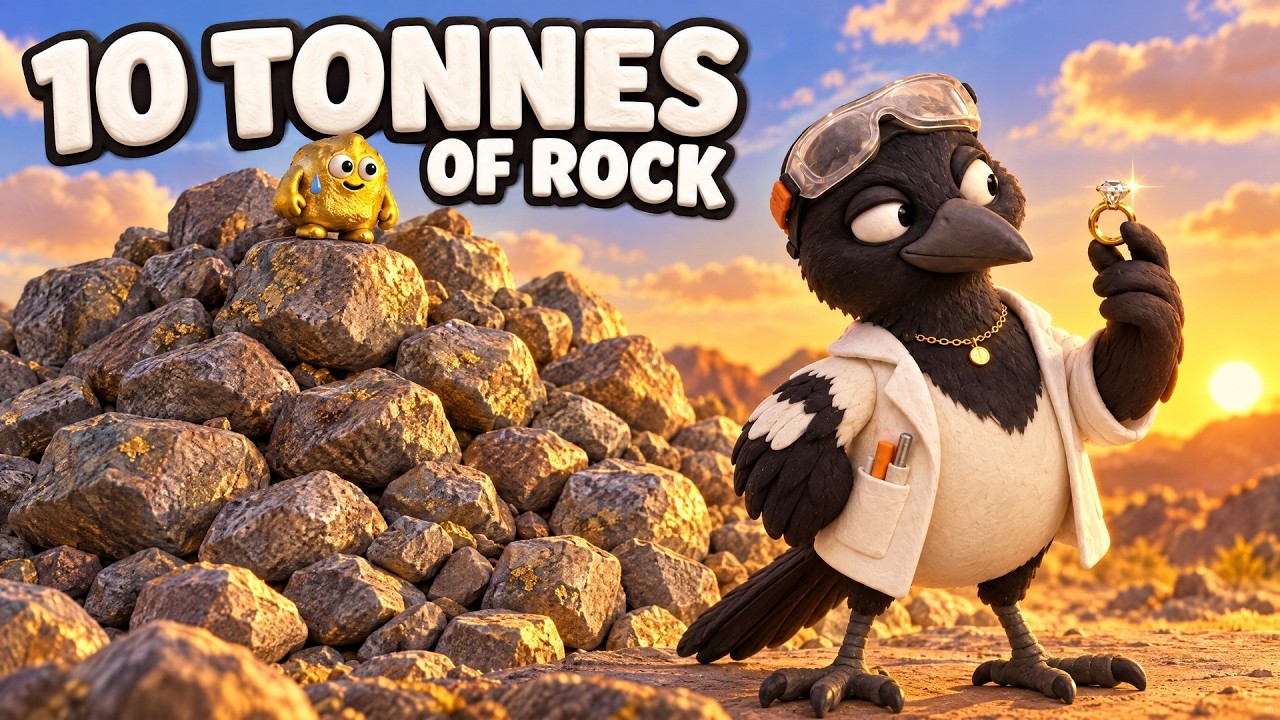
▶ How gold is mined and refined, from rock to ring. · 5:27
King of the Hills gold mine is in Western Australia, not Nevada
Searches for a “King of the Hill gold mine” sometimes point to Nevada. The well-known mine of that name is King of the Hills near Leonora in Western Australia, part of the Leonora operation of Vault Minerals Limited (ASX: VAU). Vault reported FY26 gold production (year to 30 June 2026) of 336,540 ounces across the group, of which Leonora produced 179,666 ounces. Stage 1 of the King of the Hills processing upgrade was commissioned in March 2026 and Stage 2 was 71% complete on 3 July 2026, with completion targeted for September 2026; the company says the upgrade lifts processing capacity by 50% (Vault Minerals ASX announcement, 3 July 2026). Its Australian reporting uses ounces and Australian dollars, which differs from the US and Canadian filings above.
Chart
Vault Minerals gold production by operation
Thousand ounces, year to 30 June 2026
Utah and Idaho mining companies at a glance
People who land here often search for Utah or Idaho miners in general. This table lists operators named in sources we read, with facts and dates. It is a reading list for further research, not a ranking.
| Operator and place | Metal | Fact and date |
|---|---|---|
| Rio Tinto, Kennecott Bingham Canyon, Utah | Copper | Open pit more than 0.75 miles (1,210 m) deep and 2.5 miles (4 km) wide (Kennecott, November 2024) |
| Desert Hawk Gold Corp., Kiewit, Gold Hill, Utah | Gold, silver | Heap leach; no public market for shares in the FY2023 10-K |
| Anfield Energy, Velvet-Wood, southeast Utah | Uranium, vanadium | Portal reopened 6 November 2025; the company then planned production by mid-2026, and its June 2026 update targets the end of 2026 (Salt Lake Tribune, 7 November 2025) |
| Energy Fuels, White Mesa Mill, Utah | Uranium, rare earths | Licence amendment to expand rare earth processing pending, public meeting 18 May 2026 (KSJD, 20 May 2026) |
| Bunker Hill Mining Corp., Kellogg, Idaho | Silver, lead, zinc | First concentrate shipped 31 July 2026 |
How to research a mining stock from filings
- Start at the filing, not the headline. For US-registered companies, search the company name on SEC EDGAR; for Canadian listings, use SEDAR+. Read the latest 10-Q or 10-K and the technical report summary.
- Check the technical basis. Look for whether the plan is a scoping study, pre-feasibility study or feasibility study, and the date and price assumptions behind it.
- Read the debt note. Streams, silver loans and royalties change how much of future revenue reaches shareholders.
- Look up legacy liabilities. Superfund or reclamation obligations can run for decades and are listed in the notes.
- Compare share counts across dates. Reverse splits, warrants and share-settled interest all change the count.
- Check a company’s own satellite or drilling claims against the data. A drill hole is a point; resources are modelled volumes. Our guide to finding gold deposits and our look at satellite gold exploration in the United States explain what early-stage evidence can and cannot show.
Farmonaut is a US-based company that screens licence areas with satellite data to produce exploration targets, which come before any resource estimate. If you own or manage a licence and want a screening quote, use the mining query form, read about satellite-based mineral detection, or contact the team.

▶ How satellites help find gold: they map the rock around it, not the gold itself. · 4:25
If this topic matters to you, read Baffin Island Iron Mine: Output, Debt and Steensby Rail next.
Frequently asked questions
What is the ticker for Bunker Hill Mining stock?
BNKR on the Toronto Stock Exchange and BHLL on the OTCQB, per the company’s release of 31 July 2026. BNKR moved from the TSX Venture Exchange to the TSX, where it began trading on 25 March 2026.
Where is the Bunker Hill Mine?
At Kellogg in Shoshone County, in the Silver Valley of northern Idaho. The company holds 440 patented claims over more than 5,700 acres there.
Is Bunker Hill producing yet?
Concentrate was produced by 29 June 2026 and the company announced the first shipment to Teck’s Trail smelter on 31 July 2026; it is ramping up. The company defines commercial production as 90 days at more than 65% of 1,800 tpd and targets the end of 2026.
Did Bunker Hill do a reverse split?
Yes. Shares were consolidated 1-for-35 effective 6 March 2026, so older price charts need adjusting.
Who owns Bunker Hill Mining?
No single holder controls it. The March 2026 prospectus gives about 29.6% for Sprott and about 23.9% for Teck after the June 2025 transactions. Shares outstanding have grown since, so check the latest filings.
What does Bunker Hill owe the EPA?
US$14 million of principal remained at 30 June 2026 out of US$19 million, with scheduled instalments each 1 November from 2026 to 2029, subject to talks on a second amendment.
What is the Bunker Hill Superfund site?
A clean-up area of more than 1,500 square miles in Idaho and Washington, listed by the EPA in 1983. The mine lies inside it.
Is there a Gold Hill, Utah mining stock?
Desert Hawk Gold Corp., which runs the Kiewit mine, reported no public trading market for its shares in its 10-K filed 1 April 2024.
Where is the King of the Hills gold mine?
Near Leonora in Western Australia. It is part of Vault Minerals (ASX: VAU), which reported 179,666 ounces from Leonora in the year to 30 June 2026.
How much silver does Idaho produce?
The USGS does not give a state figure in its national summary, but it notes that two silver mines in Idaho supply by-product lead. US mine output of silver was about 1,100 metric tons in 2025 (estimate).
Is this investment advice?
No. It is a summary of public documents with dates, so you can read the sources yourself.
This page is for information only. It is not investment advice. Check current prices and filings before any decision.
Farmonaut mining
Screen your own licence area from space
Request a quote to map exploration targets on a licence area from satellite data.

Mining Pro sample view, synthetic data
Keep reading
Sources
- Bunker Hill Mining Corp., prospectus supplement 424B3 (March 2026): sec.gov
- Bunker Hill Mining Corp., Form 10-Q for June 2026: bunkerhillmining.com
- Bunker Hill news release, 31 July 2026: bunkerhillmining.com
- Bunker Hill Mining Corp. website (accessed October 2026): bunkerhillmining.com
- Idaho DEQ, Coeur d’Alene Basin: history and cleanup: cdabasin.idaho.gov
- USGS, Mineral Commodity Summaries 2026: silver: pubs.usgs.gov
- USGS, Mineral Commodity Summaries 2026: lead: pubs.usgs.gov
- USGS, Mineral Commodity Summaries 2026: zinc: pubs.usgs.gov
- Desert Hawk Gold Corp., Form 10-K for 2023: sec.gov
- Vault Minerals, ASX announcement 3 July 2026: announcements.asx.com.au
- Kennecott, The Bingham Mine (November 2024): kennecott-groundbreakers.com
- Salt Lake Tribune, Velvet-Wood construction (7 November 2025): sltrib.com
- KSJD, White Mesa Mill meeting (20 May 2026): ksjd.org
- Bunker Hill Form 8-K press release, Silver47 arrangement agreement (21 August 2026): sec.gov
Discussion
Questions, corrections or field experience? Share them below. First-time comments are reviewed before they appear, and your email is never published.
No comments yet. Be the first to add a question or your experience.

 SG Gold Mining LLC
 VRV Global Pte Ltd
 Omsri International FZE
 G.I.T.T.
 Jaunita Erss Ltd
 Almosi SARL
 SRK Consulting
 Berks Gold Limited
 Mwerezi Minerals Company Limited
 Mining SARL
 SenGold Invest SAS
 Sean Mining Limited
 NTS Group (Pty) Ltd
 Mine4Africa
 Lithspo Minerals Limited
 Tintina Mining Group

 Licence holder · Nigeria · Gold + lithium










