

Burkina Faso gold · Company ranking
Mining Companies in Burkina Faso: 6 Mines Ranked by Output
Six mines run by IAMGOLD, West African Resources, Endeavour and Orezone made about 702,000 oz of gold in the first half of 2026, while the state company SOPAMIB now holds Wahgnion and Boungou and oversees the restarts of Taparko and Perkoa. Ranked, with ownership, costs and mining-code rules.
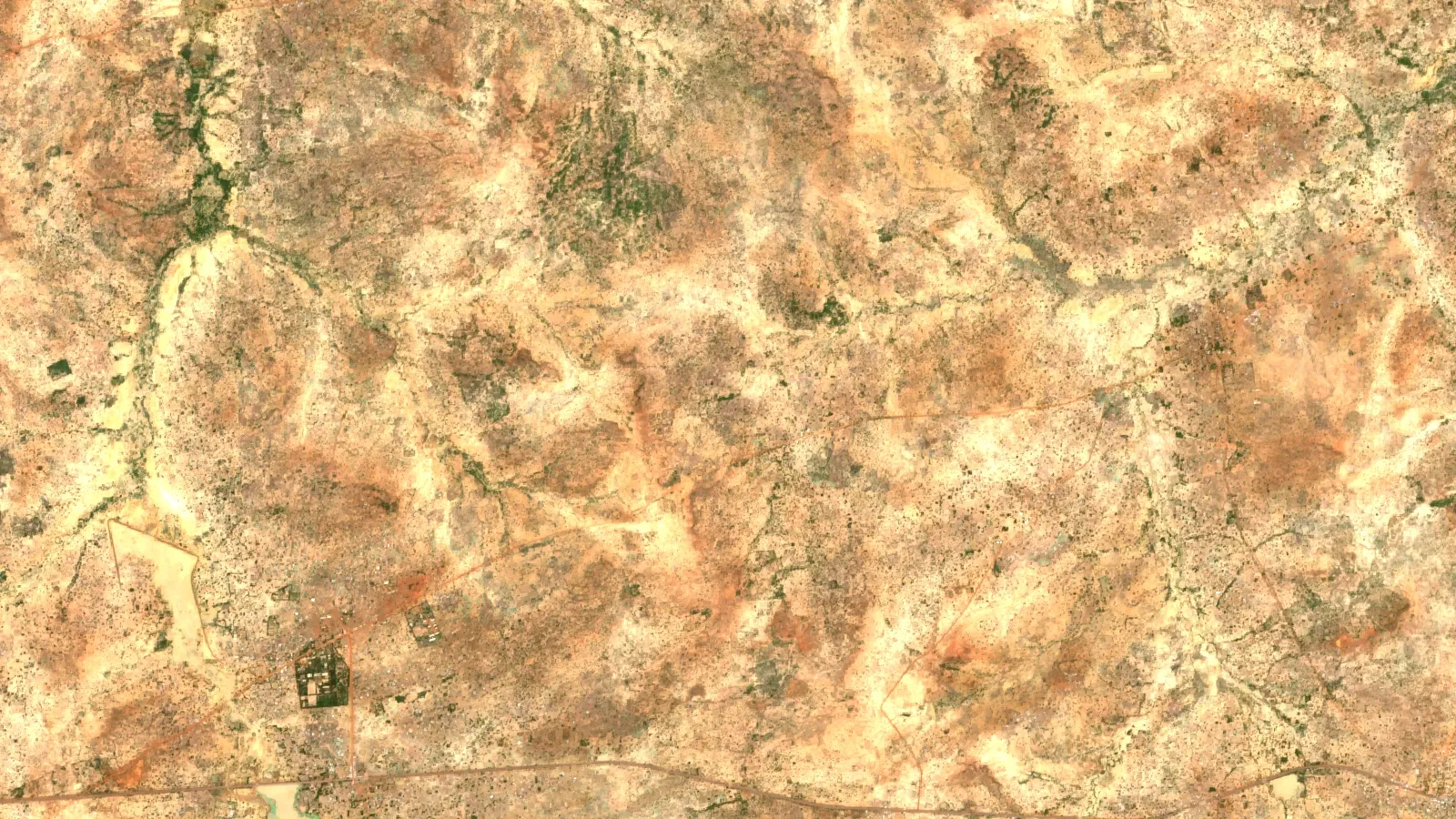
Key takeaways
- Six reporting mines made about 702 koz (about 22 t) of gold in the first half of 2026 on a 100% basis (company reports to 30 June 2026; West African Resources to 30 September 2026).
- Essakane led with 215.9 koz at an AISC of US$2,159/oz; Mana had the highest AISC of the four mines that report one, at US$2,841/oz (IAMGOLD and Endeavour, August and July 2026).
- The 2024 mining code gives the state 15% of an industrial permit holder’s capital at no cost, a priority dividend and the right to buy at least 30% more (Law 016-2024/ALT).
- A decree of 16 April 2026 lets SOPAMIB buy 25% more of Kiaka for CFA 70 billion, taking the state to 40%; West African Resources aims to close by end-2026 (ASX, April 2026).
- The state took Wahgnion and Boungou from Endeavour in a 2024 settlement, and Fortuna sold Yaramoko and left the country in May 2025 (Reuters, Fortuna).
In this article
- How we ranked these mines
- Burkina Faso mining companies ranked by output
- Which mines grew and which shrank
- Mines the state now runs through SOPAMIB
- Companies that sold or lost mines in Burkina Faso
- What the mining code changed for licence holders
- What an ounce costs: AISC and royalties
- The weight of mining in the national economy
- Mining vocabulary in French
- What to check before you partner, supply or invest
- Frequently asked questions
Burkina Faso’s industrial gold comes from a short list of mines, and six of them publish quarterly results. Together they produced about 702,000 troy ounces (roughly 22 tonnes) in the first half of 2026 on a 100% basis: Essakane (IAMGOLD), Kiaka and Sanbrado (West African Resources), Houndé and Mana (Endeavour) and Bomboré (Orezone). The state company SOPAMIB runs Wahgnion and Boungou, and oversees the restart of Taparko and the Perkoa zinc project, but it does not yet publish comparable figures. This page ranks the six reporting mines and then covers the rest.
Units used below: oz is a troy ounce (31.1 g), koz is a thousand ounces, and “100% basis” means the whole mine rather than the owner’s share. AISC is all-in sustaining cost per ounce sold, as defined in the World Gold Council guidance, and it includes royalties. Figures are in US dollars. The page gives facts from filings, not advice.
How we ranked these mines
We ranked mines, not companies, because Endeavour and West African Resources each run two of them. The measure is gold produced in the first half of 2026 on a 100% basis, taken from each company’s own report. That makes the order easy to check and leaves out share prices and opinion.
- Latest filed data only. Endeavour, IAMGOLD and Orezone report to 30 June 2026. West African Resources reports to 30 September 2026, so we took its nine-month total and subtracted the third quarter to get the first half. That figure is our own subtraction.
- Reporting mines only. Wahgnion, Boungou, Taparko and the Nordgold mines are not ranked because they do not publish production on the same basis.
- Output is not profit. A mine that pours more ounces can still earn less per ounce. The cost column shows why.
- Ownership shown as reported. Where a filing does not state the government’s share, the table says so rather than guessing.
Burkina Faso mining companies ranked by output
Essakane leads by a wide margin, while Houndé and Sanbrado are close enough that one quarter can swap them. In the first half, Endeavour’s group realised gold price, including its Sabodala-Massawa stream, was US$4,579 per ounce, Orezone’s group US$4,588 and IAMGOLD’s US$4,631 (all realised prices, including streams where they apply), so the cost figures below sit against a high gold price.
Chart
Gold produced by the six reporting mines, first half of 2026
Thousand troy ounces, 100% basis; Kiaka and Sanbrado calculated as nine-month total minus the September quarter
| Rank | Mine | Operator (listing) | State stake | Output, first half (koz) | AISC, first half (US$/oz) |
|---|---|---|---|---|---|
| 1 | Essakane | IAMGOLD (NYSE: IAG, TSX: IMG) | 15% | 215.9 | 2,159 |
| 2 | Kiaka | West African Resources (ASX: WAF) | 15%, with a purchase of 25% more decreed | 133.3 | Not given in the update |
| 3 | Houndé | Endeavour (LSE and TSX: EDV) | Not given in the report | 110.0 | 2,191 |
| 4 | Sanbrado | West African Resources (ASX: WAF) | 15% | 99.6 | Not given in the update |
| 5 | Bomboré | Orezone (TSX and ASX: ORE) | 15% | 75.6 | 2,234 |
| 6 | Mana | Endeavour (LSE and TSX: EDV) | Not given in the report | 68.0 | 2,841 |
Sources for the table: IAMGOLD (Essakane output and AISC, ownership 85/15), West African Resources (Kiaka and Sanbrado), Endeavour (Houndé and Mana) and Orezone (Bomboré H1 output; the AISC of 2,234 is Bomboré’s alone). The Sanbrado stake comes from Ecofin Agency.
1. Essakane (IAMGOLD)
Best for: readers who want the largest reporting mine as a reference point. Essakane made 215,900 oz in the first half (100% basis) and IAMGOLD’s attributable guidance for the year is 340,000 to 380,000 oz. The government’s carried interest rose from 10% to 15% in June 2025, so IAMGOLD’s share fell from 90% to 85%. IAMGOLD says an updated technical report in the first half of 2027 could show potential to extend mine life through 2035.
Pros: highest output, a record US$855 million dividend declared in 2025 (shared between the government and IAMGOLD), and a second dividend of about US$500 million declared in June 2026. Cons: AISC of US$2,159 per ounce including royalties is just above the top of IAMGOLD’s US$2,000 to 2,150 guidance, and IAMGOLD’s annual information form lists security in the Sahel region around the mine as a risk.
2. Kiaka (West African Resources)
Best for: following how the state’s stake rules work in practice. Kiaka poured 133,300 oz in the first half (our subtraction) and 76,030 oz in the September quarter, from ore at 0.9 g/t, where g/t means grams of gold per tonne of rock. A decree published on 16 April 2026 lets SOPAMIB buy a further 25% of Kiaka SA for CFA 70 billion (about A$175 million), which would take the state to 40%. West African Resources aims to finish the deal by the end of 2026 and plans a special dividend from the proceeds.
Pros: output rose 13% from the June quarter to the September quarter and plant recovery was 93.1%. Cons: the application for a permit for the explosives plant at Kiaka had not been approved at the 8 October update, and explosives supply was still called an operational bottleneck. The state first sought a 50% holding in September 2025, so the outcome was lower than the first demand.
3. Houndé (Endeavour)
Best for: a large mine with a published cost and stripping plan. Houndé made 110,000 oz in the first half, against guidance of 220,000 to 255,000 oz for the year, which Endeavour rates “on track”. Endeavour expects higher output in the fourth quarter as grades improve.
Pros: AISC of US$2,191 per ounce is inside its guided range once adjusted to a US$3,000 gold price (US$1,864). Cons: first-half output was well below the 161,000 oz of a year earlier, and Endeavour raised the mine’s sustaining capital guidance from US$50 million to US$90 million for extra waste stripping.
4. Sanbrado (West African Resources)
Best for: seeing how an open pit and an underground mine feed one plant. Sanbrado made 99,600 oz in the first half (our subtraction). In the September quarter the plant milled 716,000 tonnes at 2.4 g/t and recovered 94.7%, while the M1 South underground delivered 171,000 tonnes at 6.5 g/t. The government approved the plan to add the M5 South underground, with stoping due to start early in the second half of 2027.
Pros: the Toega satellite pit is in pre-strip and the M5 South underground is approved. Cons: September-quarter output fell 10% from the June quarter, and underground mined ounces fell 18% on lower grade. The April 2026 decree did not apply to Sanbrado or Toega.
5. Bomboré (Orezone)
Best for: a growth case still adding hard-rock capacity. Bomboré lies about 85 km east of Ouagadougou, and Orezone owns 85% with the state holding 15%. Output was 75,626 oz in the first half, up 34% on a year earlier, and Orezone forecasts 160,000 to 180,000 oz for the full year. The stage 2A expansion is due to be commissioned in the fourth quarter.
Pros: the new hard-rock plant ran 10% above its design rate in the first quarter. Cons: irregular explosives deliveries cut high-grade tonnes in the first half, head grade fell 14%, and AISC rose to US$2,234 per ounce from US$1,548 a year earlier, partly because of the royalty structure that took effect in April 2025.
6. Mana (Endeavour)
Best for: a case study in how quickly a high-grade underground source can run out. Mana made 68,000 oz in the first half against 87,000 oz a year earlier. Endeavour now expects the mine to land below the low end of its 155,000 to 180,000 oz guidance, because the Siou underground deposit was depleted faster than planned and the Bana Camp open pit has moved to late in the second half.
Pros: Endeavour plans to start the Bana Camp open pit late in the second half. Cons: AISC of US$2,841 per ounce is above the top of its US$2,000 to 2,250 guidance, and it is the highest of the four mines whose reports give a first-half AISC.
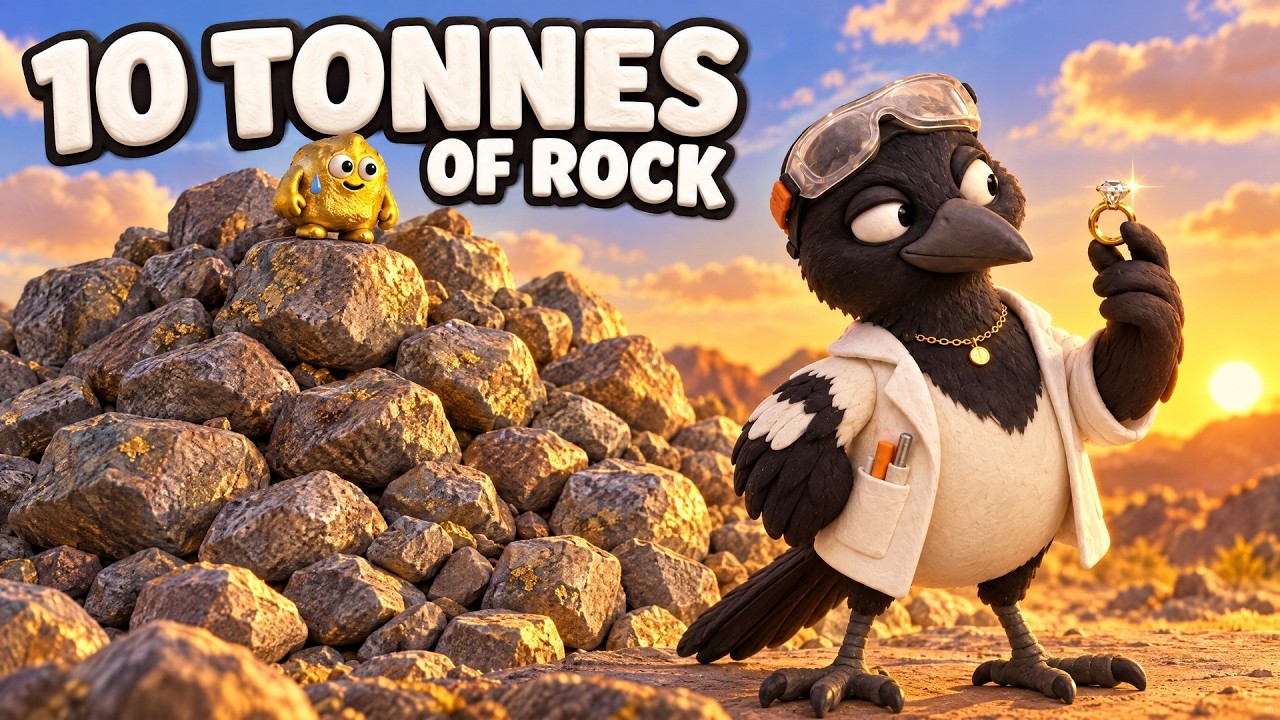
▶ Follows a gold nugget from rock to ring: found, drilled, crushed, dissolved, caught on carbon, melted and refined. · 5:27
Which mines grew and which shrank
The first half did not go one way. Bomboré grew by a third because its hard-rock plant arrived, while Houndé and Mana both produced less than a year earlier. Endeavour ties Houndé’s fall to lower grades from the Vindaloo Main and Kari West pits and a harder ore blend, and Mana’s fall to the end of mining at the high-grade Siou underground. Essakane produced 18% more than in the first quarter of 2025, but IAMGOLD’s own share rose only about 11% because the state stake went up.
Chart
Three Burkina Faso mines, first half against first half
Thousand troy ounces, 100% basis; the three mines whose company reports show both periods
Endeavour expects fourth-quarter output to rise as higher grades are mined at Houndé and Mana, and Orezone says Bomboré’s output is weighted to the second half. Both are company expectations, not results.
Mines the state now runs through SOPAMIB
SOPAMIB (Société de Participation Minière du Burkina) was set up in 2014 but only became central after the 2024 reforms. It now holds or runs five mines and projects, and publishes far less than the listed companies, so no output ranking is possible.
- Wahgnion and Boungou. Both were formerly Endeavour mines. A decree published on 11 June 2025 finished the transfer of five assets (two operating gold mines and three exploration licences) to SOPAMIB. Boungou poured gold again in July 2025 after a two-year stop. Wahgnion is expected to make about 92,000 oz in 2026, according to its owner, and SOPAMIB reported more than 1,000 direct jobs there in 2025. SOPAMIB has not published regular production figures for Boungou.
- Taparko. Nordgold halted the mine in April 2022 because of security. The government revoked its licence in September 2025 under Article 126 of the mining code, and SOPAMIB now oversees a restart.
- Perkoa (zinc). It is the country’s only industrial zinc mine and has been idle since a flood killed several miners in April 2022. Trevali withdrew, ownership passed to the state, and in July 2026 the government allocated CFA 20 billion (US$34.9 million) for rehabilitation. No restart date has been announced.
- Bouboulou (new). Cabinet approved an industrial permit on 9 July 2026. The mine holds an estimated 10.77 million tonnes of ore and 7.27 tonnes of gold over 15 years, needs more than CFA 32 billion of investment and is the state’s first mine developed entirely by itself since Poura closed in 1999. SOPAMIB has not said when production begins.
Companies that sold or lost mines in Burkina Faso
Several names in older articles on this topic no longer hold what they once did. Semafo and Roxgold, often cited as current producers, appear today only as subsidiary names in filings: the decree above lists SEMAFO Boungou SA, and the Yaramoko mine sits in Roxgold Sanu SA.
- Endeavour. Under a settlement announced in August 2024, the state took Wahgnion and Boungou after a sale to Lilium Mining stalled. Ecofin reports a US$60 million payment to Endeavour and a 3% royalty on up to 400,000 oz sold from Wahgnion. Endeavour still operates Houndé and Mana, and its 2026 half-year report notes that the final cash from the state under the settlement was received in the earlier period.
- Fortuna. It completed the sale of the Yaramoko mine on 13 May 2025 to Soleil Resources International, a private Mauritius company, for US$70 million in cash plus the right to up to about US$53 million of VAT receivables, and said it has ceased all operations in Burkina Faso.
- Trevali. It left Perkoa because it could not fund the rehabilitation after the 2022 flood.
- Nordgold. It lost Taparko but won an industrial licence for the Niou deposit in April 2025, with an estimated 20.22 tonnes of gold over eight years. In January 2026 Interfax reported, citing a source, that Okto Group may buy its Burkina Faso assets; we found no confirmed deal.
- IAMGOLD, West African Resources and Orezone. All three still hold their mines. The state’s share of Essakane has risen and its share of Kiaka is set to rise.
What the mining code changed for licence holders
Law 016-2024/ALT, the mining code, was passed by the transitional assembly in July 2024. The full French text is on the FAO’s FAOLEX legal database. The points below matter most to a company deciding whether to bid, partner or supply.
- Shares for the state at no cost. When an industrial permit is granted, 15% of the share capital goes to the state in shares that cannot be diluted (Article 66). This used to be 10%, as Ecofin reports for Essakane.
- Right to buy more. The state may also subscribe, alone or with national private investors, for at least a further 30% at a price (Article 66). Kiaka is a current example.
- Priority dividend. The state is paid a dividend equal to its stake before any other profit is shared, and may ask for payment in kind (Article 67).
- Permit lengths. A large-mine industrial permit lasts ten years, or the mine’s life if shorter, and renews in five-year steps until the deposit is exhausted (Article 72). A small-mine permit lasts five years, or the mine’s life if shorter, and also renews in five-year steps (Article 73). A research permit lasts three years and can be renewed twice (Article 57), and only a legal entity can hold one (Article 53).
- Withdrawal. If a licence is in a dispute that could threaten public order, the minister can suspend or withdraw it (Article 126). This is the article cited for Taparko.
- Royalties by decree. The code leaves rates to regulation. Ecofin reports that the rate was capped at 7% and is now 8% between US$3,000 and US$3,500 an ounce, rising one point for each further US$500. IAMGOLD’s second-quarter 2026 report confirms the same April 2025 decree: 8% above US$3,000 an ounce plus one point for each further US$500, against 7% before. That rule gives 11% between US$4,500 and US$5,000; a May 2026 Ecofin article says 10% for that band, which does not fit, so check the decree text.
- Local content and foreign firms. A separate law (017-2024) sets local-content rules. A foreign company may mine if its home country allows Burkinabe firms to do the same and it is registered in Burkina Faso with a qualified agent, according to Mayer Brown.
Our pages on neighbouring countries cover the same ground for Ghana and Côte d’Ivoire, and our guide to mining cadastre portals explains how title records are searched.
What an ounce costs: AISC and royalties
AISC is the number to read after output. It bundles cash costs, sustaining capital and royalties, so it moves when the gold price moves. Endeavour reports its first-half AISC at the actual price and again adjusted to US$3,000, and the gap at Houndé (US$2,191 against US$1,864) is the effect of higher royalties at the higher price. Mana’s AISC was US$2,841 against a guided top of US$2,250, which Endeavour ties to lower volumes sold, higher royalties and costlier self-generated power at its underground mine. Orezone attributes part of the rise at Bomboré to the royalty structure that took effect in April 2025.
Chart
Output against cost per ounce, first half of 2026
Four mines whose reports give a first-half AISC
Use the calculator below to see how a royalty and a state share change what is left from one mine-year. Enter your own numbers; the defaults are examples.
The weight of mining in the national economy
The EITI’s country report for 2024 says extractive industries supplied 69.6% of exports, 15.1% of GDP and 15.3% of government revenue in 2024. The EITI shows gold production rising from 39 tonnes in 2016 to 67 tonnes in 2021. Ecofin reports national output above 94 tonnes in 2025, and estimates industrial output at about 52 tonnes that year.
Chart
Extractive industries in Burkina Faso’s economy, 2024
Per cent of national total
Mining vocabulary in French
Documents, decrees and the cadastre are in French, so licence holders and suppliers need the terms. These are taken from the text of the code.
| English | French term in the code | What it means |
|---|---|---|
| Mining code | Code minier | Law 016-2024/ALT |
| Research permit | Permis de recherche | Three years, renewable twice |
| Large-mine industrial permit | Permis d’exploitation industrielle de grande mine | Ten years, then five-year renewals |
| Shares for the state at no cost | Actions gratuites | 15% of capital at the grant of a permit |
| Priority dividend | Dividende prioritaire | Paid to the state before other profit |
| Local content | Contenu local | Use of national staff, suppliers and technology |
| Semi-mechanised mining | Exploitation semi-mécanisée | One of three mining categories, with artisanal and industrial |
| Proportional royalty | Redevance proportionnelle | Set by decree on product value |
What to check before you partner, supply or invest
These checks apply to a mine owner, a contractor and an investor alike.
- Who holds the permit. Read the decree and the cadastre record, not a press summary. Ownership or control shifted at Wahgnion, Boungou and Taparko within about two years.
- State share and dividend order. Ask what percentage the state holds today and whether a purchase decree is pending, as at Kiaka. The priority dividend comes first.
- Which basis a number uses. Check 100% against attributable ounces. IAMGOLD reports Essakane both ways, and they differ by the state’s 15%.
- Explosives, power and permits. Both West African Resources and Orezone cite explosives supply, and Endeavour cites reduced grid power at Houndé and Mana. A permit delay can limit output as much as geology.
- Security. Company filings list security in the Sahel as a risk. Plan site access and insurance with that in mind.
- Geology before spending. The Bureau des mines et de la géologie du Burkina (BUMIGEB) lists a geoportal, documents and drilling and laboratory services on its website, which is a place to start. Satellite screening can show alteration zones across a licence area at an early stage, ahead of any resource estimate, and our note on drilling technologies in mineral exploration shows where it sits in the workflow.

▶ Explains that satellites map the rock around gold, such as iron stains, clay and fractures, rather than the gold itself. · 4:25
We cover a connected topic in Coal Mining Companies in the USA Ranked by Output.
For a closer look at a related question, see our guide: US Gold Miners Ranked: 10 Largest Mines by Output.
Frequently asked questions
Which companies operate gold mines in Burkina Faso?
IAMGOLD runs Essakane, West African Resources runs Sanbrado and Kiaka, Endeavour runs Houndé and Mana, and Orezone runs Bomboré. Nordgold also operates in the country, and its Yimiougou project began production in early 2024. SOPAMIB, the state company, runs Wahgnion and Boungou and oversees the restart of Taparko.
What is SOPAMIB?
SOPAMIB is the Société de Participation Minière du Burkina, a state-owned company created in 2014 and given a larger role after the 2024 mining code. It owns and manages assets the state has taken over, and it is the buyer of extra stakes such as the 25% more of Kiaka.
Who owns the Essakane mine?
IAMGOLD owns 85% and the government of Burkina Faso 15%, since the state’s carried stake rose from 10% on 20 June 2025.
Did Endeavour sell its Burkina Faso mines?
Endeavour gave up Boungou and Wahgnion after a sale to Lilium Mining stalled, and the state took both under a 2024 settlement. It still operates Houndé and Mana.
Is Fortuna still in Burkina Faso?
No. Fortuna sold the Yaramoko mine in May 2025 and says it has ceased all operations in the country.
How much of a mine does the Burkina Faso state own?
The mining code gives the state 15% of an industrial permit holder’s capital at no cost, and a right to buy at least 30% more. Kiaka would move to 40% if the decreed purchase completes.
How long does a mining permit last in Burkina Faso?
A large-mine industrial permit lasts ten years or the mine’s life if shorter, and renews in five-year steps. A small-mine permit lasts five years (renewable in five-year steps), and a research permit lasts three years, renewable twice.
Can a foreign company get a mining licence in Burkina Faso?
Yes, if its home country gives Burkinabe firms reciprocal rights and it registers in Burkina Faso with a qualified agent. Research permits go only to legal entities, not individuals.
How much gold does Burkina Faso produce?
Ecofin reports national output above 94 tonnes in 2025, with industrial mines estimated at about 52 tonnes. The EITI recorded 67 tonnes for 2021.
What is the gold royalty in Burkina Faso?
The rate is set by decree and rises with the gold price. IAMGOLD’s filing states the April 2025 decree sets 8% above US$3,000 an ounce, plus one point for each extra US$500 (7% before). Check the current decree before you model a project.
Which Burkina Faso gold miners are listed on exchanges?
IAMGOLD is on the NYSE and TSX, West African Resources on the ASX, Endeavour on the LSE and TSX, and Orezone on the TSX and ASX. Listing facts only; this page makes no recommendation on any share.
Where can I find Burkina Faso mining law in French?
The full text of Law 016-2024/ALT is on FAOLEX, and the vocabulary table above lists the terms to search for in decrees and the cadastre.
This page is for information only. It is not investment advice or legal advice. It gives no share prices or targets. Confirm licence, royalty and tax rules with the regulator and a local lawyer.
Farmonaut mining
Get a quote to screen your licence area from space
Mining business owners can ask for a quote to have a licence area screened with satellite data for exploration targets, ahead of any resource estimate.

Mining Pro sample view, synthetic data
Keep reading
Sources
- Orezone Gold, Second quarter 2026 results (ASX, 13 Aug 2026): announcements.asx.com.au
- West African Resources, Production update, September 2026 quarter (ASX, 8 Oct 2026): announcements.asx.com.au
- Endeavour Mining, Q2-2026 results news release (30 Jul 2026): edv-14806-s3.s3.eu-west-2.amazonaws.com
- EITI, Burkina Faso country page (2024 EITI Report data): eiti.org
- Xinhua, Burkina Faso launches first state-operated industrial gold mine (10 Jul 2026): english.news.cn
- Burkina Faso, Loi n°016-2024/ALT portant code minier (FAOLEX): faolex.fao.org
- Mining Technology, Burkina Faso government revokes Taparko gold mine licence (15 Sep 2025): finance.yahoo.com
- Fortuna Mining, Completes divestiture of Yaramoko mine (13 May 2025): finviz.com
- Interfax, Okto Group may buy Nordgold’s assets in Burkina Faso (19 Jan 2026): interfax.com
- Orezone Gold, Bomboré operations overview: orezone.com
- IAMGOLD, Annual Information Form (17 Feb 2026): s202.q4cdn.com
- West African Resources, Burkina Government decree to acquire 25% of Kiaka (ASX, 21 Apr 2026): wcsecure.weblink.com.au
- BUMIGEB, Bureau des Mines et de la Géologie du Burkina: bumigeb.bf
- Ecofin Agency, Burkina Faso turns to Nordgold as production slumps (2 May 2025): ecofinagency.com
- Ecofin Agency, Burkina Faso’s push for 50% of Kiaka leads to ASX suspension (1 Sep 2025): ecofinagency.com
- Ecofin Agency, Higher gold prices lift Burkina Faso’s revenue from Sanbrado (2 Feb 2026): ecofinagency.com
- Ecofin Agency, Essakane posts 18% output rise amid expanded state stake (7 May 2026): ecofinagency.com
- Ecofin Agency, Burkina Faso moves to restart Perkoa zinc mine (8 Jul 2026): ecofinagency.com
- Ecofin Agency, Burkina Faso clears way for fourth state-owned gold mine (10 Jul 2026): ecofinagency.com
- Ecofin Agency, Burkina Faso to buy additional stake in Kiaka (21 Apr 2026): ecofinagency.com
- Ecofin Agency, Burkina Faso restarts state-owned gold mines (29 Jun 2026): ecofinagency.com
- World Gold Council, All-in sustaining costs and all-in costs: gold.org
- Reuters via Kitco, Burkina Faso completes nationalization of five gold mining assets (12 Jun 2025): kitco.com
- Mayer Brown, Africa mining know-how: Burkina Faso: mayerbrown.com
- IAMGOLD, Second quarter 2026 results (6 Aug 2026): newsfilecorp.com
- Orezone Gold, Bomboré Phase II expansion feasibility study (28 Mar 2023; deposit coordinates): minedocs.com
- Orezone Gold, First quarter 2026 gold production (23 Apr 2026): orezone.com
Discussion
Questions, corrections or field experience? Share them below. First-time comments are reviewed before they appear, and your email is never published.
No comments yet. Be the first to add a question or your experience.

 Alkimy SARL
 Double A Trading
 GemSprout Metals Limited
 Qader Group
 Ileys General Trading
 SG Gold Mining LLC
 VRV Global Pte Ltd
 Omsri International FZE
 G.I.T.T.
 Jaunita Erss Ltd
 Almosi SARL
 SRK Consulting
 Berks Gold Limited
 Mwerezi Minerals Company Limited
 Mining SARL
 SenGold Invest SAS
 Sean Mining Limited
 NTS Group (Pty) Ltd











