

US coal producers · Ranked list
Coal Mining Companies in the USA Ranked by Output
Peabody mined 95.8 million short tons in 2024 and Core Natural Resources 84.3 million, together 35.1% of US output (EIA). Here are all 20 producers above 5 million tons, the biggest mines, and the reclamation rules.
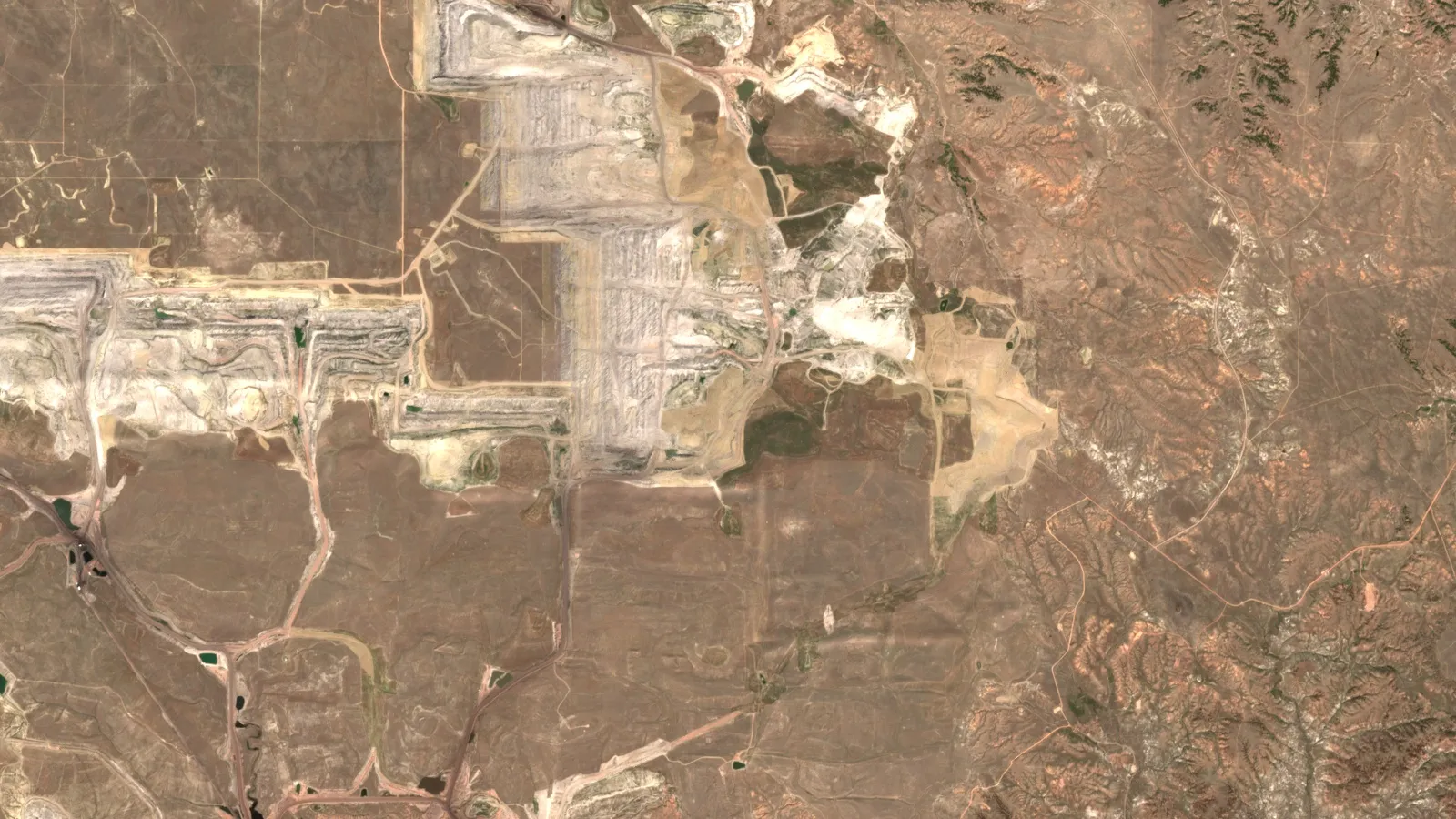
Key takeaways
- Peabody (95.8 Mst, 18.7%) and Core Natural Resources (84.3 Mst, 16.4%) led US coal output in 2024; the top 20 firms mined 84.5% of the 512.5 Mst total (EIA, 2025).
- North Antelope Rochelle in Wyoming was the largest US mine at 59.8 Mst in 2024; Wyoming mined 190.7 Mst, about 37% of the national total (EIA, 2025).
- Surface mines produced 59.7% of 2024 output; the average mine-mouth price was $52.47 per short ton, from $37.85 thermal to $180.02 metallurgical (EIA, 2025).
- Federal law requires topsoil replacement, return to approximate original contour, and 5 or 10 years of revegetation responsibility (30 U.S.C. 1265).
- US production in the second quarter of 2026 was 125.4 Mst, 2.2% below the same quarter of 2025 (EIA Quarterly Coal Report).
In this article
- Largest coal mining companies in the USA, ranked by tons mined
- How we chose and ranked these companies
- Profiles of the biggest US coal producers
- Biggest coal mines in the USA by output
- Where US coal is mined, by state and mine type
- What a ton of US coal sells for, by rank
- Land reclamation rules for US coal mining companies
- 7 land reclamation tips for coal mining operators
- Soil and water problems at coal mines
- What reclamation costs: topsoil volume and haul cost
- Jobs, infrastructure and rural economies
- Mapping a licence area before you commit
- Frequently asked questions
Peabody and Core Natural Resources were the two largest coal producers in the United States in 2024, mining about 95.8 and 84.3 million short tons. Together that was 35.1% of the 512.5 million short tons mined nationwide (EIA Annual Coal Report 2024, Table 10). This page ranks all 20 companies that EIA lists above 5 million short tons, names the biggest mines, and then covers the land reclamation rules and tips that every one of them has to follow.
Short tons are used throughout (1 short ton = 2,000 lb, or 0.9072 tonne), because that is what US agencies publish. Coal production data lag: 2024 is the latest full year of company-level data.
Largest coal mining companies in the USA, ranked by tons mined
The ranking below uses the Energy Information Administration (EIA) list of major producers for 2024. EIA groups mines by the “controlling company”, meaning the firm that controls the coal and its sale, which is usually the owner (EIA Table 10). The data come from reports that operators file with the Mine Safety and Health Administration (MSHA). Company names are shown as EIA prints them.
Chart
Largest US coal producers by tons mined
Million short tons, 2024; top 8 of 20 controlling companies as EIA lists them
| Rank | Controlling company (EIA name) | 2024 output, thousand short tons | Share of US total |
|---|---|---|---|
| 1 | Peabody Energy Corp | 95,789 | 18.7% |
| 2 | Core Natural Resources Inc | 84,312 | 16.4% |
| 3 | Navajo Transitional Energy Co | 37,112 | 7.2% |
| 4 | Alliance Resource Partners LP | 32,166 | 6.3% |
| 5 | Owners listed by personal name (EIA) | 26,614 | 5.2% |
| 6 | ACNR Holdings Inc | 26,100 | 5.1% |
| 7 | NACCO Industries Inc | 23,480 | 4.6% |
| 8 | Alpha Metallurgical Resources Inc | 15,518 | 3.0% |
| 9 | Foresight Energy Labor LLC | 15,447 | 3.0% |
| 10 | Vistra Energy | 8,917 | 1.7% |
| 11 | Seven Global Investments AS | 8,821 | 1.7% |
| 12 | Warrior Met Coal Intermediate Holdco LLC | 8,247 | 1.6% |
| 13 | Global Mining Group LLC | 7,068 | 1.4% |
| 14 | Westmoreland Mining Holdings LLC | 6,862 | 1.3% |
| 15 | Prairie State Energy Campus | 6,818 | 1.3% |
| 16 | Kiewit Peter Sons Inc | 6,753 | 1.3% |
| 17 | Coronado Coal LLC | 6,163 | 1.2% |
| 18 | Wolverine Fuels LLC | 6,108 | 1.2% |
| 19 | J Clifford Forrest | 5,610 | 1.1% |
| 20 | Iron Senergy Holding LLC | 5,153 | 1.0% |
The top 20 mined 433.1 million tons, or 84.5% of the 2024 total; the 7 largest mined about 63.5%. Output fell 11.3% in 2024 from 2023, and the number of producing mines fell from 560 to 524 (EIA, 2025). In the second quarter of 2026, US production was 125.4 million tons, 2.2% below the same quarter of 2025 (EIA Quarterly Coal Report).
How we chose and ranked these companies
- Metric: tons of coal mined in the United States in 2024, as reported to MSHA and published by EIA. Foreign mines are not counted, so a company with big overseas output can rank lower here than its global size suggests.
- Who is included: every company EIA lists at more than 5 million tons, so no known qualifier is left out. Smaller producers are grouped in “all other”, which made up 15.5% of output.
- What is not ranked: sales, profit and share price. Output is the only measure that all 20 report in a comparable way.
Profiles of the biggest US coal producers
Peabody (NYSE: BTU)
Peabody is based in St. Louis (Peabody release, 29 July 2026) and was the largest US producer in 2024. Its Powder River Basin (PRB) mines in Wyoming include North Antelope Rochelle, which mined 59.8 million tons in 2024 and is the largest mine in the country, and Caballo and Rawhide (EIA Table 9). In the second quarter of 2026 the PRB segment sold 16.4 million tons, down from 20.0 million a year earlier, which Peabody put down to mild weather and longer power-plant maintenance (Peabody results, 29 July 2026). Peabody also owns mines in Australia; those are outside the EIA US ranking. In May 2026 Anglo American said it was selling its steelmaking coal business elsewhere and that it was still in arbitration with Peabody over the 2024 deal that Peabody tried to end (Anglo American, 18 May 2026).
Core Natural Resources (NYSE: CNR)
Core was formed on 14 January 2025, when CONSOL Energy and Arch Resources completed a merger of equals (Mining Engineering, January 2025). It runs the Pennsylvania Mining Complex, Leer, Leer South and West Elk longwall mines and the Black Thunder surface mine in Wyoming, and owns stakes in two East Coast export terminals (Core results, 6 August 2026). In 2024 EIA listed Black Thunder at 44.5 million tons, the second-largest US mine, with Bailey and Enlow Fork in Pennsylvania next among Core mines. In the second quarter of 2026 Core sold 8.4 million tons of high-calorific thermal coal, 2.3 million tons of coking coal and 10.2 million tons from the PRB.
Navajo Transitional Energy Company (NTEC)
NTEC is owned by the Navajo Nation, per its own description. It bought the Antelope and Cordero Rojo mines in Wyoming and the Spring Creek mine in Montana from Cloud Peak Energy during that company’s Chapter 11 bankruptcy (Mining Technology). EIA’s 2024 mine table shows Antelope at 15.0, Spring Creek at 13.1 and Cordero Rojo at 4.3 million tons, which with the Navajo Mine in New Mexico (4.8 million) adds up to NTEC’s 37.1 million. Cloud Peak itself no longer appears in the ranking.
Alliance Resource Partners
Alliance is a master limited partnership that describes itself as the second-largest coal producer in the eastern United States, running underground complexes in the Illinois Basin and Appalachia (Alliance Resource Partners). It sold 8.6 million tons in the second quarter of 2026, helped by higher output at its Tunnel Ridge longwall in Appalachia, while the Hamilton mine in Illinois had a planned longwall move (Coal Age summary of its Q2 report).
NACCO Industries (NYSE: NC)
NACCO’s North American Coal subsidiary runs lignite mines that sit next to power plants. In the second quarter of 2026 the group delivered 5.55 million tons, of which 4.92 million came from unconsolidated mines (mines it operates but does not consolidate in its accounts). It also moved crews to planned reclamation work while a customer’s plant was down (NACCO results, 5 August 2026). EIA credits its mines with 23.5 million tons in 2024.
Other producers in the table
Position 5 is a private owner group that EIA lists by the owners’ personal names, because EIA names whoever controls the coal. Position 6 is ACNR Holdings. Position 9 is listed by EIA as Foresight Energy Labor LLC. Alpha Metallurgical Resources mined 15.5 million and Warrior Met Coal 8.2 million; Warrior’s No. 7 Mine in Alabama mined 5.3 million tons. Vistra’s total matches its Kosse mine in Texas (8.9 million), Prairie State’s matches the Lively Grove mine in Illinois (6.8 million), and Peter Kiewit Sons’ matches the Buckskin mine in Wyoming (6.8 million).
For a view of how these producers have moved in the market, see our coal producers and stock trends page and the wider overview of leading US mining firms. Nothing here is investment advice.
Biggest coal mines in the USA by output
Mines matter as much as companies, because a few giant pits in Wyoming set the national total. EIA counts 36 mines above 4 million tons in 2024. The ten largest are below (EIA Table 9).
| Rank | Mine | Operator | State | Type | 2024 output, million tons |
|---|---|---|---|---|---|
| 1 | North Antelope Rochelle | Peabody | Wyoming | Surface | 59.8 |
| 2 | Black Thunder | Thunder Basin Coal (Core) | Wyoming | Surface | 44.5 |
| 3 | Antelope | NTEC | Wyoming | Surface | 15.0 |
| 4 | Belle Ayr | Eagle Specialty Materials | Wyoming | Surface | 14.6 |
| 5 | Spring Creek | NTEC | Montana | Surface | 13.1 |
| 6 | Freedom | Coteau Properties | North Dakota | Surface | 11.9 |
| 7 | Eagle Butte | Eagle Specialty Materials | Wyoming | Surface | 11.0 |
| 8 | Caballo | Peabody | Wyoming | Surface | 10.8 |
| 9 | Bailey | Consol Pennsylvania Coal (Core) | Pennsylvania | Underground | 10.8 |
| 10 | Enlow Fork | Consol Pennsylvania Coal (Core) | Pennsylvania | Underground | 9.2 |
Eight of the ten are surface mines. Wyoming alone mined 190.7 million tons in 2024, about 37% of the national total.

▶ Strip (surface) mining explained: pros, cons and how the land is tracked. · 4:37
Where US coal is mined, by state and mine type
Surface mines produced 305.8 million tons in 2024 (59.7%) and underground mines 206.2 million (40.2%) (EIA Annual Coal Report 2024, Table 1). Surface mining is common where coal lies less than about 200 feet down; deeper seams are reached by underground mining (EIA, coal mining and transportation). Wyoming fell 19.6% in 2024, while North Dakota rose 5.5%.
Chart
Coal output fell in most big producing states
Million short tons, 8 of the largest producing states, 2023 and 2024
What a ton of US coal sells for, by rank
The average sales price at the mine was $52.47 per short ton in 2024, down 2.9% on 2023. Thermal coal averaged $37.85 and metallurgical coal $180.02 (EIA, 2025). Price depends mostly on rank, the grade of coal from lignite up to anthracite, and on whether it is burned for power or used to make steel. Prices change; check EIA for the latest data before you use them.
Chart
Average mine-mouth price by coal rank
US$ per short ton, 2024
Land reclamation rules for US coal mining companies
Before the Surface Mining Control and Reclamation Act (SMCRA) of 1977, there was no federal oversight of what happened to a coal mine after mining stopped, and millions of Americans still live less than a mile from an abandoned coal mine (Office of Surface Mining Reclamation and Enforcement). SMCRA now sets the rules for active mines and funds clean-up of old ones. Key requirements for surface mines in the statute (30 U.S.C. 1265):
- Backfill, compact where needed and grade the land to its approximate original contour, with highwalls covered. Variances are allowed for some mountaintop and steep-slope operations.
- Remove topsoil in a separate layer and replace it, or store it apart from other spoil, and restore the soil that best supports vegetation.
- Establish a diverse, permanent vegetative cover of the seasonal variety native to the area.
- Stay responsible for revegetation for five full years after the last seeding or fertilising, or ten years where average rainfall is 26 inches or less. Remining lands get two years, or five in dry areas.
Operators must also post a performance bond before a permit is issued. The bond runs for the life of the operation and for the period of revegetation responsibility (30 U.S.C. 1259). If a company fails, the bond is meant to pay for reclamation. For legacy sites, a per-ton fee on all coal produced has funded the Abandoned Mine Land program since August 1977; it had collected $14.233 billion by 30 September 2025, and Congress extended fee collection to 30 September 2034 (OSMRE).
7 land reclamation tips for coal mining operators
- Plan the end use before the first cut. The reclamation plan is part of the permit, so decide early whether the land goes back to pasture, crops, timber or wildlife habitat.
- Strip and save topsoil separately. Soil that is mixed with spoil loses its seed bank and structure. Store piles on stable ground and replant them quickly.
- Backfill as you go. Regrading behind the active pit keeps the open area small and lets the five-year revegetation clock start sooner.
- Match plants to the area. The statute asks for a diverse, native-type cover. A single quick-growing grass may pass an early check but fail later.
- Control water first. Acid mine drainage forms when water meets sulfur-bearing rock and makes sulfuric acid that can carry heavy metals (US EPA). Keep roads and spoil from causing erosion and siltation, as the statute requires.
- Budget for the bond and the monitoring years. Liability does not end when the coal does; it lasts through the revegetation period.
- Track the ground with data. Dated photos, field plots and repeat satellite images show where cover is thin or bare soil is spreading, before an inspector does.
For wider effects of coal on land and water, see our guide to the environmental impact of coal mining, and for how pits are dug, surface mining methods in the US.
Soil and water problems at coal mines
Two problems dominate. The first is soil: heavy machines compact the ground, and spoil is often low in organic matter. The second is water: abandoned mine drainage is polluted water linked mostly to coal mining, and acid mine drainage is the most common type (EPA, Abandoned Mine Drainage). Modern permits treat both as design problems, with sediment ponds, drainage control and long monitoring records. Our wider piece on why open-pit mining affects the environment covers the same ideas for other metals.
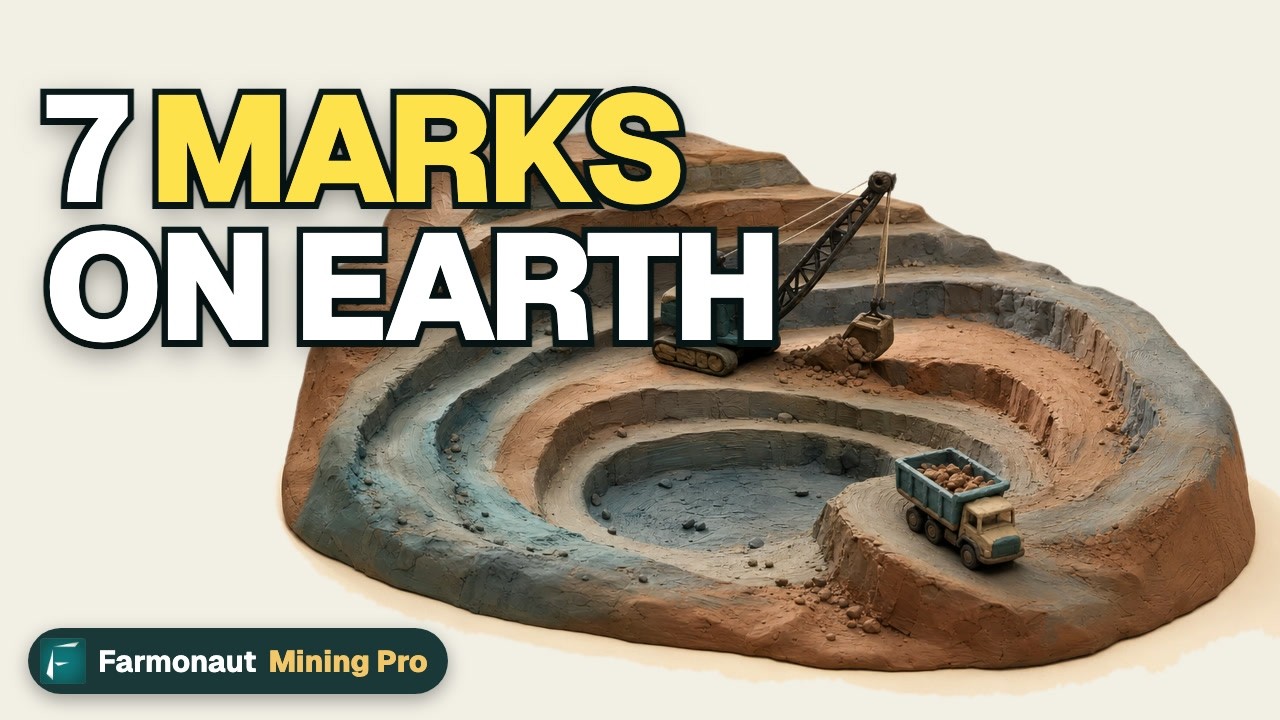
▶ The seven environmental impacts of mining, explained in clay. · 2:31
What reclamation costs: topsoil volume and haul cost
Topsoil replacement is one of the biggest line items in surface-mine reclamation. One acre covered with one inch of soil needs about 134 cubic yards, because an acre is 43,560 square feet and a cubic yard is 27 cubic feet. Use the calculator below with your own depth and haul cost to size the job; a second calculator checks the margin per ton of coal after a reclamation provision.
Calculator
How much topsoil does your reclamation area need?
Enter your own area, soil depth and haul cost. Results update as you type.
- Placement cost: $645,312
- Truckloads: 10,755
- Cost per acre: $6,453
Example values only, not benchmarks. One acre covered with one inch of soil is 134.4 cubic yards (43,560 sq ft x 1/12 ft / 27). The cost per cubic yard is an input: use your contractor quote, in US$.
Jobs, infrastructure and rural economies
US coal mines employed an average of 44,060 people in 2024, 1,416 fewer than in 2023. Output per employee hour was 5.22 short tons overall: 8.94 at surface mines and 3.24 at underground mines (EIA, 2025). In 2024 US coal consumption was 410.9 million tons, of which 373.3 million went to power plants, and exports were 108.3 million tons. Recoverable reserves at the end of 2024 were 10,593 million tons, down 5.4% for the year, and mines ran at 61.2% of productive capacity.
After mining, rail loading points, haul roads and ponds are either removed or kept for an approved post-mine use such as grazing, industrial sites or recreation. The permit sets which.
Calculator
What is your margin per ton after a reclamation provision?
Enter your own price and costs per short ton.
- Margin per year: $17,000,000.00
- Reclamation set aside per year: $3,000,000.00
- Break-even price per ton: $29.50
Example values only, not benchmarks. The default price is close to the 2024 US average for thermal coal (EIA, 2025) but is an input: use today’s price. All money in US$ per short ton; the reclamation provision is set aside each ton to fund closure.
Mapping a licence area before you commit
Farmonaut is a US-based company that screens licence and claim areas from satellite images. If you hold ground and want to see its terrain, vegetation and surface changes before you plan a programme, you can send a KML, KMZ or polygon through the mining quote form or read how satellite-based mineral detection works. For questions, use the contact page. Results are exploration targets, not a resource estimate.
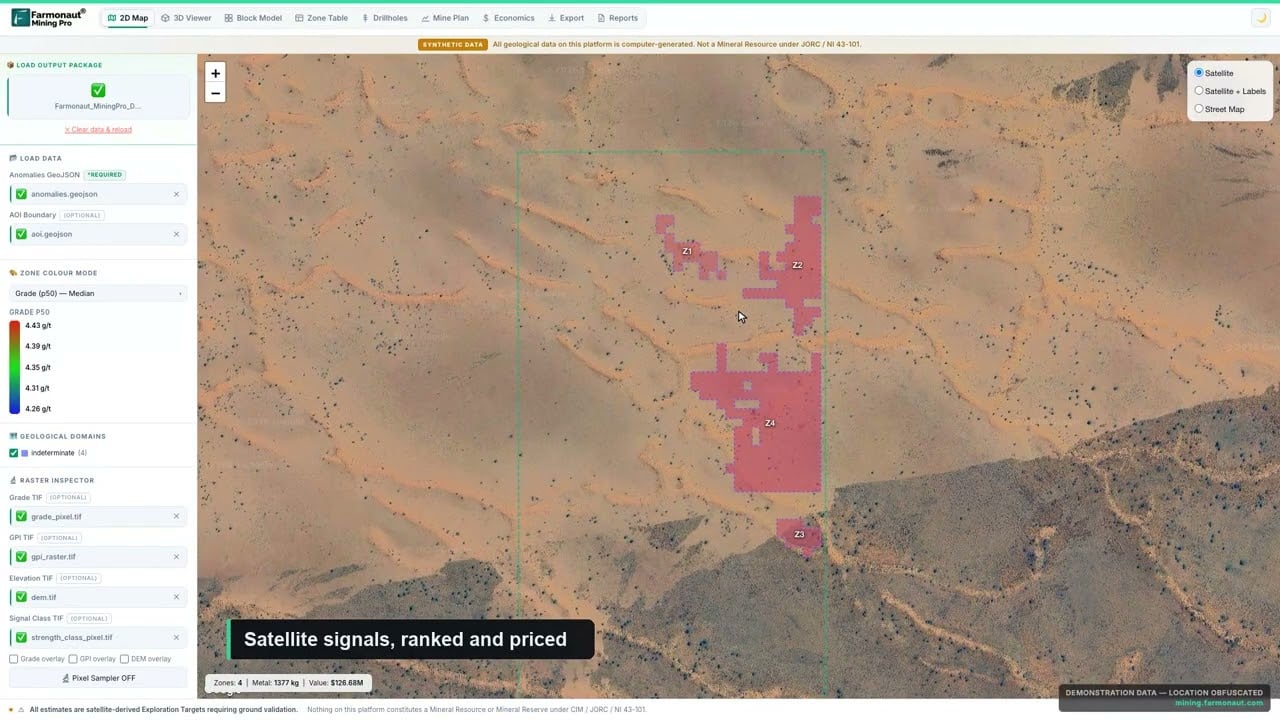
▶ A short look at Farmonaut Mining Pro, the satellite platform for licence areas. · 4:56
For a closer look at a related question, see our guide: Top Manganese Mining Companies Ranked by Ore Output.
Frequently asked questions
What is the biggest coal mining company in the USA?
Peabody, with 95.8 million tons in 2024, or 18.7% of the US total (EIA Table 10). Core Natural Resources was second with 84.3 million tons.
Who owns the largest coal mine in the United States?
North Antelope Rochelle in Wyoming, operated by a Peabody subsidiary, mined 59.8 million tons in 2024 (EIA Table 9). Black Thunder, run by a Core subsidiary, was second.
Which US state mines the most coal?
Wyoming, with 190.7 million tons in 2024. West Virginia was second at 79.5 million and Pennsylvania third at 40.6 million (EIA).
How many coal mines are there in the United States?
EIA counted 524 producing mines in 2024, down from 560 in 2023. The coal came from 339 surface and 177 underground mines in EIA’s county table (EIA).
Did CONSOL and Arch merge?
Yes. The two companies completed a merger of equals on 14 January 2025, forming Core Natural Resources, which trades on the NYSE as CNR (Mining Engineering).
What happened to Cloud Peak Energy?
Cloud Peak went through Chapter 11 bankruptcy, and Navajo Transitional Energy Company bought its Antelope, Cordero Rojo and Spring Creek mines. The company no longer appears in the EIA producer ranking.
What does coal mine reclamation involve?
Backfilling and grading to the approximate original contour, replacing topsoil, planting a diverse permanent cover, controlling water and then meeting performance standards for five to ten years before liability ends (30 U.S.C. 1265).
How long is a coal operator responsible for revegetation?
Five full years after the last seeding or fertilising, or ten years where rainfall averages 26 inches or less, under SMCRA (30 U.S.C. 1265).
What is the Abandoned Mine Land fund?
A fund paid for by a per-ton fee on coal produced. It pays for clean-up of legacy coal mines and had collected $14.233 billion by 30 September 2025 (OSMRE).
How much does a ton of US coal cost?
The 2024 average at the mine was $52.47 per short ton: $37.85 for thermal coal and $180.02 for metallurgical coal (EIA). Prices change, so use EIA data for the latest figures.
This page is for information only. It is not investment advice. Company figures are dated and change each quarter. Confirm reclamation and bonding rules with the state or federal regulator that issues your permit; this is not legal advice.
Farmonaut mining
Get a quote to map your licence area from space
Send a KML, KMZ or polygon and Farmonaut screens the area from satellite images before ground crews go in.
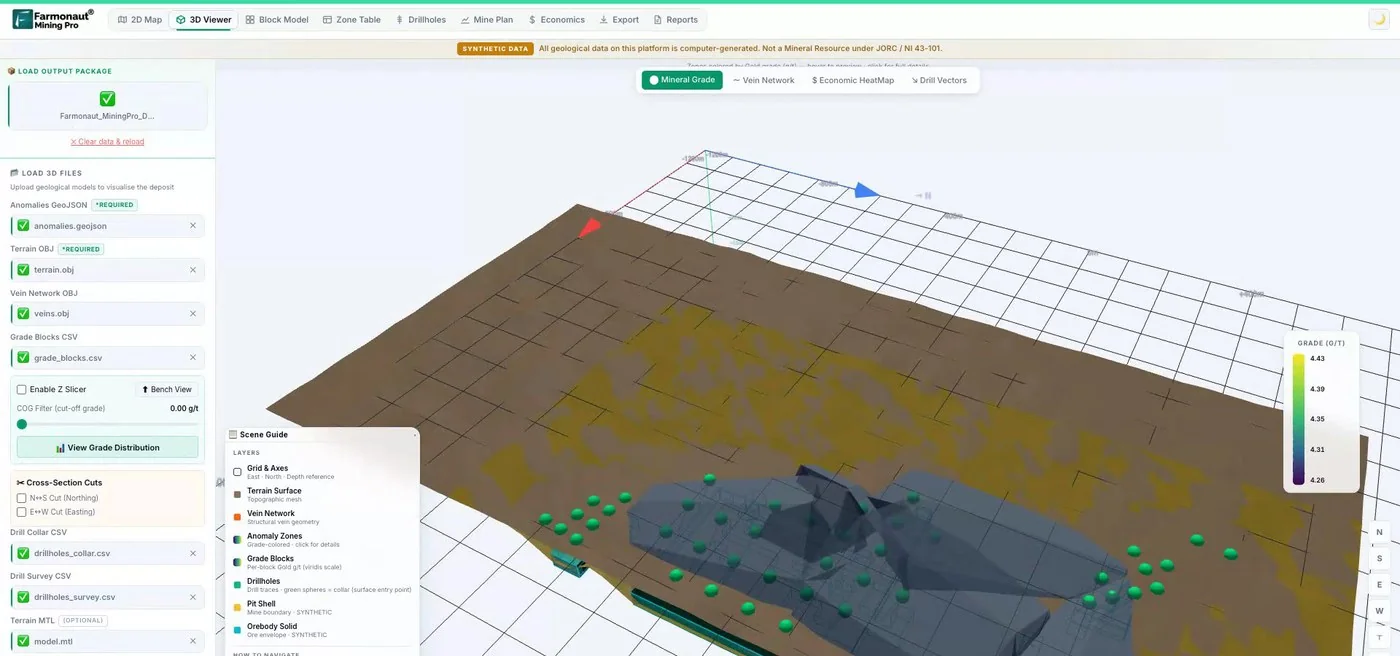
Mining Pro sample view, synthetic data
Keep reading
Sources
- U.S. EIA, Annual Coal Report 2024 (November 2025): eia.gov
- U.S. EIA, Annual Coal Report 2024, Table 10: Major U.S. Coal Producers: eia.gov
- U.S. EIA, Annual Coal Report 2024, Table 9: Major U.S. Coal Mines: eia.gov
- U.S. EIA, Quarterly Coal Report: eia.gov
- U.S. EIA, Energy Explained: coal mining and transportation: eia.gov
- 30 U.S.C. 1265, environmental protection performance standards: law.cornell.edu
- 30 U.S.C. 1259, performance bonds: law.cornell.edu
- OSMRE, Reclaiming Abandoned Mine Lands: osmre.gov
- US EPA, Abandoned Mine Drainage: epa.gov
- Core Natural Resources, second quarter 2026 results (6 August 2026): finviz.com
- Peabody, results for the quarter ended 30 June 2026 (29 July 2026): peabodyenergy.com
- Anglo American press release, 18 May 2026: angloamerican.com
- Mining Technology, Navajo Transitional Energy purchases coal mines in Wyoming: mining-technology.com
- Mining Engineering, Successful completion of merger creating Core Natural Resources (January 2025): me.smenet.org
- NACCO Industries, second quarter 2026 results (5 August 2026): finviz.com
- Alliance Resource Partners: arlp.com
- Coal Age, Alliance Resource Partners Q2 2026 report: coalage.com
Discussion
Questions, corrections or field experience? Share them below. First-time comments are reviewed before they appear, and your email is never published.
No comments yet. Be the first to add a question or your experience.

 Viahara Mining
 Mining SARL
 SenGold Invest SAS
 Sania Corporation
 Sean Mining Limited
 NTS Group (Pty) Ltd
 Mine4Africa
 Lithspo Minerals Limited
 Tintina Mining Group
 Dalgety Minerals Pty Ltd
 Vortex Minerals Pty Ltd
 Faith At Work (Pty) Ltd
 Geotech Mining Solutions plc
 Vulcan International Limited
 Kidepo Associates
 GKY Mining
 Alkimy SARL
 Double A Trading
 GemSprout Metals Limited
 Qader Group
 Ileys General Trading
 SG Gold Mining LLC
 VRV Global Pte Ltd
 Omsri International FZE










