

Scandium · Buyer guide
Scandium Suppliers Compared: Producers and Prices
Scandium comes only as a by-product: about 80 tonnes of oxide in 2025, led by China, at about US$640 per kg (USGS). Seven suppliers and projects compared by stated capacity, with prices by form and how to buy.
Key takeaways
- Scandium was produced exclusively as a by-product in 2025: about 80 tonnes of oxide worldwide, with China the leading producer (USGS, 2026).
- USGS lists 99.99% oxide at about US$640 per kg for 2025 (ex-works China), 99.999% metal at US$5,200 per kg and 2% Al-Sc alloy at US$30 per kg; a daily quote showed US$801 per kg for oxide on 21 September 2026.
- Outside China, named sources are Rio Tinto (Canada, expanding to 9 t a year), Sumitomo Metal Mining (Japan) and a Rusal pilot. NioCorp, Sunrise Energy Metals and Scandium International are still development projects.
- China added export licensing on scandium metal, alloys, oxides and compounds in April 2025, and the controls were still in effect in December 2025 (USGS).
- Per kg of scandium contained, the oxide (about US$980) costs far less than the metal ingot (US$5,200), so ‘cheap’ depends on the form you need.
In this article
- Scandium suppliers compared: who can sell you scandium
- Scandium mining companies and projects outside China
- Scandium mining companies in China
- Scandium price per kg: oxide, metal and alloy
- Is there such a thing as cheap pure scandium?
- How to buy scandium oxide: 5 steps
- Where scandium comes from and how projects are explored
- Risks to check before you sign a supply deal
- Further reading on farmonaut.com
- Frequently asked questions
A scandium supplier is, in nearly every case, a company that recovers scandium oxide (Sc2O3) as a by-product of something else. The U.S. Geological Survey (USGS) reports that scandium was produced exclusively as a by-product in 2025, mainly from nickel and titanium process streams. Global output was about 80 tonnes of oxide, China led, and the oxide itself sold for about US$640 per kilogram (kg) for 99.99% purity in 5 to 100 kg lots (USGS, 2026). This guide compares the suppliers a buyer can approach, the mining companies trying to join them, what each product costs and how to buy it.
Terms used below. Scandium oxide is the white powder most buyers purchase. A master alloy (here aluminium with 2% scandium) is the form many metal shops use. A by-product is a metal recovered from the waste or side streams of another operation. HPAL (high-pressure acid leaching) is a nickel process that can also release scandium. Ppm means parts per million. A tonne is 1,000 kg, and an offtake is a contract to buy a mine’s future output. This page gives facts, not buying or investment advice.
Scandium suppliers compared: who can sell you scandium
The table lists the suppliers we could confirm from company or government documents that sell, or have a dated plan to sell, scandium oxide in volume. Hunan Oriental and Rio Tinto make product now; SMM’s current output is not published and Rusal’s pilot start is unconfirmed. The last three are development projects. Figures are stated by the companies themselves and are not audited. Status is as of October 2026.
Chart
Stated scandium oxide capacity or design output
Tonnes of oxide a year, company figures; only Hunan Oriental and Rio Tinto are confirmed producers
| Supplier | Where | Product | Stated capacity or plan | Status |
|---|---|---|---|---|
| Hunan Oriental Scandium (LB Group) | China | Oxide, metal, Al-Sc alloy | 40 t a year of high-purity oxide at Henan Rongjia (upgraded 2022) | Operating |
| Rio Tinto Iron and Titanium | Canada (Sorel-Tracy) | High-purity oxide | Nameplate to be expanded to 9 t a year | Demonstration plant since 2022 |
| Sumitomo Metal Mining (SMM) | Japan, with feed from a nickel plant in Southeast Asia | Oxide | About 7.5 t a year (2016 plan) | Planned start 2018; current output not published |
| Rusal | Russia | Oxide from red mud; Al-Sc alloys | 1.5 t pilot, up to 19 t if commercial | Pilot due end of 2025; start unconfirmed |
| NioCorp (Nasdaq: NB) | USA (Elk Creek, Nebraska) | Oxide (planned) | 118 tons a year in the 2026 plan | Development; financing not closed |
| Sunrise Energy Metals (ASX: SRL) | Australia (Syerston) | Oxide (planned) | About 60 t a year | Development; US$400 million loan is conditional |
| Scandium International Mining (TSXV: SCY) | Australia (Nyngan) | Oxide (planned) | About 38.5 t a year | Mining lease granted; study update under way |
How we chose and ranked these suppliers
We split the list into producers and developers, then ordered each group roughly by the annual scandium oxide capacity or design output that the company itself has published. Rio Tinto sits after SMM because its 9 tonne figure is a target, while Asian Metal puts Canadian output near 3 tonnes today. We only listed names backed by a company release, an executive interview or a government document that we opened. China has other producers, but the sources we found for them give national totals, not company figures, so we left them out rather than guess. We also left out resellers and catalogue sellers, who buy from the producers above. Capacity is not output: a plant can run well below its nameplate.
1. Hunan Oriental Scandium: oxide and Al-Sc alloy supply
In a 2025 Asian Metal interview, general manager Donghong Nie said the company’s Henan Rongjia plant began as a 10 tonne a year oxide line in 2017 and was upgraded in 2022 to a 40 tonne a year high-purity facility. He also gave the group’s capacity as 4 tonnes of scandium metal, 300 tonnes of aluminium-scandium alloy and 300 tonnes of alloy wire for 3D printing. Pros: the widest product range in this list and the largest stated oxide plant among current producers. Cons: the figures are one executive’s statement, and sales outside China need an export licence (see the section on China below). The company’s own web shop describes it as a China-based manufacturer selling 99.99% oxide to buyers abroad.
2. Rio Tinto: North American supply and high purity
Rio Tinto says it made its first batch of high-purity oxide in May 2022 at a demonstration plant in Sorel-Tracy, Quebec, using waste streams from titanium dioxide production, with no extra mining needed. In October 2025 the Canada Growth Fund and Rio Tinto said the fund would invest about C$25 million to lift nameplate capacity to 9 tonnes a year. Natural Resources Canada lists the Sorel-Tracy scandium plant as active at the processing stage. Pros: a Western source with government backing. Cons: small volume, and the U.S. Defense Logistics Agency has announced plans to buy more than 6,000 kg over five years from a Sorel-Tracy source (USGS, 2026), so government orders compete with commercial buyers for a share of a small output.
3. Sumitomo Metal Mining: Japanese-refined oxide from nickel-plant feed
SMM said in April 2016 that it would recover a scandium intermediate at one of its HPAL nickel plants in Southeast Asia and refine it to oxide at its Harima Refinery in Japan, at about 7.5 tonnes a year. USGS confirms that scandium materials made in Southeast Asia are sent to Japan to become oxide and that Japan supplied 89% of U.S. oxide imports in 2021 to 2024. Pros: a non-Chinese route run by a large nickel producer. Cons: the company has not published current volumes, and the 2016 release shows a long-term sales agreement with a U.S. fuel-cell maker, so some output may already be committed.
4. Rusal: Al-Sc alloys, with a small oxide pilot
Rusal says it was the first company in the world to develop and use aluminium-scandium alloys. In February 2025 it said it was building a 1.5 tonne a year pilot plant for scandium oxide from red mud (the iron-rich waste of alumina refining) at its Bogoslovsky smelter, due to start by the end of 2025 and able to grow to 19 tonnes a year. We found no confirmation that the pilot started. Pros: long experience with Al-Sc alloys, by its own account. Cons: pilot scale and an unconfirmed start. Western buyers should check sanctions and trade-compliance rules before any approach.
5. NioCorp: planned scandium supply as one of eight products
NioCorp (Nasdaq: NB) is planning the Elk Creek project in southeast Nebraska as an underground mine and processing plant for niobium, scandium, titanium and rare earth oxides. Its August 2026 feasibility study webcast lists 118 tons a year of scandium oxide over a 40-year life and an upfront capital cost of US$1.85 billion. The deck gives the unit as “tons” (if short tons, about 107 tonnes) and refers to a debt financing application with the Export-Import Bank of the United States. Pros: the largest stated scandium figure on this list and all major permits already secured, according to the company project page. Cons: the largest funding need here, and because scandium is one of eight products its economics depend on the others.
6. Sunrise Energy Metals: planned primary scandium supply
Sunrise (ASX: SRL) is developing the Syerston project near Fifield in New South Wales. Its 10 August 2026 stock-exchange release says the initial plant is designed for about 60 tonnes a year of high-purity oxide over a 32-year life, on a granted mining lease. The same release says the U.S. Department of War’s Office of Strategic Capital has made a conditional commitment of up to US$400 million in debt, and that funding depends on milestones and binding offtake agreements. ABC News reported a five-year deal letting Lockheed Martin buy up to 15 tonnes of oxide from the project and a target to start production in the first half of 2028. Pros: a granted mining lease and a named U.S. government lender. Cons: the loan is conditional and not yet final, and nothing is built.
7. Scandium International Mining: planned primary scandium supply
Scandium International (TSXV: SCY; OTC Pink: SCYYF) owns the Nyngan project in New South Wales through its subsidiary EMC Metals Australia. It reported the grant of a new mining lease in October 2025. In June 2026 it said Lycopodium had started to update the 2016 feasibility study, which assumes about 38,500 kg of oxide a year after a 24-month ramp-up, with 75,000 tonnes a year of limonite ore at an average 409 ppm scandium over 20 years. Its project page lists a capital cost of US$87.1 million, which comes from the 2016 study and is being updated. Pros: permitted ground and a long mine plan. Cons: costs are dated, and no financing or offtake is announced in the documents we read.
What this list leaves out
Rio Tinto also owns the Burra project in New South Wales, which it bought from Platina Resources (the former Owendale project). Platina reported its final US$2 million payment in September 2026, so it no longer holds a scandium asset. The Asian Metal interview also mentions the ScaVanger project in France, targeted at 21 tonnes a year from 2026. We found no company release for it, so it is not in the table.
Scandium mining companies and projects outside China
Outside China the supply is small and mostly a by-product. The Asian Metal interviewee estimated overseas capacity at about 13 tonnes of oxide, with about 7.5 tonnes from nickel-cobalt streams processed in Japan, nearly 3 tonnes from Canadian titanium waste and about 2.5 tonnes from Russia and other sources. USGS says the U.S. had no commercial scandium mining or recovery in 2025, small scandium-metal refining in Ames, Iowa and Tolleson, Arizona, and more capacity in development in Urbana, Illinois and at Elk Creek. It also rates U.S. net import reliance at 100%.
A primary scandium mine would be new. Nyngan is a laterite deposit, meaning weathered rock where scandium collects in iron-rich layers. Geoscience Australia describes Nyngan as a lateritic nickel-cobalt-scandium deposit, and USGS puts Australia’s reserves at about 34,000 tonnes of scandium (December 2023), of which 12,000 tonnes are JORC-compliant or equivalent (JORC is the Australian code for reporting reserves). The metal is not scarce in the ground. It is rarely concentrated enough to mine alone, which is why most supply comes from other mines’ waste.
Scandium mining companies in China
China is the largest producer of scandium, and by a wide margin on industry estimates. USGS lists it as the leading producer in 2025, and the Hunan Oriental interview gives the scale: about 90 tonnes of scandium oxide produced in 2024, and about 58 tonnes of oxide equivalent from nickel-cobalt intermediates such as scandium hydroxide and oxalate. The same executive put Chinese capacity at about 150 tonnes and forecast 210 tonnes by 2025. These are industry estimates and sit well above the USGS global figure of about 80 tonnes for 2025, so treat them as upper-end views.
Chart
Scandium oxide supply in 2024
Tonnes of oxide or oxide equivalent; one company executive’s estimates
The interviewee says Chinese oxide comes from three feedstocks: titanium dioxide by-product acid (about 53%), nickel-cobalt by-products (about 45%) and zirconium by-product liquids (about 2%). That matches the pattern USGS describes for the whole world. It also means the supply follows the titanium dioxide and nickel industries, not scandium demand. He also warned of oversupply and price competition among Chinese producers, and of trade risk from export licensing.
The licensing is real. USGS reports that in April 2025 China added export controls on scandium metal, alloys, oxides and compounds, that the United States said in November that China would issue general licences, and that as of December 2025 the April controls remained in effect while some exporters received general licences. A buyer outside China should ask any Chinese supplier whether it holds a licence and how long shipments take.
Scandium price per kg: oxide, metal and alloy
USGS publishes ex-works China prices from Asian Metal. For 2025 it lists scandium oxide at 99.99% purity at about US$640 per kg (5 to 100 kg lots), metal ingot at 99.999% at US$5,200 per kg (1 to 10 kg lots) and aluminium-scandium alloy with 2% scandium at US$30 per kg (1 to 30 kg lots). The oxide price has fallen every year since 2021, when the range was US$890 to US$1,000.
Chart
Scandium oxide price range, 99.99% purity
US$ per kg, ex-works China, 5 to 100 kg lots
A daily quote page run by ScrapMonster, with data from the Institute for Rare Earths and Metals, showed oxide at 99.99% at US$801 per kg ex-works China on 21 September 2026, with metal at 99.99% near US$3,853 and the 2% alloy near US$34. Quotes differ by source, purity, lot size and tax treatment, so compare like with like. Treat the number as a reference point only and ask suppliers for a written quote.
Prices outside China are far higher. The Modern War Institute reports a U.S. Defense Logistics Agency contract for 6,384 kg of 99.8% oxide from Rio Tinto for US$40 million. If the full US$40 million were spent, that works out to about US$6,300 per kg, eight to ten times the Chinese ex-works quotes above (our arithmetic; USGS lists only a US$2 million minimum commitment, and this is a long-term government purchase, not a spot price). NioCorp’s August 2026 deck describes a 3 to 4 times non-China price premium for critical minerals such as scandium and heavy rare earths; it is not a scandium-only figure and is the company’s view.
Is there such a thing as cheap pure scandium?
Pure scandium metal is not cheap, and “cheap” depends on which form you need. The 99.999% metal ingot costs about eight times the price of the oxide per kg (USGS, 2025 estimate). Per kilogram of scandium actually contained, the oxide is the lowest-cost form. Sc2O3 is about 65.2% scandium by weight, so the US$640 oxide works out to roughly US$980 per kg of contained scandium. A 2% master alloy at US$30 per kg holds 20 g of scandium per kg, which is US$1,500 per kg of scandium, but it comes ready to melt. The metal ingot at US$5,200 per kg is pure scandium, so it costs more than five times as much per kg of scandium as the oxide.
Chart
Cost per kg of scandium contained, by product form
US$ per kg of scandium, 2025 estimates (our arithmetic)
The practical choices follow from that. A fuel-cell maker needs oxide. An aluminium shop that only wants the alloying effect can buy the master alloy. Pure metal is for sputtering targets and special alloys. Use the calculator below to compare buying oxide and alloying it yourself against buying ready-made alloy.
Calculator
Oxide or ready-made alloy: which costs less for your batch?
Enter your own batch size, scandium share and prices.
- Oxide cost for the batch (US$): $20,665
- Oxide cost per kg of alloy (US$): $21
- Ready-made ingots at your ingot price (US$): $30,000
Example values only, not benchmarks. Defaults are the USGS 2025 estimates for oxide (US$640 per kg) and 2% Al-Sc ingot (US$30 per kg); prices are inputs, so use today’s quotes. Scandium oxide (Sc2O3) is 65.2% scandium by weight, from atomic masses of 44.956 for Sc and 15.999 for O. The oxide cost leaves out the aluminium, melting, labour and loss of metal; recovery is an example, not a benchmark.
How to buy scandium oxide: 5 steps
- Define the product. Write the form (oxide, metal, master alloy), purity (for example 99.9% or 99.99%), grain size and annual volume. Offers range from 98% to 99.99%, and a higher grade costs more.
- Ask for the price basis. Quotes are ex-works, delivered or duty-paid, with or without tax. USGS prices are ex-works China for a stated lot size, so a 10 kg order and a 500 kg order will not match.
- Request a certificate of analysis. It lists the assay for scandium and for impurities such as iron, titanium and thorium. Ask for a sample and test it before the first order.
- Check trade rules. China requires an export licence for scandium products, and some countries restrict dealing with certain Russian entities. Ask the seller to name the licence holder and the shipping route.
- Write the contract around volume and supply risk. The market is about 60 tonnes of oxide a year (USGS, 2025 estimate), so one large order moves the market. Agree a delivery schedule, a price formula and a second source.
Infographic
Buying scandium oxide in 5 steps
- 1Define the productForm, purity, grain size and yearly volume.
- 2Fix the price basisEx-works, delivered or duty-paid, and the lot size.
- 3Get an assayA certificate of analysis and a sample to test.
- 4Check trade rulesExport licence and sanctions rules for the route.
- 5Contract for supply riskDelivery schedule, price formula and a second source.
Where scandium comes from and how projects are explored
Scandium sits in three kinds of source. The first is waste from titanium dioxide production, where it concentrates in acid streams (Rio Tinto and Chinese producers). The second is nickel-cobalt laterite processing plants using HPAL, which release scandium into process liquors (SMM). The third is the weathered laterite itself (Nyngan). A fourth is a mixed-metal mine such as Elk Creek, where scandium is one of several products. Rusal is working on a fifth, red mud from alumina refining.
Grade is low in all of these. The Nyngan reserve is 1.43 million tonnes at 409 ppm scandium, inside a resource of 16.9 million tonnes at 235 ppm using a 100 ppm cut-off, which is the grade below which ore is treated as waste (company project page). That is 0.0409% scandium, so an explorer’s first job is to find the right host rock, not the metal itself.
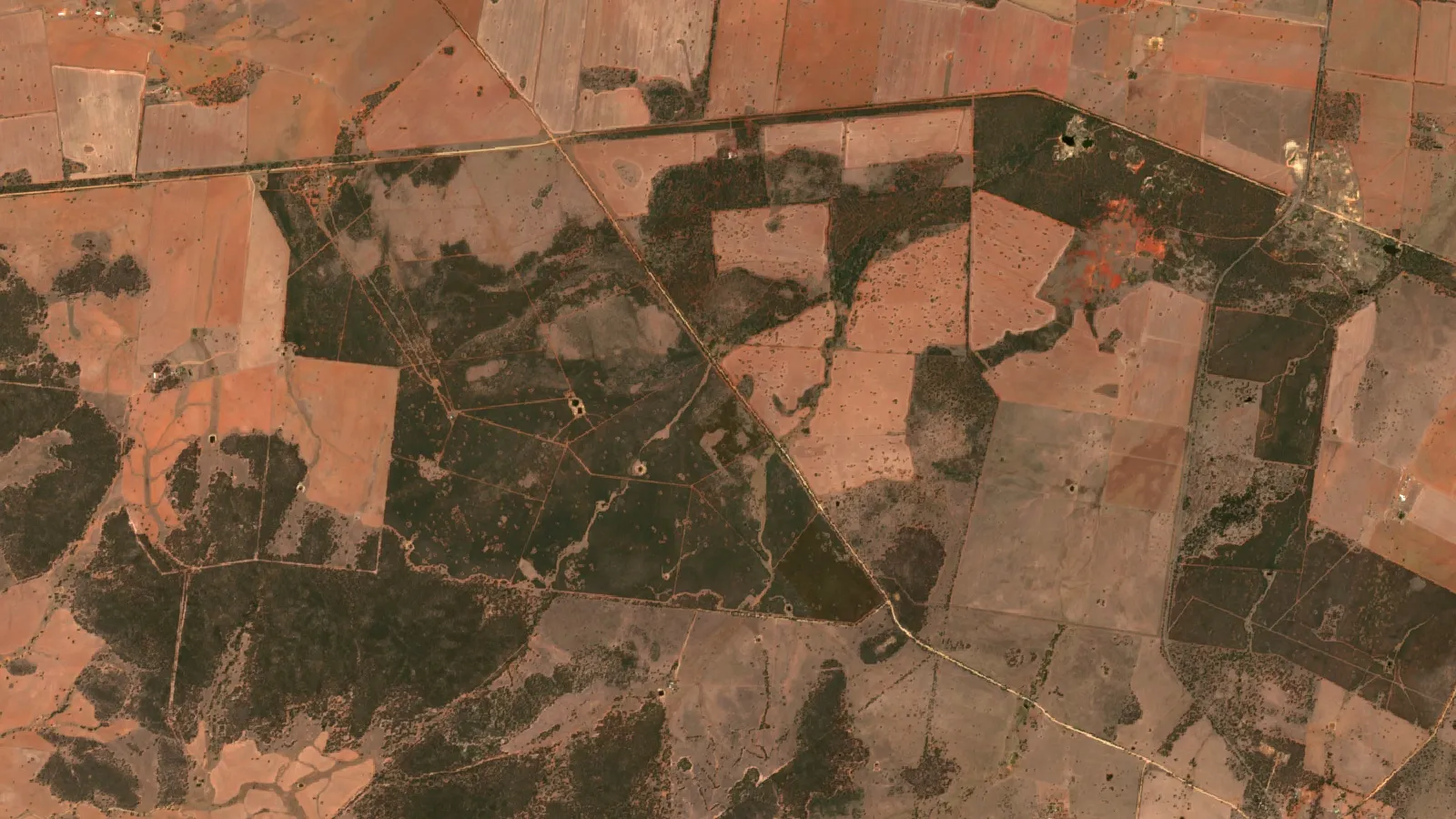
Satellite images do not measure scandium. They map the iron-oxide, clay and rock-type patterns that point to weathered nickel-cobalt laterite, and an assay then tests for scandium. Farmonaut’s mineral detection work covers rare earth elements among other materials, and a result is an exploration target that sits ahead of any resource estimate. If you hold a licence and want the surface screened, send the boundary as KML, KMZ or a polygon through the satellite mineral detection page. Reports are delivered in 5 to 20 business days according to size and mineral.
▶ Explains that remote sensing means measuring the ground from a distance, and why agreement between six instrument families is the core of the argument. · 2:01
Risks to check before you sign a supply deal
Four risks matter most. First, thin supply: the world makes tens of tonnes of oxide a year, and the U.S. alone relies on imports for all of it (USGS, 2026). Second, policy: China’s April 2025 licensing still applied in December 2025, and a change either way can move prices quickly. Third, project delay: Sunrise’s loan is conditional, NioCorp’s financing is not closed and Nyngan’s study is being updated, so any date for first output is a plan. Fourth, land and permits: ground can hold good rock and still be blocked by a town, a park or a title dispute, so check access before you count on a project’s output.
Demand is small too. USGS puts global use at about 60 tonnes of oxide in 2025, led by aerospace alloys, other alloys and solid oxide fuel cells, and the Asian Metal interview estimates about 20 tonnes of 30 tonnes of 2024 demand went to fuel cells. A single large order, or the loss of one, can swing the market.
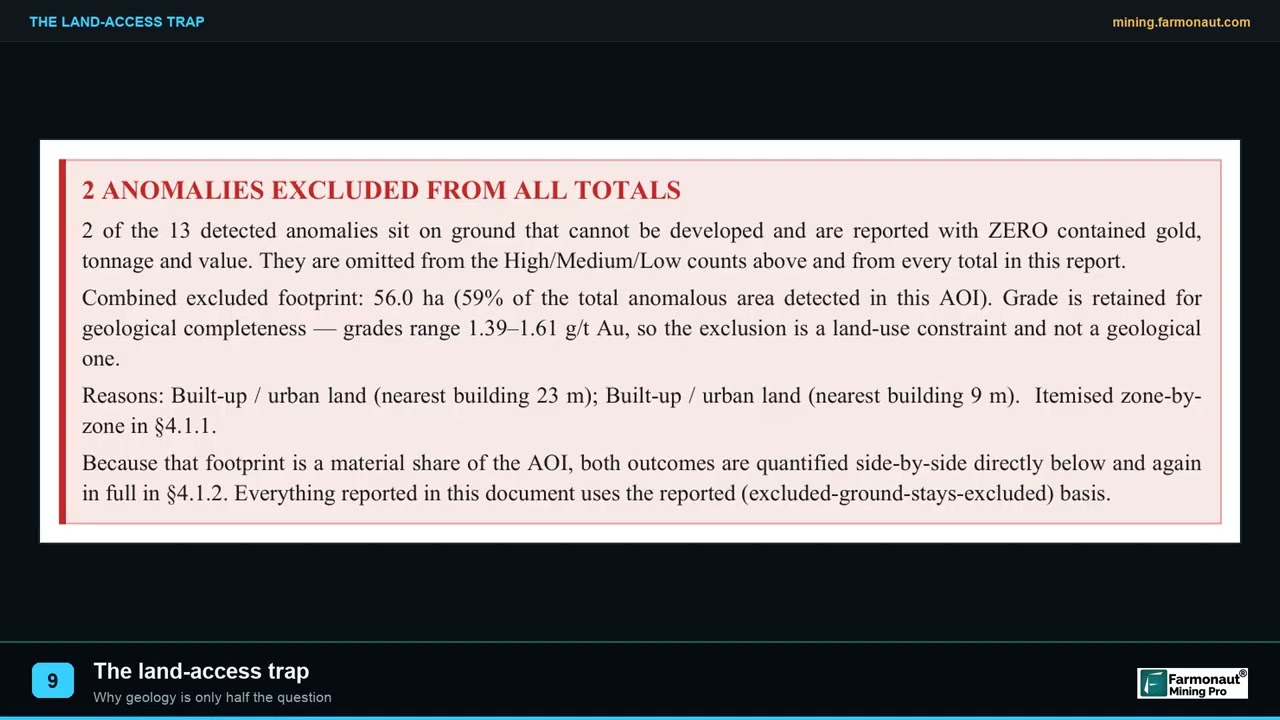
▶ Shows how good rock can still be unmineable when a town or other land use blocks access. · 2:05
Further reading on farmonaut.com
For the wider rare earth picture, see our rare earth elements map, the list of U.S. rare earth mining companies and our look at rare earth price trends. If you run a mining business and want a quote for a mapped project area, use the mining quote form, or contact us with a question.
If this topic matters to you, read Emerging Market Gold Producers Compared by Output next.
Frequently asked questions
Who is the largest scandium supplier?
China, by volume. USGS names China as the leading producer, and Hunan Oriental Scandium says, in an Asian Metal interview, that its Henan plant is the world’s largest oxide base at 40 tonnes a year. These are company and industry estimates, not audited totals.
Who supplies scandium outside China?
Sumitomo Metal Mining in Japan, Rio Tinto in Canada and Rusal in Russia (at pilot scale) are the named non-Chinese sources. NioCorp, Sunrise Energy Metals and Scandium International Mining are developing projects, but none has started production.
How much does scandium oxide cost per kg?
USGS lists 99.99% oxide at about US$640 per kg for 2025 (ex-works China, 5 to 100 kg lots). A daily quote page showed US$801 per kg on 21 September 2026. Outside China, a U.S. government contract works out near US$6,300 per kg if fully spent.
Is pure scandium metal cheap?
No. USGS lists 99.999% metal ingot at about US$5,200 per kg for 2025, compared with US$640 per kg for the oxide. Buyers who only need the alloying effect can use a master alloy at about US$30 per kg for 2% scandium.
Why is scandium so expensive?
It is rare in concentrated form, is made only as a by-product and has a tiny market of about 60 tonnes of oxide a year (USGS, 2025 estimate). Purification to 99.99% adds cost, and supply outside China is limited.
Is there an operating scandium mine?
Not a dedicated one that we could confirm. USGS says scandium was produced exclusively as a by-product in 2025. Projects such as Syerston and Nyngan are planned primary mines, and neither is producing yet.
Which scandium mining companies are listed on a stock exchange?
Sunrise Energy Metals (ASX: SRL; OTCQX: SREMF), Scandium International Mining (TSXV: SCY; OTC Pink: SCYYF) and NioCorp (Nasdaq: NB) are the ones named in this guide. Check each company’s current filings before relying on any figure. Not investment advice.
Can I buy scandium directly from China?
Yes, but exports of scandium metal, alloys, oxides and compounds need a licence since April 2025. USGS says general licences were being issued to selected exporters as of December 2025. Ask the seller who holds the licence and how long it takes.
What is scandium used for?
USGS names aerospace alloys, other alloys and solid oxide fuel cells as the main uses, with minor use in electronics and equipment. In aluminium, a small addition of scandium raises strength.
How pure is commercial scandium oxide?
Offers range from 98% to 99.99%. Nyngan’s planned product is 98% to 99.9% (June 2026 release), USGS prices are for 99.99% and the U.S. defence order above required 99.8%.
Can satellites find scandium?
Not directly. Satellites can map surface minerals and rock patterns linked to laterite hosts, but only drilling and assays confirm scandium grade. Treat satellite results as exploration targets.
This page is for information only. It is not investment advice and not legal advice. Company figures are the companies’ own and are not audited. Confirm export-licence, sanctions and trade rules with the authorities before you buy.
Farmonaut mining
Get a quote for your mining project
Mining business owners can request a quote for satellite mapping of a licence area, delivered as exploration targets ahead of any resource estimate.

Mining Pro sample view, synthetic data
Keep reading
Sources
- USGS, Mineral Commodity Summaries 2026: Scandium (2026): pubs.usgs.gov
- Asian Metal, interview with Donghong Nie, Hunan Oriental Scandium (2025): wap.asianmetal.com
- Hunan Oriental Scandium, high purity scandium oxide product page: hnosc.com
- Rio Tinto, Scandium product page: riotinto.com
- Canada Growth Fund and Rio Tinto, scandium transaction release (31 October 2025): newswire.ca
- Natural Resources Canada, Rare earth elements facts: natural-resources.canada.ca
- Sumitomo Metal Mining, Establishment of Scandium Recovery Business (28 April 2016): smm.co.jp
- Rusal, Launches Production of Rare-Earth Metal Scandium (27 February 2025): rusal.ru
- Sunrise Energy Metals, ASX release on the Office of Strategic Capital commitment (10 August 2026): announcements.asx.com.au
- ABC News, Pentagon to invest in Syerston critical minerals project (8 August 2026): abc.net.au
- Scandium International Mining, news releases: scandiummining.com
- Scandium International Mining, DFS update release (16 June 2026): newsfilecorp.com
- Scandium International Mining, Nyngan Scandium Project page: scandiummining.com
- NioCorp, 2026 Feasibility Study results webcast (11 August 2026): niocorp.com
- NioCorp, Elk Creek Project page: niocorp.com
- Sharecafe, Platina Resources finalises Owendale scandium sale (22 September 2026): sharecafe.com.au
- ScrapMonster, scandium prices (data: Institute for Rare Earths and Metals), 21 September 2026: scrapmonster.com
- Modern War Institute, The Sixty-Ton Problem: scandium supply chain risk: mwi.westpoint.edu
- Geoscience Australia, Australia’s Identified Mineral Resources 2010: ga.gov.au
Discussion
Questions, corrections or field experience? Share them below. First-time comments are reviewed before they appear, and your email is never published.
No comments yet. Be the first to add a question or your experience.

 Qader Group
 Ileys General Trading
 SG Gold Mining LLC
 VRV Global Pte Ltd
 Omsri International FZE
 G.I.T.T.
 Jaunita Erss Ltd
 Almosi SARL
 SRK Consulting
 Berks Gold Limited
 Mwerezi Minerals Company Limited
 Mining SARL
 SenGold Invest SAS
 Sean Mining Limited
 NTS Group (Pty) Ltd
 Mine4Africa
 Lithspo Minerals Limited
 Tintina Mining Group

 Licence holder · Nigeria · Gold + lithium










