

Cloud-Based Mineral Software: Top 2025 Mining Trends
“By 2025, over 60% of global mining firms will adopt cloud-based mineral software for streamlined data integration.”
Introduction: The Digital Transformation of Mining in 2025
The mining sector is rapidly evolving. Digital technologies are no longer optional or a futuristic vision—they are essential for companies seeking to maintain competitiveness, improve efficiency, and ensure sustainability. By 2025, cloud-based mineral software has emerged as a transformational force, revolutionizing how mining operations are planned, executed, and monitored.
Whether we consider exploration, resource estimation, extraction, or logistics, cloud technologies paired with advanced mineral software platforms have paved the way for smarter, safer, and environmentally conscious practices. These cloud computing solutions unlock new opportunities for data integration, predictive analytics, sustainability, and collaborative workflows—changing not just the way we manage mining operations, but how we imagine the future of minerals altogether.

This blog post provides a comprehensive dive into cloud-based mineral software, the top trends for 2025, and how new technologies are powering the next chapter in mining sector evolution. We’ll explore key features, sustainability breakthroughs, new business models, and advanced monitoring systems—offering actionable insights for professionals, companies, and decision makers across the global mining industry.



What Is Cloud-Based Mineral Software?
Cloud-based mineral software refers to applications and platforms hosted on remote servers, accessible via the internet—rather than on local computers. These solutions offer a spectrum of functionalities, including:
- Geological modeling and resource estimation
- Mine planning and scheduling
- Equipment monitoring, predictive maintenance, and asset management
- Supply chain and logistics management
- Environmental impact monitoring and compliance reporting
- Collaborative workflows for multiple users and roles
- Advanced analytics, AI-based forecasts, and optimization
By leveraging cloud infrastructure, mining companies obtain scalable computing power, real-time access to data, and the ability to integrate diverse datasets—without the heavy investment in traditional IT hardware. The result? A centralized hub for core mining operations, streamlined management, and a launchpad for continuous improvement in efficiency, sustainability, and safety.

Core Features & Benefits in 2025
In 2025, cloud-based mineral software offers a robust toolkit for mining sector transformation:
- Enhanced Data Integration & Accessibility: Centralized platforms to ingest and unite geological, geospatial, sensor, and environmental data from a range of sources.
- Real-Time Monitoring & Predictive Maintenance: Use of IoT sensors, cloud storage, and analytics to monitor machine health and anticipate failures.
- Collaborative Planning & Optimization: Cloud-native 3D modeling and scenario analysis allow teams of engineers, geologists, and managers to collaborate from anywhere.
- Sustainability & Environmental Compliance: Automatic tracking, analytics, and reporting of emissions, water usage, and land disturbance for regulatory and social accountability.
- Scalability & Cost Efficiency: Dynamic, pay-as-you-go infrastructure, minimizing upfront investment and providing on-demand computing power for mining companies of any size.
Cloud-Based Mineral Software: The Heart of Mining Transformation
Let’s break down how cloud-based mineral software has become the engine of change in mining operations in 2025:
- Data Centralization: Diverse datasets—including geospatial survey results, machine sensor outputs, and environmental metrics—are ingested and harmonized within a single platform, removing silos and giving stakeholders a unified view.
- Anytime, Anywhere Accessibility: Engineers, managers, and geologists can access consistent, up-to-date information on any internet-enabled device, facilitating informed decisions and rapid response regardless of location.
- Smart Analytics & Workflow Automation: AI-powered tools embedded in platforms analyze immense amounts of operational, geological, and environmental data for predictive insights and workflow automation.

Key Cloud-Based Mineral Software Features and Impact on Mining (2025)
| Technology/Feature | Estimated Industry Adoption Rate (2025) | Core Benefit | Sustainability Impact |
|---|---|---|---|
| Automated Data Integration | 80% | Real-time consolidation of geological, sensor, and operational data for better decision making. | Supports resource optimization and reduction of data errors. |
| Real-Time Environmental Monitoring | 70% | Enables immediate detection of environmental risks and emissions. | Drives proactive compliance and rapid response to incidents. |
| Predictive Analytics for Maintenance | 75% | Prevents asset breakdown and minimises operational downtime. | Reduces waste from unplanned shutdowns; extends machine lifespan. |
| Remote Operations Management | 60% | Enables site oversight and workflow coordination from any location. | Less need for on-site travel lowers carbon footprint. |
| Cloud-Based Compliance Reporting | 65% | Automates regulatory and ESG documentation processes. | Enhances transparency and improves stakeholder relations. |
| Blockchain-Based Traceability | 55% | Tracks the source and movement of minerals, assuring authenticity. | Promotes sustainable, ethically sourced mineral supply chains. |
How Cloud Platforms Advance Sustainability in Mining
2025’s mining industry faces mounting pressure to operate in a more sustainable and environmentally conscious manner. Cloud-based mineral software platforms are pivotal to this shift, unlocking new ways to:
- Integrate Environmental Metrics: Centralize emissions, water, air quality, and land impact data for continuous oversight.
- Automate Reporting: Generate up-to-date, auditable compliance reports for various regulatory frameworks with minimal manual work.
- Reduce Resource Use & Waste: Analytics optimize extraction, processing, and logistics, driving down water, fuel, and chemical consumption.
- Track & Minimize Carbon Footprint: Real-time monitoring tools help mining companies set, measure, and achieve emissions reduction goals.

Paired with predictive maintenance and supply chain optimization, these capabilities help reduce operational waste and make compliance less of a burden, and more of a strategic advantage.
Data Integration & Collaborative Workflows: The Smarter Mine
Mining operations generate enormous volumes of data, ranging from detailed geospatial surveys and geological models to sensor outputs from heavy machinery in the field. The real power in 2025 comes from the integration of these diverse datasets into a centralized, cloud-based platform.
- Centralized Hubs serve as the “single source of truth,” preventing discrepancies and ensuring that data—be it for a regulatory audit or a real-time extraction adjustment—remains consistent and current.
- Collaborative Workflows enable engineers, geologists, and managers to simultaneously plan, review, and update operational models, even if working remotely or across different continents.
- Scenario Modeling & Optimization can occur in the cloud, freeing up local resources and enabling rapid testing of new extraction or exploration strategies.
Cloud-based mineral software platforms also support integration of satellite, drone, and IoT sensor feeds, giving mining companies and professionals the data foundation needed for truly smarter, proactive decision-making.

“Advanced cloud monitoring has reduced unplanned mining downtimes by up to 30% in leading operations by 2025.”
Real-Time Monitoring and Predictive Maintenance
A cornerstone of digital transformation in mining is real-time monitoring of assets, processes, and environments. In 2025, cloud-based mineral software harnesses huge volumes of sensor data from “Internet of Things” (IoT) devices embedded in mine infrastructure and heavy equipment.
- Continuous Visibility: Cloud platforms collect and process data on machine health, wear-and-tear, and performance metrics, giving operations managers unprecedented visibility.
- Predictive Maintenance: Machine learning algorithms spot anomalies in this data—flagging emerging issues before breakdown, and allowing teams to schedule downtime or part replacements at optimal times.
- Extended Equipment Lifespan: This approach not only cuts costs and lost production time, but also leads to smarter resource utilization and reduced environmental waste from premature equipment retirement.
Whether we’re talking about autonomous drilling rigs, mineral conveyors, ventilation systems, or power plants, predictive analytics and real-time cloud monitoring in 2025 turn traditional “fix it when it breaks” maintenance into a future-focused, cost-efficient strategy.

Regulatory Compliance, Environmental Monitoring & Reporting
Mining companies in 2025 must ensure compliance across a patchwork of local and international standards. Cloud-based mineral software platforms make it possible to:
- Automate Reports: Seamlessly compile, update, and archive compliance documents (emissions, waste, water use, land disturbance, etc.) for audits.
- Monitor Real-Time Data: Use live sensor feeds and geospatial metrics to prove adherence to environmental thresholds—providing stakeholders, government, and communities with transparent records.
- Boost Social License to Operate: By showing proactive environmental stewardship, mining companies bolster their long-term community relationships and brand value.
Scalability and Cost Efficiency
Traditional IT infrastructure for high-volume data processing, 3D modeling, and AI analytics can be costly, inflexible, and limited by local hardware constraints. Cloud-based mineral software changes the economic equation:
- Pay-as-You-Go Versatility: Mining operations can scale infrastructure and software capacity up or down as needed, avoiding overpaying for idle resources during slow periods.
- Lower Upfront Costs: Capital investments in physical servers and system upgrades are replaced by cloud subscriptions—making advanced digital solutions accessible even to smaller mining companies.
- Modular Expansion: Companies start with core functionalities and add advanced analytics, AI tools, or mobile monitoring apps as their needs evolve.
Access to flexible cloud infrastructure removes technological and financial barriers, empowering new entrants and established players alike to adopt cutting-edge practices for operational efficiency, competitiveness, and growth.
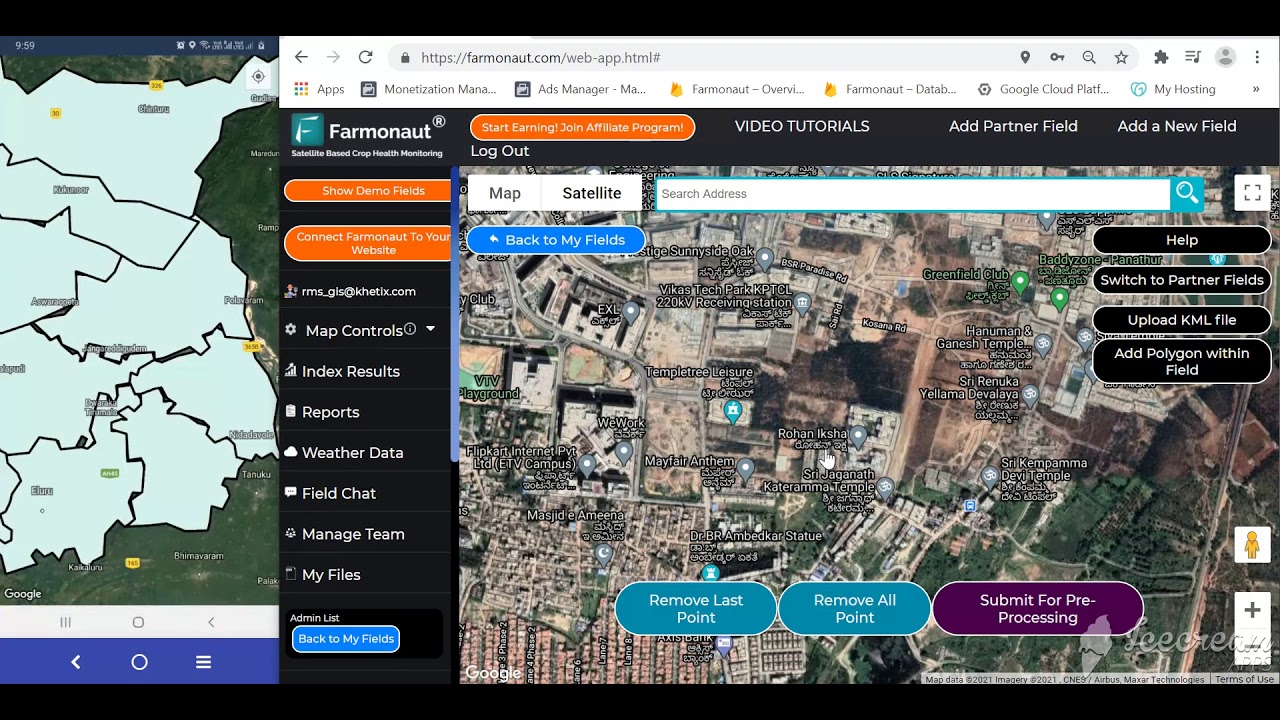
Empowering Mining with Farmonaut’s Advanced Cloud-Based Solutions
At Farmonaut, we are dedicated to democratizing satellite-driven insights and advanced cloud-based mineral software for the global mining industry. Our mission is to make satellite technology affordable and accessible—helping mining companies, individual operators, and government agencies integrate real-time monitoring, AI analytics, blockchain traceability, and sustainability management into their operations.
Farmonaut’s platform offers a comprehensive suite of tools for cloud-based mineral monitoring:
- Satellite-Based Mining Site & Resource Monitoring:
Our real-time satellite imagery provides up-to-date, high-resolution maps and NDVI/vegetation/hydrography analysis—empowering smarter mineral exploration and extraction, even in remote locations. - AI-Powered Advisory & Predictive Analytics:
Our AI systems deliver instant alerts, weather forecasts, and actionable guidance, so mining companies and site managers stay ahead—optimizing resource use and minimizing risk. - Blockchain Traceability & Compliance Tools:
We provide blockchain-backed solutions to ensure the supply chain transparency of minerals from extraction through delivery, fostering regulatory compliance and enhanced stakeholder trust. - Integrated Fleet & Machinery Management:
Our tools reduce costs, improve asset health, and boost operational safety by making it easy to track vehicles, monitor machine performance, and plan maintenance across multiple mining sites. - Environmental Impact Tracking:
Our platform offers reliable, automated emission and resource tracking—simplifying compliance and guiding the transition to sustainable mining operations.
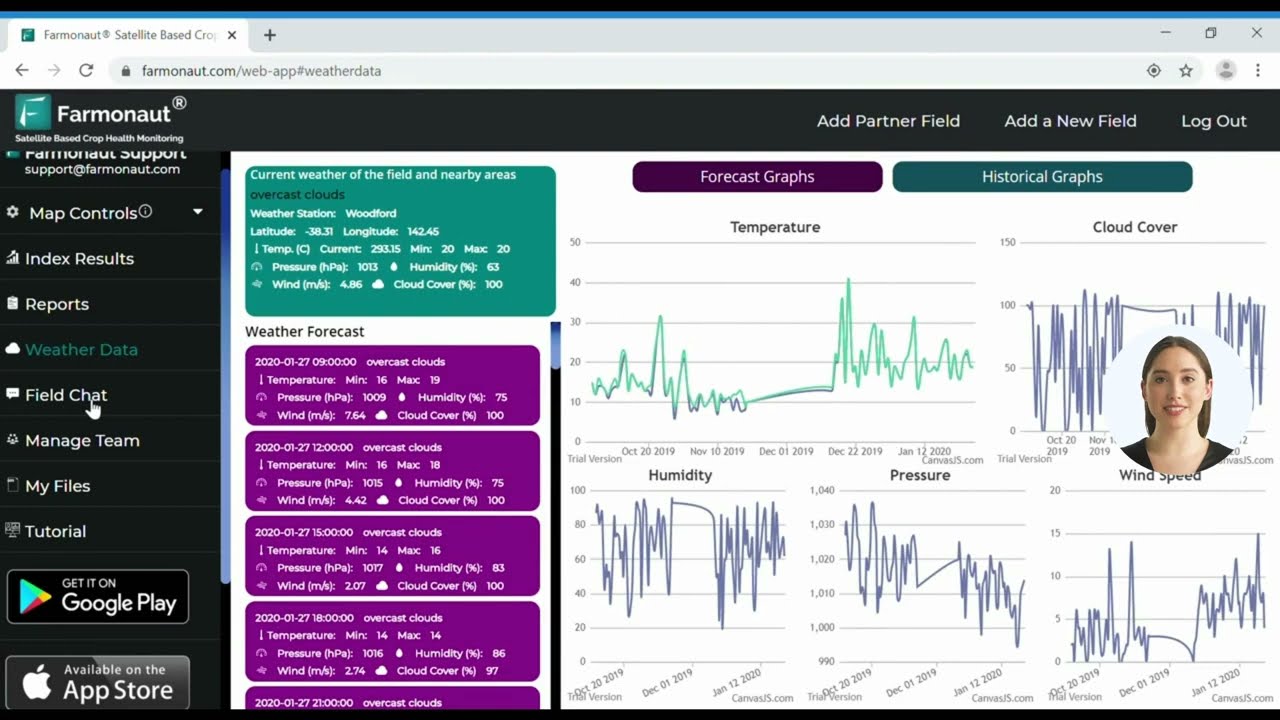
We believe in the power of cloud-based APIs and mobile-first solutions—our app and API services support everyone from on-site engineers to government data analysts, enabling anytime, anywhere access to mineral software insights.
Our subscription model is scalable and modular, making it easy to upgrade as project scopes evolve or expand. APIs are accessible here:
Farmonaut Satellite & Weather API
Farmonaut API Developer Docs
The Road Ahead: AI, Machine Learning, and Beyond
Looking towards the future, cloud-based mineral software is set to expand even further. In 2025 and beyond, we see several key trends:
- AI & Machine Learning: Deep-learning models will offer more accurate mineral prediction, anomaly detection, and process optimization, driving greater resource yield with lower risk.
- Augmented & Virtual Reality (AR/VR): AR/VR interfaces—powered by cloud compute—will allow immersive, collaborative mine planning and on-site worker training, all supported by live operational data overlays.
- Edge Computing & Advanced Remote Connectivity: With improvements in satellite internet and edge processing, even the most remote mines can participate in data-driven workflows.
- Automated Compliance & Blockchain Expansion: Automated systems will secure data integrity for regulatory and supply chain management, bolstered by next-generation blockchain solutions.
- Hyper-Personalized Advisory Tools: AI-driven advisories will be tailored to site-specific conditions, equipment health, and miner safety, supporting smarter, safer work environments.
The result for mining companies is not just improved efficiency, but also a paradigm shift towards sustainable, ethical, and community-friendly mining for the decades ahead.
Challenges and Key Considerations in 2025
Despite the transformative benefits of cloud-based mineral software, some challenges remain as we look to 2025:
- Connectivity Gaps: Many mining locations remain remote, sometimes lacking stable high-speed internet. However, advances in satellite internet and edge computing are progressively closing the gap, making real-time cloud operations feasible almost everywhere.
- Cybersecurity & Data Privacy: With sensitive operational and geological data now in the cloud, robust encryption, access controls, and regulatory compliance with data governance laws are more important than ever for all mining companies.
- Workforce Upskilling: To unlock maximum value from platform integration, mining personnel need new digital skills in cloud, analytics, and real-time monitoring technologies. Training and support programs are critical.
- System Interoperability: Migrating from legacy on-premises or proprietary mineral software to open, cloud-based solutions requires careful planning and, often, technical support.
- Change Management: As digital transformation continues, leaders must focus on transparent change strategies, demonstrating clear ROI from cloud-based workflows to all stakeholders.
Nevertheless, the benefits far outweigh these challenges, and providers are rapidly adapting their offerings to ensure robust, secure, and user-friendly solutions for evolving mining operations.
Frequently Asked Questions
What is cloud-based mineral software in mining?
Cloud-based mineral software refers to specialized mining applications and platforms hosted on remote servers, accessed via the internet. These platforms unify data, analytics, real-time monitoring, and planning tools—enabling mining companies to boost efficiency, sustainability, and compliance, without heavy IT investments.
How does cloud software improve sustainability in mining?
Cloud platforms integrate and track environmental metrics (emissions, water, land use), automate compliance, and help optimize resource extraction and logistics. This reduces waste, supports emissions reduction, and makes sustainability reporting more efficient and transparent.
Can companies in remote or developing regions use cloud-based mineral software?
Yes. Thanks to satellite internet and advances in edge computing, even mining locations with less connectivity can leverage cloud-based platforms for real-time monitoring and data-driven planning. Tools like Farmonaut’s API and mobile apps enhance accessibility for all.
Is cloud-based mineral software cost-effective for smaller mining projects?
Absolutely. Cloud solutions are typically modular with pay-as-you-go pricing, removing upfront IT costs and allowing small-to-medium companies to access state-of-the-art planning, monitoring, and compliance tools on demand.
How does predictive maintenance work in cloud mining software?
Predictive maintenance uses live sensor data and advanced analytics to detect anomalies or early signs of equipment failure. This allows mining operations to schedule repairs proactively, reduce downtime, and extend asset lifespans.
What is blockchain traceability, and why is it important?
Blockchain traceability records the chain of custody and origin of minerals from extraction to delivery, ensuring authenticity and discouraging unethical sourcing. It is increasingly valued for regulatory compliance, transparency, and consumer trust.
Where can I access Farmonaut’s cloud-based mineral software tools?
You can get started with Farmonaut’s mobile and web apps, as well as our developer APIs, by using these links:
Farmonaut Web App |
Android App |
iOS App |
Farmonaut Satellite & Weather API
Conclusion
By 2025, cloud-based mineral software stands at the forefront of mining’s digital revolution. Mining companies who embrace cloud platforms, advanced monitoring, integrated analytics, and AI-powered workflows will unlock new levels of efficiency, safety, transparency, and sustainability. The power to reduce costs, ensure regulatory compliance, and drive continuous improvement is now available to companies of every scale—no longer reserved for the few.
Farmonaut is proud to empower the mining industry’s journey toward a more sustainable, efficient, and ethical future through cutting-edge cloud-based software, satellite-driven intelligence, blockchain, and real-time analytics.
Explore our platform and experience how cloud-based mineral software is shaping the smarter, greener, and more collaborative mines of tomorrow.


