

Lithium prices · Price, cost and outlook
Lithium Price per Ton: Chart, Costs and Outlook
China lithium carbonate was 91,700 yuan per tonne on 5 November 2026 (Trading Economics). The USGS 2025 average was about US$9,000 per metric ton, against US$63,700 in 2022.
Key takeaways
- Lithium carbonate in China: 91,700 yuan per tonne on 5 November 2026, down about 27% in a month (Trading Economics).
- Benchmark data: battery-grade carbonate ended Q3 2026 at US$19,025 per tonne EXW China; spodumene fell to US$1,780 FOB Australia (INN, October 2026).
- USGS annual average for battery-grade carbonate: US$63,700 per tonne in 2022, about US$9,000 in 2025 (USGS MCS 2026).
- Greenbushes produced spodumene concentrate at a cash cost of A$415 per tonne in the year to June 2026 (IGO annual report).
- World mine output rose from 222,000 to about 290,000 tonnes of lithium between 2024 and 2025 (USGS).
In this article
- Lithium price per ton today: the quick answer
- How the lithium price per ton has moved
- What Benchmark Mineral Intelligence says about the lithium price outlook
- Lithium production cost per ton: what it takes to make a tonne
- Lithium value calculator: concentrate to carbonate equivalent
- Where lithium is mined and why supply matters for price
- What drives the lithium price per ton
- What the price means for mines, investors and project owners
- How to read a lithium price quote
- Frequently asked questions
The lithium price per ton in China was 91,700 yuan for lithium carbonate on 5 November 2026, down about 27% in a month, according to Trading Economics. That followed a spike to a two-year high near US$30,000 a tonne in May 2026 and a slide through the third quarter. The US Geological Survey puts the 2025 average for battery-grade carbonate at about US$9,000 per metric ton, far below the 2022 peak of US$63,700.
This page explains which lithium price you are looking at (carbonate, hydroxide or spodumene concentrate), what it costs to produce a tonne, what Benchmark Mineral Intelligence and other price reporters said about the 2026 market, and how to turn a concentrate tonnage into a lithium value with the calculator below. It is written for investors, licence owners and consultants who need numbers with dates and sources, not slogans.
Lithium price per ton today: the quick answer
There is no single exchange price for lithium in the way the LME sets copper. Buyers and sellers use price assessments from reporting agencies (Benchmark Mineral Intelligence, Fastmarkets, S&P Global, Shanghai Metals Market) and futures on the Guangzhou Futures Exchange (GFEX) in China. Most quotes you see are for one of three products:
- Lithium carbonate (Li2CO3), battery grade: the most quoted chemical. In China it is usually quoted in yuan per tonne, and domestic quotes may include value-added tax. Trading Economics showed 91,700 yuan per tonne on 5 November 2026.
- Lithium hydroxide (LiOH·H2O), battery grade: used for high-nickel cathodes. It is priced separately from carbonate, and the gap between them changes over time.
- Spodumene concentrate (SC6): the mined product from hard-rock mines in Australia, Africa, Brazil and Canada. It contains about 6% lithium oxide (Li2O) and sells for a fraction of the chemical price because it still has to be refined.
So when a search asks for the lithium cost per ton, the honest answer starts with a question: which product, which delivery point and which date? A spodumene price of under US$2,000 a tonne and a carbonate price of US$19,000 a tonne can both be correct on the same day.
How the lithium price per ton has moved
The USGS publishes an annual average for battery-grade lithium carbonate in its Mineral Commodity Summaries 2026. The series shows how violent the cycle has been: US$11,700 per metric ton in 2021, US$63,700 in 2022, US$39,000 in 2023, US$11,800 in 2024 and an estimated US$9,000 in 2025. In other words, the average fell by about six-sevenths from the 2022 peak to 2025.
Chart
Battery-grade lithium carbonate, annual average
US$ per metric ton, real terms (2025 estimated)
The boom-and-bust pattern is not new. Natural Resources Canada notes that spot prices reached about US$24,000 a tonne in 2017, then fell as a wave of new Australian spodumene mines came into production in 2017 and 2018, dropping to about US$7,300 by the end of 2019 and below US$5,000 by the end of 2020. Each high price draws in new mines; each wave of new supply pushes the price down again.
What happened so far
The 2026 market started with a rally. According to S&P Global data reported by Investing News Network (14 October 2026), battery-grade carbonate (delivered China) reached 201,000 yuan, about US$30,032 per metric ton, on 12 May 2026. By 10 July it had fallen to US$22,561.
Benchmark Mineral Intelligence data in the same report show battery-grade carbonate (ex-works China) ending the third quarter at US$19,025 per tonne, down 20.8% on the quarter, while spodumene concentrate (FOB Australia) fell 23.5% to US$1,780 per tonne. On 12 October 2026 the most active GFEX carbonate contract fell 11.8% in one day to about US$15,650, its weakest settlement since December 2025 (INN, 2026). By 5 November the China spot price was 91,700 yuan per tonne (Trading Economics).
What Benchmark Mineral Intelligence says about the lithium price outlook
Benchmark Mineral Intelligence is a London-based price reporting and research firm. Its full forecasts are sold to subscribers, so any page that prints a precise “Benchmark forecast” range without a link should be treated with caution. What Benchmark has said in public in 2026 is more useful than a single number:
- Q3 was a story of real supply cuts beaten by an inventory scare. In its quarterly price review, Benchmark principal analyst Adam Megginson said genuine ore supply disruption was outweighed by renewed worries over stocks and demand, even though fundamentals stayed strong (INN, October 2026).
- Destocking continued. Benchmark’s inventory tracker showed holders of lithium chemicals running down stocks through the third quarter.
- Chinese supply is fragile. After regulators revoked the environmental approval of the Jianxiawo lepidolite mine in Jiangxi in early September, Benchmark cut its 2026 output forecast for the operation from 62,500 tonnes of lithium carbonate equivalent (LCE) to 32,000 tonnes, and kept about 99,000 tonnes for 2027.
- Policy shifts move prices. Benchmark pointed to China moving to remove a domestic battery tax exemption and pausing some new storage and EV cell capacity approvals, which squeezed downstream margins.
Trading Economics, which publishes its own model forecast, showed a fourth-quarter estimate of about 95,600 yuan per tonne on 5 November 2026. That is a model output, not a promise. Use any forecast as one scenario next to a low and a high case.
Lithium production cost per ton: what it takes to make a tonne
For investors, the more useful number is often the cost of production, because it sets the floor where mines start to close. Costs differ by deposit type and by product, so compare like with like.
Hard-rock spodumene mines
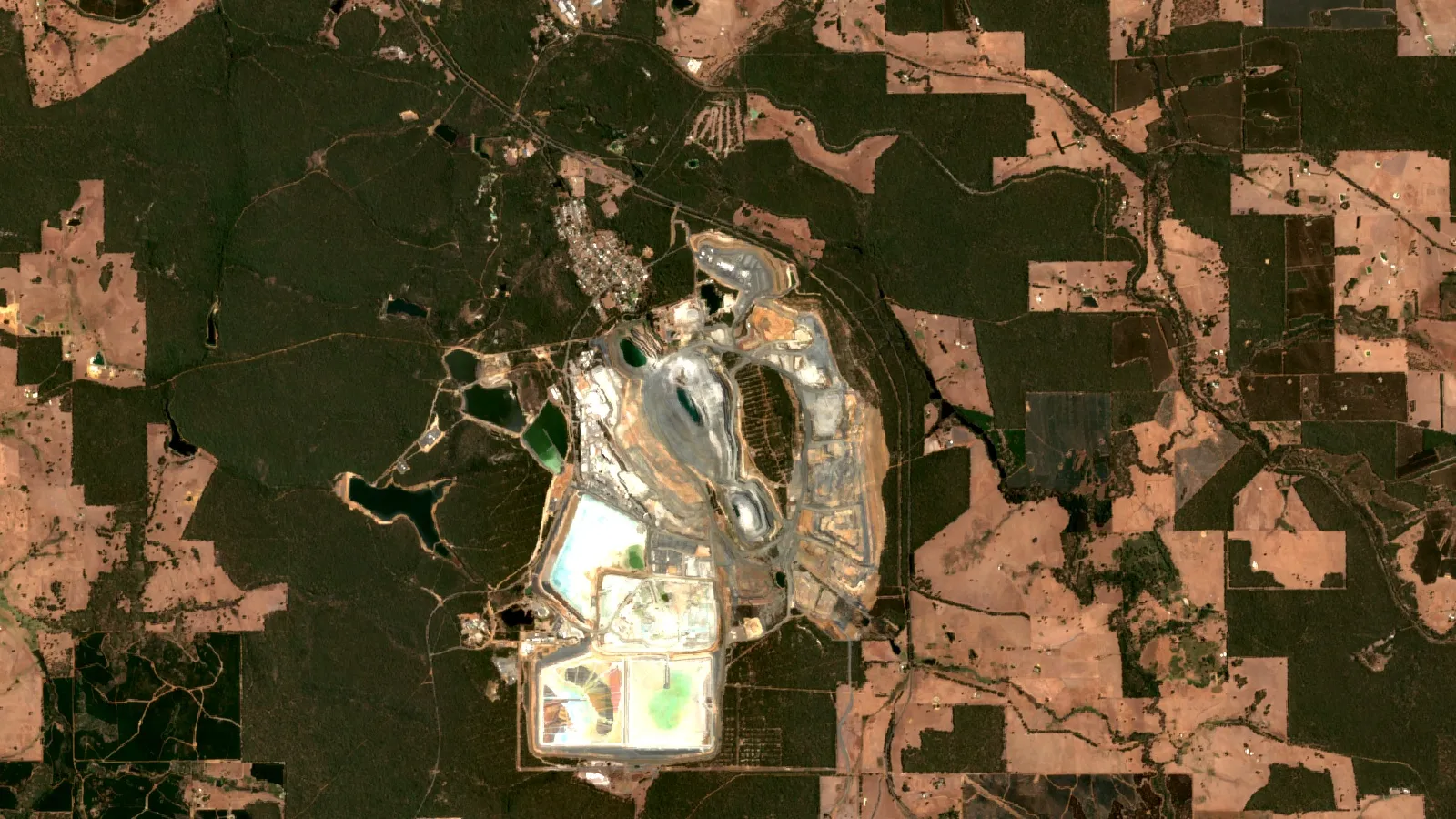
Greenbushes in Western Australia is a large hard-rock spodumene mine. Its part-owner IGO reported in its 2026 annual report that Greenbushes produced 1,410,000 tonnes of spodumene concentrate in the year to June 2026 at a production cash cost of A$415 per tonne of concentrate, against A$325 the year before. IGO’s cash cost covers mining, processing, crushing and site administration; it excludes royalties, freight and corporate costs, so the all-in cost is higher.
Smaller, lower-grade mines cost much more. Core Lithium’s 2026 annual report gives a unit cost of about US$533 per tonne (A$762) for its Finniss restart in the Northern Territory, on an FOB, SC6-equivalent basis before royalties,. Its investment decision assumed a spodumene price of US$1,500 per tonne CIF, and it quoted a market price of about US$2,200 per tonne CIF at 30 June 2026.
Brine operations
Brine producers in Chile and Argentina pump lithium-rich water into ponds and let the sun do much of the work. The IISD lithium commodity profile (2026) summarises the trade-off: brine evaporation needs high upfront capital but generally has lower operating costs once production is running, while hard-rock mining is more energy and cost intensive. Direct lithium extraction (DLE), which pulls lithium from brine with sorbents or membranes instead of ponds, is still being proven at commercial scale.
From concentrate to chemical
A tonne of spodumene concentrate is not a tonne of lithium. Using the IISD conversions, 1% Li2O equals 0.465% lithium, and one tonne of Li2O equals 2.47 tonnes of LCE. A tonne of SC6 therefore holds about 0.06 tonnes of Li2O, or about 0.15 tonnes of LCE. That is why spodumene trades at roughly a tenth of the carbonate price: the buyer still pays for roasting, leaching and refining, which add thousands of dollars per tonne of chemical.
Lithium value calculator: concentrate to carbonate equivalent
Use the calculator to convert a concentrate tonnage and grade into contained lithium carbonate equivalent, then compare the value at a carbonate price with your site cash cost. All prices are inputs; enter today’s quote for the product and delivery point you care about.
Calculator
How much lithium is in your concentrate, and what is it worth?
Enter your own tonnage, grade, carbonate price and cash cost.
- Lithium metal content (tonnes): 278.6
- Gross LCE value at your carbonate price (US$): $22,230,000
- Site cash cost of the concentrate (US$): $5,000,000
- Site cash cost per tonne of LCE (US$): $3,374
Example values only, not a benchmark. Constants: 1 tonne Li2O = 2.47 tonnes LCE, and 1 tonne LCE = 0.188 tonnes lithium (IISD lithium commodity profile, 2026). The LCE value is a gross chemical-equivalent value; a concentrate sells for much less because refining is still needed. Prices are inputs: use today’s price.
Where lithium is mined and why supply matters for price
World mine production rose from about 222,000 tonnes of lithium content in 2024 to an estimated 290,000 tonnes in 2025, according to the USGS. Australia led with about 92,000 tonnes, followed by China (62,000), Chile (56,000), Zimbabwe (28,000) and Argentina (23,000). Mali jumped from 770 tonnes to about 9,400 tonnes as two new operations started.
Chart
Lithium mine production by country
Thousand tonnes of lithium content, 2025 estimate
That 30% jump in a single year helps explain the low 2025 average. When output grows faster than battery demand, stocks build up and prices fall until high-cost mines cut back. The USGS also estimates world reserves at 37 million tonnes of lithium, with Chile (9.2 million), Australia (8.4 million) and China (4.6 million) holding the most. For a regional view of operating and planned mines, see our guides to lithium mines in Nevada and lithium mining in Europe.
Africa is a growing source. Zimbabwe’s output rose from 20,000 to 28,000 tonnes between 2024 and 2025 (USGS), with operations such as Bikita. Our page on the Bikita Minerals mine in Zimbabwe covers that site in more detail.

▶ Farmonaut video on how satellite data screens ground for lithium pegmatites in Nigeria · 10:49
What drives the lithium price per ton
Battery demand
Batteries took about 88% of lithium use worldwide in 2025, according to the USGS, ahead of ceramics and glass (4%) and lubricating greases (2%). That makes the price highly sensitive to electric vehicle sales and to grid storage orders. Albemarle (NYSE: ALB) said in its second-quarter 2026 results that net sales in its energy storage segment rose 78% to US$1.3 billion on higher pricing (INN, 2026). For the demand side in more depth, see our lithium supply and demand outlook.
Chart
World lithium reserves by country
Million tonnes of lithium content
Inventories and Chinese policy
Chinese stock levels, permits and tax rules move the global price because China is a major buyer and refiner of lithium raw materials. The October 2026 sell-off followed a change in how industry group SMM counts inventory, which raised its estimate of Chinese stockpiles by about 175,000 tonnes (Trading Economics, November 2026), and the EU’s agreement to cap imports of Chinese hybrid EVs at 350,000 units a year (INN, 2026).
Mine restarts and closures
Higher prices in the first half of 2026 brought idle Australian mines back. Trading Economics reported that Mineral Resources restarted the Bald Hill mine after an 18-month suspension and that Core Lithium restarted Finniss. Restarts add supply quickly because the pits and plants already exist, which tends to cap price rallies.
Water, permits and community licence
Brine projects in the “lithium triangle” of Chile, Argentina and Bolivia face questions about water use, and hard-rock projects need tailings and water plans. Delays in permits can hold back supply for years. Our guide to water management systems for mining covers the main options.
▶ Farmonaut claymation on the seven environmental impacts of mining · 2:31
What the price means for mines, investors and project owners
At a spodumene price near US$1,780 per tonne (Benchmark, end of September 2026), a low-cost mine such as Greenbushes keeps a wide margin, while restarted or smaller mines with costs above US$500 per tonne before royalties, freight and capital have far less room. Investors usually check three numbers for each producer:
- Unit cash cost and all-in sustaining cost per tonne of concentrate or LCE, from the latest quarterly report.
- Price assumption in the latest feasibility study or investment decision, and how far the market price sits above it.
- Contract terms: whether sales are on spot, monthly index or fixed-price contracts, and any floor or ceiling prices.
For licence owners and early explorers, a lower lithium price makes cheap, fast screening of ground more valuable than expensive drilling. Satellite data can map pegmatite outcrops and alteration over a whole licence before field work; Farmonaut offers this as a paid satellite screening service for lithium and other minerals.
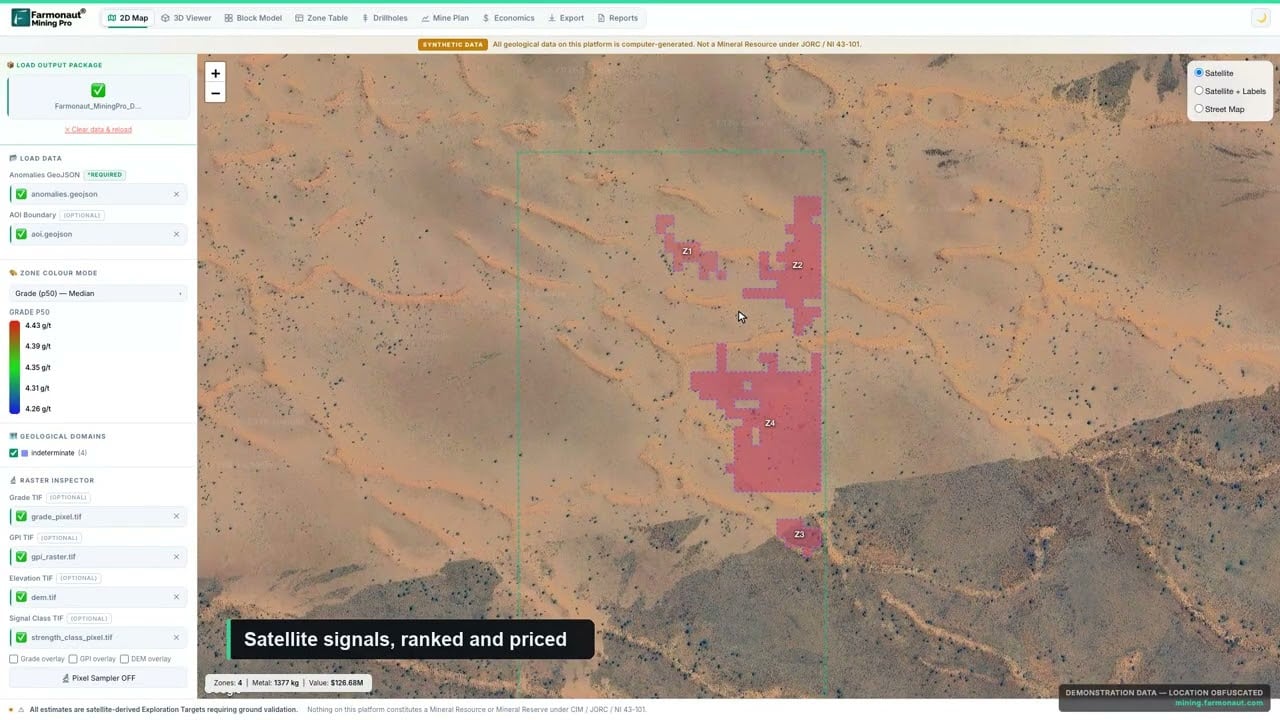
▶ A short tour of Farmonaut Mining Pro, which turns a licence boundary into exploration targets · 4:56
How to read a lithium price quote
- Check the product: carbonate, hydroxide, spodumene (and its Li2O grade) or metal.
- Check the delivery point: EXW China, DDP China, CIF China, FOB Australia or CIF Asia. Freight and duty can move the number by hundreds of dollars.
- Check the currency and tax: China domestic quotes are in yuan and may include value-added tax; seaborne quotes are in US dollars.
- Check the unit: per metric ton, per short ton or per kilogram. Lithium carbonate at US$19 per kilogram is US$19,000 per tonne.
- Check the date and source: spot moves daily; a figure without a date is close to useless.
Frequently asked questions
What is the lithium price per ton right now?
China lithium carbonate was 91,700 yuan per tonne on 5 November 2026 (Trading Economics). Benchmark assessed battery-grade carbonate at US$19,025 per tonne ex-works China at the end of September 2026. Check a dated source before you use any figure.
What is the lithium price per ton in US dollars?
Seaborne and ex-works assessments are quoted in US dollars. The USGS gives an annual average of about US$9,000 per metric ton for battery-grade carbonate in 2025, and Benchmark data put carbonate at US$19,025 per tonne at the end of the third quarter of 2026.
How much does it cost to produce a ton of lithium?
It depends on the deposit and product. Greenbushes reported a cash cost of A$415 per tonne of spodumene concentrate for the year to June 2026 (IGO). Core Lithium expects about US$533 per tonne at Finniss before royalties. Converting concentrate into carbonate adds refining costs on top.
What is the Benchmark Mineral Intelligence lithium forecast?
Benchmark’s detailed forecasts are for paying subscribers. In public comments in October 2026 it said fundamentals stayed strong but an inventory and demand scare drove prices down in the third quarter, and it cut its 2026 output forecast for the Jianxiawo mine in China.
Will lithium prices go up again?
Nobody can say for certain. Prices rose about 72% between the start of 2026 and May, then fell. Supply cuts in China, storage demand and mine restarts pull in different directions. Use several forecasts as scenarios, not as a single answer.
Why is spodumene so much cheaper than lithium carbonate?
A tonne of 6% spodumene concentrate holds only about 0.15 tonnes of lithium carbonate equivalent (IISD conversions), and it still has to be roasted and refined. The buyer pays for that processing.
What does LCE mean?
LCE stands for lithium carbonate equivalent. It expresses any lithium product as the mass of lithium carbonate it could make. One tonne of LCE holds about 0.188 tonnes of lithium metal (IISD, 2026).
What was the highest lithium price?
The USGS annual average peaked at US$63,700 per metric ton for battery-grade carbonate in 2022. Spot prices in China went higher during that year.
Which country produces the most lithium?
Australia, with an estimated 92,000 tonnes of lithium content in 2025, about a third of world output, according to the USGS.
Is lithium hydroxide more expensive than carbonate?
Not always. The two products are priced separately and the gap between them changes with demand from different battery types. Compare quotes for the same date, grade and delivery point.
More from Farmonaut: farmonaut.com, agro admin app, carbon footprinting, crop loan and insurance, farmonaut satellite weather api developer docs, fleet management, product traceability.
This page is for information only. It is not investment advice. Prices change daily; confirm the latest quote with a price reporting agency before any decision.
Farmonaut mining
Screen a lithium licence from space
For investors weighing lithium ground: get satellite exploration targets over a licence before committing to field work or drilling.

Mining Pro sample view, synthetic data
Keep reading
Sources
- USGS, Mineral Commodity Summaries 2026: Lithium: pubs.usgs.gov
- Trading Economics, Lithium carbonate price (China), accessed 5 November 2026: tradingeconomics.com
- Investing News Network, Lithium Market Trends: Q3 2026 Review and Forecast (14 October 2026): investingnews.com
- IGO Limited, 2026 Annual Report (Greenbushes): igo.com.au
- Core Lithium, 2026 Annual Report (ASX, 24 September 2026): announcements.asx.com.au
- IISD, Commodity profile: Lithium (2026): iisd.org
- Natural Resources Canada, Lithium facts: natural-resources.canada.ca
- British Geological Survey, Lithium mineral profile: nora.nerc.ac.uk
- USGS Professional Paper 1802-K, Lithium: pubs.usgs.gov
- USGS, Spectral mapping of lithium-rich playas, SIM 3554: pubs.usgs.gov
Discussion
Questions, corrections or field experience? Share them below. First-time comments are reviewed before they appear, and your email is never published.
No comments yet. Be the first to add a question or your experience.

 G.I.T.T.
 Jaunita Erss Ltd
 Almosi SARL
 SRK Consulting
 Berks Gold Limited
 Mwerezi Minerals Company Limited
 Mining SARL
 SenGold Invest SAS
 Sean Mining Limited
 NTS Group (Pty) Ltd
 Mine4Africa
 Lithspo Minerals Limited
 Tintina Mining Group
 Dalgety Minerals Pty Ltd
 Faith At Work (Pty) Ltd
 Geotech Mining Solutions plc

 Licence holder · Nigeria · Gold + lithium
 Client · Somalia · Gold










