

Coal Mining Extraction Process & Crushing in 2025
Table of Contents
- Summary: The Crushing Process in Mineral Processing — Enhancing Efficiency in 2025
- Introduction: The Ever-Evolving Coal Mining Extraction Process
- Trivia: Smart Crushers & Energy Reduction in 2025
- Understanding the Crushing Process in Mineral Processing
- Stages of Crushing: Primary, Secondary & Tertiary Steps
- Technological Advancements in Crushers & Mineral Processing (2025)
- Comparative Technology Advancement Table: Pre-2025 vs. 2025
- Environmental & Sustainability Improvements in Coal Crushing
- Role of Crushing in the Complete Mineral Extraction Chain
- Farmonaut Satellite Technology: Supporting Smarter Mining Operations
- Challenges & The Future of Coal Mining Extraction and Crushing
- FAQ: Coal Mining Extraction Process & Crushing
- Conclusion: Embracing Efficiency & Sustainability for 2025 and Beyond
- Farmonaut Subscriptions & Resources
Summary: The Crushing Process in Mineral Processing — Enhancing Efficiency in 2025
Crushing in mineral processing forms the backbone of efficient ore extraction and mineral recovery. As we approach 2025, a wave of technological advancements and smarter crushers are revolutionizing how the coal mining extraction process is conducted. With powerful improvements in automation, AI integration, predictive monitoring, and environmental controls, mining operations are not only becoming more productive but also more sustainable.
The crushing process enables the liberation of valuable minerals, supporting better grinding, refining, and resource optimization. Today’s market pressures — including the continual rise in demand for minerals, stricter environmental regulations, and the necessity to handle increasingly complex ores — make optimizing each stage, from primary to tertiary crushing, absolutely vital. In this blog, we’ll explore the latest advancements in coal crushing and mineral processing for 2025, placing a spotlight on efficiency, sustainability, and the role of smart digital solutions.
Introduction: The Ever-Evolving Coal Mining Extraction Process
The coal mining extraction process, like the manganese mining process or even the cotton seed germination process in agriculture, revolves around extracting valuable material from complex natural sources. For coal, the pathway from raw ore to a clean energy source involves a series of tightly integrated process stages: extraction, size reduction, mineral liberation, and eventual beneficiation.
As global industrial growth accelerates in 2025, the urgency for maximizing resource efficiency and minimizing environmental impact is more prominent than ever. Technology — from advanced robotics and automation to satellite monitoring — is fundamentally transforming how modern mining operations function.
Understanding the Crushing Process in Mineral Processing
Crushing is the initial, crucial, and often overlooked mechanical step that determines the success of any mineral processing operation. By transforming large raw ore lumps into smaller, manageable sizes, the crushing stage prepares material for later processing steps like grinding or milling, and eventually, for downstream separation and refining.
Why is Crushing in Mineral Processing So Important?
- Enhancing Liberation: Reduces ore particle size, exposing valuable embedded minerals and improving separation during subsequent processing.
- Boosting Recovery Rates: Consistent, controlled size reduction leads to higher mineral recovery — essential as ores become more complex and grade declines.
- Reducing Wear on Equipment: Uniform particle sizing means less stress and abrasion on grinding, flotation, and transport machinery.
- Facilitating Efficient Transport and Handling: Smaller materials flow more easily through plant equipment and conveyor systems.
- Minimizing Waste Generation: Controlled crushing helps separate waste gangue from ore early, reducing processing of non-valuable material.
The crushing in mineral processing is not a one-size-fits-all solution. Its specific execution is tailored to the hardness, size distribution, and moisture content of the mined material, which all influence overall efficiency and recovery rates.

Stages of Crushing: Primary, Secondary & Tertiary Steps in 2025
Primary Crushing: The First Line of Attack
- Function: Receives large, blasted rock chunks straight from the mining face
- Common Crushers: Jaw crushers and gyratory crushers — chosen for their robustness and ability to crush hard ores efficiently
- Output: Reduces lumps to a size suitable for handling and transport

Primary crushing sets the tone for the rest of the mineral processing circuit.
Secondary Crushing: Achieving Finer Sizing
- Task: Takes the product of primary crushers for further reduction
- Equipment Used: Cone crushers and impact crushers
- Goal: Obtain particle sizes small enough for efficient grinding and subsequent separation
Tertiary Crushing: Precision for Liberation
- Purpose: Used if required for ores necessitating further reduction
- Method: Specialized crushers offering precise sizing
- Advantage: Ensures downstream operations (like grinding or flotation) receive a consistent feed size for optimally efficient processing

Technological Advancements in Coal Mining Extraction & Crushing for 2025
Crushing technologies for 2025 are defined by their efficiency, automation, and sustainability. As mineral processing plants and crushers have evolved, the integration of smart digital solutions is now standard:
- AI-powered Automation: Intelligent crushers automatically adjust speeds and pressure in real time, optimized for ore hardness and feed rate.
- IoT-Enabled Monitoring: Vibration analysis sensors and predictive analytics reduce downtime through advanced maintenance scheduling.
- Variable Frequency Drives: Allow crushers to match energy consumption to ore characteristics, maximizing throughput and avoiding unnecessary wear.
- Improved Crusher Materials: Advanced alloys and wear-resistant linings offer longer equipment longevity and reduced maintenance costs.
- Smart Control Systems: Centralized digital platforms for managing entire crushing circuits, tracking particles sizes, and alerting operators to anomalies.
- High-Pressure Grinding Rolls (HPGRs): Innovative crushing mechanisms that improve liberation while further reducing energy consumption.
The trend is clear: plant operators in 2025 are prioritizing maximizing resource efficiency, enhancing recovery rates, and reducing environmental impact through smarter and more connected crushing systems.

Smart Crushers: A Benchmark for Modern Mining in 2025
Smart crushers leverage real-time data feeds to adaptively manage reduction stages. This ensures crushing is performed only as much as necessary, reducing both energy waste and excessive fines generation, directly contributing to sustainability.
Want real-time operational intelligence for your mine sites?
Access advanced satellite-driven mining monitoring and environmental impact solutions via the Farmonaut web app or mobile apps:



Developers: Integrate satellite-based operational insights into your own mining management solutions using the Farmonaut API and view the API Developer Docs.
For enterprises optimizing their entire logistics and machinery fleet across mining operations, Farmonaut’s Fleet Management platform provides satellite-driven tracking, safety management, and resource optimization — reducing operational costs in mineral processing.

Comparative Technology Advancement Table: Coal Crushing — Pre-2025 vs. 2025
| Process/Technology | Pre-2025 (Estimated Performance) | 2025 Innovations | Projected 2025 Performance (Estimated Values) |
|---|---|---|---|
| Mineral Processing Circuit Automation | Partial automation, basic sensors, limited remote access | Full AI-driven automation, IoT-connected, real-time adaptive control | >95% digitalized control; downtime reduced by 30% |
| Ore Recovery Rate (%) | 82% (typical for traditional crushers) | Smart crushers, precision particle size control, advanced ore sorting | 94–97% (up to 15% increase over pre-2025) |
| Energy Efficiency (kWh/ton) | 25–28 kWh/ton | VFDs, high-pressure grinding rolls (HPGR), smart energy management | 18–20 kWh/ton (approx. 20% lower) |
| Environmental Impact (CO₂ tons/year) | 600,000–800,000 (large operation estimate) | Energy reduction, dust suppression, waste minimization | <520,000 (30% reduction possible) |
| Smart Crusher Adoption Rate (%) | <20% | AI, IoT-enabled crushers, predictive maintenance integration | >70% in new and upgraded mines |
| Data-driven Maintenance Scheduling | Fixed interval, reactive | Predictive based on real-time performance analytics | Maintenance costs down 25–40% |
Environmental & Sustainability Improvements in Coal Crushing
In 2025, environmental protection is a leading metric of operational excellence in mineral processing. Mining operations are subject to stricter regulations, investor scrutiny, and social license demands.
Key Environmental Innovations: Coal Mining Extraction Process 2025
- Dust Suppression Systems: Advanced water sprays and cyclone enclosures reduce airborne particulate emissions.
- Noise Reduction Technology: Enclosed crushing chambers and smart sound barriers protect the environment and local communities.
- Energy-Efficient Crushers: Use of variable frequency drives lowers energy consumption during all reduction stages.
- Real-time Environmental Impact Tracking: Satellite-driven solutions — like those available through Farmonaut’s carbon footprint monitoring platform — empower mines to closely monitor and mitigate their CO₂ output and overall footprint.
- Pre-crushing Ore Sorting: Optical and XRF-based sensors sort ore from waste gangue before reaching the crusher, cutting down unnecessary crushing of non-valuable material.
- Resource Traceability: Blockchain-powered tracking — see Farmonaut’s traceability solution — protects supply chain transparency while supporting responsible sourcing protocols.
In parallel, environmental policies are pushing for broader sustainability practices: optimized material transport, waste reduction, recycling of process water, and reclamation of residual mineral content.
Role of Crushing in the Complete Mineral Extraction Chain
Crushing is more than a preparatory phase; it’s the linchpin for downstream mineral processing operations. If feed to the grinding mills and flotation cells is not uniform or optimal in size and quality, the entire extraction chain can suffer:
- Flotation Efficiency: Properly sized and liberated particles float or sink more predictably for improved separation yields.
- Reduced Equipment Wear: Consistent feed minimizes mechanical stress downstream, extending operational life and reducing costs.
- Grinding & Milling: Lower energy required when ore is correctly sized, enabling more efficient use of grinding equipment.
- Smarter Circuits: Well-designed crushing circuits allow for digital optimization and process simulation — in 2025, digital twin platforms make it possible to predict performance, test upgrades virtually, and eliminate bottlenecks before capital investment.

Farmonaut Satellite Technology: Supporting Smarter Mining Operations in 2025
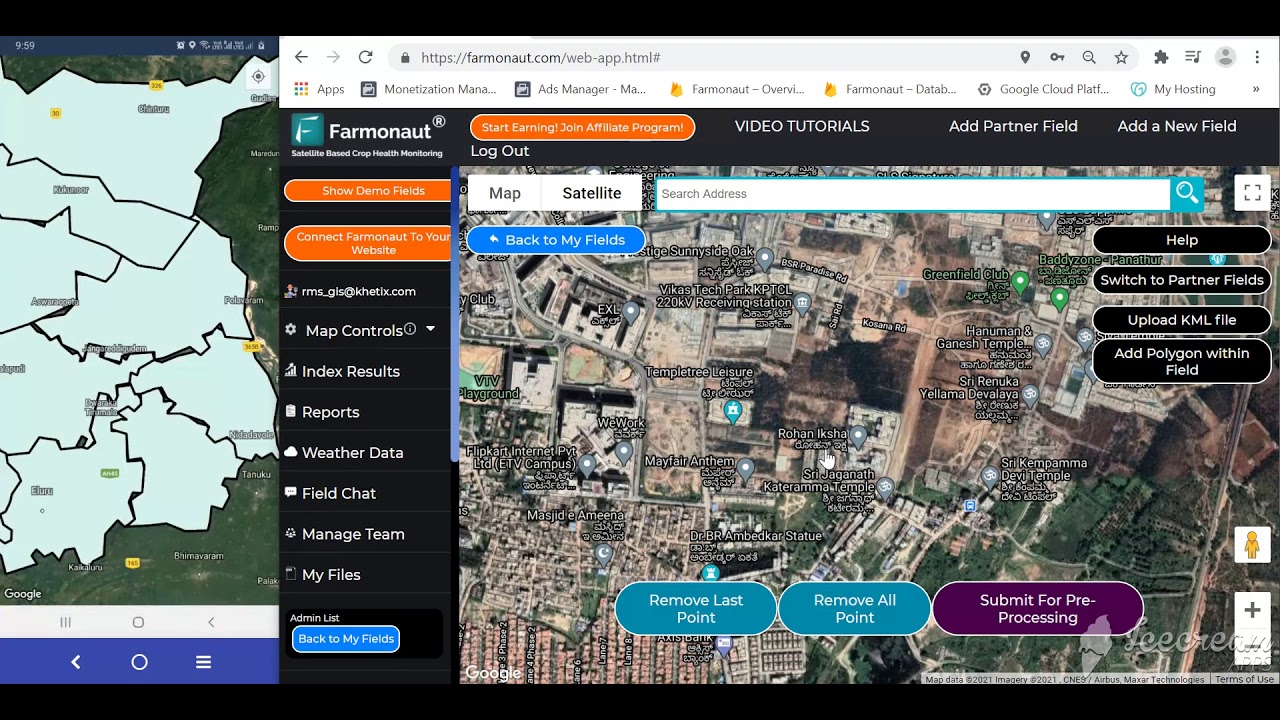
At Farmonaut, we’re committed to empowering mining professionals, plant operators, and decision-makers through affordable and accessible satellite-based insights in 2025 and beyond. Our platform supports the coal mining extraction process with:
- Real-Time Site Monitoring: Multispectral satellite images detect environmental changes and resource extraction progress across vast and remote mine sites.
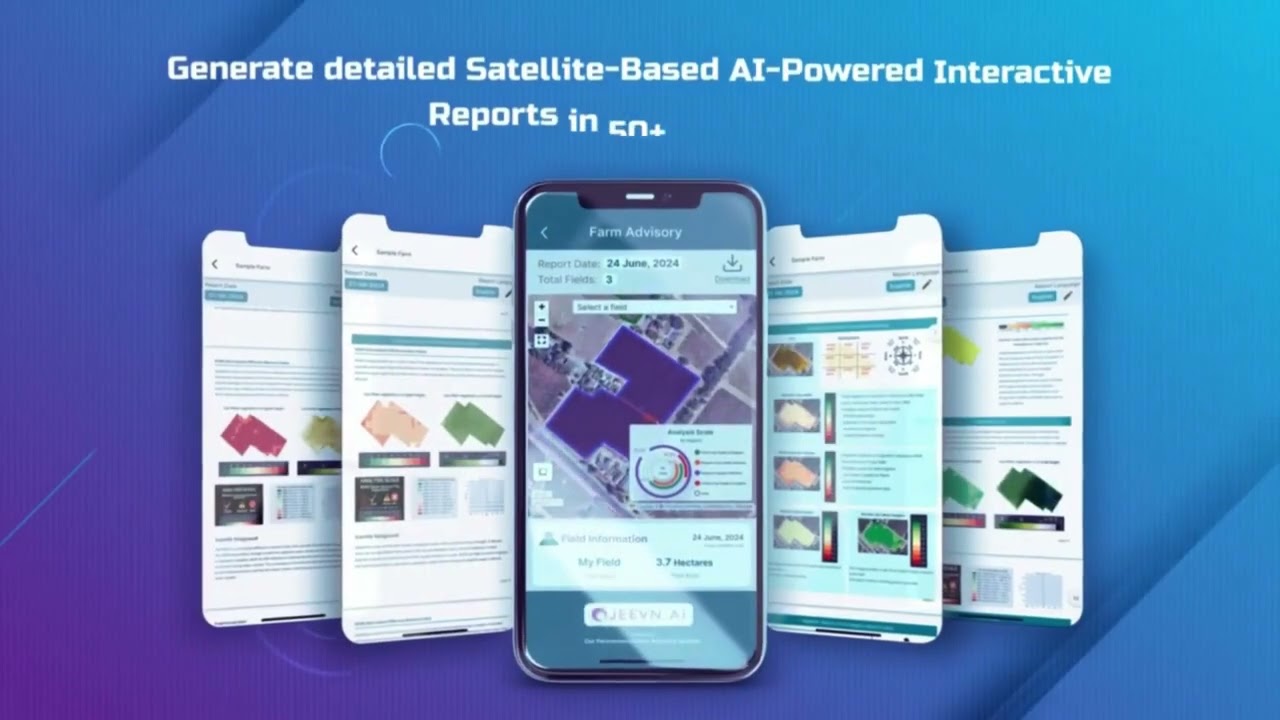
- AI-Based Advisory Systems: Our Jeevn AI analyzes satellite imagery to offer operational suggestions, enhancing productivity from crushing in mineral processing through to final separation.
- Blockchain Traceability: Full visibility from mine source to shipment, supporting compliance and investor assurance. Learn more: Farmonaut Traceability Solution
- Environmental Impact Analysis: Track emissions and carbon footprint using satellite-based metrics. See our carbon footprinting product.
- Fleet & Resource Management: For operators with extensive machinery and vehicles, we help optimize routes, reduce idle times, and boost safety with our Fleet Management tools.
- Loans & Insurance Insights: If you are a mining company or financial institution, our verification platform streamlines approvals and reduces fraud risks.
By integrating these tools, we support smarter mining operations worldwide and enable actionable decision-making for sustainability, efficiency, and compliance.

Challenges and The Future of Coal Mining Extraction & Crushing in 2025 and Beyond
While the journey toward automation, AI, and sustainability is driving significant gains, several challenges remain as we look ahead:
- Ore Variability: Greater geological diversity demands adaptive crusher settings and real-time performance adjustment.
- Decentralized Mining Operations: Smaller-scale, mobile, and modular plants require flexible, rapid-deployment crushing equipment.
- Talent & Skills Gap: The need for upskilling operators to manage advanced digital and AI-integrated systems.
- Equipment Wear & Tear: Despite advances, highly abrasive or “sticky” ores (high clay or moisture) can accelerate wear and necessitate frequent maintenance.
- Capital Costs: Implementing digital twin models, IoT sensors, and new crusher designs involves significant upfront investment — although operational savings are high in the long run.
- Compliance: Meeting complex environmental and safety standards, especially for water, air, and waste, is a moving target in global markets.
Looking ahead, the sector is exploring breakthroughs in wear-resistant materials, ever-smarter sensors, and even fully autonomous mining zones where energy, waste, and production are balanced through centralized, AI-guided management. The crushing process will remain fundamental to productivity, environmental stewardship, and operational safety in every phase of the coal mining extraction process for years to come.
Farmonaut Subscriptions & Resources
Ready to harness space-age insights for your mining or mineral processing operations in 2025? Explore our flexible subscription plans:
FAQ: Coal Mining Extraction Process & Crushing in Mineral Processing
Q1: What is the primary objective of the crushing stage in mineral processing?
The main goal is to reduce large raw ore chunks into smaller, manageable sizes, facilitating mineral liberation for higher recovery rates and efficient downstream processing.
Q2: How has smart crusher technology improved efficiency in coal mining extraction?
Smart crushers adapt their operation in real-time using AI and IoT sensor feedback, maximizing throughput, minimizing energy use, and increasing ore recovery by up to 15% over older methods.
Q3: What environmental advances can be seen in coal mineral processing for 2025?
Modern plants use dust suppression, noise reduction, energy-efficient crushers, and satellite-based environmental impact monitoring to significantly reduce their footprint.
Q4: How does crushing affect downstream processes like grinding and flotation?
Uniform and optimal particle sizing ensures better separation in flotation tanks and less wear in grinding mills, directly contributing to operational cost reduction and improved metal yields.
Q5: Can I get real-time monitoring of my mining operations with Farmonaut?
Absolutely. Our platform offers multispectral satellite monitoring, environmental tracking, predictive AI-based analytics, and blockchain traceability for safe, efficient, and transparent mining management.
Conclusion: Embracing Efficiency & Sustainability for 2025 and Beyond
The coal mining extraction process — and indeed, all mineral processing — stands on the brink of a new era in 2025. Crushing remains a fundamental step for enhancing ore recovery, reducing costs, and optimizing resource use, all while supporting more sustainable and environmentally responsible operations.
Through innovations in smart crushers, AI-enabled plant controls, and advanced environmental monitoring, the industry is not just keeping pace with the rising demand for minerals — it’s forging a future where productivity and sustainability go hand in hand. And with Farmonaut’s satellite-driven data solutions, operators everywhere can access the actionable intelligence needed to drive continuous improvement in their mining operations.
Are you ready to elevate your mineral processing workflows for 2025? Discover what real-time, satellite-based monitoring and smart technology can do for your site — from reducing operational costs to ensuring compliance and environmental stewardship.


