

AI Use Cases in Mining: Powerful Water Use Optimization 2025
“AI-driven water optimization in mining can reduce water consumption by up to 30% by 2025, enhancing sustainability efforts.”
Introduction
The mining industry continues to evolve rapidly in 2025, with digital transformation and sustainability at the heart of its future. AI use cases in mining now reshape not just extraction or mineral processing, but the very way operational resources like water are managed — bringing optimization, environmental compliance, and resilience to the forefront. As climate change exacerbates scarcity, and communities worldwide call for more responsible mining practices, AI-driven water management stands out as a transformative, innovative force tackling the critical challenge of mining water use.
Mining is inherently water-intensive, involving processes such as ore extraction, mineral processing, dust suppression, and equipment cooling. Excessive or inefficient use of water in mining not only raises operational costs but can also result in serious environmental and social challenges — especially in arid regions or communities where water availability is already limited. In this context, AI (artificial intelligence) becomes the backbone for future-ready solutions, enabling precise, data-driven, sustainable management of water resources across mining sites globally.
AI use cases in mining for water optimization in 2025—from real-time monitoring and predictive analytics to adaptive resource management and AI-aided recycling—are propelling the industry into an efficient and responsible era. This comprehensive guide explores these powerful AI innovations, provides in-depth insight into the challenges and opportunities, and demonstrates how advanced machine learning algorithms, sensors, and satellite technologies are reshaping sustainable mining for the years ahead.

AI-driven Water Optimization in Mining: The 2025 Imperative
The urgency to optimize water use in mining has never been greater. In 2025, AI is no longer a futuristic option, but a necessity for any company that wishes to enhance operational efficiency, reduce environmental impact, and meet rising compliance requirements. AI systems bring together advanced computational capabilities, vast datasets, sensor integration, and adaptive learning models — enabling a new paradigm of intelligent, automated water management in mining operations.
- Real-time monitoring of water flows, sources, leaks, and consumption using smart sensors
- Predictive analytics for anticipating water demands, high-stress periods, and operational risks
- AI-based process optimization in mineral processing, tailings, and recycling plants
- Adaptive, scenario-based decision tools for resource allocation and regulatory compliance
- Autonomous system integration for water-saving, leak prevention, and recycling maximization
The result? Mining operators reduce excessive water use, lower costs, tune operations dynamically, and support a more sustainable, ethical future for both their businesses and the communities in which they operate.
Key Challenges in Mining Water Use & Management
Despite its critical importance, water management in mining is fraught with complex challenges, stemming from both the nature of mining processes and external pressures:
- High, Inherently Variable Water Requirements: Processes like ore extraction, mineral processing, and dust suppression require vast amounts of water, with needs fluctuating across cycles.
- Water Scarcity & Environmental Stress: Many mining sites operate in arid regions or compete with local communities for precious water resources. Climate change only exacerbates this scarcity.
- Leakages & Losses: Aging infrastructure, poor controls, and lack of real-time data allow for undetected leaks and inefficient water flows—resulting in excessive consumption.
- Complex Compliance Landscape: Stricter environmental regulations demand transparent, data-backed reporting on water use and proof of sustainability efforts.
- Disparate Data Silos: Manual record-keeping and disconnected systems hinder holistic management and timely decision-making.
This is where the integration of AI-powered systems, predictive models, and advanced sensors offers unprecedented opportunities for operational optimization, loss prevention, and sustainable usage.
AI Systems for Real-Time Water Monitoring and Analytics
A cornerstone of AI use cases in mining for water is real-time, intelligent monitoring. With smart integration of advanced sensors, IoT devices, and satellite data, AI platforms can collect and analyze water data across vast, often remote mining operations—delivering precision insights, anomaly detection, and actionable analytics.
How AI-Powered Water Monitoring Works
- Sensor Networks capture data from key monitoring points: water inputs, aquifers, processing plants, tailings dams, equipment cooling systems, waste outputs, and more.
- AI algorithms and machine learning models process massive data flows, tracking consumption patterns, unusual spikes, leaks, and inefficiencies.
- Automated anomaly detection identifies leaks, excessive use, or changes in flow—enabling rapid, targeted maintenance and loss prevention.
- Forecasting and Predictive Analytics use historical and real-time data to accurately predict periods of high water stress and demand, allowing operators to adjust processing schedules and consumption accordingly.
This data-driven approach transforms mining sites into dynamic, adaptive systems—minimizing water loss, enabling rapid response, and building the foundation for further AI-based optimization.

Benefits of AI-Based Water Monitoring
- Minimizes excessive water use and losses
- Improves operational efficiency and resource allocation
- Strengthens compliance and reporting with accurate, instant data
- Supports adaptive, scenario-based management for changing conditions

Did you know? “Over 60% of mining companies plan to implement AI-powered water management systems for efficient resource use by 2025.”
AI in Water Recycling and Treatment Optimization
Another critical AI use case in mining revolves around optimizing recycling and treatment of water used throughout site operations. As environmental standards tighten and fresh water becomes even more precious and scarce, the ability to reuse, treat, and minimize water loss is a vital differentiator for mining operations.
Transforming Water Recycling with AI
- AI-driven treatment plant management: Machine learning models analyze incoming water quality, optimize filtration, chemical dosing, and sludge disposal strategies for lowest wastage and optimum recycling.
- Adaptive reuse allocation: AI platforms can route treated water to different operational needs as per real-time requirements and quality standards—e.g., equipment cooling, dust suppression, or mineral recovery.
- Tailings management: Automated systems, guided by AI, regulate the flow and water content in tailings dams and slurry pipelines to minimize both contamination risk and water loss, maximizing the retention and reuse of water throughout processing cycles.
By integrating AI-powered optimization systems in water recycling, mining sites can achieve:
- Substantial water savings without compromising mineral recovery rates
- Reduced chemical consumption and lower waste generation
- Enhanced environmental compliance and social responsibility
- Lower operational and environmental costs

Adaptive AI Resource Management in Mining
Mining operations are entangled with local water ecosystems, community needs, and regulatory frameworks. In 2025, the role of AI-powered adaptive management systems becomes invaluable, bringing a holistic, dynamic strategy to optimize resource usage and balance competing demands.
How AI Enables Adaptive Management of Water in Mining
- Hydrological modeling integration: AI decision tools build upon granular data from sources like weather forecasts, aquifers scans, local community usage, and resource availability. This allows for dynamic, scenario-based planning of water withdrawals and redistribution.
- Predictive scenario analysis: AI platforms help mine managers simulate the impact of alternate extraction or processing schedules on regional water availability, identifying ways to minimize environmental and social impact while sustaining operations.
- Regulatory compliance support: Automated reporting and risk prediction features keep companies aligned with local and international water regulations, helping avoid penalties and build stronger stakeholder trust.
By leveraging adaptive AI management models, mining operations can:
- Reduce environmental stress and social conflict by aligning industrial use with ecological preservation
- Remain resilient during periods of drought, water restrictions, and climate disruption
- Gain a data-driven edge for strategic planning and transparent communication with regulators

Fun Fact: “AI-enabled water management systems can automatically detect leaks before they become critical, often saving tens of thousands of liters per incident in modern mining.”
Comparison Table: AI Applications for Water Optimization in Mining (2025)
| AI Use Case/Technology | Function in Water Management | Estimated Water Reduction (%) | Additional Environmental Benefits | Adoption Barriers | Projected 2025 Impact |
|---|---|---|---|---|---|
| Predictive Analytics | Forecasts water demand, stress, and usage patterns; enables pre-emptive allocation and conservation | 15–25% | Prevents over-extraction; supports ecosystem resilience | Data quality, integration complexity | Mainstream in large mining firms; crucial for sustainable growth |
| Smart Sensors & IoT | Continuous real-time data collection on water flows, leaks, and consumption | 10–20% | Early leak detection; reduces loss and pollution risk | Initial cost, IT infrastructure needs | Rapidly expanding as IoT hardware costs drop |
| Automated Leak Detection | Identifies leaks/anomalies, initiates alerts or automated repairs | 5–12% | Minimizes water pollution; protects local environments | Legacy equipment compatibility | Standard in new projects; growing in retrofits |
| Real-time Monitoring | End-to-end visibility across sites for consumption and ecosystem impact | 8–18% | Supports timely response to environmental risk | System interoperability | Highly adopted among leading operators |
| AI-Aided Water Recycling Optimization | Enhances treatment process efficiency, minimizes chemical/water loss, and reallocates water adaptively | 18–30% | Lowers emissions, waste, and community impact | Requires process/plant upgrades, skilled workforce | Major impact for water-scarce regions and high-capacity sites |
Numbers are estimated based on current industry data and projections for 2025. Impact and adoption rates may vary by region and size of mining operation.
Emerging AI Innovations in Future Mining Water Optimization
Looking to 2025 and beyond, several emerging AI-driven innovations promise to further revolutionize mining water use:
- Integration of IoT, Drones, and Satellite Sensing: Merging granular on-site sensor data with remote-sensing and satellites for end-to-end water, soil, and vegetation mapping—improving water footprint assessments and enabling landscape-scale risk management.
- Autonomous Mining Equipment: Robotics and AI-powered machines precisely target ore deposits, reduce energy and water required per unit output, and minimize contamination or loss.
- Blockchain Traceability in Water Use: Secure, transparent records of water usage and recycling activity across sites, using solutions such as blockchain-based traceability to ensure compliance, boost trust, and reduce fraud.
- Sophisticated Scenario Analysis & Visualization Tools: Next-gen AI platforms capable of simulating climate, hydrological, and operational scenarios instantly—empowering operators to shift strategies proactively and comply with real-time regulatory changes.
These advancements will not only help companies optimize water use, but reduce emissions, strengthen community relationships, and lay the foundation for a resilient, environmentally responsible mining industry.

Farmonaut: Satellite & AI Solutions for Mining Water Optimization
As a pioneering satellite technology company, Farmonaut is committed to making satellite-driven insights and AI-based solutions affordable and accessible across the mining industry. Our mission is to empower businesses, government agencies, and users with advanced technology and data-driven approaches to resource management — including actionable tools for optimizing water use in mining.
-
Satellite-Based Monitoring: We provide real-time satellite imagery and resource monitoring for mining sites through our Web and Mobile Apps. This supports precision water management, leak detection, and environmental compliance across vast, remote, or hard-to-access operations.



- Advanced AI & Machine Learning: Through our platform and public API, mining operators gain access to powerful, AI-powered analytics for real-time monitoring, predictive maintenance, anomaly detection, and environmental reporting. Developers can learn more in our API Developer Documentation.
- Blockchain-Based Traceability: Our Traceability solutions bring transparency and accountability to water use, mineral flows, and supply chain management in mining.
- Environmental Impact Monitoring: We offer carbon footprinting and emissions analysis features, helping companies track their environmental impact, optimize operations, and meet sustainability goals.
- Fleet and Equipment Resource Management: Our fleet management tools optimize the use of mining vehicles and machinery—reducing operational costs, improving safety, and supporting integrated resource management.

- Scalable, Accessible Solutions: Whether you’re managing a single mine, a complex multi-site operation, or advising government/financial institutions, Farmonaut’s subscription-based model provides flexibility and affordable access to critical water and resource management tools.
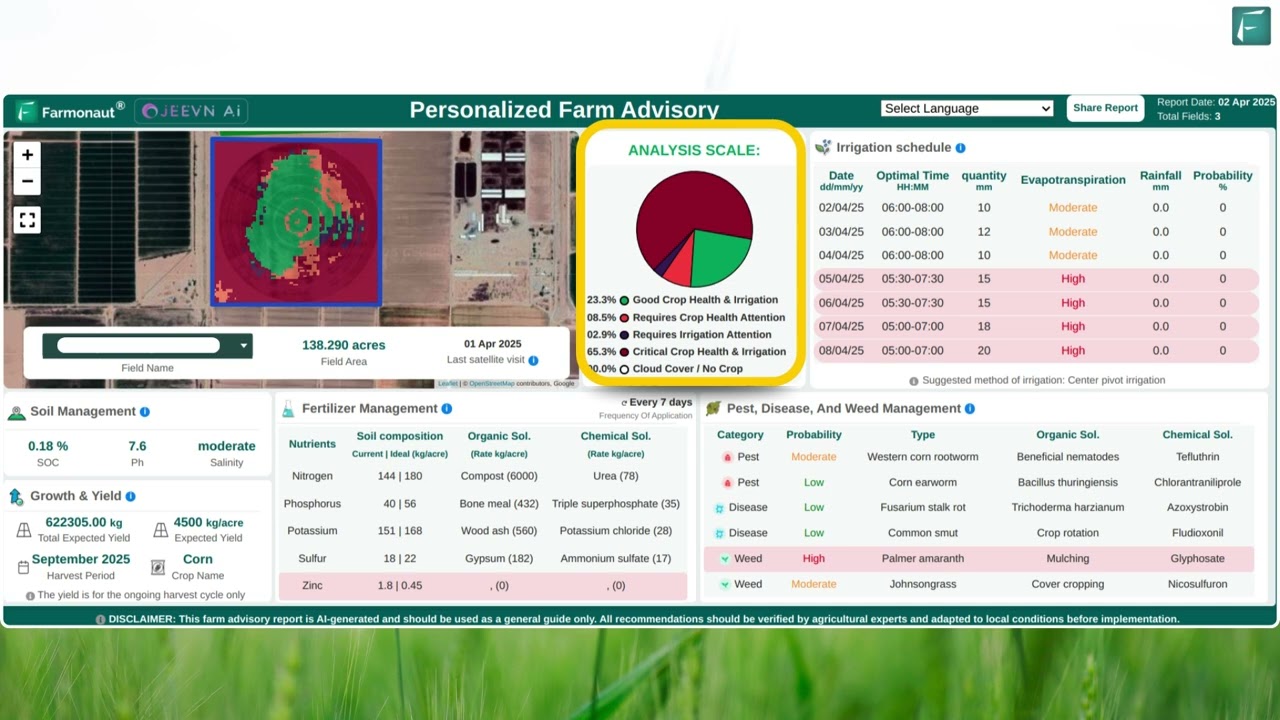
Discover our latest tools for advanced resource management and future-ready mining water use—get started with Farmonaut today.
Frequently Asked Questions (FAQ) on AI Water Use Optimization in Mining 2025
1. How does AI help optimize water use in mining?
AI helps by automating water monitoring, identifying leaks or inefficiencies, predicting future water needs, and dynamically adjusting processes to minimize waste. Techniques like predictive analytics, real-time anomaly detection, and AI-based control of recycling/treatment plants allow mining operations to reduce excessive consumption, lower costs, and maintain compliance.
2. What are the measurable benefits of adopting AI-driven water management systems?
Mining sites using AI solutions can achieve water savings of 10–30%, reduced environmental impact, improved regulatory compliance, and lower operational costs. AI systems also provide the ability to anticipate high-stress periods and pre-emptively adjust operations—ensuring sustainable, uninterrupted production.
3. Are AI solutions for mining water use scalable and affordable?
Yes, especially with cloud-based platforms, satellite data, and modular software tools like those offered by Farmonaut. These systems are designed to serve both small- and large-scale mining operations, and their cost-effectiveness increases with broader adoption and industry digitalization.
4. What challenges might companies face when implementing AI for water optimization?
Key challenges include integrating AI with existing legacy infrastructure, ensuring high-quality input data, and training the workforce to interpret and act on AI-powered insights. However, as systems become more user-friendly and interoperable, these barriers are expected to diminish by 2025.
5. How do AI and satellite solutions help with regulatory compliance?
These tools provide accurate record-keeping, automated reporting, and transparent resource tracking. By integrating data from sensors and satellite imagery, mining companies can more easily demonstrate compliance with increasingly stringent environmental and water use regulations.
6. How does Farmonaut support mining water optimization?
Farmonaut leverages satellite imagery, AI analytics, and blockchain technology to provide real-time monitoring, anomaly reporting, and traceability for mining water use. Our platform supports sustainable resource management, process optimization, and environmental impact tracking — available through Web, Android, and iOS apps and APIs.
Conclusion: A Sustainable, Data-Driven Mining Future with AI
By 2025, AI use cases in mining for water use optimization will be foundational—not optional. AI-powered solutions are rapidly transforming how mining companies monitor, manage, and minimize water consumption, from predictive analytics and real-time monitoring to adaptive resource management and advanced recycling optimization.
As climate change, regulatory pressure, and community expectations intensify, the strategic adoption of AI, machine learning, sensor integration, and satellite insights will define the mining industry’s capacity to be both productive and sustainable. Companies that embrace these innovations today will enjoy:
- Significant water and cost savings
- Best-in-class environmental compliance
- Stronger stakeholder trust and community relationships
- An adaptive, resilient approach to future operational challenges
With the powerful combination of AI-driven analytics, satellite monitoring, and accessible digital platforms like those from Farmonaut, mining water use can be optimized for a cleaner, more responsible, and profitable future.
Ready to unlock the power of AI for your mining water optimization needs?
Explore our tailored Farmonaut Mining Water Monitoring Apps or learn more about our Developer APIs for seamless integration.
Let AI, satellite, and data-driven resource management pave the way for your mining operation’s success—ultimately reducing water use, cost, environmental impact, and supporting communities worldwide. The future of mining water management is smart, sustainable, and powered by AI.
Discussion
Questions, corrections or field experience? Share them below. First-time comments are reviewed before they appear, and your email is never published.
No comments yet. Be the first to add a question or your experience.

 Sahel Shipping SA
 Sania Corporation
 Sean Mining Limited
 NTS Group (Pty) Ltd
 Mine4Africa
 Lithspo Minerals Limited
 Tintina Mining Group
 Dalgety Minerals Pty Ltd
 Vortex Minerals Pty Ltd
 Faith At Work (Pty) Ltd
 Geotech Mining Solutions plc
 Vulcan International Limited
 Kidepo Associates
 GKY Mining
 Alkimy SARL
 Double A Trading
 GemSprout Metals Limited
 Qader Group
 Ileys General Trading
 SG Gold Mining LLC
 VRV Global Pte Ltd
 Omsri International FZE
 G.I.T.T.
 Jaunita Erss Ltd










