

Connectivity Challenge in Mining: Fixes That Work
Reviewed September 2026 against IMARC Group, FactMR (via OpenPR), and Globalstar/MSHA regulatory data.
Try it: Run your own numbers →
The connectivity challenge in mining comes down to three physical facts: signals don’t travel through rock, most mine sites sit far from cellular infrastructure, and any network gap during autonomous or safety-critical operations stops production. Fixing it means combining underground-rated wireless (leaky feeder, mesh), private LTE or 5G at the surface, and satellite links for backup — not picking one technology and hoping it covers every zone of the site. Below is what’s actually driving investment, what it costs when connectivity fails, and how mines are architecting around the problem.
“A single hour of unplanned equipment downtime in mining operations runs about $130,000 — and Fortune Global 500 companies collectively lose $1.4 trillion a year to unplanned downtime across all their operations, per the Siemens/Senseye study.” (Sources below.)



What “Mining Connectivity” Actually Means
When people search “mining connectivity” or “connectivity challenge in mining,” they’re usually asking about one of three distinct problems that get lumped together: getting a signal to a truck in an open pit, getting a signal to a continuous miner 2,000 feet underground, or getting sensor and equipment data off the site entirely so it can reach a control room, a cloud dashboard, or an AI model. Each has a different fix, and treating them as one problem is why so many connectivity projects underdeliver.
Surface operations can often lean on private LTE, public 5G where towers exist, or line-of-sight microwave links between fixed points. Underground operations cannot use any of those directly — rock and soil attenuate RF signals so heavily that a tunnel needs its own dedicated infrastructure, historically leaky feeder cable (a coaxial cable that radiates and receives signal along its length, effectively acting as a very long antenna) paired with mesh nodes at intervals. Getting data off-site, especially from a remote pit with no fiber run nearby, is where satellite links — historically high-latency geostationary, increasingly lower-latency low-earth-orbit (LEO) constellations — come in as backup or, at truly remote exploration sites, as the primary path.
The regulatory backdrop matters here too. In the US, the MINER Act of 2006 required underground coal mines to install post-accident communications systems and electronic tracking for miners — a direct legislative response to a string of fatal accidents, and the reason so much of the connectivity spend on the underground side of the industry is safety-and-compliance driven rather than purely operational, per Globalstar’s summary of the requirement (Globalstar).
The Connectivity Challenge in Mining, Broken Down
Four factors combine to make mining connectivity harder than almost any other industrial connectivity problem, and each has a direct operational consequence.
- Remoteness. Many mine sites, especially in the western US, sit hours from the nearest fiber backbone or cell tower. Traditional wireless build-out is either impractical or prohibitively expensive per site, which is exactly why satellite backup has moved from “nice to have” to standard design in new site connectivity plans.
- Underground attenuation. Wireless signals lose most of their strength passing through rock and soil. A continuous miner, an autonomous haul truck in a decline, or a methane sensor array needs infrastructure built into the tunnel itself — there is no “just add a repeater” fix once you’re several hundred feet down.
- Environmental load. Dust, vibration, temperature extremes, and in some regions extreme cold or heat all shorten the working life of network hardware and complicate power delivery to it — many remote nodes run on diesel generators or solar with battery backup, neither of which guarantees the uptime a safety system needs.
- Reliability requirements that don’t tolerate gaps. Ventilation control, gas detection, and autonomous vehicle coordination are systems where a dropped connection isn’t an inconvenience, it’s a safety incident. That raises the bar for redundancy far above what a typical industrial wireless deployment needs.
These four factors are also why the market for solving them is growing quickly. The global mine monitoring system market — sensors, tracking, and the connectivity that carries their data — was sized at $2.84 billion in 2025 and is projected to reach $6.12 billion by 2033, a 10.3% compound annual growth rate for 2026–2033, according to FactMR data reported by OpenPR (OpenPR/FactMR). That’s a faster growth rate than mining automation overall, which suggests monitoring and connectivity infrastructure is the bottleneck automation vendors are racing to clear.
What Connectivity Failures Actually Cost
It’s hard to find a published, mining-specific dollar figure for “connectivity downtime” alone, because most cost studies bundle it into general equipment downtime — but the equipment downtime numbers themselves make the case. Unplanned downtime in mining operations costs an estimated $130,000 per hour, per multiple industry sources compiled by Innovapptive (Innovapptive). Across all industrial sectors, Fortune Global 500 companies lose a combined $1.4 trillion a year to unplanned downtime, according to a Siemens and Senseye study (MapTrack).
A related data point: across a fleet-operations dataset of 8.85 million maintenance records, 46.3% of work orders were unscheduled or emergency repairs rather than planned maintenance, per Fleetio data compiled by MapTrack. Connectivity gaps are a direct contributor to that ratio — a haul truck or continuous miner that can’t report telemetry in real time can’t be flagged for predictive maintenance, so its failures show up as emergency work orders instead of scheduled ones. This is the mechanism by which a connectivity problem becomes a maintenance-budget problem: no network, no early warning, no planned fix, and the equipment goes down at the $130,000-an-hour rate instead of a scheduled one.
No federal or industry body currently publishes a connectivity-specific downtime figure broken out from general equipment downtime for US mining — if your operation needs that number, the way to get it is to log network outage windows against your own maintenance system’s unscheduled-work-order timestamps for a full quarter and calculate the overlap directly, rather than relying on an industry-wide average that wasn’t built to answer this question.

Network Technologies Compared
There’s no single “best” connectivity technology for a mine site — the right mix depends on whether you’re covering an open pit, a underground decline, or a beltline between the two. The table below lays out what each option is actually good for, so you can match it to the zone you’re trying to cover instead of buying one system to solve every zone.
| Technology | Best Coverage Zone | Typical Constraint | Where It Fits in a Mine Network |
|---|---|---|---|
| Private LTE / 5G | Open pit, surface plant, haul roads | Requires tower/base station build-out; line of sight helps but isn’t strictly required at LTE frequencies | Primary network for surface autonomous vehicles and surface sensor backhaul |
| Leaky feeder cable + mesh | Underground tunnels, declines, stopes | Physical cable run required through every tunnel; damage or extension of the tunnel means extending the cable | Only proven approach for continuous coverage deep underground |
| Wireless mesh networking | Mixed surface/near-surface, temporary work areas | Node density needed for reliable hop-to-hop coverage; each hop adds latency | Fills gaps between fixed infrastructure and covers areas that change shape as mining progresses |
| Satellite (LEO/GEO) | Site-to-world backhaul; remote exploration camps with no terrestrial option | GEO satellite has meaningfully higher latency than terrestrial; LEO needs a compatible ground terminal | Backup/failover for terrestrial networks, or primary link at very remote exploration sites |
| Edge computing nodes | Anywhere latency-sensitive control decisions need to happen locally | Not a network technology itself — reduces how much data needs to travel over the network in real time | Complements all of the above by cutting the volume and urgency of data that must cross the network |

For a deeper technical walkthrough of one specific connectivity fix — chain connectivity in sluicing operations — see our dedicated piece on solving mining connectivity challenges in sluicing, which covers a narrower operational case than this article does.
Why AI Rollouts Stall on Bad Connectivity
US mining automation is a real and growing market — sized at $1.2 billion in 2025 and projected to reach $2.0 billion by 2034, a 5.90% compound annual growth rate for 2026–2034, per IMARC Group (IMARC Group). But nearly every AI use case in mining — predictive maintenance, autonomous haulage, real-time hazard detection — depends on a data pipeline that connectivity gaps break at the source. An AI model trained to flag an equipment failure three days out is useless if the sensor feeding it drops out every time a truck goes around a blind curve underground.
Data Integration and Standardization
Beyond raw connectivity, mines run equipment from multiple vendors and multiple decades, logging data in incompatible formats. Drone imagery, IoT sensor feeds, manual surveys, and legacy SCADA logs all need to land in one place before an AI model can use them together. Platforms built around open APIs — such as Farmonaut’s API for data integration — are one way operators consolidate these feeds without building custom point-to-point connectors for every source.
Workforce and Explainability
Two non-technical obstacles compound the connectivity problem. First, a skills gap: crews need people who understand both mining operations and the AI/data side, and that hybrid skill set is scarce industry-wide. Second, explainability — safety regulators and site managers need to be able to audit why an automated system made a given call, which is a harder ask when the underlying data itself arrived with gaps or delays caused by network drops. Neither obstacle is solved by better wireless hardware alone; both require deliberate training programs and dashboard design that shows its work.

Downtime Cost Calculator
Estimate what a given connectivity outage is costing your site in equipment downtime, using the $130,000/hour industry baseline as your starting reference point — adjust it to your own site’s figure if you have one.
Run your own numbers
Assumptions: uses the $130,000/hour industry downtime baseline from Innovapptive as a default, adjustable to your own figure. Excludes indirect costs like safety incidents, regulatory penalties, or reputational impact — it estimates direct equipment downtime cost only, and the connectivity-attributable share is a manual estimate you supply, not a measured figure.
Satellite-Based Monitoring as a Connectivity Layer
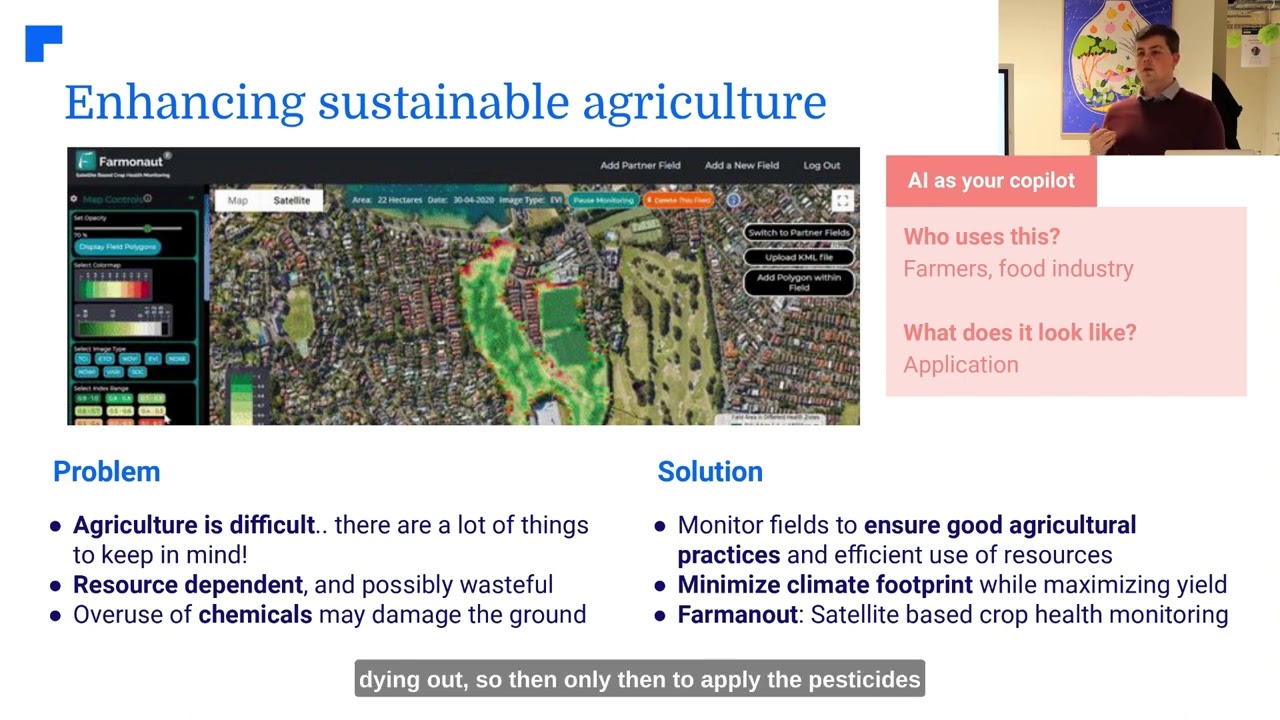
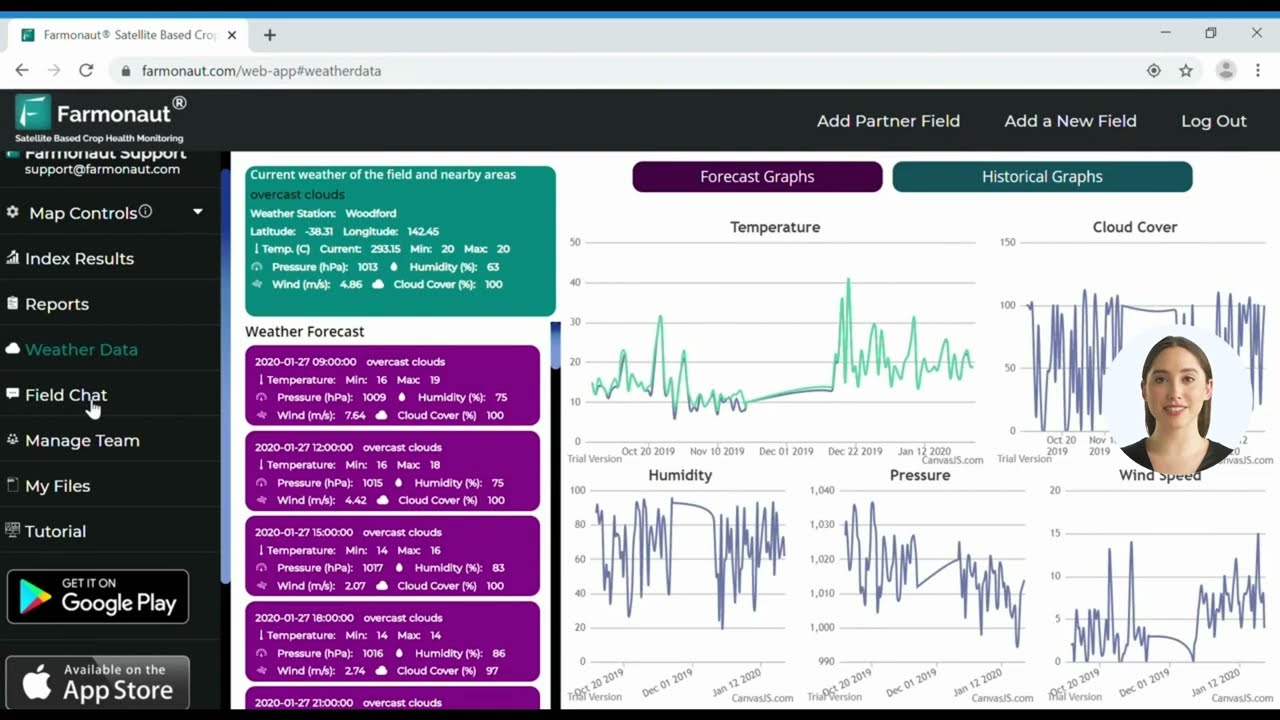
One piece of the connectivity stack that doesn’t depend on terrestrial infrastructure at all is satellite-based site monitoring. At Farmonaut, our approach uses multispectral satellite imagery and AI analytics to keep visibility on remote assets and site conditions even when on-site terrestrial networks are down or don’t exist yet:
-
Remote Site Monitoring: Satellite imagery covers remote assets, open-pit and underground surface footprints, and environmental conditions independent of local network status. Data is accessible via our
cross-platform apps or
API endpoints. - AI-Based Advisory: The Jeevn AI Advisory System analyzes satellite feeds to flag risks and suggest efficiency and compliance actions, without requiring a live terrestrial feed from every sensor on site.
- Blockchain-Powered Traceability: Our traceability tools track a mineral’s chain of custody in a tamper-proof record, useful precisely because it doesn’t depend on continuous connectivity at every handoff point.
- Environmental Impact Tracking: Carbon footprinting tools use satellite data to support emissions reporting and compliance.
- Fleet and Resource Management: Our fleet management dashboard helps operators track machinery usage and logistics.

For enterprise and government users, large-scale site monitoring and reporting tools are available via
web, Android, and iOS.

Where the Fixes Are Headed
The direction of travel across the sources cited in this piece is consistent: monitoring and connectivity infrastructure spend (10.3% CAGR to 2033) is growing faster than mining automation spend overall (5.90% CAGR to 2034), which tells you the industry sees connectivity as the current bottleneck for automation, not the other way around. Four moves show up repeatedly in how operators are addressing it:
- Layer, don’t replace: underground leaky feeder plus mesh, surface private LTE, and satellite failover are complementary, not competing choices. A single-technology bet leaves gaps.
- Push compute to the edge: reducing how much raw data needs to cross the network in real time lowers the reliability bar the network itself has to hit.
- Standardize the data layer: APIs like Farmonaut’s developer documentation illustrate the kind of open integration path that lets AI models draw on multiple data sources without custom connectors for each.
- Track compliance obligations directly: post-MINER Act tracking and communications requirements aren’t optional in US underground coal mining, and connectivity investment there is as much a compliance question as an efficiency one.
If you want to track how this market moves going forward: IMARC Group and FactMR both publish updated market sizing on roughly an annual cycle (check IMARC’s mining automation report page and FactMR’s monitoring-market release via OpenPR for their latest editions), and Mining Technology’s annual industry survey tracks year-on-year adoption rates for real-time optimization tools if you need adoption figures rather than market-size figures.
Farmonaut: Subscription Options
Explore scalable access to satellite-driven monitoring, analytics, and AI platforms for mining and other remote operations:
Frequently Asked Questions
What is the connectivity challenge in mining?
It’s the combined problem of getting reliable network coverage to remote, physically difficult mine sites — underground tunnels where rock blocks wireless signal, open pits far from cell towers, and equipment that needs to send data continuously for safety and automation systems to work.
Why is mining connectivity harder than connectivity in other industries?
Underground signal attenuation, site remoteness, harsh environmental conditions, and safety-critical reliability requirements combine in mining in a way most other industrial settings don’t face simultaneously. A factory floor doesn’t need to solve for RF signal loss through hundreds of feet of rock.
What technologies solve underground connectivity specifically?
Leaky feeder cable — a coaxial cable that radiates and receives signal along its full length — combined with wireless mesh nodes is the established approach for continuous coverage in tunnels. It requires physical cable installation through every active tunnel, which is why it’s costly to extend as a mine expands.
How much does mining downtime actually cost?
An estimated $130,000 per hour for unplanned equipment downtime in mining operations, per data compiled by Innovapptive. Fortune Global 500 companies across all sectors lose $1.4 trillion annually to unplanned downtime, per a Siemens and Senseye study reported by MapTrack.
What US regulation governs mine communications systems?
The MINER Act, passed in 2006, requires underground coal mines to install post-accident communications and electronic tracking systems — a direct driver of connectivity investment in the US underground coal sector, per Globalstar’s summary of the requirement.
How big is the US mining automation market?
$1.2 billion in 2025, projected to reach $2.0 billion by 2034 at a 5.90% compound annual growth rate for 2026–2034, according to IMARC Group. For the current figures beyond this window, check IMARC’s or FactMR’s next published update, since both firms revise these forecasts on roughly an annual cycle.
Does satellite connectivity work for mining sites?
Yes, as backup for terrestrial networks or as a primary link at remote exploration sites with no fiber or cellular option nearby. Geostationary satellite links carry meaningfully higher latency than terrestrial connections; low-earth-orbit (LEO) constellations reduce that gap but need a compatible ground terminal.
How can mining companies close the AI/connectivity skills gap?
By investing in cross-training that combines core mining operational expertise with data and AI literacy, and by involving operations staff directly in how new systems get deployed rather than presenting connectivity and AI upgrades as a finished top-down rollout.
Conclusion
The connectivity challenge in mining isn’t one problem — it’s remoteness, underground attenuation, environmental load, and zero-tolerance reliability requirements, each demanding a different fix. The durable approach is layering technologies to the zone: private LTE or 5G at the surface, leaky feeder and mesh underground, satellite as the failover that catches everything else, and edge computing to shrink how much has to cross the network at all. Track the market data on your own schedule — IMARC Group and FactMR both update their mining automation and monitoring forecasts roughly annually — and validate any downtime-cost assumption against your own maintenance logs rather than an industry average, since that’s the number that actually tells you whether a connectivity fix paid for itself.
Satellite-based monitoring tools, including the ones at Farmonaut, are one way to maintain visibility on remote and underground-adjacent assets independent of terrestrial network status.
- Access Farmonaut for mining and infrastructure: Web App
- API integration: Farmonaut API | API Developer Docs
- Fleet Management Solution: Optimize Mining Logistics & Safety
- Carbon Footprinting for Mining: Environmental Impact Monitoring
- Blockchain Traceability for Mining: Product Traceability Solutions
Discussion
Questions, corrections or field experience? Share them below. First-time comments are reviewed before they appear, and your email is never published.
No comments yet. Be the first to add a question or your experience.

 Timestream Mining
 Lithspo Minerals Limited
 Tintina Mining Group
 Dalgety Minerals Pty Ltd
 Vortex Minerals Pty Ltd
 Faith At Work (Pty) Ltd
 Geotech Mining Solutions plc
 Vulcan International Limited
 Kidepo Associates
 GKY Mining
 Alkimy SARL
 Double A Trading
 GemSprout Metals Limited
 Qader Group
 Ileys General Trading
 SG Gold Mining LLC
 VRV Global Pte Ltd
 Omsri International FZE
 G.I.T.T.
 Jaunita Erss Ltd
 Almosi SARL
 SRK Consulting
 Berks Gold Limited
 Mwerezi Minerals Company Limited
 Exploration consultancy · South Africa · Gold










