

Georgia gold · Visitor and history guide
Consolidated Gold Mine Georgia: Tour Cost and History
The Consolidated Gold Mine in Dahlonega, Georgia, charges US$24.95 per adult and US$15.95 per child (ages 3 to 12), plus tax, for a 40-minute underground tour (mine website, October 2026). This guide adds hours, extras, history and two calculators.
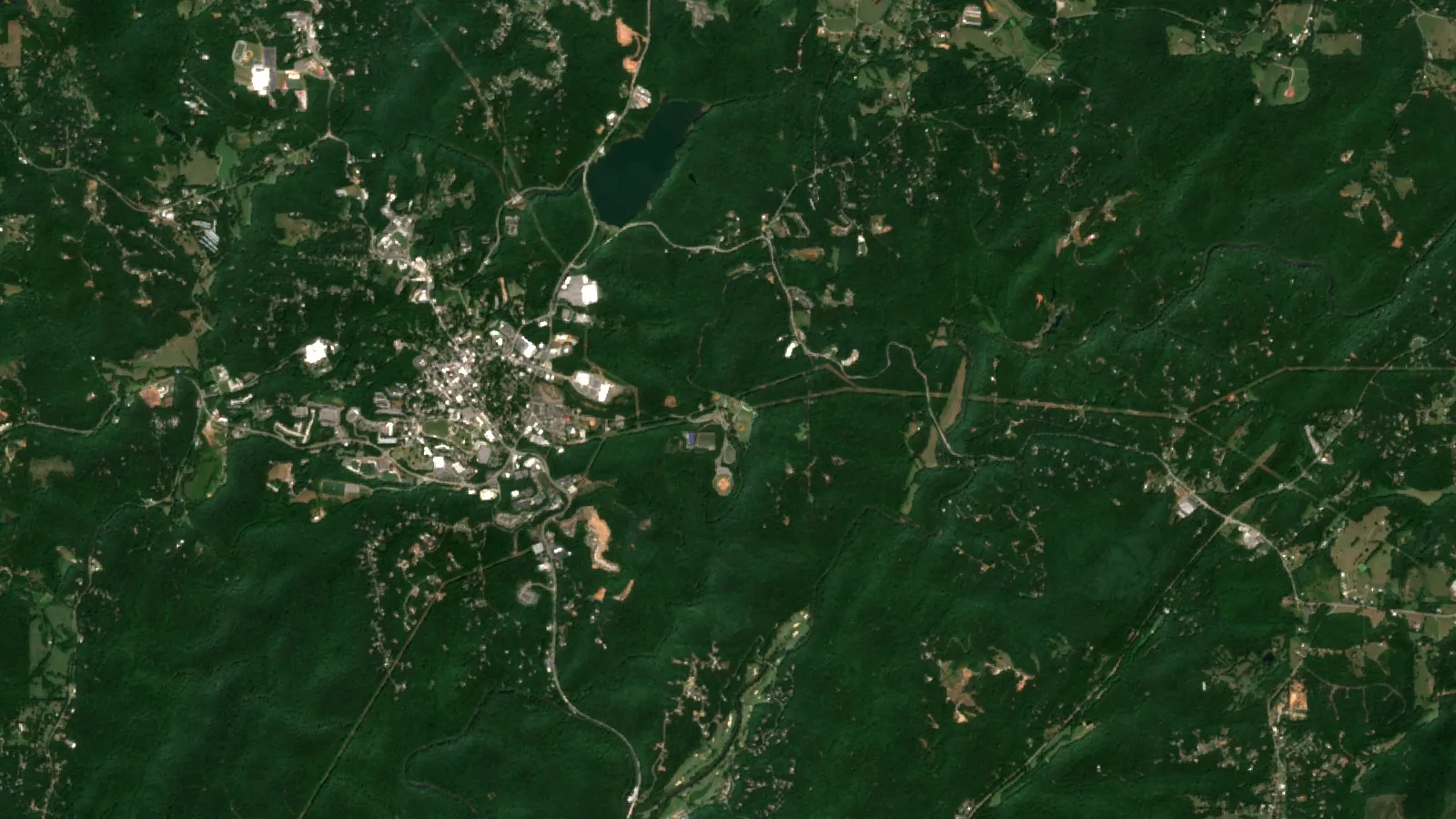
Key takeaways
- The underground tour costs US$24.95 for adults and US$15.95 for ages 3 to 12, plus tax; each paid ticket includes a sample pan of ore (Consolidated Gold Mine website, October 2026).
- The mine is open 10 am to 5 pm daily and closed on Easter Sunday, Thanksgiving and Christmas Day; the tour goes about 200 feet down at roughly 60 degrees Fahrenheit.
- Dahlonega Consolidated was formed from older mines by 1898 and built a 120-stamp mill, the largest gold plant east of the Mississippi (Digital Library of Georgia); it had closed by 1906 because costs exceeded the gold price of about US$21 per ounce.
- The Dahlonega district yielded more than 500,000 troy ounces of gold, and the Dahlonega Mint struck over US$6 million in coins between 1838 and 1861 (Craig; New Georgia Encyclopedia).
- The two calculators turn your party size into a visit budget and your ore grade into a break-even test.
In this article
- Consolidated Gold Mine tour prices and hours
- What the underground tour is like
- Gold panning and gem buckets: what extras cost
- How to plan your visit
- History of the Consolidated Gold Mine: how the Yahoola Creek plant was built
- Why the big Dahlonega mines lost money
- Georgia's gold output over time
- The Dahlonega Mint and the Capitol dome
- Geology of the Dahlonega gold belt
- Panning in the wild: ask before you dig
- What "consolidated" means in mining
- Frequently asked questions
The Consolidated Gold Mine in Dahlonega, Georgia, is a restored underground mine that you can tour today. An adult ticket is US$24.95 and a child ticket (ages 3 to 12) is US$15.95, plus tax, as listed on the mine’s own website in October 2026. The tour lasts 40 minutes, the mine is open daily from 10 am to 5 pm, and each paid ticket includes a sample pan of ore to practise gold panning. It is not a working producer: the company that built the big plant on Yahoola Creek was out of business by 1906, and the site now sells tours, panning and gem buckets (Consolidated Gold Mine, Underground Tours; Our History).
This page covers what a visit costs, how the tour works, how the mine got its name, and why Georgia’s gold history matters to anyone who explores for gold today. A visit-cost calculator and a break-even grade calculator are included. If you came for the history, skip to the section on the 120-stamp mill.
Consolidated Gold Mine tour prices and hours
All prices below come from the mine’s website (checked 16 October 2026) and exclude sales tax. Prices change, so confirm on the day you book or arrive.
Chart
What the main activities cost at the mine
US$ per ticket or bucket, before tax
- Underground tour, adult (age 13 and up): US$24.95. It includes the 40-minute tour, gold panning instruction and a sample pan.
- Underground tour, child (ages 3 to 12): US$15.95. Children aged 2 and under are not charged.
- Gold panning without the tour: from US$60 (gold panning page).
- Gem buckets: Mini US$30, Super US$50, Mega US$100, and Jumbo buckets at US$300, US$500 and US$1,000 (gemstone mining page).
- Hours: 10 am to 5 pm, Monday to Sunday (mine homepage). The mine is closed on Easter Sunday, Thanksgiving Day and Christmas Day, and opens 10 am to 1 pm on Christmas Eve.
- Payment: Visa, Mastercard, Discover and cash. American Express and personal checks are not accepted.
Tours leave every 20 to 35 minutes, and no booking is needed for parties under 25. The mine says weekday mornings from 10 am to noon are busiest because large groups visit then. Groups of 25 or more book at least one week ahead to get a group rate.
What the underground tour is like
The tour page describes a descent of about 200 feet (roughly 60 metres) by stairs, with a guide who explains how miners followed gold-bearing quartz veins around the turn of the 20th century. You enter by three flights of stairs and two ramps. The air stays near 60 degrees Fahrenheit (16 degrees Celsius) all year and is a little damp, so a light jacket helps in summer. Closed-toe shoes are recommended.
Access is the main limit. Strollers, walkers and wheelchairs are not allowed on the underground tour, though they can be used in the gift shop, the gem mining area and the panning area. Pets are not allowed, apart from service animals as defined by the ADA. The panning and gem areas are indoors, so rain does not change the plan.
The mine says most gold in the region sat in quartz veins only 2 to 3 inches thick, but that miners on the Dahlonega side of the mountain found several veins joining into one about 22 feet thick, and that one day’s work on that Knight vein once gave 54 pounds 9 ounces of gold.
Gold panning and gem buckets: what extras cost
Panning is the part most visitors remember. Staff who compete in gold-pan contests teach the method, then you wash your sample pan under their eye. Any gold you find is bottled for you to keep. Do not expect a nugget: a sample pan is a lesson, not a profit centre, and the mine’s price list shows that serious panning is sold as a separate product from US$60.
Gem buckets are washed in water-powered flumes. The mine says buckets can hold stones such as rubies, sapphires, emeralds, amethyst, garnet and topaz, and offers on-site cutting and jewellery making. Price rises with volume: the Mega bucket holds 11 gallons and the Jumbo buckets hold up to 55 gallons. Choose the size by how long your group wants to sit at the flume, not by the promise of stones.
How to plan your visit
- Pick a time. Arrive after noon on a weekday, or on a weekend, to avoid the morning rush of school and tour groups.
- Check access. Anyone who cannot manage stairs should ask the mine before travelling, since the underground route has no stroller or wheelchair access.
- Budget the extras. The tour ticket is only part of the bill. Use the calculator below to add buckets, panning and tax for your own party.
- Add the town. The mine is about one mile from historic downtown Dahlonega, where the Dahlonega Gold Museum sits in the old courthouse on the square (built in 1836, according to Wikipedia’s Dahlonega entry). The Digital Library of Georgia says a complete set of Dahlonega-minted gold coins is on show there. Confirm museum hours and admission with Georgia State Parks before you go.
- Bring the right clothes. Closed-toe shoes, a layer for 60 degrees, and a towel for the gem flumes.
Calculator
What will your Consolidated Gold Mine visit cost?
Enter your party size and extras. Results update as you type.
- Tour tickets before tax: $82
- Gem buckets before tax: $50
- Tax: $9
- Cost per person: $35
Example values only. Ticket prices are the mine’s October 2026 prices before tax (adult, age 13 and up; child, ages 3 to 12; children 2 and under are not charged). The Super gem bucket price of US$50 is used as the example bucket. The tax rate is an example: use your local rate. Tax is applied to every item.
History of the Consolidated Gold Mine: how the Yahoola Creek plant was built
Gold was found in north Georgia in 1829 (the mine’s page names a deer hunter, Benjamin Parks, in 1828), and thousands of miners arrived. Most early miners were placer miners, who wash gold out of stream gravel with pans, cradles and sluice boxes. When the easy gold ran out, miners moved to hard-rock mining, digging tunnels to reach veins and crushing the ore in stamp mills (Digital Library of Georgia, Georgia Gold History). A stamp mill drops heavy iron stamps on ore to crush it, so the gold can be separated afterwards.
Chart
Stamp mills at the company’s older mines, 1898
Number of stamps per mill
The name “Consolidated” is literal. The Dahlonega Consolidated Gold Mining Company was formed from many older mines. By 1898 its holdings included the Hand, Yahoola, Findley, Lawrence, Barlow and Ralston mines, each with its own stamp mill of 10 to 40 stamps, plus canals and equipment. The company then built a plant on Yahoola Creek that the Digital Library of Georgia describes as the largest gold-mining plant ever built east of the Mississippi River. Its mill building was four stories high, 100 by 300 feet, and held 120 stamps (same source).
Air compressors, hydraulic “giants” (high-pressure water hoses) and river dredges all featured in this “second Georgia gold rush” of 1899 to 1906. The mine’s own history page gives the same bookends: established in 1898 and out of business in 1906, and described as one of the first systematic attempts at deep underground mining in the eastern United States.
Why the big Dahlonega mines lost money
The Digital Library of Georgia is direct about the result: despite large spending and real gold output, none of these enterprises made a reasonable profit, because the cost of extracting and processing the gold was higher than its market price, about US$21 per troy ounce at the time. Most of the large plants had closed by 1906, with heavy losses for investors. A later burst of interest came in the 1930s, after the gold price was fixed at US$35 per ounce, and several mines reopened briefly, but none made a reasonable profit.
The lesson is the same one modern explorers learn from a cost curve. Gold at a fixed price pays only if the grade of the ore, the share of gold recovered and the cost to mine and mill a tonne work together. At US$21 per ounce a gram is worth about 68 cents, so a tonne of ore at 5 grams per tonne yields about US$3.38 of gold before recovery losses. Compare that with the unit costs on a modern gold mining cost curve.
Processing also shaped what came next. Early Georgia mills used mercury amalgamation to catch fine gold, and photographs from 1913 show a chlorination plant at the Consolidated company. Our guide to cyanide heap leaching explains how today’s low-grade operations extract gold from crushed ore.

▶ Farmonaut’s video follows a gold nugget from rock to ring: finding, drilling, crushing, dissolving and refining. · 5:27
Georgia’s gold output over time
A review of Appalachian gold by mineralogist James R. Craig reports that the Dahlonega district in Georgia yielded more than 500,000 troy ounces, the most concentrated area of production in the Central and Southern Appalachians. Output across the region peaked between 1830 and 1852, generally above 30,000 troy ounces a year, then dropped after the California gold rush of 1849. After the Civil War it averaged about 8,000 ounces a year from 1865 to 1878 and about 13,000 ounces a year from 1881 to 1915, before falling close to nil (Craig, Appalachian Gold, OneMine). Reported production for the whole area through 1959 was above 2.5 million troy ounces.
Chart
Average gold output per year, Appalachian gold belts
Troy ounces per year; only the periods reported; first period is ‘above 30,000’
Those figures cover the Appalachian belts, not Georgia alone, so read the chart as the regional pattern. For today’s scale, USGS estimated United States mine production of gold at 160 tonnes in 2025, with Nevada making about 64% and Alaska about 22% (USGS Mineral Commodity Summaries 2026, Gold). 160 tonnes is about 5.1 million troy ounces, roughly ten times the historic Dahlonega district total in a single year.
The Dahlonega Mint and the Capitol dome
Congress chartered a branch of the U.S. Mint at Dahlonega in 1835, alongside Charlotte and New Orleans. Its first coins came out in 1838, the first $5 half eagles on 17 April 1838. Over 23 years it struck more than US$6 million in gold, including gold dollars, quarter eagles, half eagles and, in one year, a three-dollar piece. The Confederate Congress closed it in June 1861 (New Georgia Encyclopedia, Branch Mint at Dahlonega).
Dahlonega gold also covers the dome of the Georgia State Capitol in Atlanta. In 1958 citizens of Dahlonega and Lumpkin County pledged twenty ounces, and a caravan of seven mule-drawn wagons carried it to Atlanta before it was milled into gold leaf. By 1977 almost half of that leaf had gone, and the dome was regilded by 1981 (New Georgia Encyclopedia, Georgia State Capitol). The Consolidated’s website says it is home to the gold that covers the dome.
Geology of the Dahlonega gold belt
The Dahlonega gold belt runs through north Georgia. The USGS describes the southwestern part of the belt and the nearby Carroll County belt as gold deposits in interlayered metasedimentary and metavolcanic rocks of Late Proterozoic to early Paleozoic age, now mostly mica gneiss and schist, graphitic schist, quartzite, amphibolite and granite gneiss, stacked in thrust sheets that continue the Blue Ridge thrust stack (Lesure, USGS Map MF-2213). In plain terms, hot fluids deposited gold in quartz veins in old, folded rocks, and weathering later shed gold into streams. That is why Georgia had both stream placers and hard-rock veins.
Places like this are also why explorers still study old districts. Mapping clay, iron-oxide and structure patterns from satellite images can point to altered rock near old workings; field sampling then decides if anything is there. Our overview of gold deposits in Georgia and abandoned mines goes deeper, and the Appalachian neighbour is covered in our North Carolina gold mining guide.
Panning in the wild: ask before you dig
If you want to pan outside a paid attraction, remember that stream beds in Georgia are a mix of private land, state land and national forest. Rules differ by owner, and a hobby pan and shovel are treated very differently from sluices, dredges or digging banks. Ask the owner or the Forest Service ranger district first, never use mercury, and leave streams as you found them. Fee-based panning sites on private ground are the simplest way to be sure.
The same caution applies to buying a claim. A mining claim gives rights to the minerals, not to the land, so check the surface owner before spending money. Our satellite gold exploration guide for the United States lists the public data sets to check first.
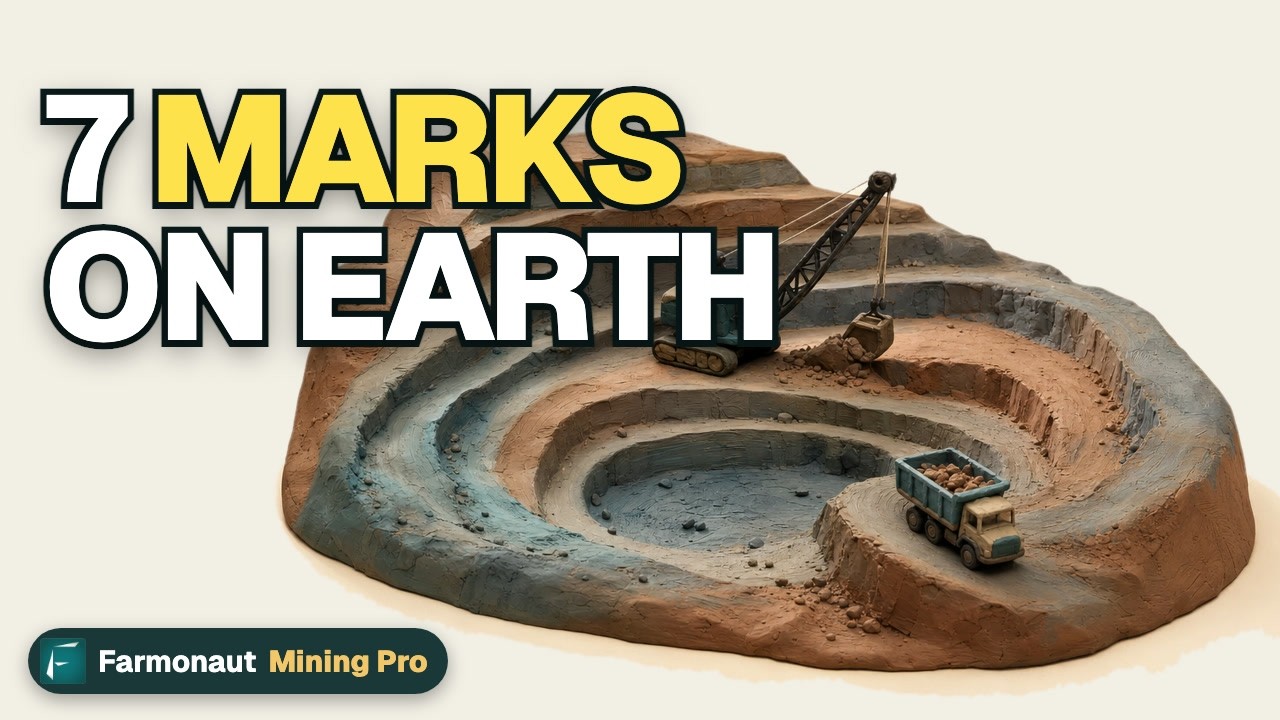
▶ Farmonaut’s video explains seven environmental impacts of mining, including effects on streams and land. · 2:31
What “consolidated” means in mining
A consolidated mine merges neighbouring claims, leases or small mines under one owner. The aim is to share one mill, one power supply and one water system across many deposits, which spreads fixed cost over more tonnes. Dahlonega’s 1898 company is a textbook case: six mines with their own mills (plus several other properties), and a plan to replace them with one very large plant. The risk is the same today as in 1906. If the combined ore does not grade high enough, a bigger plant only loses money faster.
Use the break-even calculator below to test the idea with your own numbers. It shows how grade, recovery, cost per tonne and the gold price decide whether a tonne of ore pays.
Calculator
Does a tonne of your ore pay?
Enter your own grade, recovery, cost and gold price.
- Gold recovered per tonne: 2.70 g
- Revenue per tonne: $347
- Break-even grade: 0.69 g/t
- Gold recovered per year: 43,403 oz
- Margin per year: $133,613,902
Example values only, not benchmarks and not a forecast. The gold price is an input: example, use today’s price. Grade is in grams per tonne (g/t), recovery is the share of gold the plant catches, and cost is the all-in cost to mine and process one tonne. One troy ounce is 31.1035 grams. At the US$21 per ounce quoted for the early 1900s, a gram was worth about 68 cents.
We cover a connected topic in Mount Morgan Mine: History, Cleanup and Gold Restart.
Frequently asked questions
Where is the Consolidated Gold Mine in Georgia?
It is at 185 Consolidated Gold Mine Road, Dahlonega, GA 30533, about one mile from historic downtown Dahlonega in Lumpkin County, in the north Georgia mountains.
How much does the Consolidated Gold Mine tour cost?
The mine lists US$24.95 for adults (13 and up) and US$15.95 for children aged 3 to 12, plus tax, with children aged 2 and under not charged. Prices were checked on 16 October 2026 and can change.
How long is the underground tour?
About 40 minutes, with tours leaving every 20 to 35 minutes. Add time for gold panning and any gem bucket.
What are the opening hours?
The mine is open 10 am to 5 pm every day, rain or shine. It is closed on Easter Sunday, Thanksgiving and Christmas Day, with shortened hours on Christmas Eve.
Is the Consolidated Gold Mine still operating as a mine?
No. The Dahlonega Consolidated company closed in 1906, and the site now runs as a tourist attraction with tours, panning and gem buckets.
Can you keep the gold you find panning?
Yes. The mine says gold from your sample pan is bottled for you to keep. The amount is usually small, since the pan is a lesson.
Is the tour suitable for wheelchairs or strollers?
No. The mine does not allow strollers, walkers or wheelchairs on the underground tour because entry is by stairs and ramps. They can be used in the shop, gem and panning areas.
Do I need to book in advance?
Not for parties under 25. Groups of 25 or more should book at least a week ahead to get the group rate.
When did the Georgia gold rush start?
Documented finds date to 1829, with the mine citing a discovery in 1828 near Dahlonega. The Dahlonega Mint opened in 1838, and the first rush faded as miners left for California after 1849.
How much gold came from the Dahlonega district?
One review of Appalachian gold puts the Dahlonega district at more than 500,000 troy ounces. That is a district figure, not a total for Georgia.
What does a gold mine “consolidated” company mean?
It means a company that merged several nearby mines or claims into one operation to share infrastructure and cut unit costs. Dahlonega Consolidated did this in the late 1890s.
Can I use satellite data to look for gold near old Georgia mines?
Satellite images can map rock alteration and structures near old workings and help rank places to sample. They do not show gold itself, and results are exploration targets that need field checks, sampling and drilling.
Not investment, legal or travel advice. Confirm prices, hours and land access with the operator, owner or regulator before acting.
This page is for information only. It is not investment, legal or travel advice. Confirm prices, hours and land access with the operator, landowner or regulator. When prospecting, get permission first, follow the rules for the land, and never use mercury.
Farmonaut mining
Map your mining site from space
Send a KML, KMZ or polygon of your licence area and get satellite-based exploration targets in 5 to 20 business days; targets are not a resource estimate.

Mining Pro sample view, synthetic data
Keep reading
Sources
- Consolidated Gold Mine, Underground Tours (prices, access, FAQ), checked October 2026: consolidatedgoldmine.com
- Consolidated Gold Mine, Our History: consolidatedgoldmine.com
- Consolidated Gold Mine, Gold Panning: consolidatedgoldmine.com
- Consolidated Gold Mine, Gemstone Mining: consolidatedgoldmine.com
- Consolidated Gold Mine, Frequently Asked Questions: consolidatedgoldmine.com
- Consolidated Gold Mine, home page (hours): consolidatedgoldmine.com
- Digital Library of Georgia, Georgia Gold History: dlg.usg.edu
- New Georgia Encyclopedia, Branch Mint at Dahlonega: georgiaencyclopedia.org
- New Georgia Encyclopedia, Georgia State Capitol: georgiaencyclopedia.org
- USGS, Lesure, Geochemical reconnaissance of the Carroll County Gold Belt and Dahlonega Gold Belt (MF-2213): pubs.usgs.gov
- James R. Craig, Appalachian Gold: Ore Mineralogy and Chemistry (OneMine): onemine.org
- USGS, Mineral Commodity Summaries 2026, Gold: pubs.usgs.gov
- Wikipedia, Dahlonega, Georgia: en.wikipedia.org
Discussion
Questions, corrections or field experience? Share them below. First-time comments are reviewed before they appear, and your email is never published.
No comments yet. Be the first to add a question or your experience.

 NTS Group (Pty) Ltd
 Mine4Africa
 Lithspo Minerals Limited
 Tintina Mining Group
 Dalgety Minerals Pty Ltd
 Vortex Minerals Pty Ltd
 Faith At Work (Pty) Ltd
 Geotech Mining Solutions plc
 Vulcan International Limited
 Kidepo Associates
 GKY Mining
 Alkimy SARL
 Double A Trading
 GemSprout Metals Limited
 Qader Group
 Ileys General Trading
 SG Gold Mining LLC
 VRV Global Pte Ltd
 Omsri International FZE
 G.I.T.T.
 Jaunita Erss Ltd
 Almosi SARL
 SRK Consulting
 Berks Gold Limited
 Mwerezi Minerals Company Limited











