

Copper smelters · Facility list
Copper Smelters in North America: List and Output
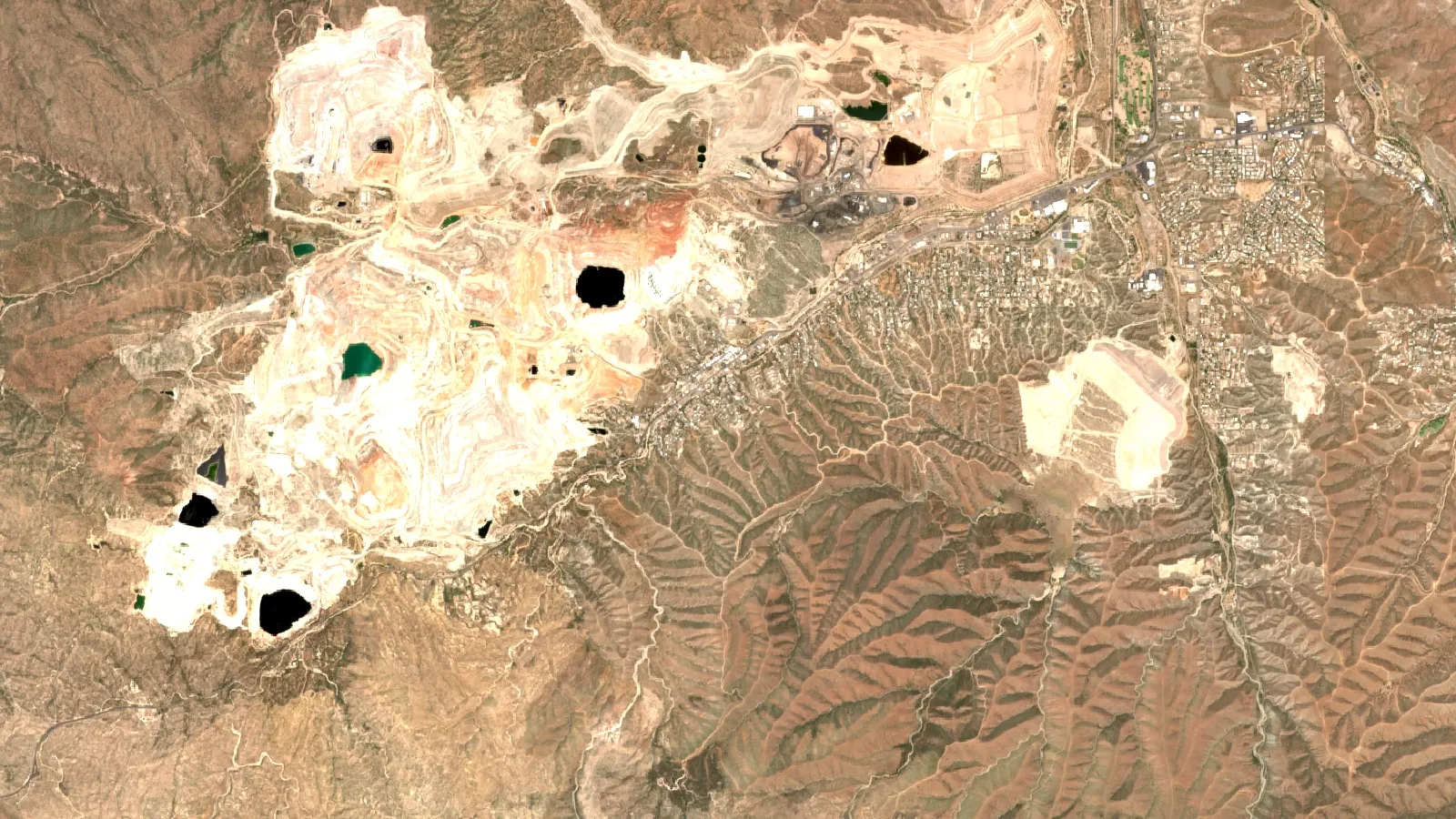
Four primary copper smelters run in North America: Miami (Arizona), Kennecott (Utah), Horne (Quebec) and La Caridad (Sonora). Hayden in Arizona is idle. Each owner’s latest filed output is below.
Key takeaways
- USGS counts 2 primary smelters in the US in 2025, and says planned maintenance at both cut US refined output by an estimated 9 percent (USGS, 2026).
- Miami smelted 821,200 t of concentrate and made 209,300 t of anode in 2025; La Caridad smelted 1,021.2 thousand t and made 272.7 thousand t of anode (Freeport and Southern Copper annual reports, 2025).
- Kennecott made 66,000 t of refined copper in nine months of 2026, down 31 percent, after a furnace breach in late June (Rio Tinto, 14 October 2026).
- Glencore calls Horne the only copper smelter in Canada; Quebec’s June 2026 law sets its emissions framework through 2033.
- The 2026 benchmark treatment and refining charge reported for Antofagasta was zero, against US$21.25 per tonne and 2.125 cents per pound for 2025 (Reuters, December 2025).
In this article
- North American copper smelters at a glance
- How we chose these smelters
- Copper smelters in the USA
- Copper smelters in Canada: the Horne smelter
- Copper smelters in Mexico: La Caridad and Empalme
- Why North America mines more copper than it refines
- How a copper smelter turns concentrate into anode
- Reading smelter numbers: concentrate, anode and cathode
- Outages and turnarounds: why smelter news moves copper supply
- Emission rules that decide smelter economics
- What miners pay a smelter: treatment and refining charges
- What smelter access means for exploration and mine planning
- Frequently asked questions
North America has a short list of working primary copper smelters. Two are in the United States (Freeport-McMoRan’s Miami smelter in Arizona and Rio Tinto’s Kennecott smelter in Utah), one is in Canada (Glencore’s Horne smelter in Quebec) and one large one is in Mexico (Southern Copper’s La Caridad smelter in Sonora). A fifth, ASARCO’s Hayden smelter in Arizona, is idle. The US Geological Survey (USGS, 2026) counts two primary smelters in the US, and the sections below give the latest figure each owner has filed.
A primary smelter melts copper concentrate (the powder a mine makes by flotation; the grade varies by mine, and the example calculator below uses 25 percent) into anodes, which a refinery then turns into cathode. It is different from a secondary smelter, which melts scrap. This page covers primary smelters, because that is where mine output meets the metal market.
North American copper smelters at a glance
The table lists every primary copper smelter that appears in a company filing, regulator document or USGS report opened for this page. Figures are the most recent each owner has published, and the year is shown with each one. Anode is the cast copper slab that leaves the smelter at roughly 99 percent purity.
Chart
Anode output at named smelters
Thousand tonnes of copper anode, latest year filed (Horne 2024; others 2025)
| Smelter | Owner and place | Status | Latest figure filed |
|---|---|---|---|
| Miami | Freeport-McMoRan, Arizona | Operating; major maintenance turnaround in 2025 | 821,200 t concentrate and 209,300 t anode (2025) |
| Kennecott | Rio Tinto, Utah | Operating; furnace rebuilt after a June 2026 breach | 66,000 t refined copper in nine months of 2026, down 31 percent |
| Horne | Glencore, Rouyn-Noranda, Quebec | Operating; emissions framework set by Quebec law in June 2026 | 147,940 t copper anodes (2024) |
| La Caridad | Southern Copper, Sonora, Mexico | Operating | 1,021,200 t concentrate and 272,700 t anode (2025) |
| Hayden | ASARCO, Arizona | Idle since 2019, per the 2025 report | No output; restart not scheduled |
| Empalme | Southern Copper, Sonora, Mexico | Under evaluation, not built | None |
The old San Luis Potosi smelter in Mexico is not on the list because Southern Copper’s annual report says the company closed it in 2010 and moved that feed to La Caridad.
How we chose these smelters
We counted a smelter only if a company filing, a regulator or the USGS describes it as a copper smelter that is running, idle or planned. We did not rank by size, because the owners report different things: Freeport reports concentrate and anode, Rio Tinto reports refined metal, and Glencore reports anode. Where a number is not on the same basis as another, the table says so. We left out nickel smelters that make copper only as a by-product in matte, and we left out secondary (scrap) smelters except where USGS counts them.
Capacity is often quoted differently from output. Capacity is what the furnace can take in a year; output is what it did take. Where an owner publishes both, the output is shown, because it is the measured number.
Copper smelters in the USA
The USGS Mineral Commodity Summaries (2026) report that the US recovered copper at 26 mines, 2 primary smelters, 2 secondary smelters, 2 primary electrolytic refineries and 14 electrowon refineries in 2025. The same report says US refined output fell by an estimated 9 percent in 2025 because of planned maintenance at both primary smelters. Copper was added to the US list of critical minerals in November 2025.
Chart
US mine and refinery output
Thousand tonnes of copper; 2025 is a USGS estimate
Miami smelter, Arizona
Freeport’s annual report for 2025 says the Miami smelter has run for more than 100 years and processes concentrate mostly from Freeport’s US mines. It smelted 821,200 tonnes of concentrate and made 209,300 tonnes of anode in 2025, against 840,600 and 214,000 tonnes in 2024. The anode goes to the company’s El Paso, Texas refinery. The smelter is also the largest source of sulfuric acid for Freeport’s US leaching operations, which shows how a smelter by-product feeds other mines. Freeport also records a 2025 turnaround (a planned shutdown for maintenance) that cost US$73 million in maintenance charges and idle costs.
Kennecott smelter, Utah
Rio Tinto’s third quarter operations review (14 October 2026) says a flash converting furnace breached in late June 2026. The rebuild took about 70 days and finished at the end of August, and the furnace has since returned to normal capacity. Kennecott made 12,000 tonnes of refined copper in the third quarter and 66,000 tonnes in the first nine months, 31 percent below the same period of 2025. Rio Tinto also notes that the third quarter of 2025 was weak because of a 45-day planned smelter shutdown.
Hayden smelter, Arizona
ASARCO’s Hayden smelter has been idle, per a 2025 report. In an interview published by GB Reports, ASARCO’s chief executive said the Hayden concentrator and smelter stay inactive while the company assesses how to resume operations, and that the Amarillo, Texas refinery restarts only after the smelter does. No restart date has been published in the sources we opened.
Copper smelters in Canada: the Horne smelter
Glencore describes Horne in Rouyn-Noranda, Quebec as the only copper smelter in Canada. It has operated since 1927, takes concentrate and recycled material from Glencore and third parties, and makes anodes of 99.1 percent copper. Those go to the CCR refinery in Montreal, which turns them into 99.99 percent cathode. Glencore reports 147,940 tonnes of anode from Horne in 2024.
The smelter’s main issue is emissions, not ore supply. Quebec passed Bill 11 in June 2026, which sets a stable framework through 2033 and extends the deadline for stricter arsenic standards. Glencore said it would gradually resume about C$300 million of environmental projects that had been paused for regulatory uncertainty. A Canadian mine that wants to smelt at home has one plant to deal with, so what happens at Horne matters to the whole country.
Copper smelters in Mexico: La Caridad and Empalme
Southern Copper’s 2025 annual report describes La Caridad as having an installed capacity of 1,000,000 tonnes of concentrate a year. In 2025 it smelted 1,021.2 thousand tonnes, up 3 percent on 2024, and made 272.7 thousand tonnes of anode averaging 99.48 percent copper, with smelter recovery of 96.31 percent. It also produced 1,053.8 thousand tonnes of sulfuric acid. It takes concentrate from the La Caridad, Buenavista, Santa Barbara and Charcas operations.
The same report lists the Empalme smelter among projects that could make Southern Copper a fully integrated producer, but it is a project under review, not a plant. We found no construction start in the filing.
Why North America mines more copper than it refines
Mines in all three countries produce more copper than the refineries make. The USGS world table for 2025 (estimates) shows the US mining 1,000 thousand tonnes against 850 thousand tonnes of total refinery output (primary and scrap; the chart above shows primary only, 790), Canada mining 500 against 320, and Mexico mining 690 against 480. USGS also reports that the US exported 340 thousand tonnes of concentrate in 2025 while importing 1,700 thousand tonnes of refined copper, and that net import reliance reached 57 percent of apparent consumption.
Chart
Mining versus refining
Thousand tonnes of copper, 2025 estimates; refinery includes primary and scrap-based output
Two things in the USGS data explain part of the gap: the US ships concentrate abroad, and its mines also feed 14 electrowon refineries, which make cathode by leaching rather than smelting. With so few smelters serving a large mining base, one outage, such as Kennecott’s in 2026, moves national output.
▶ Copper mining explained: why electric vehicles need copper and where it comes from. · 6:03
How a copper smelter turns concentrate into anode
The US EPA’s emission factor chapter on primary copper smelting describes the sequence. Concentrate is dried, melted in a furnace (flash and Noranda-type furnaces are two of the four types used in the US) to make matte, which is 35 to 65 percent copper, then blown in converters to remove iron and sulfur. Fire refining casts the result into anodes. Electrolytic refining, usually at a separate plant, makes cathode that is 99.95 to 99.96 percent pure.
Infographic
From concentrate to cathode in 5 steps
- 1Dry and feedConcentrate is dried and fed to the furnace with flux.
- 2Smelt to matteThe furnace melts it into matte, 35 to 65 percent copper.
- 3ConvertConverters blow out iron and sulfur to leave blister copper.
- 4Fire-refine and castThe copper is refined in a furnace and cast into anodes.
- 5Refine to cathodeElectrolysis makes cathode that is 99.95 percent pure or better.
The sulfur in the concentrate leaves as sulfur dioxide gas. Acid plants turn it into sulfuric acid, and EPA says a double-contact acid plant can remove up to 99.8 percent of the sulfur dioxide. That is why smelters are both a pollution source and a sulfuric acid supplier.
Reading smelter numbers: concentrate, anode and cathode
Three numbers are easy to mix up. Concentrate is the mine’s product and is weighed wet or dry. Anode is the smelter’s product. Cathode is the refinery’s product. A smelter’s anode weight is far lower than its concentrate weight because concentrate carries iron, sulfur and silica as well as copper.
Chart
Concentrate smelted at Miami
Thousand tonnes of concentrate per year
The filed figures also let us work out how much anode each tonne of concentrate gives. Miami made 209,300 tonnes of anode from 821,200 tonnes of concentrate in 2025, which is 25.5 percent. La Caridad made 272,700 tonnes from 1,021,200 tonnes, which is 26.7 percent. The ratio depends on the copper grade of the concentrate, so a higher ratio does not mean a better plant. It mostly tells you how rich the feed was.
Capacity and utilisation are separate again. La Caridad’s installed capacity is 1,000,000 tonnes a year and it smelted slightly more, so utilisation was about 102 percent. Miami’s report gives throughput but no capacity, so the same check cannot be made there from the filing.
Outages and turnarounds: why smelter news moves copper supply
Smelters run continuously and stop for scheduled rebuilds. Freeport says Miami needs a major maintenance turnaround about every three to four years, and the 2025 turnaround cost US$73 million in maintenance and idle costs. The USGS attributes the estimated 9 percent fall in US refined output in 2025 to planned maintenance at both primary smelters, which shows how much of US output depends on two plants.
Unplanned stops are different. Kennecott’s furnace breach in June 2026 cut cathode output in the third quarter, and Rio Tinto’s nine-month figure of 66,000 tonnes is 31 percent below 2025. For a buyer or a trader the useful question is whether the stop is a planned shutdown (a known length) or a failure (a rebuild estimate that can move).
Smelter news timeline, to
- March 2025: EPA announces it will reconsider the 2024 copper smelter air rule (Freeport annual report).
- 2025: Miami completes a major turnaround; Kennecott has a planned 45-day smelter shutdown in the third quarter (Rio Tinto).
- October 2025: a presidential proclamation exempts the Miami smelter from the rule’s compliance deadlines for two years (Freeport).
- November 2025: copper is added to the US list of critical minerals (USGS).
- December 2025: Antofagasta and a Chinese smelter agree zero treatment and refining charges for 2026 (Reuters via Mining.com).
- June 2026: Kennecott’s flash converting furnace breaches; Quebec passes Bill 11 for Horne.
- Late August 2026: Kennecott’s rebuild finishes; the furnace returns to normal capacity (Rio Tinto, 14 October 2026).
Emission rules that decide smelter economics
In 2024 the EPA amended its rule on hazardous air pollutants from primary copper smelters. Freeport’s annual report says the rule would affect Miami, that EPA announced in March 2025 it would reconsider it, and that an October 2025 presidential proclamation exempted the Miami smelter from the rule’s compliance deadlines for two years. Freeport says the cost of any changes could be significant once EPA proposes new terms.
In Canada the issue is arsenic around Horne, handled through Quebec’s June 2026 law. Smelter dust can contain arsenic, antimony, cadmium and lead, as the EPA chapter notes, so the controls are about dust capture as well as sulfur dioxide. Slag, the glassy by-product, is a separate waste stream: an EPA profile of the copper industry says primary copper slag is left to state requirements, not federal hazardous waste rules.
▶ The environmental impacts of mining, explained in clay with satellite maps. · 2:31
What miners pay a smelter: treatment and refining charges
A smelter earns money from treatment charges (TC, paid per tonne of concentrate) and refining charges (RC, paid per pound of copper). Reuters reported in December 2025 that Antofagasta and a Chinese smelter agreed 2026 terms of US$0 per tonne and 0 cents per pound, the lowest ever agreed in annual talks, compared with US$21.25 per tonne and 2.125 cents per pound for 2025. Reuters said outages at major mines tightened concentrate supply, which pushed spot processing fees below zero and left smelters earning less from processing.
The calculator below shows what a shipment of concentrate is worth to a mine after the smelter takes its charges. Contracts also pay for only part of the copper in the concentrate (the payable percentage) and can add penalties for impurities such as arsenic. The values are examples; replace them with the terms in your own contract.
Calculator
What is a concentrate shipment worth after smelter charges?
Enter your own shipment and contract terms.
- Value of payable copper (US$): $25,529,500
- Treatment charge paid (US$): $212,500
- Refining charge paid (US$): $113,021
- Net to the mine before freight (US$): $25,203,978
Example values only, not a benchmark. The treatment charge and refining charge defaults are the 2025 annual terms reported by Reuters (Mining.com, December 2025); the 2026 reported terms were zero. Payable percentage and price are examples: use your contract and today’s price. 1 tonne = 2,204.62 lb.
What smelter access means for exploration and mine planning
A mine that makes concentrate needs a buyer within reach, and in North America that means one of four plants or an export route. Consultants and licence owners should check which smelter would take the concentrate, whether it accepts the arsenic level, and how freight compares with the charges above. Our posts on copper deposit types and where to explore and on porphyry copper deposits, a deposit type that feeds smelters, give the geology side.
Farmonaut screens licence areas with Sentinel-2 and other satellite data and returns mineral zones as exploration targets in 5 to 20 business days, ahead of any resource estimate. You can read about satellite-based mineral detection, send a request through the mining query form, or contact the team.
▶ Remote sensing for mining explained in plain words. · 2:01
If this topic matters to you, read Mines in Brits, North West: Operators and Output next.
Frequently asked questions
How many copper smelters are there in the USA?
USGS counts two primary smelters operating in 2025, plus two secondary (scrap) smelters. The two primary plants are Freeport’s Miami smelter in Arizona and Rio Tinto’s Kennecott smelter in Utah.
Where are the copper smelters in Arizona?
Miami (Freeport-McMoRan) is operating. Hayden (ASARCO) is inactive, according to ASARCO’s chief executive in the GB Reports interview.
Is there a copper smelter in Canada?
Yes. Glencore says Horne, in Rouyn-Noranda, Quebec, is the only copper smelter in Canada. It made 147,940 tonnes of anode in 2024.
What is the biggest copper smelter in North America?
Measured by concentrate smelted in the latest filings, La Caridad in Sonora handled 1,021.2 thousand tonnes in 2025, more than Miami’s 821.2 thousand tonnes. Horne and Kennecott do not report on that basis, so a full ranking is not possible from filings alone.
Where does US copper concentrate go if there are so few smelters?
USGS reports US concentrate exports of 340 thousand tonnes in 2025. Some US copper is also made by leaching and electrowinning, which needs no smelter: USGS counts 14 electrowon refineries.
What does a copper smelter produce besides copper?
Sulfuric acid, slag, and precious metals that end up in anode slimes. La Caridad made 1,053.8 thousand tonnes of sulfuric acid in 2025, and Freeport’s Miami smelter supplies acid for its US leaching.
Why did Kennecott’s output fall?
A flash converting furnace breached in late June 2026. Rio Tinto says the rebuild finished at the end of August and the furnace is back at normal capacity, but nine-month refined output was 31 percent lower than a year earlier.
What are treatment and refining charges?
They are the fees a mine pays a smelter to process concentrate. The reported 2026 benchmark between Antofagasta and a Chinese smelter was zero, against US$21.25 per tonne and 2.125 cents per pound for 2025.
Is a new copper smelter planned in North America?
Southern Copper lists the Empalme smelter in Sonora as a project under review in its 2025 report. We found no construction start in the sources opened.
Does the EPA regulate copper smelter emissions?
Yes. The EPA amended its hazardous air pollutant rule for primary copper smelters in 2024 and is reconsidering it, and the Miami smelter was exempted from the compliance deadlines for two years in October 2025, according to Freeport’s annual report.
This page is for information only. It is not investment advice. It gives no share prices or targets. Smelter figures are the latest each owner has published and can change; check the company filings.
Farmonaut mining
Get a quote for your licence area
Mining consultants can request a quote to map a site from satellite data and receive exploration targets ahead of any resource estimate.
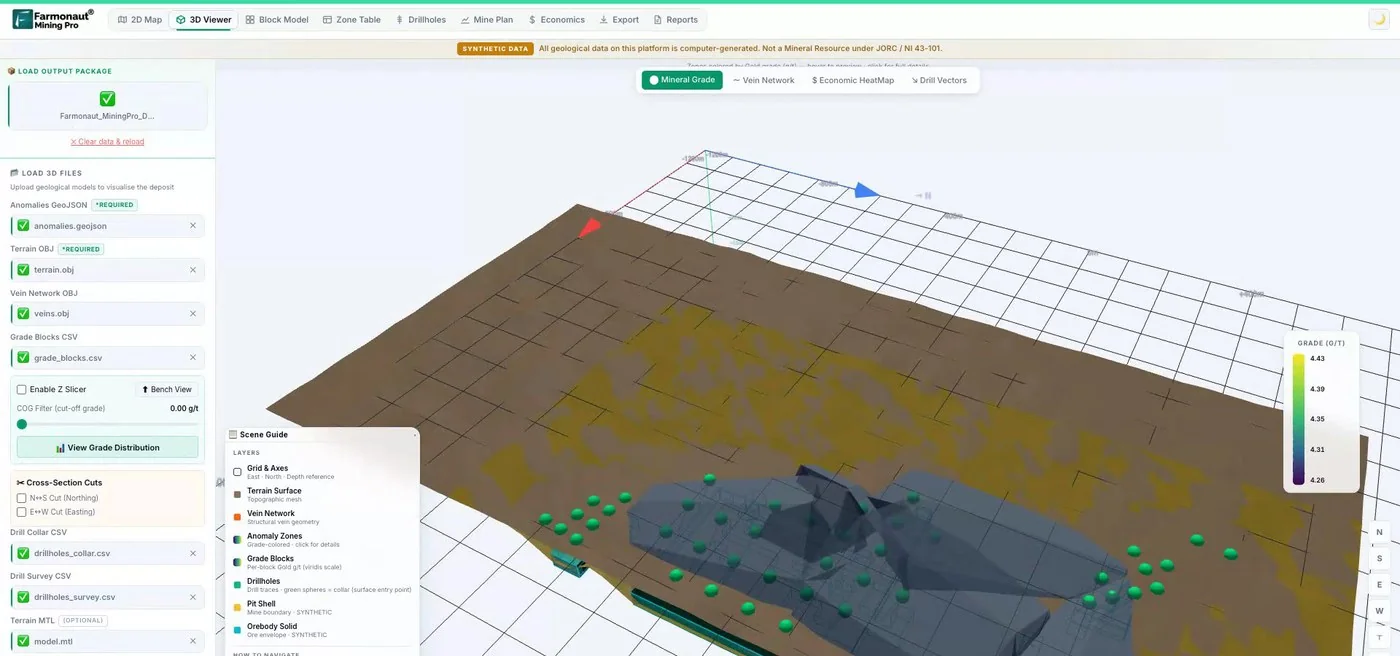
Mining Pro sample view, synthetic data
Keep reading
Sources
- USGS, Mineral Commodity Summaries 2026: Copper: pubs.usgs.gov
- Freeport-McMoRan, Annual Report on Form 10-K for 2025: s22.q4cdn.com
- Southern Copper, Annual Report on Form 10-K for 2025: southerncoppercorp.com
- Rio Tinto, Third quarter 2026 operations review (14 October 2026): sec.gov
- Glencore Canada, Copper (Horne smelter and CCR refinery): glencore.ca
- SMM, Quebec passes bill supporting Horne smelter operations (15 June 2026): news.metal.com
- GB Reports, ASARCO and Hudbay interviews (Western USA mining 2025): projects.gbreports.com
- Reuters via Mining.com, Antofagasta agrees zero copper processing charges for 2026 (19 December 2025): mining.com
- US EPA, AP-42 Section 12.3, Primary copper smelting: epa.gov
- US EPA, Copper industry profile (mineral processing wastes): archive.epa.gov
Discussion
Questions, corrections or field experience? Share them below. First-time comments are reviewed before they appear, and your email is never published.
No comments yet. Be the first to add a question or your experience.

 Congo Mining Solutions
 Mining SARL
 SenGold Invest SAS
 Sania Corporation
 Sean Mining Limited
 NTS Group (Pty) Ltd
 Mine4Africa
 Lithspo Minerals Limited
 Tintina Mining Group
 Dalgety Minerals Pty Ltd
 Vortex Minerals Pty Ltd
 Faith At Work (Pty) Ltd
 Geotech Mining Solutions plc
 Vulcan International Limited
 Kidepo Associates
 GKY Mining
 Alkimy SARL
 Double A Trading
 GemSprout Metals Limited
 Qader Group
 Ileys General Trading
 SG Gold Mining LLC
 VRV Global Pte Ltd










