

Gold processing · Comparison guide
Gold Extraction Methods Compared: Recovery and Cost
Gold extraction methods differ most in recovery and cost per tonne: heap leaching cost US$5.02/t at 72.3% recovery at DeLamar (technical report, December 2025), a carbon-in-leach plant US$17.62/t at 88.5% at Mt Todd (July 2025). Studies, a chart set and two calculators.
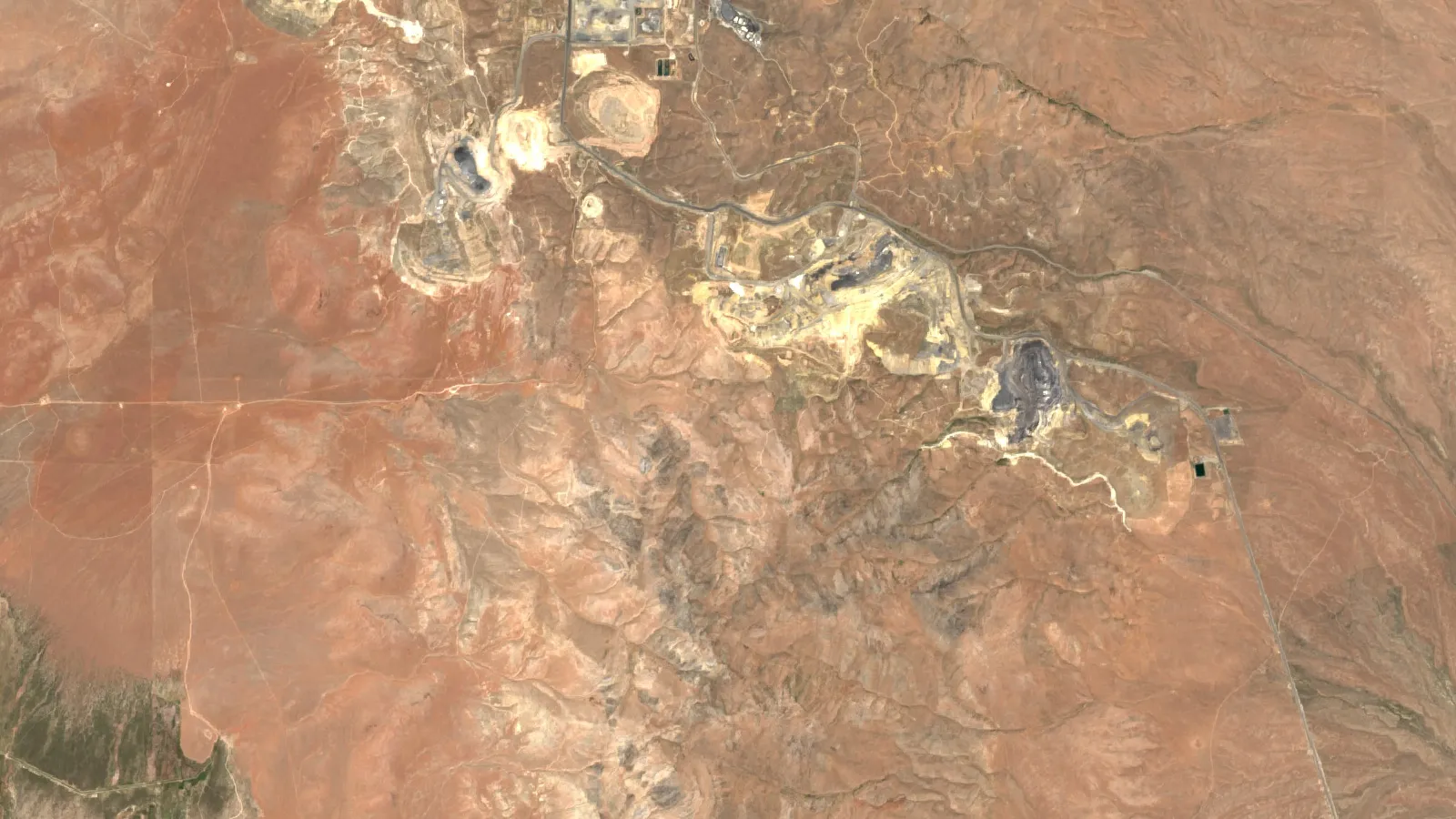
Key takeaways
- Heap leaching recovers about 60 to 80% of gold (EPA profile, 1994): 72.3% at DeLamar, Idaho, and 80.5% at Spring Valley, Nevada, in 2025 studies.
- Tank leaching (CIL or CIP) recovers 92 to 98% in the EPA profile; Essakane assumed 92.1% and Mt Todd 88.5% in recent studies, at US$17.62/t at Mt Todd (2025).
- Processing is about 45 to 48% of site operating cost in the DeLamar and Mt Todd studies, so mining and overheads matter as much as the plant.
- Finer crushing lifts heap recovery by 9 to 18 percentage points at Spring Valley and adds about 22% to process cost, so grade and price decide whether it pays.
- In situ leaching is experimental for gold (EPA, 1994). Small-scale miners can recover gold with gravity methods and no mercury (EPA).
In this article
- How we compared these gold extraction methods
- Gold extraction methods at a glance
- How much gold each method recovers
- Processing cost per tonne
- Heap leaching: lowest cost per tonne, lower recovery
- Tank leaching: carbon-in-leach and carbon-in-pulp
- Gravity separation: the low-cost first step
- Sulfide and refractory ore: flotation and oxidation
- In situ leaching: not a working option for gold
- Small-scale gold: recover gold without mercury
- How to choose a gold extraction method: 6 steps
- What is a tonne of your ore worth after processing?
- Is the higher-recovery route worth its extra cost?
- Where satellite data helps before you build a plant
The cheapest way to extract gold depends on the ore, and the cheapest method per tonne is rarely the cheapest per ounce. In recent project studies, heap leaching cost about US$5.02 per tonne to process and recovered 72.3% of the gold at DeLamar, Idaho (feasibility study technical report, effective 8 December 2025). A carbon-in-leach plant cost US$17.62 per tonne and recovered 88.5% at Mt Todd, Australia (feasibility study, July 2025). The right choice is the route that leaves the most margin on each tonne of ore, after mining, processing and overheads. This guide compares the main routes on recovery and cost, shows where each one fits, and gives two calculators so you can test your own grade, price and costs.
Terms used below. Grade is the amount of gold in the rock, in grams per tonne (g/t). Recovery is the share of that gold you actually capture. Head grade is the grade of ore going into the plant. Leaching means dissolving gold in a weak cyanide solution. Heap leaching stacks crushed ore on a lined pad and sprinkles solution over it. Tank leaching grinds the ore to a slurry and leaches it in tanks. Doré is the impure gold-silver bar a mine pours before refining. This page gives facts from filings and official sources. It is not engineering advice, and it is not investment advice.
How we compared these gold extraction methods
We used the US Environmental Protection Agency’s industry profile of gold mining for the way each method works, and recent public technical studies for recovery and cost: DeLamar (Idaho), Spring Valley (Nevada), Mt Todd (Northern Territory, Australia), Copperstone (Arizona), Madsen (Ontario, Canada) and Essakane (Burkina Faso). Each figure carries its own date, because costs and prices move. Two limits apply. First, every project has its own grade, rock hardness and location, so a cost from one site is not a price list for another. Second, studies report different cost items. Where a figure is per short ton (2,000 pounds) we say so, and we convert to metric tonnes only where we show a chart. Dollars are US dollars unless a line says Canadian (C$).
Gold extraction methods at a glance
In the United States, cyanide leaching produced about 90% of lode gold in 1991 (EPA profile), and a gravity step often comes first. The table below puts the main routes side by side with the figures from the sources below.
| Method | Recovery in sources | Processing cost in sources | Best fit | Main limit |
|---|---|---|---|---|
| Gravity concentration | 82.3% of gold in one preliminary test of a single sample (Rosebud, Arizona, 2026) | Not costed on its own in the studies here | Coarse native gold, placers, first step in a mill | Fine gold and gold locked in sulfides pass through |
| Heap leaching | 60 to 80% (EPA profile, 1994); 72.3% (DeLamar); 80.5% (Spring Valley) | US$5.02/t (DeLamar); US$3.23 per short ton of crushed ore (Spring Valley reserve case) | Low-grade oxide ore in large tonnages | Lower and slower recovery |
| Tank leaching (CIL or CIP) | 92 to 98% (EPA profile, 1994); 92.1% (Essakane); 88.5% (Mt Todd) | US$17.62/t (Mt Todd) | Ground ore, higher grades, tight recovery targets | Needs grinding, tanks and a larger plant |
| Gravity plus carbon-in-pulp | 95.7% (Madsen) | C$75.25/t at 800 t/d (Madsen) | Small, high-grade underground operations | High cost per tonne at small scale |
| Flotation plus cyanide leach | 96% (Copperstone) | US$23.79/t (Copperstone) | Gold hosted in sulfide minerals | Two circuits to run |
| Oxidation before leaching (pressure oxidation, roasting, biooxidation) | Depends on the ore | Gap between the three under US$7/t in a 1990 comparison | Refractory sulfide ore | Extra plant, extra permits |
| In situ leaching | Not used commercially for gold (EPA, 1994) | Not applicable | None today | Experimental only |
Sources for every cell are in the sections that follow. Read the recovery and cost columns together: a method with a lower cost and a lower recovery can still win on a low-grade, large-tonnage ore, and lose on a high-grade one.
How much gold each method recovers
Recovery is the number that most changes the answer. The EPA’s profile of the industry puts heap and valley-fill leaching at 60 to 80% recovery, and tank methods at 92 to 98% (EPA, 1994; the ranges are old, so recent studies are shown beside them). In the studies below, a heap leach recovers 67 to 81% of the gold and tank or mill circuits reach 88 to 96%.
Chart
Gold recovery assumed in published project studies
Life-of-mine average recovery, % of gold in ore; method in label
The gap shows up inside a single mine. The feasibility study for Essakane, a Burkina Faso mine, assumed a 92.1% average recovery for the carbon-in-leach plant and 67.0% for a later heap leach, up from 55.0% after a redesign that adds high-pressure grinding rolls, agglomeration and a longer leach (study effective 6 November 2019). Agglomeration means sticking fine particles into larger lumps so solution can pass through the heap.
Ore type matters as much as method. Cyanide leaching recovers less gold from sulfide ores than from oxide ores and costs more, because the cyanide reacts with other minerals, and sulfide ore may need extra oxidation steps, according to the same EPA profile.
Processing cost per tonne
Processing is only part of the bill. At DeLamar, the technical report lists mining at US$3.95, processing at US$5.02 and general and administrative costs at US$1.54 per tonne of ore, a total of US$10.52. At Mt Todd, cash costs over the life of the mine total US$39.20 per tonne, of which processing is US$17.62, mining US$16.55, administration US$2.09, royalties US$2.81 and refining US$0.14. Processing is therefore close to half of site cost in both studies, at about 48% and 45% respectively. A 10% cut in plant cost trims the site bill by only about 5%, so mining, power and haul distance matter as much.
Chart
Higher recovery usually costs more per tonne
Five studies; Spring Valley converted from short tons (life-of-mine recovery, crushed-ore cost); Madsen converted from C$ at the 1.4 rate in its release; Spring Valley pairs the blended 80.5% recovery with the crushed-ore cost
The scatter chart shows five studies. Higher recovery tends to come with a higher cost per tonne, but scale and grade shift every point. Madsen sits far up the cost axis because it treats only about 800 tonnes a day from an underground mine.
A word on cost labels. Cash cost counts the money spent to mine, process and sell gold. All-in sustaining cost (AISC) adds the capital needed to keep the mine running. Companies define AISC with small differences, for example in whether head-office overheads and exploration are included, so two reports may not match. Compare cost per tonne only with the same grade and the same list of items.
Heap leaching: lowest cost per tonne, lower recovery
Heap leaching is the lowest-cost route in the studies. The EPA notes that it has simpler design, lower capital and operating costs, and shorter start-up times than tank leaching, and heaps are usually built from lower-grade oxidized ore. In 1991 in the United States, heap leaching treated about 36% of all gold ore and produced about 33% of the gold, while tank leaching treated about 14% of the ore and produced about 56% (EPA Table 1-5; 1991 figures).
Chart
Crushing lifts heap leach recovery most in sulfide ore
Spring Valley design recovery, % of contained gold, by ore type
Crush size is the main lever. Spring Valley, a Nevada heap leach project, designs 88% recovery of the gold in crushed oxide ore against 79% for run-of-mine oxide, and 74% against 56% for sulfide ore (feasibility study; reserve effective 3 September 2024). The reserve case assumes process costs of US$2.65 per short ton for run-of-mine ore and US$3.23 for crushed ore, so crushing adds about 22% to the cost and recovers 9 to 18 percentage points more gold. Whether that pays depends on grade and price, which is what the second calculator below tests. Our guide to rock crushing in mining covers the equipment side.
Best for: large tonnages of low-grade oxide ore, such as the 0.016 ounces per short ton (about 0.55 g/t) average at Spring Valley. Watch for: clay and fine material that blocks solution flow, and ore with sulfides.
Tank leaching: carbon-in-leach and carbon-in-pulp
Tank leaching grinds the ore to a fine slurry and dissolves the gold in agitated tanks. Activated carbon then captures the gold from solution. In carbon-in-pulp (CIP), the slurry leaches in a first set of tanks and carbon works in a second set. In carbon-in-leach (CIL), leaching and carbon capture happen in the same tanks, as the EPA profile explains. The carbon is stripped and the gold is recovered by electrowinning or zinc precipitation.
The Mt Todd study uses a three-stage crush, a single-stage sort, two-stage grinding and carbon-in-leach. It assumes 88.5% recovery from ore averaging 0.97 g/t over the life of the mine, with an all-in sustaining cost of US$1,499 per ounce, using a US$2,500 gold price in its base case. The plant treats 15,000 tonnes a day. It is a good example of a tank plant on a low-grade, large-scale ore, where grinding cost is accepted in return for higher recovery.
Best for: ore that must be ground fine to release the gold, higher-grade ore, and sites where each percentage point of recovery is worth more than the extra plant cost. Watch for: power and grinding cost, and a tailings facility that must be built and monitored.

▶ Follows a gold nugget from rock to ring: drilling, crushing, dissolving, catching on carbon, melting and refining. · 5:27
Gravity separation: the low-cost first step
Gold is very dense, about 19.3 times the density of water against 2.8 to 4.0 for typical host rock, so it separates readily by gravity (ALS laboratory guidance). In an industrial mill the gravity unit usually sits in the grinding circuit and treats the cyclone underflow or the mill discharge. A gravity recoverable gold (GRG) test grinds a 50 to 100 kg sample through a centrifugal concentrator at three grind sizes and shows how much gold gravity could capture. ALS also warns that small laboratory tests usually show higher recovery than a full-scale plant.
Results vary widely by ore. In one preliminary test on a 12.52 g/t master composite from the Rosebud property in Arizona, 82.3% of the gold reported to the gravity concentrate, and gravity plus rougher flotation reached 93.5% (company release, 2 September 2026; one sample, so treat it as a screening result). At Madsen, the pre-feasibility study pairs gravity concentration of the mill circuit with carbon-in-pulp and averages 95.7% recovery from ore at 8.16 g/t (effective 7 January 2025).
Best for: coarse native gold, placer deposits, and as a first step that catches coarse gold before leaching. Watch for: gold that is fine or locked in sulfides, which gravity will not catch. We cover the equipment in more detail in our guides to ore gravity separation methods and gravity separation methods for gold ores.
Sulfide and refractory ore: flotation and oxidation
Refractory ore is ore from which cyanide alone recovers little gold, usually because the gold is locked in sulfide minerals such as pyrite or arsenopyrite. The usual answer is to oxidize the sulfides first, by pressure oxidation (an autoclave), roasting, or biooxidation (bacteria that break down sulfides). An older SME comparison found that bacterial oxidation usually had the lowest overall cost and pressure oxidation the highest, with differences under US$7 per tonne, and that flotation before oxidation saved US$10 to 13 per tonne of ore (Litz and others, 1990, in 1990 dollars). A later conference paper reports that biooxidation capital cost could be a fraction of a pressure-oxidation plant or roaster and operating cost as low as one third, depending on the method (Lee, 2016). Both are decades old, so use them to see the direction of the trade-off, not to price a project.
Flotation is often the first move: it separates the sulfide minerals that carry the gold into a small concentrate, so the costly oxidation step treats a fraction of the ore. The Copperstone pre-feasibility study (Arizona, May 2026) plans crushing, grinding, flotation and cyanide leaching, with 96% recovery at US$23.79 per tonne on ore averaging 4.87 g/t.
Best for: sulfide-hosted gold where a straight leach recovers too little. Watch for: arsenic and sulfur dioxide handling, and the added permitting a roaster or autoclave brings.
In situ leaching: not a working option for gold
Some older guides list in situ leaching, which dissolves gold underground without mining the ore, as an emerging low-cost method. The EPA’s profile says in situ leaching is common in copper but only experimental for gold and not used in commercial operations (1994). None of the recent studies we opened uses it for gold. The technique that does exist at scale for other metals is covered in our guide to in situ leach mining.
Small-scale gold: recover gold without mercury
Many small operations still use mercury. It poisons the people who handle and burn it, and the Minamata Convention asks countries to cut and, where feasible, end its use in this sector. The US EPA notes that gold can be recovered safely and economically without mercury, and lists panning, sluicing, shaking tables, spiral concentrators, vortex concentrators and centrifuges as gravity options, alongside magnets, flotation and direct smelting. Ore must be crushed or milled to a consistent grain size first, because most of these methods depend on gold’s density.
A practical order for a small operator: crush and size the material, concentrate by gravity, then have the concentrate assayed or sold to a licensed buyer or refinery. Do not use mercury, and do not attempt cyanide leaching without a licence, training and the permits your regulator requires. Large operators that use cyanide can join the Cyanide Code, a voluntary programme with independent audits every three years, which more than 240 companies have signed.
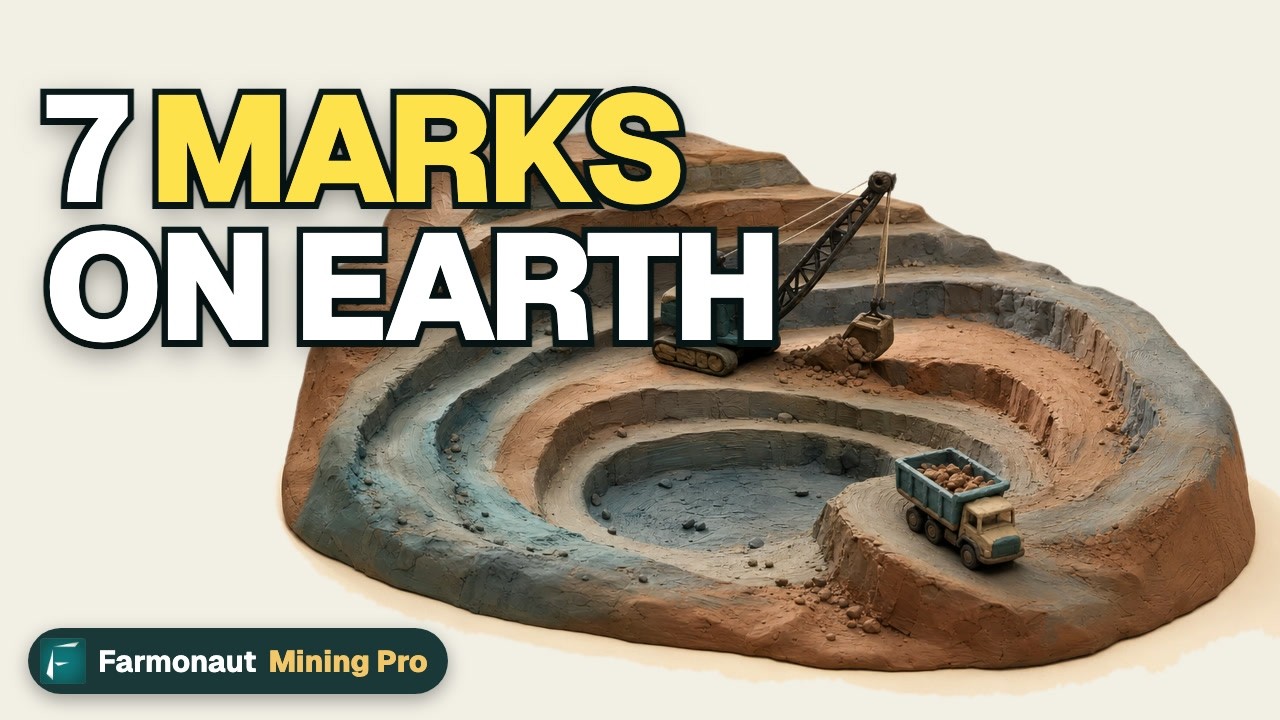
▶ Explains the seven environmental impacts of mining in plain words, with satellite maps. · 2:31
How to choose a gold extraction method: 6 steps
This order works for most projects, from a junior explorer with drill core to a small mill owner.
- Characterise the ore. Get assays for gold and for sulfur, arsenic, carbon and copper. Ask a laboratory to describe how the gold occurs: as native gold, in sulfides, or in quartz.
- Run a gravity recoverable gold test. It shows how much gold gravity can capture and whether a gravity circuit is worth building.
- Run leach tests. Bottle-roll tests on ground ore, and column tests on crushed ore for a heap, show recovery and cyanide use.
- Test crush or grind size. Spring Valley shows that finer feed recovers more but costs more. Find the size where the extra gold pays for the extra cost.
- Compare margin per tonne. Use the calculators below with your own grade, recovery, price and costs, and look at the break-even grade for each route.
- Check permits and tailings. Water, cyanide management, tailings storage and closure bonds can decide the route before cost does.
What is a tonne of your ore worth after processing?
Enter your grade, expected recovery, gold price and costs. The result is the margin per tonne before tax and sustaining capital (royalties are inside the last cost line), and the break-even head grade, below which a tonne loses money on these inputs.
Calculator
What margin does a tonne of your ore leave?
Enter your own grade, recovery, price and costs.
- Revenue per tonne of ore: $85
- Total cost per tonne of ore: $39
- Break-even head grade (g/t): 0.46
Example values only, not a benchmark. Defaults are rounded from the Mt Todd study (88.5% recovery, US$17.62/t processing, about US$21.6/t for mining, administration, royalties and refining; Vista Gold, 2025) with an example grade and price. Price is an input: example, use today’s price. Result is before tax, sustaining capital and overheads not listed; 31.1035 grams = 1 troy ounce.
Is the higher-recovery route worth its extra cost?
The second calculator compares two routes on the same ore. Route A is the cheaper one, for example a heap leach, and Route B the one with higher recovery and cost, for example a mill. The defaults are rounded from the DeLamar and Mt Todd studies, but they are different deposits, so treat them as an illustration.
Calculator
Does the higher-recovery route pay for itself?
Route A is the cheaper route, Route B recovers more; enter your numbers.
- Extra gold recovered per tonne (g): 0.16
- Extra processing cost per tonne: $13
- Break-even grade for Route B (g/t): 0.82
Example values only, not a benchmark. Defaults are rounded from the DeLamar heap leach (72.3%, US$5.02/t) and Mt Todd carbon-in-leach (88.5%, US$17.62/t) studies, which are different deposits. Price is an input: example, use today’s price. Mining and overhead costs are assumed equal for both routes and left out.
Where satellite data helps before you build a plant
The process route is chosen after the ore is understood, and the ore is understood after the ground is explored. Satellites cannot see gold. They map surface minerals that often travel with it, such as iron oxides and clays, and show faults, which helps decide where to sample. Farmonaut turns a licence boundary (KML, KMZ or polygon) into satellite-derived exploration targets ahead of any resource estimate. Your recovery test results still come from the laboratory. For place-based context, see our pages on satellite gold exploration in the United States, gold deposits in Nevada and the active gold mine regions of the USA. The USGS estimates that Nevada produced about 64% of US mined gold in 2025 (Mineral Commodity Summaries, 2026), so many US heap leach and mill decisions are made there.

▶ Explains how satellites map the rock around gold, such as iron stains, clay minerals and long cracks, since they cannot see gold itself. · 4:25
If you read company reports to follow producers, the cost lines above are the ones to look for, and our overview of gold mining stocks explains how listed producers report them. A companion article on a second, case-based look at cost-effective gold extraction takes a case-by-case view.
We cover a connected topic in Best Strip Mining Technique: 5 Methods Compared.
For a closer look at a related question, see our guide: Pilbara Mine Rehabilitation: 7 Methods and the Data.
Frequently asked questions
What is the cheapest way to extract gold from ore?
Heap leaching has the lowest processing cost per tonne in the studies we reviewed, at US$5.02 per tonne at DeLamar (technical report, December 2025). It suits low-grade oxide ore. It also recovers less gold, so the cheapest route per ounce depends on grade and price.
What are the main methods of gold extraction?
Gravity concentration, heap leaching, tank leaching (carbon-in-leach or carbon-in-pulp), flotation, and oxidation before leaching for refractory ore. Most hard-rock mines combine two or three of them in one flowsheet.
How much gold does heap leaching recover?
The EPA profile gives 60 to 80% (1994). Recent studies fall in that range: 72.3% at DeLamar and 80.5% at Spring Valley. Crushing the ore finer raises recovery, at higher cost.
What is the difference between CIL and CIP?
Both leach ground ore in tanks and capture the dissolved gold on activated carbon. In CIP the leaching and the carbon adsorption happen in separate sets of tanks. In CIL they happen in the same tanks.
Is gravity separation enough to recover gold on its own?
Only for ore where most of the gold is coarse and liberated, such as many placer deposits. A GRG test shows how much a given ore gives up to gravity. Where the gold is fine or in sulfides, a leach or flotation step follows.
How can small-scale miners recover gold without mercury?
The EPA lists gravity methods that need no mercury: panning, sluicing, shaking tables, spiral and vortex concentrators and centrifuges. Crush and size the material first. Never use mercury, and get the permits your regulator requires.
What is refractory gold ore?
It is ore where the gold is locked in minerals, usually sulfides, so direct cyanide leaching recovers little. It needs flotation, oxidation or both before leaching, which raises cost.
Can gold be extracted by in situ leaching?
Not commercially. The EPA’s industry profile calls in situ leaching experimental for gold. It is used for other metals.
Does a lower cost per tonne always mean a cheaper ounce?
No. Cost per ounce depends on grade and recovery as well. A route that costs more per tonne but recovers 16 more percentage points (the calculator default, 72% to 88%) can leave a higher margin, as the second calculator shows.
How do I find out which method suits my ore?
Run laboratory tests on a representative sample: assay, mineralogy, a GRG test, and bottle-roll or column leach tests. Compare the results with the cost of each route using your own grade and price.
What does safe cyanide management involve?
It means lined and monitored storage, trained staff, emergency plans and tailings control, with the permits your regulator requires. The Cyanide Code audits signatory operations every three years.
This page is for information only. It is not investment advice or engineering advice. Study figures come from company releases and change with price, ore and site. Get the landholder’s permission and the permits your regulator requires before you sample or process ore, stay out of old workings, and never use mercury. Cyanide must only be handled under licence, with training.
Farmonaut mining
Get a quote for satellite exploration of your licence
Send your licence boundary and target mineral, and Farmonaut will quote a satellite-derived exploration report to help you choose where to sample first.
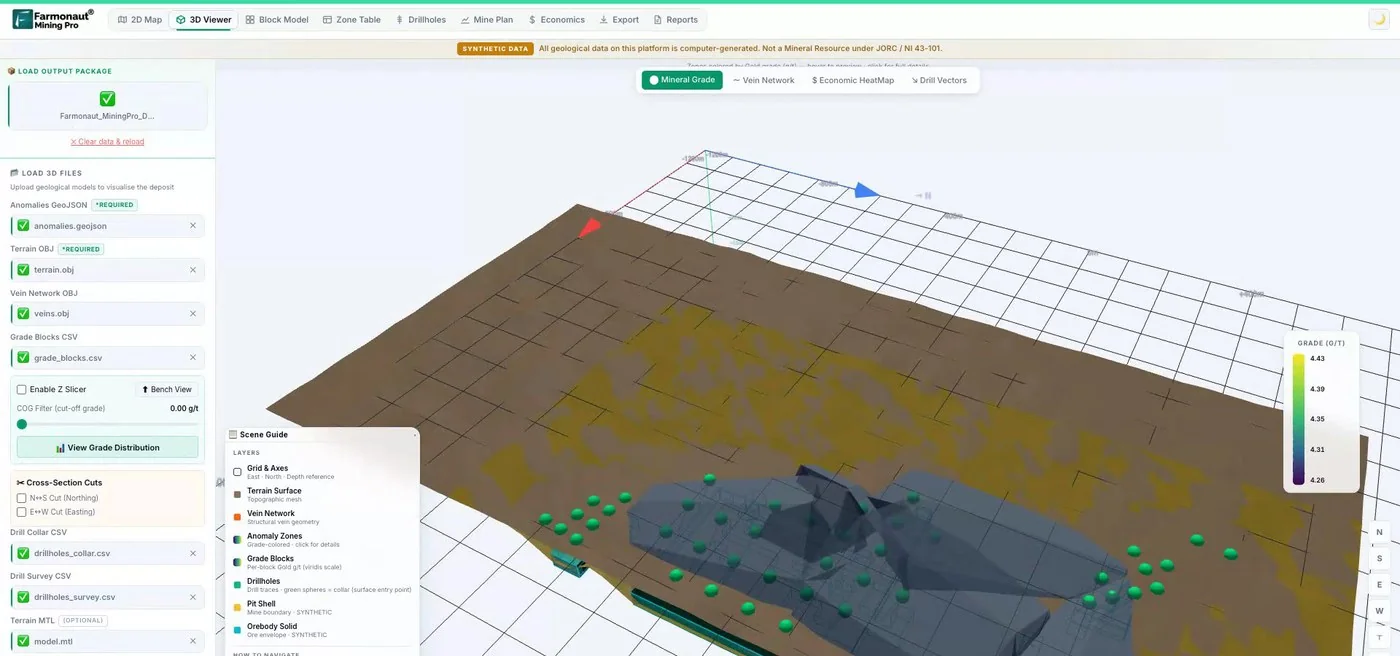
Mining Pro sample view, synthetic data
Keep reading
Sources
- US EPA, Technical Resource Document: Extraction and Beneficiation of Ores and Minerals, Volume 2: Gold (1994): archive.epa.gov
- US EPA, Artisanal and Small-Scale Gold Mining Without Mercury: 19january2025snapshot.epa.gov
- Integra Resources, DeLamar Feasibility Study and Technical Report (Forte Dynamics; effective 8 December 2025, issued 2 February 2026): minedocs.com
- Vista Gold, Mt Todd 15,000 tpd Feasibility Study results (July 2025): nasdaq.com
- Solidus Resources, Spring Valley 2025 Feasibility Study: solidus-resources.com
- Minera Alamos, Copperstone Pre-Feasibility Study (27 May 2026): theglobeandmail.com
- West Red Lake Gold, Madsen Pre-Feasibility Study (7 January 2025): westredlakegold.com
- IAMGOLD, Essakane CIL and Heap Leach Feasibility Study (effective 6 November 2019): newsfilecorp.com
- Kingman Minerals, Rosebud metallurgical results (2 September 2026): webull.com
- ALS Metallurgy, Gravity gold recovery: alsglobal.com
- Litz, Carter and Kenney, Refractory Gold Treatment Options (SME, 1990): onemine.org
- Lee, Economic evaluation of biooxidation of gold ores (IMPC, 2016): experts.arizona.edu
- The Cyanide Code, About the Cyanide Code: cyanidecode.org
- USGS, Mineral Commodity Summaries 2026: Gold (February 2026): pubs.usgs.gov
Discussion
Questions, corrections or field experience? Share them below. First-time comments are reviewed before they appear, and your email is never published.
No comments yet. Be the first to add a question or your experience.

 Jaunita Erss Ltd
 Almosi SARL
 SRK Consulting
 Berks Gold Limited
 Mwerezi Minerals Company Limited
 Mining SARL
 SenGold Invest SAS
 Sean Mining Limited
 NTS Group (Pty) Ltd
 Mine4Africa
 Lithspo Minerals Limited
 Tintina Mining Group
 Dalgety Minerals Pty Ltd
 Vortex Minerals Pty Ltd
 Faith At Work (Pty) Ltd
 Licence holder · Nigeria · Gold + lithium










