

Praseodymium and neodymium · Price guide
Praseodymium Neodymium Alloy Price: Oxide to Metal Cost
SMM quoted Pr-Nd alloy near US$134 per kg and Pr-Nd oxide near US$110 per kg on 30 September 2026. The gap covers oxygen removed in conversion, power and losses. Check the tax basis of each quote.
Key takeaways
- SMM quoted Pr-Nd oxide at 738,000 to 741,000 yuan per tonne and Pr-Nd alloy at 895,000 to 900,000 yuan per tonne on 30 September 2026, about US$110 and US$134 per kg at 6.69 yuan per dollar.
- A kilogram of 75% Nd, 25% Pr metal needs about 1.18 kg of oxide by atomic-mass arithmetic; MP Materials uses 1.25 in its reporting from the first quarter of 2026.
- USGS 2025 estimates: praseodymium oxide US$74, neodymium oxide US$73 and NdPr oxide US$69 per kg, down from US$128, US$134 and US$124 in 2022 (USGS, 2026).
- SMM’s alloy quote includes 13% VAT and is delivered to works in China, so compare it with an oxide quote on the same tax basis and date.
- Natural Resources Canada puts neodymium at 36% and praseodymium at 7% of rare earth demand in 2024, with magnets the largest use at 47.6%.
In this article
- Praseodymium and neodymium prices side by side
- Praseodymium neodymium alloy price against the oxide price
- How oxide becomes alloy and what it costs
- How to check an alloy quote step by step
- Why praseodymium and neodymium are priced as a pair
- Which Pr-Nd quote is which: a reading guide
- Price swings from peak to trough
- What moves Pr-Nd prices at the moment
- Who supplies praseodymium and neodymium
- Worked example: pricing a 10-tonne alloy order
- From alloy to magnet: what the metal costs in a motor
- Praseodymium mining and where the pair comes from
- Where satellite data fits in rare earth exploration
- Frequently asked questions
The price of praseodymium-neodymium (Pr-Nd) alloy depends on three things: the Pr-Nd oxide it is made from, a conversion step, and the tax basis of the quote. On 30 September 2026 the Shanghai Metals Market (SMM) quoted Pr-Nd oxide at 738,000 to 741,000 yuan per tonne and Pr-Nd alloy at 895,000 to 900,000 yuan per tonne, delivered to works in China. At the 6.69 yuan per US dollar rate shown by Trading Economics on 15 October 2026, that is about US$110 per kg for the oxide and about US$134 per kg for the alloy (approximate, because we applied the October rate to the September quotes) (SMM weekly review, 30 September 2026).
This page is about the step between those two numbers, and about how praseodymium (Pr) and neodymium (Nd) are priced alone and as a pair. It is written for buyers of alloy, magnet makers, traders and anyone checking a supplier quote. For the oxide price history, the China and ex-China split and the US price floor, see our guide to the neodymium price per kg. Prices change daily and this page is not a price feed. Always confirm a live quote with the publisher or your supplier.
Terms used below. An oxide is the powder a separation plant makes from rare earth ore, for example Nd2O3 or Pr6O11. Pr-Nd or NdPr means a blend of the two. Alloy or metal means the oxide has been reduced to metal, the form magnet makers melt into magnet alloy. VAT is value-added tax. A tonne is 1,000 kg.
Praseodymium and neodymium prices side by side
The US Geological Survey (USGS) lists praseodymium oxide, neodymium oxide and the NdPr blend on one table, with annual average prices in US dollars per kg taken from Argus Media. The figures below are annual averages in FOB terms (price at the port of loading, before sea freight); 2025 is an estimate (USGS Mineral Commodity Summaries 2026, Rare Earths).
Chart
Average oxide prices, US$ per kg
Annual averages; Pr oxide 99.99%, Nd oxide 99.5%, NdPr oxide 99%; 2025 is an estimate
| Product | 2021 | 2022 | 2023 | 2024 | 2025 (estimate) |
|---|---|---|---|---|---|
| Praseodymium oxide, 99.99% min | US$93 | US$128 | US$76 | US$56 | US$74 |
| Neodymium oxide, 99.5% min | US$98 | US$134 | US$78 | US$56 | US$73 |
| NdPr oxide, 99% min | US$92 | US$124 | US$75 | US$55 | US$69 |
Three points stand out. First, the three series move together. A buyer who watches one of them sees the direction of the others. Second, praseodymium oxide sold for slightly less than neodymium oxide in 2021 and 2022, matched it in 2024, and averaged US$1 more in the 2025 estimate. Third, the blend sits a few dollars below both single oxides in every year. That is partly a purity effect: the single oxides are quoted at higher minimum purity (99.99% for Pr, 99.5% for Nd) than the 99% blend, so the three are not strictly like for like.
The USGS does not publish a price for pure neodymium metal or pure praseodymium metal. SMM does publish a daily neodymium metal price (Nd 99.0% minimum, delivered to works in China, 13% VAT included) as well as the Pr-Nd alloy price covered below.
Praseodymium neodymium alloy price against the oxide price
SMM defines its Pr-Nd alloy as metal with at least 99% rare earth content, praseodymium at 25 plus or minus 2% and neodymium at 75 plus or minus 2%, delivered to works in China, with 13% VAT included in the original price and no tax rebate (SMM Pr-Nd alloy price page). The oxide it is made from is quoted separately. The two SMM quotes for the week to 30 September 2026 were:
Chart
Oxide cost inside 1 kg of Pr-Nd alloy
US$ per kg, SMM midpoints for 30 September 2026 at 6.69 yuan per dollar; oxide cost uses 1.18 kg per kg
| Product (SMM) | Yuan per tonne | Midpoint in US$ per kg at 6.69 |
|---|---|---|
| Pr-Nd oxide | 738,000 to 741,000 | about 110 |
| Pr-Nd alloy (metal), incl. 13% VAT | 895,000 to 900,000 | about 134 |
The alloy quote is about 21% above the oxide quote. That does not mean the metal producer earns a 21% margin. Making a kilogram of alloy consumes more than a kilogram of oxide, because the oxide contains oxygen that is removed in the process. For a 75% Nd and 25% Pr blend the oxide needed is about 1.18 kg per kg of metal. We calculated this from atomic masses (Nd2O3 needs about 1.166 kg of oxide per kg of Nd, Pr6O11 about 1.208 kg per kg of Pr), so it is an arithmetic minimum before any process loss. Multiplying the US$110 oxide midpoint by 1.18 gives about US$130 of oxide inside each kilogram of alloy, against an alloy quote of about US$134.
That leaves a gross spread of about US$4 per kg to cover power, labour, electrodes, furnace wear and losses, and it only works if both quotes use the same tax basis. SMM states that the alloy price includes VAT. Its oxide page says the US dollar oxide price is exclusive of 13% VAT, which points to the yuan oxide quote including it, but the weekly review does not say so. If both include 13% VAT, the spread is about US$4 per kg. If the oxide quote is before tax, the alloy would be priced below its oxide cost, and SMM’s own weekly review says metal producers had little room to cut prices while losing money, with trading stagnant because magnet makers were cautious about accepting high prices. Read the alloy quote as a number to compare with the oxide quote of the same date, never as a stand-alone price.
How oxide becomes alloy and what it costs
Mines sell a rare earth concentrate. A separation plant splits it into individual oxides or a Pr-Nd oxide blend. A metal plant then reduces the oxide to metal. The main industrial route is electrolysis: the oxide is dissolved in a molten fluoride salt bath and an electric current is passed through it, which deposits metal at the cathode. A US Bureau of Mines laboratory study made 99.8% pure neodymium metal this way, with current efficiency of only 50 to 60% and oxygen and carbon as the main impurities (Dysinger and Murphy, US Bureau of Mines, 1994). That was a small laboratory cell, not a plant, but it shows why power and yield drive the conversion cost.
The conversion also shows up in company reporting. MP Materials (NYSE: MP) counts its NdPr metal sales in oxide-equivalent tonnes. From the first quarter of 2026 it uses a conversion ratio of 1.25 tonnes of oxide per tonne of metal, up from an earlier assumption of 1.20 (MP Materials, second quarter 2026 results). That is a company bookkeeping ratio, higher than our 1.18 theoretical minimum, which fits real plants losing some oxide to process and handling. MP’s metal, alloy and magnet plant is in Fort Worth, Texas.
- Oxide input: 1.18 to 1.25 kg per kg of alloy, depending on blend and process loss.
- Conversion cost: power, labour, consumables and furnace time. Plants rarely publish this figure, so the calculator below takes it as your own input.
- Tax and delivery: SMM’s alloy quote includes 13% VAT and is delivered to works in China. A buyer outside China pays on a different basis.
How to check an alloy quote step by step
- Write down the date, the product (oxide, alloy, metal) and the delivery basis of the quote.
- Convert yuan per tonne to US dollars per kg: divide by 1,000, then by the yuan-per-dollar rate on that date. For 897,500 yuan per tonne at 6.69 this gives about US$134 per kg.
- Remove the tax if you compare with a quote that has none: dividing by 1.13 turns US$134 into about US$119 per kg.
- Find the oxide quote of the same date and the same tax basis.
- Multiply the oxide price by 1.18 to 1.25 for the oxide in a kilogram of metal.
- The gap between steps 5 and 2 is what the quote leaves for conversion cost and margin. A very small or negative gap means the quote is thin or mismatched.
The calculator below runs steps 4 to 6 on your own numbers.
Calculator
What does a kilogram of Pr-Nd alloy cost to make?
Enter an oxide price, your oxide ratio and conversion cost.
- Oxide cost in 1 kg of alloy: 129.8 US$
- Margin per kg against the quote: 1.2 US$
- Cost of the whole order: $1,328,000
Example values only, not a quote or benchmark. Oxide price is an input: example, use today’s price. The 1.18 ratio is our calculation from atomic masses for a 75% Nd, 25% Pr blend; MP Materials uses 1.25 in its reporting. The US$3 conversion cost is an example chosen to fit inside the gross spread on this page; use your own figure; plants rarely publish them. The quote default is the SMM alloy midpoint of 30 September 2026 converted at 6.69 yuan per US$ and includes 13% VAT, so enter the oxide price with the same tax basis.
Why praseodymium and neodymium are priced as a pair
Praseodymium and neodymium sit next to each other in the periodic table and behave almost the same in chemistry. They also occur together in the same ores, which is why a Pr-Nd oxide blend is a normal traded product (the USGS table lists an NdPr oxide price next to the single oxides). The USGS lists their average crustal abundance at about 41.5 parts per million for neodymium and 9.2 for praseodymium, or roughly four and a half parts of neodymium for each part of praseodymium (USGS Fact Sheet 2014-3078). Deposits vary, but magnet alloys are blended to about 75% Nd and 25% Pr, which is the specification SMM uses for its alloy quote.
Demand explains why the pair is the focus. Natural Resources Canada reports that magnets were the largest end use of rare earths in 2024 at 47.6% of demand, and that neodymium had the highest demand of any single rare earth at 36% and praseodymium 7% (Natural Resources Canada, rare earth elements facts). The agency also notes that praseodymium and neodymium, unlike most light rare earths, are in high demand because wind turbines and electric vehicles need them. Neodymium-iron-boron (NdFeB) magnets are the strongest permanent magnets known, according to the USGS fact sheet cited above. Our guide to rare earth uses gives the wider picture.
The result is that most trade is in the Pr-Nd blend, oxide or alloy, while pure praseodymium or pure neodymium products are specialist lines with thinner public price data. If a supplier quotes a single “neodymium” price, ask which product it means.
Which Pr-Nd quote is which: a reading guide
Most confusion about the praseodymium neodymium price comes from putting different quotes in one comparison. Use this guide before you put two numbers side by side.
| Source | What it quotes | Basis to check |
|---|---|---|
| USGS Mineral Commodity Summaries | Annual average oxide prices for Pr, Nd and NdPr (from Argus Media) | FOB, per calendar year, with different minimum purities |
| SMM | Daily Pr-Nd oxide and Pr-Nd alloy in yuan per tonne | Delivered to works in China; alloy includes 13% VAT; oxide page says its US dollar price excludes 13% VAT |
| Benchmark Minerals | NdPr oxide assessments, China and ex-China | Ex-China is CIF Europe and North America; Chinese price converted to dollars by Benchmark |
| Trading Economics | A neodymium contract in yuan per tonne (947,500 on 15 October 2026) | Page does not say whether it tracks metal or oxide; use for direction only |
Two rules keep you out of trouble. Compare the same product on the same date, and convert currency with the rate for that date. A yuan quote that looks 20% higher than a dollar assessment may only differ by VAT, freight and exchange rate.
Price swings from peak to trough
The USGS annual averages show how violent the cycle has been. Praseodymium oxide fell from US$128 per kg in 2022 to US$56 in 2024, a drop of 56%. Neodymium oxide fell from US$134 to US$56, a drop of 58%, and NdPr oxide from US$124 to US$55, a drop of 56%. The 2025 estimates recovered to US$74, US$73 and US$69 (USGS, 2026). A contract signed at the 2022 average would have paid more than twice the 2024 average for the same kilogram.
Chart
Peak to trough, oxide prices
US$ per kg, annual averages
A contract signed at a fixed price carries that swing. Ask your supplier whether the price is fixed or linked to a published oxide index, and what conversion fee and oxide ratio it assumes.
What moves Pr-Nd prices at the moment
The main drivers are summarised here, and the oxide guide linked above covers them in more detail.
- Chinese demand and futures sentiment. SMM’s 30 September 2026 review attributed the oxide rise to large plants entering the market and to news that made suppliers hold prices, while downstream firms stayed cautious about buying at high levels.
- A split between China and the rest of the world. In a report dated 21 August 2026, Benchmark Minerals put NdPr oxide outside China at US$95,000 per tonne CIF (cost, insurance and freight to the destination port) Europe and North America, after a fall over 6 to 20 August, below the US$110 per kg price floor that applies to MP Materials and Lynas (Benchmark Minerals, 21 August 2026). Alloy quoted in China therefore does not tell you the price of metal made outside it.
- Export controls on other rare earths. The USGS describes Chinese controls from April 2025 on samarium, gadolinium, terbium, dysprosium, lutetium, scandium and yttrium, widened in October 2025 and suspended in part in November 2025. Neodymium and praseodymium are not on the USGS list. The effect on the pair is indirect, because heavy rare earths go into the same magnets.
Who supplies praseodymium and neodymium
Neither element is mined on its own. Both come out of rare earth deposits, mainly as the light-rare-earth part of bastnaesite and monazite ores. China mined an estimated 270,000 tonnes of rare earth oxide equivalent in 2025, about 69% of the 390,000 tonnes mined worldwide, and the United States mined 51,000 tonnes at Mountain Pass, California, and from monazite in the south-east (USGS estimates).
Chart
Rare earth mine production, selected producers, 2025
Thousand tonnes of rare earth oxide equivalent; USGS estimates
- Lynas Rare Earths (ASX: LYC): produced 1,857 tonnes of NdPr in the June 2026 quarter (ore from Mt Weld in Western Australia, processed at Kalgoorlie and in Malaysia), and reported a record average selling price of A$98.2 per kg across all its rare earth products, helped by NdPr prices, heavy rare earth sales and premiums over the market index (Lynas quarterly report, 22 July 2026). That figure mixes elements and is not a Pr-Nd price.
- MP Materials (NYSE: MP): mines and separates at Mountain Pass and makes metal, alloy and magnet products at its Fort Worth, Texas, plant, according to its second quarter 2026 results.
- Hastings Technology Metals (ASX: HAS) and Wyloo, Yangibana, Western Australia: a project at study stage, not a producing mine. Its July 2026 study update uses US$110 per kg for NdPr oxide (Hastings ASX announcement, 13 July 2026).
The US also imports its alloy. The USGS estimates imports of rare-earth metals and alloys at 350 tonnes in 2025, after 96 tonnes in 2024 and 579 tonnes in 2021. For a map of where deposits sit see our rare earth elements map, and for listed producers our list of US rare earth mining companies. This list is not exhaustive and carries no view on any share.
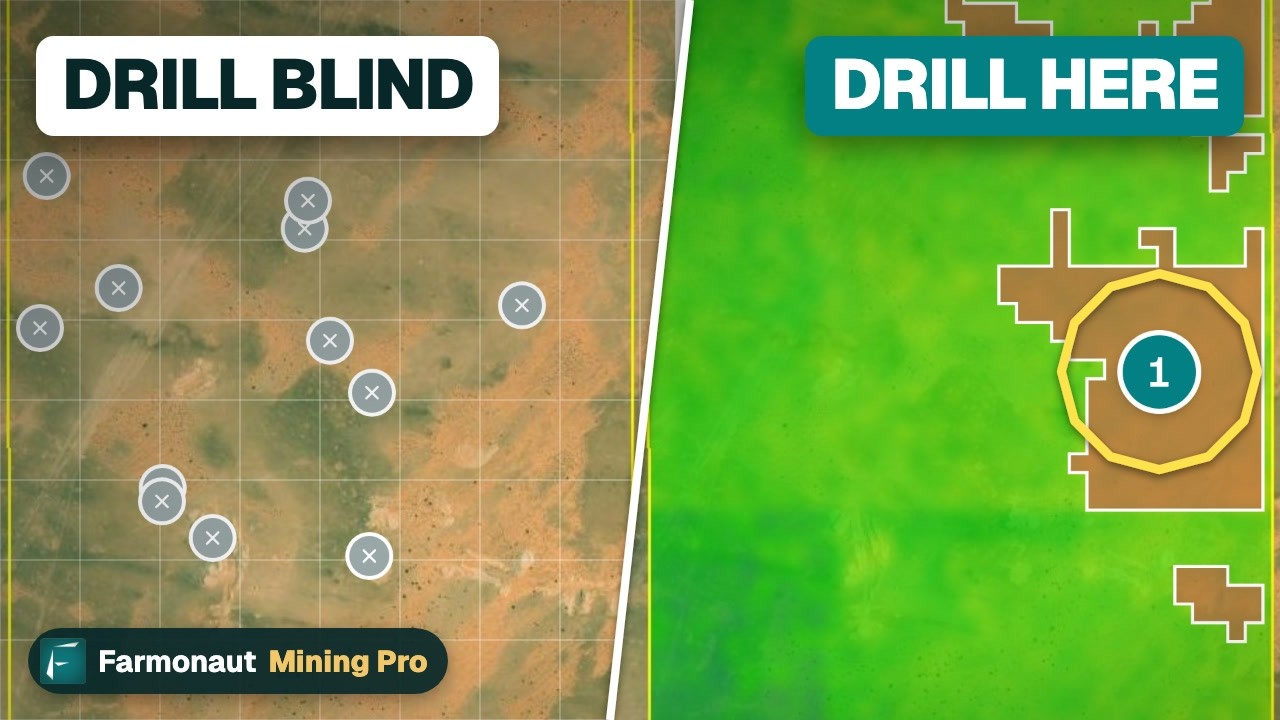
▶ Shows how mining feeds exports, jobs and revenue, and why energy-transition minerals such as the rare earths used in magnets depend on new supply. · 5:03
Worked example: pricing a 10-tonne alloy order
Take a buyer who needs 10 tonnes of Pr-Nd alloy. The numbers are round examples built from the 30 September 2026 SMM midpoints, not a quote.
- Oxide midpoint 739,500 yuan per tonne at 6.69 gives US$110.5 per kg.
- At 1.18 kg of oxide per kg of alloy, the oxide in 10 tonnes of alloy is 11.8 tonnes, costing about US$1.30 million.
- At 1.25 kg (the MP Materials bookkeeping ratio), it is 12.5 tonnes, costing about US$1.38 million.
- The alloy midpoint of 897,500 yuan per tonne gives about US$134.2 per kg, or about US$1.34 million for 10 tonnes including 13% VAT.
The difference between step 2 and step 3 is about US$78,000, which is bigger than the whole gross spread at 1.18. A supplier’s yield assumption therefore matters as much as the headline price. Ask what oxide-to-metal ratio the quote assumes.
From alloy to magnet: what the metal costs in a motor
Benchmark Minerals puts the NdPr alloy in a typical electric vehicle traction motor at 1 to 2 kg (Benchmark Minerals glossary). At the SMM alloy midpoint of about US$134 per kg, 1.5 kg of alloy is about US$201, before the magnet maker adds sintering, machining and coating and before any dysprosium or terbium. A change of 10% in the alloy price moves that figure by about US$20 per motor. Whether the motor maker absorbs the move or passes it on is a commercial question we cannot answer from public data.
The alloy price also decides how attractive it is for Western producers to integrate downstream. MP Materials reports that its Fort Worth site began manufacturing NdFeB permanent magnets in December 2025, in addition to metal and alloy. A producer that sells metal rather than oxide captures the conversion spread described above.
Praseodymium mining and where the pair comes from
Praseodymium is a by-product of the same mines that produce neodymium, so there is no separate praseodymium mining industry to track. Mine output by country is in the chart above. Most new supply outside China is in advanced projects rather than operating mines, and each of them has to be checked against company filings for status. Our guide to rare earth deposits and exploration lists the regions.
Where satellite data fits in rare earth exploration
A price page does not find a deposit. Teams that hold a rare earth licence can screen it with satellite data before spending on fieldwork. Farmonaut returns satellite-derived exploration targets for a licence boundary supplied as KML, KMZ or a polygon, and rare earth elements are on its detectable-mineral list. Results are targets that sit ahead of any resource estimate, not a resource under JORC or NI 43-101.

▶ Explains how AI is used in mineral exploration, what it can find and where it fails. · 4:37
Frequently asked questions
What is the praseodymium neodymium alloy price per kg?
SMM quoted Pr-Nd alloy at 895,000 to 900,000 yuan per tonne on 30 September 2026, about US$134 per kg at 6.69 yuan per dollar. That quote includes 13% VAT and is delivered to works in China.
How much more than the oxide does the alloy cost?
On the same SMM date the alloy midpoint was about 21% above the oxide midpoint. About 18 percentage points of that gap come from the extra oxide mass needed to make metal, so the real conversion spread is much smaller.
How much oxide does it take to make 1 kg of Pr-Nd metal?
About 1.18 kg by our atomic-mass arithmetic for a 75% Nd and 25% Pr blend. MP Materials uses 1.25 when it converts NdPr metal sales to oxide-equivalent tonnes from the first quarter of 2026.
What is the praseodymium oxide price per kg?
The USGS estimates the 2025 average at US$74 per kg for 99.99% praseodymium oxide, against US$128 in 2022 and US$56 in 2024.
Is praseodymium more expensive than neodymium?
Not by much. USGS averages for 2025 were US$74 per kg for praseodymium oxide and US$73 for neodymium oxide, but the two are quoted at different minimum purity.
What ratio of Pr to Nd is in the alloy?
SMM’s alloy specification is 25 plus or minus 2% praseodymium and 75 plus or minus 2% neodymium.
Why is the price different outside China?
Benchmark Minerals reported on 21 August 2026 that NdPr oxide outside China was assessed at US$95 per kg CIF Europe and North America, while Chinese PrNd oxide was equal to about US$107.5 per kg on its conversion.
What does 13% VAT do to a Chinese alloy quote?
It raises the number you see. Dividing a quote that includes 13% VAT by 1.13 gives the price before tax, so US$134 becomes about US$119 per kg.
Can I buy pure neodymium metal at a published price?
Partly. SMM publishes a daily neodymium metal price (Nd 99.0% minimum, delivered to works in China, 13% VAT included), and the Pr-Nd alloy price. The USGS gives annual oxide averages only. Ask suppliers for a written quote that names purity, form and delivery terms.
Which companies sell Pr-Nd outside China?
Lynas Rare Earths and MP Materials are the two producers named in this page with 2026 production data. Benchmark Minerals says the US price floor applies to both, so their realised prices can differ from spot.
Where can I follow a live Pr-Nd price?
SMM, Trading Economics, Benchmark Minerals and Fastmarkets publish dated quotes, some behind a subscription. The USGS Mineral Commodity Summaries give annual averages.
This page is for information only. It is not investment advice. Prices change daily; confirm any quote with the publisher or your supplier before you buy, sell or sign a contract.
Farmonaut exploration
Screen a rare earth licence area from space
Send a licence boundary as KML, KMZ or a polygon and receive satellite-derived exploration targets, ahead of any resource estimate.
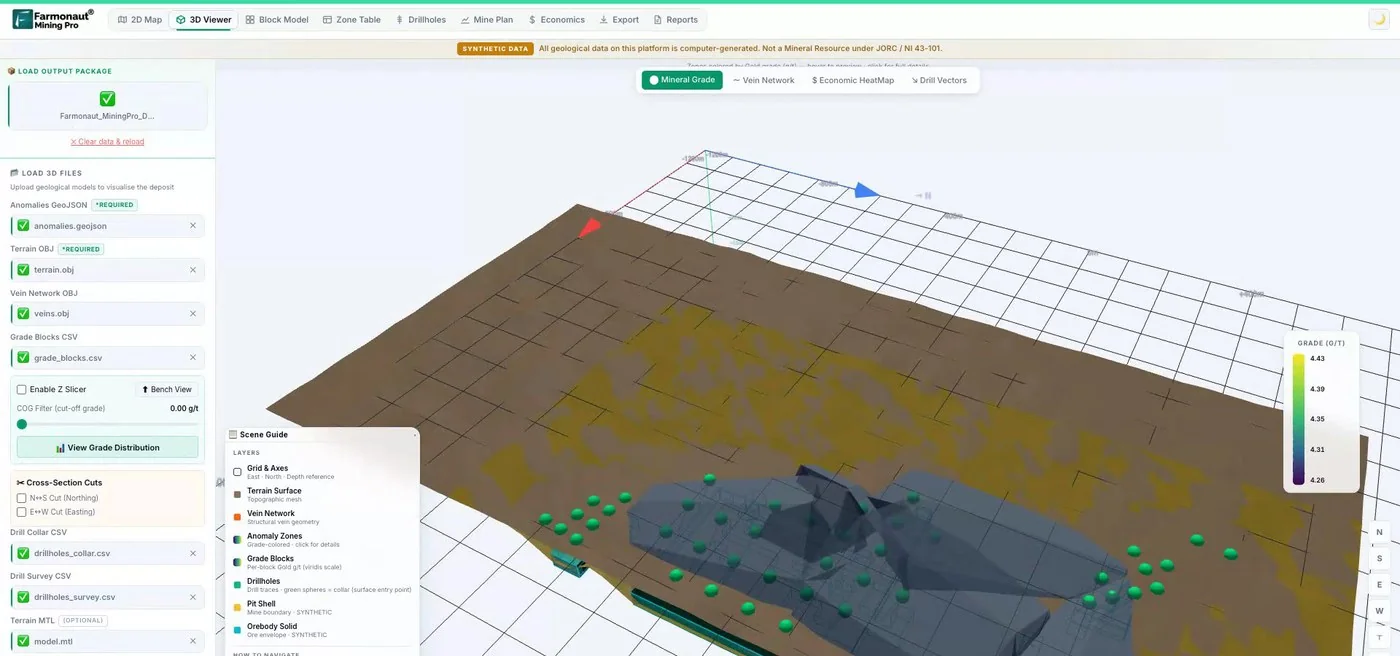
Mining Pro sample view, synthetic data
Keep reading

Sources
- USGS, Mineral Commodity Summaries 2026: Rare Earths: pubs.usgs.gov
- SMM Rare Earth Weekly Review (30 September 2026): news.metal.com
- SMM, Pr-Nd alloy price page (definition and VAT basis): metal.com
- Trading Economics, Neodymium (15 October 2026): tradingeconomics.com
- USGS Fact Sheet 2014-3078, Rare earth elements: critical resources: pubs.usgs.gov
- Dysinger and Murphy, US Bureau of Mines RI 9504: Electrowinning of neodymium (1994): stacks.cdc.gov
- MP Materials, second quarter 2026 results: mpmaterials.com
- Natural Resources Canada, Rare earth elements facts: natural-resources.canada.ca
- Benchmark Minerals, Ex-China NdPr prices slip below $110/kg price floor (21 August 2026): source.benchmarkminerals.com
- Lynas Rare Earths, quarterly report for the period ended 30 June 2026: announcements.asx.com.au
- Hastings Technology Metals, Updated DFS for Yangibana Stage 1 (13 July 2026): bulletin.webull.com
- Benchmark Minerals, What is rare earths (glossary): benchmarkminerals.com
Discussion
Questions, corrections or field experience? Share them below. First-time comments are reviewed before they appear, and your email is never published.
No comments yet. Be the first to add a question or your experience.

 Double A Trading
 GemSprout Metals Limited
 Qader Group
 Ileys General Trading
 SG Gold Mining LLC
 VRV Global Pte Ltd
 Omsri International FZE
 G.I.T.T.
 Jaunita Erss Ltd
 Almosi SARL
 SRK Consulting
 Berks Gold Limited
 Mwerezi Minerals Company Limited
 Mining SARL
 SenGold Invest SAS
 Sean Mining Limited
 NTS Group (Pty) Ltd
 Mine4Africa










