

Rare earths · Price guide
Samarium Oxide Price per kg: Chart and Drivers
99.9% samarium oxide was US$2.80 per kg ex-works or FOB China on 21 September 2026, close to the USGS 2025 average of US$2.82. Here is why a metal ranked first for supply-cut risk costs so little.
Key takeaways
- 99.9% samarium oxide was US$2.80 per kg (US$2,800 per tonne) EXW/FOB China on 21 September 2026, up 14.75% from 24 August (ScrapMonster, Institute for Rare Earths and Metals data).
- The USGS 2025 average for 99.5% oxide was US$2.82 per kg, against US$69 per kg for NdPr oxide, about 24 times higher (USGS, 2026).
- The USGS ranked samarium first of 84 commodities for modelled U.S. GDP loss from a supply cut: US$4,498 million, all from the China scenario (USGS Open-File Report 2025-1047).
- China’s Announcement No. 18 (April 2025) requires export licences for samarium oxide, metal, alloys and SmCo magnet material; Lynas reported its first samarium oxide outside China on 19 March 2026.
- SmCo magnets are about 25% (2:17) to 35% (1:5) samarium by weight, so even a 10 kg magnet batch needs only about US$9 of oxide at an example price of US$2.80 per kg.
In this article
- What is the samarium oxide price per kg?
- Samarium oxide price chart
- Why samarium oxide costs so little next to NdPr
- Samarium oxide, metal and magnet prices compared
- What moves the samarium price
- How much damage a samarium supply cut could do
- Where samarium comes from
- Who makes samarium oxide outside China
- The environmental cost of separating rare earths
- What samarium is used for
- How much samarium oxide goes into a magnet
- How to read a samarium price quote
- What to check before putting money into samarium
- How explorers screen ground for rare earths
What is the samarium oxide price per kg?
Samarium oxide (Sm2O3) sold for about US$2.80 per kg on 21 September 2026, for 99.9% material priced ex-works (EXW) or FOB China, according to ScrapMonster, which republishes data from the Institute for Rare Earths and Metals. That is US$2,800 per tonne (US$2.80 per kg times 1,000). The U.S. Geological Survey put the 2025 average for 99.5% oxide at US$2.82 per kg, up from US$2.01 in 2024.
The number surprises many readers. A 2025 USGS study ranked samarium first among 84 commodities for the damage a supply cut would do to the U.S. economy, yet the oxide trades at a few dollars per kilogram. This page shows the price history, the reasons the gap exists, who can make the oxide outside China, and what an investor or buyer should check before reading anything into a quote. It also has a calculator for the oxide cost inside a samarium-cobalt magnet.
Prices on this page are dated, and they change. Treat the figures as a record of what published sources showed in September and October 2026, and check a live source before you quote or trade.
Samarium oxide price chart
ScrapMonster lists monthly readings for 99.9% minimum oxide. From late March to mid-June 2026 the price held in a narrow band of US$2.22 to US$2.28 per kg. It crept to US$2.31 in July and US$2.44 in August, then rose 14.75% in a month to US$2.80 on 21 September. The September reading is 26% above the late-March reading.
Chart
Samarium oxide 99.9%, monthly readings in 2026
US$ per kg, EXW/FOB China, one reading per month
The USGS annual averages tell the longer story. They are for 99.5% oxide, and the 2022 spike to US$3.34 per kg is the only year that broke out of a US$2 to US$3 range between 2021 and 2025.
| Year | Average price, 99.5% samarium oxide (US$ per kg) |
|---|---|
| 2021 | 2.03 |
| 2022 | 3.34 |
| 2023 | 2.17 |
| 2024 | 2.01 |
| 2025 (estimate) | 2.82 |
Source: USGS Mineral Commodity Summaries, rare earths chapter. The USGS marks 2025 as an estimate. The Payne Institute at the Colorado School of Mines describes this series as an FOB quote from Argus Media, and notes that buyers outside China may well have paid more once Beijing began licensing exports in April 2025.
Two different sources, two purity grades and two price bases land within 2 cents of each other: the 2025 average (US$2.82) and the 21 September 2026 reading (US$2.80). Both sit in the same low band.
Why samarium oxide costs so little next to NdPr
NdPr oxide is a blend of neodymium and praseodymium, the two rare earths that go into the strongest everyday magnets in electric vehicles and wind turbines. The USGS puts the 2025 average for 99% NdPr oxide at US$69 per kg, roughly 24 times the samarium oxide figure. Neodymium oxide averaged US$73 and praseodymium oxide US$74.
Chart
Lowest-priced rare earth products, 2024 and 2025
USGS average price, US$ per kg
| Product (USGS average price, US$ per kg) | 2024 | 2025 (estimate) |
|---|---|---|
| Lanthanum oxide, 99.5% | 0.97 | 1.00 |
| Cerium oxide, 99.5% | 1.21 | 1.71 |
| Samarium oxide, 99.5% | 2.01 | 2.82 |
| Europium oxide, 99.99% | 27 | 27 |
| Gadolinium oxide, 99.99% | 28 | 30 |
| NdPr oxide, 99% | 55 | 69 |
| Neodymium oxide, 99.5% | 56 | 73 |
| Praseodymium oxide, 99.99% | 56 | 74 |
Source: USGS Mineral Commodity Summaries, rare earths chapter. Purity grades differ by row, as the USGS lists them.
The price gap has simple causes. Demand for neodymium and praseodymium grew with electric vehicles and industrial motors, so producers invest to supply them. Samarium serves a small, specialised market, and the Payne Institute notes that this gives private investors little reason to build spare capacity outside China. The result is a low price that says very little about how hard the material would be to replace.
A second cause is geology. Samarium is only a few percent of the rare earth content of monazite, so it arrives as a co-product of ores worked for other rare earths. The ore section below gives the numbers.
Samarium oxide, metal and magnet prices compared
A quote means little until you know which product, purity and delivery point it covers. The same word, samarium, covers at least four products at very different prices.
| Product | Reading | Basis and source |
|---|---|---|
| Oxide, 99.9% minimum | US$2.80 per kg | EXW/FOB China, 21 September 2026, ScrapMonster (Institute for Rare Earths and Metals data) |
| Oxide, industrial bulk | US$2.17 per kg | Shanghai Metals Market benchmark, 30 September 2026, as reported by Rare Earth Mining |
| Oxide, 99.5% | US$2.82 per kg | 2025 average, USGS (Argus FOB quote per the Payne Institute) |
| Metal, industrial | US$9.87 per kg | Shanghai Metals Market benchmark, delivered to works, 30 September 2026, as reported by Rare Earth Mining |
The oxide readings differ by up to about 30% because of purity, delivery terms and reporting date. The metal benchmark, reported by Rare Earth Mining from Shanghai Metals Market data, is more than four times the oxide benchmark on the same date, which reflects the extra reduction and refining steps. A finished samarium-cobalt magnet is priced per magnet or per kilogram of magnet, not per kilogram of samarium, so there is no clean public price for the samarium inside it.
Small-lot catalogue prices for laboratory-grade oxide are far higher per kilogram than bulk industrial quotes because of purity certificates, packaging and handling. Do not compare a catalogue price with a bulk benchmark.
What moves the samarium price
Four forces matter, and none of them is a forecast. Each one can be checked against a dated source.
China’s export licences
On 4 April 2025 China’s Ministry of Commerce and customs authority issued Announcement No. 18, which added samarium, gadolinium, terbium, dysprosium, lutetium, scandium and yttrium to the export control list, together with their metals, alloys, oxides, compounds and permanent magnet materials. Pillsbury, a law firm, summarises the announcement and the later suspension. The USGS notes that the April controls stayed in force when China suspended a wider October 2025 package for one year, and that China began issuing general export licences to selected exporters.
The suspension of the October package was due to end on 10 November 2026. On 28 September 2026 China’s Commerce Ministry said its trade arrangements with the United States were extended to 10 January 2027, but RAWMATERIALS.net reported that the statement did not name rare earths, so separate confirmation of the new date for the export controls was still pending. Samarium sits under the April rules whichever date applies.
New supply outside China
Lynas Rare Earths reported its first samarium oxide from Malaysia on 19 March 2026. Solvay supplies oxide from France under a November 2025 deal. MP Materials targets samarium from Mountain Pass, California, in early 2028, according to the Payne Institute’s account of management comments. The table in the next section gives the details. The ScrapMonster series shows no break after the Lynas announcement: the price was US$2.22 per kg on 24 March 2026, five days after it.
Defence rules
Fastmarkets reports that U.S. Department of Defense sourcing restrictions will, from January 2027, bar the Pentagon from buying samarium-cobalt and neodymium-iron-boron magnets that contain materials mined, refined, separated, melted or produced in China. Buyers who must meet that rule need non-Chinese oxide, metal and alloy, and Fastmarkets reports that U.S. consumers were paying more for heavy rare earths than European buyers.
The state of the national stockpile
The USGS lists 60 tons of samarium-cobalt alloy among the potential acquisitions for the U.S. National Defense Stockpile in fiscal year 2025. The Payne Institute adds that the fiscal 2026 plan lists the same 60 metric tons and that the Federal Register notices describe such quantities as ceilings, not targets.
How much damage a samarium supply cut could do
The price does not show how much damage a supply cut would do. In 2025 the USGS ran more than 1,200 disruption scenarios across 84 mineral commodities and 402 U.S. industries, in Open-File Report 2025-1047. Samarium ranked first, with a probability-weighted loss of US$4,498 million of U.S. gross domestic product (in 2023 dollars). The China scenario produced all of it, and the USGS set that scenario’s probability to 100% because China had already restricted samarium exports when the model ran.
Chart
Modelled U.S. GDP loss from a one-year supply cut
Probability-weighted, US$ million (2023 dollars), top 8 of 84 commodities
The Payne Institute adds that the loss falls mainly on guided-missile and space-vehicle manufacturing and on search, detection and navigation instrument manufacturing. Neodymium, the best known magnet metal, scored only US$154 million in the same table, and praseodymium US$66 million.
The lesson for a price reader is that a low price and a high strategic weight can sit together. A material with a small market and one dominant supplier is hard to replace quickly even when it is cheap per kilogram.
Where samarium comes from
Samarium is one of the lanthanides recovered together from rare earth ores, and its share of the ore is small. Geoscience Australia’s mineral resources report gives the oxide mix of monazite, a phosphate mineral, from several places. Samarium oxide makes up 2.5% of the rare earth oxides in the Australian sample, 3% in the Guangdong (China) sample, 3.3% in the Taiwan sample and 4.9% in the Florida (USA) sample, in Australia’s Identified Mineral Resources 2010. Those numbers are weight percentages of the rare earth oxide content, not of the ore.
Chart
Samarium oxide share of rare earth oxides in monazite
Weight percent of total rare earth oxides, monazite samples
That means a tonne of rare earth oxide from a typical monazite concentrate contains 25 to 49 kg of samarium oxide. Multiply by the roughly US$2.80 per kg price and the samarium in a tonne of that rare earth oxide is worth about US$70 to US$137, while the same tonne also carries the neodymium and praseodymium that pay for the mine. The samarium is a by-product credit, not the business case.
Rare earth ores include bastnaesite (a fluorocarbonate), monazite, xenotime (a heavy-rare-earth phosphate) and ion-adsorption clays. The USGS reports world mine production of rare earths at 390,000 tons of rare earth oxide equivalent in 2025, with China at 270,000 tons, the United States 51,000, Australia 29,000 and Burma 22,000 (all estimates, USGS, 2026). Mining is only the first step. Separating individual elements takes many rounds of solvent extraction, and a Mining Technology review of GlobalData figures calls processing the main bottleneck, with China refining up to 90% of global rare earths.
For a view of mine-scale rare earth pricing by mineral concentrate, see our guide to monazite and xenotime concentrate prices per tonne.
Who makes samarium oxide outside China
Few operations make separated samarium oxide outside China, and the reported volumes are small. The table lists the operations named in published reports. It is not a ranking.
| Company and site | Step | What the source reports |
|---|---|---|
| Lynas Rare Earths, Malaysia | Oxide separation | First samarium oxide on 19 March 2026, ahead of its April forecast; the company says it is the only commercial producer of separated heavy rare earth oxides outside China (Mining Technology) |
| Solvay, La Rochelle, France | Oxide separation | Supplies samarium oxide to U.S. magnet maker Permag, with Less Common Metals turning it into metal, under a November 2025 deal for limited volumes (Reuters via Kitco) |
| Less Common Metals, United Kingdom | Metal conversion | Owned by USA Rare Earth since a late 2025 purchase (Payne Institute) |
| MP Materials, Mountain Pass, California | Concentrate stockpile | Holds a heavy rare earth concentrate containing samarium, europium and gadolinium; samarium targeted for early 2028 (Payne Institute, citing management) |
| Terves (a REalloys subsidiary), United States | Metal plant design | Defense Logistics Agency design contract worth up to US$1.7 million per Reuters; design capacity of 300 tons a year (Payne Institute) |
The Lynas milestone sits inside a heavy rare earth expansion announced in October 2025. Mining Technology reports that the first suite of separated heavy rare earths, covering samarium, dysprosium, gadolinium, lutetium, terbium and yttrium, is expected to be operating within two years. Reuters, via Kitco, put the cost of the new Malaysian separation facility at about A$180 million.
The Payne Institute adds a caution that applies to every row: a plant that could ship samarium in a war is worth far less to the Pentagon than one that is already qualified, under contract and cleared for export, and none of these projects had reached that point by its September 2026 commentary.
The environmental cost of separating rare earths
Rare earth ores often carry thorium and uranium, which stay in the waste when the elements are separated. Malaysia renewed the Lynas operating licence for 10 years on 2 March 2026. Reuters, via Kitco, reported that Lynas must stop producing radioactive waste after five years and neutralise earlier residue by thorium extraction or another approved method. The same report says 1% of the company’s annual gross sales will fund research and development in Malaysia.
These terms are part of the true cost of any non-Chinese oxide, and they explain why a Western plant cannot simply copy a low Chinese price. For a plain-language tour of the seven main impacts of mining, see our post on the effects of mining on the environment.
Two Farmonaut pages cover related ground: carbon footprinting for tracking emissions at a processing site, and product traceability for records that follow material from mine to product, which matters when a buyer must show where a magnet’s materials came from.
▶ The seven environmental impacts of mining, explained in plain words with a claymation. · 2:31
What samarium is used for
Most samarium goes into samarium-cobalt (SmCo) permanent magnets. Two alloy families exist. According to magnet maker Dura Magnetics, the older 1:5 alloy is about 35% samarium by weight and typically operates up to 250 degrees Celsius. The newer 2:17 alloy is about 25% samarium and typically operates at 300 to 350 degrees Celsius. Dura adds that the practical limit depends on the shape of the magnet and the circuit around it.
The Payne Institute explains that samarium-cobalt magnets keep their strength at temperatures too high for many neodymium-iron-boron magnets, which is why defence and aerospace designs use them in hot environments.
The Payne Institute repeats a widely circulated figure of up to 50 pounds of SmCo magnets in each F-35 fighter but says it cannot confirm the number. We do not use it in the calculation below.
Other uses are smaller in tonnage. The isotope samarium-153, with a physical half-life of 46.3 hours, is the active part of the cancer-pain drug Quadramet, and the U.S. FDA-hosted prescribing information says it concentrates in areas of bone turnover. Mining Technology lists optics, catalysts and medical devices among other end uses of the oxide.
How much samarium oxide goes into a magnet
Because SmCo magnets are 25% to 35% samarium by weight, you can estimate the oxide consumed by a given magnet mass. Samarium oxide is about 86% samarium by weight (two samarium atoms of 150.36 each against 348.7 for the whole formula), so each kilogram of samarium needs about 1.16 kg of oxide before process losses.
The calculator below turns magnet mass, the samarium share and a conversion yield into the oxide you would have to buy, and prices it at a figure you choose. With the defaults (10 kg of 2:17 magnet at 25% samarium, 90% yield and US$2.80 per kg), the oxide comes to about 3.2 kg and roughly US$9. Change any input to see your own case.
Calculator
How much samarium oxide does a magnet batch need?
Enter your magnet mass, the samarium share and an oxide price to see the oxide you would buy.
- Samarium metal in the magnets (kg): 2.5
- Oxide cost at your price (US$): $9
- Oxide cost per kg of finished magnet (US$): 0.90
Example values only, not a benchmark. Samarium shares are from Dura Magnetics (about 35% in 1:5 alloy, about 25% in 2:17 alloy). The factor 1.1595 is the mass of Sm2O3 per unit of samarium (atomic masses 150.36 and 15.999). The yield and price are examples: use today’s price and your own process yield.
How to read a samarium price quote
Use this checklist before you compare two numbers.
- Product. Oxide, metal, SmCo alloy or finished magnet. The metal benchmark in the table above is more than four times the oxide benchmark.
- Purity. 99.5%, 99.9% and 99.99% are different products. Higher purity costs more.
- Delivery basis. Ex-works (EXW) means the buyer collects from the factory. FOB means the seller pays to load the ship. Delivered prices add freight and, outside China, licensing and import costs.
- Tax and currency. Chinese domestic prices often exclude value added tax and are quoted in yuan. The Shanghai Metals Market metal figure above is delivered to works and VAT-excluded; the page does not state the VAT treatment of its oxide figure.
- Date. Monthly series such as ScrapMonster’s are snapshots. A single date can sit above or below the month’s average.
- Volume. Bulk contract prices differ from spot offers and from catalogue prices for small lots.
When a report gives a figure many times higher than every number here, check the product, purity and basis first.
What to check before putting money into samarium
Samarium is a small market, so stock stories about it need arithmetic. This page gives facts and a method. It does not recommend any share.
Do the revenue test. At US$2.80 per kg, 100 tonnes of oxide sells for about US$280,000. A listed company that talks about samarium in a presentation should state how many tonnes it expects to sell, at what price and from when. Compare the result with the project’s capital cost.
Check which step the company is at. A mine that holds samarium in its resource table has done nothing yet to separate it. A separation plant can make oxide. A metal plant and magnet maker are further down. The table above shows that even the leaders are at different steps.
Read the resource table, not the headline. Mining announcements list individual rare earth oxide grades, including samarium oxide, inside a total rare earth oxide (TREO) figure. Samarium oxide is one line inside that total, and the monazite figures above show it is a small share. See our look at rare earth mineral stocks for how to read those tables.
Look for offtake and qualification. The Payne Institute argues that defence buyers value qualified, under-contract, export-cleared supply. A signed offtake with a magnet maker matters more than a pilot run.
Watch the policy dates. The Chinese licensing regime (April 2025), the suspension of the October 2025 package (extended trade arrangements to 10 January 2027) and the January 2027 Pentagon sourcing rule are all dated events that shift buyer behaviour.
Not investment advice. Nothing on this page is a forecast or a price target.
How explorers screen ground for rare earths
Rare earth deposits are hard to see from the surface because the valuable elements are spread through weathered clays, carbonatites and sands. Satellite imagery can help the early screening of a licence area by mapping surface alteration, structures and terrain. It cannot measure samarium, and no satellite result replaces drilling and assay.
Farmonaut offers satellite-based mineral screening for licence owners and investors, with results presented as exploration targets that sit ahead of any resource estimate. The video below explains in three minutes how remote sensing for mining works.
Farmonaut also has pages on fleet management and a satellite weather API for site operations.
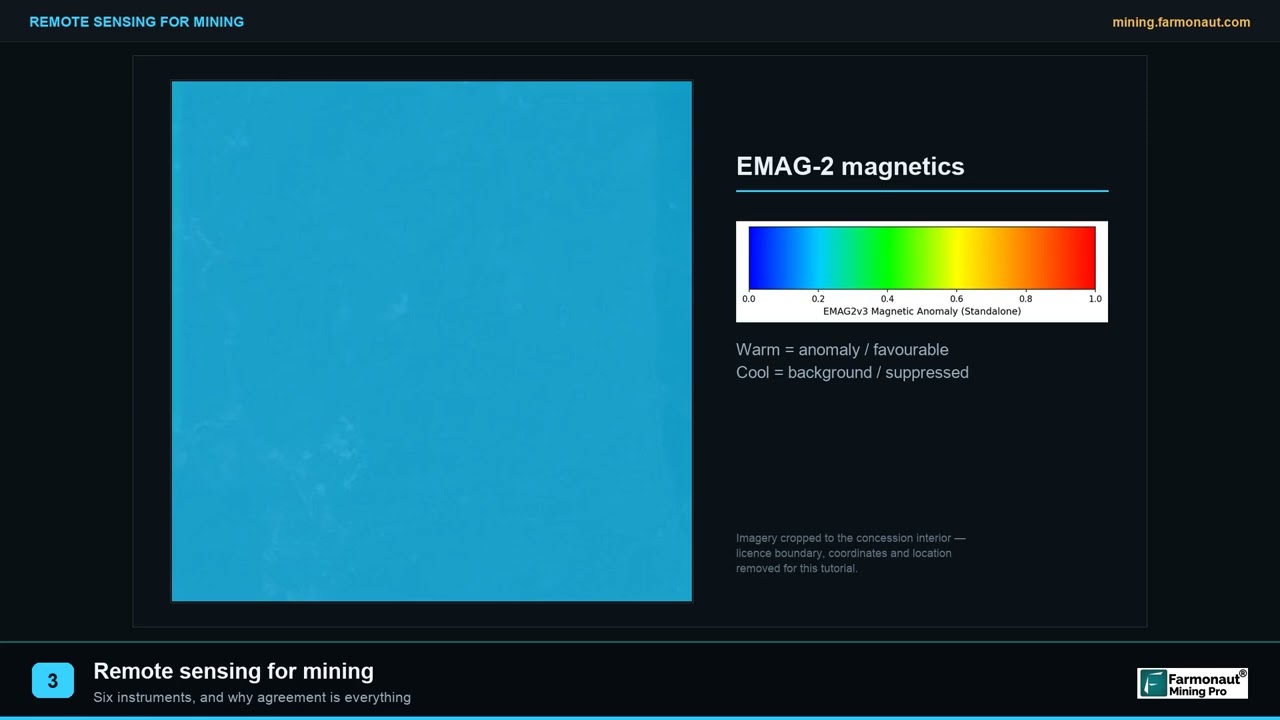
▶ Remote sensing for mining in three minutes: the six instrument families used to map ground. · 2:01
Frequently asked questions
What is the samarium oxide price per kg?
ScrapMonster listed 99.9% minimum samarium oxide at US$2.80 per kg, EXW/FOB China, on 21 September 2026. The USGS 2025 average for 99.5% oxide was US$2.82 per kg. Check a live source before quoting.
What is the samarium oxide price per tonne?
US$2,800 per tonne for 99.9% minimum oxide on 21 September 2026, which is the ScrapMonster price of US$2.80 per kg multiplied by 1,000.
Why is samarium oxide so cheap if it is a critical mineral?
Because the market is small and the oxide is a co-product of mines run for other rare earths. Importance to defence and price are different measures. The USGS ranked samarium first for modelled GDP loss from a supply cut, with US$4,498 million, even though the oxide trades near US$2.80 per kg.
Is samarium oxide cheaper than neodymium oxide?
Yes. The USGS 2025 averages were US$2.82 per kg for samarium oxide and US$73 per kg for neodymium oxide, a ratio of about 26 to 1.
Do China’s export controls cover samarium oxide?
Yes. Announcement No. 18 of April 2025 requires export licences for samarium metal, alloys, oxide, compounds and SmCo magnet materials. The USGS and the Payne Institute both say the April controls stayed in force when the wider October 2025 package was suspended.
Is the samarium metal price the same as the oxide price?
No. A Shanghai Metals Market benchmark reported by Rare Earth Mining put the metal at US$9.87 per kg and the oxide at US$2.17 per kg on 30 September 2026.
Who produces samarium oxide outside China?
Solvay at La Rochelle in France supplies it under a November 2025 agreement. Lynas Rare Earths reported its first samarium oxide in Malaysia on 19 March 2026. MP Materials plans samarium from Mountain Pass, California, in early 2028, according to the Payne Institute.
How much samarium is in a samarium-cobalt magnet?
About 35% by weight in the 1:5 alloy and about 25% in the 2:17 alloy, according to magnet maker Dura Magnetics.
How much samarium is in the ore?
In monazite samples reported by Geoscience Australia, samarium oxide is 2.5% to 4.9% of the rare earth oxides. Bastnaesite and clay deposits differ, and each project’s resource table gives its own figure.
Can I buy samarium oxide in small amounts?
Laboratory suppliers sell it in grams and kilograms, but small-lot prices carry a large premium over bulk quotes. Ask for purity, certificate and delivery terms and do not compare the result with a bulk benchmark.
What is samarium-153 used for?
It is the radioactive isotope in the drug Quadramet, used for pain from bone metastases. Its physical half-life is 46.3 hours, per the FDA-hosted label.
Will the samarium oxide price go up?
This page does not forecast. The dated events to watch are the Chinese licensing regime, the status of the suspended October 2025 controls, the January 2027 Pentagon sourcing rule, and whether Lynas, Solvay and MP Materials report tonnes of oxide sold rather than test batches.
This page is for information only. It is not investment advice, a price target or a forecast. Prices are dated readings from the sources named; check a live source before you buy, sell or sign a contract.
Farmonaut mining
Screen your licence area from space
Investors can see how satellite exploration works on licence areas, with results presented as exploration targets ahead of any resource estimate.

Mining Pro sample view, synthetic data
Keep reading
Sources
- USGS, Mineral Commodity Summaries 2026: Rare earths: pubs.usgs.gov
- USGS, Open-File Report 2025-1047: Methodology and Technical Input for the 2025 U.S. List of Critical Minerals: pubs.usgs.gov
- Payne Institute, Colorado School of Mines: The Most Vulnerable Mineral in America’s Arsenal Costs Three Dollars a Kilogram (2026): payneinstitute.mines.edu
- ScrapMonster, Samarium oxides 99.9% min price, EXW/FOB China (Institute for Rare Earths and Metals data): scrapmonster.com
- Rare Earth Mining, Samarium Price Today (SMM benchmark, 30 September 2026): rare-earth-mining.com
- Pillsbury, China Suspends Export Controls on Certain Critical Minerals and Related Items: pillsburylaw.com
- RAWMATERIALS.net, China confirms extension of trade arrangements with U.S. (28 September 2026): rawmaterials.net
- Mining Technology, Lynas announces first samarium oxide output in Malaysia (March 2026): mining-technology.com
- Reuters via Kitco, Solvay seals two deals to supply rare earths to US magnet makers (12 November 2025): kitco.com
- Reuters via Kitco, Malaysia renews Lynas Rare Earths operating licence for 10 years (2 March 2026): kitco.com
- Fastmarkets, US defence sourcing rules and heavy rare earth prices: fastmarkets.com
- Dura Magnetics, Samarium cobalt magnet grades: duramag.com
- U.S. FDA, Quadramet (samarium Sm 153 lexidronam) prescribing information: accessdata.fda.gov
- Geoscience Australia, Australia’s Identified Mineral Resources 2010: ga.gov.au
- Mining Technology, China rare earth export pause nears expiry (April 2026): finance.yahoo.com
Discussion
Questions, corrections or field experience? Share them below. First-time comments are reviewed before they appear, and your email is never published.
No comments yet. Be the first to add a question or your experience.

 Almosi SARL
 SRK Consulting
 Berks Gold Limited
 Mwerezi Minerals Company Limited
 Mining SARL
 SenGold Invest SAS
 Sean Mining Limited
 NTS Group (Pty) Ltd
 Mine4Africa
 Lithspo Minerals Limited
 Tintina Mining Group
 Dalgety Minerals Pty Ltd
 Vortex Minerals Pty Ltd
 Faith At Work (Pty) Ltd
 Geotech Mining Solutions plc
