

Lithium · Buyer guide
Direct Shipping Ore Lithium: Grades, Projects, Prices
Direct shipping ore lithium is pegmatite that is crushed and screened and sold without a concentrator. It grades about 1.2% to 1.5% Li2O, not 6%. Projects, prices, export bans and a cargo-value calculator, with sources.
Key takeaways
- Recent lithium DSO grades are 1.4% Li2O (Core Lithium’s Finniss cargo, January 2023) and about 1.2% (Develop Global’s Pioneer Dome plan); 6% Li2O is the grade of concentrate, not of DSO (Core Lithium, 2023; Mining Magazine, 2026).
- Core sold 15,000 dry tonnes of DSO at US$951 per tonne in 2022; shortlisted 2026 offers for 1.2% Li2O DSO ranged US$362 to US$430 per tonne CIF China, against a PLS concentrate price of US$1,708 per tonne at 6% for the year to June 2026.
- At 1.4% Li2O you ship about 4.3 tonnes of ore for the Li2O in one tonne of 6% concentrate (our arithmetic), so freight and port cost decide whether DSO pays.
- Zimbabwe banned lithium ore exports in 2022, suspended concentrate exports in February 2026 and partly reopened them under per-producer quotas from April 2026; Namibia banned unprocessed crushed lithium ore in 2023 (Reuters; The Namibian).
- USGS puts 2025 world lithium mine output at about 290,000 tonnes of contained lithium, with Australia at 92,000 and Zimbabwe at 28,000 (USGS, 2026).
In this article
- What direct shipping ore lithium is, and the grade it really has
- DSO lithium vs spodumene concentrate compared
- Direct shipping ore lithium projects compared
- What this ore sells for
- How to estimate what a cargo is worth
- Export bans that decide where the ore can be sold
- Is DSO lithium more sustainable?
- What to check before trusting a DSO lithium project
- Where satellite data helps a lithium project
- Frequently asked questions
Direct shipping ore (DSO) lithium is spodumene-bearing pegmatite that is blasted, crushed, screened and sold without a concentrator. Its grade is low, not high. Recent DSO cargoes and offtakes sit around 1.2% to 1.4% Li2O, about a quarter of the roughly 6% Li2O in standard spodumene concentrate. Core Lithium sold a 15,000 dry tonne cargo at 1.4% Li2O for US$951 per dry tonne, and Develop Global plans an 850,000 tonne campaign at about 1.2% Li2O. This page covers what DSO lithium is, how it differs from concentrate, which projects have sold or plan to sell it, what it fetches, which countries block it and what to check before relying on a project. It includes a cargo-value calculator and is written for consultants and technical readers who need the numbers.
Terms used below. Li2O is lithium oxide, the way hard-rock lithium grade is quoted; 1% Li2O is 10 kg of Li2O in each tonne of rock. Spodumene is the main lithium mineral in pegmatite, a coarse granite-like rock. Beneficiation means upgrading ore to a concentrate. A dry metric tonne (dmt) is a tonne with the moisture removed. CIF means the seller pays freight and insurance to the destination port. This page gives facts from filings and published reports. It is not investment advice.
What direct shipping ore lithium is, and the grade it really has
An ASX filing from TG Metals in August 2026 describes DSO as spodumene-rich pegmatite of sufficient grade and quality to support direct export and sale, with no on-site beneficiation beyond basic crushing and screening. In practice the ore goes from the pit to a crusher, then to a truck and a ship. The buyer puts it through its own concentration and chemical plants.
Many web pages, including an earlier version of this one, say DSO lithium grades above 6% Li2O. That is the grade of concentrate, not of DSO. The projects that have published a DSO grade report far lower numbers:
- Core Lithium’s Finniss cargo, shipped from Darwin in January 2023, averaged 1.4% Li2O.
- Develop Global’s Pioneer Dome plan is built on a product grading about 1.2% Li2O.
- TG Metals’ Lake Johnston testwork points to a DSO product of about 1.5% Li2O after simple ore sorting, from a resource averaging 1.18% Li2O.
The sales unit is the key difference. A concentrate buyer pays for roughly 6 kg of Li2O in every 100 kg shipped. A DSO buyer pays for about 1.2 to 1.4 kg. That is why a tonne of DSO sells for a fraction of a tonne of concentrate, and why freight weighs more heavily on DSO: low-grade rock costs the same to haul as high-grade rock. Core’s cargo went to a buyer in Fangcheng, China.
DSO lithium vs spodumene concentrate compared
The table sets the two products side by side. The figures come from the filings named in the notes under the table; where a value is our own arithmetic it is marked.
Chart
Li2O grade: DSO product vs concentrate
% Li2O; selected company figures; Lake Johnston concentrate is the top of a tested 5.28% to 5.74% range
| Feature | DSO lithium | Spodumene concentrate |
|---|---|---|
| Typical grade shipped | About 1.2% to 1.5% Li2O | About 5% to 6% Li2O |
| Processing before sale | Crush and screen; ore sorting if needed | Crush, grind, then dense media separation or flotation |
| Tonnes shipped per tonne of 6% product (our arithmetic) | About 4.3 t at 1.4% Li2O; 5 t at 1.2% | 1 t |
| Capital cost to start | Low: crusher, haul road, stockpile | Higher: processing plant and tailings storage |
| Price per tonne, recent report | US$362 to US$430 per tonne CIF China at 1.2% Li2O (indicative offers, 2026) | US$1,708 per tonne on a 6% basis, PLS average for the year to June 2026 |
| Main risk | Freight on low-grade rock; impurities such as iron and mica; buyer demand | Plant recovery, power cost and tailings |
Notes: the 4.3 t figure is 6 divided by 1.4, the 5 t figure is 6 divided by 1.2. DSO price range from Mining Magazine Australia, citing shortlisted non-binding proposals that assumed a lithium carbonate price of US$27,500 per tonne. Concentrate price from the PLS 2026 annual report. The two prices are from different periods and are not a like-for-like comparison.
Direct shipping ore lithium projects compared
We list projects that have either shipped DSO or published a DSO plan with a grade. The list is selected, not complete. Others exist, and plans change quickly, so read each company’s latest ASX announcement before relying on a row. We did not rank the projects: they are at different stages and quote different grades, so a single ranking would mislead.
How we chose. A project is included when its own filing or a named trade report states a DSO grade, a sale or an offtake. Projects described only in promotional material are left out. Status is as of the latest source cited for each row (April to August 2026 for most rows).
| Project | Where | Status and grade | What the record shows |
|---|---|---|---|
| Finniss (Core Lithium) | Northern Territory, Australia | Shipped January 2023 at 1.4% Li2O; shut in 2024; restart approved March 2026 and mining restarted in the Grants pit (reported 20 May 2026), with first ore processing targeted for the September 2026 quarter and first shipment for the December quarter | First cargo of 15,000 dmt sold for US$951 per dmt CIF; by April 2026 Core had sold 20,000 t of DSO fines to the trading arm of Glencore at A$405 per tonne and planned to sell a further 55,000 t |
| Pilgangoora (PLS, formerly Pilbara Minerals) | Pilbara, Western Australia | 85,000 t shipped June 2018, grade not stated | Early cash flow while the concentrator was commissioned; sold through Atlas Iron |
| Goulamina (Leo Lithium at the time) | Mali | First DSO mined June 2023 from a starter pit averaging 1.68% Li2O | Company targeted 185,000 t a year of DSO exports until concentrate production |
| Pioneer Dome (Develop Global) | Western Australia | Investment decision June 2026; about 1.2% Li2O; no sales reported yet | Trafigura offtake for at least 750,000 t; in its June 2026 quarterly report (28 July 2026) Develop expected first DSO sales in the December 2026 quarter; we found no later update confirming mining or crushing progress, and the September quarterly report is due in late October; export via the Port of Esperance |
| Burmeister, Lake Johnston (TG Metals) | Western Australia | Inferred resource 6.71 Mt at 1.18% Li2O (August 2026); no mining lease yet | Mining lease application lodged; core drilling planned to supply DSO samples to potential buyers |
Sources for each row: Core’s half-year report to December 2022 and a 30 April 2026 report in Resources Rising Stars; a Fastmarkets report on the Pilgangoora shipment; Leo Lithium’s 30 June 2023 ASX announcement; International Mining on the Pioneer Dome contract; and the TG Metals resource announcement. Goulamina is a reminder that a starter-pit grade is a resource grade, not a shipped product grade. Check a project’s own product specification.
For wider lithium geology see our guides to pegmatite, brine and clay lithium deposits and spodumene deposits in Australia, and our overview of the largest lithium producers.
What this ore sells for
DSO prices follow the concentrate market and the lithium carbonate price, with a discount for grade and for the buyer’s processing cost. USGS reports that the average real price of battery-grade lithium carbonate in the United States was US$63,700 per tonne in 2022, US$11,800 in 2024 and an estimated US$9,000 in 2025. Core’s DSO cargo was sold in the 2022 price peak. By the year to June 2026, PLS reported a realised concentrate price of US$1,708 per tonne on a 6% basis, up 122% from US$769 a year earlier.
Chart
Battery-grade lithium carbonate price, 2021 to 2025
US dollars per tonne, annual average in real terms; 2025 is a USGS estimate
TG Metals describes a DSO market resurgence in 2026. The Trafigura offtake for Pioneer Dome was reported at an indicative $400 to $500 per tonne (currency not stated in the report) for 1.2% Li2O DSO, with a floor price. A floor protects the seller if the market falls again. Treat every figure here as a dated snapshot and check a current price source before using any of it.
A simple way to compare products is price per percentage point of Li2O. At US$362 to US$430 per tonne for 1.2% Li2O, the Pioneer Dome offers work out at about US$300 to US$360 per percentage point (our arithmetic). The PLS average for concentrate, US$1,708 for 6%, is about US$285 per point. The two come out close, but the DSO offers assumed a lithium carbonate spot price of US$27,500 per tonne while the PLS figure is a year average, so the comparison is only indicative.
How to estimate what a cargo is worth
Four numbers decide a DSO cargo: tonnes, grade, the concentrate price you benchmark against, and the share of that price the buyer will pay for low-grade ore. The calculator below turns them into a price per tonne and a margin after freight and mining. The payable share is an assumption you must set from a real offer, because it moves with the market and with impurities.
Worked example with the default values: 15,000 tonnes at 1.4% Li2O, a concentrate benchmark of US$1,000 per tonne at 6% and a 70% payable share gives about US$163 per tonne, or about US$2.45 million for the cargo, before costs. Core’s 2022 cargo shows how far the inputs can move: it sold for US$951 per dmt at 1.4% Li2O in a very strong market. If your inputs give a far higher or lower figure than the offers you receive, find out why before going further.
Calculator
What is your DSO lithium cargo worth per tonne?
Enter your own tonnes, grade, benchmark price, payable share and costs.
- Cargo value at that price: $2,450,000
- Margin per tonne after freight and mining: $63
- Cargo margin: $950,000
- DSO tonnes per tonne of 6% product: 4.3 t
Example values only, not a forecast or a benchmark. The method scales a 6% concentrate price down to your grade (price x grade / 6) and then applies a payable share, which is an assumption you must replace with a real buyer offer. The concentrate price is an input: example, use today’s price. Freight and mining costs are examples in US dollars per tonne. The result ignores royalties, tax, moisture, penalties for impurities and financing.
Export bans that decide where the ore can be sold
Zimbabwe and Namibia both block raw lithium ore. Zimbabwe banned lithium ore exports in 2022, so only concentrate can leave. Namibia’s Cabinet approved a ban on unprocessed critical minerals including crushed lithium ore in June 2023, with small quantities allowed at the mines minister’s discretion.
Chart
World lithium mine production, leading countries
Tonnes of contained lithium, 2025 estimate; Chile and Argentina are mostly brine, the rest mostly hard rock
Zimbabwe has since tightened further. In late February 2026 it suspended exports of raw minerals and lithium concentrates, citing alleged malpractice and mineral leakages. In April 2026 the mines ministry told producers that exports could resume under per-producer quotas, written commitments to build lithium sulphate plants before 1 January 2027, and a continuing 10% export tax, with a ban on concentrate shipments due from January 2027. Quotas were then granted company by company: Sichuan Yahua received a six-month quota in April 2026, and Chengxin Lithium and Sinomine were reported to have quotas too. On 9 October 2026 Zimbabwe’s information minister said there was no reason to delay the January 2027 concentrate ban. We found no published total quota volume, so check the ministry or each producer before assuming anything. The same Reuters report puts Zimbabwe’s 2025 concentrate exports to China at 1.128 million tonnes.
Zimbabwe’s size explains the attention. USGS estimates it mined 28,000 tonnes of contained lithium in 2025, fourth after Australia (92,000), China (62,000) and Chile (56,000). Mali’s output rose from 770 to 9,400 tonnes between 2024 and 2025, after two new operations started in 2024. Every project in the table above that has sold or plans to sell DSO to the market is in Australia, apart from the 2023 plan at Goulamina in Mali. For African pegmatite, see our guide to lithium in Mali, Zimbabwe and Ghana.
Is DSO lithium more sustainable?
Often described as a sustainable mining solution, DSO removes one step, the concentrator, from the mine site. That has real effects: no flotation reagents, no on-site process plant and no concentrator tailings dam at the mine. It does not remove the mine itself, and it moves other costs elsewhere.
- More rock moves per unit of lithium. At 1.4% Li2O you ship about 4.3 tonnes of ore to deliver the Li2O in one tonne of 6% concentrate (our arithmetic). Every extra tonne means more trucking, port handling and shipping.
- Processing still happens. The buyer concentrates the ore elsewhere, so the processing footprint and the waste move to the buyer’s site.
- Mining carries a large share. A Fraunhofer UMSICHT life-cycle assessment for one hydroxide route attributed 3.8 of 10.5 kg CO2-equivalent per kilogram of lithium hydroxide to spodumene mining and concentration. That is a single study for one supply chain, not a DSO result.
- Where the emissions come from. A University of Melbourne inventory of Greenbushes found that blasting is the main contributor in mining and electricity is the main contributor in processing, and that high-pressure grinding rolls cut the newer plant’s global warming impact by 17.3%.
The life-cycle studies we opened model concentrate or hydroxide production, and none compared DSO with concentrate directly. Whether DSO has a lower footprint per unit of lithium therefore depends on haul distance, the grid that powers the buyer’s plant and how much waste each route leaves. Anyone claiming a fixed percentage saving for DSO should show the study. Our summary of environmental effects of mining is in the video below, and our post on balancing land and water in lithium ore mining covers the water side.
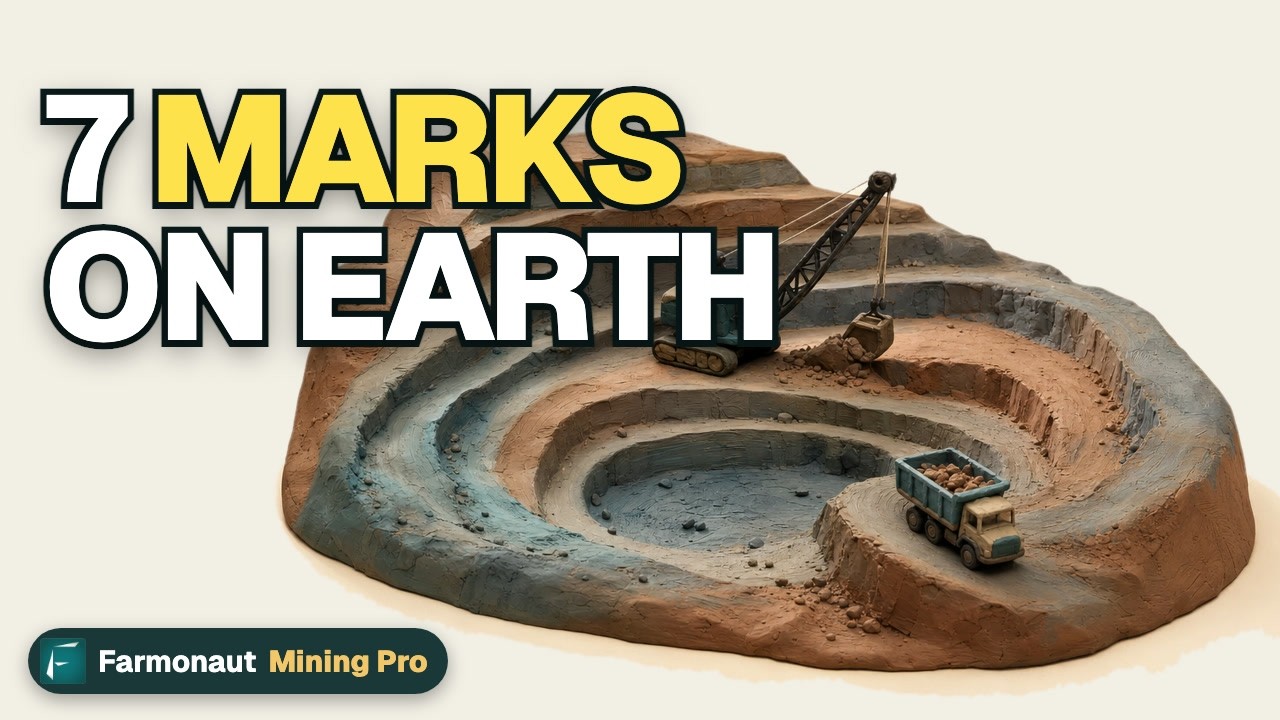
▶ A short claymation on the seven environmental impacts of mining, with satellite maps. · 2:31
What to check before trusting a DSO lithium project
- The product specification, not the resource grade. Ask for the Li2O grade of the crushed, screened product after dilution, and the lump and fines split.
- Impurities. Buyers test the iron, magnesium and other impurities in the ore. TG Metals reports 1.32% Fe and 1.02% MgO in the Burmeister resource and describes low levels of deleterious elements, and Leo Lithium’s starter pit carried 0.73% Fe2O3.
- The offtake terms. A signed offtake with a floor price carries more weight than a non-binding proposal.
- Distance to port. Haul cost is paid on every tonne of low-grade ore. Pioneer Dome exports through the Port of Esperance; Finniss shipped through Darwin.
- Permits and ground. A mining lease or an approved mining proposal must be in place. TG Metals’ Burmeister is still at the application stage.
- How long the ore lasts. Develop’s plan covers 850,000 tonnes over about 12 months. A short campaign is a bridge to concentrate production, not a long-life mine.
- The category of resource. An Inferred resource is the least certain category (see our guide to inferred, indicated and measured resources). TG Metals’ own filing says Mineral Resources are not Mineral Reserves and that further economic studies and modifying factors are required.
Where satellite data helps a lithium project
Satellite imagery cannot measure lithium grade. It can map pegmatite outcrops, alteration, vegetation and surface moisture, and it can track pit and stockpile footprints once mining starts. Sentinel-2 carries four bands at 10 m resolution, which is enough to see pits, stockpiles and haul roads but not narrow dykes. Drilling and assays remain the only way to prove grade.
Farmonaut lists lithium among the minerals its satellite detection covers. A project owner or consultant can send a licence boundary as KML, KMZ or a polygon and receive satellite-derived exploration targets, ahead of any resource estimate. The video below shows a lithium case study in Nigeria.

▶ A satellite-based lithium exploration case study in Nigeria. · 10:49
If this topic matters to you, read Iron Ore vs Gold Mining: Grades, Costs and Output next.
Frequently asked questions
What is direct shipping ore lithium?
It is spodumene-rich pegmatite that is crushed and screened and then sold without concentration. Recent cargoes and plans quote about 1.2% to 1.5% Li2O.
What grade is DSO lithium?
Core Lithium’s Finniss cargo averaged 1.4% Li2O and Develop Global’s Pioneer Dome plan is built around about 1.2% Li2O. Spodumene concentrate, which is processed on site, is quoted at about 6% Li2O.
How much does DSO lithium sell for?
Core sold a cargo at 1.4% Li2O for US$951 per dry tonne in 2022. In mid-2026, shortlisted offers for 1.2% Li2O DSO ranged from US$362 to US$430 per tonne CIF China. Prices move with the lithium market, so check a current source.
Is DSO the same as spodumene concentrate?
No. Concentrate is upgraded at a processing plant to about 5% to 6% Li2O. DSO is only crushed and screened, so a tonne holds a quarter of the lithium and sells for less.
Why is DSO lithium cheaper to start?
It needs a crusher, haul road and port access but no concentrator or tailings storage. Develop Global estimates pre-production capital for Pioneer Dome at A$35 million to A$40 million (Mining Magazine Australia uses US$ when it means US dollars, so the bare figure is read as Australian dollars).
Which companies sell DSO lithium?
Core Lithium shipped DSO from Finniss, Pilbara Minerals (now PLS) shipped it from Pilgangoora in 2018, and Develop Global plans DSO from Pioneer Dome. TG Metals is studying a DSO start at Lake Johnston. Check each company’s latest ASX filing for status.
Which countries ban lithium ore exports?
Zimbabwe has banned raw lithium ore exports since 2022 and Namibia banned unprocessed crushed lithium ore in 2023. Zimbabwe also suspended concentrate exports in February 2026, then began granting per-producer export quotas from April 2026, so exports have partly reopened; a concentrate ban is planned from January 2027.
Is DSO lithium better for the environment?
It removes the on-site concentrator and its tailings, but it ships about four times as much rock per unit of lithium and passes the processing step to the buyer. No study we opened compares the two routes directly.
Why have DSO lithium sales returned?
Lithium prices recovered, and converters wanted material quickly. PLS reported a realised concentrate price of US$1,708 per tonne for the year to June 2026, 122% above the year before, and several projects moved to DSO as a low-capital start.
Can satellites find DSO-grade lithium?
Satellites can help screen for pegmatite outcrops and alteration over large areas, but only drilling and assays show grade. Satellite results are exploration targets, not resource estimates.
This page is for information only. It is not investment advice and not legal advice. Company plans, prices and export rules change; confirm them with the company filing, the regulator and a current price source.
Farmonaut mining
Map your mining site from space
Consultants can send a licence boundary as KML, KMZ or a polygon and receive satellite-derived exploration targets, ahead of any resource estimate.

Mining Pro sample view, synthetic data
Keep reading
Sources
- USGS, Mineral Commodity Summaries 2026: Lithium: pubs.usgs.gov
- Core Lithium, half-year financial report to 31 December 2022 (ASX): asx.com.au
- TG Metals, Maiden lithium resource at Lake Johnston (ASX, 18 August 2026): announcements.asx.com.au
- Leo Lithium, first DSO produced at Goulamina (ASX, 30 June 2023): announcements.asx.com.au
- Fastmarkets, Pilbara Minerals makes first shipment of lithium DSO (2018): fastmarkets.com
- Resources Rising Stars, Resurgent lithium price sets miners scrambling to make lucrative DSO sales (30 April 2026): resourcesrisingstars.com.au
- International Mining, Develop brings MLG Oz in for Pioneer Dome DSO (30 June 2026): im-mining.com
- Mining Magazine Australia, Develop builds Pioneer Dome case ahead of lithium FID: miningmagazine.com.au
- Smallcaps, Develop Global fast tracks Pioneer Dome toward first sales: smallcaps.com.au
- PLS Group, Annual Report 2026: pls.com
- Reuters via Kitco, Zimbabwe to introduce lithium export quotas (9 April 2026): kitco.com
- Fastmarkets, Zimbabwe lithium ban disrupts spodumene supply chain (March 2026): fastmarkets.com
- Reuters via Mining.com, Zimbabwe to ban export of lithium concentrates from 2027: mining.com
- The Namibian, Namibia bans export of unprocessed lithium (12 June 2023): namibian.com.na
- Fraunhofer UMSICHT, LCA of battery-grade lithium (14 June 2023): umsicht.fraunhofer.de
- Khakmardan et al., Life cycle inventory of spodumene concentrate production, Greenbushes (Journal of Cleaner Production, 2025): minerva-access.unimelb.edu.au
- Copernicus SentiWiki, Sentinel-2 mission: sentiwiki.copernicus.eu
- Motley Fool Australia, Develop Global June quarter 2026 report (28 July 2026): fool.com.au
- Miningmx, Zimbabwe grants Chinese miners lithium export quotas (13 April 2026): miningmx.com
Discussion
Questions, corrections or field experience? Share them below. First-time comments are reviewed before they appear, and your email is never published.
No comments yet. Be the first to add a question or your experience.

 Denkyira Nkoranza Concession
 Mwerezi Minerals Company Limited
 Congo Mining Solutions
 Mining SARL
 SenGold Invest SAS
 Sania Corporation
 Sean Mining Limited
 NTS Group (Pty) Ltd
 Mine4Africa
 Lithspo Minerals Limited
 Tintina Mining Group
 Dalgety Minerals Pty Ltd
 Vortex Minerals Pty Ltd
 Faith At Work (Pty) Ltd
 Geotech Mining Solutions plc
 Vulcan International Limited
 Kidepo Associates
 GKY Mining
 Alkimy SARL
 Double A Trading

 Licence holder · Nigeria · Gold + lithium










